
Beans are notorious for being light feeders — or so the common wisdom goes. The truth is that while beans fix their own nitrogen, they are surprisingly sensitive to the nutrient balance in the soil. The wrong compost mix can lead to lush foliage with zero pods, or worse, a root system that refuses to cooperate. The compost you choose directly determines whether your bush beans, pole beans, or shelling beans deliver a heavy harvest or a disappointing one.
I’m Rikta — the co-founder and writer behind Lawn Gear Lab. I’ve spent countless hours cross-referencing horticultural data, analyzing nutrient profiles (NPK ratios, calcium content, microbial density), and tracking real-world owner feedback to isolate the handful of composts that actually perform well with legume crops.
Whether you are starting a raised bed, replenishing a container, or amending a traditional row garden, the selection below cuts through the marketing to deliver the definitive compost for beans that balances fertility without triggering the over-fertilization trap.
How To Choose The Best Compost For Beans
Bean plants are legumes that form a symbiotic relationship with rhizobia bacteria to fix atmospheric nitrogen. This natural process means they require a different nutritional approach than heavy feeders like tomatoes or corn. The ideal compost for beans provides balanced nutrients without overwhelming the plant’s own nitrogen-fixing ability.
NPK Ratio — The Middle Ground Wins
Look for a compost or fertilizer with a moderate first number (nitrogen). Ratios in the 3-4-4 or 4-4-4 range work well because they support root development and pod production without pushing excessive leaf growth. Too much nitrogen (anything above 8 in the first slot) will produce tall, bushy plants that flower late and produce fewer pods. The phosphorus and potassium in the middle and last numbers are equally important for flower set and disease resistance.
Organic Matter and Microbial Life
Beans thrive in soil that is rich in decomposed organic matter. Worm castings are especially effective because they contain a dense population of beneficial microbes that help break down nutrients into plant-available forms. Composts that list high microbial activity or include mycorrhizae are a strong signal that the product will support a healthy rhizosphere.
Texture and Drainage
Bean roots are sensitive to waterlogged conditions. A compost that feels heavy, dense, or clay-like can suffocate the root system and promote fungal diseases. The best options have a crumbly, granular texture that aerates the soil while retaining just enough moisture for steady growth. If the bag clumps together like mud when squeezed, it is too wet for bean beds.
Quick Comparison
On smaller screens, swipe sideways to see the full table.
| Model | Category | Best For | Key Spec | Amazon |
|---|---|---|---|---|
| Wiggle Worm 40lb | Pure Castings | Living soil foundation | 40 lbs, live egg material | Amazon |
| Espoma Garden-tone | Organic Granules | Monthly feeding regimen | 3-4-4 NPK + Bio-tone | Amazon |
| Sustane All Natural | Granular Food | Fruit & bloom booster | 5 lb, all-natural blend | Amazon |
| Coast of Maine Veg Soil | Planting Mix | Direct seed starting | 20 qt, composted manure | Amazon |
| Back to the Roots 5lb | Pure Castings | Containers & small beds | 5 lbs, resealable bag | Amazon |
| Worm Bliss 1 Qt | Pure Castings | Houseplants & seedlings | 1 Qt, vegan-fed worms | Amazon |
| Doter Worm Castings | Granular Castings | Entry-level supplementation | 1.1 lbs, odor-free | Amazon |
In‑Depth Reviews
1. Wiggle Worm 100% Pure Worm Castings Plus Egg Material, 40lbs
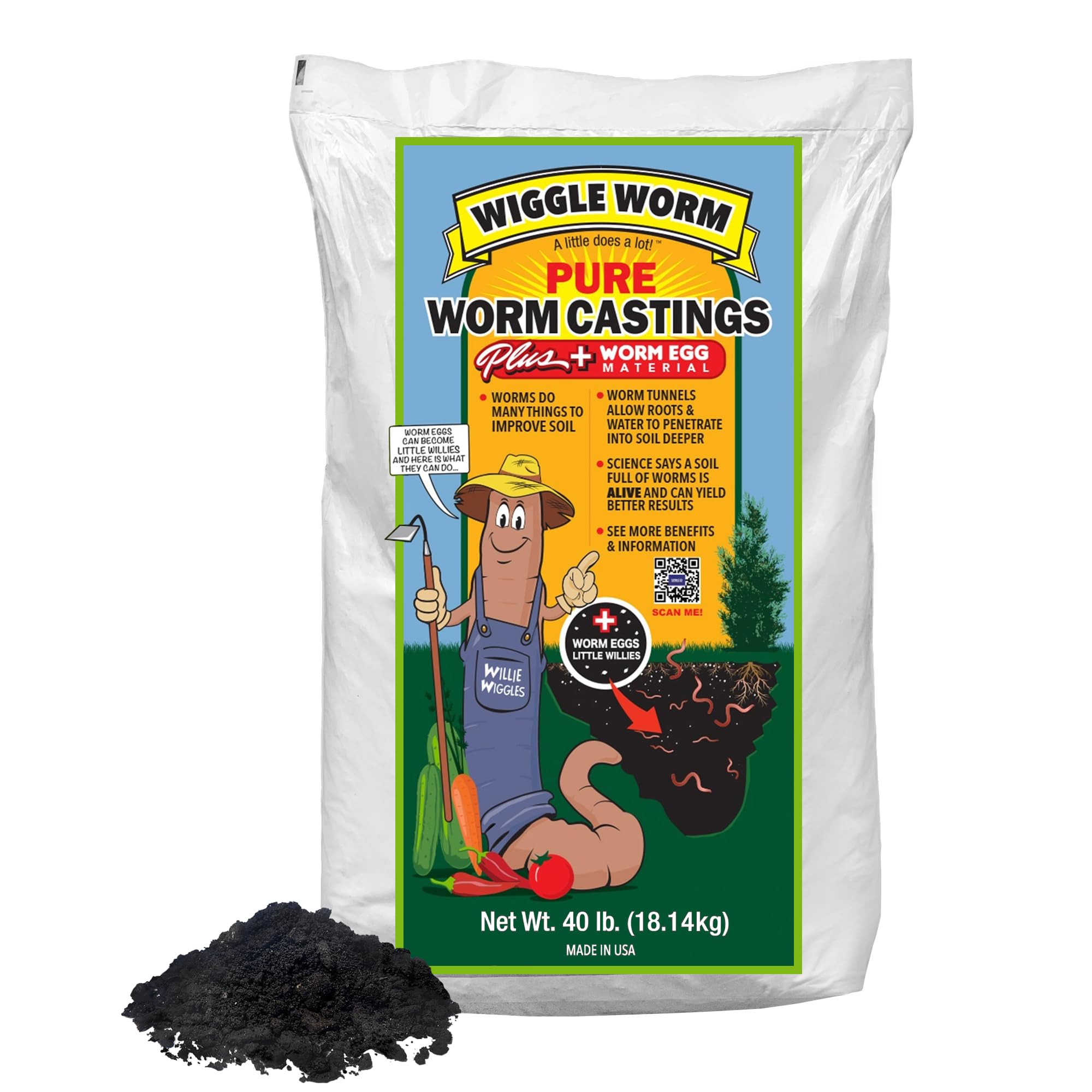
The Wiggle Worm 40lb bag is the heavyweight champion for any serious bean grower. At 40 pounds of pure worm castings loaded with worm egg material, you are getting a living soil product that inoculates your beds with an ongoing population of worms. The castings are finely sifted with no foul odor and no filler-heavy compost debris. For a large raised bed or multiple rows of pole beans, this bag covers serious ground without requiring multiple purchases.
The inclusion of worm egg material means that over time, live worms hatch and continue to aerate the soil and produce more castings. This creates a self-sustaining cycle of soil improvement that granular fertilizers cannot match. The microbial activity in this product is exceptionally high, which directly supports the rhizobia bacteria that beans need to fix nitrogen efficiently. Owners report that even in harsh desert soil, this product enabled the growth of plants that typically struggle in the region.
This is not a fertilizer in the traditional NPK sense — it is a soil amendment that builds long-term fertility. For beans, which benefit from steady, balanced nutrition rather than a quick synthetic spike, the slow-release microbial ecosystem of Wiggle Worm is nearly ideal. The only consideration is the upfront investment, but the per-pound cost is remarkably low for the quality level.
What works
- Massive 40lb bag provides excellent coverage for large gardens
- Live worm egg material creates a self-sustaining soil ecosystem
- Finely sifted, odor-free, and free of synthetic fillers
What doesn’t
- Heavy bag may be difficult to move for some gardeners
- Some small rocks or debris may pass through the sifting process
2. Espoma Organic Garden-tone 3-4-4, 4lb (Pack of 2)

Espoma Garden-tone is the classic organic granular fertilizer that hits the exact NPK sweet spot for beans. With a 3-4-4 analysis and 5% calcium, it provides enough phosphorus for strong flower set and enough potassium for disease resistance without pushing excessive leaf growth. The Bio-tone formula adds beneficial microbes that help break down organic matter in the root zone, which is exactly what bean roots need to thrive.
This product is designed to be applied monthly throughout the growing season. It is ready to use straight from the bag with no mixing required. The granules are easy to scatter around the drip line of bean plants or along planting rows. Owners consistently report that it does not burn plants even when applied generously, and the smell is mild compared to many organic fertilizers. The pack of two bags gives you enough for several months of feeding a medium-sized garden.
For gardeners who prefer a scheduled feeding regimen rather than a one-time soil amendment, Garden-tone is the most practical choice. The 3-4-4 ratio is deliberately moderate, so you can combine it with a base of worm castings or compost without overloading the soil. The calcium content is a bonus for preventing blossom end rot in any nearby tomatoes or peppers, though beans themselves rarely suffer from that issue.
What works
- Balanced 3-4-4 NPK tailored for vegetable and herb growth
- Bio-tone microbes enhance soil activity around bean roots
- Safe, slow-release formula that will not burn plants
What doesn’t
- Has a noticeable organic smell for a few days after application
- May be slightly hot for the first application if used on young seedlings
3. Sustane All Natural Flower and Vegetable Plant Food, 5lb

Sustane All Natural plant food is a pelleted organic fertilizer made from composted turkey litter. It is a complete nutrient source that improves soil structure and promotes microbial biodiversity. Independent research cited by the manufacturer shows it produces more fruits and blooms than many competing organic and synthetic fertilizers. For bean growers focused on pod production, the bloom-boosting properties of this product are a direct match.
The granular form is easy to mix into the top few inches of soil before planting or to side-dress around established plants. The pellets release nutrients slowly as soil microbes break them down, providing a steady supply of nutrition through the critical flowering and pod-set stages. Owners report phenomenal growth responses in raised beds, with vegetables growing at a breakneck pace after application. The 5lb bag is compact enough to store easily but provides enough material for several seasons of a moderate garden.
One thing to note is that this product is relatively concentrated, so careful measurement is important. The manufacturer recommends about half a cup per 2’x6′ bed mixed into the top six inches. Over-application is unlikely to burn plants given the organic source, but it can lead to excessive foliage growth if used too heavily on beans. Used correctly, it is a high-performance option for gardeners who want maximum pod density.
What works
- Proven to boost bloom and fruit production in independent trials
- Slow-release organic pellets feed beans steadily through the season
- Improves soil structure and microbial biodiversity
What doesn’t
- Requires careful measurement to avoid over-application
- Pelleted form may dissolve slowly if soil is very dry
4. Coast of Maine Organic & Natural Planting Soil for Vegetables & Tomatoes, 20 Qt

Coast of Maine’s planting soil is a complete organic potting mix blended with composted manure and sphagnum peat moss. It is formulated specifically for tomatoes and vegetables, which makes it a strong candidate for bean beds as well. The composted manure provides a steady release of nutrients while the peat moss balances moisture retention and drainage. The texture is lightweight and crumbly, which is exactly what bean seeds need for easy germination and root penetration.
This product is OMRI listed for organic use, meaning it meets the standards for certified organic production. It can be used for seeding, transplanting, or top-dressing both in-ground gardens and containers. The included cedar and aromatic wood chips help deter insects, which is a useful feature for bean beds that are prone to aphid or beetle pressure. Owners report it holds moisture well while draining effectively, a balance that prevents the root rot issues that plague beans in heavy soil.
The 20-quart bag is ideal for filling a few large containers or refreshing a small raised bed. Because it is a complete planting mix, you can use it straight out of the bag without adding extra compost or fertilizer for the first few weeks. Some users have reported fungus gnats in the bag, which is a known risk with any compost-heavy product, but a quick Neem oil treatment resolves the issue without harming the plants.
What works
- Complete organic mix ready for direct seeding or transplanting
- Lightweight texture with excellent drainage for bean roots
- Aromatic wood chips help deter common bean pests
What doesn’t
- Can occasionally contain fungus gnats that require treatment
- Per-cubic-foot cost is higher than buying components separately for large gardens
5. Back to the Roots Organic Worm Castings for Plants, 5lb

Back to the Roots offers a 5lb bag of pure USA vermicompost that delivers the same microbial and nutrient benefits as larger bags at a more accessible entry point. The castings are rich and clean with no odor, and they blend easily into chunky soil mixes containing coco chips, perlite, or charcoal. For bean growers using a custom soilless mix or amending a small raised bed, this bag provides exactly the right amount without committing to a massive 40lb purchase.
These castings are sourced from mother earth vermicompost and contain beneficial microbes that protect seedlings from harmful pathogens. The slow-release nature of worm castings means beans get a steady supply of micronutrients without the risk of nitrogen burn. The resealable bag is a practical touch for gardeners who use castings sparingly throughout the season. Owners consistently report healthier leaves and stronger growth after mixing it into their standard potting soil.
The 5lb size sits perfectly between trial quantity and serious bulk. It is enough to amend several cubic feet of potting mix or to top-dress a row of bush beans. The #GrowOneGiveOne program is a nice brand touch — sharing a photo with the hashtag triggers a donation of an organic gardening kit to a school. For the quality-to-size ratio, this is one of the best values in the pure casting category.
What works
- High-quality pure castings with no synthetic fillers or additives
- Resealable bag keeps product fresh for multiple uses
- Blends easily into chunky soil mixes without compacting
What doesn’t
- Holds significant moisture, which may require watering adjustments
- 5lb bag goes quickly if used as a primary soil base for large containers
6. Worm Bliss (1 Qt) – Organic Worm Castings by Plantonix

Worm Bliss from Plantonix is a premium 100% vegan and manure-free worm casting product. The worms are raised in a climate-controlled facility and fed a strictly vegan diet, which produces castings that are free from any synthetic residues or animal byproducts. For organic bean growers who want the purest possible input, this product meets the highest standard of cleanliness. The castings are meticulously screened to remove any dirt, sand, or rocks.
The humus content in Worm Bliss improves the soil’s ability to retain moisture while also increasing porosity for better aeration. This dual action is particularly valuable for beans, which need consistent moisture during flowering but cannot tolerate soggy roots. The microbial density in these castings encourages the beneficial soil bacteria that convert nutrients into forms beans can absorb. Owners report excellent results when mixing it into aroid mixes or using it as a soil amendment for houseplants and seedlings.
The 1-quart size is genuinely compact — several users have noted it is smaller than expected, roughly the size of a bag of potato chips. This makes it perfect for a small container garden or for amending a few starter pots, but it is not economical for large in-ground beds. The per-ounce cost is higher than bulk options, so it is best suited for targeted use where purity matters more than volume.
What works
- 100% vegan and manure-free with no synthetic contaminants
- High humus content improves both moisture retention and aeration
- Excellent microbial activity for nutrient conversion
What doesn’t
- Very small bag size limits use to containers or seedlings
- High per-ounce cost compared to bulk casting options
7. Doter Worm Castings Organic Fertilizer, 1.1lb

Doter’s worm castings are a budget-friendly entry point for gardeners who want to test the benefits of worm castings before committing to a larger bag. The 1.1-pound package contains granular, odor-free castings that are broken down into a form plants can digest immediately. There is no need for pre-mixing or measuring, and the formula is gentle enough that there is no risk of chemical burn. For a first-time bean grower, this is a safe way to introduce organic amendments.
The castings help reduce carbon, prevent extreme pH levels, and increase nitrogen levels in the soil. They also improve soil structure to reduce irrigation needs and increase drought resistance. While the bag is small, it is enough to amend a few planting holes or to mix into the top layer of a small container. The odor-free and non-toxic formulation makes it safe to use around children and pets.
The main limitation is the quantity. At 1.1 pounds, you are paying a premium per pound compared to larger bags. This product is best viewed as a trial size or a quick fix for a single planting. The quality is solid for the price point, but the economics favor a larger bag if you have any serious garden ambitions.
What works
- Odor-free and non-toxic formulation safe for kids and pets
- No measuring or pre-mixing required before application
- Gentle formula eliminates risk of chemical burn
What doesn’t
- Very small 1.1lb bag has a high cost per pound
- Insufficient for more than a few square feet of garden bed
Hardware & Specs Guide
NPK Ratio
The NPK (nitrogen-phosphorus-potassium) ratio is the most critical spec for bean compost. A ratio in the 3-4-4 range provides enough phosphorus for heavy flowering and enough potassium for pod development without triggering excessive vegetative growth. Avoid ratios with a first number above 8, as high nitrogen suppresses nodulation and delays pod set. Organic fertilizers typically list a guaranteed analysis on the label — for beans, moderate is the target.
Organic Matter Content
Worm castings typically contain 40-60% organic matter by weight, with high levels of humic acids and beneficial microbes. Bagged composts often list the percentage of organic matter directly. For beans, look for products that specify a high microbial count or include mycorrhizal fungi. The organic matter feeds the soil food web that supports the rhizobia bacteria responsible for nitrogen fixation in bean roots.
FAQ
Can I use high-nitrogen fertilizer on beans?
How often should I apply compost to bean plants?
Are worm castings better than bagged compost for beans?
Final Thoughts: The Verdict
For most gardeners, the compost for beans winner is the Wiggle Worm 40lb bag because it provides the most living soil value per dollar and creates a self-sustaining ecosystem in your bean beds. If you want a balanced granular fertilizer that you can apply on a monthly schedule, grab the Espoma Garden-tone 2-pack. And for a compact, high-purity option perfect for containers and seedling starts, nothing beats the Back to the Roots 5lb worm castings.