
Your tomato plant looks pale, your soil is hard as a brick, and every time you water, it just runs off the surface. That is the difference a good compost can fix. Compost feeds the soil with organic matter so your plants get the nutrients they need. Mulch on top keeps moisture in and weeds out. The trick is knowing which bag does which job and which ones actually deliver—so you do not waste money on products that introduce weed seeds or lack real nutrition.
I’m Rikta — the co-founder and writer behind Lawn Gear Lab. This guide is built by comparing the manufacturers’ published specifications and the patterns across verified customer reviews, so you get each pick’s real strengths and trade-offs instead of marketing spin.
To help you pick the right bag for your garden, I have broken down the top contenders for the best compost and mulch, ranking them by their actual ingredient quality, nutrient content, and what real buyers report after a season of use.
How To Choose The Best Compost And Mulch
Walk into any garden center and you will see bags labeled “compost,” “soil amendment” (a material you mix into soil to improve its structure), and “mulch” stacked side by side — but they do very different jobs. Compost feeds the soil biome (the community of microbes and earthworms living in your dirt) with organic matter and nutrients, while mulch sits on top to retain moisture and block weeds. The best approach is to pick a nutrient-rich compost to dig into your beds and a clean, weed-free mulch to lay on the surface.
Read the Ingredient Source, Not Just the Label
The source of the organic matter tells you everything about what you are getting. Cow manure compost is a classic all-arounder, packed with nitrogen (which fuels leafy green growth), calcium (for strong cell walls), and iron. Plant-based composts are gentler and great for clay soil because they improve aeration without adding heavy salts. Special blends like lobster and crab meal compost add chitin — a fibrous compound from shellfish shells — which naturally deters soil pests. That is a bonus you do not get from standard feed.
Check the Texture and Finishing
A good compost should look and feel like dark, crumbly soil — not like a bag of chunky bark or wet sawdust. Compost that is fully “finished” (meaning the decomposition process is complete) has no strong ammonia smell and should not burn plant roots. If you see reviews mentioning clumps, sticks, or plastic contamination, that bag was not screened properly before packaging.
Look for Organic Certification (OMRI)
For vegetable gardens and edible crops, an OMRI (Organic Materials Review Institute — an independent nonprofit that verifies no synthetic chemicals are present) listing matters because it means the product was independently verified to contain no synthetic chemicals, GMOs (genetically modified organisms), or sewage sludge. If you are planting ornamentals or flowers, a non-certified compost from a trusted source is often fine. But for your tomatoes and peppers, certified organic gives you peace of mind.
Quick Comparison
On smaller screens, swipe sideways to see the full table.
| Model | Category | Best For | Key Spec | Amazon |
|---|---|---|---|---|
| Espoma Organic Land and Sea | Premium | Maximum vegetable yield | 24 lb bag, lobster & crab meal | Amazon |
| R&M Organics Premium Compost | Mid-Range | Quick plant recovery | 10 lb bag, manure-based | Amazon |
| Brut Cow Compost | Mid-Range | Budget-friendly cow manure | 192 oz bag, OMRI listed | Amazon |
| Old Potters Organic Compost | Premium | Heavy clay soil repair | 24 quarts, plant-based | Amazon |
| Blue Mountain Hay Organic Straw | Budget | Mulch for flower beds | 5 lb box, natural straw | Amazon |
| Ribbon Organics OMRI Compost | Premium | Indoor container gardens | 7.9 gallons, OMRI certified | Amazon |
In‑Depth Reviews
1. Espoma Organic Land and Sea Gourmet Compost with Lobster & Crab Meal

24 pounds — 4.8 times heavier than the 5-pound Blue Mountain Hay straw box — and a lobster and crab meal blend make this the top pick for any gardener who wants the biggest, healthiest vegetables possible. Owners mention that it “noticeably boosts tomato yield/size, zucchini production, and leafy greens health,” and the bag covers a lot of ground whether you are mixing it into a new bed or recharging tired container soil.
It also contains a proprietary blend of mycorrhizae — beneficial fungi that attach to plant roots and help them pull more water and nutrients from the soil. The compost itself is dry and lightweight, so it improves both water retention and drainage at the same time. One reviewer has used it for three straight seasons, which says a lot about its staying power.
You pay more per bag here compared to a basic manure compost, and for a large garden you may need several bags. But if you want the biggest, healthiest vegetables you have ever grown, this is the bag to buy.
Why it’s great
- Lobster and crab meal add trace nutrients standard composts lack
- Includes beneficial mycorrhizae for root health
- Dry, crumbly texture improves both drainage and water retention
Good to know
- Premium price per bag — you pay for the quality ingredients
2. R&M Organics Premium Organic Compost 10 lb Bag
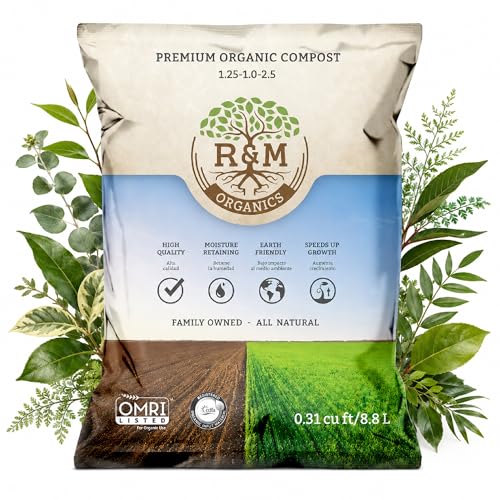
Where the Espoma compost excels for long-term soil building, this R&M Organics bag is your rescue option when a plant is struggling right now. One reviewer noted that it “revived ailing tomato plant: yellow leaves turned green, new growth and flower buds appeared within a week of mixing into 27-gallon planter soil.” That speed comes from fully composted dairy cow manure that is low-odor and safe to use indoors — a different approach than the lobster-and-crab-meal formula of the Espoma.
At 10 pounds, the bag is compact enough to carry home easily and apply to a few pots or a small raised bed. The texture is fine and close to topsoil, so you can spread a quarter-inch layer around existing plants without burying stems. It holds moisture well, which means you can stretch time between waterings in hot weather.
If you have a large vegetable patch, you will want a bigger bag to avoid buying multiples. The unit count here is 160 ounces, which is 20% less volume than the 192-ounce Brut Cow Compost bag. This one is for anyone with a few containers or a small garden bed who wants immediate, visible results.
Where it shines
- Fine, soil-like texture spreads easily and does not smell like manure
- Customers note visible plant recovery within one week
- Low-odor formula works well for indoor container plants too
Worth noting
- Smaller bag means less value per pound compared to bulk options
3. Brut Cow Compost – Nutrient-Rich Composted Cow Manure

If you are a first-time tomato grower starting seeds on a patio, this Brut Cow Compost gives you 192 ounces — 20% more than the 160-ounce R&M Organics bag — at a very similar price point. That makes it the strongest value in the mid-range tier. It is also OMRI (Organic Materials Review Institute) listed, meaning an independent certifier has verified there are no synthetic additives or chemicals inside.
First-time growers have had great luck with it. One reviewer, new to gardening, planted tomatoes from seed on March 1st and by April 22nd had sturdy plants growing fast using a 3:2 ratio of this compost to soil. The compost is finely sifted and completely odor-free, so you will not smell manure even working on a patio. It is gentle enough for seedlings and delicate flowers, with no risk of burning tender roots the way a raw manure would.
The catch is the bag size — at 10 pounds it will not cover a large in-ground garden on its own. But for the price and the certified organic peace of mind, it is the best value for a tomato grower or flower gardener with a few containers or a small raised bed. If you want more volume per dollar than the R&M Organics offers, this is your bag.
What stands out
- OMRI listed for organic gardening peace of mind
- Odor-free and safe to use around seedlings and delicate blooms
- More volume per dollar than similar manure-based competitors
The trade-offs
- Single 10 lb bag runs out fast on a large garden plot
4. Old Potters Organic Compost – Plant Based Potting Soil
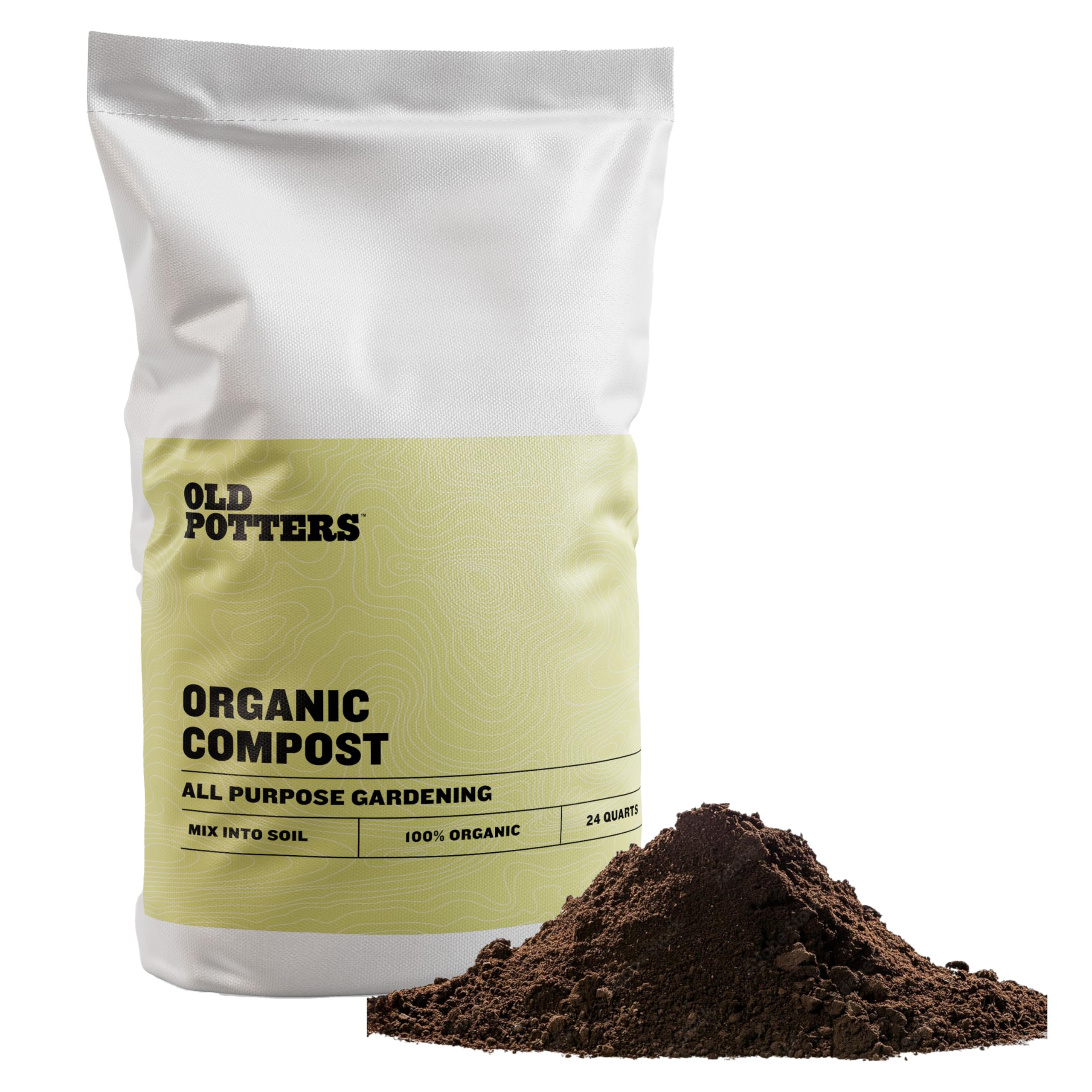
The single number that matters most in this category is “plant-based” — and this compost scores a perfect 100% on that spec. Unlike manure composts that sometimes add to the salt load in already-poor soil, this Old Potters compost is made entirely from natural plant materials. That means it lightens clay, improves drainage, and feeds the soil without making compaction worse. One buyer in zone 7a (a temperate climate region) used it mixed with worm castings and mycorrhizal fungi to help 10 bare-root roses survive flooding, drought, heat, and cold.
You get 24 quarts (768 fluid ounces) of compost, which is more volume than the R&M or Brut bags offer. The texture is rich and dark — one reviewer described it as “nice dark soil.” Some buyers did note it arrived a bit clumpy, with a few clayish clumps that needed manual crumbling before use. That is a minor inconvenience for the results it delivers in tough soil conditions.
For price per quart, this lands in the premium tier. But for anyone dealing with heavy clay or a garden bed that has never been properly amended, it is a targeted solution that works — a price-to-value read that says you pay more for a specific fix rather than a general amendment.
The upsides
- Plant-based formula is gentle on clay soil and reduces compaction
- Large 24-quart bag offers good coverage for the price
- Proven to help plants survive extreme weather swings
Keep in mind
- Some bags arrive with clay-like clumps that need breaking up by hand
5. Blue Mountain Hay Organic Garden Straw (5 lb)
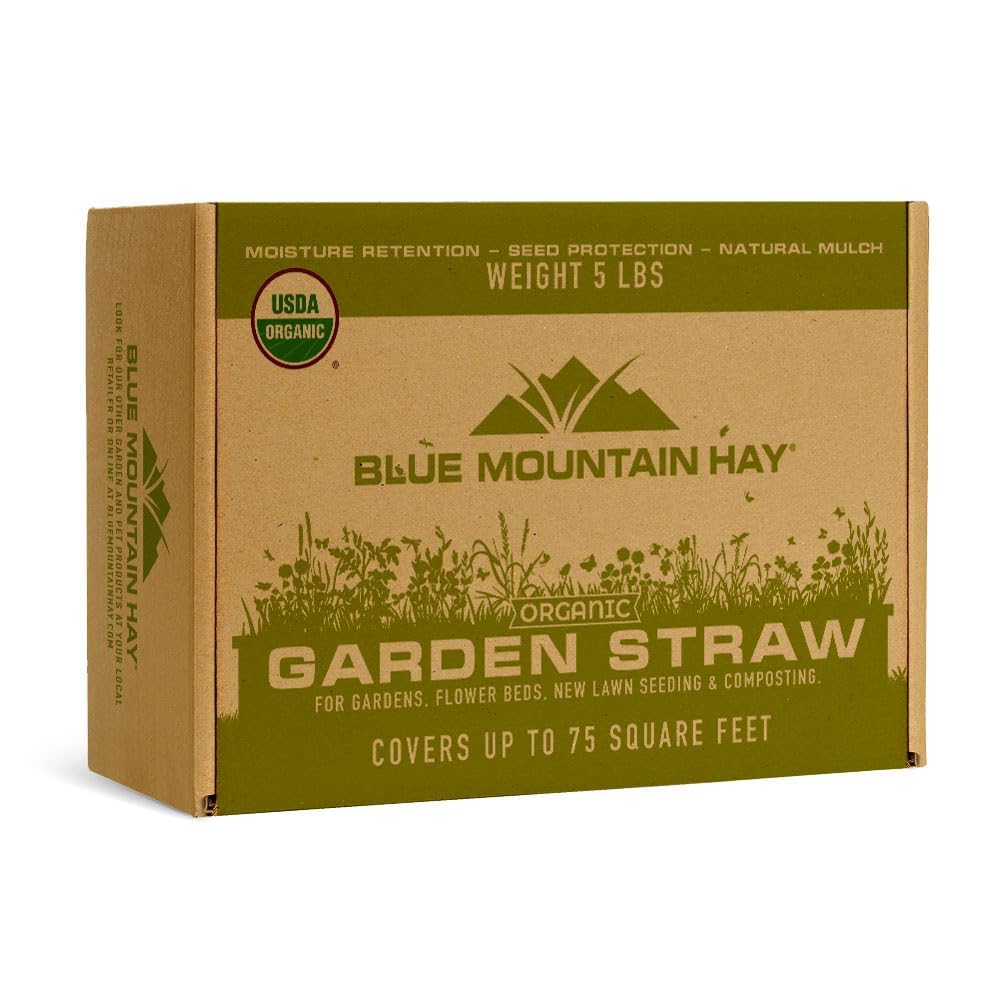
What you actually get at this lower price is a 5-pound box of natural straw mulch, not compost — it is designed to sit on top of your soil, not mix into it. If you have flower beds, potato trenches, or a patch where you want to keep soil moist and block weeds, this box is clean and easy to spread. Buyers love it for covering potted plants, onion tubs, garlic rows, and cat grass kits. One reviewer called it “very clean, soft, no dirt or bugs.”
The honest warning from multiple buyers is that some bags caused “massive grass shoots in all raised beds, ruining vegetables and strawberries,” according to one verified review. That suggests the straw may occasionally contain viable weed seeds — a risk with any natural straw product. Another reviewer noted the coverage claim of 300 sq ft is optimistic; they found one box covers about 100 sq ft at a 1-inch depth, closer to a third of a bale. For large areas, buying a full bale from a local farm will be more economical.
If you only need a small, tidy mulch layer for a few containers or a tiny flower bed and you want it delivered to your door, this box works well. Just inspect the straw before spreading, and be prepared to pluck any stray grass shoots that pop up. It is the perfect budget buyer for someone with just a few pots or a very small garden patch who values convenience over covering a large area.
Why we’d pick it
- Clean, soft, and easy to handle without dirt or bugs
- Convenient boxed format delivers to your door ready to use
- Works well for covering garlic, potatoes, and potted plants
A few caveats
- Some bags contain viable weed seeds that sprout in raised beds
- Coverage is less than advertised — expect about 100 sq ft per box
6. Ribbon Organics OMRI Certified Organic Compost

This pick is perfect for the serious container gardener or indoor grower who demands the purest, most contaminant-free organic compost for high-value plants. The 7.9-gallon (approximately 32-35 pounds) bag gives you a lot of material to work with, and it rehydrates easily even after sitting in storage, so you do not waste any of it. Indoor growers have had particular success mixing it 1:2 with perlite and orchid bark for plants like Clivias, orchids, and Epiphyllums — a balance that holds moisture without suffocating roots.
Reviewers call it “hands down the BEST compost I’ve ever used” and “black gold,” thanks to its rich, dark, earthy-smelling finish that is completely free of contaminants like sticks, plastic, metal, or glass. It is OMRI (Organic Materials Review Institute) certified, so there is zero doubt about its organic integrity. It also pairs well with worm castings for an extra nutrient boost.
The obvious barrier is the cost — at the top end of the price range, it is significantly more expensive per pound than the Brut Cow Compost or R&M Organics options, so for a large in-ground vegetable garden, you would need multiple bags that add up fast. But if you grow high-value container plants, seedlings, or a small indoor garden where every plant matters, this compost’s unmatched purity and performance make it a worthy investment. It is what you pick over the Espoma when container quality is your top priority.
Strong points
- Exceptionally clean — no sticks, plastic, or metal fragments
- Rich, dark texture that rehydrates easily from storage
- OMRI certified for organic vegetable and container gardens
Before you buy
- Premium price makes it expensive for large-scale garden use
Understanding the Specs
OMRI Certification
OMRI (Organic Materials Review Institute) is an independent nonprofit that verifies a product contains no synthetic chemicals, GMOs (genetically modified organisms), sewage sludge, or prohibited substances. If the bag says “OMRI Listed,” you can use it confidently on your organic vegetable garden without wondering what is really inside. For ornamental flowers and lawns, certification matters less. But for edible crops, it is the gold standard of trust.
Mycorrhizae vs. No Mycorrhizae
Mycorrhizae are beneficial fungi that form a partnership with plant roots — the fungi extend the root reach in exchange for sugars from the plant, effectively helping your plants pull more water and nutrients from the soil. Composts like the Espoma Land and Sea include a proprietary “Myco-Tone” blend of these fungi. Standard manure composts do not include them, which means you may want to add a separate mycorrhizal inoculant if you are growing heavy feeders like tomatoes or squash.
FAQ
Can I use compost and mulch at the same time?
How do I know if a compost is fully “finished” and safe to use?
Why did my straw mulch grow grass in my raised bed?
Final Thoughts: The Verdict
When it comes down to it, the best compost and mulch winner is the Espoma Organic Land and Sea Gourmet Compost because its lobster and crab meal blend delivers nutrients standard manure composts cannot match, plus the added mycorrhizae give your plants a genuine growth advantage. If you want a budget-friendly certified organic option for small containers and fast results, grab the Brut Cow Compost. And for repairing heavy clay soil or growing premium container gardens where purity matters most, the Ribbon Organics compost is your best bet.