
Walking into a grow-light aisle feels like decoding a secret language — Kelvin ratings, nanometer spikes, PPFD maps, blurple vs. white. The wrong color spectrum starves your leaves; the right one fuels explosive growth, tighter nodes, and earlier flowering. This guide strips the marketing noise off the science so you pick exactly what your Monstera, peppers, or seedlings actually need.
I’m Rikta — the co-founder and writer behind Lawn Gear Lab. I’ve spent hundreds of hours comparing PPFD maps, dissecting diode layouts, and mapping real-world customer feedback across budget sticks and premium tent fixtures to isolate the single most important variable: usable spectrum.
Whether you are starting seeds on a wire shelf or finishing a 2×4 tent, finding the right color light for plants boils down to matching your crop’s stage with a light that delivers real red and blue peaks — not just a pink glow.
How To Choose The Best Color Light For Plants
A light that appears bright to your eyes may be useless for photosynthesis. Plants use specific wavelengths — mostly in the blue (400-500nm) and red (600-700nm) ranges — to drive chlorophyll absorption. The goal is to match your light’s spectral output to your plant’s growth stage.
Understand the Spectrum: Kelvin vs. Nanometer
Kelvin (K) describes the color temperature visible to humans — 2700K looks warm yellow, 6500K looks cool blue. Nanometers (nm) describe the actual wavelength of light. A 4000K white LED can look great but lack the 660nm deep-red spike that triggers flowering. Look for spec sheets that list specific peaks, not just a color temperature. A quality full-spectrum fixture will mention 660nm red and sometimes 730nm far-red alongside blue in the 460nm range.
PPFD and PAR — The Real Performance Metrics
Wattage is an electricity spec, not a plant-growth spec. PAR (Photosynthetically Active Radiation) measures light usable by plants, and PPFD (Photosynthetic Photon Flux Density) tells you how many photons land per square meter per second. A 150W fixture with high PPFD can outperform a 300W blurple panel. For seedlings, aim for 100-200 µmol/m²/s. For flowering, you want 500-800 µmol/m²/s at canopy level. Ignore any light that only lists lumens — lumens measure human vision, not plant fuel.
Blurple vs. Full Spectrum — Which Color Is Better?
Early “blurple” lights used only red and blue LEDs, wasting no energy on green light. They work but make it impossible to see plant color or pests. Modern full-spectrum white lights include green and amber wavelengths, producing a natural appearance while still delivering strong red and blue peaks. Full-spectrum fixtures also penetrate deeper through the canopy. For most home growers, a white full-spectrum light with a 660nm red supplement is the sweet spot.
Dimming and Timer Control
A fixed-intensity light forces you to adjust by raising or lowering the fixture — a crude and inefficient method. Dimming lets you dial in the exact PPFD for each growth stage. Timer memory is equally important; a light that forgets your schedule after a power outage will stress your plants. Look for mechanical or digital timers that hold settings through brief interruptions.
Quick Comparison
On smaller screens, swipe sideways to see the full table.
| Model | Category | Best For | Key Spec | Amazon |
|---|---|---|---|---|
| VIPARSPECTRA XS1500 Pro | Premium Panel | Small tent veg & flower | 150W actual, 747 PPFD | Amazon |
| AC Infinity IONBEAM S16 | Inter-Canopy Bar | Supplemental canopy light | Samsung LM301H EVO diodes | Amazon |
| VIVOSUN LumaLight 200W | Smart Panel | App-controlled 2×4 tents | 200W IP65, 4-level dimmer | Amazon |
| Grow Light with Stand & Timer | Floor Lamp | Tall plants & seed starts | 36W, 60° spotlight, 20H timer | Amazon |
| SANSI Dual-Gooseneck | Clip-On | Desk & shelf plants | 20W, 2000LM, lifetime bulb | Amazon |
| Wiaxulay Floor Grow Light | Tall Floor Lamp | Large, tall plants | 153 LEDs, 5 dim levels | Amazon |
| SDOVUERC Tri-Heads Pack | Multi-Head Clip | Multi-shelf setups | 15W, 6000K + 660nm red | Amazon |
In‑Depth Reviews
1. VIPARSPECTRA XS1500 Pro

The XS1500 Pro packs optical lenses that concentrate light into a highly uniform PPFD footprint — one reviewer measured 747 µmol/m²/s at 50% power and 13 inches, which is exceptional for a 150W panel. The full spectrum includes white 3000K and 5000K plus dedicated 660nm red and 730nm far-red diodes, giving you both the blue peak for tight, bushy vegetative growth and the deep-red spike for flowering. The aluminum heat sink keeps temps low enough that the unit runs cool to the touch even after hours of operation, protecting your canopy from leaf-scorch stress.
The dimming daisy-chain feature is a serious advantage if you plan to expand: you can link up to twenty units and control intensity from a single knob. For a 2×2 foot flowering tent or a 3×3 foot veg tent, a single unit delivers full canopy coverage with even edge-to-edge photon distribution. The included rope hangers and stainless hooks make installation a five-minute job, and the plug-and-play design means no wiring.
One common complaint is the absence of a physical on/off switch — you must pair it with an external timer to kill power. A few users also note that the high PPFD at close range can scorch seedlings if the dimmer is not turned down. That said, for a mid-to-premium priced panel with a real 150W draw and pro-grade spectrum, the XS1500 Pro is hard to beat for a 2×3 tent environment.
What works
- Optical lens design delivers high, uniform PPFD across the canopy
- Dedicated 660nm red + 730nm far-red diodes for flowering
- Daisy-chainable with up to 20 units for scaling
- Low heat output thanks to quality aluminum heatsink
What doesn’t
- No physical power switch — must use an external timer
- Can burn seedlings at full intensity if too close
- Color rendering could be warmer for visual inspection
2. AC Infinity IONBEAM S16

The IONBEAM S16 is not a top-light — it is a bar designed for inter-canopy placement, sliding between rows of dense foliage to target lower bud sites that your overhead panel cannot reach. The 16-inch bars use Samsung LM301H EVO diodes, rated at 3.14 µmol/J PPE, making them among the most efficient LEDs available for a supplemental fixture. Each bar outputs up to 3000 lumens from a slim 0.62-inch profile that will not shade out upper leaves.
Installation is magnetic: steel bars adhere to the tent frame or canvas, and the included mounting kit lets you position them vertically or horizontally. The digital controller (Controller 77) offers ten intensity levels and a programmable daily schedule with sunrise/sunset simulation — invaluable for coaxing photoperiod-sensitive plants into flower. The bars connect via cable, and multiple extensions let you run them from a central power source.
Several growers note that the interconnecting cables are short, requiring additional extension cables sold separately if your tent is large. The price point is firm for a supplemental bar, but build quality is exceptional — anodized aluminum housings, vibration-resistant mounts. For a 4×4 tent with dense canopies, the S16 bars are a serious upgrade over running more overhead wattage.
What works
- Samsung LM301H EVO diodes with 3.14 µmol/J efficacy
- Magnetic mounting for quick vertical/horizontal placement
- Digital controller with sunrise/sunset timer
- Extremely low heat output — safe for tight gaps
What doesn’t
- Short interconnecting cables may require extensions
- Premium priced for a supplemental-only bar
- Not a standalone fixture — needs a primary overhead light
3. VIVOSUN LumaLight 200W
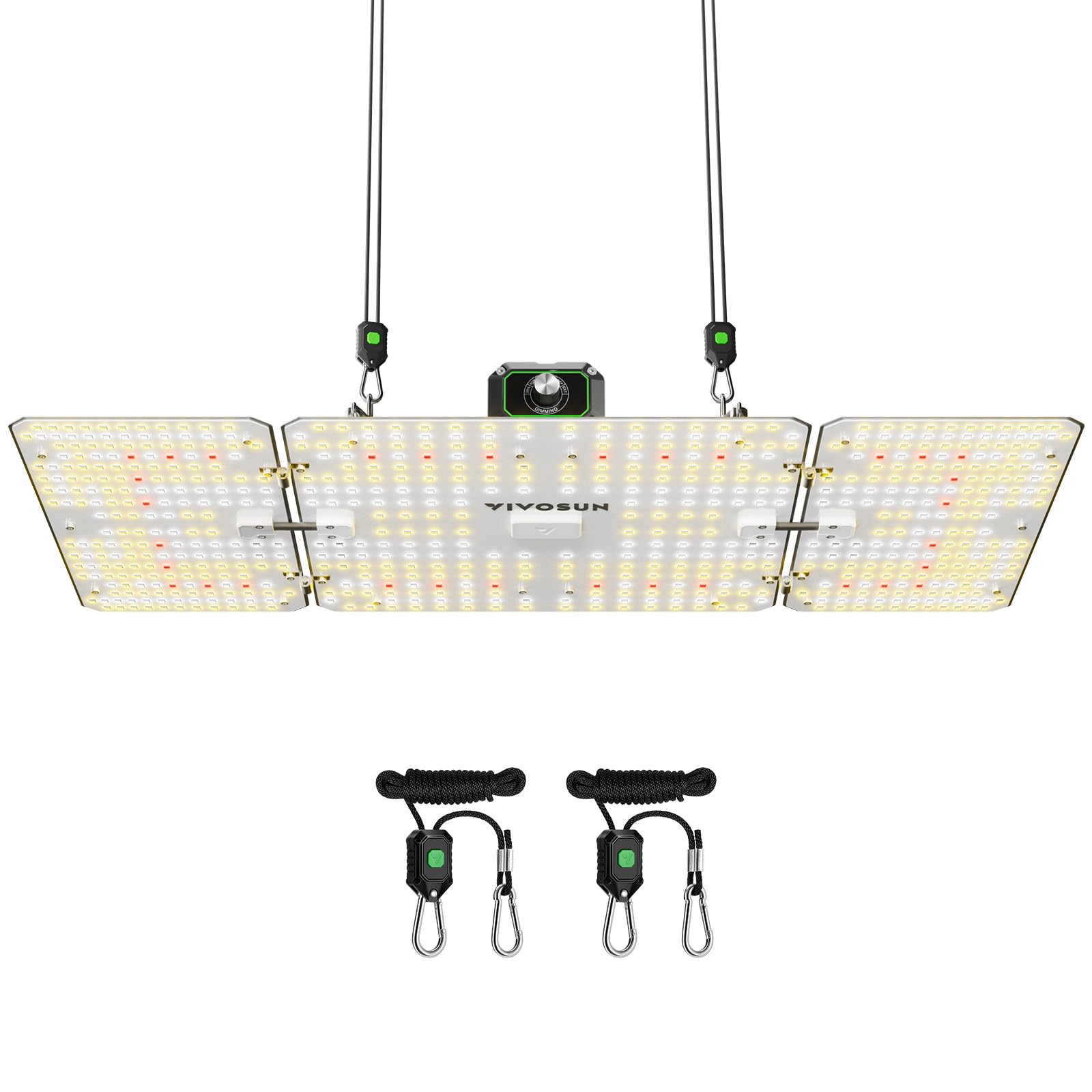
The LumaLight 200W is VIVOSUN’s answer to the mid-power full-tent panel, drawing a true 200W while covering a 2×4 foot flowering area or a 3×3 foot veg zone. The spectrum includes 3000K white, 5000K white, 660nm deep red, and 730nm far-red — the same four-channel recipe used in higher-end fixtures. What sets this unit apart is the IP65 dust and water resistance rating, meaning you can safely spray foliar feeds or mist plants in high-humidity environments without worrying about moisture damage to the electronics.
The 4-level dimming knob lets you run at 25%, 50%, 75%, or 100% power. When paired with the VIVOSUN GrowHub (sold separately), you get full mobile app control for scheduling, dimming, and real-time monitoring. The 23.5 x 11.8-inch panel is a direct fit for standard 2×4 tents, and the included rope hangers make raising and lowering simple. Users report that the light is extremely bright — even 25% power can cover a single 10×20 propagation tray with strong PPFD.
Several owners mention that the power connection to the driver feels flimsy; any movement can cut the light temporarily. The panel also raises tent temperature noticeably, so good ventilation is non-negotiable. With a 2-year unlimited warranty and a Q90 lifespan rated at 36,000 hours, this panel is built for years of service. It is a premium pick for the app-controlled smart-grower.
What works
- IP65 waterproof — safe for high-humidity spray environments
- App-compatible for remote scheduling and dimming
- Real 200W draw with 660nm + 730nm deep red spikes
- Long 36,000-hour Q90 lifespan
What doesn’t
- Power connection to driver is fragile — movement can cut light
- Raises tent temperature noticeably
- Overpowered for small shelves — best suited for 2×4 tents
4. Grow Light with Stand and Timer 36W
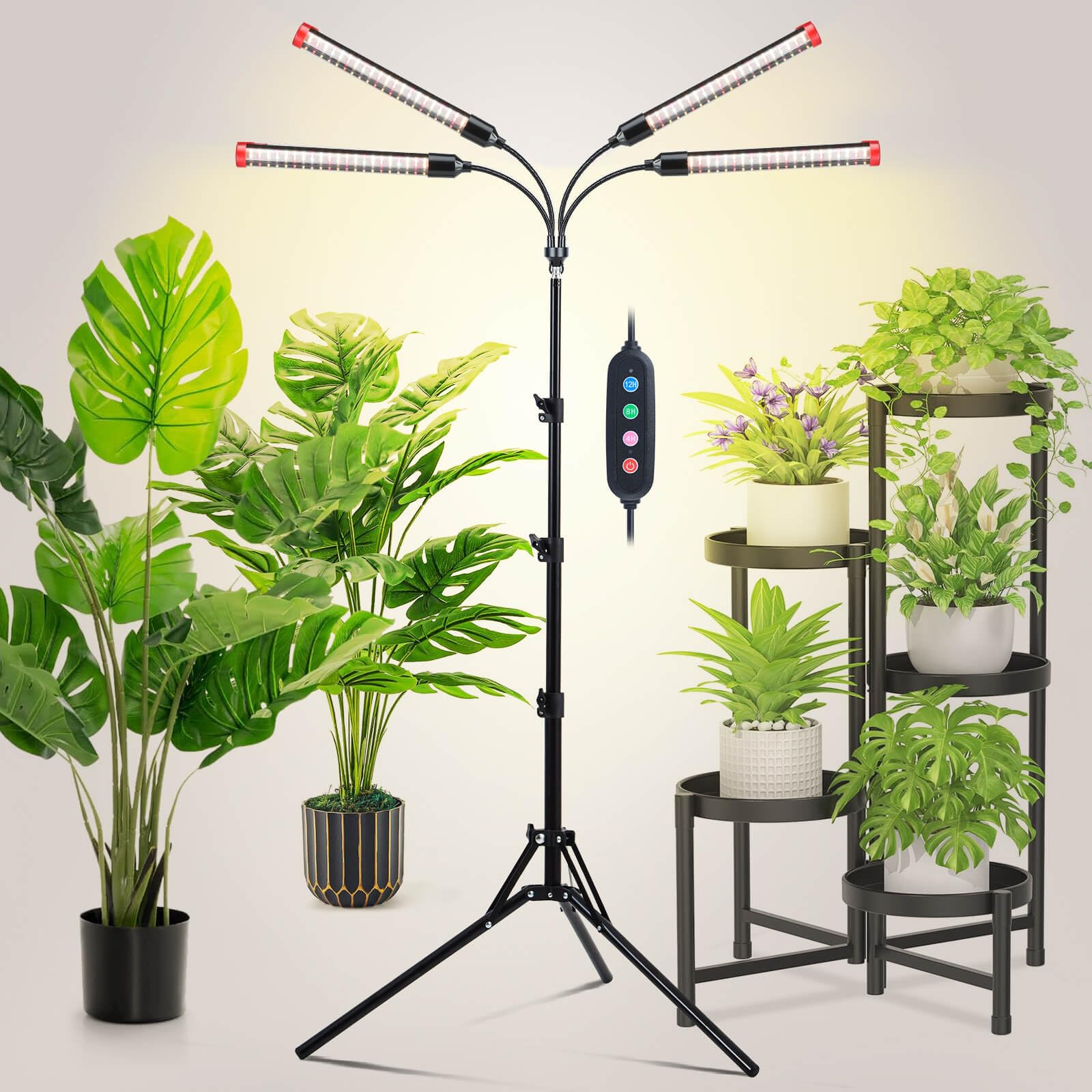
This floor-lamp-style grow light brings a 36W LED bar with 1000 lumens per bar and a 60-degree spotlight lens to focus light downward onto single plants or dense seedling trays. The tripod stand adjusts from 24 to 64 inches, which means you can start it low over a propagation tray and raise it as plants stretch toward the light. The 42 high-quality LEDs produce a natural-looking full spectrum that reviewers confirm kept seedlings alive through cold snaps and low-light winter garages.
The built-in timer offers five settings — 4, 8, 12, 16, and 20 hours — plus a combination mode (4+12 for 16H, 8+12 for 20H). This is a genuine set-and-forget system: once you dial in the hours, the light cycles every 24 hours without intervention. Each head is mounted on a 360-degree gooseneck, letting you pinpoint light exactly where it is needed without moving the whole stand. The base is metal, providing stability at full extension.
A few owners note that after a couple of years one head can dislodge slightly from the main bar, though the light continues functioning. The 60-degree beam is ideal for focused spotlighting but less effective for wide-area canopy coverage. For a budget-friendly tripod that can handle bonsai, tall houseplants, or seed-starting on a versatile stand, this light over-delivers for its cost.
What works
- 24-64 inch adjustable tripod fits plants of all heights
- 360-degree goosenecks for precise light positioning
- 20-hour max timer with set-and-forget cycling
- Plugged directly into wall — no adapter needed
What doesn’t
- 60° spotlight is narrow — weak for wide shelf coverage
- Heads may loosen from the main frame over extended use
- No dimming feature — only timer control
5. SANSI Dual-Gooseneck 300W

The SANSI 20W clip-on light uses a replaceable E26-based PAR20 bulb, meaning if the LEDs eventually fade, you swap the bulb without throwing away the entire fixture — SANSI backs this with a lifetime free bulb replacement policy. The 300W-equivalent output (actual draw 20W) produces 2000 lumens of white light that spans 380nm to 800nm, covering the full photosynthetic range. The dual-gooseneck design splits into two independently adjustable heads, each with a sturdy clip lined with foam padding to protect shelf edges.
The auto-timer offers 4, 8, and 12-hour cycles based on a rolling 24-hour schedule — set it once and the light turns itself on and off daily. The goosenecks hold their position reliably, even with the bulbs at extreme angles, and users report that the light is bright enough to keep ponytail palms and desert roses healthy in dark garages. The cord length is generous for reaching distant outlets.
A clear limitation is that the clips, while strong, are designed for horizontal surfaces up to about 1.5 inches thick; thicker desktops or vertical poles may not accept them. The bulbs get hot — hot enough to burn leaves if placed closer than 6 inches, and hot enough to sting skin on contact. The timer resets to factory defaults after a power loss event, so a brief outage can throw off your schedule. For a compact, high-PPFD desktop solution with a lifetime bulb warranty, this setup is a sensible mid-range pick.
What works
- Lifetime free replacement bulbs — never buy a new fixture
- 2000 lumens from a 20W actual draw
- Strong clips hold securely on shelves and desks
- Natural white spectrum — easy on the eyes for living spaces
What doesn’t
- Bulbs get hot — can scorch leaves and skin if too close
- Timer resets after a power outage
- Clips limited to horizontal surfaces up to 1.5 inches thick
6. Wiaxulay Floor Grow Light 153 LED
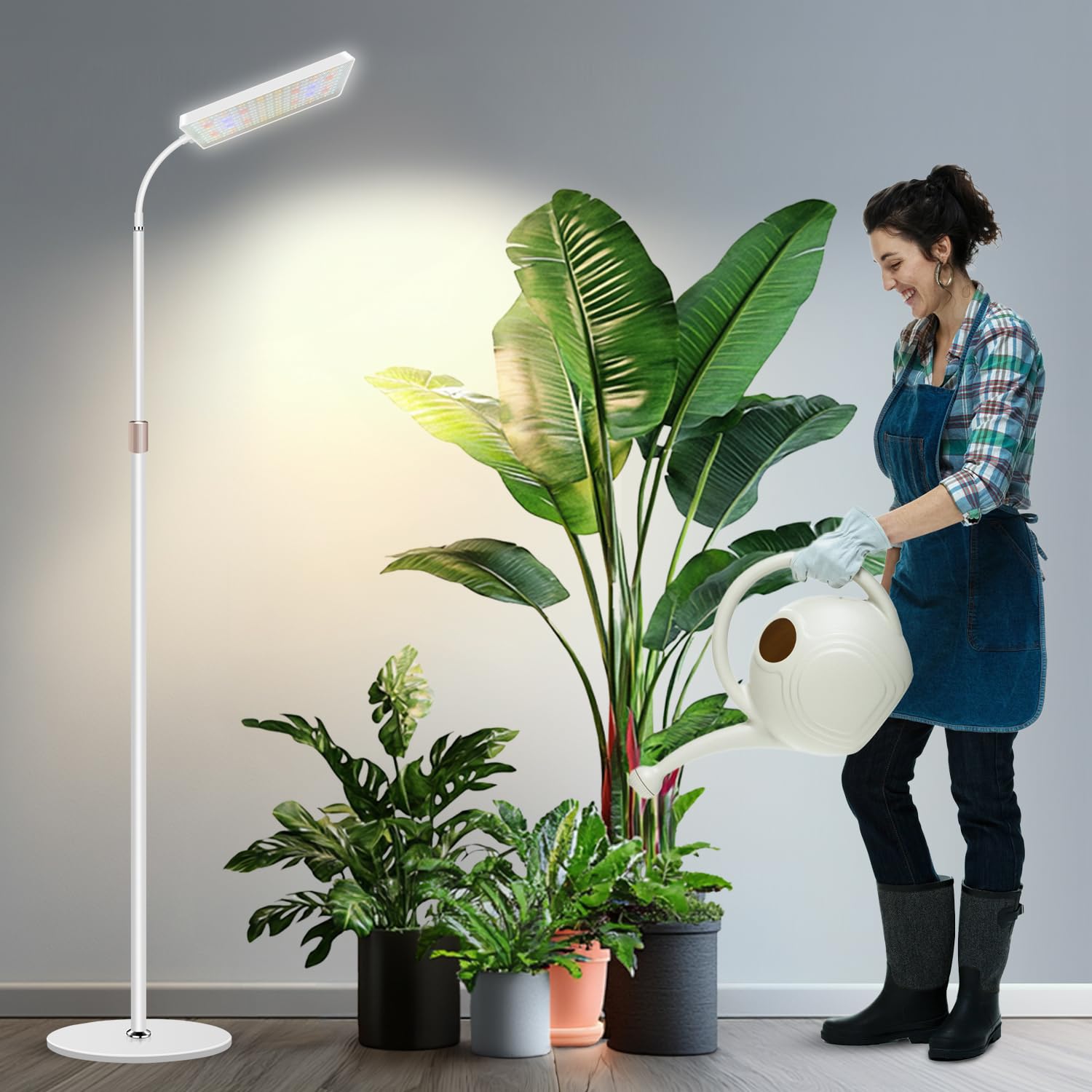
This floor-standing light uses 153 LEDs to emit wavelengths from 380nm to 800nm, covering the full PAR range. The telescopic pole adjusts from 24 to 68 inches by turning a metal ring — no disassembly required, which is far more convenient than lights with screw-collars. The 7.8-inch gooseneck at the top gives you full 360-degree articulation for directing light into a tall Fiddle Leaf Fig or onto a sprawling succulent shelf.
The controller provides three spectrum modes (white, warm white, and red+blue mixed), five brightness levels from 20% to 100%, and a timer with 4, 8, 12, and 16-hour cycles. Users report that the base is stable even at full height, the assembly takes minutes, and the thin cord is designed to avoid damaging plant stems. The remote control attaches to the pole with a clip, keeping it away from the lights so it does not interfere with the beam.
Some users note that the unit is fairly lightweight, making it possible to knock over if bumped accidentally. The telescopic mechanism, while convenient, does not feel as robust as a metal locking pin system. For the price of a budget lamp, you get a tall, dimmable fixture with a full-spectrum board — ideal for wintering large plants indoors on a garage or living-room floor.
What works
- Tool-free height adjustment by turning a metal ring
- 153 LEDs with 5 dimmable brightness levels
- Stable, low-profile base at full 68-inch extension
- Remote control clips to pole, stays accessible
What doesn’t
- Lightweight build can tip if bumped
- Telescopic mechanism less rigid than pin-lock systems
- Not suitable for wide, multi-plant canopy coverage
7. SDOVUERC Tri-Heads Pack of 2
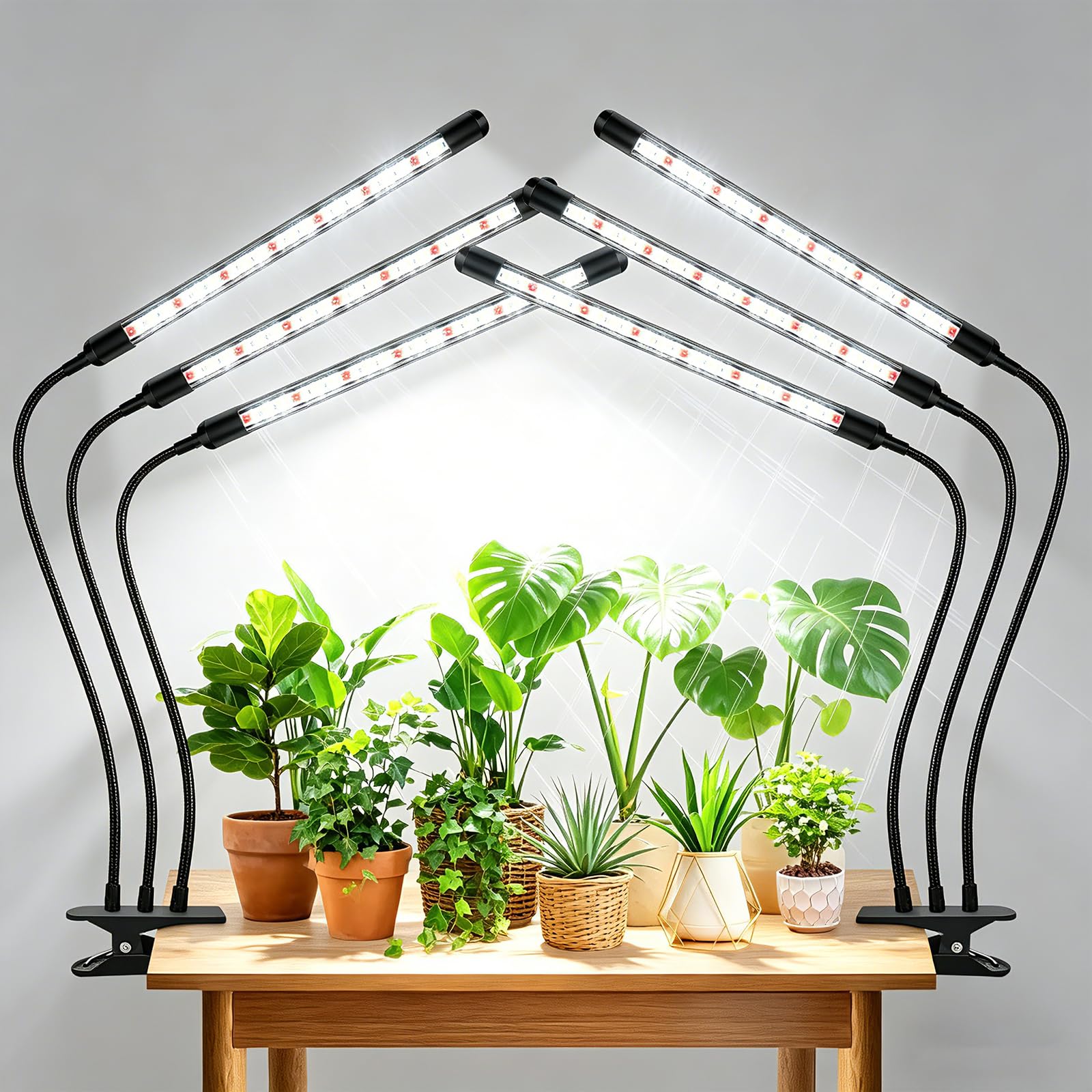
This two-pack of tri-head clip lights gives you six total heads for a multi-shelf grow rack. Each head delivers a 15W output with three selectable spectrum modes: 6000K cool white, 6000K plus 660nm deep red, and a full-spectrum blend. The 660nm red spike is particularly useful for flowering-stage supplements in small propagation tents or wire shelves where space is tight. The V-shaped head design spreads the beam wider than a standard round fixture, covering more shelf area per unit.
The timer offers 6, 12, and 18-hour settings with a memory function — this is critical: the light remembers your last setting even after unplugging, so a power flicker does not reset your photoperiod. The 18-hour timer is ideal for seedlings and vegetative clones that need long day length. The clamp is lined with foam padding to prevent slipping and protect shelf paint, and the 360-degree gooseneck allows precise positioning.
Reviewers found the lights effective for starting seedlings, though the goosenecks can be awkward to bend and maintain angle on certain shelf frames. The 15W per head is modest — expect strong results at 6-12 inches, but diminished PPFD beyond 18 inches. For a low-cost, multi-head kit with timer memory and deep-red supplementation, this pack covers a lot of ground for small-space growers.
What works
- Two-pack gives six heads for multi-shelf coverage
- Timer memory holds settings through power interruptions
- V-shaped design spreads light wider than standard round heads
- Foam-padded clamp protects shelf surfaces
What doesn’t
- Goosenecks can be stiff to bend and hold position
- 15W per head — PPFD drops fast beyond 18 inches
- Not suitable as a primary flowering light for larger areas
Hardware & Specs Guide
PPFD and Photosynthetic Photon Flux Density
PPFD measures how many photons in the PAR range hit each square meter per second. A PPFD map showing at least 500 µmol/m²/s across the canopy center is needed for flowering crops. For seedlings and clones, 100-200 µmol/m²/s is sufficient. Always check the manufacturer’s PPFD grid, not the center point — edge drop-off reveals a light’s real coverage.
Red 660nm vs. Far-Red 730nm
660nm red light triggers photosynthesis directly and is the primary driver of flowering biomass. 730nm far-red light contributes to the Emerson enhancement effect, boosting photosynthetic efficiency in the upper canopy, and also influences phytochrome-mediated responses like stem elongation and flowering timing in photoperiod-sensitive plants. A light that includes both wavelengths delivers superior flower density.
FAQ
Is 6500K or 3000K better for my plants?
What does 660nm deep red actually do for flowering?
Why do some grow lights look pink but others look white?
Can I use a regular white LED bulb for growing plants?
Final Thoughts: The Verdict
For most gardeners, the color light for plants winner is the VIPARSPECTRA XS1500 Pro because it combines a proven full spectrum with optical-lens PPFD uniformity at a fair price for a 150W panel. If you want inter-canopy penetration to fatten lower buds, grab the AC Infinity IONBEAM S16. And for a smart, app-controlled panel that shrugs off high humidity, nothing beats the VIVOSUN LumaLight 200W.