
A sagging cucumber vine or a fallen pea plant isn’t just an eyesore — it’s a direct hit on your harvest. Climbing vegetables need a structure that lets them grow upward, improving airflow and sunlight exposure while keeping fruit off the wet soil where rot sets in. The challenge is cutting through the noise of mesh rolls, folding A-frames, and natural bamboo to find the support that actually holds up under a full season’s weight.
I’m Rikta — the co-founder and writer behind Lawn Gear Lab. I spend my time comparing structural specs, studying plant support load tolerances, and analyzing aggregated owner feedback from thousands of gardeners to identify which trellis systems deliver season after season.
Whether you are tending a raised bed, a row garden, or a greenhouse setup, the right trellis transforms your yield. This guide breaks down the specific materials, aperture sizes, and assembly requirements you need to know before buying a climbing vegetable trellis that works with your space and your plants.
How To Choose The Best Climbing Vegetable Trellis
Buying a trellis is rarely a one-size-fits-all decision. The ideal support for a heavy indeterminate tomato plant differs from what a delicate pea vine needs. Focus on three factors: material durability, mesh or grid spacing, and the physical footprint in your garden.
Material Matters: Longevity vs. Weight
Powder-coated steel and PVC-coated steel are the benchmarks for weather resistance and load capacity. They won’t rot or degrade over multiple seasons but add weight and cost. HDPE or polypropylene netting is lightweight and affordable, making it easy to cut and replace, though UV exposure eventually weakens all plastics. Bamboo offers a biodegradable, aesthetic option but requires deeper anchorage and rarely lasts beyond a couple of years in wet climates.
Mesh Size and Access
Most general-purpose trellis netting uses a 6-inch square mesh. This is wide enough to slide your hand through for harvesting and pruning but narrow enough to support cucumber tendrils and bean vines. Small-mesh nets (under 4 inches) snag leaves and make removal difficult. Extremely large openings (over 8 inches) allow heavy fruit to fall through or create gaps that side branches slip out of. Stick to 6-inch squares unless you are training a specific crop like melons that need wider rungs.
Height and Footprint
Cucumbers and pole beans need 5 to 6 feet of vertical space. Peas require 3 to 4 feet. A-frame trellises typically max out around 4 feet but offer a dense footprint for raised beds. Netting rolls let you span long rows but need a sturdy frame of stakes or PVC pipes to hold the tension. Measure your planting area’s width and the mature height of your chosen crop before deciding on a style — a trellis that is too short leaves vines sprawling on the ground, defeating the purpose.
Quick Comparison
On smaller screens, swipe sideways to see the full table.
| Model | Category | Best For | Key Spec | Amazon |
|---|---|---|---|---|
| Gardener’s Supply Lifetime Tomato Cages | Premium Steel Cage | Heavy tomato & pepper plants | 14″ square x 39″ H, 8″ grid | Amazon |
| Gardener’s Supply Expandable Pea Trellis | Expandable Steel Panel | Long rows of peas & beans | 9′-8″ L x 37″ H, 8″ grid | Amazon |
| DoCred 2-Pack A-Frame Trellis | PVC-Coated Steel | Compact raised beds | 15.75″ W x 39.37″ H per unit | Amazon |
| Toriexon A-Frame Cucumber Trellis | Powder-Coated Steel | Versatile A-frame with accessories | 48″ L x 34″ W, 1 pack | Amazon |
| Taoskai 5-Pack Bamboo Trellis | Natural Bamboo | Potted plants & small garden beds | 47.3″ H, 12″ W top aperture | Amazon |
| ATICCA Trellis Netting 47″x328′ | PE Mesh Roll | Budget bulk coverage | 47″ H, 6″ mesh, 328′ roll | Amazon |
| Toolazy Trellis Netting 59″x328′ | HDPE Mesh Roll | High volume & tall crops | 59″ H, 6″ mesh, 328′ roll | Amazon |
In‑Depth Reviews
1. Gardener’s Supply Company Lifetime Tomato Cages (Set of 4)
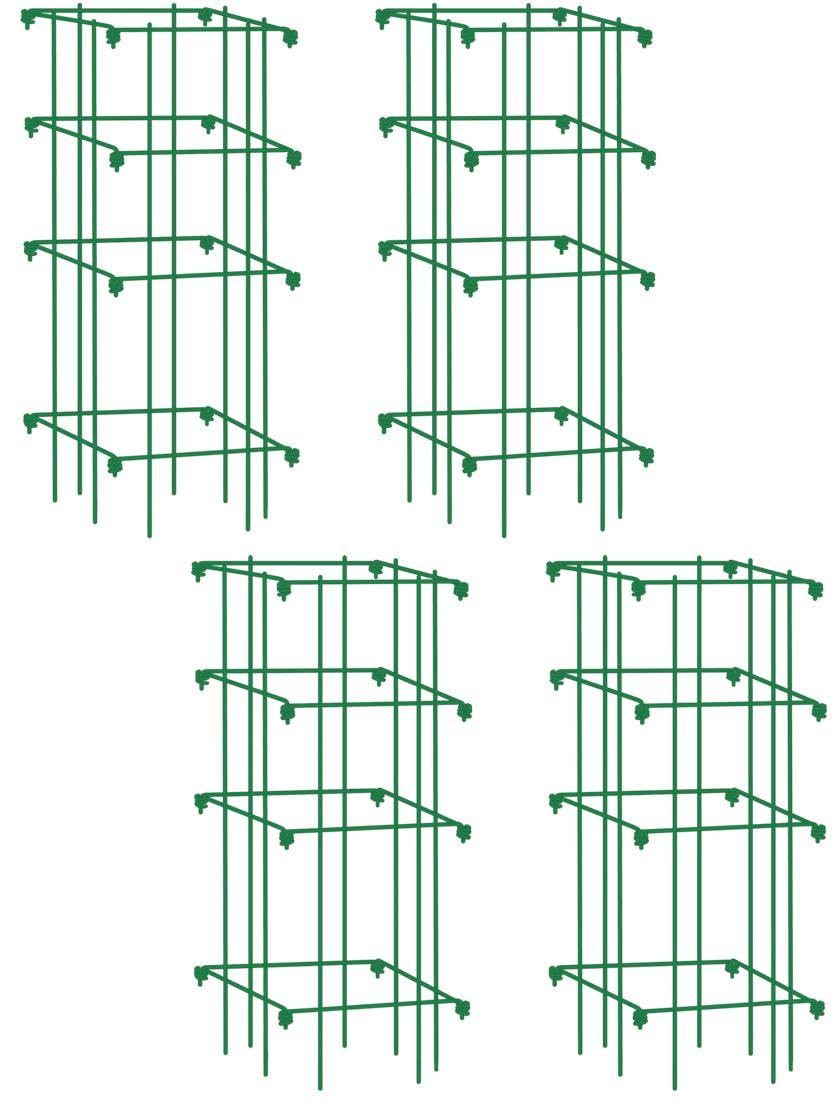
This cage system represents the gold standard for heavy indeterminate tomato plants. The 14-inch square base is substantially wider than cone-style cages, giving roots room to spread while the 39-inch overall height (32 inches installed after pushing the 7-inch legs into soil) handles full-grown vines loaded with ripe fruit. The 8-inch grid spacing is generous enough to reach through for harvesting without snagging trusses.
Built from heavy-gauge powder-coated steel, these cages laugh at wind storms and support plants over 5 feet tall without bending — a claim few competing cages can make. The set of four is perfect for a modest raised bed or a container garden with determinate varieties.
On the downside, the 7-inch legs are short for loose or sandy soil; staking the base is recommended in exposed areas to prevent the cage from tipping under heavy fruit weight. The initial unfolding can be stiff — some users needed pliers to bend the hinge tabs for smoother operation. Despite these minor setup quirks, the long-term durability is unmatched.
What works
- Heavy-gauge powder-coated steel resists rust after multiple seasons of exposure.
- Wide 14-inch square base provides far better stability than conical cages.
- Hinged panels fold flat for compact off-season storage.
What doesn’t
- Short 7-inch legs may need additional staking in loose or sandy garden beds.
- Initial hinge assembly can be stiff and may require manual bending for smooth operation.
2. Gardener’s Supply Company Sturdy Expandable Tall Pea Trellis
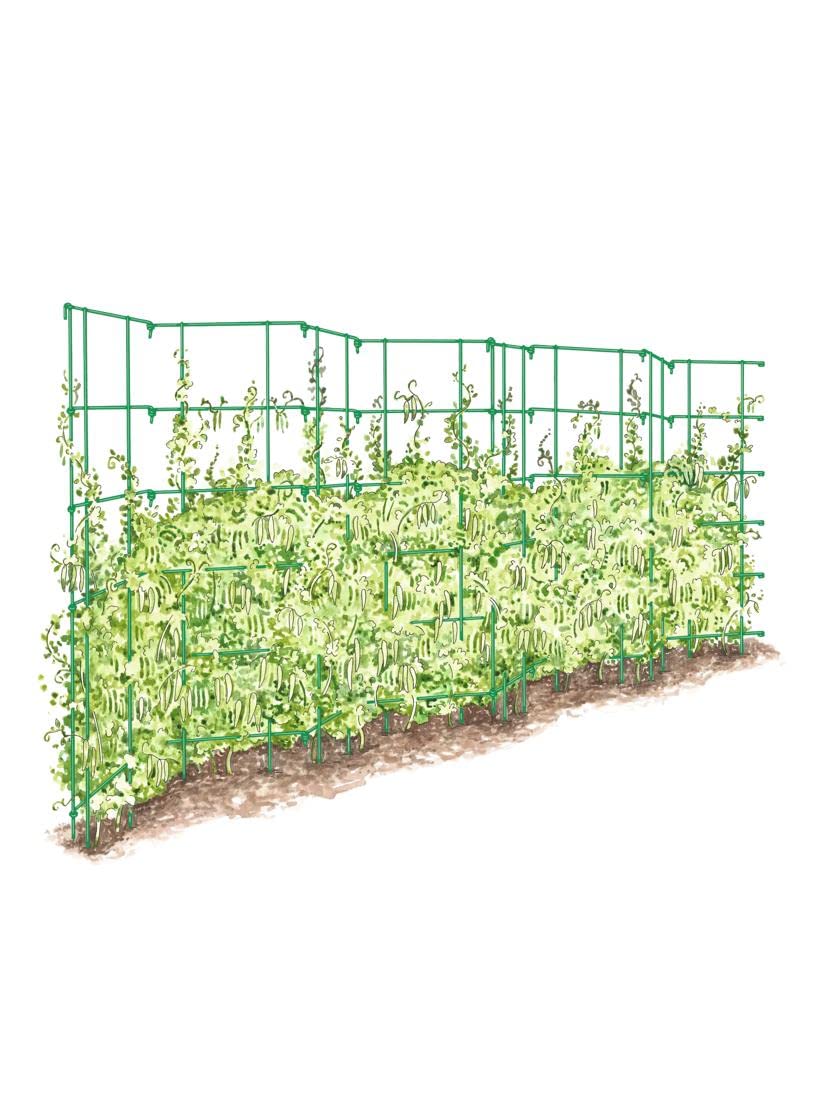
If you grow peas in long rows, this expandable trellis from Gardener’s Supply is the most efficient solution available. Eight hinged powder-coated steel panels zig-zag open to a total length of 9 feet 8 inches with an installed height of 37 inches — ideal for shelling peas, snow peas, and even light cucumber varieties. The 8-inch grid spacing is wide enough to harvest easily but narrow enough to support tendrils.
Setup is genuinely tool-free: you simply unfold it, zig-zag the panels through your row, and push the legs into the soil. The steel frame withstands strong winds without collapsing, and multiple owners report it surviving summer storms that flattened cheaper netting. The entire structure folds flat for storage, and the panels can be separated to use individually in raised beds if you need smaller sections.
The primary limitation is height. At 37 inches, this trellis works perfectly for peas and bush beans but is too short for pole beans or full-size cucumbers that reach 6 feet or more. Some reviewers note that heavy tomato vines cause the frame to sag, so stick to lighter vining crops for best results. The lack of included stakes means you should add one at each end in windy areas.
What works
- Tool-free assembly — unfolds and pushes directly into soil in minutes.
- 8-inch grid spacing allows easy hand access for harvesting and pruning.
- Powder-coated steel frame resists rust and remains rigid through multiple seasons.
What doesn’t
- Maximum height of 37 inches is insufficient for pole beans or tall cucumber varieties.
- No stakes included; additional anchoring needed in windy locations.
3. DoCred 2-Pack Foldable A Frame Trellis

This two-pack of A-frame trellises from DoCred is a strong mid-range contender for raised bed gardeners. Each unit measures 15.75 inches wide by 39.37 inches tall, and combining both units creates a 31.5-inch wide support — a perfect fit for a standard 3-foot raised bed. The PVC coating over steel prevents rust while blending visually into the garden, and the A-frame shape allows planting on both sides.
Assembly requires no tools: each trellis unfolds in seconds and sticks into the soil with its leg posts. The kit includes plant support clips, twist ties, and plastic ties, so you have everything needed to secure vines immediately. Owners consistently praise the sturdiness for cucumbers, squash, and peas, with several reporting no rust or fading after a full season of outdoor exposure.
The main drawback is the 39.37-inch height. While this is adequate for bush cucumbers and determinate peas, pole beans and vining tomatoes will quickly outgrow the support. The individual width of 15.75 inches is also narrow, meaning you need both units combined to cover even a small bed effectively. The included ties are functional but not heavy-duty enough for thick tomato stems.
What works
- PVC-coated steel resists rust and remains sturdy through wet seasons.
- Comes with a generous pack of clips, ties, and plant bags for immediate setup.
- A-frame design lets you grow on both sides, maximizing raised bed space.
What doesn’t
- Height under 40 inches limits use to shorter vine crops only.
- Individual units are narrow; most beds need both combined for adequate coverage.
4. Toriexon Foldable Cucumber Trellis A-Frame

The Toriexon A-Frame trellis offers a generous 48-inch length and 34-inch width, making it one of the larger foldable steel options available. The green powder coating is specifically designed to resist rust and chipping, with owners in Oregon reporting no visible degradation after two years of continuous outdoor exposure. The A-frame geometry provides excellent stability in wind, and the 48-inch height accommodates most cucumber and zucchini varieties.
Setup is intuitive: unfold the frame, push the U-stakes into the soil, and connect multiple units using the included spring connectors for extended rows. The kit includes twist ties, garden clips, and plant bags — everything needed to train vines from day one. Owners consistently note the sturdiness of the steel wire relative to budget plastic alternatives, and the ability to disassemble completely for off-season storage is a practical bonus.
The biggest complaint involves the included spring connectors, which some users find difficult to manipulate during setup, especially with cold hands. At 48 inches high, this trellis is still on the shorter side for indeterminate tomatoes, which may need additional height. The 34-inch width, while generous, means the trellis occupies a significant footprint in a small raised bed.
What works
- Powder coating holds up well against rust and chipping after multiple seasons outdoors.
- Included U-stakes and spring connectors provide solid anchoring in garden soil.
- Larger 48-inch length suits medium-row gardening better than compact A-frames.
What doesn’t
- Spring connectors can be finicky to install, especially in cooler conditions.
- 48-inch height is adequate for cucumbers but too short for pole beans or vining tomatoes.
5. Taoskai 5 Pack 4 Feet U-Shape Bamboo Trellis

For gardeners who prefer natural materials or a rustic aesthetic, this five-pack of U-shaped bamboo trellises from Taoskai is a compelling option. Each trellis stands 47.3 inches tall with a top width of 12 inches and a bottom width of 9.45 inches. The bamboo is fumigated during production to resist cracking and mold, which is a common failure point in untreated bamboo supports. The U-shape is ideal for single tomato cages or small clusters of pole beans.
The renewable, biodegradable material appeals to organic growers who want to minimize plastic in their garden. Owners consistently praise the sturdiness for cucumbers and blackberries, noting that the natural material blends seamlessly into the garden. The five-pack provides good value for covering a small raised bed or container garden, and the lightweight construction makes repositioning easy as plants grow.
The primary trade-off is longevity. Bamboo is a natural fiber and will eventually break down, especially in consistently wet soil. Owners report needing to push the legs deeper than expected for stability in loose soil, and the 12-inch top width limits the support area for spreading vines. The handmade nature means minor measurement variations between units, which can affect alignment in neat garden layouts.
What works
- Natural bamboo is renewable and fully biodegradable, appealing to organic gardeners.
- Pre-treated to resist cracking and mold during humid growing conditions.
- U-shape design provides two-sided support for compact vine setups.
What doesn’t
- Bamboo will degrade over time, especially in wet soil; not a multi-decade solution.
- Requires deeper burial than expected for stability in loose or sandy garden beds.
6. ATICCA Plastic Trellis Netting 47″ x 328 ft
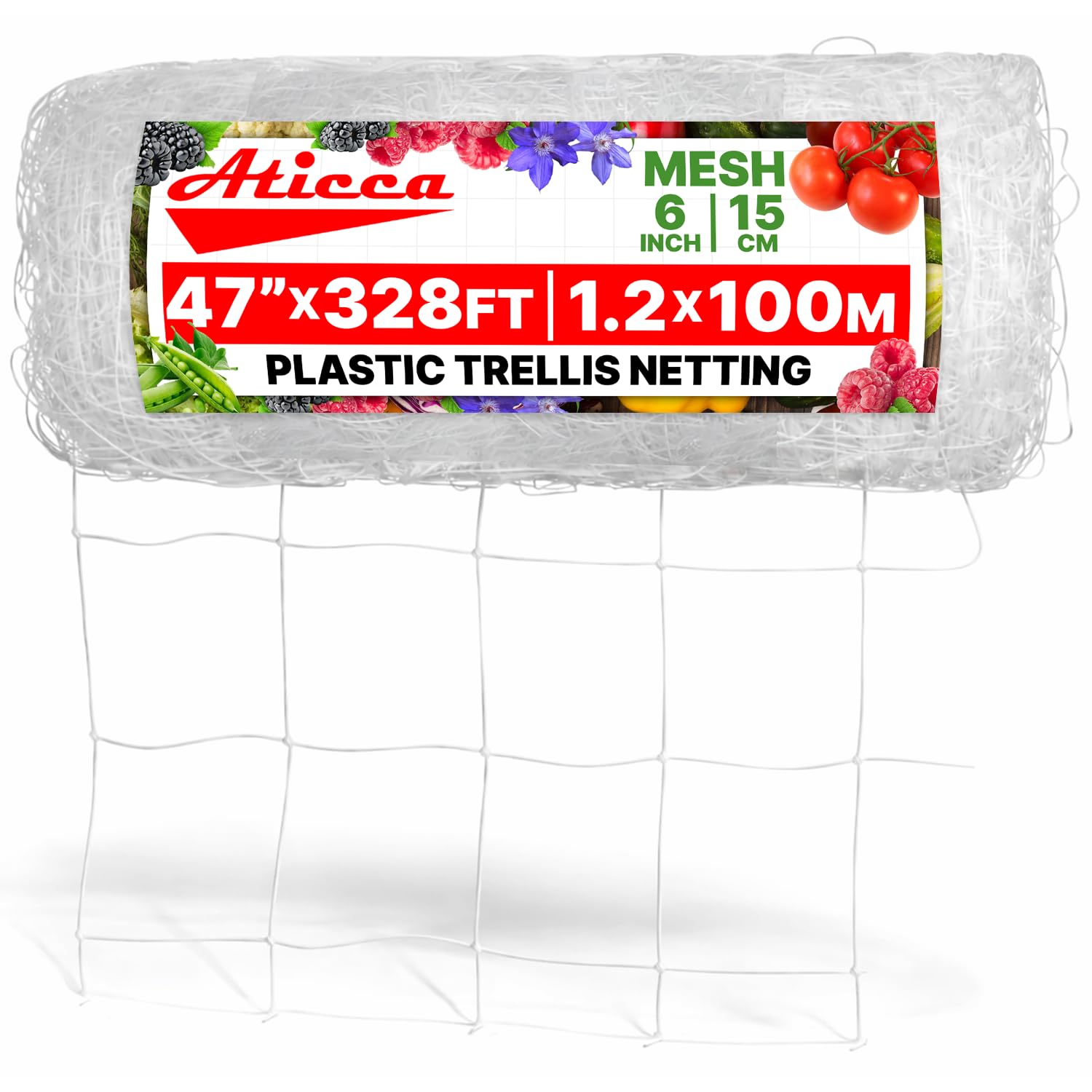
When you need to cover a large area on a budget, the ATICCA netting roll delivers massive coverage at a low per-foot cost. The 47-inch height by 328-foot roll provides over 1,200 square feet of support, and the 6-inch mesh size is the standard sweet spot for cucumbers, peas, beans, and even winter squash. Made from polyethylene, the netting is UV-resistant enough to last a full growing season and often longer if properly stored.
Installation is straightforward: cut the netting to length with scissors, attach it to a frame of stakes or PVC pipes using zip ties or garden clips, and train your vines. The white color reflects light onto the lower leaves, improving photosynthesis in dense plantings. Owners particularly like the strength of the material for heavier crops like winter squash, which would collapse thinner netting.
The biggest limitation is the need for a supporting structure. This netting has no inherent rigidity — it requires stakes, a fence, or a frame to hold it taut. The 47-inch height is also on the shorter side, meaning tall vining tomatoes or pole beans may outgrow it mid-season. Some owners note that the netting can sag under heavy fruit loads if not tensioned properly during installation.
What works
- Extremely low per-foot cost when covering long rows or multiple beds.
- UV-resistant polyethylene holds up through a full season of outdoor exposure.
- 6-inch mesh size is versatile for peas, beans, cucumbers, and squash.
What doesn’t
- Requires a separate support frame; it has no rigidity on its own.
- 47-inch height is insufficient for pole beans or vining tomatoes that reach 6 feet.
7. Toolazy Trellis Netting 59″ x 328′ Heavy Duty

The Toolazy netting roll stands a full 59 inches tall, making it one of the taller mesh options available. This extra height accommodates cucumbers, pole beans, and even shorter indeterminate tomatoes without the vines hanging over the top. The 328-foot length covers over 1,600 square feet of trellis area, and the 6-inch HDPE mesh is UV-stabilized to resist sun damage across multiple seasons.
The HDPE material is noticeably stronger than standard polyethylene netting. Owners report reusing the same roll for two full seasons with no sagging or UV degradation, even in direct sun. The white color stays bright, and the mesh cuts cleanly with scissors without fraying. It works horizontally as a SCROG net in grow tents, vertically on fence lines, or draped over A-frame structures.
The trade-off is that, like all netting rolls, it needs a sturdy frame to hold tension. The 59-inch height also means you need taller stakes or posts — typically 6-foot steel T-posts or EMT conduit — to keep the netting taut. Some users find the roll packaging tight, requiring patience to unroll without tangling. The 5% size variation typical of thermoplastic products means you might get slightly less than 328 feet.
What works
- 59-inch height is tall enough to support pole beans and vining tomatoes effectively.
- UV-stabilized HDPE lasts multiple seasons without visible degradation from sun exposure.
- Cuts cleanly with scissors and does not fray or unravel at cut edges.
What doesn’t
- Requires a separate support structure; not a standalone solution.
- Roll packaging can be tight, requiring careful unrolling to avoid tangling.
Hardware & Specs Guide
Mesh Aperture & Grid Spacing
The width of the netting openings directly affects how easily vines climb and how accessible the fruit is for harvesting. A 6-inch square mesh is the universal standard for climbing vegetables because it is wide enough to slide a hand through for picking but narrow enough for tendrils and side branches to grip. Smaller mesh (under 4 inches) tends to trap leaves and make removal difficult at the end of the season. Larger openings (8 inches or more) work fine for tomatoes but may allow smaller pea vines or heavy squash to slip through gaps. Always match the aperture size to the mature leaf and fruit size of your primary crop.
Material Composition & Weather Resistance
Three materials dominate the trellis market, each with a distinct lifespan. Powder-coated or PVC-coated steel is the most durable, surviving 5-10+ years with no rust if the coating remains intact. HDPE and polypropylene netting are UV-stabilized to resist sunlight degradation for 1-3 seasons before becoming brittle. Bamboo is biodegradable and typically lasts 1-2 seasons in wet climates before cracking or rotting. For permanent garden beds, invest in coated steel. For temporary or annual crops, netting offers the best value. Bamboo is best for gardeners who prioritize sustainability and are willing to replace supports regularly.
FAQ
What mesh size works best for cucumbers and beans?
Can I use a trellis netting roll without a wooden frame?
How tall should a trellis be for pole beans?
Final Thoughts: The Verdict
For most gardeners, the climbing vegetable trellis winner is the Gardener’s Supply Company Lifetime Tomato Cages because the heavy-gauge powder-coated steel, wide 14-inch base, and 39-inch height provide unmatched long-term durability and stability for heavy vines. If you need an economical solution for long rows, grab the Toolazy Trellis Netting 59″x328′ for its tall 59-inch height and multi-season HDPE construction. And for a compact raised bed with medium-height crops, the DoCred 2-Pack A-Frame Trellis delivers pvc-coated strength with a full accessory kit at a mid-range price point.