
Specs are compiled from manufacturer listings and verified buyer reviews and can change over time — please confirm the key details on the product page before buying.
Filling a raised bed with bagged soil feels like a guessing game — you want rich, living dirt that feeds your plants, but many bags are mostly wood chips, twigs, and filler. The right bulk raised bed soil gives your vegetables and flowers a deep, nutrient-packed root zone from the start, so you are not fighting weak growth or scrambling for fertilizer weeks later.
I’m Rikta — the founder and writer behind Lawn Gear Lab. This guide is built by comparing the manufacturers’ published specifications and the patterns across verified customer reviews, so you get each pick’s real strengths and trade-offs instead of marketing spin.
Each of these three soil mixes takes a different approach to the same job: filling your raised beds with something plants will thrive in. Whether you prioritize organic ingredients, worm-casting enrichment, or plain value in a bulk bag, the bulk raised bed soil that fits your garden is on this short list.
Our Picks at a Glance
How To Choose The Best Bulk Raised Bed Soil
A raised bed is a closed system — the soil you pour in is all your plants have to work with for the whole season. Picking the right mix means understanding what each bag actually contains and how it will behave after a few weeks of watering.
Organic Matter vs. Fill Material
The biggest hidden difference between soil bags is what fraction is real soil versus composted wood. Some products marketed as “topsoil” can be half wood chips and twigs. For a raised bed, you want a high proportion of organic compost, peat, or loam — material that holds moisture and nutrients, not just takes up volume.
Worm Castings and Living Ingredients
A few mixes include worm castings (the nutrient-rich waste worms produce) or even worm eggs. Castings add a slow-release nutrient boost and beneficial microbes. If the bag contains eggs, you may get live worms tunneling through your bed over time, naturally improving drainage and aeration. This is a bonus, not a necessity, but it can turn a one-time fill into a self-maintaining soil.
Bag Volume vs. Actual Weight
Soil volume is measured in cubic feet, but the weight tells you about density and moisture content. A 1.5-cubic-foot bag can weigh anywhere from 20 to 50 pounds depending on how much sand or compressed peat is inside. Denser soil usually holds together better and resists settling, but it is heavier to move. Match the bag weight to how far you have to carry it from the car to your garden beds.
Quick Comparison
| Model | Best For | Volume | Weight | Key Ingredient | Amazon |
|---|---|---|---|---|---|
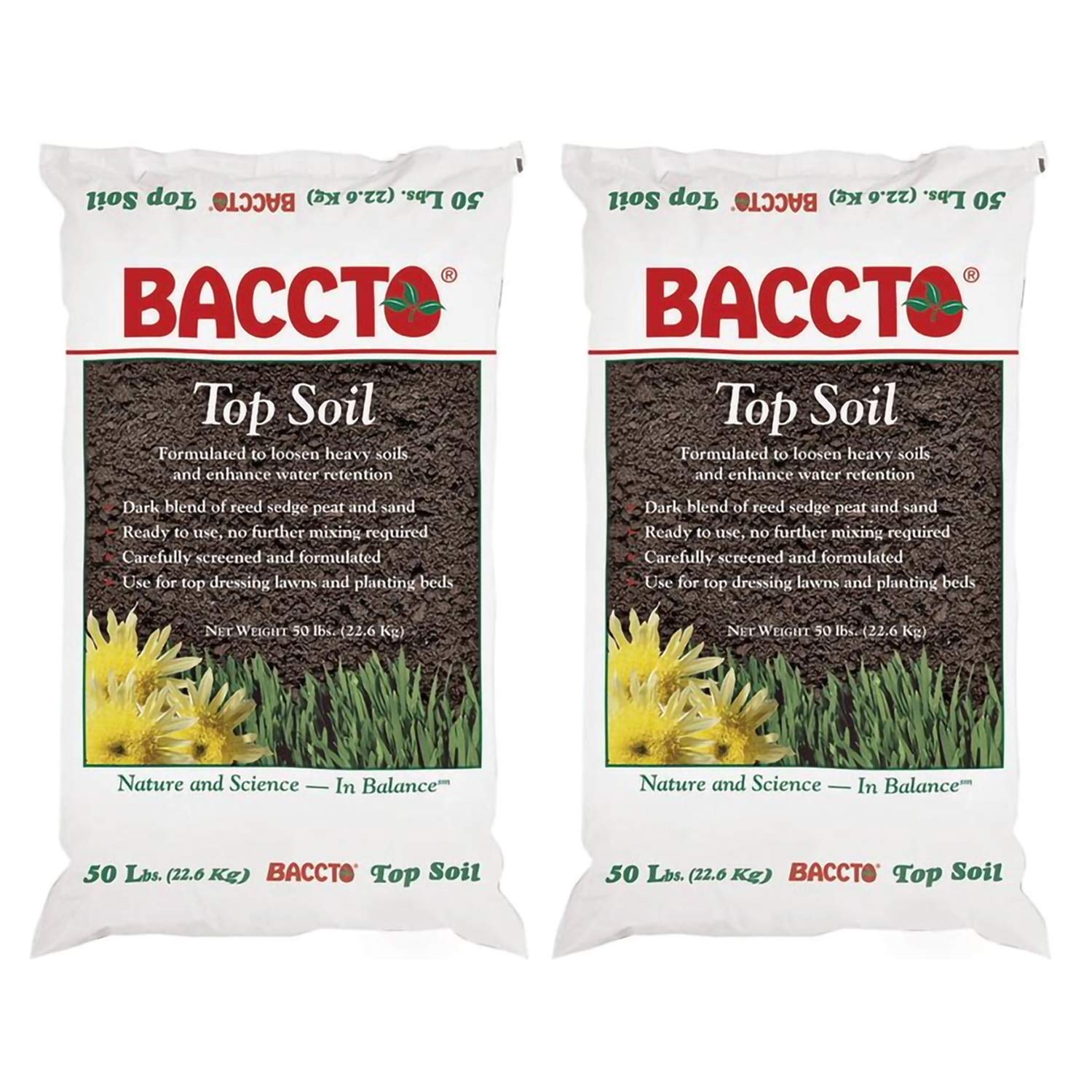
| Michigan Peat Baccto Top Soil★ Best Overall | Budget-friendly bulk fill | 1122 Cubic Inches (2 Pack) | 50 lbs each | Reed sedge peat & sand | Amazon |
| Espoma Organic Raised Bed Mix | Premium organic raised beds | 1.5 Cubic Feet | — | Myco-tone & worm castings | Amazon |
| Wiggle Worm Raised Bed Mix | Living soil & strong transplants | 640 Fluid Ounces | 40 lbs | Worm castings & eggs | Amazon |
In‑Depth Reviews
1. Michigan Peat Baccto Top Soil
Our pick — over 4★ from 300+ verified ratings; the strongest balance of quality and price.
A 50-pound bag of classic topsoil that gives you bulk volume at a budget-friendly price.
This is the no-frills option — a 2-count pack of 50-pound bags filled with reed sedge peat and sand. Michigan Peat screens and formulates it to loosen heavy soil, and the peat helps the mix hold moisture and distribute water evenly to roots. It is versatile enough for top-dressing lawns, filling large planting beds, and mixing into shrub transplant holes.
One repeat buyer calls it “the best value for your money topsoil that can be bought,” noting it is darker and cleaner than many “screened” competitors. However, several customer reviews mention the soil is full of twigs and stones — one said half the bag was wood chips and rocks, making it unsuitable for growing grass or delicate plants. If you need pure, fine soil for seed-starting beds, this requires sifting. For general bulk fill in a large raised bed where you are mixing in your own compost, the price-to-volume ratio is tough to top.
Value Strengths
- 50-pound bags provide heavy volume for filling large beds
- Peat and sand blend improves drainage and moisture retention
- Repeat buyers praise its cleanliness compared to other budget topsoils
Watch Out For
- Frequent reports of twigs and stones that require sifting before planting
Grab it for: Filling deep raised beds or large garden areas where you plan to mix in your own compost and don’t mind picking out a few sticks.
Pass if: You need a refined, seed-ready soil straight from the bag — the extra debris make it frustrating for fine planting work.
2. Espoma Organic Raised Bed Mix

You get organic meals plus live fungi in one bag — a true organic head start for your raised bed.
The 1.5-cubic-foot bag is designed specifically for raised garden beds and outdoor containers, not for general lawn patching. Espoma packs it with a precise blend of natural ingredients — alfalfa meal, kelp meal, feather meal, and earthworm castings — so you get slow-release nutrition without needing to mix in separate fertilizer. The standout addition is Myco-tone, a proprietary blend of endo and ecto mycorrhizae (beneficial fungi that form a living network around plant roots, helping them absorb water and nutrients more efficiently).
Buyers consistently praise this soil’s clean, fresh smell and its ability to retain moisture without getting soggy, even in a subtropical climate. One reviewer noted that their seeds (including eggplant, herbs, and green beans) started strong and stayed healthy, with pest issues kept low. There is one common caution: a few users found the texture surprisingly light and woody, and one reported yellowing seedlings after a few weeks, suggesting you may need an extra fertilizer boost for heavy-feeding crops later in the season.
What Makes It Shine
- Rich blend of organic meals and worm castings feeds plants steadily
- Myco-tone fungi improve root uptake and soil health
- Holds moisture well without turning into mud, buyers report
One Limitation
- Some users found the soil too light and had to add fertilizer for long-term growth
Reach for this if: You want a ready-to-use organic mix with live soil biology for a new raised bed, especially for vegetables and herbs.
Look elsewhere if: You need dense, heavy topsoil for cheap bulk fill or you expect the bag to carry your plants all season without any supplements.
3. Wiggle Worm Raised Bed Mix
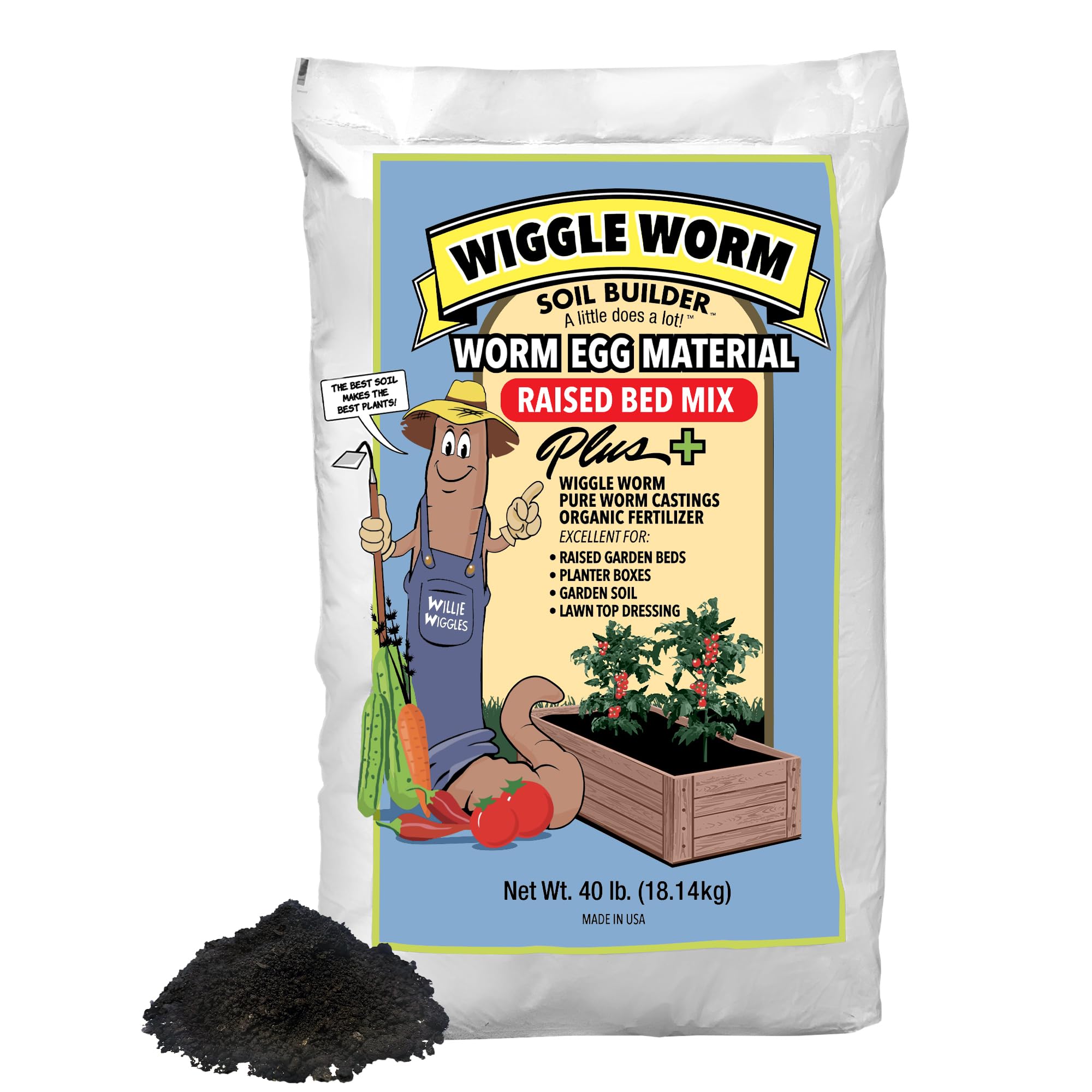
Worm eggs and castings in the bag can turn your raised bed into a self-aerating living soil system.
At 40 pounds, this bag is noticeably lighter than the Michigan Peat option (40 pounds versus the Michigan Peat’s 50-pound bags), but the difference is in the ingredients — Wiggle Worm is built around high-quality compost soil blended with worm castings (nutrient-rich worm waste) and actual worm eggs. You pour it straight from the bag into your planter box, and the worm eggs can hatch, adapt, and start tunneling. Those tunnels bring oxygen into the soil, drain excess water, and create space for roots, while the live worms produce more castings over time.
Owners mention this is the “absolute best stuff ever for moving young plants out to the garden,” with one describing how a small scoop in the planting hole made transplants “take off like wildfire.” Another reviewer noted their raised beds were full of worms the following season after using this mix. Quality complaints pop up occasionally — one user found rocks and twigs, and another had a delivery issue — but the overall rating is solid at 4.2 stars from 316 reviews.
Why It Stands Out
- Worm eggs can hatch into live worms that aerate and enrich the soil naturally
- Compost base holds moisture and feeds plants gently
- No chemicals or wood filler — pure organic material
The Trade-off
- A few buyers reported rocks and debris; you may want to sift for a fine finish
Best for transplanting: If you move seedlings from pots to raised beds and want a boost without fertilizer burn, this mix delivers.
skip it if: You expect a perfectly screened soil free of any particles — check the bag for debris before filling your whole bed.
Understanding the Specs
Organic vs. Synthetic Ingredients
An organic label means the soil contains no synthetic plant foods or chemical fertilizers. Mixes with meals (alfalfa, kelp, feather) and worm castings release nutrients slowly as microbes break them down, which is gentler on young roots than a synthetic blast. If your raised bed is for vegetables you intend to eat, organic ingredients give you confidence and steady feeding over weeks.
Mycorrhizae and Soil Biology
Mycorrhizae are beneficial fungi that attach to plant roots and act like extra root hairs, pulling water and phosphorus from the soil. A mix with added endo and ecto mycorrhizae (like Espoma’s Myco-tone) can help plants establish faster and resist drought stress. In a raised bed, where soil is contained, this living network makes a bigger difference than in open ground.
Bag Volume vs. Cubic Feet
Volume is the most direct way to compare how many bags you need for your bed size. A standard 4×8-foot raised bed that is 12 inches deep needs about 32 cubic feet of soil. A 1.5-cubic-foot bag covers roughly 0.05 of that, while a large 50-pound bag of topsoil may hold closer to 1 cubic foot depending on density. Measure your bed’s length, width, and depth in feet, then multiply for cubic feet to know exactly how many bags are required.
FAQ
How many bags of raised bed soil do I need for a standard 4×8 bed?
Can I use regular topsoil in a raised bed instead of a special mix?
What is the difference between raised bed mix and potting soil?
Will worm castings in the soil really help my plants grow?
Do worm eggs in the bag actually hatch in my garden?
Why does some raised bed soil have wood chips in it?
How long does a bag of raised bed soil last before it goes bad?
Can I mix topsoil with raised bed mix to save money?
Is organic raised bed soil worth the extra cost?
How do I know if my raised bed soil has gone bad after a season of use?
Final Thoughts: The Verdict
For most gardeners, the bulk raised bed soil winner is the Espoma Organic Raised Bed Mix because it combines organic meals, worm castings, and mycorrhizae into a single bag that gives seedlings a clean, nutrient-rich start. If you want a living soil that builds its own ecosystem with hatched worms, grab the Wiggle Worm Raised Bed Mix. And for budget-friendly bulk fill in a big bed, the standout is the volume per dollar of the Michigan Peat Baccto Top Soil.
How We Picked
We do not accept paid placement. Every pick is matched to a real buyer and a real use-case; we do not hands-on test units.
Sources & Methodology
Specifications: manufacturer listings and product documentation. Review insights: verified customer reviews, as of July 2026. Pricing: not shown on this page (it changes often); check the current price via the retailer link.
As an Amazon Associate, Lawn Gear Lab earns from qualifying purchases. This does not affect which products we feature.