
Specs are compiled from manufacturer listings and verified buyer reviews and can change over time — please confirm the key details on the product page before buying.
The bag you grab determines whether your tomatoes explode with fruit or your ferns turn yellow and sulk. The right mix must drain fast enough that roots never sit in water yet hold enough moisture between waterings so the plant doesn’t stress — and the wrong one brings gnats, mold, or a crust that water just runs off. That difference lives in the ingredients list and the bag’s weight, not the brand name on the front.
I’m Rikta — the founder and writer behind Lawn Gear Lab. This guide is built by comparing the manufacturers’ published specifications and the patterns across verified customer reviews, so you get each pick’s real strengths and trade-offs instead of marketing spin.
Whether you are repotting a monstera, filling a raised bed for tomatoes, or starting seeds for a spring garden, the right choice depends on drainage, nutrition, and texture — this guide walks through the standouts to help you confidently choose the best potting soil for your specific plants.
Our Picks at a Glance

How To Choose The Best Potting Soil
Potting soil is not just dirt from the ground — it’s a manufactured blend designed to do three things at once: drain excess water so roots don’t rot, hold just enough moisture so the plant doesn’t dry out between drinks, and supply nutrients for steady growth. A bag labeled “garden soil” is too heavy for a pot and will turn into concrete. Real potting soil stays fluffy. Before you buy, match the blend to the plant type and the pot size.
Texture and Drainage
The single biggest mistake beginners make is buying a mix that is too dense. Shake the bag in the store — if it feels heavy for its volume, it likely has too much sand or fine peat and will compact after a few waterings. Good potting soil feels light and springy because it contains perlite (white volcanic beads that create air pockets), pumice, or bark fines. For succulents and aroids (monsteras, philodendrons), you want visible chunks that let water run straight through. For moisture-loving ferns or vegetables in hot sun, you want a finer texture with coir or peat that holds water without getting soggy.
Nutrients and Feed Duration
Some mixes come “pre-loaded” with synthetic fertilizer that feeds plants for a set period — typically up to six months. Others rely on organic ingredients like compost, worm castings, kelp meal, or bone meal that release nutrients slowly as soil microbes break them down. If you are planting vegetables or heavy feeders (tomatoes, peppers), a nutrient-rich organic mix gives you a strong start without needing liquid fertilizer every week. For houseplants you repot every year, a lighter base with no added fertilizer lets you control the feeding schedule yourself.
Ingredient Quality and Organic Certifications
The phrase “organic” on a bag means the ingredients meet USDA or OMRI standards — no synthetic pesticides, no chemical fertilizers, no genetically modified materials. OMRI-listed products (like the Coast of Maine mixes) have been independently verified, which matters for edible crops. For non-edible houseplants, organic certification is less critical, but you still want a clean mix free of large sticks, weed seeds, and chemical wetting agents. Sterilized soils (like Gardenera’s) kill off fungus gnat eggs and pathogens before they reach your pot.
Quick Comparison
| Model | Best For | Volume | Key Ingredients | Feed Duration | Amazon |
|---|---|---|---|---|---|
| Miracle-Gro Potting Mix (3-Pack)★ Best Overall | General outdoor containers, value | 8 qt. (3-pack) | Peat moss, perlite, fertilizer | Up to 6 months | Amazon |
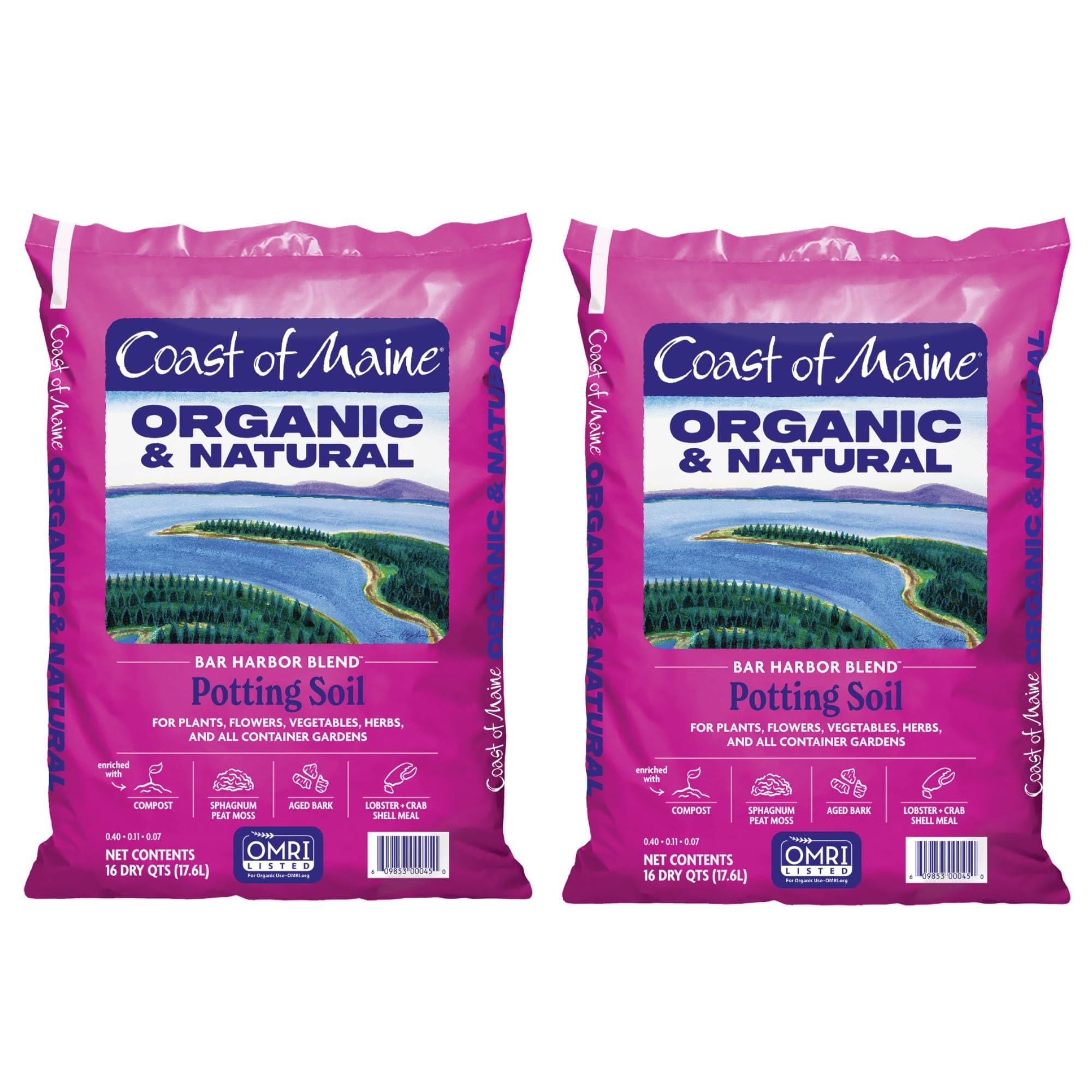
| Coast of Maine Bar Harbor BlendBest All-Purpose Organic | Premium all-purpose, organic | 16 Quarts | Peat moss, compost, perlite, lobster/crab/kelp meal | Slow-release organic | Amazon |
| Miracle-Gro Moisture Control | Outdoor container plants, beginners | 2 cu. ft. | AquaCoir formula with peat, coir, wetting agent | Up to 6 months | Amazon |
| Craft Aroid Potting Mix by Grow Queen | Monsteras, philodendrons, aroids | 4 Quarts | Fir bark, lava rock, pumice, coco coir, worm castings | Organic (amended) | Amazon |
| Midwest Hearth Premium Potting Mix | Seed starting, general indoor/outdoor | 8 Dry Quarts | Peat moss, vermiculite, perlite | None (pH controlled) | Amazon |
| Gardenera Premium Monstera Potting Soil | Monstera and aroids in small pots | 1 Quart | Peat moss, perlite, coco coir, biochar, worm castings, bark | Organic (amended) | Amazon |
| Coast of Maine Organic Tomato & Vegetable | Vegetables, tomatoes, in-ground or containers | 20 Quarts | Composted manure, sphagnum peat moss | Organic compost | Amazon |
In‑Depth Reviews
1. Miracle-Gro Potting Mix (3-Pack, 8 qt. each)
Our pick — over 4.5★ from 850+ verified ratings; the strongest balance of quality and price.
The three small bags that keep your back happy and your annuals fed for half a year.
Instead of one giant bag you get three 8-quart bags — each fills two 8-inch containers (fill may vary by root-ball size). The formula is the classic Miracle-Gro Potting Mix: it feeds plants for up to 6 months, and the maker says it Grows Plants Twice As Big compared to unfed plants. Use it for outdoor container plants including flowers, vegetables, shrubs, annuals, and perennials. Customers note the soil drains well and does not pack down hard, staying loose so water reaches the roots. One reviewer ordered these smaller bags specifically so they would not have to carry the big ones — a real advantage if you have limited mobility or want to use one bag now and store the rest without opening a giant sack that goes stale.
Compared to the Moisture Control version, this standard mix does not have the AquaCoir ingredient, so it drains faster — which is better for general-purpose container gardening. The 3-pack gives you 24 quarts total in three manageable bags.
What it does best: Gives you a reliable, pre-fertilized soil in portioned bags that are easy to carry and store — perfect for seasonal container planting.
One thing to note: It is a synthetic-fertilizer product, so if organic gardening is your goal, you should look at the Coast of Maine or Grow Queen picks instead.
Smart pick for: The weekend container gardener who repots annuals twice a year and wants portioned bags that fit under the sink.
skip it if: You need organic certification for edible vegetables or you are planting moisture-sensitive houseplants.
2. Coast of Maine Bar Harbor Blend Potting Soil
The dark, crumbly mix that turned container tomatoes into a showpiece overnight.
The Coast of Maine Bar Harbor Blend uses lobster and crab meal (a slow-release nitrogen source that feeds without burning roots) to give your plants steady nourishment. It combines sphagnum peat moss, compost, perlite (white volcanic beads for drainage), lobster and crab shell meal, and kelp meal. Buyers report their tomatoes never looked so good and that the soil feels “super nice” and rich, with a darker color from the compost. One reviewer noted two bags were enough to mound up 8 potato plants with some left over. It is OMRI listed (meaning a third party verified it meets organic standards for edible crops). The 16-quart bag weighs about 14 pounds.
Compared to the Coast of Maine Tomato & Vegetable mix (20 quarts), this Bar Harbor Blend costs more at retail because of the added shellfish and kelp meals — you get a more complete organic nutrient package. It works for raised beds, hanging baskets, window boxes, or any container garden, indoors and out.
Who it fits best: The organic gardener who wants one high-quality bag for everything from salad greens to houseplants and doesn’t want to supplement with liquid fertilizer.
The honest caveat: At 16 quarts, you will need to buy multiple bags for larger raised beds, and the shellfish meal can attract pets or wildlife if left open outdoors.
Reach for it when: You want a proven organic base that handles both a tomato pot and a fern basket with zero guesswork.
Look elsewhere if: You are on a tight budget or need a fast-draining mix specifically for succulents or orchids.
3. Miracle-Gro Moisture Control Potting Mix

The moisture buffer that forgives a skipped watering without drowning the roots.
The 2-cubic-foot bag (big enough for two 14-inch containers) uses what the maker calls its AquaCoir Formula — a blend of sphagnum peat moss, coir (coconut fiber), and a wetting agent. The maker claims it absorbs up to 33% more water than basic potting soil without those ingredients. That means it acts like a sponge: it holds extra water and releases it slowly, so you get a buffer against both over- and under-watering. It also feeds plants for up to 6 months, and the maker says it Grows Plants Twice As Big (vs unfed plants).
Owners mention it has helped them become better gardeners — one buyer mentioned they have used it for the last ten years, starting 500 to 700 baby plants each season. Another noted their tomatoes and peppers thrived, and that the soil arrived with no small bugs flying around. The 40.5-pound bag is heavy, so having it delivered saves a trip to the store. Unlike the regular Miracle-Gro Potting Mix (which lacks the AquaCoir ingredient), this moisture-control version is the better pick if you tend to underwater or live in a hot, dry climate.
Where it shines
- Massive 2 cu. ft. bag covers large containers at a low per-quart cost
- Built-in water reservoir reduces watering frequency for outdoor pots
- Pre-loaded fertilizer feeds for six months — no mixing required
Where it stalls
- Too moisture-retentive for succulents, monsteras, or any plant needing sharp drainage
- Not organic — uses synthetic fertilizer and wetting agents
Best for: The container gardener growing flowers, tomatoes, and peppers in hot sun who wants a large bag with a built-in safety net against drying out.
Not for: Anyone who has killed a houseplant by overwatering — this mix holds too much moisture for indoor pots in low light.
4. Craft Aroid Potting Mix by Grow Queen
The chunky, peat-free blend that lets you water your monstera without holding your breath.
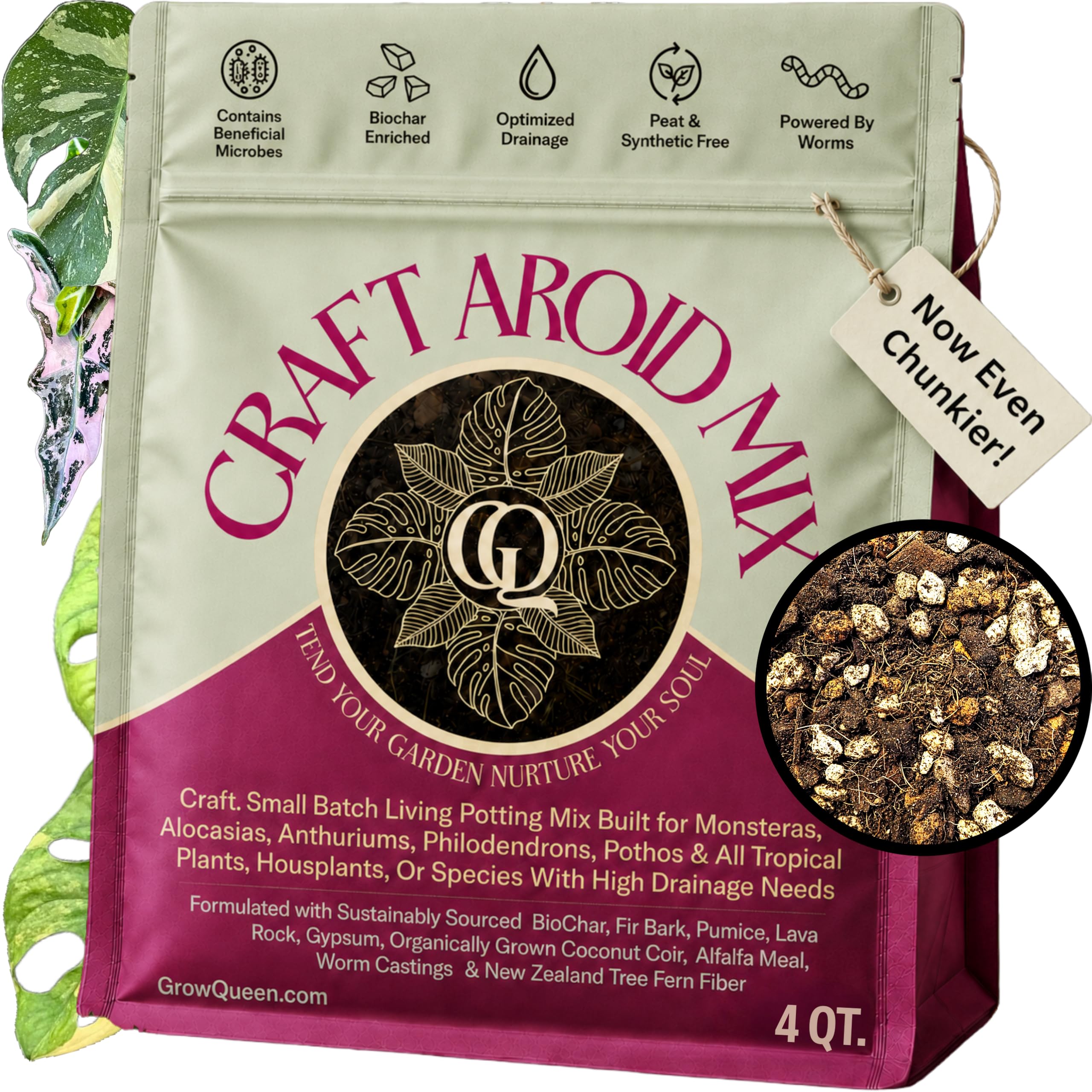
The Craft Aroid Potting Mix by Grow Queen is built around large Douglas fir bark fines, lava rock, and pumice — chunks so big that water runs straight through while air reaches the roots. The maker says it is “almost impossible to overwater” because the structure sheds excess moisture instantly. It is peat-free and perlite-free, using sustainable pumice and lava rock instead. The ingredients include certified organic coco coir (coconut fiber washed more times than the competition, according to the maker), New Zealand tree fern fiber that neutralizes pH to 6.0, worm castings, and living beneficial microbes.
Reviewers point out the texture is perfect — chunky, airy, and drains really well while still holding enough moisture. One reviewer has used Grow Queen products five times and says the quality is consistently amazing with no bugs, no mold, and a fresh dirt smell; another called it “my forever soil.” However, one owner reported it did not dry out fully for a large alocasia and philodendron in pots over 6 inches, so it may hold too much moisture for larger plants. Unlike the Gardenera Monstera mix (which is peat-based and 1 quart), this is peat-free and designed for high drainage. The 4-quart bag is enough for several small to medium pots.
What makes it stand out
- Peat-free and perlite-free with sustainable pumice and lava rock
- Chunky texture provides immediate drainage and constant airflow
- Pet-friendly and pre-moistened for immediate use
Where it may not fit
- One reviewer found it held too much moisture for large plants in pots over 6 inches
- At 4 quarts, it is not economical for large-scale repotting
Reach for it when: You have a collection of monsteras, philodendrons, or alocasias that demand sharp drainage, and you want a peat-free, eco-conscious mix.
Look elsewhere if: You need a mix for very large pots (10+ inches) or you want a budget-friendly option for a full flower bed.
5. Midwest Hearth Premium Potting Soil Mix

The light, fluffy mix that gave petunia seeds a sprint start in their first weeks.
The Midwest Hearth Premium Potting Mix is the same formulation used by professional growers, according to the maker. It contains peat moss, perlite (white volcanic beads for air pockets), and vermiculite (a golden flake mica mineral that holds water like a sponge). The pH is controlled to a balanced level for many plants, which matters when you are starting seedlings sensitive to acidity. Shoppers say it was great for germinating petunias and does not harden around the roots. One reviewer with years of gardening experience called it one of the best they have ever used, saying the texture is light and fluffy, holds moisture perfectly without getting soggy, and provides phenomenal drainage. The bag is resealable. Another noted their plumerias are thriving, though they said the bags are too small.
Unlike the Miracle-Gro options, this mix has no added fertilizer — you control the feeding schedule yourself. That makes it a solid choice for seed starting because you can give gentle liquid fertilizer at the right strength without worrying about pre-loaded nutrients burning tender roots. The 8-dry-quart bag weighs only 1.25 kilograms, so it is surprisingly light for its volume.
Best feature: A clean, pH-balanced base with zero added fertilizer — you are in charge of the nutrition, which is ideal for seedlings and sensitive plants.
The catch: The 8-quart bag is small, and the “modern” style name feels odd for a gardening product, but the mix itself delivers.
Perfect for: The gardener who starts seeds indoors or wants a controlled, no-surprise base for picky ornamentals like plumerias and petunias.
Not ideal if: You want a big-value bag for filling large containers, or you prefer a mix with built-in fertilizer for low-maintenance outdoor pots.
6. Gardenera Premium Monstera Potting Soil

The chunky, sterilized bag designed to stop root rot before it reaches your prized monstera.
This 1-quart bag is sterilized (heated to kill fungus gnat eggs and pathogens) to protect monstera plants from brown spots and root rot. The ingredients are organic aged bark, coco coir (coconut fiber), perlite, peat moss, biochar (IBI-certified carbon that holds onto nutrients like nitrogen and phosphorus), and worm castings. Buyers report the mix is “nice and chunky” with a “great mixture,” holding just enough moisture without staying waterlogged. One customer observed this bag gave them enough to fill a 5-inch pot and then some, and that their Thai Constellation monstera loved it. The bag is resealable and non-toxic, safe for homes with pets.
Compared to the Craft Aroid mix by Grow Queen (which is peat-free and 4 quarts), this Gardenera mix uses peat as a base and comes in a much smaller bag. It is a better fit for someone with one or two monstera pots who wants a pre-sterilized, ready-to-go solution — you do not have to buy a huge bag that sits in the garage for months. The 1-quart volume is a 20x gap compared to the Coast of Maine Tomato & Vegetable blend at 20 quarts, so it is purely for small jobs.
Why it works for monsteras
- Biochar boosts nutrient retention for stronger plant health
- Sterilized to eliminate pests and pathogens before they reach your pot
- Resealable bag keeps the mix fresh between repots
Where it falls short
- Only 1 quart — you will need multiple bags for a large plant collection
- Some owners mention a mushroomy smell (though they describe it as healthy soil smell)
Good fit for: The plant parent with one or two monsteras who wants a pre-sterilized, biochar-enriched blend without buying a giant bag.
Not for: Large repotting projects, vegetables, or anyone who wants the best per-quart price.
7. Coast of Maine Organic Tomato & Vegetable Planting Soil

The compost-rich Maine blend that turns a 5-gallon pot into a tomato factory.
This 20-quart bag uses composted manure and sphagnum peat moss as the base, designed to balance moisture retention and drainage for both in-ground and container planting. The maker says it is lightweight — and buyers confirm the bag is easy to carry for its size. One user highlighted that “one bag per 5-gallon pot” is the right ratio, and that their plants thrive with no stress. Reviewers report excellent moisture retention and drainage, with high nutrients causing visible rapid growth. One shopper added their wife called it the best soil she has tried so far. Another noted it is best for heirloom tomatoes needing drainage, and that cedar in the mix seems to deter insects. A potential downside is that the bag may contain undecomposed twigs needing removal for fine soil — so you may want to sift it if you are using it for seed starting or small pots. It is OMRI listed for organic use.
This is the largest bag in the Coast of Maine lineup at 20 quarts (compared to 16 quarts for the Bar Harbor Blend) and is designed specifically for the heavy feeding needs of tomatoes and other hungry vegetables. The composted manure provides a rich, natural nutrient source that is different from the synthetic feed in the Miracle-Gro options.
The main advantage: A lightweight, OMRI-listed organic mix with composted manure that gives heavy-feeding vegetables the rich base they need without chemical fertilizers.
One thing to watch for: Some bags contain undecomposed twigs — you may want to sift the soil before using it for seed starting or fine-rooted plants.
Ideal for: The organic vegetable grower filling 5-gallon pots with tomatoes, peppers, or squash who wants a proven, lightweight natural blend.
Look elsewhere if: You want a soil for houseplants or delicate seedlings where large bark pieces and undecomposed twigs could be a problem.
Understanding the Specs
Volume and Bag Size
Potting soil is sold by volume, not weight. Common sizes range from 1 quart (just enough for one 6-inch pot) to 2 cubic feet (enough for two large 14-inch planters). A quart is roughly the volume of a standard plastic nursery pot. When comparing bags, always check whether the label says “quarts” or “dry quarts” — the latter is the standard for dry goods, but the numeric value is the same. A 20-quart bag is about 0.67 cubic feet. For any bag, the bigger the volume, the cheaper the per-quart cost, but only buy the size you can use within a season — opened soil can dry out or grow mold if stored too long.
Perlite vs Vermiculite vs Pumice
These are the white, golden, or gray bits you see in potting mixes — they are not fertilizer, they are structural. Perlite (puffed volcanic glass) creates air pockets for drainage and is the most common. Vermiculite (a mica mineral that expands when heated) absorbs water like a sponge and releases it slowly — it is great for seed starting but can make a mix too wet for succulents. Pumice is a denser, heavier volcanic rock that does not float up to the surface when you water, which is why premium aroid mixes often use it instead of perlite. If you tend to overwater, choose a mix with more perlite or pumice. If you tend to forget to water, choose one with vermiculite or coir.
FAQ
What is the difference between potting soil and garden soil?
How much potting soil do I need for my pot?
Can I reuse potting soil from last year?
Is potting soil sterile and safe for indoor plants?
Should I choose organic or non-organic potting soil?
What does “feeds for 6 months” actually mean?
Can I use cactus or succulent soil for regular houseplants?
Why does my potting soil have white mold or a bad smell?
Final Thoughts: The Verdict
For most buyers, the best potting soil winner is the Coast of Maine Bar Harbor Blend because it combines a rich, organic ingredient list (lobster and crab meal, kelp, compost) with the versatility to handle vegetables, herbs, flowers, and houseplants in one bag. If you want a massive-value bag with built-in water control for sun-baked outdoor pots, grab the Miracle-Gro Moisture Control Potting Mix. And for aroid enthusiasts who need the sharpest possible drainage without peat, the Craft Aroid Mix by Grow Queen is the one that stops root rot cold.
How We Picked
We do not accept paid placement. Every pick is matched to a real buyer and a real use-case; we do not hands-on test units.
Sources & Methodology
Specifications: manufacturer listings and product documentation. Review insights: verified customer reviews, as of July 2026. Pricing: not shown on this page (it changes often); check the current price via the retailer link.
As an Amazon Associate, Lawn Gear Lab earns from qualifying purchases. This does not affect which products we feature.