
You want to stop hornworms and aphids from shredding your tomato leaves, but you also need a spray that stays safe on the fruit you will eat. The wrong spray wastes time and can even harm your plants. This guide lines up six proven sprays, explaining exactly what each one targets and what the real-world results look like, so you can pick the right bottle and get back to watching your tomatoes grow.
I’m Rikta — the co-founder and writer behind Lawn Gear Lab. This guide is built by comparing the manufacturers’ published specifications and the patterns across verified customer reviews, so you get each pick’s real strengths and trade-offs instead of marketing spin.
The right choice comes down to the specific pest and how you want to apply it. This guide helps you match the best bug spray for tomato plants to your exact situation, using real specs and honest buyer feedback to point you in the right direction.
How To Choose The Right Bug Spray For Tomato Plants
Picking the wrong spray wastes your time and can stress your tomato plants. The trick is to match the spray’s active ingredient to the specific pest you are seeing and to confirm the label says it is safe for edible vegetables. Here are the three main things to look at before you buy.
Active Ingredient: What kills the bug
The active ingredient is the only thing that actually kills the pest. Spinosad works on a broad range of chewing insects like caterpillars and beetles, plus thrips. Bacillus Thuringiensis (Bt for short, which is a natural bacteria that only targets caterpillars) is a much more targeted option that spares most other bugs. Neem oil smothers soft-bodied insects and also helps control fungal diseases like powdery mildew. Check the label for one of these names to know what you are getting.
Ready-to-Use vs. Concentrate
Ready-to-use sprays come in a trigger bottle and require zero mixing — you just point and spray. They are perfect for a small garden or a quick spot treatment. Concentrates (like the Monterey B.t. options) need to be mixed with water in a sprayer, but a single small bottle can make many gallons of finished spray, which is far more economical if you have a large vegetable patch.
Organic Certification and Harvest Safety
Look for “OMRI Listed” on the label — OMRI (the Organic Materials Review Institute) independently checks that a product meets organic farming standards. Even more important: the label should state it is safe for use on vegetables and specify the number of days you must wait between spraying and harvesting (often zero or just one day). This ensures you are not putting anything harmful on the food you eat.
Quick Comparison
On smaller screens, swipe sideways to see the full table.
| Model | Category | Best For | Key Spec | Amazon |
|---|---|---|---|---|
| Monterey B.t. (8 oz Concentrate) | Premium | Precise caterpillar control | 8 oz concentrate (makes many gallons) | Amazon |
| Monterey B.t. (16 oz Concentrate) | Premium | Large garden caterpillar control | 16 oz concentrate (2x more than 8 oz) | Amazon |
| Ferti-lome Spinosad Soap (32 oz RTU) | Mid-Range | Broad-spectrum chewing insect control | 32 oz ready-to-use (0.005% Spinosad) | Amazon |
| Natural Guard Spinosad Soap (32 oz RTU) | Mid-Range | Contact kill of beetles & mites | 32 oz ready-to-use (2 active ingredients) | Amazon |
| Natria Neem Oil (24 oz RTU) | Value | Dual pest & disease control | 24 oz ready-to-use (0.9% Neem Oil) | Amazon |
| Organic Insecticide & Fungicide (16 oz Concentrate) | Premium | All-in-one indoor & outdoor protection | 16 oz concentrate (bio-based formula) | Amazon |
In‑Depth Reviews
1. Monterey B.t. Caterpillar & Worm Killer (8 oz Concentrate)
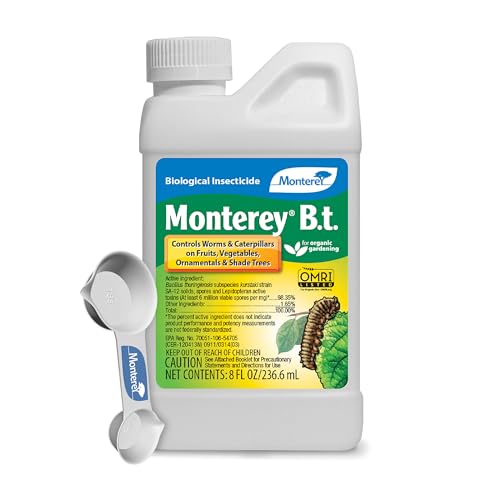
8 oz concentrate (makes many gallons of spray) for the tomato grower who wants a safe, precise weapon against caterpillars that spares every other creature. Its active ingredient, Bacillus Thuringiensis (Bt for short — a natural soil bacteria that produces a protein toxin deadly only to caterpillars), attacks the gut of chewing worms and kills them within a couple of days. Buyers report that Bt effectively killed cabbage looper worms on flower seedlings and cilantro, making it a proven solution for the most destructive tomato pests.
The 8-ounce concentrate bottle makes a huge volume of finished spray compared to a ready-to-use bottle — you mix a small amount with water in a sprayer, so one container lasts many seasons for a typical home garden. It is also OMRI Listed for organic gardening, meaning it meets the standards for certified organic production. Because Bt only targets caterpillars, it has no effect on birds, earthworms, or beneficial insects like honeybees and ladybugs, so you are not wrecking your garden’s ecosystem while protecting your tomatoes.
The one limit is that Bt breaks down quickly in sunlight, so you need to apply it in the late evening and use a fresh mix each time. If you also need to kill beetles or aphids, skip this and look at the Fertilome Spinosad instead. This is the spray for the tomato grower who wants a safe, precise weapon against caterpillars that spares every other creature.
Why it’s great
- Selective — kills caterpillars without harming bees or earthworms
- OMRI Listed and made for use on vegetables like tomatoes
- Concentrate form means one small bottle goes a long way
Good to know
- Only works on caterpillars, not on aphids or beetles
- Needs to be applied in the evening due to UV breakdown
2. Fertilome Spinosad Soap (32 oz RTU)

If the caterpillars are already bad but you also see beetles or thrips, the Fertilome Spinosad Soap covers more ground than the Bt-focused Monterey pick. Its active ingredient is Spinosad (a natural substance made from a soil bacterium that attacks the nervous system of a broad range of insects), combined with potassium salts of fatty acids (soap that helps break down the insect’s outer shell). It controls Colorado Potato Beetles, borers, fruit flies, and aphids on top of caterpillars — a far wider pest list than Bt alone.
This 32-ounce bottle comes ready to use, so you just pull the trigger and spray all parts of the plant, including under the leaves where pests hide. Owners mention it “effectively eliminated my thrips,” a pest that is notoriously hard to control. The bottle weighs 2 pounds, which is a third heavier than the Natria Neem Oil, meaning you get more liquid in hand for the same effort.
The catch is that Spinosad can also harm beneficial insects like bees while the spray is wet, so you must apply it in the evening when bees are not active. Choose this if you need a single spray that handles a whole menu of chewing and sucking pests, not just caterpillars. If you only have caterpillars and want to protect bees at all costs, stick with the Monterey Bt.
Where it shines
- Broad-spectrum — kills beetles, caterpillars, thrips, and more
- Ready-to-use trigger bottle requires no mixing
- OMRI Listed for organic gardening
Worth noting
- Can harm bees if sprayed during the day
- Alternate with a different spray to prevent pest resistance
3. Natural Guard Spinosad Soap (32 oz RTU)

Imagine walking out to your tomato patch and finding a cactus beetle infestation that seems to be spreading by the hour. The Natural Guard Spinosad Soap is the spray you grab when you need immediate, visible results on contact. A buyer who faced exactly that scenario reported that they “sprayed once on cactus beetle infestation; beetles disappeared and haven’t returned after days,” which speaks to the speed of this formula.
This 32-ounce ready-to-use bottle pairs Spinosad with insecticidal soap (the soap penetrates the insect’s waxy coating, causing it to dry out and die) to kill a wide range of foliage-feeding insects, including spider mites and aphids. It also controls powdery mildew when sprayed directly on the fungus, giving it a dual role that the pure Bt products lack. The liquid volume matches the Fertilome option at 32 fluid ounces, so you get the same coverage territory per bottle. It kills faster than the Fertilome thanks to the added soap, but it costs more per ounce.
The one catch buyers mention is that the bottle can leak during shipping if the packaging is not tight. For a vegetable gardener who wants a fast-acting, budget-friendly spray that handles both bugs and mildew in one pass, this is a strong contender. With Spinosad plus soap in a single 32-ounce RTU bottle, it is the only pick here that kills both insects and powdery mildew on contact.
What stands out
- Kills pests within minutes of contact
- Effective against both insects and powdery mildew
- Large 32 oz bottle covers a good-sized garden
The trade-offs
- Bottle can leak during shipping if not carefully packed
- Best for smaller gardens due to ready-to-use format
4. Natria Neem Oil (24 oz RTU)
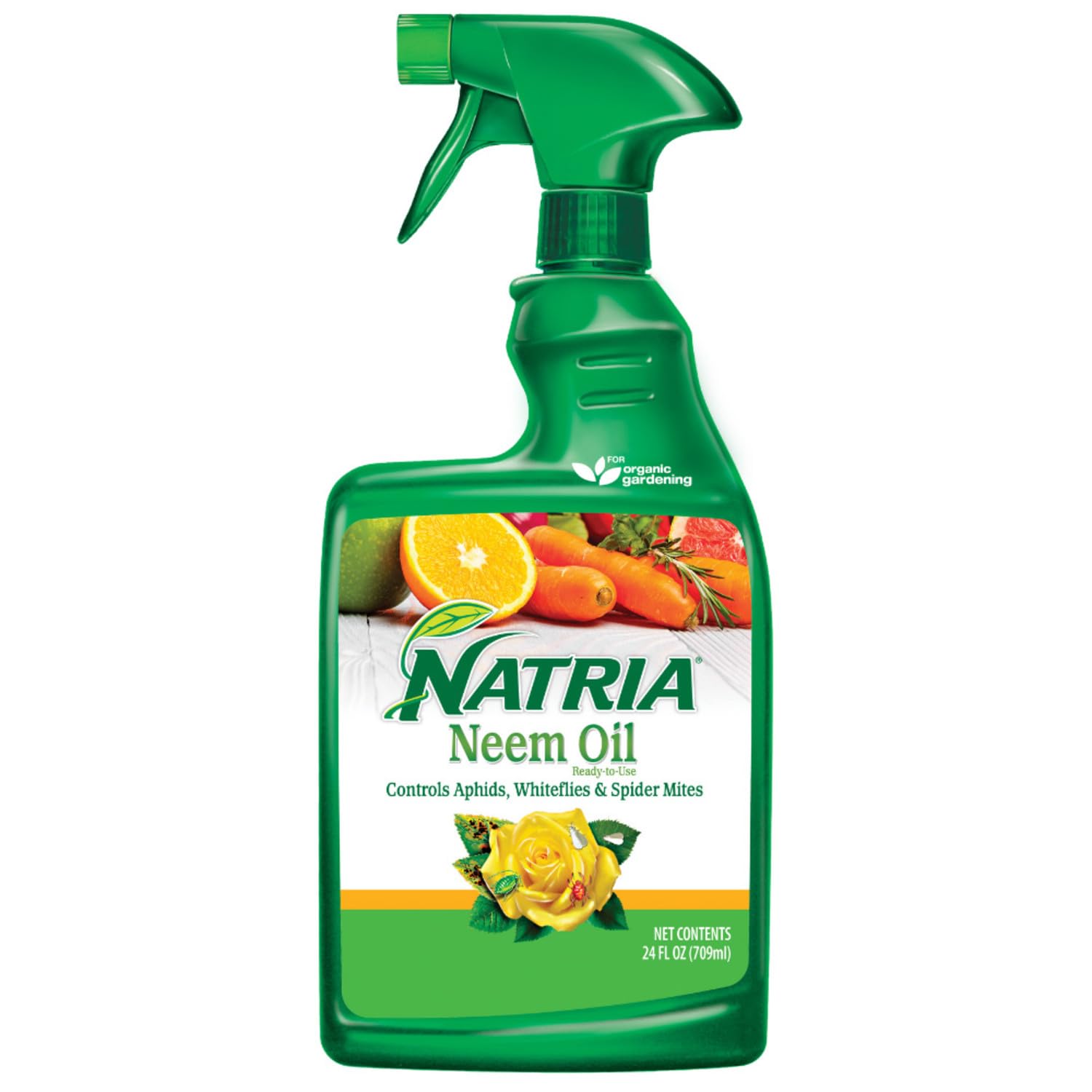
The single number that matters most in this category is the 0.9% clarified hydrophobic extract of Neem Oil — a concentration strong enough to both kill insects and prevent fungal diseases like powdery mildew and black spot. For tomato growers struggling with whiteflies and aphids alongside early signs of mildew, this one bottle handles both, which saves you from buying separate products. It weighs 1.5 pounds and comes in a ready-to-use 24-ounce trigger sprayer, so it is lighter than the Fertilome’s 2-pound bottle but still gives decent coverage.
The downside is a recognizable weakness: some long-time users report that the formula or concentration changed over time, with one reviewer noting “effectiveness dropped ~50% vs. prior years” when battling mite infestations. That means for serious mite problems, a pure neem oil concentrate that you dilute yourself might still work better. The Natria spray still keeps pests off vegetables, just not as aggressively as it used to. The strong neem oil smell also lingers for a day or two, which the Organic Insecticide concentrate does not have.
This is a solid mid-range value for a gardener who wants an all-in-one spray that protects against both bugs and disease and can be used right up to the day of harvest — a price-to-value read that works best if you do not have a severe infestation.
The upsides
- Works as both an insecticide and a fungicide
- Can be used up to the day of harvest
- Ready-to-use trigger sprayer is extremely convenient
Keep in mind
- Some customers note the formula feels weaker than previous versions
- Strong smell that lingers for a day or two
5. Monterey B.t. Bacillus Thuringiensis (16 oz Concentrate)

What you actually get at this lower price is the same Bt concentrate as the top pick, but in a 16-ounce bottle — double the liquid volume of the 8-ounce version for a modest step up in cost. For a tomato grower with a big garden or multiple raised beds, that extra volume means you can mix more gallons of spray without having to reorder mid-season. The active ingredient is Bacillus Thuringiensis, the same natural bacteria that targets only caterpillars and worms, making it safe for bees and earthworms.
You get exactly what you pay for: more concentrate, same great results. One reviewer confirmed, “after spraying my tomatoes following the directions on the bottle, two days later I found several caterpillars dead,” which matches the experience of many organic gardeners. The 16-ounce bottle weighs 1 pound, so it is 0.5 pounds lighter than the Fertilome Spinosad bottle, making it easier to handle when mixing. It is also OMRI Listed and safe for use on vegetables, including tomatoes, up to the day of harvest.
If you already know you want Bt for caterpillar control and your garden is large enough that you will use more than a few spray sessions, the 16-ounce version is the smarter buy per gallon of finished spray than the 8-ounce version. Skip the smaller bottle and grab this if you have more than a dozen tomato plants. For a small patio garden, the 8-ounce version is less to store, making this 16-ounce concentrate perfect for the budget buyer with a large vegetable patch who wants to avoid mid-season reorders.
Why we’d pick it
- Double the concentrate volume for large gardens
- Selective caterpillar control — safe for bees and birds
- OMRI Listed for organic gardening
A few caveats
- Only works on caterpillars, not on aphids or beetles
- Must be applied in the evening due to sunlight breakdown
6. Organic Insecticide & Fungicide (16 oz Concentrate)

This concentrate is perfect for the gardener who wants one product to handle both bugs and diseases across multiple plant types, from indoor herbs to outdoor tomatoes, and prefers to mix their own spray strength rather than rely on a fixed ready-to-use formula. While the Natria Neem Oil also covers both roles, this concentrate gives you far more control over application strength: you dilute it in water yourself, so you can mix a strong batch for a heavy infestation or a lighter mix for routine prevention. One buyer using 10 drops in 32 ounces of water saw insects die within 5-10 seconds.
What that money buys you is a whole-garden solution: it tackles aphids, whiteflies, spider mites, thrips, and fungus gnats while simultaneously suppressing powdery mildew and other leaf diseases. The concentrate format means a single 16-ounce bottle yields multiple refills, making it more economical than the ready-to-use options for weekly maintenance across many plants. It is also odorless (reviewers point out “no strong smell”), which is a relief compared to the strong neem oil scent of the Natria.
The one thing to know is that at its price point, it sits at the higher end of the field, but the dual insect + fungus action in a concentrate form means you are getting a lot of treatment per dollar. Choose this if you want a single concentrate to handle everything from fungus gnats on indoor plants to aphids on outdoor tomatoes. If you only need to kill caterpillars, the cheaper Monterey Bt is a better fit.
Strong points
- Combines insecticide and fungicide in one concentrate
- No strong smell — ideal for indoor use
- Concentrate formula is very economical for large gardens
Before you buy
- Requires mixing with water before each use
- Higher upfront cost than ready-to-use bottles
Understanding the Specs
Active Ingredient: The Pest-Specific Decider
The active ingredient is the chemical or natural substance doing the killing. Spinosad (from a soil bacterium) attacks the nervous system of a wide range of insects and is great for beetles, thrips, and caterpillars. Bacillus Thuringiensis, or Bt, is a bacteria that only caterpillars can digest into a deadly toxin — so it spares every other insect. Neem oil smothers soft-bodied pests like aphids and mites and also acts as a fungicide. Match the active ingredient to the pest you actually see on your tomato leaves.
Ready-to-Use vs. Concentrate: Coverage vs. Convenience
Ready-to-use (RTU) sprays come in a trigger bottle with the exact mixture already prepared — you pull the trigger and spray. They are perfect for quick spot treatments on a few plants. Concentrates are bottles of undiluted product that you mix with water in a sprayer before each use. They cost less per gallon of finished spray and let you control the strength, but they require an extra step and a sprayer. For a single tomato patch, an RTU bottle is fine; for a large vegetable garden, a concentrate saves money.
FAQ
How often should I spray my tomato plants with bug spray?
Can I use these sprays on tomato fruits right before I pick them?
Will these sprays harm bees or ladybugs?
Final Thoughts: The Verdict
For most gardeners, the top bug spray for tomato plants winner is the Monterey B.t. (8 oz) because it targets caterpillars with surgical precision while leaving bees and earthworms completely unharmed. If you need a spray that handles beetles, thrips, and aphids on top of caterpillars, grab the Fertilome Spinosad Soap. And for a single concentrate that fights both bugs and fungal disease indoors and out, the Organic Insecticide & Fungicide is the most versatile bottle you can buy.