
Missouri’s diverse landscape from the Ozarks to the Mississippi flyway brings a rotating cast of cardinals, chickadees, finches, and woodpeckers through your yard. But the wrong seed mix leaves you paying for filler grains that birds kick to the ground, attracting rodents instead of songbirds. The difference between a quiet feeder and a bustling backyard sanctuary comes down to one choice: what’s inside the bag.
I’m Rikta — the co-founder and writer behind Lawn Gear Lab. I compare ingredient labels, analyze protein-to-filler ratios, and cross-reference thousands of owner reports to find the seed blends that actually deliver nutrition Missouri’s wintering and migrating birds need without the garbage that gets swept off the deck.
Whether you want to attract bright red cardinals in January or warblers during spring migration, the right mix saves money and keeps feathers healthy. This guide ranks the best bird seed for missouri backyards based on freshness, ingredient purity, and measurable bird attraction results.
How To Choose The Best Bird Seed For Missouri
Missouri sits at the crossroads of several bird migration corridors, meaning your feeder will host both year-round residents and seasonal travelers. The ideal blend balances high-oil content for winter energy with enough variety to keep picky species like cardinals and goldfinches interested. Focus on these three factors before buying.
Black Oil Sunflower Content Is King
Thin-shelled black oil sunflower seeds deliver the highest fat-to-shell ratio of any common bird seed. Missouri’s cardinals, chickadees, nuthatches, and woodpeckers all prefer them over striped sunflower or mixed grains. Look for blends where black oil sunflower appears as the first ingredient. Pure sunflower seed bags offer the best per-pound value for serious birders.
The Filler Tax: Milo, Oats, and Red Millet
Many economy blends load 30-50% of the bag with white milo, oats, and cracked corn. These fillers lower the price tag but Missouri birds often ignore them entirely. What they don’t eat gets kicked to the ground, where it sprouts weeds or attracts house sparrows and squirrels. Spending a few more dollars on a filler-free blend actually costs less per successful feeding visit.
Seasonal Strategies: Winter Energy vs. Spring Variety
December through February demands high-fat options like black oil sunflower or sunflower hearts. March through October, a varied mix of sunflower, safflower, cracked corn, and fruit pieces attracts the broadest range of migratory species. A single all-purpose blend that works year-round should have sunflower as the base with no more than 20% filler ingredients.
Quick Comparison
On smaller screens, swipe sideways to see the full table.
| Model | Category | Best For | Key Spec | Amazon |
|---|---|---|---|---|
| Backyard Seeds Black Oil Sunflower 25lbs | Premium Straight Seed | High-volume year-round feeding | 25 lbs, thin shells, no fillers | Amazon |
| Audubon Park Sunflower Hearts 15lb | Shell-Free Premium | Zero-mess winter feeding | 15 lbs, 100% shelled kernels | Amazon |
| Old Potters Black Oil Sunflower 12lbs | Non-GMO Straight Seed | Chemical-free backyard feeding | 12 lbs, Non-GMO, USA small farm | Amazon |
| Schoen Farms Gourmet Wild Bird Mix 10lbs | Gourmet Blend | Diverse species attraction | 10 lbs, family farm freshness | Amazon |
| Nature Anywhere Bird Banquet 5lbs | No-Filler Premium | Small feeder, high bird satisfaction | 5 lbs, no filler grains | Amazon |
| Meadow Ridge Farms Mix 10lbs | Value Economy Mix | Budget-friendly bulk feeding | 10 lbs, locally blended | Amazon |
| Pennington Ultra Double Nut 10lbs | Nut & Fruit Blend | Attracting woodpeckers and nuthatches | 10 lbs, Bird Kote vitamins | Amazon |
In‑Depth Reviews
1. Backyard Seeds Black Oil Sunflower Seeds 25lbs
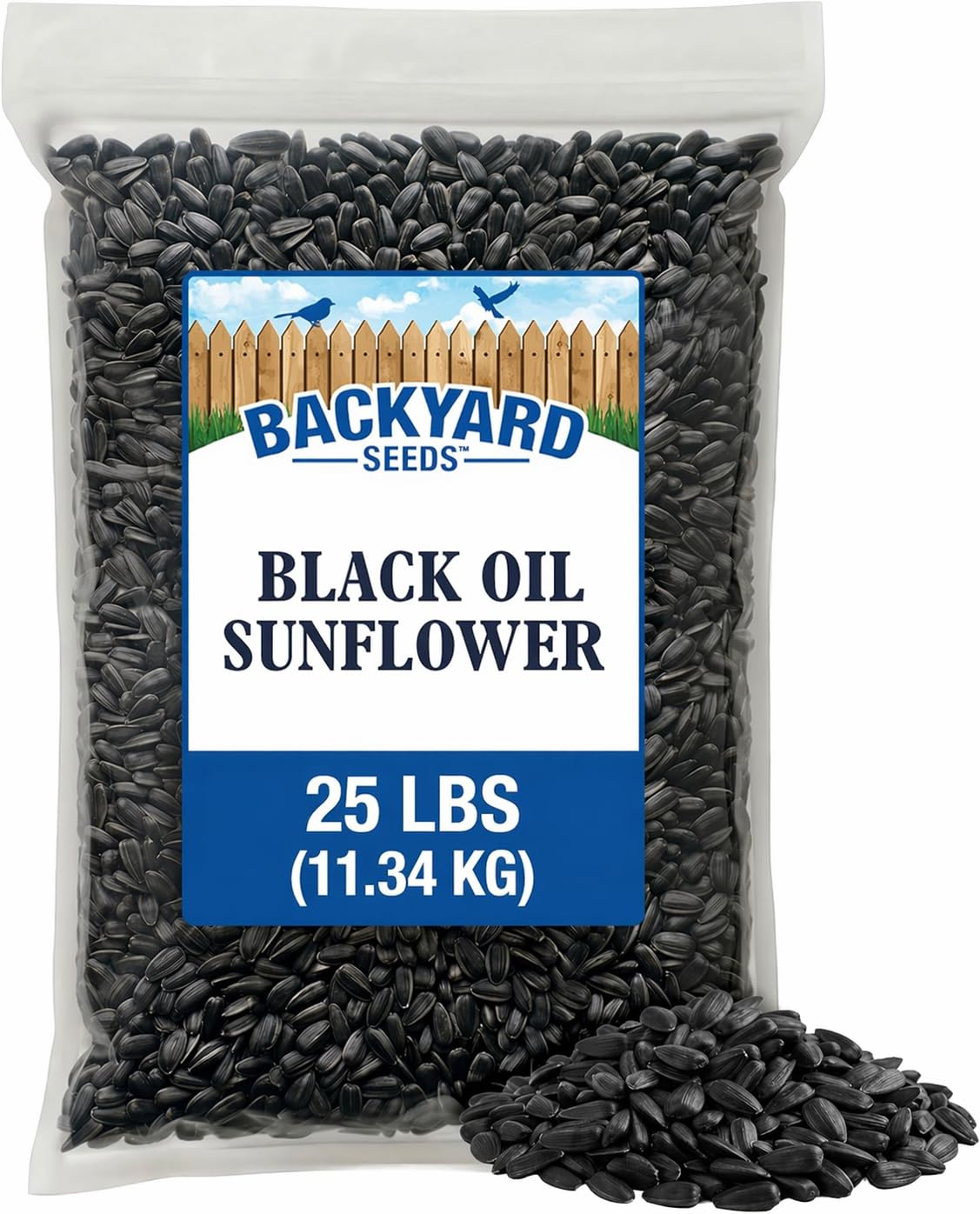
This 25-pound bag of straight black oil sunflower seed represents the gold standard for Missouri backyards. The thin shells make it accessible to smaller birds like chickadees and goldfinches while delivering the high-fat content cardinals and woodpeckers need during cold Ozark winters. Owners consistently report zero twigs or debris in the bag, meaning every pound is edible seed rather than filler weight that drives up cost per feeding.
CountryMax sources this seed from USA farms and processes it fresh enough that customers describe it as the cleanest sunflower bag they have ever opened. The resealable bag helps maintain freshness across the long feeding season, though serious birders should transfer it to a 5-gallon bucket with a lid for airtight storage. Cardinals in particular show a clear preference for these thin-shelled kernels over thicker striped sunflower varieties.
Because this is a straight seed rather than a blend, you sacrifice variety for purity. Birds that prefer safflower or cracked corn won’t visit a feeder filled only with sunflower. But for the species that matter most to Missouri birders — cardinals, chickadees, nuthatches, and woodpeckers — this bag delivers maximum nutrition with zero waste and the best per-pound value in the lineup.
What works
- Exceptionally clean, no sticks or debris found in multiple reported bags
- Thin shells allow the widest range of bird sizes to feed easily
What doesn’t
- Straight sunflower won’t attract safflower-loving species like house finches
- 25-pound bag requires proper sealed storage against moisture and pests
2. Audubon Park Sunflower Hearts 15-lb Bag

Shelled sunflower hearts remove everything that normally litters the ground under a feeder. With 100% sunflower kernels and zero hulls, this 15-pound bag creates almost no mess — a critical advantage for anyone feeding on a deck, patio, or above a manicured lawn. The kernels are rich in healthy fat, providing the concentrated energy Missouri birds need most during cold snaps and migration stopovers.
Finches, nuthatches, sparrows, juncos, and chickadees devour these hearts rapidly, which means you will refill more often than with whole seed. The trade-off is dramatically less cleanup time and no sprouting weeds under the feeder. Owners report that the cost per pound is very competitive for a shell-free product, especially compared to mixed blends where half the bag goes uneaten.
The packaging is easy to open and the kernels arrive clean with minimal dust. Because the shells are already removed, this seed works in tube, hopper, and platform feeders without clogging. The only real downside is that shelled hearts spoil faster in wet weather than whole seeds, so avoid filling feeders deeper than what birds will eat in 3-4 days during humid Missouri summers.
What works
- Virtually zero mess under the feeder with no hulls to sweep
- Attracts the widest variety of small songbirds including finches and bluebirds
What doesn’t
- Birds consume it faster than whole seed, requiring more frequent refills
- Shelled kernels can clump or spoil if left in damp feeders too long
3. Old Potters Black Oil Sunflower Seeds 12 lbs

Old Potters offers straight black oil sunflower seed certified Non-GMO and sourced from small sustainable farms across the USA. For Missouri birders who prioritize chemical-free feeding, this bag delivers the cleanest nutritional profile in the lineup. The seeds are unprocessed with natural field traces — occasional twigs or debris that confirm minimal industrial handling rather than a quality defect.
The resealable bag is a practical touch for the 12-pound size, keeping seeds fresh across several weeks of daily feeding. Owners report that the freshness of these seeds stands out: birds eat a smaller volume compared to older, shriveled seeds because the meat inside the shell hasn’t dried out. That freshness translates directly to lower long-term cost since birds get more nutrition per piece.
The 12-pound size sits between small trial bags and massive 25-pound sacks, making it a good choice for single-feeder households. Squirrels are as enthusiastic about these seeds as the birds, so consider a baffle or squirrel-proof feeder if you use this straight sunflower. The seeds themselves are plump and consistent in size, feeding smoothly through tube and hopper styles without jamming.
What works
- Non-GMO certification appeals to eco-conscious birders avoiding pesticides
- Seeds are notably fresh with plump meat inside every shell
What doesn’t
- Natural field debris means occasional small twigs mixed into the bag
- Straight sunflower seed attracts squirrels as aggressively as birds
4. Schoen Farms Gourmet Wild Bird Food Mix 10 LBS
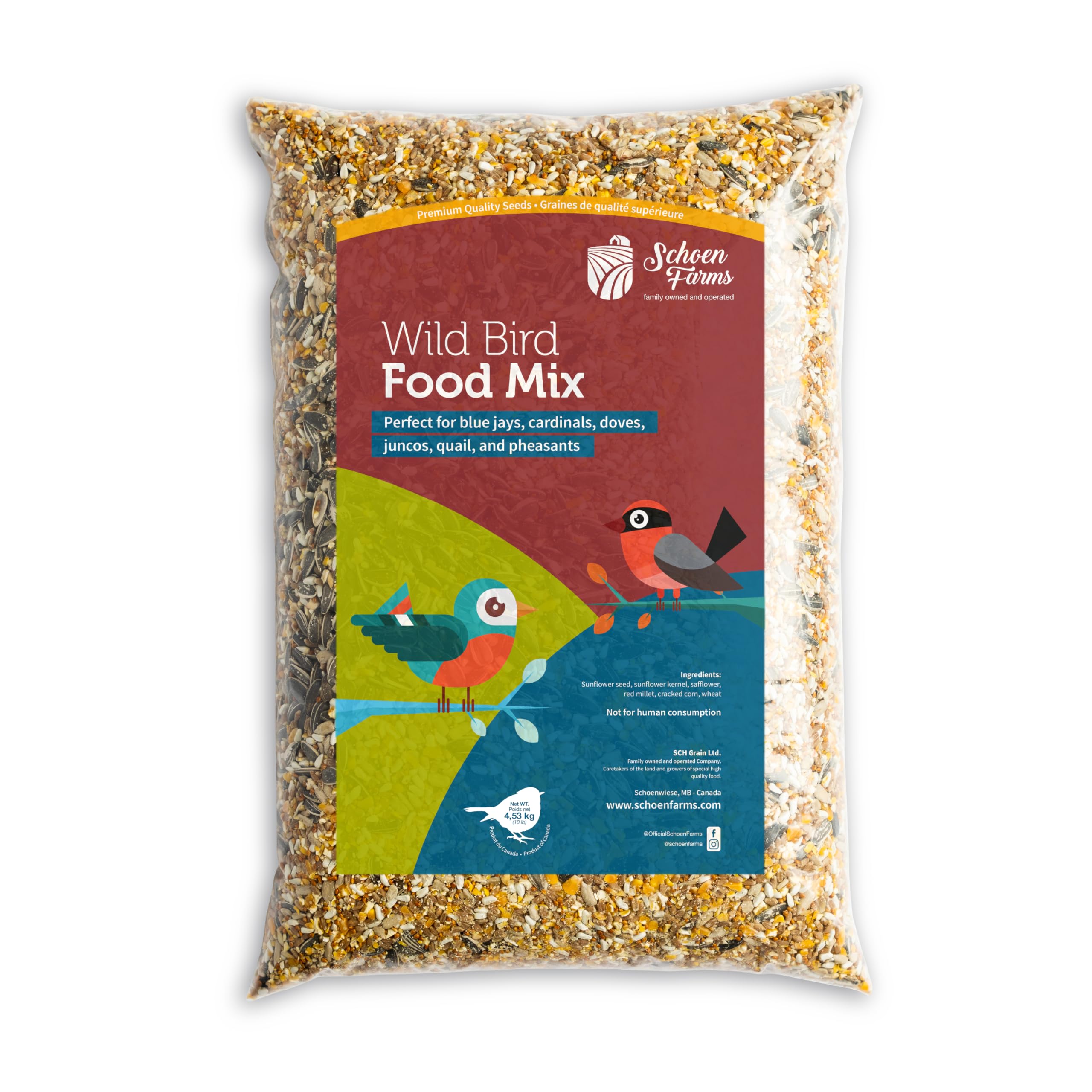
Schoen Farms blends sunflower seeds, sunflower kernels, safflower, red millet, cracked corn, and wheat into a gourmet mix designed to attract the full range of Missouri songbirds. Unlike many economy blends that dump cheap milo as a base, this mix leads with sunflower and safflower — two ingredients that cardinals, finches, grosbeaks, and blue jays actually eat enthusiastically.
Being sourced from the family’s own farm means the seeds arrive fresh without the stale mustiness common in mass-produced bagged seed. Customers report that birds consume everything in the mix down to the last kernel, leaving virtually no waste under the feeder. The inclusion of sunflower kernels alongside whole seeds gives small birds easy access to nutrition without struggling with tough shells.
The 10-pound size is convenient for households with one or two feeders. Owners note that grass germination under the feeder is minimal compared to filler-heavy brands, and the birds show noticeably more activity than when fed standard grocery store mixes. The only hesitation is that the cracked corn component may attract large flocks of mourning doves and pigeons, which some birders prefer to avoid.
What works
- Birds consume nearly everything in the bag, reducing ground waste
- Family farm sourcing ensures consistent freshness across batches
What doesn’t
- Cracked corn and millet content can attract larger flocks of doves
- Safflower seeds may be less popular with some local bird populations
5. Nature Anywhere Bird Seed Bird Banquet 5lbs
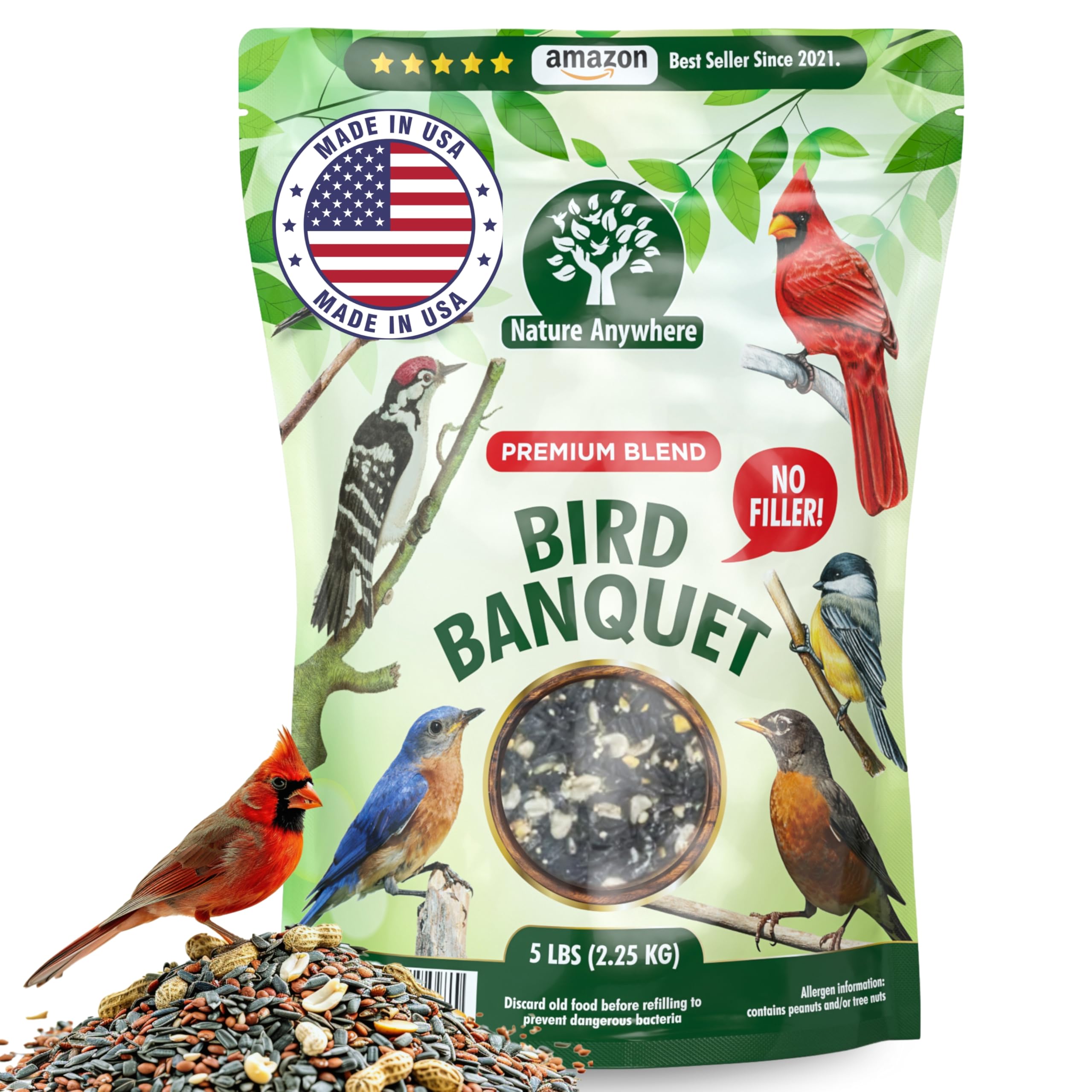
Nature Anywhere positions this 5-pound blend as a no-filler alternative that eliminates the cheap grains birds typically pick through and waste. The ingredient list skips milo and oats entirely, focusing on high-protein seeds that Missouri’s cardinals, chickadees, jays, and finches actually prefer. The smaller bag size makes it an ideal trial purchase for birders who want to test a premium blend before committing to a bulk order.
Customers report dramatic increases in both bird count and species variety after switching to this blend. The seed composition is dense enough that a 5-pound bag lasts longer than larger bags of filler-heavy mixes, because more of every pound gets eaten rather than kicked to the ground. The company backs the product with a satisfaction guarantee — if your feeder isn’t the busiest in the neighborhood, they refund you.
One bag fills a typical tube or hopper feeder about one and a half times, so you’ll reorder more frequently than with bulk options. The blend is available in larger sizes, but the 5-pound price point lets you confirm your local birds approve before scaling up. The absence of artificial colors and additives is a nice bonus for birders avoiding unnecessary processing in their feed.
What works
- Zero cheap fillers means every pour delivers actual nutrition birds eat
- Money-back satisfaction guarantee reduces risk of trying a new blend
What doesn’t
- 5-pound bag requires frequent reordering for busy feeders
- Small size limits suitability for multi-feeder setups
6. Meadow Ridge Farms Wild Bird Seed Mix 10-Pound
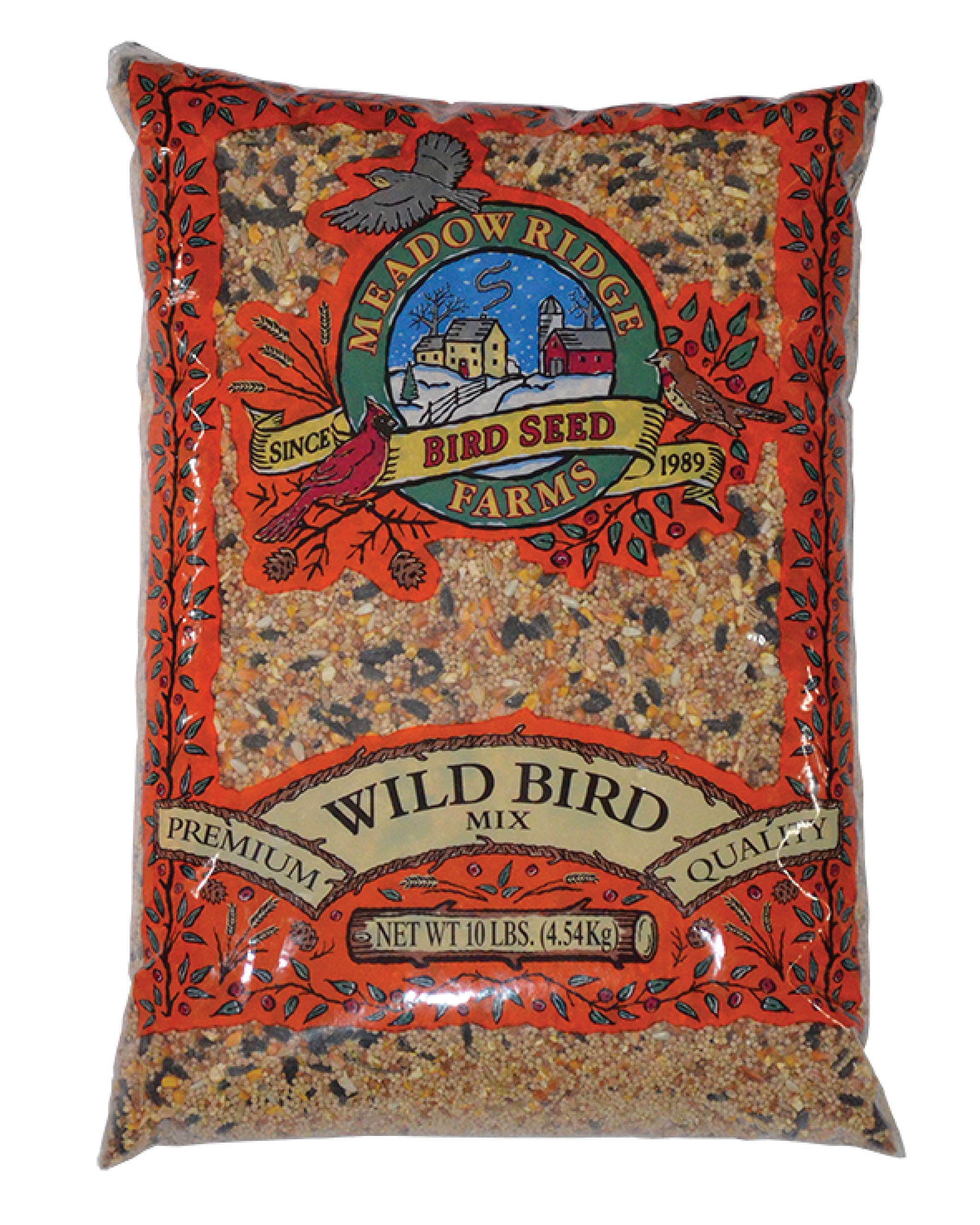
Meadow Ridge Farms blends sunflower, cracked corn, safflower, wheat, oats, and millet into an economy mix that hits a lower price point than the premium blends above. Locally blended and bagged in Minnesota, this mix targets the widest possible species range including house sparrows, chickadees, finches, juncos, goldfinches, buntings, mourning doves, and numerous sparrow varieties common in Missouri.
The 10-pound bag works well for feeders that attract ground-feeding birds like doves and sparrows who naturally consume the cracked corn and millet components. Customers report the seed stays fresh without the barn moth infestations some budget brands struggle with. The blend contains black oil sunflower, which provides the core nutrition many species need, even if the filler grains reduce the overall protein density per pound.
The downsides are predictable at this price tier: birds will kick out some of the millet and oats to reach the sunflower first, creating more ground waste than the premium blends. The bag also lists wheat and oats, which few songbirds prioritize. For birders on a tight budget who don’t mind sweeping occasionally, this mix still brings birds to the feeder reliably.
What works
- Attracts a very wide species range including ground feeders like doves
- Local blending ensures better freshness than mass-imported alternatives
What doesn’t
- Millet and oat fillers create more waste under the feeder
- Lower protein density compared to straight sunflower or premium blends
7. Pennington Ultra Double Nut, Nut & Fruit Blend 10lbs
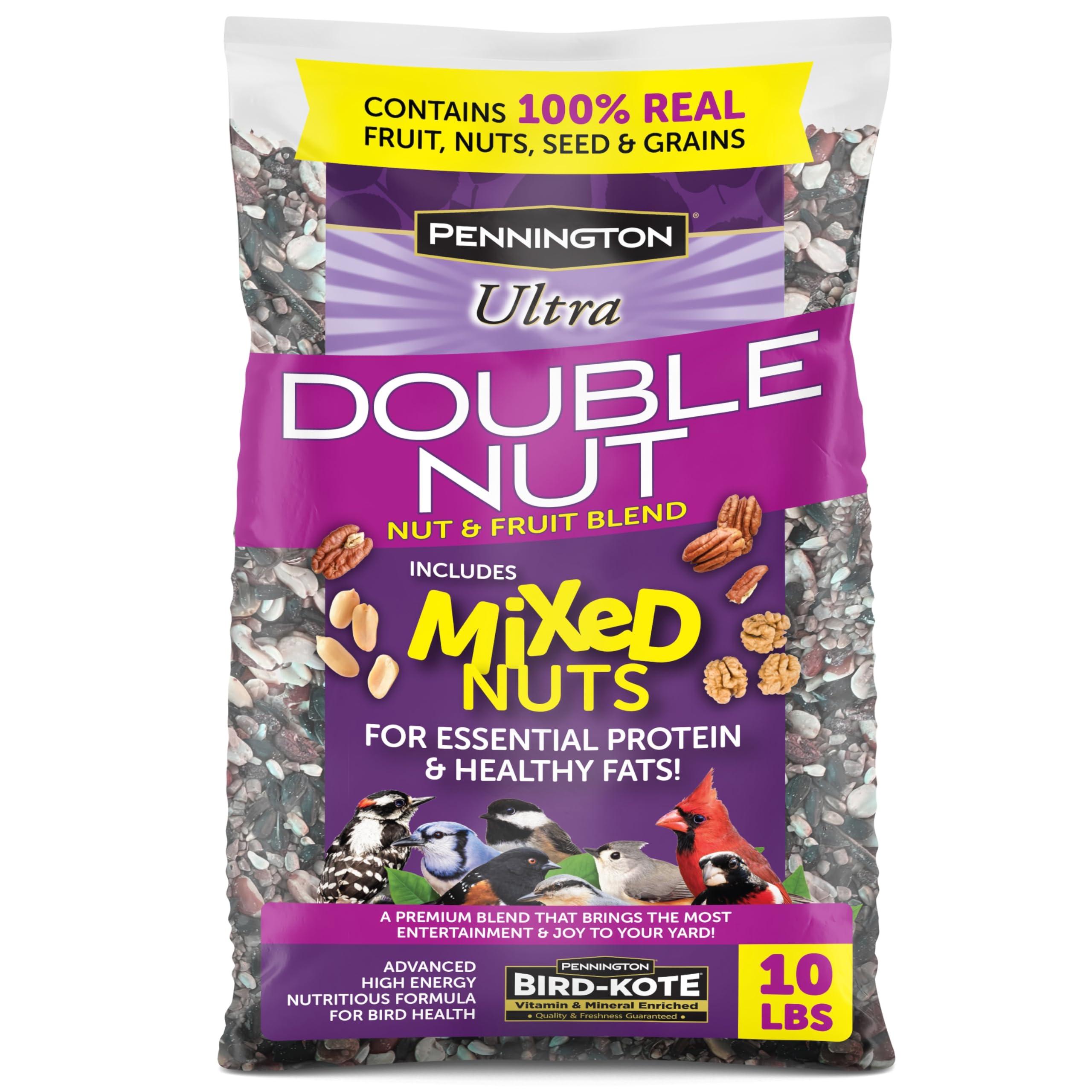
Pennington takes a different approach with this nut-and-fruit blend featuring mixed nuts, real dried fruits, seeds, and grains boosted with Bird Kote technology — a supplemental coating of vitamins and minerals. This composition targets woodpeckers, nuthatches, towhees, chickadees, and cardinals, especially during fall and early winter when natural fruit sources disappear from Missouri’s landscape.
The 10-pound bag works in gazebo, hopper, platform, and tube feeders, giving flexibility for different feeder types. The dried fruit component provides natural sugars that birds metabolize quickly for energy, which is particularly valuable during cold mornings and migration fueling. Squirrels find this blend as irresistible as the birds do, making it a strong choice for birders who also enjoy watching their bushy-tailed visitors.
Some customers express concern about whether the dried fruits contain added sugars, as the ingredient list does not clearly specify. The mix also includes seeds and grains that overlap with standard blends, so birders already feeding a straight sunflower mix may find this redundant for most species. The Bird Kote technology is a unique nutritional bonus, but the fruit pieces can also mold faster than pure seed if moisture gets into the feeder.
What works
- Bird Kote vitamin coating adds nutritional value not found in standard blends
- Dried fruit and nut content specifically attracts woodpeckers and towhees
What doesn’t
- Added sugar in dried fruit is not disclosed on the packaging
- Fruit pieces can spoil faster in humid feeders than all-seed mixes
Hardware & Specs Guide
Fat Content and Energy Density
Black oil sunflower seeds contain approximately 50% fat by weight, making them the highest calorie-per-gram option for winter feeding when Missouri birds need maximum energy for overnight survival. Shelled sunflower hearts remove the hull weight but preserve the same fat ratio. Blends with more than 20% cracked corn or millet dilute the overall fat density, requiring birds to eat more volume to get the same energy.
Thin Shell Mechanics
Thin-shelled black oil sunflower seeds require less beak pressure to crack than striped sunflower varieties, making them accessible to smaller birds like chickadees, goldfinches, and pine siskins. The shell-to-meat ratio for black oil sunflower averages 30-35% shell by weight versus 45-50% for striped sunflower. That difference means more edible kernel per pound and less hull litter under the feeder.
Storage Life and Moisture Tolerance
Whole sunflower seeds in shells maintain freshness for 6-12 months when stored in a cool, dry environment below 70°F. Shelled hearts and fruit-inclusive blends degrade faster — expect 3-4 months before the oils go rancid in warm conditions. Missouri’s humid summers accelerate spoilage; transfer any seed to airtight metal or plastic containers and avoid storing bags directly on concrete floors where moisture wicks upward.
Protein Percentages Across Ingredient Types
Black oil sunflower seeds offer roughly 20-22% crude protein. Safflower seed runs similar at 18-20%. Cracked corn drops to 7-10% protein, while white millet sits around 11-12%. Straight sunflower or sunflower heart blends deliver the highest protein density per pound. Filler-heavy mixes require birds to consume more total volume to meet their protein requirements, which wastes energy on low-value processing.
FAQ
What single seed attracts the most bird species in Missouri?
How do I stop seed from spoiling during Missouri’s humid summers?
Should I change my seed blend between summer and winter in Missouri?
Does safflower seed actually deter squirrels in Missouri backyards?
Final Thoughts: The Verdict
For most Missouri birders, the bird seed for missouri winner is the Backyard Seeds Black Oil Sunflower 25lbs because it delivers the highest edible-seed-to-dollar ratio with zero filler waste and thin shells that attract the widest range of local species. If you want a shell-free option that keeps your deck spotless through winter, grab the Audubon Park Sunflower Hearts 15lb. And for a premium Non-GMO choice from small USA farms, nothing beats the Old Potters Black Oil Sunflower 12lbs.