
Specs are compiled from manufacturer listings and verified buyer reviews and can change over time — please confirm the key details on the product page before buying.
If your weekend to-do list always includes pushing a noisy mower around the yard, a battery-powered robot lawn mower promises a pretty compelling shift: hand the job over to a machine that handles the work for you, on its own schedule. The real trick is picking the right one for your specific lawn size, slope, and layout—where some models rely on GPS satellites, others use cameras or laser sensors to navigate.
I’m Rikta — the founder and writer behind Lawn Gear Lab. This guide is built by comparing the manufacturers’ published specifications and the patterns across verified customer reviews, so you get each pick’s real strengths and trade-offs instead of marketing spin.
The eight mowers below range from compact units for tiny lawns to powerful machines that can handle nearly an acre. After digging through the specs, here is your look at the battery powered robot lawn mower market as it stands today.
Our Picks at a Glance

How To Choose The Best Battery Powered Robot Lawn Mower
Picking the right robot mower starts with knowing your yard. Its size, the steepness of slopes, the number of obstacles, and whether the lawn is one open area or split into front and back all change which features matter most. Here are the specs to focus on.
Navigation: How the mower finds its way
The biggest change in robot mowers is the move away from buried boundary wires. Modern systems use RTK (Real-Time Kinematic — a satellite positioning method that uses a reference station for centimeter-level accuracy), AI vision cameras, or 360° LiDAR (Light Detection and Ranging — a laser-based sensor that builds a 3D map of your yard). RTK works great in open yards but can struggle under dense tree cover. Vision-based mowers see obstacles like toys and are good for complex yards but may need good lighting. LiDAR combines both strengths by mapping in 3D regardless of light.
Cutting width and height range
The cutting width determines how many passes the mower needs to cover the lawn — wider cuts mean faster coverage. A 6-inch width is fine for a small lawn, while a 17-inch width cuts bigger lawns in fewer laps. The adjustable cutting height range dictates how short or long you can keep the grass. A range from 0.8 inches to 2.4 inches covers most needs, but some mowers go up to 4 inches for a tall, healthy lawn.
Slope handling and traction
If your yard has a noticeable slope, check the mower’s maximum incline rating. Entry-level models handle around 20-25% (about 11-14°), while premium four-wheel-drive (4WD) models climb up to 84% (40°). Also look for off-road tires and suspension systems that keep the mower stable and prevent wheel spin on damp grass.
Battery life and charging
Battery capacity (measured in Watt-hours or mAh) sets how long the mower can run between charges. Typical runtimes are 45-70 minutes. The mower should support auto-return to the charging station when the battery dips low, then resume mowing where it left off. Larger yards need either a high-capacity battery (like 7500 mAh) or fast charging (like 189W) to cut downtime.
Quick Comparison
| Model | Best For | Cutting Width | Max Slope | Weight | Amazon |
|---|---|---|---|---|---|
| Segway Navimow X430★ Best Overall | Large, steep lawns | 17 ” (17 Inches) | 84% | 63.71 lbs | Amazon |
| ECOVACS Goat A3000 LiDAR PROLiDAR Leader | Mid-large yards, LiDAR | 12.99″ (12.99 Inches) | — | — | Amazon |
| Segway Navimow i110NProven Navigation | Small yards, proven RTK | — | — | 24 lbs | Amazon |
| MOVA LiDAX Ultra 1000 | Complex multi-zone lawns | 8″ (8 Inches) | 45% | 30 lbs | Amazon |
| ANTHBOT M9 | Small-medium 0.3 acre | 7.9″ (7.9 Inches) | 45% | 21.6 lbs | Amazon |
| YARDCARE N1600 PRO | 0.4 Acre, systematic mowing | 7.09″ (7.09 Inches) | 20° | 39.5 lbs | Amazon |
| YARDCARE M800Plus | Small wireless yards | 7.1″ (7.1 Inches) | 35% | 28.7 lbs | Amazon |
| LEBOSBO V3 | Tiny lawns up to 1600 sq ft | 6.3″ (6.3 Inches) | — | — | Amazon |
In‑Depth Reviews
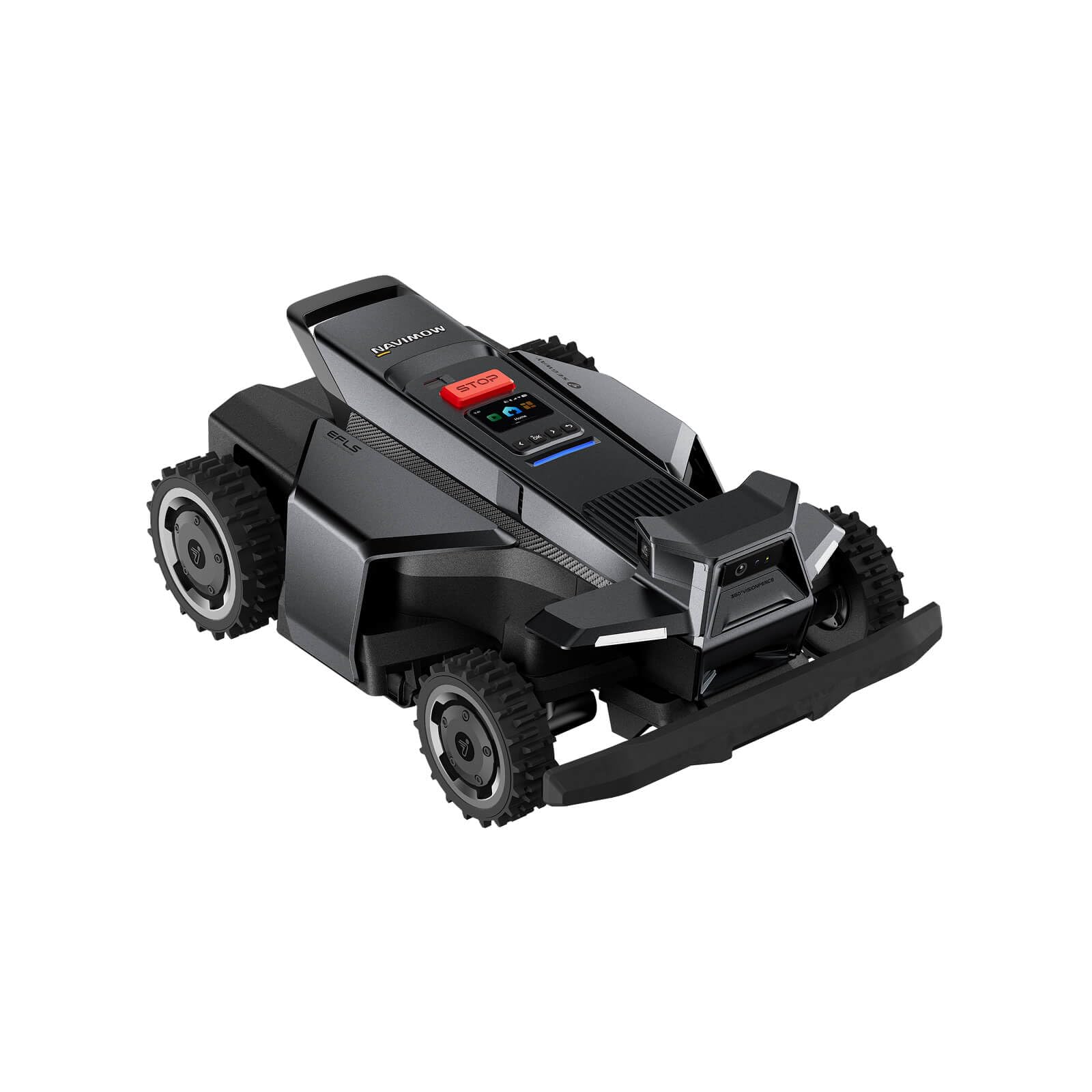
1. Segway Navimow X430 Robot Lawn Mower
Our pick — over 4★ from 70+ verified ratings; the strongest balance of quality and price.
A tank-like 4WD mower that powers through the steepest slopes without breaking stride.
If your yard has a serious hill — we are talking up to 84% (40°) — the Segway Navimow X430 is built for exactly that challenge. It uses an ORV-tuned (off-road vehicle) dual suspension system and Xero-Turn AWD steering to keep the mower stable on uneven terrain, while smart traction control prevents the wheels from scuffing or tearing the turf as it turns. That is a major real-world benefit: zero-turn steering means the mower spins in place without dragging the tires across the grass.
The cutting deck is equally impressive. Dual 180W motors spin two cutting discs with 12 blades across a 17-inch cutting width — that is the widest cut on this list. It handles tall, dense grass through an adaptive blade control system, and the EdgeSense feature lets you trim within 2 inches of borders. The cutting height adjusts from 0.75 inches to 4 inches across 11 positions, so you can go from a golf-green short cut to a longer, healthier grass height. For context, its 17-inch width, versus the LEBOSBO V3’s 6.3-inch width,, which translates to far fewer laps around the yard. Setup is completely wire-free, with one-tap auto mapping using EFLS tri-frequency Network RTK combined with 360° Vision and VIO (Visual Inertial Odometry — a technology that estimates the mower’s position by analyzing camera images). It identifies over 200 obstacle types.
Buyers report the mapping is fast and the mower handles thick grass without getting stuck, though a few mention the 63.71-pound weight can make it tricky to carry across the yard for storage. At the premium end of the spectrum, this is the mower to pick if you have a large, complex, sloped lawn and want the best navigation and cutting performance available.
What it does best
- Climbs extreme 84% (40°) slopes with ease — no other mower here comes close
- 17-inch cutting width is the largest on the list, cutting mowing time significantly
- Superior obstacle detection recognizes over 200 types of objects
The trade-offs
- Weighs 63.71 pounds, so it is not something you will want to move manually often
- Premium price reflects the advanced features but may be overkill for a flat, small lawn
Best for: Owners with steep, large yards who need the most powerful, capable robot mower for extreme terrain and dense grass.
Look elsewhere if: Your lawn is under a quarter of an acre and mostly flat — a lighter, less expensive model will handle it and be easier to move around.
2. ECOVACS Goat A3000 LiDAR PRO
A large-capacity mower that uses dual-LiDAR to map your yard without GPS or wires.
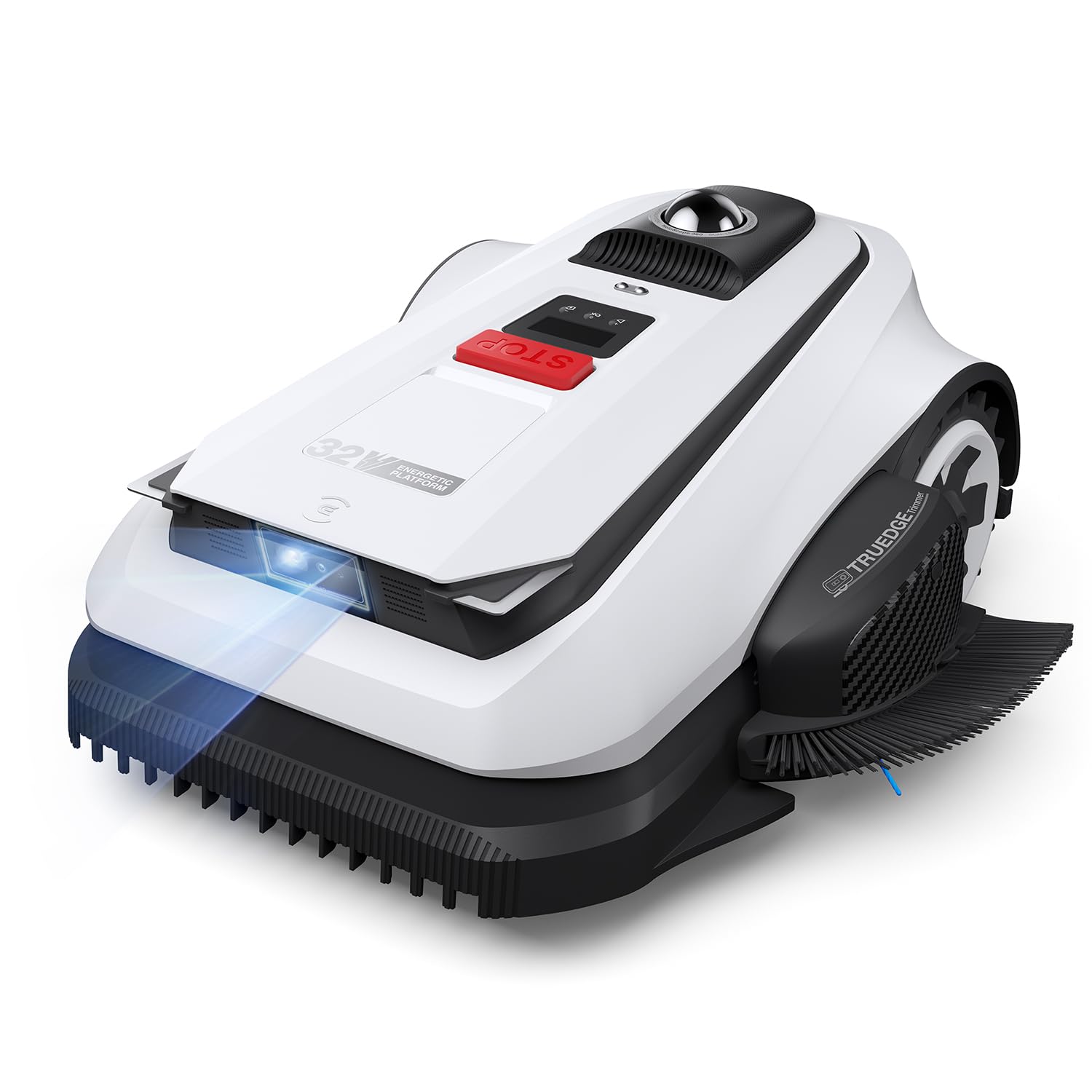
The ECOVACS Goat A3000 LiDAR PRO is a standout choice if your yard has shaded areas, fences, or narrow passages where GPS-based mowers often lose their signal. The HoloScope 360° Dual-LiDAR system (two laser-based sensors that spin continuously to build a 3D map) maintains 2 cm positioning accuracy even under dense tree cover. No perimeter wire and no RTK antenna are required, which makes the initial setup simpler.
Its built-in TruEdge trimmer is a unique feature — it cuts right along sidewalks, driveways, and flower beds, reducing the manual string trimming you would otherwise do after the mower finishes. The 32V high-power platform and dual-blade disc system are designed to handle thick American grass types like Bermuda, Zoysia, Fescue, and St. Augustine. The 12.99-inch cutting width is significantly wider than most mid-range mowers. Owners mention that the mower tackles dense St. Augustine well, though the cutting height range of 1.2 inches to 3.6 inches across 5 positions offers less granular control than some competitors. The 7500 mAh battery provides a 70-minute runtime and recharges fully in about 70 minutes using the 189W fast charger. It can manage up to 3/4 of an acre, making it a strong premium pick for larger yards.
Key strengths
- Dual-LiDAR navigation works flawlessly in shaded or GPS-denied areas under trees
- Integrated TruEdge trimmer cuts along borders, reducing manual touch-up work
- 7500 mAh battery with 189W fast charging is among the highest capacity on the list
Considerations
- Only 5 cutting height positions limit fine-tuning for a specific grass length
- Premium pricing similar to the Segway X430, but slope rating is not specified in the data
Ideal if: You have a medium to large yard with lots of trees, fences, or odd shapes where GPS is unreliable and you still want a completely wire-free setup.
Not the best fit if: You need a very specific cutting height (1.8″, 2.0″, etc.) that requires more than 5 positions to dial in.
3. Segway Navimow i110N
A best-selling mid-range model that combines proven RTK with AI-assisted mapping.
With 496 customer reviews at the time of writing, the Navimow i110N is among the most widely purchased robot mowers on the market. It uses EFLS 2.0, an enhanced RTK positioning technology backed by vision sensors, to deliver stable centimeter-level navigation even in tricky areas like under trees or through narrow passages. Setup is quick: you guide the mower around your lawn with your phone, and an AI-powered Assist Mapping feature automatically fills in the rest of the mapped area. No perimeter wire is required.
This mower is designed for lawns up to 1/4 acre and features a 60-minute battery life. It mows in planned patterns, changes direction after covering 100% of the lawn to minimize track marks, and auto-returns to charge and resume. The 140° field-of-view camera with built-in AI recognizes more than 150 types of obstacles, which is more comprehensive than basic bumper or ultrasonic sensor systems. Customers note the mapping is straightforward and the mower handles narrow passages reliably. The cutting height adjusts through 5 positions. Note that the 4G module for anti-theft tracking is an optional extra, and at 24 pounds, it is light enough to carry between front and back yards if needed.
Where it shines
- Proven RTK+Vision navigation with strong performance under trees and in narrow spaces
- High review count (496) suggests reliable real-world performance
- Light at 24 pounds, making it portable enough to move around the property
Things to note
- Cutting height limited to 5 positions — less adjustment range than some rivals
- Anti-theft tracking requires an optional 4G module, not included in the package
Great pick for: Homeowners with a complex, quarter-acre lawn who want a well-reviewed, reliable wire-free mower from a major brand.
Maybe skip if: Your lawn is larger than 1/4 acre, or you need the widest possible cutting height range (0.8″ to 4″) for a tall-grass lawn.
4. MOVA LiDAX Ultra 1000
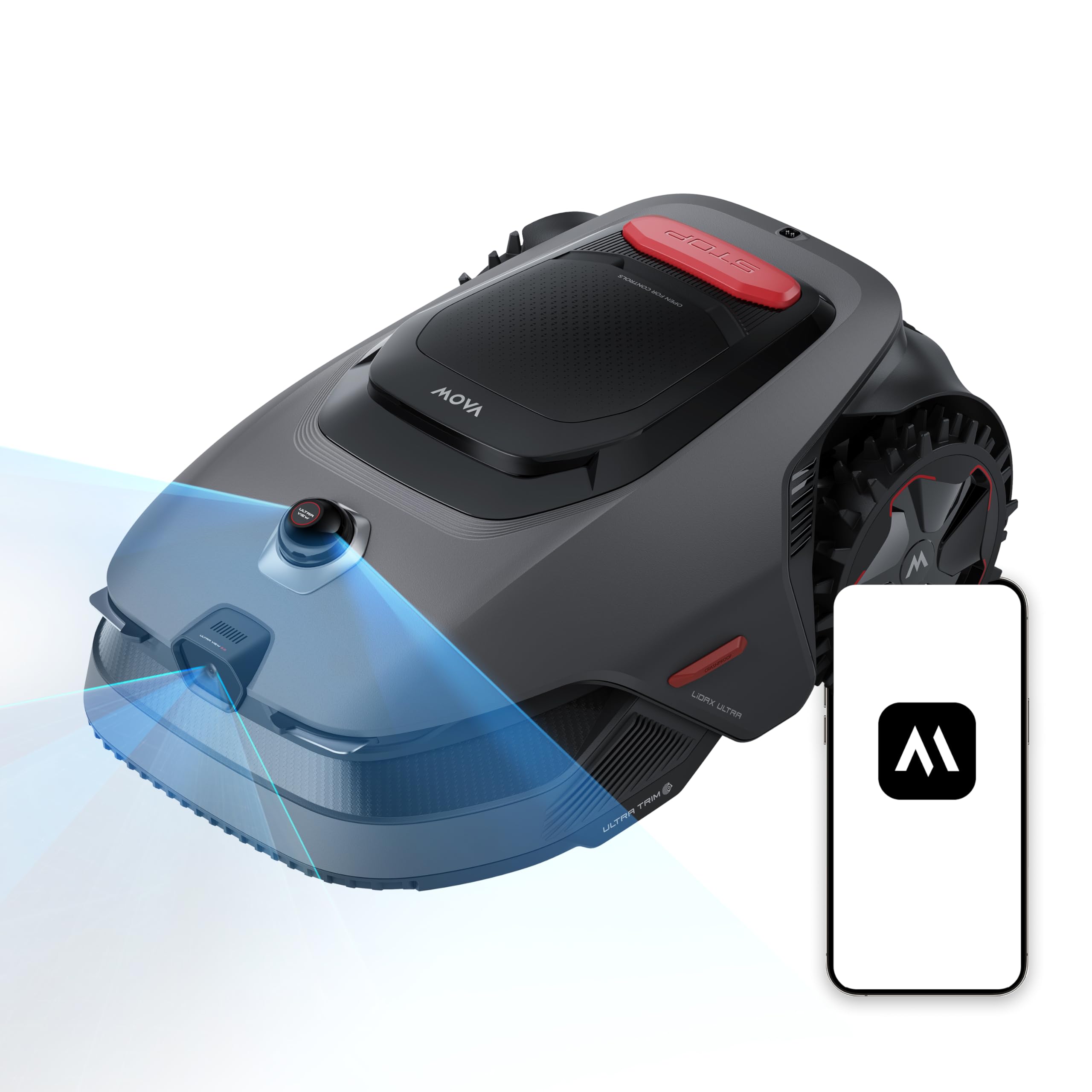
An RTK-free mower that maps your yard in 3D with LiDAR and manages up to 150 zones.
The MOVA LiDAX Ultra 1000 takes a different approach than many other premium mowers by combining AI vision with 360° 3D LiDAR. This means it does not need an RTK station or GPS signal to navigate. The mower auto-maps your yard in 3D with centimeter accuracy, even under dim or harsh light, and it works in complex layouts where a pure satellite system might struggle. This makes it ideal for those who want a totally GPS-independent system.
It can manage up to two independent maps (for front and back yards, for example) and up to 150 managed zones. The UltraTrim 1.0 feature cuts within 2 inches of walls and hedges using a movable disc. The cutting height adjusts electronically from 1.2 inches to 3.9 inches directly from the app. It handles slopes up to 45% and climbs obstacles up to 1.6 inches high. The mower uses smart U-shaped path planning for even coverage and automatically returns to charge and resumes. Reviewers point out the mapping is quick and the dual-map feature is genuinely useful for split yards. The manufacturer backs it with a 3-year warranty.
Why it stands out
- RTK-free navigation works perfectly in shaded or GPS-poor yards using LiDAR and vision
- Manages up to 2 independent maps and 150 zones — ideal for complex front/back layouts
- Cutting height range from 1.2″ to 3.9″ offers the widest adjustment on this list
What to consider
- 30 pounds makes it moderately heavy to carry, though lighter than the 63.7 lb X430
- RTK-free setup is simple, but the price is mid-premium for a 1/4 acre mower
An excellent choice for: Anyone with front and back yards, or a complex lawn with trees and poor sky visibility, who wants a GPS-free, app-controlled mower with wide height adjustment.
Probably not for: Buyers who need a mower for over 1/4 acre — the Ultra 1000 is rated for 0.25 acres.
5. ANTHBOT M9 Robot Lawn Mower
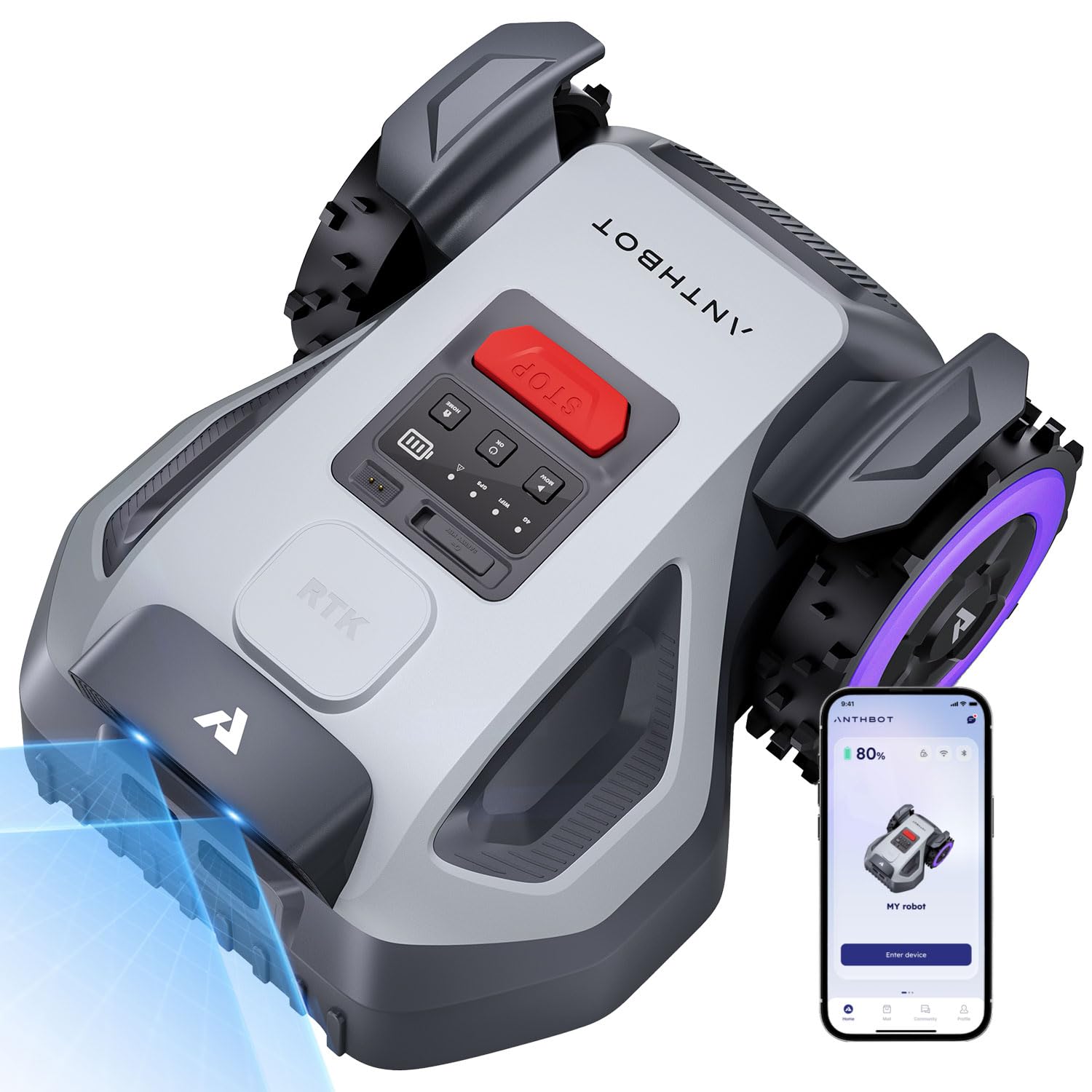
A lightweight, beginner-friendly mower that maps your yard in 10 minutes and identifies 1,000+ obstacles.
The ANTHBOT M9 packs a lot of technology into a very accessible package. It uses a Dual AI Vision System with NRTK (Network RTK — a satellite correction service that provides centimeter-level accuracy without a personal base station) to map your yard. The company says it creates a virtual map all by itself in the ANTHBOT app in about 10 minutes — you do not have to manually drive it around first. It handles slopes up to 45%, and at 21.6 pounds, it is the lightest model among the premium options, which makes it easy to carry up a set of stairs or across the driveway. In comparison, the Segway Navimow X430 weighs 63.71 pounds; the ANTHBOT M9 is 21.6 pounds, so if portability is a priority, this is a major advantage.
The cutting width is 7.9 inches, with a height range from 1.2 inches to 2.7 inches. It uses 5 free-rotating blades to create a carpet-like finish. The obstacle avoidance system uses dual 150° HDR cameras and built-in AI to recognize over 1,000 types of garden objects. It manages up to 30 work zones via the app, and the noise level is listed as ≤58 dB. A small limitation is that the maximum mowing area is stated at 0.3 acres, so it suits small to medium yards. With 369 reviews, it has a solid track record, and buyers often mention the easy setup and good obstacle recognition.
What we like
- Very light at 21.6 pounds — among the most portable robot mowers available
- Maps your yard automatically in 10 minutes without manual driving
- Recognizes over 1,000 obstacle types for excellent safety and navigation
Trade-offs
- Maximum mowing area of 0.3 acres limits its use for larger properties
- Cutting height maximum is 2.7 inches, which is shorter than the 3.9″ on the MOVA Ultra 1000
Best suited for: First-time robot mower buyers with a small to medium yard who want plug-and-play setup, great obstacle detection, and a lightweight machine.
Look elsewhere if: Your lawn is close to 0.5 acres or more — the ANTHBOT M9 is designed for up to 0.3 acres.
6. YARDCARE N1600 PRO Wireless Robotic Lawn Mower
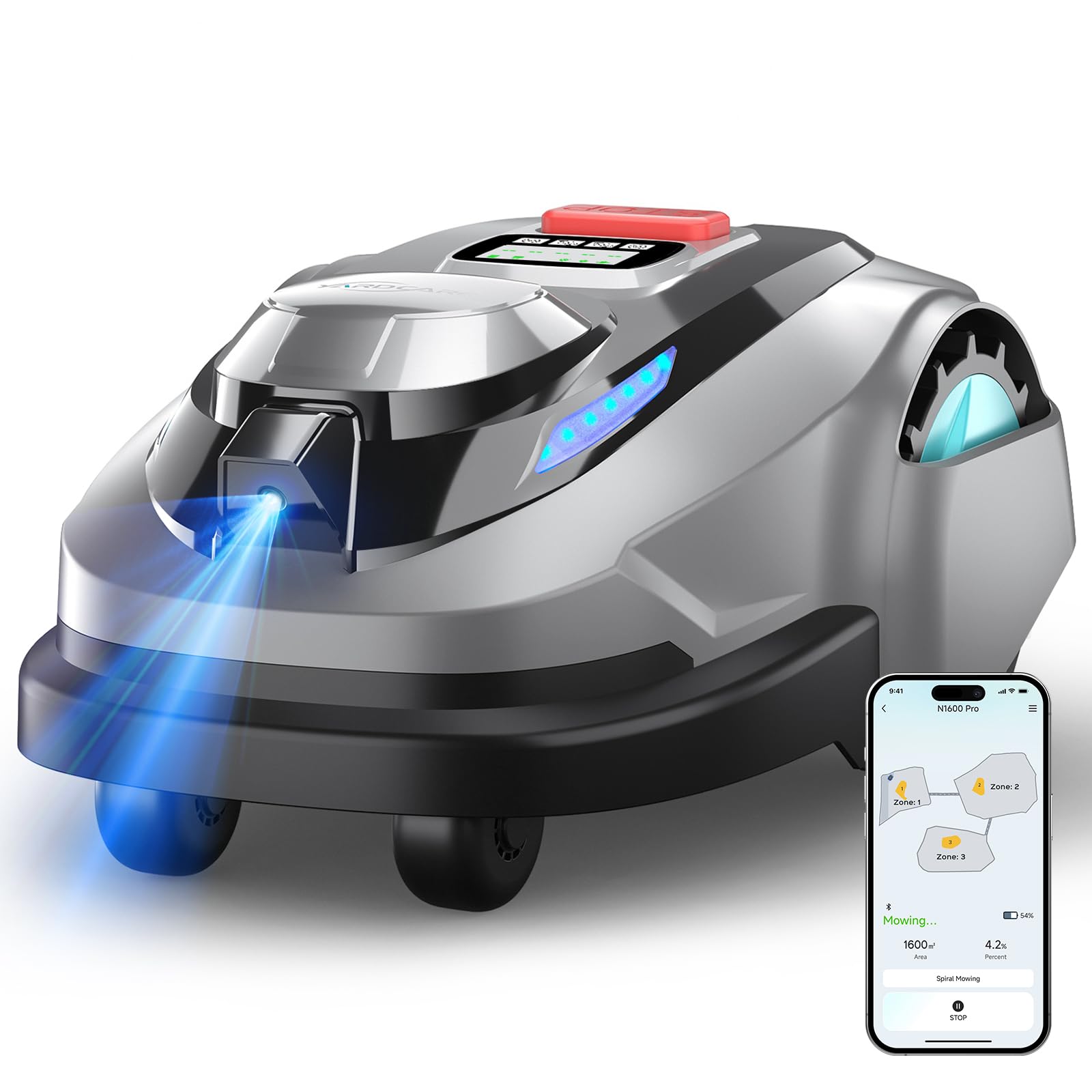
A mid-range power-house offering RTK precision and multi-zone control for yards up to 0.4 acres.
The YARDCARE N1600 PRO is positioned for the buyer who wants reliable RTK navigation and systematic mowing without jumping to the premium tier. It combines RTK positioning with AI visual navigation for centimeter-level accuracy. There are no boundary wires — you create virtual boundaries directly in the app. You can define and manage multiple mowing zones to match different sections of a complex lawn, and the mower will automatically return to charge and resume from where it stopped.
It features a brushless motor, a 7.09-inch cutting width, and an adjustable cutting height from 0.8 inches to 2.4 inches across 17 positions — the highest number of position settings on this list, which gives you very fine control over grass length. For context, the YARDCARE M800Plus below has a maximum cutting height of 2.4 inches, and the ANTHBOT M9’s maximum is 2.7 inches, so this model offers a wider range. It has an advanced 3D obstacle avoidance system and can handle slopes up to 20°. The battery life is rated at 45 minutes. Shoppers say the mower handles the systematic mowing well, though at 39.5 pounds, it is one of the heavier models in the mid-range slot.
Highlights
- Cutting height adjustable across 17 positions — the most granular control on the list
- Wire-free multi-zone control works well for complex yards with separate areas
- Auto-resume and return-to-charge for fully hands-free operation
Limitations
- Battery life of 45 minutes is shorter than the 60-70 minute runtimes of competitors
- Weighs 39.5 pounds — heavier than similarly-sized models like the 21.6 lb ANTHBOT M9
A strong option for: Owners of medium-sized yards (up to 0.4 acres) who want fine cutting-height control, multi-zone mapping, and wire-free RTK navigation at a mid-range price.
Maybe not for: Those with lawns larger than 0.4 acres, as the 45-minute runtime and 0.4 acre coverage limit might leave the job incomplete.
7. YARDCARE M800Plus Robot Lawn Mower
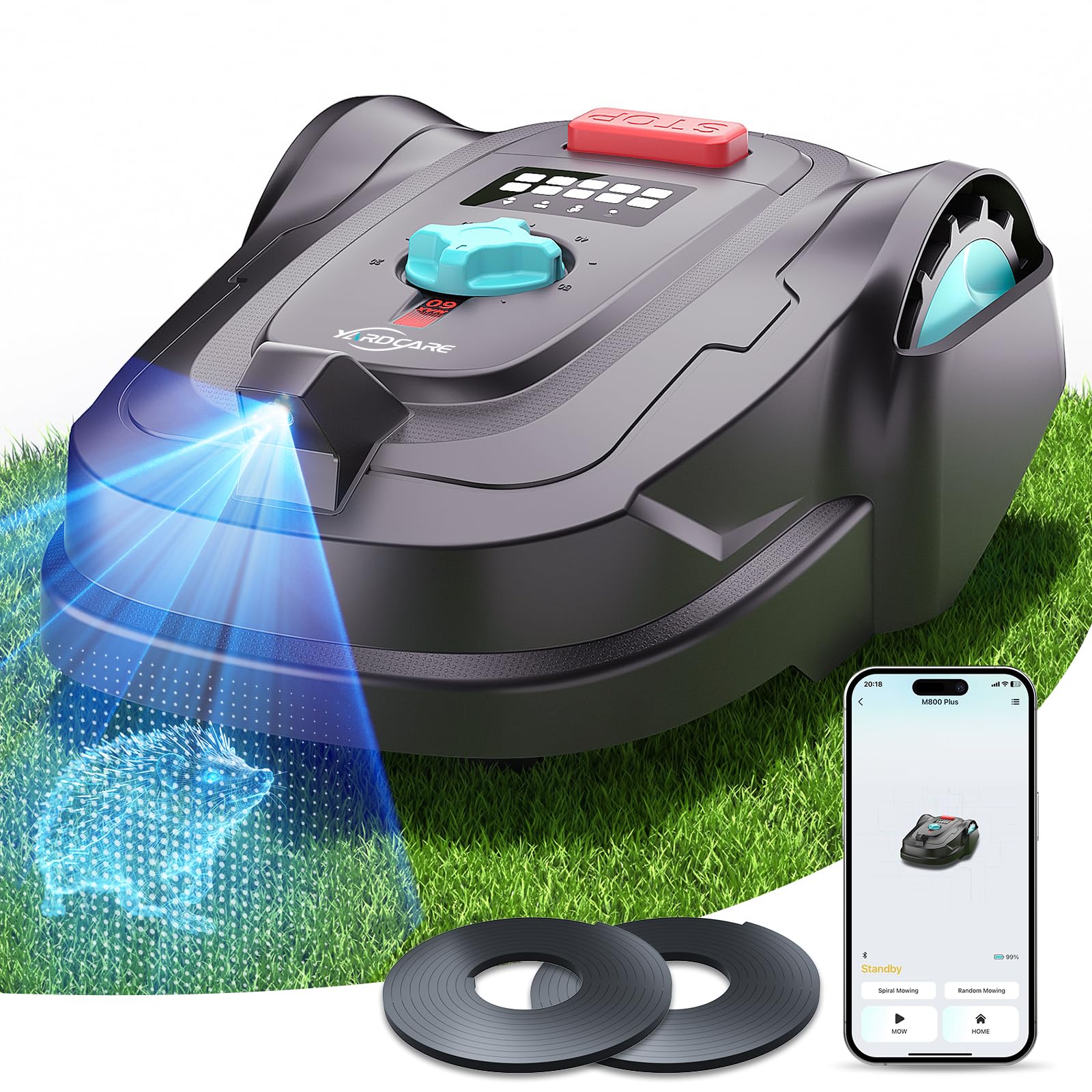
A well-rated, fully cordless mower that climbs 35% slopes and uses a 32-foot magnetic strip for no-go zones.
The YARDCARE M800Plus has earned a perfect 5.0 out of 5 rating from 39 reviews, which suggests very satisfied early adopters. It uses a GPS and 3D vision system for cordless operation — meaning no perimeter wires are needed. The system identifies grass and non-grass areas by sight. For the best results, the manual recommends an initial manual trim if the grass is taller than 2.6 inches. Setup is clean: a 32-foot magnetic strip is included for creating no-go zones around flower beds or paths — no digging at all.
The M800Plus features a three-blade cutting disc with a 7.1-inch cutting width and a height adjustment range from 0.8 inches to 2.4 inches. It can handle slopes up to 35% (20°), which is a solid rating for most residential lawns. It has a spiral spot mowing mode for thicker areas of grass, and it is controlled through the YARDCARE App where you can set schedules and adjust patterns. A notable limitation compared to the N1600 PRO is that it lacks an RTK system and has fewer cutting height positions, but for the price, buyers get a reliable autonomous mower for smaller yards.
Strengths
- Perfect 5.0 rating from nearly 40 reviews indicates strong user satisfaction
- GPS + 3D vision navigation is fully cordless and works on lawns with clear boundaries
- 32-foot magnetic strip makes creating no-go zones very easy
Weaknesses
- Vision-only navigation may struggle in dim light or on lawns without clear visual boundaries
- Maximum cutting height of 2.4 inches and fewer adjustment positions than the N1600 PRO
Perfect for: Someone with a small, visually clear lawn who wants a top-rated, fully wireless mower with simple no-go zone setup and decent slope handling.
Not the best if: Your yard has poor lighting, is heavily shaded, or has grass that grows taller than 2.6 inches before it can mow.
8. LEBOSBO V3 Robotic Lawn Mower
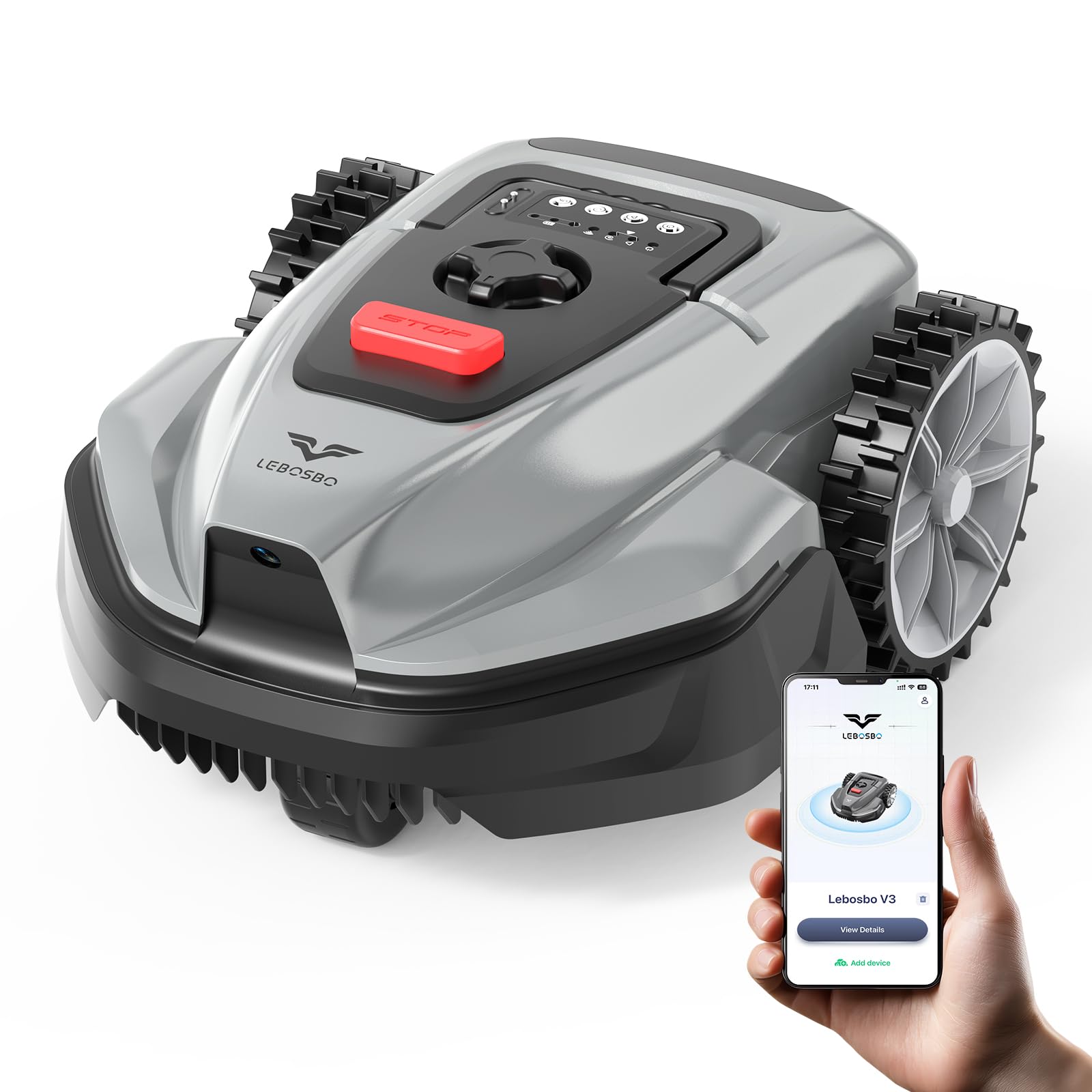
An entry-level AI mower for tiny lawns with plug-and-play simplicity and a 32-foot magnetic strip.
For very small lawns up to 1600 square feet, the LEBOSBO V3 is the most accessible robot mower on this list. It uses AI vision technology for obstacle detection, so it can identify grass areas and restricted zones in real-time without requiring a perimeter wire. The setup is as straightforward as it gets: assemble the included components, charge the mower, and start mowing. The 32-foot magnetic strip lets you mark off no-go zones around flower beds, pet areas, or garden equipment.
The cutting width is 6.3 inches — the narrowest on the list, at 6.3 inches versus the Segway Navimow X430’s 17 inches, meaning more passes are needed for coverage. The cutting height adjusts from 0.8 inches to 2.4 inches. The mower runs on an 18V battery, and a charger is included. The LEBOSBO V3 includes OTA (Over-The-Air) firmware updates through the app, which keeps the mower current with new features. Buyers report it is quiet during operation and very easy to set up for the price. It is a straightforward, no-frills option for the smallest lawns.
Good points
- Very easy setup — no boundary wire, just charge and mow
- AI vision obstacle detection is surprisingly advanced for the budget tier
- Compact and quiet operation suits small urban gardens
Limitations
- 6.3-inch cutting width is the narrowest, so it takes more time to cover even a 1600 sq ft lawn
- Limited to very small spaces up to 1600 sq ft — not suitable for quarter-acre or larger lawns
Best for: First-time buyers with a tiny lawn, patio area, or small garden who want to test the robot mower experience with minimal investment and setup.
Not for: Anyone with a lawn larger than 1600 square feet — the small battery and narrow cutting deck will struggle to keep up.
Understanding the Specs
RTK vs Vision vs LiDAR Navigation
Your robot mower’s navigation system determines how well it finds its way around your yard. RTK (Real-Time Kinematic) is a satellite-based method that uses a reference station to achieve centimeter-level accuracy — it works great in open, sunny yards but can lose signal under heavy tree cover. Vision navigation uses cameras to “see” the lawn and obstacles; it is good for complex gardens but needs decent light. LiDAR (Light Detection and Ranging) uses rotating laser sensors to create a 3D map of the yard, working independently of light or satellite signal. The best mowers often combine two of these systems for redundancy.
Cutting Width and Height Adjustment
Cutting width (measured in inches) tells you how wide a strip the mower cuts in one pass. A wider cut like the 17-inch X430 means fewer passes and faster mowing, while a 6.3-inch cut is fine for small lawns but takes longer. The adjustable cutting height range and the number of height positions let you set the grass to your preferred length. A wider range (e.g., 1.2″ to 3.9″) gives you more control over the final look of your lawn, allowing you to go short in summer or leave it longer for drought resilience.
Slope Rating (Percentage vs Degrees)
The slope rating tells you the steepest incline the mower can climb without losing traction or tipping. Ratings are often given in percentages (a 45% slope means the yard rises 45 feet for every 100 feet of horizontal distance) or degrees. A 45% slope is roughly a 24° angle. Most residential lawns are under 35% (about 19°). If you have a steep hill, look for 4WD with a high percentage like 84% or a solid 20°-45% range.
Battery Capacity and Auto-Return Charging
Battery capacity (measured in mAh or runtime in minutes) determines how long the mower works before needing a recharge. A 7500 mAh battery might run for 70 minutes. The key feature is auto-return: the mower senses low battery, drives back to the charging dock, recharges, and then resumes mowing exactly where it stopped. This means a single mowing session can take hours of real clock time for large lawns, but the machine does the whole job without you being present.
FAQ
Do battery powered robot lawn mowers require a perimeter wire?
How long does a battery powered robot mower last on a single charge?
Can a robot lawn mower handle hills and slopes?
What is the difference between RTK and LiDAR navigation in robot mowers?
Will a robot mower cut grass that is very long or thick?
How do I set up no-go zones for my robot mower?
Can a robot lawn mower be left in the rain?
How noisy is a battery powered robot lawn mower compared to a gas mower?
What kind of maintenance does a robot mower need?
Final Thoughts: The Verdict
If you want one dependable pick, the battery powered robot lawn mower winner is the Segway Navimow X430 because it combines the widest cutting deck with class-leading slope handling and top-tier navigation. If you want a LiDAR-based system that works perfectly under trees, grab the ECOVACS Goat A3000 LiDAR PRO. And for the best value with excellent obstacle detection and a lightweight build, the standout is the ANTHBOT M9.
How We Picked
We do not accept paid placement. Every pick is matched to a real buyer and a real use-case; we do not hands-on test units.
Sources & Methodology
Specifications: manufacturer listings and product documentation. Review insights: verified customer reviews, as of July 2026. Pricing: not shown on this page (it changes often); check the current price via the retailer link.
As an Amazon Associate, Lawn Gear Lab earns from qualifying purchases. This does not affect which products we feature.