
A ceramic pot that looks antique but arrives cracked, a plastic planter that claims to be “sturdy” but flexes under the weight of wet soil — the difference between a pot that elevates your decor and one that becomes a frustration comes down to material density, drainage engineering, and glaze quality. The market is flooded with lookalikes, so knowing which specs actually matter separates a smart purchase from a regretful one.
I’m Rikta — the co-founder and writer behind Lawn Gear Lab. I’ve spent dozens of hours cross-referencing ceramic firing temperatures, polypropylene thickness ratings, drainage hole geometries, and real owner durability reports to build this guide around measurable, category-specific data rather than surface-level styling claims.
Whether you need a petite succulent holder or a large statement floor planter, this guide will help you identify the best at home pots for plants by focusing on the specs that keep your greenery thriving and your space looking intentional.
How To Choose The Best At Home Pots For Plants
Selecting a pot for your home involves more than matching a color to your sofa. The wrong material can suffocate roots, the wrong drainage can rot them, and the wrong weight can make repotting a struggle. Here are the three criteria that define a well-engineered houseplant pot.
Material Density and Wall Thickness
Ceramic and porcelain pots offer mass that insulates roots from rapid temperature swings — a 5.5mm thick plastic pot, by contrast, transfers heat almost instantly. For indoor use, look for ceramic wall thickness around 4–6mm; thinner walls chip easily, thicker walls become unnecessarily heavy. Plastic pots under 4mm wall thickness often crack when moved with wet soil inside.
Drainage Engineering
Not all drainage holes are equal. A single small center hole (under ½ inch) clogs fast. The best designs use multiple trapezoid-shaped holes or one hole at least ¾ inch wide, paired with a mesh pad or silicone plug. A pot without a drainage hole forces you to layer pebbles, which only raises the water table closer to roots — avoid it unless you’re potting an artificial plant.
Glaze and Finish Selection
Glossy glazes seal the pot completely, reducing water evaporation through the walls — better for moisture-loving plants like ferns but risky for succulents. Unglazed or crackle-glazed interiors allow some breathability. Reactive glazes and crackle finishes add visual depth but can feel rough; ensure the interior is smooth enough not to scrape roots during repotting.
Quick Comparison
On smaller screens, swipe sideways to see the full table.
| Model | Category | Best For | Key Spec | Amazon |
|---|---|---|---|---|
| YBX 8 + 6 Inch Set | Terracotta | Boho decor, succulents | 1200°C fired ceramic | Amazon |
| UOUZ 12/10/9 Inch Set | Plastic | Large floor plants, lightweight | 5.5mm polypropylene | Amazon |
| HERDUK 6 Inch | Porcelain | Modern minimalist decor | 6″D x 6″H cylinder | Amazon |
| LE TAUCI 5.1 + 6.4 Inch | Ceramic | Kitchen herbs, small succulents | Includes silicone plugs | Amazon |
| EFISPSS Rainbow Pearl 3-Piece | Ceramic | Budget multi-pot setups | Unglazed interior | Amazon |
| Tuscan Ceramic 6.29 Inch | Ceramic | Farmhouse, vintage decor | Crackle glaze finish | Amazon |
| Xiaan Jiaju Lavender 6.29 Inch | Ceramic | French country, gift giving | Distressed finish | Amazon |
In‑Depth Reviews
1. YBX 8 Inch + 6 Inch Ceramic Plant Pots Set

The YBX set stands apart because it combines handmade artisan firing at 1200°C with true terracotta material, which breathes better than sealed ceramic. The 8-inch pot offers 5.12 inches of planting depth — enough for a mature pothos or a compact fiddle-leaf fig — while the 6-inch pot covers smaller specimens. Both include silicone plugs and mesh pads, giving you control over drainage and soil retention simultaneously.
Owners consistently report that the boho-style decal patterns hold up through outdoor exposure without peeling or fading, thanks to the high firing temperature that bonds the artwork into the glaze. The neutral white-and-terracotta palette works across farmhouse, modern, and Scandinavian interiors without clashing.
At 5.24 pounds for the pair, these feel substantial but not immovable. The only trade-off is that the terracotta body dries slightly faster than fully glazed ceramic, which benefits succulents and cacti but requires more frequent watering for moisture-loving plants like ferns.
What works
- High-temperature firing prevents outdoor fading and cracking
- Includes both mesh pads and silicone plugs for drainage flexibility
- Terracotta body promotes root aeration better than sealed ceramic
What doesn’t
- Terracotta dries faster, requiring more frequent watering for thirsty plants
- Boho decal patterns may not suit ultra-minimalist decor
2. UOUZ 12/10/9 Large Modern Plant Pots

If you need to pot a large Monstera or a floor-standing Fiddle-leaf Fig without spending on ceramic, this polypropylene trio delivers the volume you need at a fraction of the weight. The 12-inch pot holds up to 5 gallons of soil, while the 10- and 9-inch pots cover medium-to-large specimens. At 5.5mm wall thickness on the largest pot, these are stiffer than standard nursery-grade plastic and resist flexing when filled with damp soil.
The 48 trapezoid-shaped drainage holes per pot are a genuine engineering upgrade over the typical three round holes — they drain faster and resist clogging. Each pot includes a matching saucer, and the matte black-with-green-speckle finish hides minor dirt better than glossy surfaces. Owners note that the shallow saucer design works well for catching excess water without adding bulk.
The main compromise is material: plastic lacks the thermal mass of ceramic, so pots in direct sun or near drafty windows will experience wider temperature swings. The textured matte finish also shows dust and dry soil residue more readily than smooth glazed surfaces.
What works
- Three sizes cover small to large floor plants in one purchase
- 48 trapezoid drainage holes prevent soil clogging
- Lightweight polypropylene is easy to move when repotting
What doesn’t
- Plastic walls offer less root temperature insulation than ceramic
- Matte exterior shows dirt and dry soil residue
3. HERDUK 6 Inch Porcelain Planter Pot

The HERDUK 6-inch pot is a study in restrained design — a simple cylinder with horizontal grooved lines and a cracked green glaze over a beige base. At 6 inches both wide and tall, the proportions are nearly cubical, giving compact root systems like those of snake plants or ZZ plants enough vertical depth without excessive volume that could hold moisture too long.
The porcelain body is noticeably denser than standard earthenware ceramic, weighing 16 ounces at this size, which gives it a solid, premium feel on a tabletop. The included saucer fits flush against the base so the two pieces appear as one continuous form. Owners praise the included cone-shaped mesh pad that prevents soil from escaping through the drainage hole.
Where this pot falls short is single-unit value — you get one pot at a premium price point, making it less economical if you need to outfit multiple plants at once. The cracked glaze also has a slightly textured feel that can trap dust in the grooves if you don’t wipe it down regularly.
What works
- Dense porcelain construction feels substantial and durable
- Saucer sits flush, creating a clean monolithic appearance
- Cracked glaze adds unique visual texture without being fragile
What doesn’t
- Single pot purchase offers less value for multi-plant buyers
- Textured glaze grooves can collect dust over time
4. LE TAUCI 5.1 + 6.4 Inch Footed Ceramic Pots

LE TAUCI’s set brings a footed pedestal design that elevates the pot slightly above the surface — improving air circulation underneath and preventing water rings on wooden furniture. The reactive glaze produces subtle color variations across the white finish, so every pair has unique depth. The 6.4-inch pot fits standard 6-inch nursery inserts perfectly, while the 5.1-inch pot suits 4-inch nursery pots.
What makes this set genuinely useful for plant health is the included silicone plugs and drainage hole nets. You can leave the plug out for normal drainage, insert it to create a sealed cachepot for a nursery pot inside, or use the net to retain soil while allowing water through. Owners confirm the smooth glazed interior doesn’t snag roots during repotting.
The footed base, while elegant, creates a slight wobble on uneven surfaces like outdoor patio tables. At 1.88 kilograms for the pair, these are heavier than similarly sized pots, which is a positive for stability but a negative if you frequently rearrange your plant display.
What works
- Footed design improves airflow and prevents furniture water marks
- Includes silicone plugs and mesh nets for drainage customization
- Smooth glazed interior won’t damage roots during repotting
What doesn’t
- Footed base can wobble on uneven outdoor surfaces
- Heavier than average for their size class
5. EFISPSS Rainbow Pearl Glaze 4+5+6 Inch Set
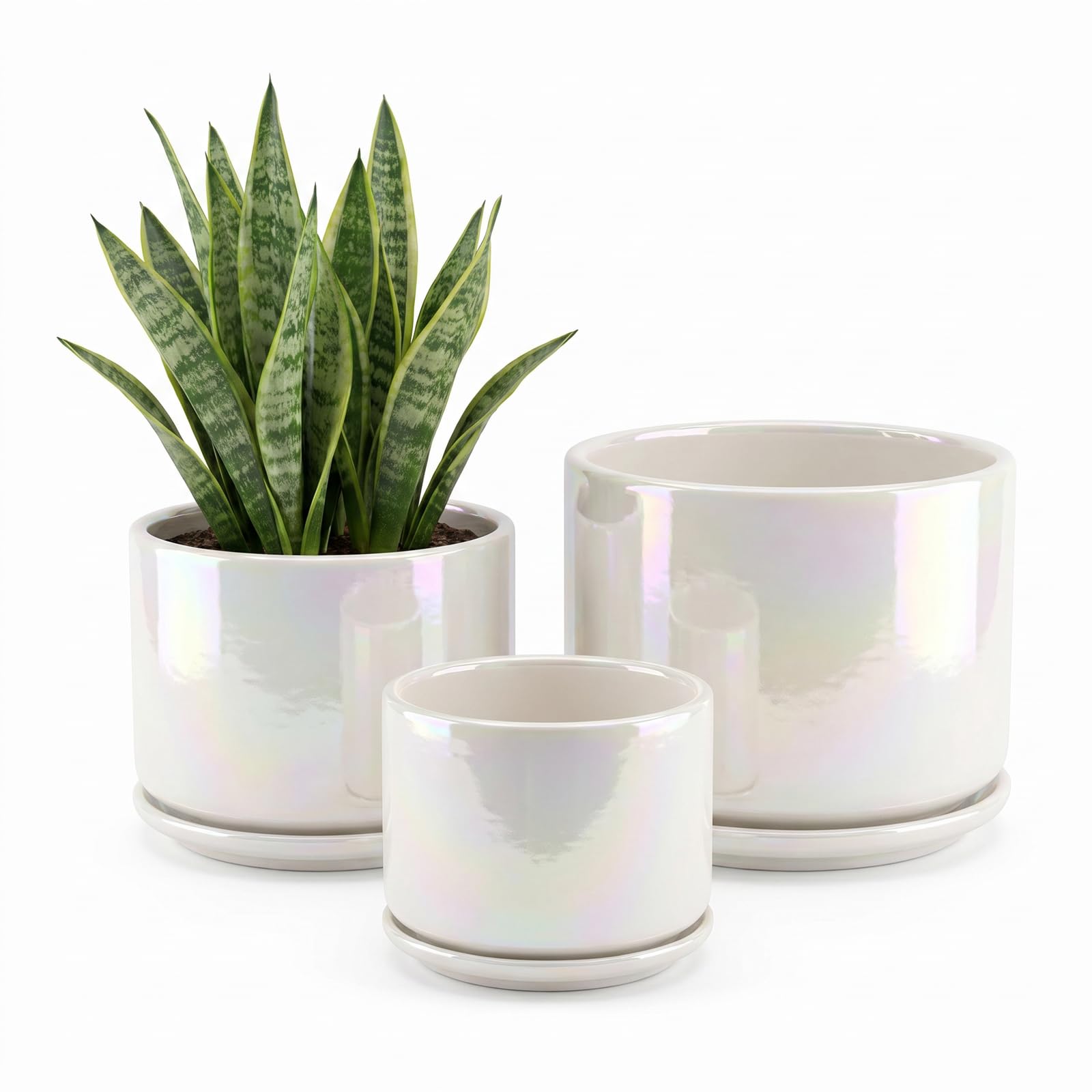
The EFISPSS set delivers three graduated sizes in a single box, making it an ideal starter kit for a windowsill collection. The iridescent rainbow pearl glaze shifts color depending on lighting — appearing peach in warm light and lavender in cool light. More importantly, the interior is left unglazed, which promotes water penetration through the clay walls and creates a more breathable environment for root systems compared to fully sealed ceramic pots.
All three pots feature drainage holes, and the saucers are permanently attached to the base. This integrated design prevents the pot from lifting off the saucer when carried, but it also means you can’t separate the two for thorough cleaning. Owners report that the largest saucer can arrive cracked despite intact packaging, though the seller typically resolves the issue.
The unglazed interior, while beneficial for airflow, does mean moisture wicks through the clay more readily. If you set these on absorbent surfaces like unsealed wood or fabric, you may notice damp rings forming underneath even with the saucer in place.
What works
- Unglazed interior improves root aeration and drainage
- Three graduated sizes cover multiple plant needs in one purchase
- Iridescent glaze adds distinctive color-shifting visual appeal
What doesn’t
- Permanently attached saucers make deep cleaning difficult
- Unglazed walls can leave damp rings on absorbent surfaces
6. Tuscan Ceramic 6.29 Inch Rustic Planter

This Xiaan Jiaju planter captures the worn, aged look of Tuscan pottery through a deliberate crackle glaze and distressed finish that makes each pot look like a vintage market find. At 6.29 inches in diameter and 5.12 inches tall, it fits well on a bookshelf, nightstand, or kitchen counter. The ceramic body weighs 1.17 kilograms, offering enough heft to anchor a medium-sized snake plant or pothos without tipping.
Buyers consistently report that the floral embossed pattern and weathered texture look more expensive than the price suggests. The crackle finish is sealed, so the surface feels smooth to the touch despite its aged appearance — dust doesn’t settle into the cracks as it might with actual aged pottery. The drainage hole at the bottom is centrally located and adequately sized for most potting mixes.
The trade-off with this type of decorative finish is that the distressed look is intentionally uneven — the glaze distribution varies pot to pot, so if you buy multiples expecting exact uniformity, you may be disappointed. The crackle pattern is purely aesthetic and does not affect breathability since the interior is fully glazed.
What works
- Distressed crackle glaze mimics authentic antique Tuscan pottery
- Heavy ceramic build provides stability for medium-sized plants
- Sealed surface remains smooth and easy to clean
What doesn’t
- Glaze variation between pots means no two look exactly alike
- Fully glazed interior offers no breathability for soil
7. Xiaan Jiaju 6.29 Inch Lavender Ceramic Planter
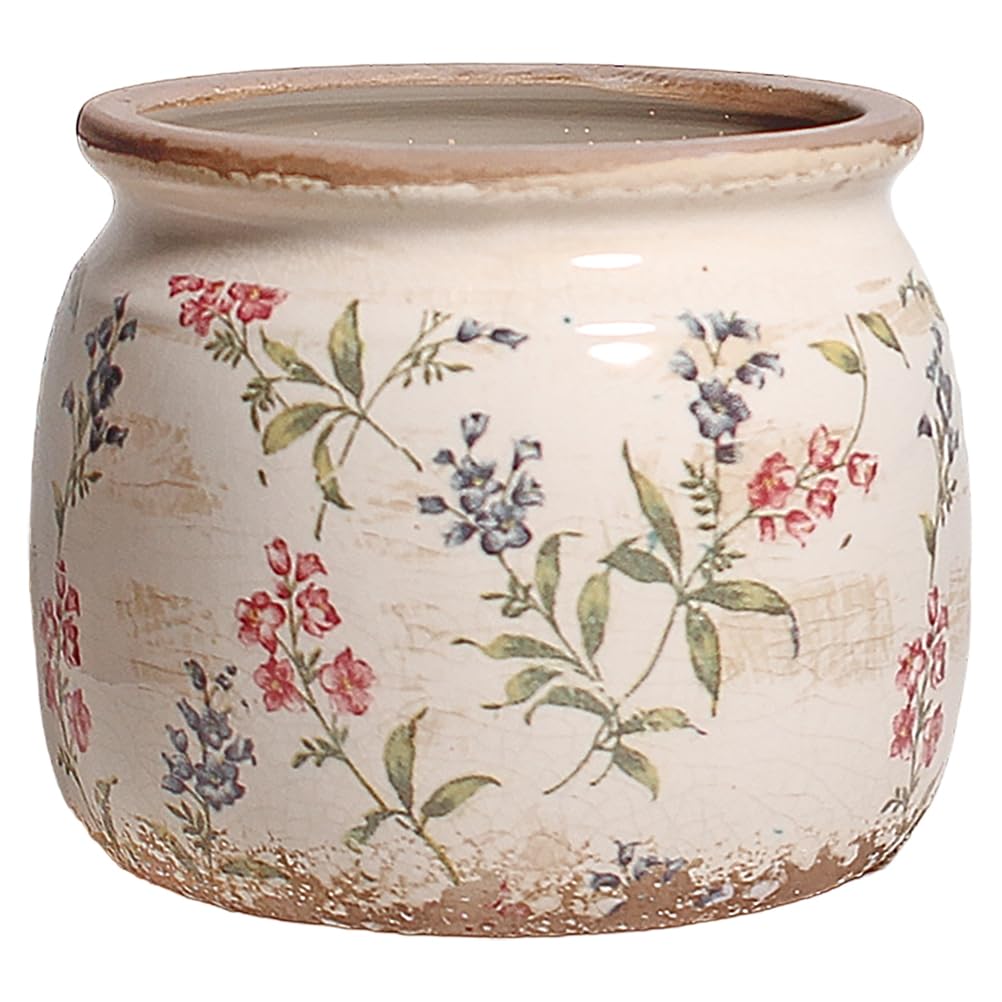
Sharing the same 6.29 x 5.12 inch footprint as the Tuscan model above, this Xiaan Jiaju variant swaps the green finish for a purple-red lavender hue with the same distressed crackle glaze and floral embossed pattern. The color leans toward a muted berry tone rather than bright lavender, which makes it easier to integrate into warm-toned decor without clashing. The ceramic weight is slightly lighter at 0.96 kilograms, suggesting a thinner wall profile.
The primary use case here is accent decor — this pot stands out on a neutral shelf or contrasted against white cabinetry. The drainage hole and crackle finish are functionally identical to the Tuscan version, and the same potential for glaze variation applies. Owners who purchased multiples report the color can vary slightly between batches, but all agree the distressed look remains consistent in quality.
The narrower value proposition compared to multi-pot sets is that you get a single pot at a similar price point to sets containing two or three pieces. The appeal is purely visual — if you love the lavender color and floral motif, this pot is a beautiful accent. If you just need functional planters, multi-piece sets from EFISPSS or LE TAUCI deliver more value.
What works
- Unique lavender-purple hue adds a warm accent to neutral spaces
- Distressed crackle finish gives an antique look out of the box
- Adequate single drainage hole for standard potting needs
What doesn’t
- Single pot at this price competes with multi-piece sets
- Color may vary slightly between production batches
Hardware & Specs Guide
Drainage Hole Geometry
The shape and pattern of drainage holes directly impact how fast excess water exits and whether soil stays in the pot. Trapezoid-shaped holes, like the 48 on the UOUZ polypropylene pots, resist clogging from perlite and bark particles better than round holes. For ceramic pots, a single hole under ½ inch diameter can clog within weeks if your soil mix contains fine particles. The ideal solution is one hole at least ¾ inch wide or multiple holes arranged radially.
Glaze Interior vs Unglazed Interior
A fully glazed interior seals the ceramic walls, preventing moisture from wicking outward — this is fine for plants that prefer consistent moisture like peace lilies and ferns. An unglazed interior, like the EFISPSS rainbow pearl pots, allows the clay to absorb water from the soil and release it through the exterior walls, creating a self-regulating moisture buffer. The trade-off: unglazed pots can leave damp rings on furniture even with a saucer, and they dry out faster in arid indoor environments.
Wall Thickness and Material Density
Ceramic wall thickness between 4mm and 6mm provides enough thermal mass to protect roots from minor temperature shifts without making the pot excessively heavy. Polypropylene pots under 4mm thickness can deform when filled with wet soil. Porcelain, like the HERDUK pot, is denser than earthenware ceramic — a 6-inch porcelain pot weighs roughly 16 ounces compared to 12 ounces for a similar earthenware pot, indicating higher density and greater durability.
Footed Base vs Flat Base
A footed base elevates the pot body off the surface, allowing air to circulate underneath and preventing water from pooling around the base of the pot. This reduces the risk of root rot on plants that sit directly in their outer pots. Flat-bottomed pots with attached saucers, like the EFISPSS set, are more stable on uneven surfaces but trap a thin film of water between the pot and saucer if the drainage holes don’t fully clear.
FAQ
Do ceramic plant pots need a drainage hole for indoor use?
What does crackle glaze mean and does it affect durability?
Is terracotta or glazed ceramic better for indoor succulents?
Why do some ceramic pots come with silicone plugs for the drainage hole?
Final Thoughts: The Verdict
For most gardeners, the at home pots for plants winner is the YBX 8 + 6 Inch Ceramic Set because it pairs high-temperature fired terracotta breathability with the versatility of two sizes, mesh pads, and silicone plugs. If you need large capacity without the weight, grab the UOUZ 12/10/9 Inch Plastic Set. And for a precise two-pot kitchen-grade set with customizable drainage, nothing beats the LE TAUCI Footed Ceramic Set.