
Specs are compiled from manufacturer listings and verified buyer reviews and can change over time — please confirm the key details on the product page before buying.
Aphids multiply fast. One day you see a few, the next day they are clustered on new growth, sucking the life out of your roses, tomatoes, or fruit trees. You need a method that stops them — and stops them now — without turning your garden into a chemistry experiment. The right approach depends on if you want to smother them on contact, trap them before they land, or prevent the next generation from hatching.
I’m Rikta — the founder and writer behind Lawn Gear Lab. This guide is built by comparing the manufacturers’ published specifications and the patterns across verified customer reviews, so you get each pick’s real strengths and trade-offs instead of marketing spin.
The 7 products here cover sticky traps that catch flying adults, neem-oil sprays that kill eggs and larvae, and a synthetic last-resort chemical for stubborn outbreaks. Matching each tool to the exact stage of an aphid infestation is the real key to aphid control.
Quick Picks
- Garden Safe Brand Fungicide3, 1 Gallon — Best Overall
- Bonide All Seasons Horticultural & Dormant Spray Oil, 32 oz — Best Value
- Monterey Neem Oil RTU – 32 oz — Top Performer
- Fertilome (12246) Triple Action, 32 oz — Premium Pick
- Hi-Yield 55% Malathion Spray, 32 oz — Heavy Duty
- 60PCS Yellow Sticky Traps by PESTCON — Budget Friendly
- MAXGUARD (30 Pack) Yellow Stake Sticky Traps — Compact Pick
How To Choose The Best Aphid Control
Aphid control depends on a simple decision: do you want to prevent them from landing, kill them on contact, or stop the next generation from hatching? Each method works best at a different stage of the infestation and for different types of plants.
Match the Method to the Life Stage
Sticky yellow traps only catch adult aphids that are flying or crawling between plants. They do nothing to eggs in the soil or larvae on the leaves. For a full solution, you pair traps with a spray that kills eggs and larvae — usually a neem-oil or horticultural-oil product.
Check the Active Ingredient
Neem oil works as a fungicide, insecticide, and miticide all in one. It smothers soft-bodied insects like aphids and prevents fungal diseases like powdery mildew. Mineral oil (the active ingredient in some dormant sprays) works the same way but is designed for year-round use. Malathion is a synthetic chemical and should be a last resort for stubborn outbreaks that organic options cannot touch.
Ready-to-Use vs Concentrate
A ready-to-use (RTU) spray lets you shake and spray with no mixing — convenient for small gardens or quick spot treatments. A concentrate requires you to measure and mix with water in a tank or hose-end sprayer. Concentrates are more economical for large gardens or repeated applications.
Quick Comparison
On smaller screens, swipe sideways to see the full table.
| Model | Best For | Type | Strength / Count | Volume | Amazon |
|---|---|---|---|---|---|
| Garden Safe Fungicide3 | Triple threat neem oil spray | Liquid RTU Spray | Neem Oil Extract | 128 fl oz | Amazon |
| Monterey Neem Oil RTU | Ready-to-use convenience | Liquid RTU Spray | Neem Oil Extract | 32 fl oz | Amazon |
| Bonide All Seasons Oil | Year-round organic oil | Liquid Concentrate | Mineral Oil | 32 fl oz | Amazon |
| Fertilome Triple Action | Neem oil with miticide | Liquid Concentrate | Neem Oil | 32 fl oz | Amazon |
| Hi-Yield Malathion | Synthetic chemical last resort | Liquid Concentrate | 55% Malathion | 32 fl oz | Amazon |
| PESTCON Sticky Traps | High volume sticky traps | Sticky Trap | 60 pieces | — | Amazon |
| MAXGUARD Sticky Traps | Sturdy dual-sided stakes | Sticky Trap | 30 pieces | — | Amazon |
In‑Depth Reviews
1. Garden Safe Brand Fungicide3, 1 Gallon
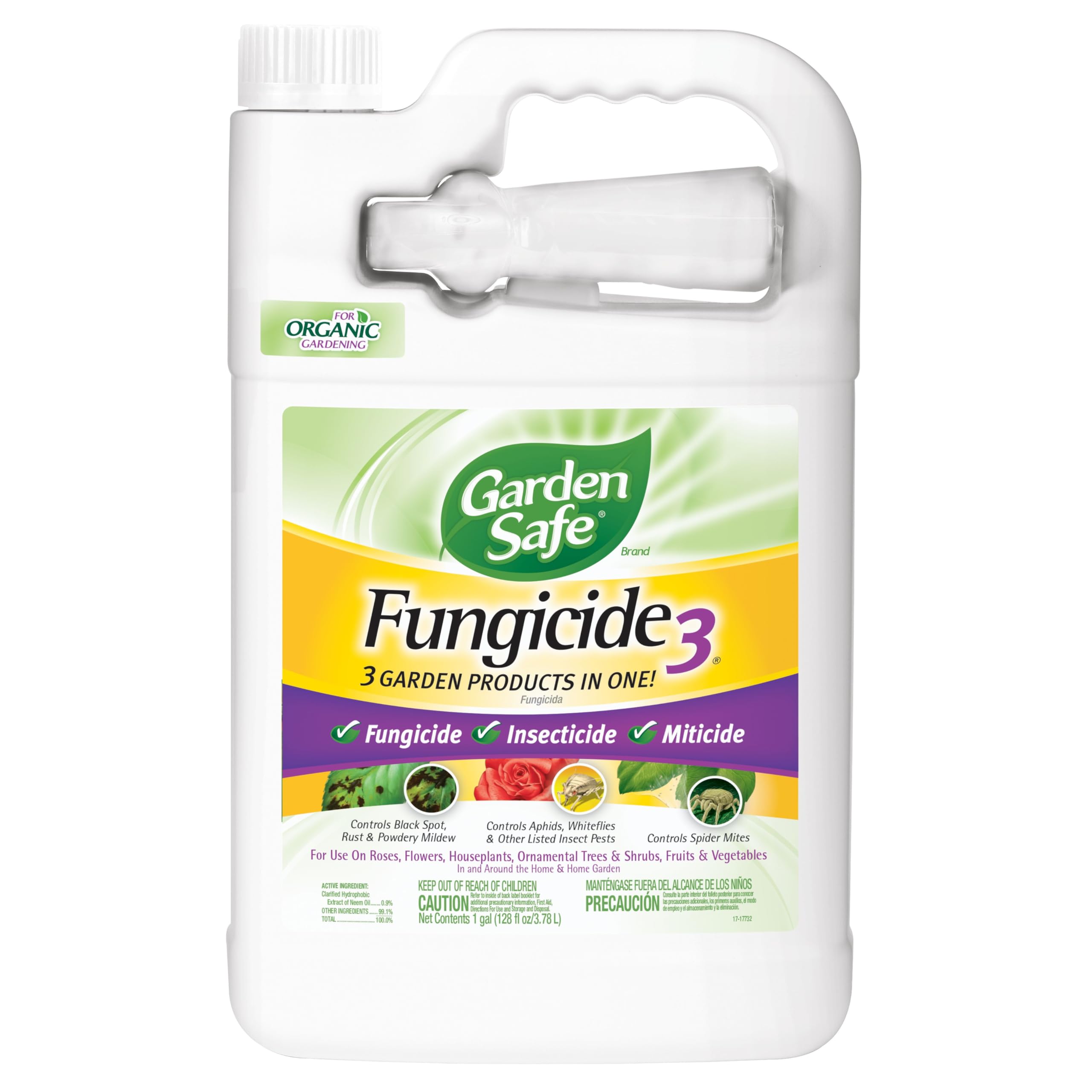
The gallon-sized workhorse that covers your entire garden in one spray.
You stop aphids, fungus, and mites with a single product here. The active ingredient is neem oil extract, which smothers aphids, spider mites, and whiteflies while also preventing fungal diseases like black spot and powdery mildew. At 128 fluid ounces, this is 4 times the volume of the Bonide All Seasons Oil, so you refill less often and get better value per application with multiple beds or trees.
Buyers report that this stuff works so well you should “use less than half the recommended dose” on the first application to avoid burning tender leaves. A few reviewers mention that the included sprayer is awkward — the hose is only about 4 inches long — so you may want to swap it for a separate pump sprayer for better reach. Many users saw greener foliage and more blossoms with weekly use during growing season.
If you want a single all-in-one solution for aphids, fungus, and mites that lasts all season, this gallon jug is it. The only real downside is the sprayer design, but the product itself is tough to beat.
Why it stands out
- Triple-action (fungicide, insecticide, miticide) saves buying separate products
- 128 fl oz volume lasts through a large garden season
- Neem oil extract is approved for organic gardening
The trade-offs
- Included sprayer has very short hose — may need a separate sprayer
- Can burn plants if used at full strength during hot daytime sun
Reach for this if: you need a single product that covers aphids, fungus, and mites for a medium-to-large garden.
Look elsewhere if: you only have a few small potted plants — the gallon size is overkill and the sprayer design frustrates tight spaces.
2. Bonide All Seasons Horticultural & Dormant Spray Oil, 32 oz

A mineral oil spray you can use from dormant season through harvest.
Unlike neem-oil sprays that are mostly for the growing season, this ready-to-spray concentrate works year-round — dormant stage, green tip stage, and during active growth. The active ingredient is mineral oil, which envelops and smothers soft-bodied insects like aphids, scale, mites, and mealybugs without leaving toxic residues. It is approved for organic gardening and safe around people and pets once dry.
One reviewer noted that it “took care of the black bean aphids on my Spanish Broom” after a thorough soaking, with no chemical odors afterward. Another reviewer notes that the hose-end sprayer included with the bottle is poorly calibrated and messy — they recommend decanting the concentrate into a pump sprayer for better control. At 32 fluid ounces, it is 4 times smaller than the Garden Safe gallon, but it is a concentrate, so it stretches further per ounce.
If you want an organic oil you can use on fruit trees, ornamentals, and vegetables from early spring through fall, this is a great mid-range option that punches above its price.
Smart investment for small yards: one reviewer says this is the “only pesticide needed” for a small yard, controlling worms, sooty mildew, fungus, and thrips.
Who it fits: gardeners who want a single organic oil spray that works in every season on a wide variety of plants.
Who might skip: anyone who needs a built-in sprayer that works well — plan to buy a separate pump sprayer.
3. Monterey Neem Oil RTU – 32 oz
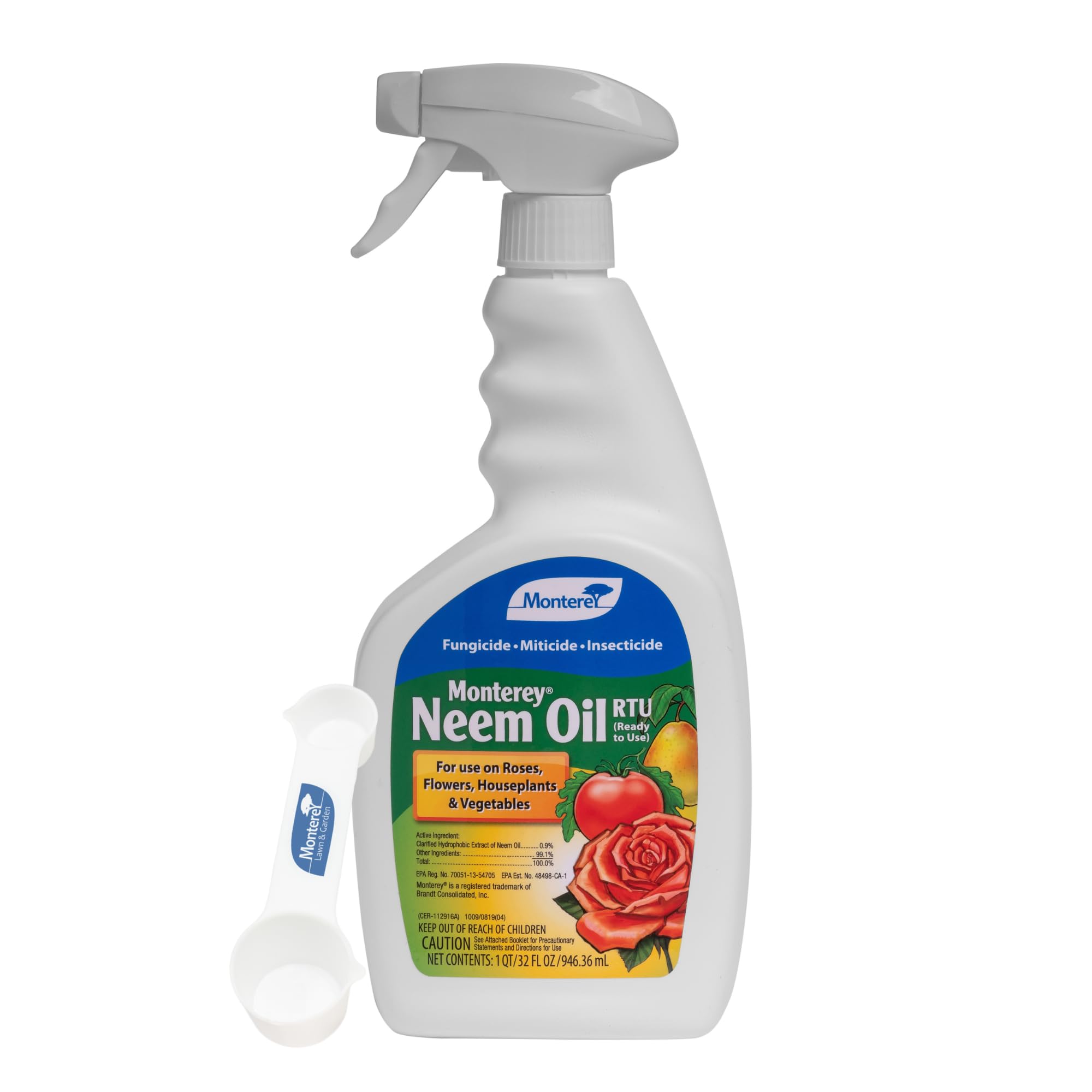
Ready-to-use neem oil that stops aphids, mildew, and mites — no mixing required.
This is a convenient RTU (ready-to-use) spray that requires no measuring or mixing — just shake and spray directly on plant surfaces. It works as a fungicide, insecticide, and miticide, controlling black spot, powdery mildew, rust, aphids, and spider mites. Because it is safe for edible plants up to the day of harvest, you can use it on tomatoes, peppers, and herbs without worrying about chemical residues.
Buyers warn that neem oil has a strong, unpleasant smell — one described it as “like a dirty diaper” — but note the odor dissipates after the spray dries. A reviewer also found it effective at halting the fungus gnat cycle by sterilizing adults, though it was less effective against spider mites, which may require a stronger miticide. The 32-ounce bottle is best for small container gardens or a few raised beds, not a full-acre orchard.
The trade-off is that you pay more per ounce for the convenience of a premixed spray compared to a concentrate. If you value grab-and-go simplicity over economy, this is a strong choice.
The perks
- No mixing — shake and spray
- Safe on edibles up to harvest day
- Fungicide, insecticide, and miticide in one bottle
The drawbacks
- Strong neem odor while wet
- Less economical than buying concentrate
- Blamed for leaking during shipping in some cases
Perfect for: small-space gardeners who want a ready-to-go spray for quick spot treatments.
Not ideal for: large gardens or orchards where a concentrate would be much more economical.
4. Fertilome (12246) Triple Action, 32 oz
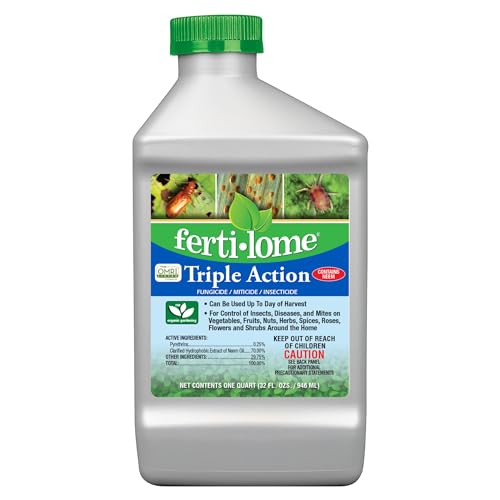
A trusted neem oil concentrate with a proven track record on fruit trees.
Fertilome Triple Action uses neem oil as its active ingredient and works as an insecticide, miticide, and fungicide all in one. It controls aphids, spider mites, leafminers, leafrollers, and armyworms, and it prevents powdery mildew, rust, and leaf spot. The label lists fruits, herbs, nuts, vegetables, roses, and shrubs — so it covers just about everything you might grow.
Unlike the Garden Safe gallon that comes RTU, this is a concentrate — you mix it with water and spray it on a 7-to-14-day schedule. That schedule is important: you need to reapply regularly to stop the next wave of aphids from maturing. One long-term buyer says they have used it for years on apple trees and call it a “proven product.” Another reviewer warns it is “getting pretty expensive” over time, so budget-minded buyers should compare per-ounce costs with other neem concentrates.
It is not a ready-to-use product, so you will need a sprayer and some mixing. But for gardeners who already own a pump sprayer and want a reliable concentrate, this is a top-tier choice.
Long-term use case: one buyer reports years of successful use on apple trees, calling it ideal for bagworms and fruit-tree insects.
Choose this if: you have fruit trees or a large vegetable garden and want a concentrate you can apply every week or two.
Skip this if: you want a grab-and-go RTU spray or are on a tight budget — this concentrate costs more per bottle than some RTU options.
5. Hi-Yield 55% Malathion Spray, 32 oz
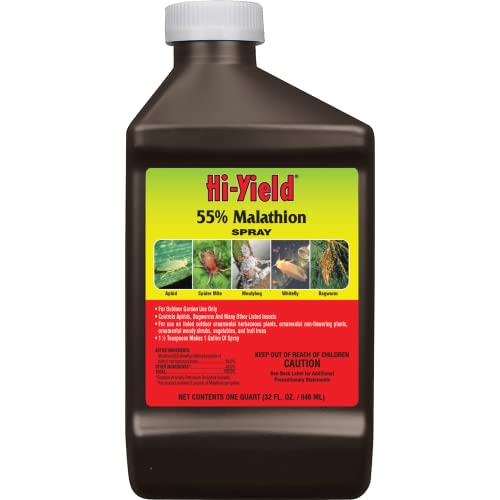
The chemical last resort for infestations that organic sprays cannot touch.
This is a different league from the neem-oil products above. The active ingredient is 55% Malathion, a synthetic organophosphate insecticide that kills aphids, thrips, spider mites, lace bugs, and more. It is for use on herbaceous plants, ornamental non-flowering plants, shrubs, vegetables, and fruit trees. You apply it with a hose-end or tank sprayer in calm weather when rain is not predicted for the next 24 hours.
One reviewer calls Malathion a “strong suspected carcinogen” and advises using protective gear — gloves, goggles, a respirator — when handling it. They used it as a last resort on stubborn scale and red spider mites that no organic product could control, and it worked where everything else failed. Another buyer calls it “Kryptonite for mosquitoes” but warns about unknown effects on wildlife and pets, recommending research before use. This is not a product you grab for a casual spot treatment.
If you have tried neem oil, horticultural oil, and sticky traps and the aphids are still winning, this is the heavy hammer. But it carries real risks and requires careful handling.
When to reach for it
- Highly effective on stubborn scale, spider mites, and aphids
- Works fast where organic options failed
Handling concerns
- Strong suspected carcinogen — requires gloves, goggles, respirator
- Unknown effects on wildlife and pets — research label before applying
Only for: severe infestations where every gentler method has failed, and you are willing to use full protective gear.
Do not buy: for routine use, small gardens, or any situation where neem oil or sticky traps would work.
6. 60PCS Yellow Sticky Traps by PESTCON

A huge 60-pack of bright yellow traps that catch adult aphids on contact.
The PESTCON sticky traps work by attracting flying insects to the bright yellow color, where they get stuck on the super-sticky, dual-sided adhesive. They are non-toxic — no chemicals, no odor — and safe to use around pets and children. The included green stakes let you insert the traps right into potted soil so they stand upright and look neat.
Buyers caution that these traps “only catch adults” — you still need diatomaceous earth or mosquito bits for eggs and larvae in the soil. One reviewer found them “incredibly effective” at catching fungus gnats and whiteflies, noting the population dropped immediately. Another said they are a “pain to set up” because the sticky paper grabs your fingers, but it is worth the hassle. With 60 pieces, you get twice as many as the MAXGUARD 30-pack, which helps in larger gardens.
For a budget-friendly monitoring tool that tells you exactly how bad an aphid problem is, these are tough to top. Just remember they are one half of a two-part strategy.
What works
- 60 pieces — twice the count of the MAXGUARD pack
- Non-toxic, odorless, chemical-free
- UV resistant and waterproof — last until covered
What does not
- Only catches adult aphids — larvae and eggs survive
- Sticky paper grabs your fingers during setup
Best for: monitoring aphid populations and catching flying adults in large gardens or multiple houseplants.
Not enough alone: if you already have a heavy infestation, pair with a neem-oil spray to kill eggs and larvae.
7. MAXGUARD (30 Pack) Yellow Stake Sticky Traps

Stake-shaped traps with 3x thicker glue that holds strong for up to 6 months.
MAXGUARD uses an industrial-grade super-adhesive glue that is three times thicker than standard sticky traps. Each dual-sided stake lasts up to 6 months in the soil before it needs replacing — you only swap it when it is fully covered with bugs. The simple stake shape is easier to insert than some competitors’ designs, and you can also hang them using the included twist ties.
Owners mention that “potting soil caused severe fungus gnat infestation” and these traps “caught adults instantly” — one counted 8 gnats trapped within seconds of inserting the stake. They also caught Asian beetles and house flies. Several reviewers noted the traps are a bit large for small potted plants and recommend cutting them lengthwise with scissors to fit better. The non-sticky tips make handling much less messy than the PESTCON traps.
With 30 pieces, this is half the count of the PESTCON 60-pack, but the thicker glue and long-lasting design mean each trap does more work. For smaller gardens or a handful of houseplants, this is the smarter call.
Strong points
- 3x thicker glue than standard traps — lasts up to 6 months
- Non-sticky tips for easy handling
- Effective on gnats, whiteflies, Asian beetles, house flies
Weak points
- 30 pieces — half the count of the PESTCON pack
- Too large for small pots without cutting
Reach for this if: you have a few houseplants or a small garden and want a low-mess, long-lasting trap.
Better options exist if: you need high volume for many pots — the PESTCON 60-pack gives you more traps for coverage.
Understanding the Specs
Ready-to-Use vs Concentrate
A ready-to-use (RTU) spray, like the Monterey Neem Oil, comes premixed in the bottle — you shake it and spray directly on the plant. A concentrate, like the Fertilome Triple Action or Bonide All Seasons Oil, requires you to measure and mix the product with water in a hose-end or pump sprayer. RTUs are more convenient for quick spot treatments on a few plants. Concentrates are more economical for large gardens because one bottle makes many gallons of finished spray.
Sticky Trap Count
Sticky traps are sold by the number of pieces in the pack. The PESTCON pack gives you 60 pieces, while the MAXGUARD pack gives you 30 — a 2.0x gap. More traps let you monitor more plants at once, especially if you have a large greenhouse or multiple raised beds. Each trap should be replaced only when it is fully covered with insects, so a higher count also means less frequent reordering.
FAQ
Will neem oil harm my plants if I use too much?
Do sticky traps work for all stages of aphids?
Can I use Bonide All Seasons Oil during the summer growing season?
Is Malathion safe to use around pets and children?
How often should I reapply a neem oil spray?
What is the difference between neem oil and mineral oil for aphid control?
Can I mix neem oil with other pesticides?
How do I clean sticky trap residue off my hands?
Will these products kill bees and other pollinators?
What is the shelf life of neem oil once mixed with water?
Final Thoughts: The Verdict
For most buyers, the aphid control winner is the Garden Safe Fungicide3 because it combines neem oil’s triple action (fungicide, insecticide, miticide) with a gallon-size volume that one bottle covers the entire season. If you want year-round organic oil you can use from dormant season through harvest, grab the Bonide All Seasons Oil. And for budget-friendly monitoring that catches flying adults before they lay eggs, the standout is the sheer volume of the PESTCON 60-pack sticky traps.
How We Picked
We do not accept paid placement, and we did not hands-on test every unit. Instead, we match each pick to a real buyer and use-case by comparing the manufacturers’ published specifications against the patterns in verified customer reviews — so you get each pick’s real strengths and trade-offs instead of marketing copy.
Sources & Methodology
Specifications: manufacturer listings and product documentation. Review insights: verified customer reviews, as of July 2026. Pricing: not shown on this page (it changes often); check the current price via the retailer link.
As an Amazon Associate, Lawn Gear Lab earns from qualifying purchases. This does not affect which products we feature.