
African violets are notoriously picky about feeding — too much nitrogen and you get a bushel of leaves with zero buds; too little phosphorus and those signature purple, pink, or white blooms simply never appear. The right African violet fertilizer must deliver a precise low-nitrogen, higher-phosphorus profile that matches the plant’s unique metabolic rhythm, something a generic all-purpose feed simply cannot do.
I’m Rikta — the co-founder and writer behind Lawn Gear Gear Lab. I’ve spent dozens of hours cross-referencing NPK ratios, analyzing manufacturer feeding schedules, and reading through thousands of verified owner experiences to build a buying guide that cuts through the marketing noise and highlights only the formulations that actually trigger flowering in Saintpaulia.
From slow-release organic capsules to fast-acting liquid concentrates, this guide ranks the top formulations you can buy today. After thorough research, I’m confident this is the definitive resource for finding the best african violet fertilizer to keep your collection blooming strong all year.
How To Choose The Best African Violet Fertilizer
Choosing the correct fertilizer for African violets means understanding that these plants require a different nutrient balance than standard foliage houseplants. The three numbers on the label — the NPK ratio — dictate whether you get abundant flowers or just a mound of green leaves.
NPK Ratio: Low Nitrogen, High Phosphorus
African violets are heavy feeders during bloom cycles, but they are sensitive to excess nitrogen, which drives leaf growth at the expense of flowers. Look for a fertilizer where the middle number (phosphorus) is higher than the first (nitrogen). A ratio around 1-2-1 or 3-12-6 is ideal — the phosphorus encourages strong root systems and triggers bud formation.
Liquid vs. Slow-Release vs. Capsule Formats
Liquid concentrates give you precise control — you dilute them with water and can adjust strength every time you water. Slow-release granules and capsules (like EarthPods) are set-and-forget options that release nutrients over weeks, reducing the risk of overfeeding. The trade-off: liquids offer flexibility, while capsules offer convenience.
Micronutrients and pH Considerations
African violets perform best in slightly acidic soil (pH 6.0–6.5). Many premium fertilizers include chelated trace elements like iron, zinc, and manganese that remain available in that pH range. If your water is alkaline, a fertilizer with added sulfur or ammonium nitrogen can help keep the root zone within the sweet spot.
Quick Comparison
On smaller screens, swipe sideways to see the full table.
| Model | Category | Best For | Key Spec | Amazon |
|---|---|---|---|---|
| EarthPods Bio-Organic Capsules | Capsule | Long-term set-and-forget feeding | NPK 2-2-2 + trace minerals | Amazon |
| Dyna-Gro Bloom 3-12-6 | Liquid | High-phosphorus bloom initiation | NPK 3-12-6 | Amazon |
| HiThrive 16oz All-Purpose | Liquid | Budget liquid for mixed collections | NPK 6-2-4, 87+ gallons yield | Amazon |
| Leaves and Soul Professional Soil Mix | Soil Mix | Repotting and root health | Peat + coco coir + perlite | Amazon |
| Duspro African Violet Potting Mix | Soil Mix | Moisture retention and drainage | 4-in-1: perlite, coco peat, pumice, pine bark | Amazon |
| Miracle-Gro African Violet Potting Mix | Soil Mix | Trusted brand for consistent results | 8 quarts, 2-pack | Amazon |
In‑Depth Reviews
1. EarthPods Bio-Organic African Violet Fertilizer Capsules
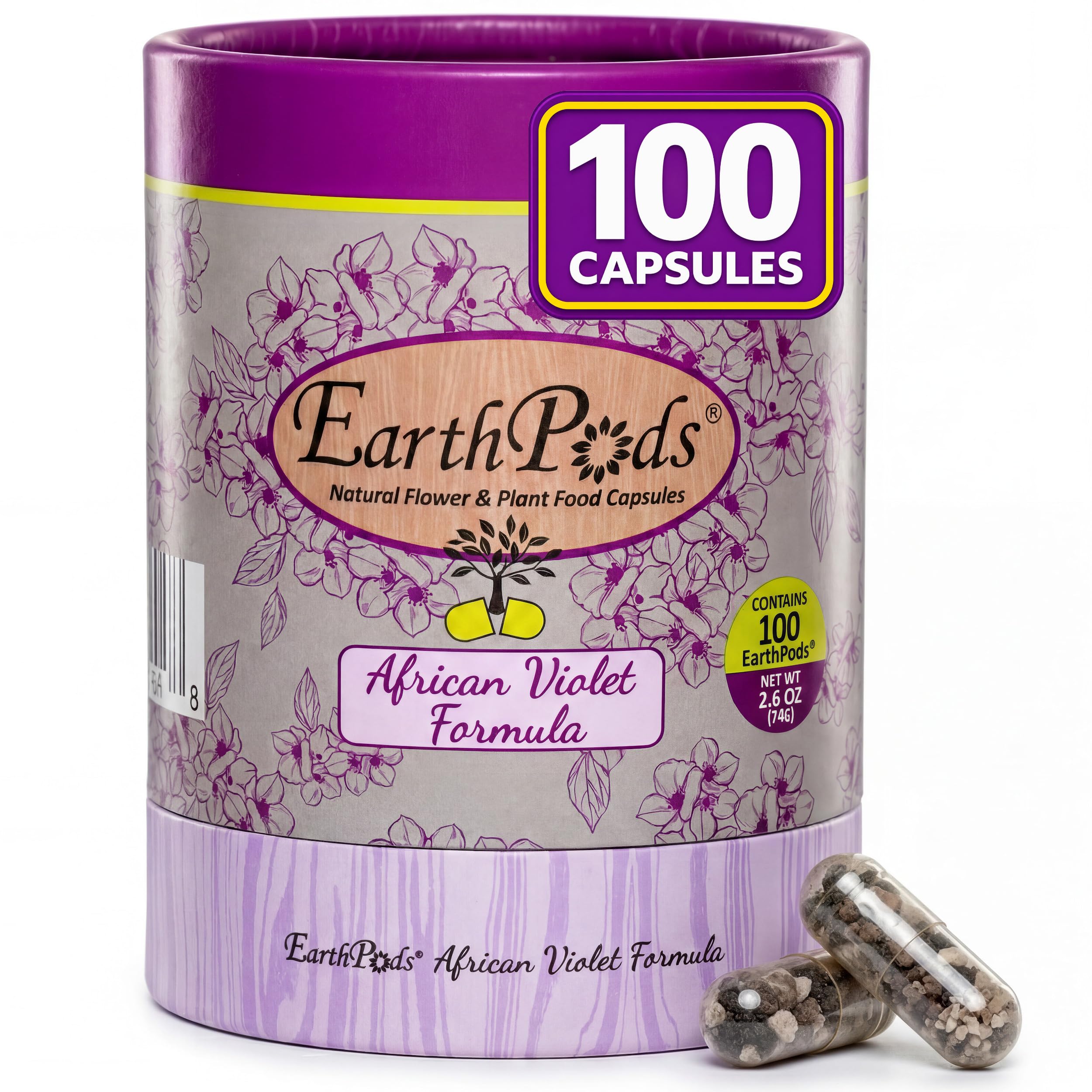
The EarthPods system removes all guesswork from fertilizing African violets. Each small capsule is packed with a bio-organic blend of plant nutrients, trace minerals, and humates that break down gradually in the root zone every time you water. A single tube contains 100 capsules, translating to roughly a four-year supply for one plant — or you can feed a whole collection of violets, peace lilies, and begonias simultaneously.
What sets this apart from liquid fertilizers is the delivery mechanism. Instead of mixing and worrying about concentration, you push one capsule about an inch into the moist potting mix near the center of the plant, then water normally. Users with decades-old violets report renewed blooming within weeks, and the NPK 2-2-2 ratio provides balanced nutrition without the nitrogen spike that can suppress flowers.
The capsules are pH-neutral and OMRI-listed organic, making them safe around pets and children. Because the nutrients are released slowly over roughly two weeks, the risk of root burn is essentially eliminated — a major advantage for growers who tend to overfeed.
What works
- Extremely convenient — no measuring, no mixing, no mess
- Lasts years for a single plant; cost-effective for collections
- Organic ingredients safe for frequent use
What doesn’t
- Slower initial response compared to liquid formulas
- Cannot adjust dosage mid-cycle for individual plants
2. Dyna-Gro Bloom 3-12-6 Liquid Fertilizer

If your African violets are producing lush leaves but refusing to flower, the Dyna-Gro Bloom formula is the targeted solution. Its 3-12-6 NPK ratio delivers a heavy phosphorus punch — the middle number that directly triggers bud initiation — while keeping nitrogen low so energy flows to blooms rather than foliage. This is the fertilizer many experienced growers reach for when they want to force a reluctant violet into flowering.
The 8-ounce bottle is a concentrate: you mix approximately 5 mL per gallon of water and feed every two to three weeks during the active growing season. Users report that streps (Streptocarpus, a close relative) and violets that have not bloomed in months begin pushing buds within two applications. The formula also contains all six essential macronutrients, including calcium and magnesium, which support cell wall strength and chlorophyll production.
Dyna-Gro specifically recommends applying before flower buds appear to initiate the bloom cycle persistently. For growers managing a collection of violets and other flowering houseplants, this bottle provides precise control without the guesswork of balanced all-purpose feeds.
What works
- High-phosphorus ratio forces bloom initiation effectively
- Contains chelated micronutrients for complete nutrition
- Economical concentrate — small amount per gallon
What doesn’t
- Requires careful measuring and mixing each use
- Not suitable for dormant winter feeding
3. HiThrive 16oz All-Purpose Indoor Plant Food

The HiThrive formula is marketed as an all-purpose indoor plant food, but its 6-2-4 NPK ratio — with higher nitrogen than phosphorus — makes it better suited as a supplementary feed for violets that are already blooming or for use during the vegetative growth phase after repotting. One 16-ounce bottle makes over 87 gallons, making this the highest yield-per-dollar liquid option in the guide.
The mixing ratio is simple: one teaspoon (half a capful) per gallon of water. Users have noted that the formula works particularly well when alternated with a high-phosphorus bloom booster — using this for two waterings, then switching to a 3-12-6 formula for the next two. The liquid is fast-acting, and several owners report noticeable greening of leaves within a week of first application.
HiThrive recommends using a slightly weaker concentration for water-propagated cuttings (¼ teaspoon per gallon). While this is not a dedicated violet-specific fertilizer, its affordability and massive coverage make it an excellent everyday maintenance option for growers with mixed collections.
What works
- Extremely high dilution yield — over 87 gallons per bottle
- Fast-acting liquid for quick leaf greening
- Versatile for multiple houseplant species
What doesn’t
- Nitrogen-heavy ratio may suppress blooming if used exclusively
- Not optimized specifically for African violet needs
4. Leaves and Soul Professional African Violet Soil Mix
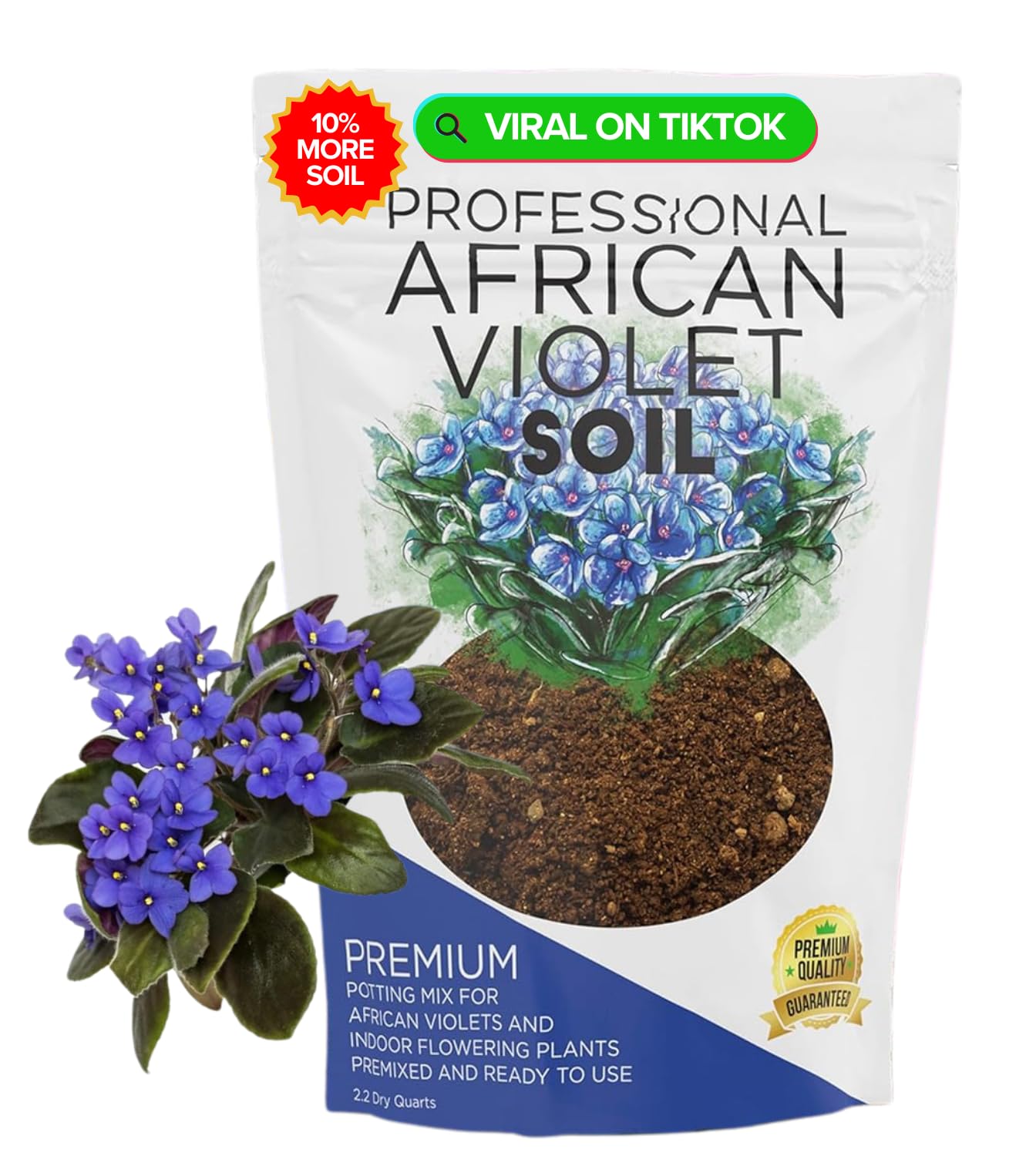
While not a fertilizer in the traditional sense, the Leaves and Soul Professional Mix acts as a delivery medium for nutrients and is often used in tandem with liquid feeds. This 2.2-quart mix combines Canadian peat moss, coco coir, perlite, and dolomite lime to create a lightweight, well-aerated environment that mimics the loose, slightly acidic soil African violets evolved in. The dolomite lime buffers the pH, keeping it stable between 6.0 and 6.5.
The texture is a standout feature — the perlite and coco coir create air pockets that prevent the compaction that suffocates violet roots in standard potting soil. Users report healthier root systems and improved water drainage compared to generic mixes. The resealable bag also keeps leftover soil fresh for future repotting, which is important because violets benefit from fresh soil every 6 to 12 months.
Because this mix is free of added synthetic fertilizers, it complements rather than competes with a separate fertilizing routine. Growers who use high-phosphorus liquids often prefer a neutral base mix like this to avoid nutrient buildup or salt damage.
What works
- Excellent drainage prevents root rot in violet pots
- pH-buffered with dolomite lime for stable acidity
- Lightweight texture supports delicate root systems
What doesn’t
- Contains no fertilizer — requires separate feeding schedule
- 2.2 quarts only fills 3-4 standard 4-inch pots
5. Duspro Premium 4-in-1 African Violet Potting Soil
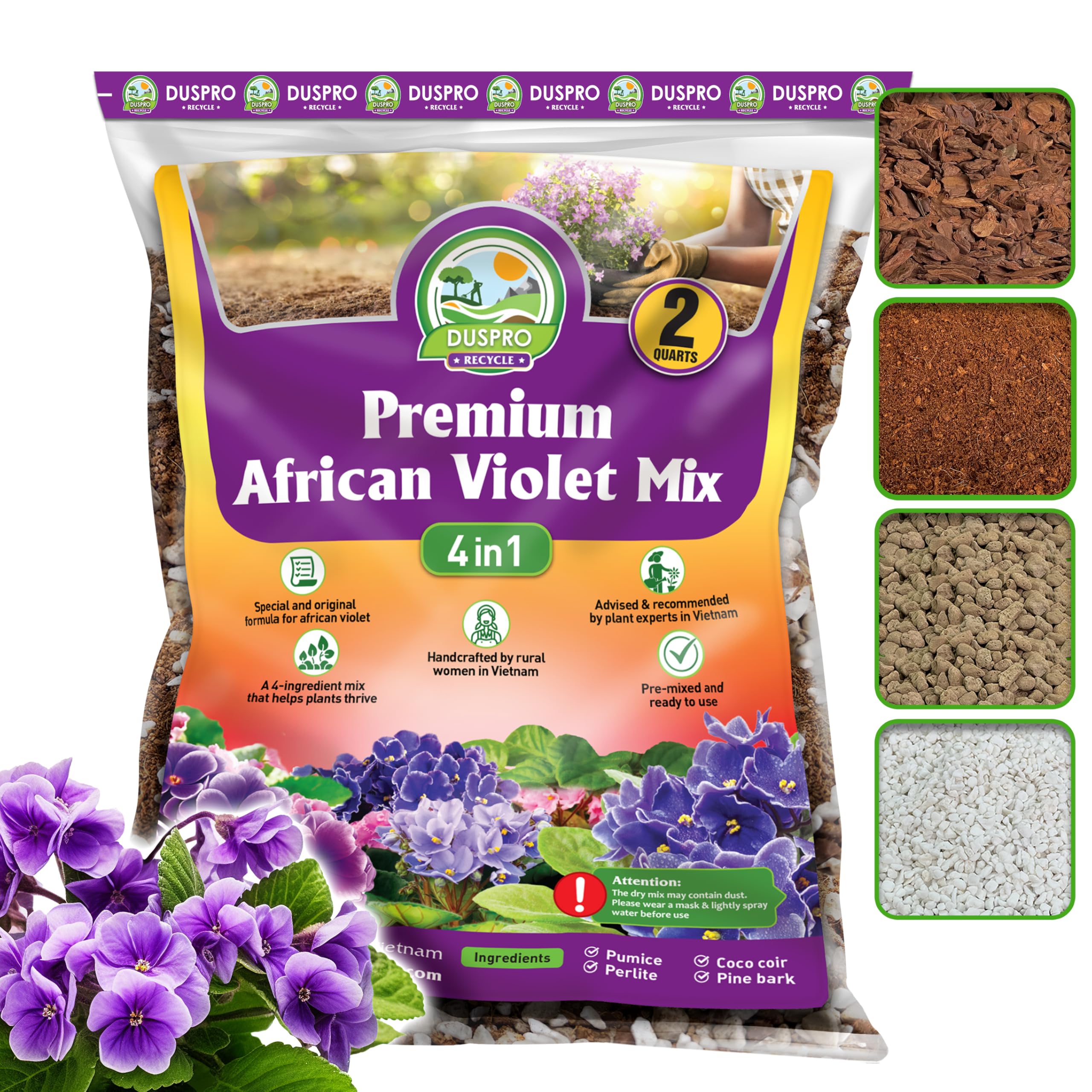
The Duspro 4-in-1 mix combines perlite, coco peat, pumice, and fine pine bark into a blend engineered specifically for the moisture-drainage sweet spot that African violets demand. Coco peat and pine bark retain just enough water between waterings, while the perlite and pumice create drainage channels that prevent the soggy conditions that cause crown rot — the most common killer of violets.
This mix is hand-crafted and ready to use straight out of the bag. One dry quart is enough to fill two 4-inch pots or one 6-inch pot, making the 2-quart size ideal for repotting a few plants at once. Users transitioning from standard potting soil consistently note that their violets stop dropping lower leaves and start pushing new growth within two weeks. The lack of synthetic fertilizer in the mix also gives you full control over your feeding regimen.
For growers who struggle with overwatering or who live in humid climates, the Duspro blend offers a forgiving structure that reduces the need for strict moisture monitoring. It also pairs well with slow-release capsules since the pumice and bark provide a coarse matrix that allows capsules to break down evenly.
What works
- Pumice and perlite create exceptional drainage for sensitive roots
- Coco peat retains moisture without becoming waterlogged
- Hand-crafted consistency with no filler ingredients
What doesn’t
- Small 2-quart bag may require multiple purchases for large collections
- Pine bark pieces can be slightly large for tiny propagation pots
6. Miracle-Gro African Violet Potting Mix (2-Pack)
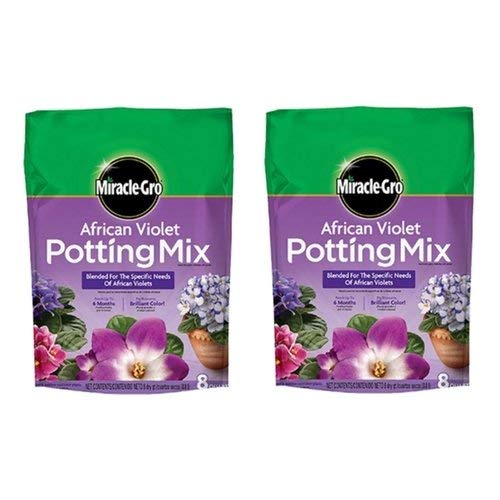
The Miracle-Gro African Violet Potting Mix is the most widely recognized name in the category, and for good reason. This 8-quart two-pack provides a generous volume of pre-mixed soil that is slightly acidic and lightweight, formulated specifically for violets. The mix contains a small amount of fertilizer that feeds plants for the first few weeks, giving new transplants a gentle nutritional head start.
User reviews overwhelmingly report that violets repotted in this mix begin blooming within weeks and maintain near-constant flowers throughout the growing season. The texture is finer than the Duspro or Leaves and Soul blends, which some growers prefer for smaller pots and root-bound violets that need a tighter soil structure. The 8-quart total volume is enough to repot six to eight medium violets.
One caveat: the mix ships regionally to select Northeastern and Midwestern states, so availability may vary depending on your location. The pre-added fertilizer also means you should wait four to six weeks before introducing additional liquid feeds to avoid salt buildup.
What works
- Large 8-quart total volume ideal for multiple repottings
- Contains starter fertilizer for first few weeks of growth
- Proven track record for continuous blooming
What doesn’t
- Shipping restricted to select Northeastern and Midwestern states
- Pre-added fertilizer limits immediate feeding flexibility
Hardware & Specs Guide
NPK Ratio Decoded for African Violets
The three-number code on a fertilizer label represents Nitrogen (N), Phosphorus (P), and Potassium (K). For African violets, the phosphorus number (the middle digit) matters most because it drives flower bud formation. A ratio like 3-12-6 supplies low nitrogen to keep leaves compact while delivering a heavy phosphorus dose that triggers persistent blooming. Avoid ratios where the nitrogen number is higher than phosphorus unless you are in a growth-only phase after repotting.
Liquid Concentrate vs. Capsule Slow-Release
Liquid fertilizers give you per-watering control — you can skip feeds during winter dormancy or increase strength during peak bloom cycles. Capsules like EarthPods simplify the process by releasing nutrients gradually with every watering, which is ideal for forgetful growers or those with large collections. The trade-off is speed: liquids produce visible results within days, while capsules take one to two weeks to build up in the soil.
FAQ
How often should I fertilize my African violets during the growing season?
What happens if I use a high-nitrogen fertilizer on African violets?
Final Thoughts: The Verdict
For most gardeners, the best african violet fertilizer winner is the EarthPods Bio-Organic Capsules because it eliminates measuring errors and provides consistent slow-release nutrition that keeps violets blooming month after month. If you want a high-phosphorus bloom booster that snaps stubborn plants into flower fast, grab the Dyna-Gro Bloom 3-12-6. And for a budget-friendly liquid that stretches across dozens of gallons and works well in rotation with a bloom formula, the HiThrive All-Purpose Plant Food delivers excellent value.