
Specs are compiled from manufacturer listings and verified buyer reviews and can change over time — please confirm the key details on the product page before buying.
If you want more flowers, bigger tomatoes, or a better potato harvest, you need to shift nutrients away from leaves and into roots, blooms, and fruit. A fertilizer’s N-P-K (nitrogen-phosphorus-potassium) ratio controls exactly that, and 5-10-10 — low in nitrogen (5), high in phosphorus (10) and potassium (10) — is the balance for flowering, fruiting, and root crops. These two liquid formulas from TPS Nutrients share the same 5-10-10 ratio and 32-ounce bottle size, so your real choice is which target plants you feed.
This guide is built from comparing the makers’ published specs and patterns across verified buyer reviews. You get each pick’s real strengths and trade-offs, not marketing claims.
The right 5-10-10 liquid fertilizer (a fertilizer dissolved in water for fast root absorption) decides if your roses bounce back or your potatoes stay marble-sized.
Quick Picks
- TPS Nutrients 5-10-10 Fertilizer — Best Overall
- TPS Nutrients Potato Fertilizer — Specialist Pick
How To Choose The Best 5-10-10 Liquid Fertilizer
Both products here come from the same brand, in the same 32-ounce liquid volume, with the same 5-10-10 N-P-K ratio. So the difference is which plant families the formula targets. You pick the one that matches your garden.
Match the Formula to Your Crop
The general TPS 5-10-10 works on flowering plants, tomatoes, and vegetables — it is a broad-spectrum blend for anything needing a phosphorus and potassium boost. The TPS Potato Fertilizer is designed specifically for potatoes and underground tubers, with a mix aimed at tuber swelling and root mass. For a mixed garden, the general formula gives you more flexibility. For a dedicated potato patch, the specialized version may give a measurable yield advantage.
Liquid vs. Granular — Speed and Control
Liquid fertilizer hits the soil and roots immediately because it is already dissolved. You see results in days, not weeks. That is why both products are 32-ounce liquid concentrates: you mix them with water, pour over the soil, and the plant starts using nutrients right away. You will need to reapply more often than with a slow-release granular — but you get direct control over timing and dosage.
Quick Comparison
In‑Depth Reviews
1. TPS Nutrients 5-10-10 Fertilizer
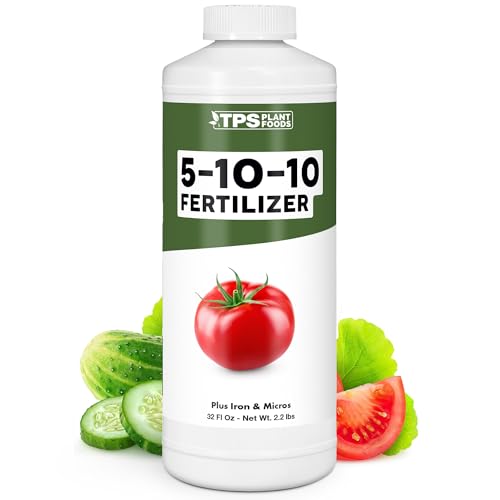
This is the most versatile 5-10-10 liquid — a buyer said it revived half-dead knockout roses in three weeks.
The reason this TPS 5-10-10 Fertilizer earns the top spot is its broad reach: it works on tomatoes, peppers, flowers, and even cacti, not just one crop. The 5-10-10 ratio — 5% nitrogen (which fuels leaves), 10% phosphorus (which drives roots, blooms, and fruit), and 10% potassium (which strengthens overall health) — pushes energy into flowers and produce instead of leafy growth. You dilute a small amount of the 32-ounce concentrate with water and pour it over the soil, so roots can absorb the nutrients instantly. One reviewer noted that after two applications on a bell pepper plant, it jumped from one pepper to over 30 buds, with lusher leaves and better height. Another reviewer noted the bottle is small but concentrated — a little goes a long way because you dilute it. A key limitation: it is not an organic (OMRI-listed) product, so skip it if you require organic certification. Also, no measuring cup is included; you must supply your own tablespoon or dropper.
Compared to the specialized TPS Potato Fertilizer below, this all-purpose version is the right choice for a mixed garden — it covers tomatoes, roses, and cacti in one bottle. Its 119 ratings and 4.7-star average show strong buyer satisfaction across many plant types.
What Stands Out
- Works on flowers, tomatoes, peppers, cacti — a true all-purpose 5-10-10
- Liquid concentrate reaches roots fast; buyers saw results in days
- Revived stressed plants: a buyer called it “amazing” after 3 weeks on dying roses
What to Consider
- Not organic; a dealbreaker for strict organic gardeners
- No measuring cup included — you need your own dropper or spoon
Reach for this if: You grow a mix of flowers, vegetables, and fruits and want one liquid 5-10-10 that handles them all — from tomatoes and peppers to cacti and roses.
Look elsewhere if: You only grow potatoes and want a formula specifically tuned for tubers, or you require an organic-certified product.
2. TPS Nutrients Potato Fertilizer
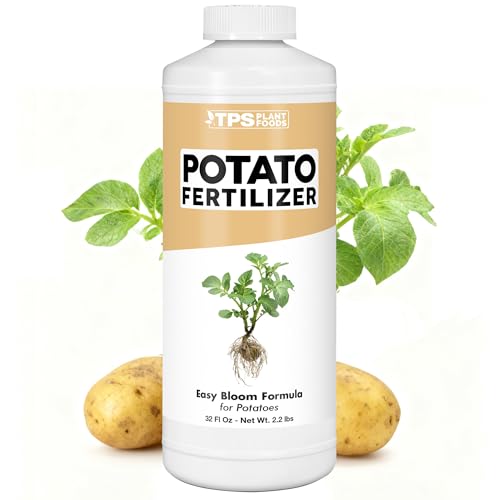
This 5-10-10 liquid is built for one job: pushing energy into underground tubers for bigger potatoes.
While the general TPS 5-10-10 works on everything, this Potato Fertilizer narrows its focus to potatoes, sweet potatoes, and other root crops. It shares the exact same 5-10-10 ratio and 32-ounce bottle size, but the formula is tuned to encourage tuber swelling and stronger roots underground. One buyer in Zone 8B reported healthy top growth over four weeks with just two applications. By week nine, they spotted a red potato about the size of a golf ball near the soil surface — a sign the nutrients were working below ground. You mix this liquid concentrate with water and pour it on; it absorbs faster than a granular potato fertilizer because it is already dissolved. The trade-off is the same as the general version: it is not an organic product. And if your garden includes tomatoes, flowers, and peppers, the all-purpose 5-10-10 above is a better fit, since this bottle is designed primarily for potatoes. At 159 ratings with a 4.6-star average, it has a slightly larger review base, and buyers report it simply “works” for its intended crop.
Unlike the all-purpose TPS 5-10-10 above, this specialist version earns its spot if your garden is mostly potatoes — you get a formula that prioritizes yield below the soil line rather than flower production above it. For a potato-only patch, it is the more targeted choice and the one to grab over the broader formula.
Why It Works for Potatoes
- Specifically designed for tubers — owners mention visible potato growth at 9 weeks
- Liquid format absorbs fast; mix with water and pour over soil
- 2 fertilizations showed healthy top growth over 4 weeks in Zone 8B
Limitations
- Not organic — same limitation as the all-purpose version
- Too narrow if you grow a wide variety of flowers and vegetables
Grab this if: You are planting a dedicated potato patch and want a liquid 5-10-10 purpose-built to boost tuber size and root development — customers note seeing golf-ball-sized potatoes by week nine.
pass on it if: You need a single fertilizer for tomatoes, flowers, peppers, and cacti — the general TPS 5-10-10 covers more ground.
Understanding the Specs
N-P-K Ratio — What 5-10-10 Actually Means
The three numbers on a fertilizer label stand for Nitrogen (N), Phosphorus (P), and Potassium (K). A 5-10-10 ratio means 5% nitrogen, 10% phosphorus, and 10% potassium. Nitrogen drives leafy green growth. Phosphorus supports root development, flower formation, and fruit set. Potassium strengthens overall plant health and disease resistance. So a 5-10-10 is deliberately low in nitrogen — you are not trying to grow huge leaves; you are pushing energy into roots, blooms, and produce. For tomatoes, potatoes, peppers, flowers, and cacti, this ratio hits the balance.
Liquid Concentrate vs. Ready-to-Use
Both products here are 32-ounce liquid concentrates. That means you do not pour the bottle straight onto the soil — you mix a small amount with water first (typically a tablespoon or two per gallon, depending on the plant). The advantage is speed: liquid fertilizer is already in a form roots can absorb, so you see results in days instead of weeks. You will need to reapply more frequently than a slow-release granular, but you gain full control over how much and how often you feed each plant.
FAQ
Can I use the TPS 5-10-10 Fertilizer on potatoes?
How often should I apply a liquid 5-10-10 fertilizer?
Is 5-10-10 good for tomato plants?
Can I use these fertilizers on indoor houseplants?
How do I mix liquid 5-10-10 concentrate with water?
Will 5-10-10 fertilizer burn my plants if I use too much?
Are these TPS 5-10-10 fertilizers organic?
Can I use 5-10-10 on flowers like roses and hydrangeas?
One bottle says “Fertilizer for Plants” and the other says “Potato Fertilizer” — what is the actual difference?
How long does a 32-ounce bottle of liquid 5-10-10 last?
Final Thoughts: The Verdict
For most home gardeners, the best 5-10-10 liquid fertilizer is the TPS 5-10-10 Fertilizer because it handles tomatoes, flowers, peppers, and cacti with one bottle — and buyers have proven it can even revive half-dead roses in just three weeks. If you are running a dedicated potato patch, grab the TPS Potato Fertilizer for a formula purpose-built to push energy into tubers, with buyer reports of golf-ball-sized potatoes at nine weeks. Both are premium picks at the same price and same bottle size — the choice depends on how many different crops you are feeding.
How We Picked
We do not accept paid placement. Every pick is matched to a real buyer and a real use-case; we do not hands-on test units.
Sources & Methodology
Specifications: manufacturer listings and product documentation. Review insights: verified customer reviews, as of July 2026. Pricing: not shown on this page (it changes often); check the current price via the retailer link.
As an Amazon Associate, Lawn Gear Lab earns from qualifying purchases. This does not affect which products we feature.