
Specs are compiled from manufacturer listings and verified buyer reviews and can change over time — please confirm the key details on the product page before buying.
If you have ever wrestled a root-bound tomato out of a plastic pot at the end of the season, you already know the pain a 10 gallon grow bag is built to solve. These fabric containers air-prune roots as they grow, so instead of circling in panic, your plants branch out into a dense, healthy root ball that slurps up water and nutrients. The real question is which fabric, which stitching, and which handle holds up when you drag a full bag of damp soil across the patio in July. This guide cuts through the noise to find the bags that actually survive a season — or five.
I’m Rikta — the founder and writer behind Lawn Gear Lab. This guide is built by comparing the manufacturers’ published specifications and the patterns across verified customer reviews, so you get each pick’s real strengths and trade-offs instead of marketing spin.
Whether you are planting potatoes on a balcony or filling a row of tomatoes in the backyard, you want 10 gallon grow bags that drain well, move easily, and do not fall apart by August. Below are the nine best options ranked by real-world owner experience and build quality.
Our Picks at a Glance
How To Choose The Best 10 Gallon Grow Bags
Not all fabric pots are created equal. Three specs separate a bag that lasts one season from a bag you will still be hauling around five years from now.
Fabric Thickness and Material
The weight of the fabric is the single biggest predictor of durability. Most cheap bags use standard nonwoven fabric that feels like felt and starts to fray after a summer in the sun. Look for bags labeled “300G” — that number means 300 grams per square meter, a heavy-duty thickness that resists tearing, holds its shape when full of wet soil, and survives multiple seasons of weather exposure.
Handle Construction
You will move these bags when they are heavy. A handle stitched directly into the felt fabric will rip out under that weight. The best bags use reinforced polypropylene webbing straps that are either sewn deep into the seam or wrapped in an inner lining. Those handles let you drag a fully loaded 10 gallon bag across the yard without the strap pulling loose.
Aeration and Drainage
The whole point of a fabric bag is that it breathes. Good airflow lets roots air-prune — when a root tip hits the fabric wall, it dries out and stops growing, which forces the plant to branch more roots inside the soil. That creates a dense root ball. Poorly made bags can still hold too much water, so look for clear statements about breathability or “nonwoven” fabric that naturally sheds excess moisture.
Quick Comparison
| Model | Best For | Fabric Weight | Number of Bags | Bag Dimensions | Amazon |
|---|---|---|---|---|---|
| Rain Science★ Best Overall | Premium longevity | Plastic-coated mesh | 1 | 18 x 18 x 12.2 in | Amazon |
| OPPOLIFE 4-PackBest for Potatoes | Potato harvest window | Thickened nonwoven | 4 | 14 x 14 x 18 in | Amazon |
| iPower 6-PackBest Value Multi-Pack | Best value multi-pack | 300G nonwoven | 6 | 18 x 18 x 12.2 in | Amazon |
| FEED GARDEN 4-Pack | Sturdy compact shape | 300G nonwoven | 4 | 11.8 x 15.7 x 15.7 in | Amazon |
| NACHLYNN 5-Pack | Self-supporting fabric | Nonwoven | 5 | 16 x 16 x 12.5 in | Amazon |
| HealSmart 12-Pack | Large volume planting | Nonwoven | 12 | 15.9 x 15.9 x 11.9 in | Amazon |
| LUNGAR 5-Pack | Double-stitch durability | 300G nonwoven | 5 | — | Amazon |
| OPPOLIFE 12-Pack | Budget bulk buy | 300G nonwoven | 12 | 12 x 12 x 10 in | Amazon |
| Sinimaka 7-Pack | Colorful patio display | Fabric | 7 | 15 x 15 x 12 in | Amazon |
In‑Depth Reviews
1. Rain Science Grow Bag — 10 Gallon (Single)
Our pick — over 4.5★ from 600+ verified ratings; the strongest balance of quality and price.
The one serious growers swear will outlast everything else in your shed.
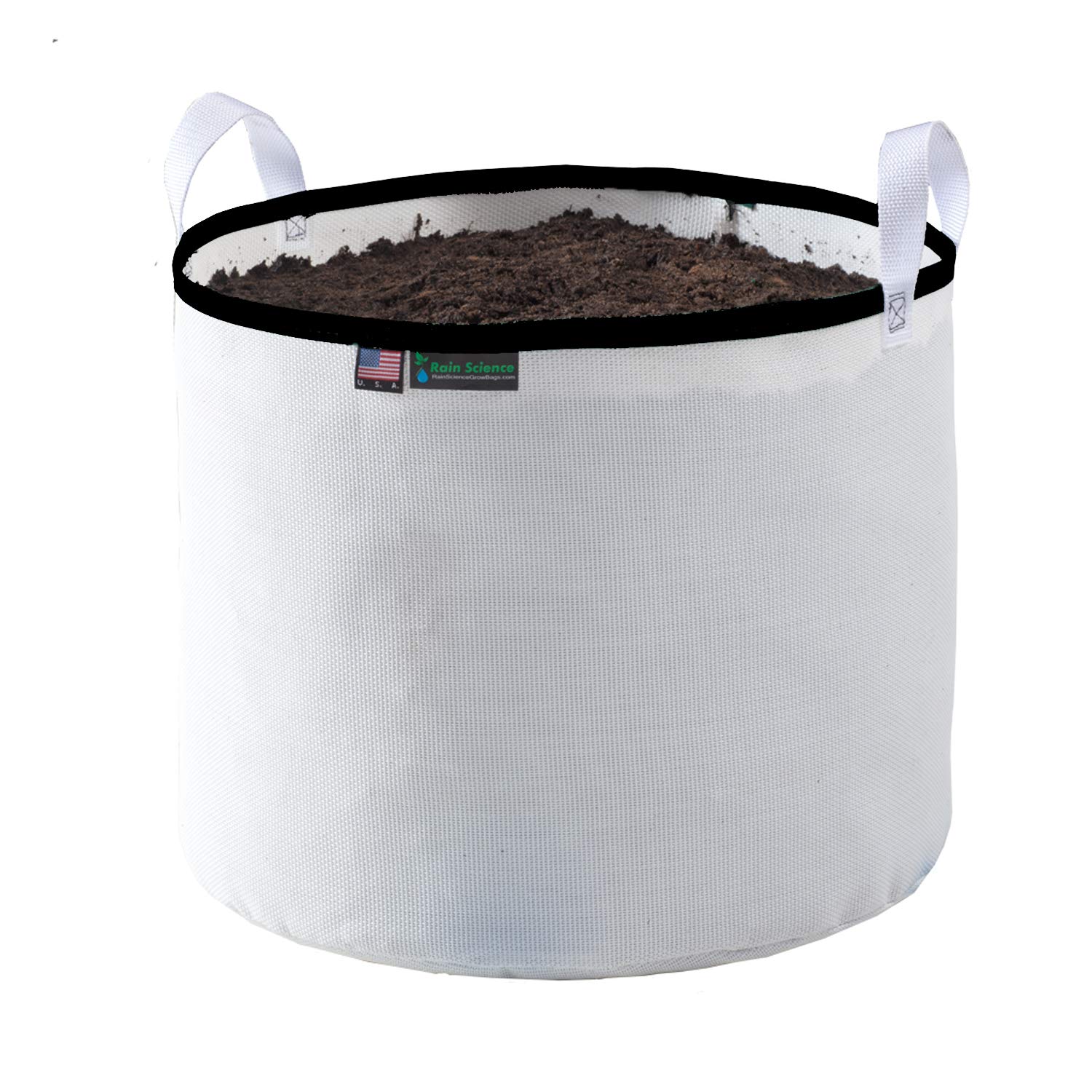
This is the bag that changes how you think about fabric pots. Instead of the standard felt-like nonwoven material, Rain Science uses a plastic-coated woven mesh — a construction that feels almost rigid when empty yet softens into a breathable, structured container once filled. The difference you notice immediately is that water does not seep through the sides the way it does on ordinary fabric bags. That means less evaporation loss on hot days and far less messy dripping on your patio.
If you want a single bag that may genuinely last a decade, the Rain Science bag is it. Owners consistently say the handle stitching and binding hold up season after season, and one longtime user summed it up bluntly: “This grow bag could last 10 years.” The tapered shape and external seams make transplanting far less stressful on roots, and the whole thing is machine washable for proper sterilization between crops. The trade-off is that you get one bag for roughly what other brands charge for a 4- or 6-pack. skip it if you need multiple bags now; this is for the buyer who wants one bag that may not need replacing this decade.
What owners love
- A unique woven-mesh design that breathes without leaking water through the sides
- Machine-washable for reuse across seasons without pathogen carryover
- External seams and tapered shape reduce transplant shock when moving plants
The honest trade-off
- Premium price for a single bag when competitors sell multi-packs for less
- The mesh needs careful handling to avoid snagging on rough surfaces
The long-haul choice: Reach for this if you want one bag that handles years of reuse without degrading — especially for permanent plantings like dwarf fruit trees or long-season peppers where root health matters most.
Think twice if: You need a dozen bags for a single-season potato crop on a tight budget, where a multi-pack makes more economic sense.
2. OPPOLIFE 4-Pack 10 Gallon Potato Grow Bags
A harvest flap that lets you peek without digging up the whole plant.
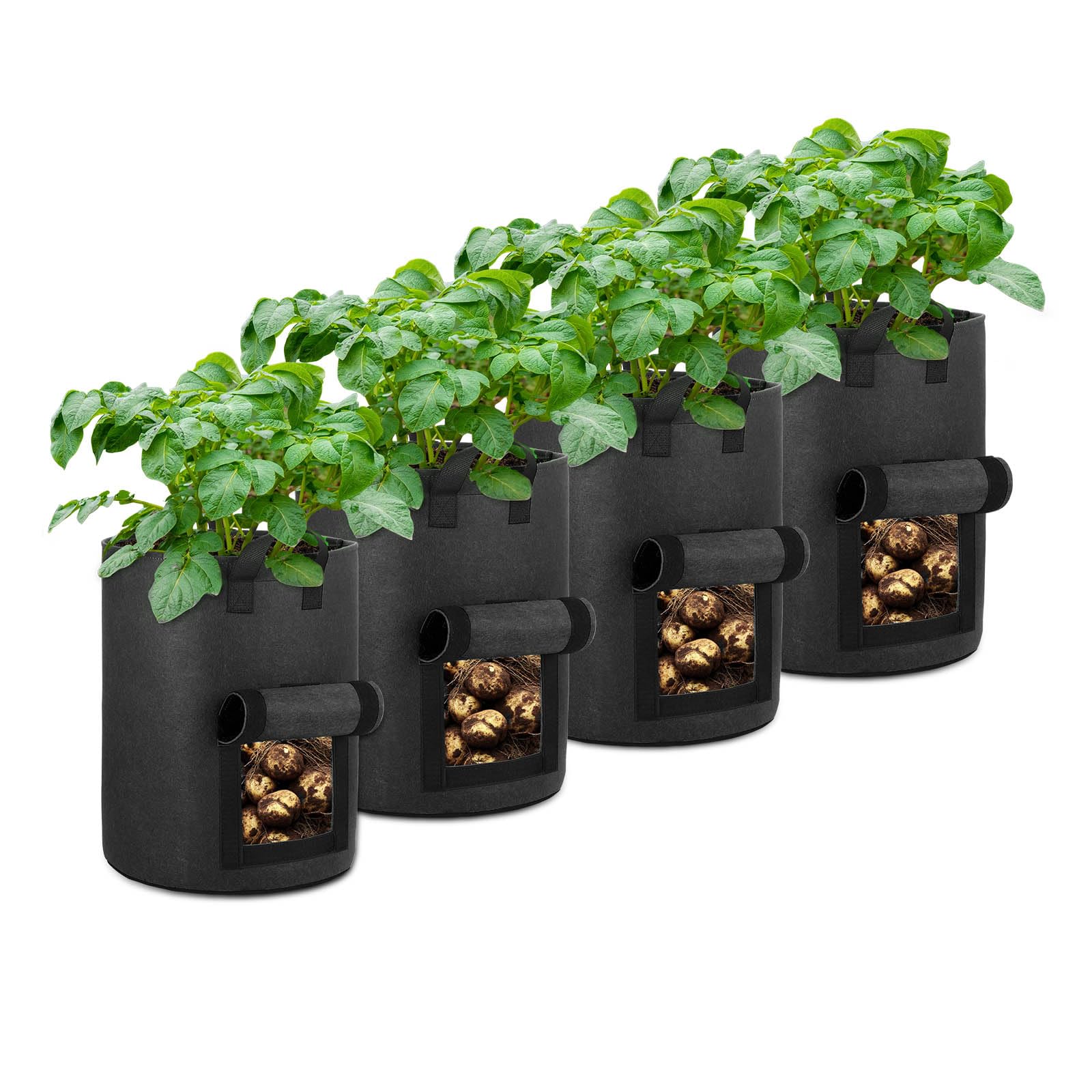
These are taller than most 10 gallon grow bags — 18 inches high versus the typical 12 inches — which makes them purpose-built for root vegetables that need depth. The big differentiator is the harvest visualization window, a flap on the side that you can open to check potato size mid-season without disturbing the plant. Reviewers confirm the flap reseals perfectly every time, so it is not a weak point that blows out after a few uses.
The nonwoven fabric is thickened for UV resistance, and the polypropylene webbing handles are reinforced with an inner lining so they do not rip when you haul a full bag of soil and potatoes. Buyers report using these for two seasons straight with zero tearing — one even hit them with a weed eater by accident and they held up. The catch: the fabric is water-absorbent, which means faster evaporation in hot weather compared to plastic pots, and there are no drainage holes in the bottom (the fabric itself handles drainage). You will need to water more frequently during dry spells.
Why this one wins for root veggies: The tall 14 x 14 x 18 inch profile gives potatoes and carrots the vertical room they need, and the side flap means you stop guessing when to harvest.
Who should pass: If you are growing shallow-root crops like lettuce or herbs, the extra height is wasted and a shorter, wider bag would be easier to manage.
3. iPower 6-Pack 10 Gallon Heavy Duty Fabric Pots
Six thick bags that do not flop over — even when half-empty.
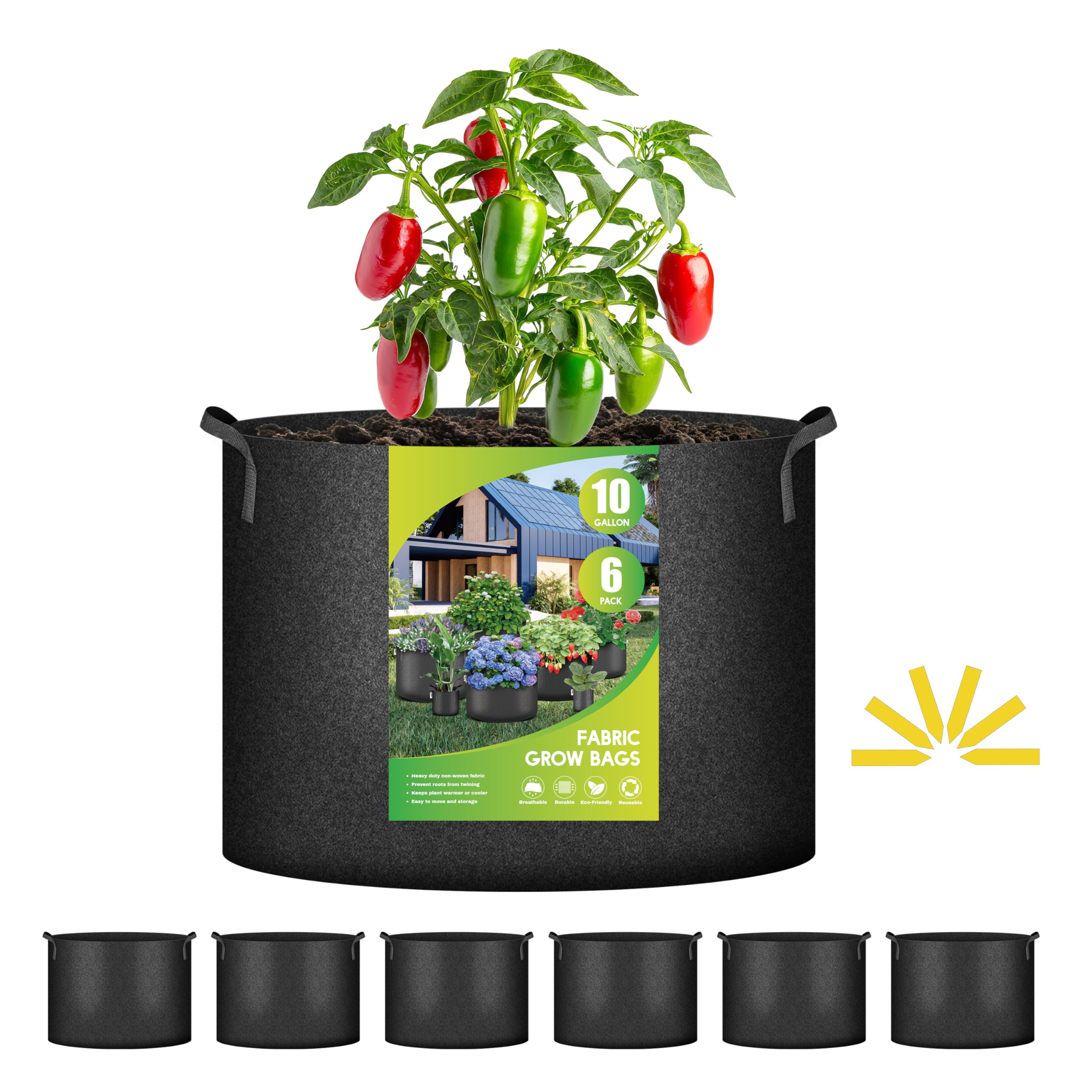
iPower uses 300G thickened nonwoven fabric (the heavy-duty standard), and the difference from standard thin felt is immediately obvious when you fill them: they stand up on their own with or without soil. That self-supporting shape makes a real difference when you are starting seeds or transplanting — no wrestling with a floppy sack that collapses as you pour dirt. The nylon handle straps are sturdy and reinforced, so moving a full bag is genuinely safe.
Owners consistently report using these iPower bags for 4 years and counting, with one reviewer noting “durable, lasting years with only a small tear” after long-term use. The breathable felt drains excess water well, which means roots get oxygenated and you avoid the root rot that plagues plastic nursery pots. The size feedback is mixed — some find them smaller than expected — but at this price for a 6-pack of 300G bags, the value is tough to top. Consider that this pack offers 6 bags versus the Rain Science single bag, all at a budget-friendly price point. If you need many bags now and can accept a slightly smaller fit, this is your pick.
Why it is a crowd favorite
- 300G fabric holds its shape upright even when partially filled
- Six bags in one pack make it ideal for starting a full container garden in one order
- Nylon handles and reinforced stitching survive multiple seasons of moving
What to know
- Size impressions vary — some owners feel the 10-gallon volume runs slightly smaller than expected
- Black fabric absorbs heat in direct sun, which can raise root-zone temperature in hot climates
Best for the budget-conscious gardener: Grab this 6-pack if you are setting up a new vegetable patch and want thick, durable bags without paying per-bag premium pricing.
Look elsewhere if: You need a taller bag for deep-root crops like potatoes — at 12.2 inches high, these are shorter than the OPPOLIFE potato bags.
4. FEED GARDEN 4-Pack 10 Gallon Grow Bags
A 300G fabric pot that stayed upright through a storm without tipping.
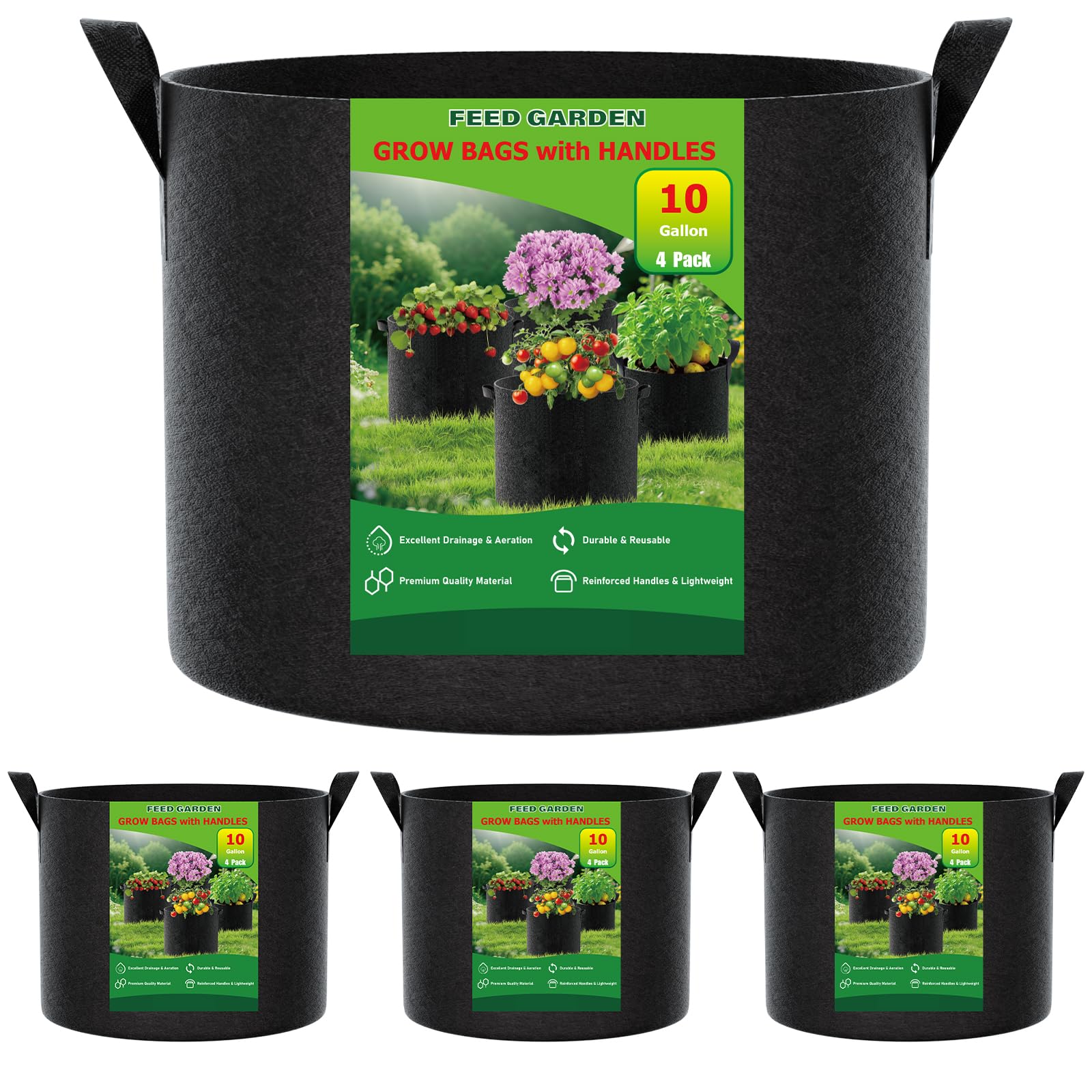
The FEED GARDEN bags are built with the same 300G thickened nonwoven fabric as the iPower bags, so the durability baseline is high, but the shape is noticeably more compact at 11.8 inches deep versus the wider, shallower profile of other 10-gallon bags. That makes them a strong fit for balconies and tight patios where every inch of floor space counts. The double-stitched handles are sewn deep into the bag, and owners confirm they do not stretch or tear when the bag is full of wet soil. If you have limited floor space, these are a better fit than the wider Rain Science bag.
What stands out in the owner feedback is how well these hold up to weather. One reviewer noted the bags “stayed upright in storms” — a rare compliment for fabric pots that typically blow over or collapse in wind. The breathable fabric drains quickly and prevents water pooling around roots, which is the main cause of root rot. The honest downside is the same one every fabric bag faces: in hot weather, the sides breathe so well that soil dries faster than it would in a plastic pot, meaning you will water more often.
The compact advantage: If your growing space is a small balcony or a narrow patio strip, the 11.8-inch depth fits where taller bags would block walkways or look awkward.
Not for deep-root crops: Potatoes and carrots prefer the 18-inch height of the OPPOLIFE bags — at 11.8 inches, these are better for tomatoes, peppers, herbs, and flowers.
5. NACHLYNN 5-Pack 10 Gallon Grow Bags

The bag that stands up straight and refuses to flop over.
Self-supporting fabric is the feature that gets the most praise on these NACHLYNN bags. Owners specifically call out that “they support themselves and don’t flop over” — a real problem with thinner grow bags that collapse under their own weight when dry. At 16 inches in diameter and 12.5 inches tall, these have a wide, stable base that resists tipping even with top-heavy tomato plants. The reinforced handles on both sides are sewn directly into the bag structure, and reviewers confirm they make moving a full pot easy without the strap pulling loose.
The nonwoven fabric provides the same breathability and air-pruning benefits as the other 300G bags, but owners note that the 5-pack price point delivers strong value for the quality. The size feedback is mixed — some find the 16-inch diameter broader than expected, which is actually an advantage for spreading plants like peppers and bush beans. The fabric does not retain excess water, so roots stay oxygenated and growth is vigorous.
What wins owners over
- Sturdy fabric holds its shape whether full or empty — no flopping
- Wide 16-inch diameter gives spreading plants room to branch out
- Reinforced handles survive repeated moves around the garden
One thing to note
- Size runs on the wider side — this bag takes up more patio floor space than narrower 10-gallon options
- Dries faster than plastic pots, typical of all fabric bags, requiring consistent watering in heat
Ideal for spreading crops: The wide 16-inch diameter gives peppers, bush beans, and flowers the horizontal space they need to fill out.
Skip if space is tight: If your balcony or shelf has limited footprint, a narrower tall bag like the OPPOLIFE potato bag fits better.
6. HealSmart 12-Pack 10 Gallon Nonwoven Grow Bags
A dozen bags for your biggest planting season ever.
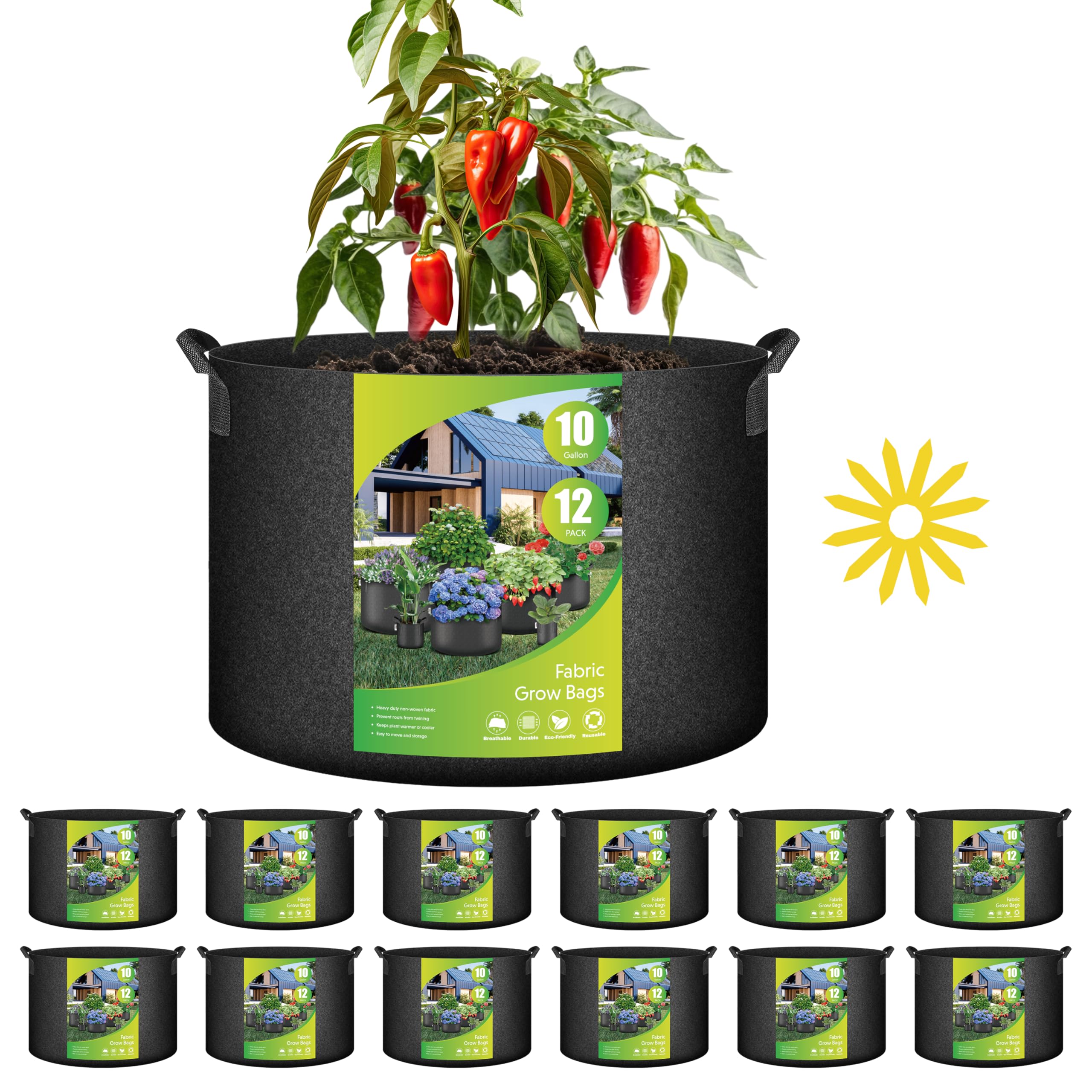
When you need volume — a full row of tomatoes, a block of peppers, a patch of flowers — the HealSmart 12-pack delivers the most bags per dollar in this lineup. At 15.9 inches in diameter and 11.9 inches tall, these are nearly identical in footprint to the NACHLYNN bags but come as 12 units with a bonus set of plant labels. The nonwoven fabric is BPA-free and breathable, providing the same air-pruning and drainage benefits that fabric bags are known for.
Owners appreciate how well these HealSmart bags stay open at the top even when not fully filled, which is helpful for starting potatoes that need gradual soil addition. The handles make repositioning simple, and the material feels thick enough for repeated use. The recurring caution: some owners find the 10-gallon size small for sprawling vegetables, so stick to single plants per bag for best results. At this quantity, the per-bag cost is tough to top for setting up a large container garden in one order. If you are starting many plants at once, this pack gives you the most bags for your money.
The volume play: If you are planting a whole balcony garden or a veggie patch that needs a dozen containers, this 12-pack with labels gets you set up fast at a friendly price.
Who needs more depth: At 11.9 inches tall, these are shallow — skip them for potatoes and carrots and grab the OPPOLIFE 18-inch bags instead.
7. LUNGAR 5-Pack 10 Gallon Plant Grow Bags

Double stitching that holds up for half a decade of use.
LUNGAR takes the standard 300G nonwoven fabric and adds a double-stitch seam — two lines of stitching on every edge instead of one. That extra seam is the difference between a bag that lasts three seasons and one that is still going strong after five years, based on owner reports. One buyer mentioned their first set is “5 years old and still going strong.” The fabric is fluffy and dense, giving it a premium hand feel that stands out from thinner felt-style bags.
The handles are reinforced for heavy lifting, though some owners wish they were longer for easier two-handed hauling. Drainage is good — water passes through the fabric without pooling — and the bags retain moisture well enough that soil does not dry out as fast as some other fabric options. The size feedback is mixed, with a few owners feeling the dimensions run smaller than advertised. But for the per-bag price on a 5-pack of 300G double-stitched bags, the durability is excellent.
Why this one lasts
- Double-stitch (double seam) construction outlasts single-stitch bags by years
- 300G fabric is thick and fluffy, holding its shape well
- Owners mention 5-year lifespan on first sets still in active use
What to check
- Handle length could be longer for easier two-handed carrying
- Some buyers found the actual dimensions slightly smaller than the listing suggests
Best for repeat planters: If you plan to use these bags every season for years, the double-stitch build gives you the longest service life among multi-packs at this price tier.
Not if you need precise dimensions: If exact 10-gallon capacity is critical for your soil mixing ratios, the sizing variance might bother you.
8. OPPOLIFE 12-Pack 10 Gallon Plant Grow Bags
The biggest pack for the smallest per-bag cost.
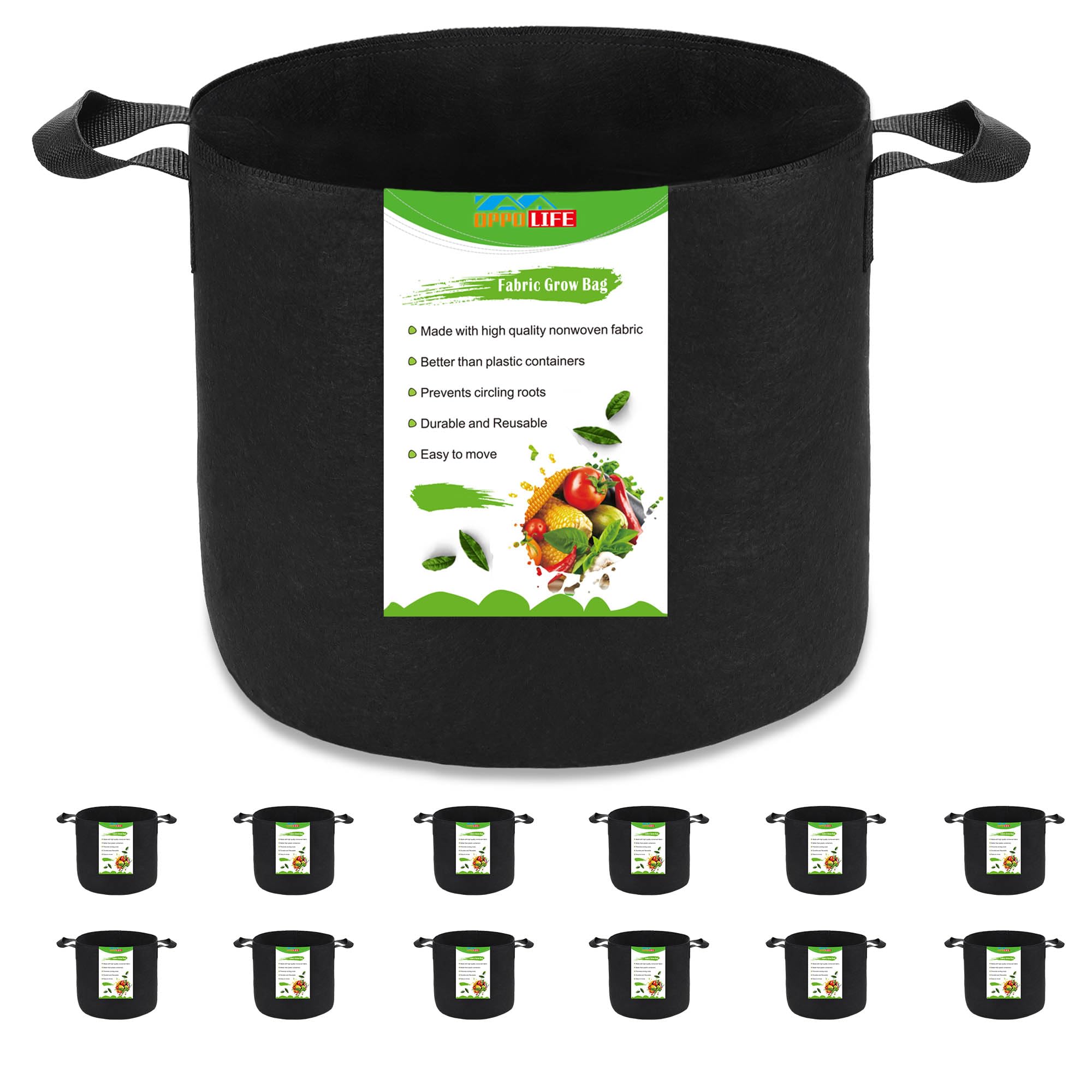
If your project needs a dozen grow bags and the budget is tight, this OPPOLIFE 12-pack delivers the most units at the lowest per-bag cost in the lineup. The 300G thickened nonwoven fabric matches the same heavy-duty material used by iPower and FEED GARDEN, with anti-ultraviolet performance for outdoor sun exposure. The handles are the same reinforced polypropylene webbing with inner lining that the 4-pack OPPOLIFE bags use — tested and proven to hold up under full weight.
These bags are noticeably shorter at 10 inches tall and 12 inches in diameter compared to the taller potato-bag version from the same brand. That means they work best for shallow-root crops: lettuce, herbs, strawberries, flowers. Customers note good results with sweet potato slips and general veggie growing. The quality is high for the price, and the company backs the bags with a contact-us warranty if any issues arise. The catch is that 10 inches of depth limits what you can plant — tomatoes and peppers will grow in them but may not reach full potential.
The bulk advantage: Buy this 12-pack when you need to fill a large area with bags for shallow-root crops like greens, herbs, and flowers at the absolute lowest cost per bag.
Not for deep-root veggies: Potatoes, carrots, and full-size tomatoes need the 18-inch depth of the 4-pack OPPOLIFE potato bags — these are too short for serious root vegetables.
9. Sinimaka 7-Pack 10 Gallon Grow Bags — Multicolor

Seven bright colors that turn a veggie patch into a garden feature.
Most grow bags come in black or maybe green. Sinimaka gives you seven distinct colors — from warm reds to cool blues — so your container garden actually looks intentional rather than like a row of industrial buckets. The fabric is double-stitched for durability and the handles are sturdy enough to move full bags around. Owners love that these do not look “generic like black cloth bags” and find the colors stay vibrant through the season (though one noted some water staining and color running on the yellow bag). If you want your garden to look designed, this is the pick over the standard black iPower bags.
At 15 inches in diameter and 12 inches tall, these sit in the middle of the size range — not as tall as the OPPOLIFE potato bags but deeper than the HealSmart or OPPOLIFE 12-packs. The eco-friendly, BPA-free fabric breathes well and prevents roots from circling. The bag count of 7 is an unusual number that fills a patio neatly without having leftover bags or falling short. The main practical caveat is that lighter colors may show dirt and staining over time, and the color-fastness is not perfect on every shade.
Why owners pick these
- Seven cheerful colors make a patio garden look intentional and inviting
- Double-stitched fabric with sturdy handles for easy moving
- Versatile mid-size profile works for tomatoes, peppers, flowers, and herbs
What some noticed
- Lighter colors, especially yellow, may show water staining and color bleed over time
- At 12 inches tall, depth is average — not ideal for long-root crops like carrots
Best for the patio decorator: Grab these if your garden doubles as outdoor living space and you want bags that look good enough to leave on display — the colors are a genuine aesthetic upgrade.
Skip if you want maintenance-free looks: If you prefer a bag that always looks clean and never stains, stick to black fabric — the lighter Sinimaka colors do show wear.
Understanding the Specs
300G Fabric Weight
That “300G” you see on several bags stands for 300 grams per square meter — a measurement of fabric density. Standard budget grow bags often use 150G or 200G fabric that feels like thin felt and can tear after one season. A 300G bag is roughly twice as thick, resists UV degradation longer, and holds its shape when full of wet soil. If you want a bag that lasts multiple seasons, 300G is the number to look for.
Air Pruning (the whole point)
When a root tip reaches the porous wall of a fabric bag, it hits dry air and stops growing — it “air-prunes.” That sounds counterproductive, but it triggers the plant to send out dozens of branching roots inside the soil instead. The result is a dense, fibrous root system that absorbs water and nutrients far more efficiently than the tangled, circling roots you get from a plastic nursery pot. Healthier roots mean bigger yields. This is why any fabric grow bag outperforms a standard plastic pot for root health.
FAQ
How many seasons will a 10 gallon grow bag last?
Do grow bags need drainage holes?
Can I grow potatoes in a 10 gallon grow bag?
Do fabric bags dry out faster than plastic pots?
How many plants can I put in one 10 gallon bag?
Are colored grow bags better than black ones?
Can I reuse grow bags from last season?
What size bag do I need for tomatoes?
Do I need a saucer under my fabric grow bag?
Final Thoughts: The Verdict
For most people, the 10 gallon grow bags winner is the Rain Science bag because it uses a plastic-coated woven mesh that outlasts standard nonwoven fabric by years — owners say it could last a decade. If you want a harvest window for checking potatoes mid-season, grab the OPPOLIFE 4-pack. And for the best balance of thickness and value across multiple bags, the iPower 6-pack gives you six 300G fabric pots at a per-bag price that is tough to beat.
How We Picked
We do not accept paid placement. Every pick is matched to a real buyer and a real use-case; we do not hands-on test units.
Sources & Methodology
Specifications: manufacturer listings and product documentation. Review insights: verified customer reviews, as of July 2026. Pricing: not shown on this page (it changes often); check the current price via the retailer link.
As an Amazon Associate, Lawn Gear Lab earns from qualifying purchases. This does not affect which products we feature.