
Specs are compiled from manufacturer listings and verified buyer reviews and can change over time — please confirm the key details on the product page before buying.
Potted citrus trees often struggle because of the dirt they sit in. Regular potting mix holds too much water, so roots suffocate, leaves turn yellow, and fruit never appears. A citrus-specific potting mix fixes that by being loose, fast-draining, and slightly acidic — exactly what oranges, lemons, and limes need in a container.
I’m Rikta — the founder and writer behind Lawn Gear Lab. This guide is built by comparing the manufacturers’ published specifications and the patterns across verified customer reviews, so you get each pick’s real strengths and trade-offs instead of marketing spin.
I looked for mixes that nail three things: drainage to stop root rot (root rot is when roots decay from too much water), the right pH range (pH is a scale of acidity, from 0 to 14) for nutrient uptake, and enough organic material to feed new growth. The list below covers the best citrus-specific potting mixes you can buy right now for indoor and outdoor container trees.
Quick Picks
- Soil Sunrise Citrus Tree Potting Soil Mix (12 Quarts) — Best Overall
- GARDENWISE Premium Organic Citrus Potting Soil (3 Quarts) — Premium Pick
- GARDENWISE Organic Lemon Tree Soil – Citrus Potting Mix (3 Quarts) — Best Value
- DUSPRO Citrus Tree Potting Soil Mix (6 Quarts) — Great All-Rounder
- GARDENERA Citrus Tree Potting Soil Mix (1 Quart) — Entry-Level
How To Choose The Best Citrus-Specific Potting Mix
When you pick a bag off the shelf, three things matter more than the brand name: how fast water runs through, the acidity level, and what is actually inside the bag. Here is what to check before you buy.
The Drainage Factor
Citrus roots hate sitting in wet soil. Look for ingredients like perlite (a lightweight volcanic glass that creates air pockets), coarse sand, or coconut coir. These keep the mix loose so water drains quickly and oxygen reaches the root zone.
Getting the pH Right
Citrus trees need a slightly acidic environment, typically a pH between 5.5 and 6.5, to absorb iron and other micronutrients. If the soil is too alkaline, leaves turn yellow — a condition called chlorosis. Some mixes include dolomite lime or organic acidic compost to lock the pH in this balance.
Volume vs. Your Pot Size
A small 1-quart bag works for a single sprouted seed or a tiny sapling in an 8-inch pot. A 6-quart bag handles a few medium containers or one larger tree. Bigger 12-quart bags are the right choice if you have multiple trees or are repotting a mature plant.
Quick Comparison
| Model | Best For | Volume | pH Range | Key Ingredients | Amazon |
|---|---|---|---|---|---|
| Soil Sunrise | Best Overall | 12 Quarts | — | Peat Moss, Perlite | Amazon |
| GARDENWISE (Citrus) | Premium Pick | 3 Quarts | 5.5 – 6.5 | Perlite, Compost, Dolomite | Amazon |
| GARDENWISE (Lemon) | Best Value | 3 Quarts | 5.5 – 6.5 | Perlite, Sand, Organic Fertilizer | Amazon |
| DUSPRO | Great All-Rounder | 6 Quarts | — | Peat Moss, Perlite | Amazon |
| GARDENERA | Entry-Level | 1 Quart | — | Peat Moss, Perlite, Worm Castings | Amazon |
In‑Depth Reviews
1. Soil Sunrise Citrus Tree Potting Soil Mix (12 Quarts)

The big bag that brings a struggling Meyer lemon tree back to life.
At 12 Quarts, this is the most economical option for anyone with multiple trees or a single large pot. The blend of peat moss and perlite gives you superior aeration and effective drainage — roots get air and water leaves fast, so you avoid the dreaded yellow-leaf curl. The mix also retains enough moisture that you are not watering daily, something buyers report is a real win. One reviewer noted the “perfect soil for our lime tree! Holds just the right moisture needed, and already the tree is growing and sprouting leaves.”
A buyer who had a Meyer lemon tree with sparse leaves repotted it with this mix and saw “every branch now has new leaf growth” — a total transformation. The trade-off versus the GARDENWISE Premium Organic Citrus Potting Soil (3 Quarts) is volume: this bag holds 12 Quarts versus 3 Quarts, making it ideal if you are filling several containers. It costs more upfront, but you need fewer bags.
Some owners wish the inner bag was resealable rather than a box with a plastic bag inside, and it is a touch pricier than generic potting soil. Still, for healthy, thriving citrus, it is the one most buyers reach for.
bulk value soil: The home grower with a few potted citrus trees who wants a large, ready-to-go mix that produces visible new growth fast.
heavy bag: The packaging is a box with a big plastic bag — not resealable, so you will need a clip or a bucket to store leftovers.
best for volume buyers: If you have multiple citrus trees or a large planter, the 12-quart size means you are not hunting for a second bag mid-repot.
skip it if you just need a tiny refill: A single small potted sapling is better served by a smaller, cheaper bag.
2. GARDENWISE Premium Organic Citrus Potting Soil (3 Quarts)
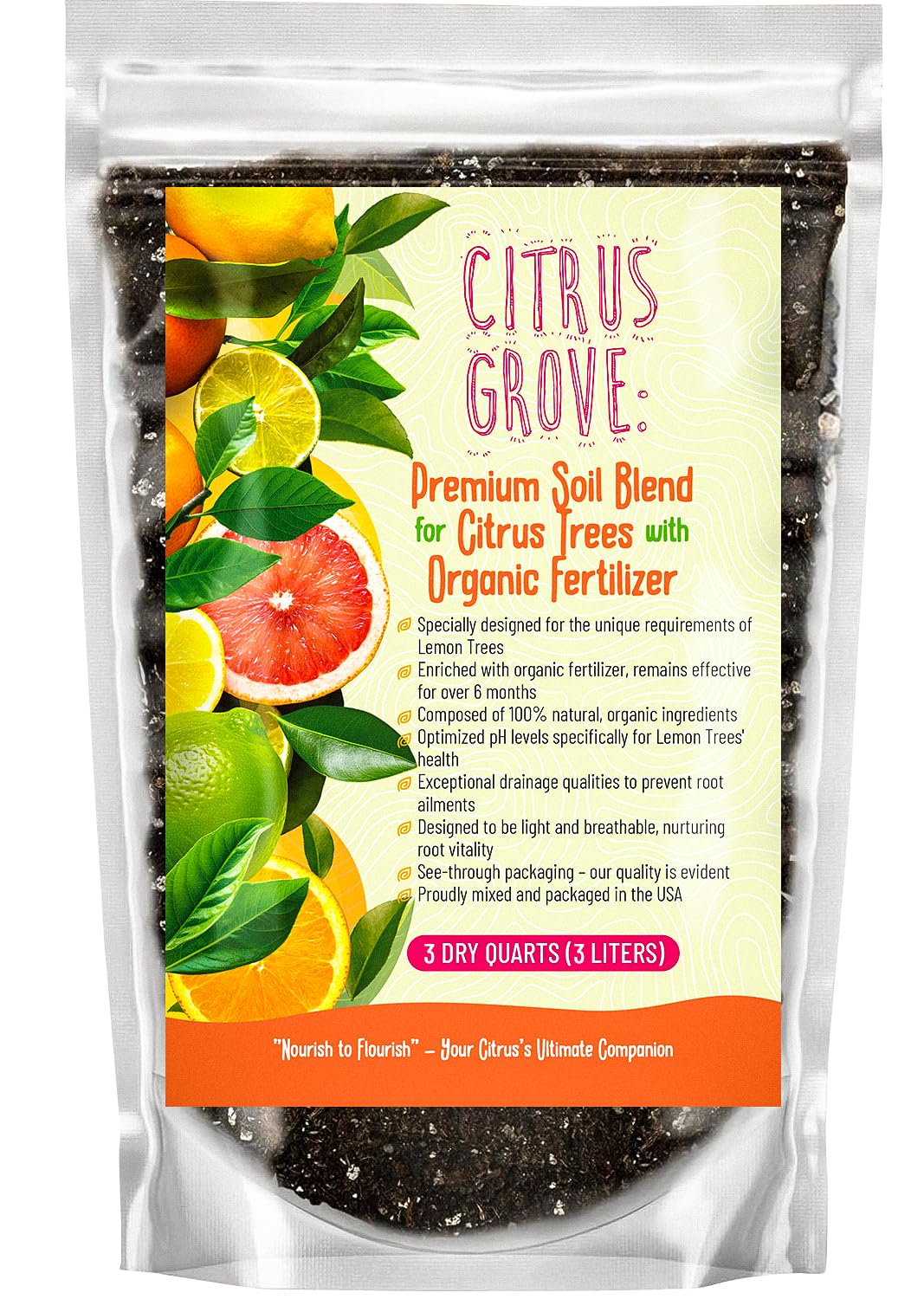
The hand-blended specialist that packs essential micronutrients into every quart.
This mix is built around what the maker says is a scientifically developed formula that holds the pH between 5.5 and 6.5 — the ideal acidic range where citrus roots absorb iron, magnesium, and manganese. The blend includes special organic fertilizer plus dolomite lime (a mineral that stabilizes pH) to keep that pH stable, so you are not making constant adjustments. The enhanced drainage system combines extra perlite and coarse sand, which prevents root rot while the compost holds the right moisture level.
Buyers consistently report strong results. One buyer mentioned after repotting two grapefruit plants “they are thanking me every day. They look super healthy, dark green and thick.” Another noted their lime tree sapling is doing well, and multiple people saw new growth on their lemon trees quickly. The catch is the volume — at 3 Quarts, it is noticeably smaller than the Soil Sunrise bag, and some reviewers mention it feels “a little expensive” for the amount. But if your tree is struggling and you want a precision blend, the results speak for themselves.
Compared to the entry-level GARDENERA 1 Quart, this GARDENWISE mix gives you 3 Quarts versus 1 Quart, with a guaranteed pH range and richer micronutrient content — a meaningful upgrade for a serious citrus grower.
premium organic blend
- pH locked at 5.5-6.5 for optimal nutrient uptake
- Extra perlite + coarse sand for superior drainage
- Packed with iron, magnesium, and manganese
- Ready-to-use, no mixing required
small quantity
- 3-quart bag is pricey for larger pots
- Small volume means you may need multiple bags for several trees
- A few buyers wanted a resealable bag
Reach for this if your tree needs a revival: The precise pH and micronutrient blend gives a quick boost to yellowing or slow-growing citrus.
Look elsewhere if you are on a tight budget: For a single small tree this fits perfectly; for a big planting project, the larger Soil Sunrise bag is more cost-effective.
3. GARDENWISE Organic Lemon Tree Soil – Citrus Potting Mix (3 Quarts)
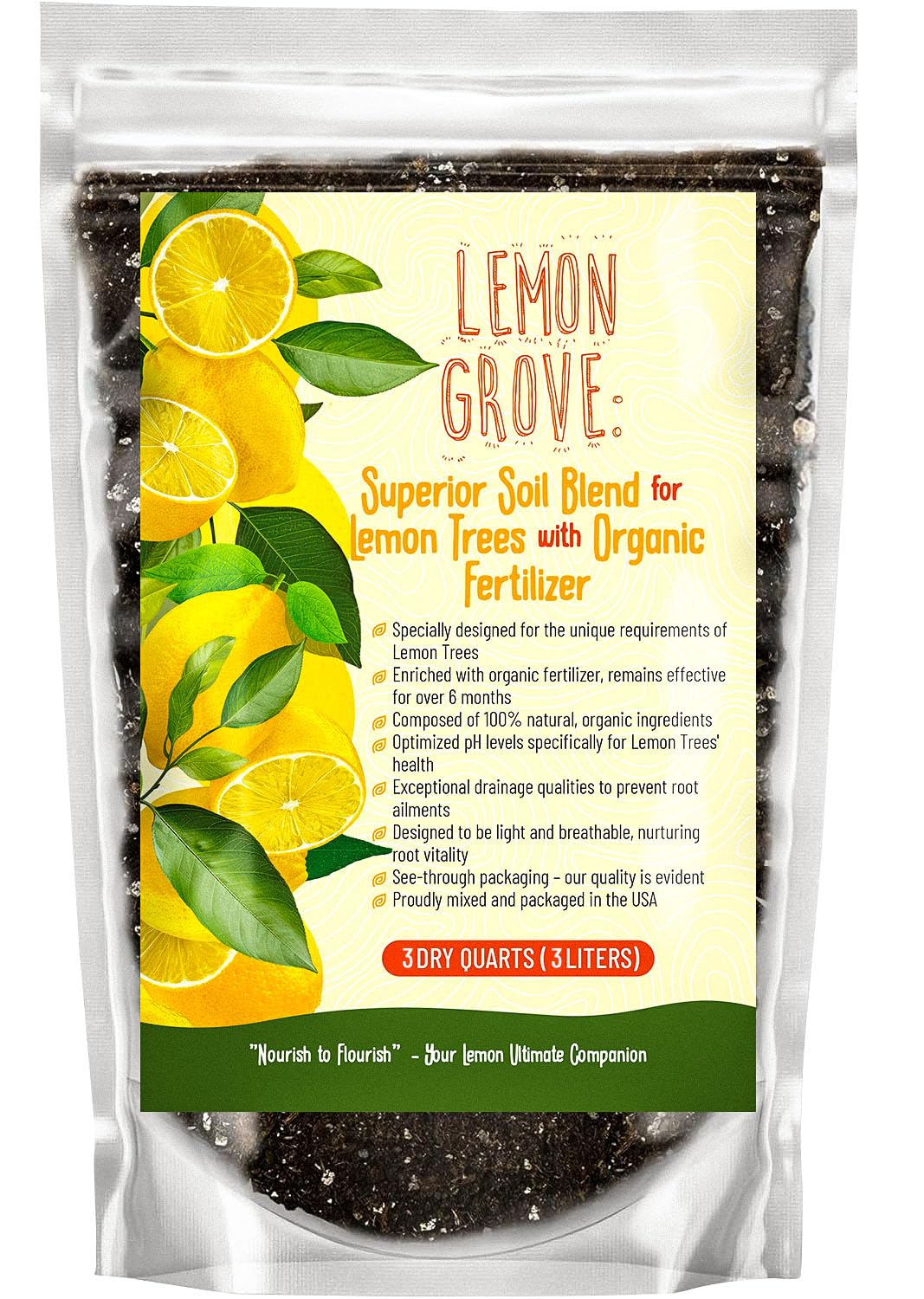
The budget-friendly pick that feeds your citrus for six months straight.
What makes this mix a standout value is the organic fertilizer already blended in — it keeps feeding your tree for up to 6 months, meaning you do not have to remember to add plant food every few weeks. The pH is tune at 5.5 to 6.5, just like the premium GARDENWISE mix, so your lemon or lime tree gets the acidic environment it craves. The formulation uses extra perlite and coarse sand for drainage, along with coconut coir and vermiculite to hold just enough water without drowning the roots.
The included components — perlite, coarse sand, coconut coir, vermiculite, garden compost, organic acidic compost, peat moss, and dolomite — cover every base a citrus tree needs. For a single potted Meyer lemon, you get 3 Quarts which is enough for a standard 8-inch to 10-inch pot. The biggest difference between this and the more expensive GARDENWISE Premium Organic Citrus Potting Soil is the addition of coarse sand here, which gives it a chunky texture that improves drainage even further.
Owners mention it is “light, breathable, and easy to use” and that it creates “the perfect acidic environment for lemon trees.” It is an ideal mid-range option that sits between the tiny GARDENERA bag and the much larger Soil Sunrise bucket.
Perfect for first-time citrus owners: The built-in fertilizer removes the guesswork — just repot and water for half a year of steady feeding.
ideal for one tree: 3 Quarts is one or two pots; buying a larger bag like the Soil Sunrise 12 Quarts is cheaper per quart if you have more trees.
4. DUSPRO Citrus Tree Potting Soil Mix (6 Quarts)
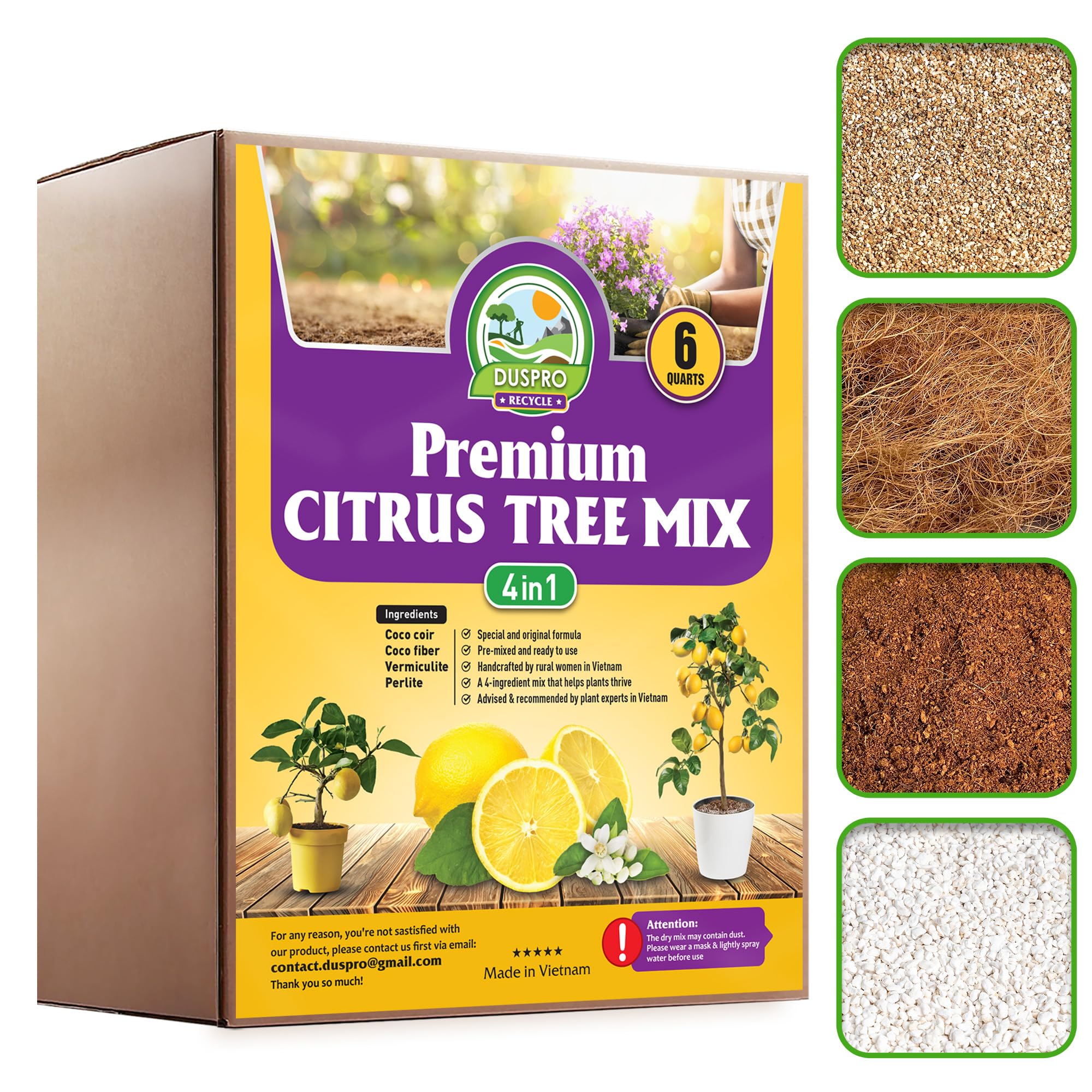
The medium-sized bag that doubles as a course in citrus tree care.
DUSPRO hits the balance between the small 1-3 Quart bags and the large 12 Quart bag. At 6 Quarts, it gives you enough volume to repot a few medium containers or one larger tree without overbuying. The mix is double-screened — meaning all the raw ingredients are filtered for consistency before blending — so you get a uniform texture with no clumps or debris. It is a pre-mixed 4-in-1 blend that you pour straight from the bag into the pot.
The included tree care eBook is a thoughtful bonus for newer growers. One owner reported after repotting their orange tree with this soil, “immediately, the tree improved.” Another noted that “good quality mix; plants thriving with new growth after 3-4 weeks.” It is versatile enough that buyers use it for money trees, avocado, and aloe vera as well as citrus. The only downsides are that the bag can get dusty near the end (one reviewer recommends wearing a mask when pouring the last bits) and the 6-quart size still requires a trip to the store once you run out.
Unlike the GARDENERA 1 Quart which is strictly a starter bag, this DUSPRO mix gives you room to grow — literally — and the free care guide helps you keep that growth going.
Grab this for a medium-sized collection: Perfect for two medium pots or one larger pot, with a helpful guide for beginners.
dust-free option: The last bit of the bag gets dusty, so wear a mask or pour slowly.
5. GARDENERA Citrus Tree Potting Soil Mix (1 Quart)

The hand-mixed starter bag that fits an avocado seed perfectly.
If you just sprouted a citrus seed or have a single small sapling in an 8-inch pot, this is your easy entry point. It is hand-blended on a small family farm in the USA with Canadian peat moss, perlite, worm castings, and lime — no additives, no chemicals, and approved for organic growing. The extra perlite and low-salt coconut coir promote rapid root development, and the mix includes worm castings that provide a gentle, natural nutrient boost.
Customers note that after 1.5 months with this mix, they had “no bugs, mites, or gnats” — a real peace-of-mind win for anyone keeping a tree indoors. One reviewer brought a Buddha hand lemon back from a scale infestation by replacing the soil with this mix, calling it “great soil for a lemon.” The biggest limitation is obvious: at 1 Quart, it is the smallest bag here. For a single small pot it works, but if your tree outgrows its container you will need a second bag or a larger option like the DUSPRO 6 Quarts.
Compared to the GARDENWISE Premium Organic Citrus Potting Soil (3 Quarts), this is 1 Quart versus 3 Quarts, so you pay less per bag but more per quart. It is the right call for a single small project — not for a mature tree or multiple pots.
small pot perfect Just enough soil to get an 8-inch pot going, with premium ingredients that keep pests away.
Pass if you have a large tree or multiple pots: You will need 3-4 bags for one big container, making the larger Soil Sunrise or DUSPRO options more practical.
Understanding the Specs
Perlite vs. Coarse Sand
These two ingredients do the same job — improve drainage — but in slightly different ways. Perlite is a lightweight volcanic glass that looks like small white pebbles; it creates air pockets in the soil so oxygen reaches the roots and excess water flows through. Coarse sand adds weight and grit, which prevents the mix from compacting over time. A good citrus potting mix will have one or both of these.
pH and Dolomite Lime
Citrus trees need a slightly acidic soil, ideally with a pH between 5.5 and 6.5, to absorb iron and other key nutrients. If the soil is too alkaline, the leaves turn yellow and the tree stops growing. Dolomite lime is often added to mixes because it buffers the pH — it keeps it from swinging too high or too low, so you do not have to test and adjust constantly.
FAQ
Can I use regular potting soil for my citrus tree?
How often should I repot my citrus tree?
Do I need to add fertilizer to citrus potting mix?
How much potting mix do I need for a standard 10-inch pot?
Can I use citrus potting mix for other acid-loving plants?
What is the white stuff in my citrus potting soil?
Can I make my own citrus potting mix at home?
How do I know if my citrus soil has the right drainage?
Should I worry about bugs in store-bought potting soil?
Is organic citrus potting soil better than non-organic?
Final Thoughts: The Verdict
If you want one dependable pick, the citrus-specific potting mix winner is the Soil Sunrise Citrus Tree Potting Soil Mix (12 Quarts) because it gives you the best volume-to-quality ratio, with consistent results reported by real buyers. If you want guaranteed pH control and micronutrient richness, grab the GARDENWISE Premium Organic Citrus Potting Soil. And for a budget-friendly starter that feeds itself for six months, the GARDENWISE Organic Lemon Tree Soil is a smart choice.
How We Picked
We do not accept paid placement. Every pick is matched to a real buyer and a real use-case; we do not hands-on test units.
Sources & Methodology
Specifications: manufacturer listings and product documentation. Review insights: verified customer reviews, as of July 2026. Pricing: not shown on this page (it changes often); check the current price via the retailer link.
As an Amazon Associate, Lawn Gear Lab earns from qualifying purchases. This does not affect which products we feature.