
Specs are compiled from manufacturer listings and verified buyer reviews and can change over time — please confirm the key details on the product page before buying.
Filling a massive planter with potting soil is expensive, heavy, and wasteful — your plant’s roots only need the top portion, so all that dirt at the bottom is just dead weight and wasted cash. The solution is a dedicated filler material that takes up volume, improves drainage, and keeps your pots light enough to move without a forklift.
I’m Rikta — the founder and writer behind Lawn Gear Lab. This guide is built by comparing the manufacturers’ published specifications and the patterns across verified customer reviews, so you get each pick’s real strengths and trade-offs instead of marketing spin.
The right material makes your planters healthier and your back happier. Here is the definitive breakdown of the best filler for large planters on the market right now.
Quick Picks
- D’vine Dev Ceramic Planter Filler Balls 12qt — Best Overall
- Voulosimi Clay Pebbles Hydroponic Rocks (18LB) — Premium Heavy-Duty Pick
- MDPQT Professional Grade Horticultural Perlite (20 QT) — Best Soil Mix Additive
- Bubblefast! FunPak EcoFoam Sustainable Gardening Peanuts (1.5 cu. ft.) — Lightest Solution
- Rahato LECA Clay Pebbles for Plants (10 lbs) — Budget Entry
How To Choose The Best Filler For Large Planters
The perfect filler saves you money on soil and makes your pots easier to move, but the wrong choice can cause waterlogged roots or a planter you can’t lift. Here is what to think about before clicking add to cart.
Weight matters more than you think
A huge ceramic planter filled with saturated soil can weigh over a hundred pounds. Lightweight options like foam peanuts drastically reduce that load, while clay pebbles add some weight but give you better stability for tall plants. Decide if you need to move the pot regularly or set it permanently.
Drainage and aeration keep plants alive
A filler that traps water around the roots is a disaster. Look for materials with a porous structure like LECA (lightweight expanded clay aggregate) or chunky perlite that allow excess water to drain away and air to circulate. This prevents root rot and mimics the natural loose soil plants love.
Volume and coverage per bag
Large planters eat up a shocking amount of filler. A 12-quart bag might fill the bottom of one big pot, while a 20-quart bag or a 1.5 cubic foot package covers multiple planters. Check the unit count and dimensions so you don’t end up short on project day.
Quick Comparison
| Model | Best For | Volume | Weight | Material | Amazon |
|---|---|---|---|---|---|
| D’vine Dev Ceramic Planter Filler Balls | Best Overall Drainage | 12 quarts | 8 pounds | Expanded Porous Clay | Amazon |
| Voulosimi Clay Pebbles | Best Heavy-Duty Volume | — | 17.56 pounds | Ceramsite Clay | Amazon |
| MDPQT Horticultural Perlite | Best Soil Mix Additive | 20 Quarts | 4.62 Kilograms | Organic Perlite | Amazon |
| Bubblefast! FunPak EcoFoam | Best Lightweight Solution | 1.5 cubic feet | 0.5 Pounds | EcoFoam Peanuts | Amazon |
| Rahato LECA Clay Pebbles | Best Budget Entry | — | — | Natural Clay | Amazon |
In‑Depth Reviews
1. D’vine Dev Ceramic Planter Filler Balls 12qt

The heavy lifter for drainage that also saves you a pile of soil.
Your plant’s roots need air and water to move freely, and this bag of 12 quarts of expanded porous clay pebbles (LECA) delivers exactly that. You simply layer these at the bottom of your pot before adding soil, and the porous structure creates a drainage zone that protects roots from rot and acidity. Buyers report these are “the best product for good drainage in potted plant I have ever found,” which is high praise from someone who clearly tried the alternatives.
At 8 pounds versus the 17.56-pound Voulosimi clay bag, it is a meaningful difference when you are moving a big ceramic pot around your patio. The included metal mesh circles to cover the drainage hole are a thoughtful touch that buyers appreciated.
The bag covers up to eight 5-inch pots or thirty-two 3-inch pots, so for a single large planter you will likely use most of it in the bottom third. Just wash and soak the pebbles before use to get rid of dust and boost water flow from day one.
The drainage king: The porous clay structure is the real deal for preventing waterlogged roots, and the 12-quart volume gives you plenty of coverage for large pots.
The trade-off: At 8 pounds it is not featherlight, so if you need the absolute lightest option for a balcony pot you should look at the foam-based fillers below.
Reach for this if: You need a solid, reusable filler that improves drainage and adds moderate weight to anchor tall plants in large ceramic or terra cotta planters.
Look elsewhere if: Your top priority is making a massive planter as light as possible for frequent rearranging — the EcoFoam peanuts weigh virtually nothing.
2. Voulosimi Clay Pebbles Hydroponic Rocks (18LB)

The heaviest bag that gives you consistent clay pebbles with zero guesswork.
If your large planter is staying put and you want a filler that feels substantial and drains like a dream, this 17.56-pound bag of ceramsite clay pebbles is the undisputed heavyweight. Owners mention the “LECA beads: consistent size/shape, excellent drainage and aeration for root growth, great value vs. local options, packaging intact.” The 0.3 to 0.5 inch size is uniform from bag to bag, with very little dust compared to some other brands.
EcoFoam peanuts, so you will feel the difference when lifting the box — but that weight translates to stability for top-heavy plants like fiddle leaf figs or large palms. The clay is pH neutral, non-toxic, and sterile, making it safe for both hydroponic setups and traditional soil pots.
One reviewer did mention that the pebbles are very dusty and require a thorough rinse and a 24-hour soak before use, so factor in that prep time. Once clean, they are sturdy, reusable, and block light well in deep water culture hydroponic systems.
Consistent quality, heavy payload: The uniform 0.3-0.5 inch size and excellent drainage make this a reliable pick for serious gardeners, and the 17.56-pound bag gives you a lot of pebbles per dollar.
The dust factor: You will need to rinse and soak these before use — skip that step and the fine dust can clog your drainage layer.
Ideal for permanent planters: This is the choice for a large, stationary pot where you want excellent drainage and enough weight to keep a tall plant from tipping over.
Not great for frequent movers: If you shift your pots around every season, the 17.56-pound weight will be a chore — grab the EcoFoam instead.
3. MDPQT Professional Grade Horticultural Perlite (20 QT)

Oversized perlite chunks that aerate your soil without crushing under pressure.
Standard perlite often arrives as half dust, but this 20-quart bag of “gigantor sized” chunks, as one buyer put it, is different. The large, chunky pieces create serious air pockets in your soil mix so roots can breathe and water can drain. One reviewer specifically called it “chunky perlite for orchids,” which makes sense because orchids need the kind of airy, fast-draining medium that smaller perlite just cannot provide.
Compared to the 12-quart D’vine Dev clay bag, this 20-quart bag gives you a significant extra amount of filler for the same price tier. The pieces are crush-resistant and will not break down over time like some cheaper perlite varieties do.
The bag is thin and the perlite is very dusty — one reviewer recommended shaking it in a pan to remove dust rather than rinsing it in a sink, which would cause a mess. You might find occasional debris like a piece of styrofoam or grass, but the quality of the perlite itself is excellent.
The big chunk advantage
- Giant, crush-resistant pieces that are perfect for a chunky potting mix
- Very little dust compared to standard perlite, just a slight amount at the bottom
- 20-quart volume covers multiple large pots or one massive planter
What to watch for
- Thin bag can tear easily during shipping, especially given the weight of almost 10 pounds
- Some debris (styrofoam, grass, pottery pieces) found in the bag by one reviewer
Best for serious soil mixers: If you mix your own aroid or orchid blend and want big, lasting perlite chunks that won’t turn to dust after a season, this 20-quart bag delivers.
Skip it for pure bottom filling: This is a soil additive, not a standalone bottom filler like the clay pebbles or foam peanuts — it works best mixed through your potting medium.
4. Bubblefast! FunPak EcoFoam Sustainable Gardening Peanuts (1.5 cu. ft.)

The float-weight foam that shrinks your soil bill and your lifting effort.
One buyer even joked “don’t eat these,” but they are serious about the practical benefit: you use this product “3/4 of the way up and then fill with soil and plant,” which saves a fortune in potting soil and keeps your planter light enough to carry with one hand.
The foam will never absorb water, so it does not add hidden weight after watering the way some organic fillers might. It is made in the USA by a veteran-owned company, and the material is plant-safe and reusable for multiple potting projects.
One caveat from a buyer: the bag arrived with “old, dirty, crushed peanuts,” so packaging and freshness may vary. The material is designed for architectural and landscaping use, so it is a modern synthetic alternative to traditional packing peanuts — check the bag condition when it arrives.
Why go this light
- Almost weightless at 0.5 pounds for the whole bag — ideal for hanging baskets or balcony pots
- Never absorbs water, so your planter stays light even after heavy rain
- Reduces soil usage by up to three-quarters, saving significant money on large planters
Consider this
- Some bags may arrive with crushed or dirty peanuts based on one reviewer’s experience
- Not a good choice if you want the filler to add stability for a top-heavy plant
Perfect for portable pots: If you need to move your planters around your deck or bring them indoors for winter, this EcoFoam makes that task easy.
Avoid if you need weight: Tall, top-heavy plants in a lightweight foam-filled pot will tip over easily — use a clay-based filler for those.
5. Rahato LECA Clay Pebbles for Plants (10 lbs)
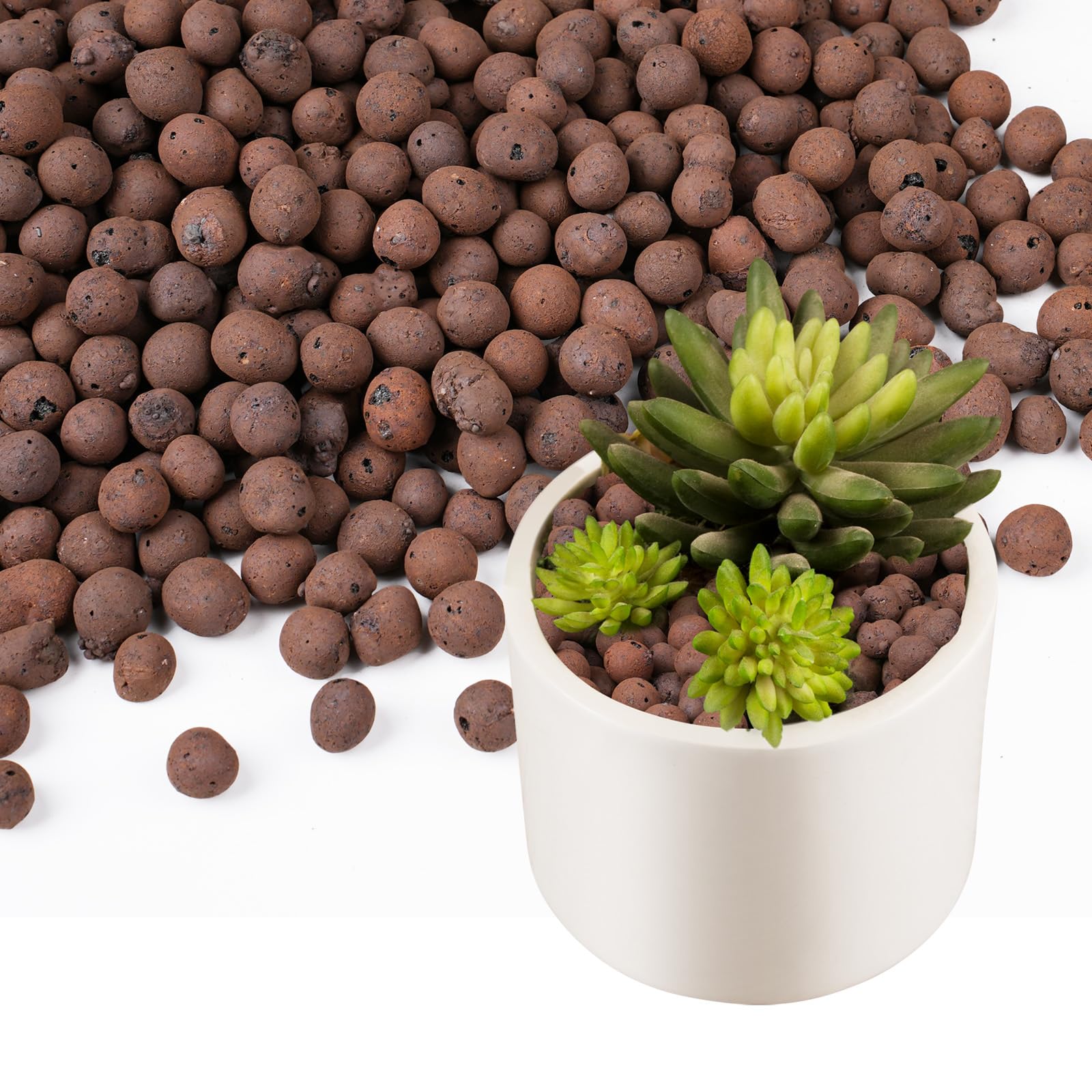
The budget-friendly clay pebble that gets the job done without the premium label.
For the price of a couple of takeout lunches you get a 10-pound bag of natural LECA (lightweight expanded clay aggregate) pebbles that are chemical-free, pH neutral, and perfectly safe for your plants. One buyer summed it up simply: “Just what I needed to fill a large planter.” They used bricks at the bottom first to minimize the number of bags needed, then topped with river rocks for a clean look.
The pebbles range from 4 to 16mm in diameter, which is slightly smaller than the more uniform 8-16mm clay pebbles from Voulosimi. A few reviewers noted they are on the small side, but they work great mixed into potting soil to create a chunkier blend for better aeration.
The porous structure helps prevent root rot by allowing water to flow through freely while slowly releasing moisture and nutrients back to the roots. In the Arizona desert, one reviewer noted they “help keep roots from cooking in their pots during Arizona summers,” which is a smart use case for hot climates.
Lowest price, solid performance: You get natural, eco-friendly clay pebbles that do the basic job of filling space and improving drainage at a price that beats most competitors.
The size trade-off: At 4-16mm the pebbles are on the smaller side, so if you want large, uniform chunks for aeration you might prefer the Voulosimi or D’vine Dev bags.
Start here on a budget: If you just need to fill a large planter without spending much and the pebble size is not critical, this 10-pound bag is the most affordable way to get LECA benefits.
Upgrade for consistency: For large pots where even drainage across the entire bottom is essential, the slightly more expensive D’vine Dev bag offers more uniform 12 quarts of pebbles.
Understanding the Specs
Volume (Quarts vs. Cubic Feet)
The volume tells you how much space the filler covers, which is the most important number for a large planter. A 12-quart bag and a 20-quart bag are both practical sizes for bottom-filling large pots, while a 1.5 cubic foot bag of foam peanuts is enormous and will fill multiple very large planters. Always estimate your planter’s bottom volume before buying so you don’t run short.
Weight (Pounds)
Weight determines how easy your planter is to move after filling. At 0.5 pounds, the EcoFoam peanuts are essentially weightless — you can carry a filled pot easily. At 17.56 pounds, the Voulosimi clay pebbles add significant heft that anchors tall plants but makes shifting the pot a two-person job. For a permanent floor planter, heavier is fine; for a balcony or deck pot, lighter wins.
FAQ
How much filler do I need for a large planter?
Can I use regular packing peanuts as planter filler?
Will clay pebbles or foam peanuts keep my planter lighter?
Do I need to wash LECA clay pebbles before using them?
Can I use filler materials for hydroponics or just regular pots?
How do I keep soil from mixing into the bottom filler layer?
Is perlite a good filler for large planters?
How long do clay pebbles last in a planter?
Final Thoughts: The Verdict
For most people, the filler for large planters winner is the D’vine Dev Ceramic Planter Filler Balls because it offers the best combination of drainage, uniform 12-quart volume, and modest 8-pound weight that works for both permanent and semi-portable pots. If you want the absolute lightest solution for a balcony or hanging planter, grab the Bubblefast! FunPak EcoFoam. And for massive, stationary planters where stability and drainage are everything, the Voulosimi Clay Pebbles is the heavy-duty king.
How We Picked
We do not accept paid placement. Every pick is matched to a real buyer and a real use-case; we do not hands-on test units.
Sources & Methodology
Specifications: manufacturer listings and product documentation. Review insights: verified customer reviews, as of July 2026. Pricing: not shown on this page (it changes often); check the current price via the retailer link.
As an Amazon Associate, Lawn Gear Lab earns from qualifying purchases. This does not affect which products we feature.