
Forget soil, forget weeding, and forget worrying about weather forecasts. A quality indoor hydroponics setup puts you in total control of your herbs, greens, and even small vegetables, delivering growth rates that leave traditional gardening in the dust. The challenge is cutting through the noise of pod counts, pump noise levels, and light wattages to find a system that reliably sprouts seeds and keeps them thriving without constant babysitting.
I’m Rikta — the co-founder and writer behind Lawn Gear Lab. I’ve spent countless hours comparing specifications, studying horticultural data, and analyzing aggregated owner feedback to pinpoint the setups that actually deliver on their promises for home growers.
In this guide, I highlight the best options across different needs so you can grow fresh produce year-round without the guesswork, powered by a reliable diy hydroponics kit that matches your counter space and crop ambitions.
How To Choose The Best DIY Hydroponics Kit
Picking the right indoor garden begins with understanding the interplay between light power, water management, and physical footprint. These three factors decide whether you harvest basil in three weeks or fight algae and leggy seedlings for months.
Light Wattage and Spectrum
The LED grow light is the engine of any hydroponic system. A 24W full-spectrum panel is the baseline for decent growth on a standard countertop unit. Systems packing 28W or higher deliver noticeably denser foliage and can support fruiting plants like cherry tomatoes or peppers. Look for panels that include red and far-red wavelengths, which are critical for flowering and fruit set, not just vegetative leaf growth.
Tank Capacity and Pump Reliability
Water volume directly dictates how often you need to refill. A 3-liter tank may require attention every 7-10 days, while 4-liter or 5-liter units stretch to two weeks or more. The pump cycle matters too — 30-minute on/off intervals are the industry standard, as they keep oxygen flowing to roots without overheating the motor. A pump running at less than 20dB is effectively silent; anything under 40dB is still very quiet for a living space.
Pod Count vs. Spacing
More pods sounds better, but cramming 16 plants into a narrow footprint can lead to leaf overlap and reduced airflow. Look at the physical dimensions: a 12-pod system with 20% more spacing between holes will grow healthier, larger plants than a 16-pod unit that forces competition for light. Adjustable light height, ideally ranging from 2 inches up to 17 inches, gives you flexibility to start seeds close to the panel and raise it as they mature.
Quick Comparison
On smaller screens, swipe sideways to see the full table.
| Model | Category | Best For | Key Spec | Amazon |
|---|---|---|---|---|
| SUNCOZE 12 Pod | Mid-Range | Compact daily herbs | 24W LED / 4L tank | Amazon |
| URUQ 8 Pod | Mid-Range | Small countertop starters | 24W LED / 3L tank | Amazon |
| LetPot LPH-Air | Premium | App-controlled automation | 24W LED / 4L tank | Amazon |
| Ahopegarden 12 Pod | Premium | Tall crop versatility | LCD touch / 5L tank | Amazon |
| inBloom 12 Pod (White) | Premium | Wide spacing for big leaves | LED / 4.2L tank | Amazon |
| Growell 16 Pod | Premium | High-volume leafy greens | 28W LED / 8L tank | Amazon |
| inbloom 12 Pod (Pro) | Premium | Low-water alarm reliability | 24W LED / 4.2L tank | Amazon |
In‑Depth Reviews
1. SUNCOZE Hydroponics Growing System Kit 12 Pods
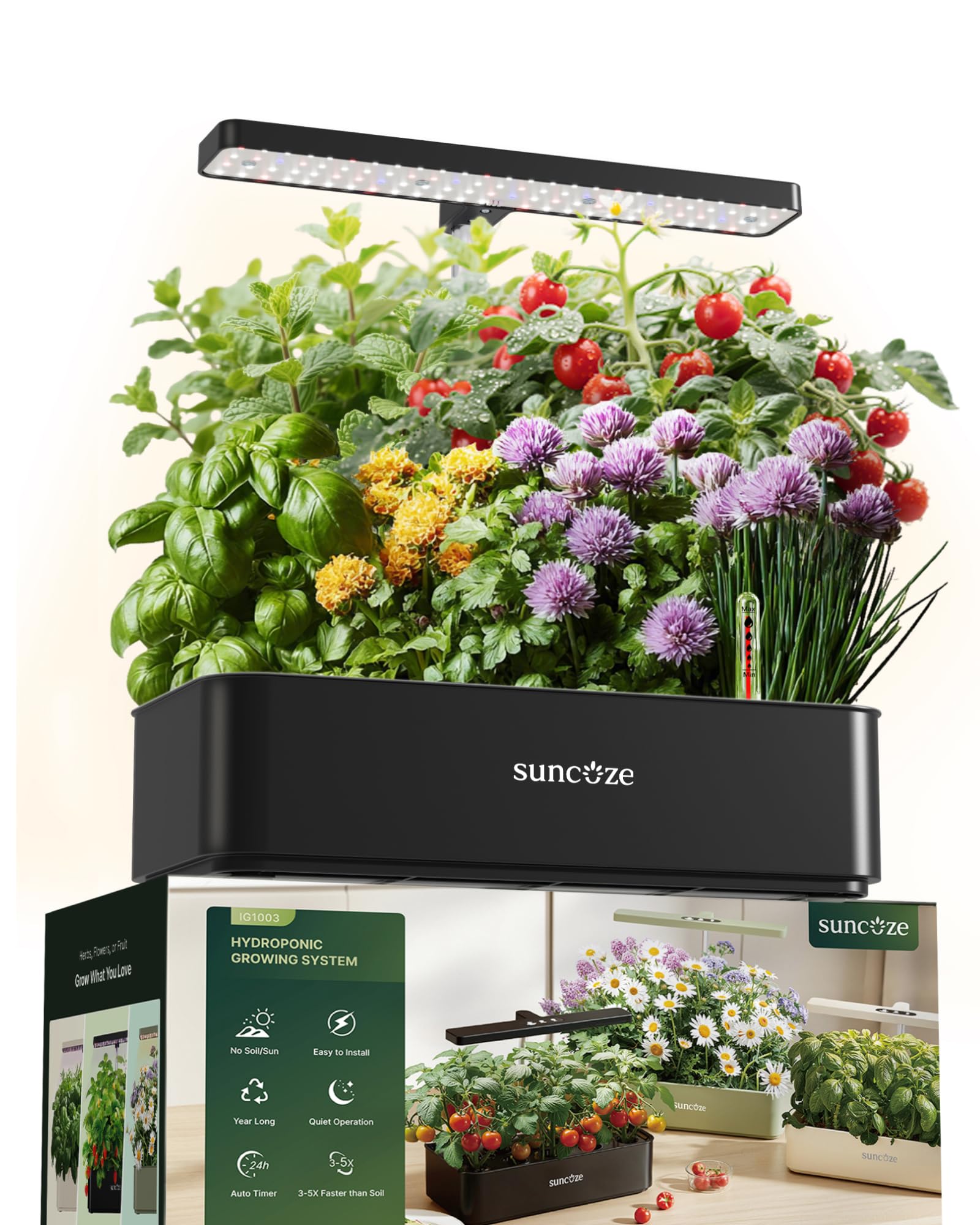
The SUNCOZE kit hits the sweet spot between pod capacity, light power, and footprint. Its 24W full-spectrum panel drives rapid germination for herbs like basil and bok choy, while the 4-liter reservoir with a 15-minute-on, 105-minute-off pump cycle keeps roots oxygenated without excessive noise. The adjustable light arm extends from 2.2 to 12.4 inches, accommodating everything from seedlings to mature kale.
Owner feedback highlights consistent germination within three to five days, with many reporting lush growth of tomatoes, cucumbers, and green beans in the first two weeks. The three-button control panel with dedicated veggie and flower/fruit modes makes it approachable for first-timers, and the low-water indicator adds a layer of safety against pump dry-running. The 12 included baskets, sponges, and A/B nutrients mean you have everything except seeds out of the box.
The only notable limitation is the narrow light bar — a wider panel would reduce leaf burn risk for sprawling plants at the edges. Additionally, the maximum height of 12.4 inches means taller peppers or indeterminate tomatoes will outgrow this unit. For compact greens and herbs, however, this is a balanced, reliable performer.
What works
- Rapid germination — seeds often sprout within 3 days
- Pump cycles are nearly silent during operation
- Dual light modes match veggie and fruit growth phases
What doesn’t
- Light bar could be wider for edge pod coverage
- 12.4-inch max height limits tall crops
2. URUQ Hydroponics Growing System Indoor Garden 8 Pods
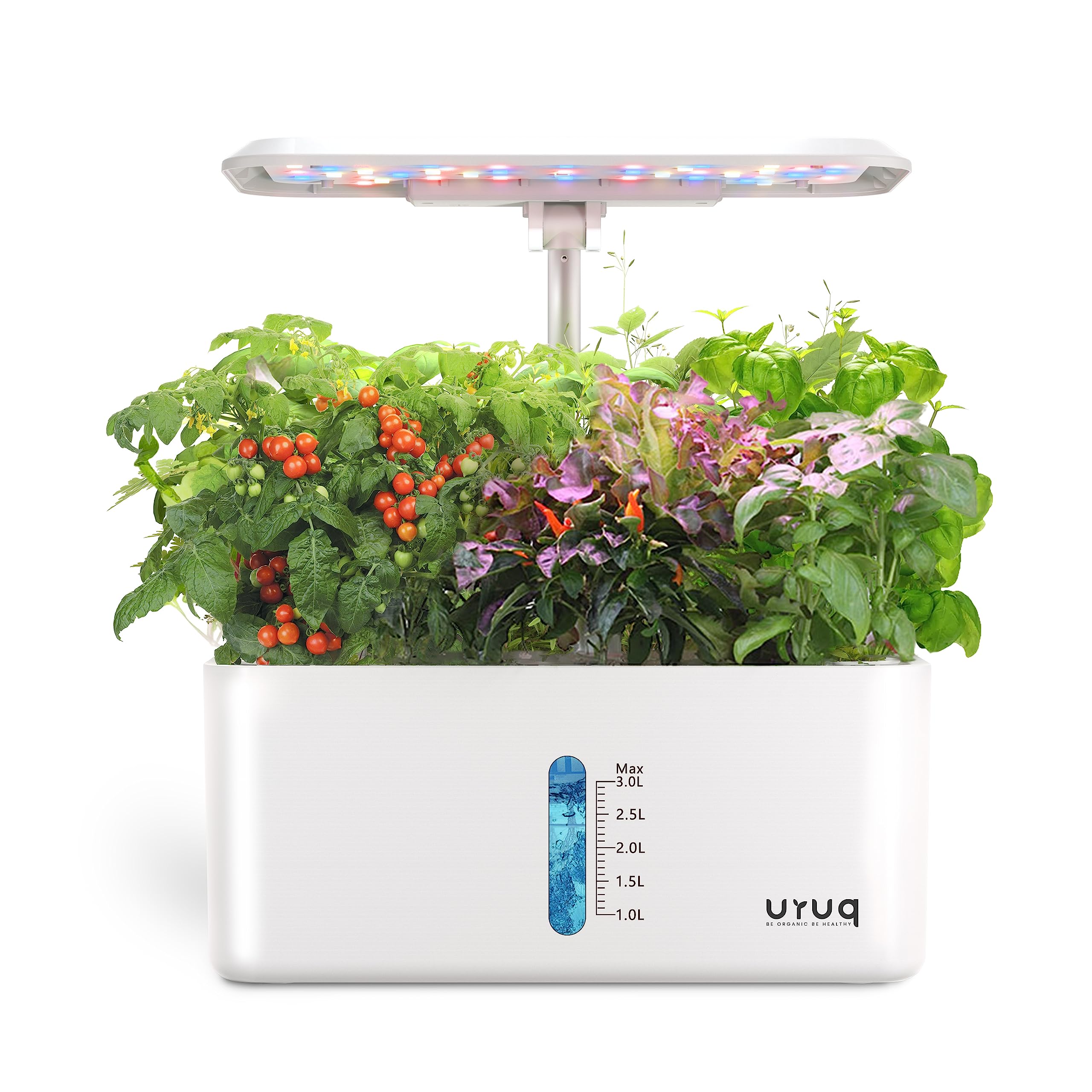
The URUQ 8-pod system is an entry-level machine that punches above its price point thanks to a surprisingly robust 24W light panel and a pump rated under 20dB. The light arm adjusts up to 21 inches — more headroom than many premium units — and can tilt 180 degrees for side-lighting taller plants. The 3-liter reservoir is smaller than average, but the see-through water level window makes monitoring painless.
Customer reports consistently mention basil, mint, parsley, and dill sprouting in under a week, with true leaves appearing by day seven. The 16-hour-on, 8-hour-off auto cycle is reliable, though the timer resets each time you plug it in, meaning you may have to set the start time manually. The included guide with a germination chart helps beginners track progress without guesswork.
Where this kit compromises is pod spacing and capacity. Eight pods are enough for a small herb garden, but if you plan to grow multiple types of lettuce simultaneously, you will run out of room quickly. The 3-liter tank also requires refills roughly every seven days, so this is best for a desktop garnish garden rather than a primary produce source.
What works
- Adjustable light arm reaches 21 inches for tall plants
- Pump operates below 20dB for whisper-quiet use
- Germination chart simplifies planting decisions
What doesn’t
- Small 3L tank requires weekly refills
- Auto timer resets after unplugging
3. LetPot LPH-Air Hydroponics Growing System Kit
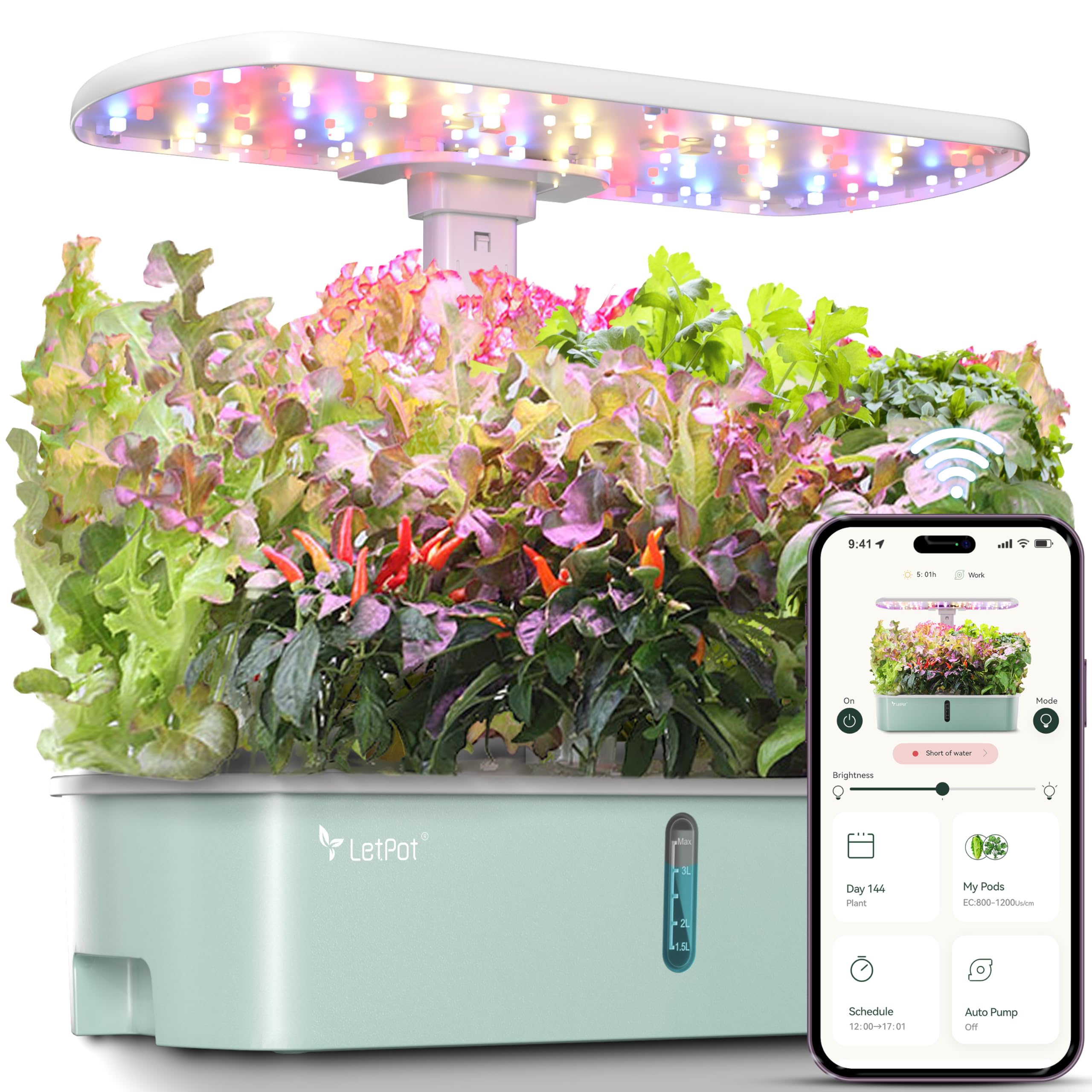
LetPot brings app-based intelligence to the countertop garden, allowing you to adjust light schedules and brightness across a full 24-hour timeline rather than being locked into a fixed 16/8 cycle. The 24W full-spectrum panel is identical in wattage to the SUNCOZE and URUQ units, but the app adds the ability to set custom modes for germination, vegetative growth, and flowering. The 4-liter BPA-free tank is rated for 14-21 days between refills.
User reports praise the five-minute setup and the plant-tracking feature that logs germination dates and suggests optimal harvest windows. Basil, oregano, and tomatoes have shown consistent growth, with several owners noting they bought additional units after initial success. The pump is quiet, and the silent mode in the app shuts off the water circulation for overnight operation without any noise.
The biggest friction point is the app itself — some users report needing to delete and re-add units when managing multiple LetPot systems. The plant list within the app is also limited, so uncommon herbs or vegetables may not appear in the preloaded database. This kit is ideal for the tech-savvy grower who values schedule flexibility over a large pod count.
What works
- Full 24-hour app-based light scheduling
- 14-21 day water reservoir reduces maintenance
- Silent mode for noise-free nighttime operation
What doesn’t
- App can be glitchy when managing multiple units
- Limited species list in the plant database
4. Ahopegarden Hydroponics Growing System Kit 12 Pods

The Ahopegarden kit distinguishes itself with an LCD touchscreen control panel and a maximum light height of 17 inches — enough vertical room to grow lettuce, kale, and even compact tomato varieties without constant adjustment. The 5-liter tank is one of the largest on this list, and the ultra-quiet pump cycles every 30 minutes to keep water oxygenated. The ABS plastic body feels sturdy, and the polished finish looks modern on a kitchen counter.
Owners consistently praise the 22-hour light mode, which reportedly boosts flowering by 50% and improves fruit sweetness in cherry tomatoes and strawberries. The 12 planting baskets are round and cheap to replace, a detail that matters when you expand your grow. The included A/B nutrient solution and seedling covers get you started immediately, and the touchscreen makes mode switching intuitive.
The trade-off is the unit weight — at 5.1 pounds, it is noticeably heavier than competitors, which matters if you plan to move it between rooms. Some users also found the 22-hour mode to be overkill for leafy greens, accelerating growth but also drying out the sponges faster if water levels dip. This is a premium option best suited for growers who want maximum vertical flexibility and a large reservoir.
What works
- 17-inch maximum light height for tall crops
- 5L tank with 22-hour flowering boost mode
- Touchscreen control is responsive and clear
What doesn’t
- Heavier than most countertop systems
- 22-hour mode may dry sponges faster
5. inBloom 12 Pods Hydroponics Growing System (White)

inBloom’s 12-pod model prioritizes spacing — its deck arranges holes 20% farther apart than typical competitors, giving each plant more room to spread leaves and access light without shading neighbours. The 24W full-spectrum LED panel is recessed and reportedly reduces leaf burn compared to exposed bulbs. The 4.2-liter tank supports up to 15 days between refills, and the pump cycles every 30 minutes for consistent oxygenation.
Customer reviews highlight fast germination for romaine lettuce, cherry tomatoes, and bell peppers, with many noting the healthy root development enabled by the spacious design. The low-water alarm is a practical safeguard, and the power outage memory feature means the light cycle resumes correctly after a brief blackout. The unit has a bottom drain hole that simplifies cleaning when switching crops.
The main drawback is the larger footprint — this system takes up more counter space than a standard 12-pod unit. The adjustable light arm extends only from 7 to 12 inches, which is sufficient for most herbs and compact greens but not for taller determinate tomatoes. If you have ample counter room and want to maximize leaf area, this design is a clear winner.
What works
- Pod spacing allows larger, healthier leaf development
- Recessed LED reduces leaf burn risk
- Power outage memory preserves light schedule
What doesn’t
- Larger footprint requires more counter space
- Light height range limited to 7-12 inches
6. Growell Hydroponics Growing System Kit 16 Pods

The Growell kit is the heavy lifter of the group, combining a 28W full-spectrum LED with a massive 8-liter water tank. The light includes red, blue, white, and far-red diodes, giving it a photosynthetic edge over standard 24W panels. Three preset modes — Vegetables, Flowers & Fruits, and Herbs — plus a 22-hour accelerated growth mode make it extremely versatile. The 15.4-inch adjustable height and detachable light pole simplify cleaning.
Owners report excellent results with leafy greens, harvesting romaine lettuce in just 30 days. The included accessories are generous: 16 baskets, 16 sponges, 16 grow domes, labeling materials, and a set of tweezers. The transparent water level window on the 8L tank makes refill timing obvious, and the pump operates below 40dB, which is barely perceptible in a living space.
The biggest challenge is the sheer number of pods — packing 16 plants into a single unit can lead to overcrowding unless you stick to compact greens like lettuce or spinach. Taller crops like peppers will compete for light at the center rows. The starter kit also includes only enough nutrients for one grow cycle, so you will need to purchase additional A/B solution soon. This is a high-volume solution for serious indoor farmers.
What works
- 28W panel with far-red diodes for fruiting plants
- 8L tank supports 4 weeks between water changes
- 16 pods allow high-density leafy green production
What doesn’t
- 16 pods can lead to overcrowding with tall crops
- Kit only comes with one grow cycle of nutrients
7. inbloom Hydroponics Growing System 12 Pods
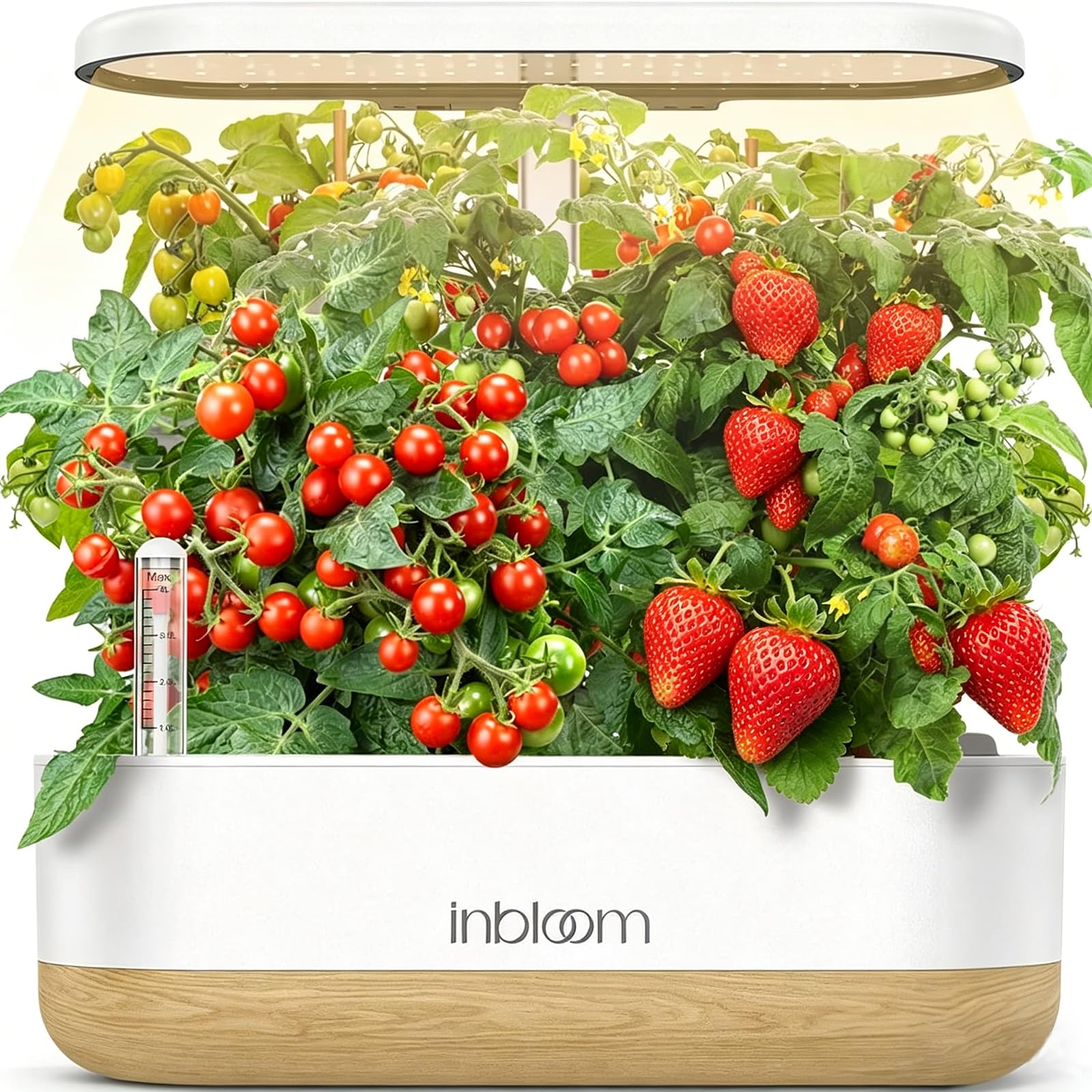
This inbloom model shares the same 12-pod deck as its white counterpart but adds a low-water alarm that triggers an audible beep when the reservoir drops below 700ml — a critical safeguard for users who travel or work long hours. The 24W panel uses 76 individual LED bulbs with tuned red and blue wavelengths plus far-red, and the 4.2-liter tank supports 15-30 days between fill-ups depending on plant size and environment.
Owners frequently mention the rapid growth of basil, thyme, and oregano, with some reporting they had to replant after the original batch overgrew the system. The pump is quiet enough for a bedroom, and the one-click timer lets you turn off the light at night with automatic re-start after 10 hours. The 12 included baskets, domes, sponges, and plant food A/B provide a complete starter experience.
The water alarm can be loud enough to startle you, and some users found it annoying during nighttime if they forgot to check the level before bed. The pod spacing is average — not as generous as the other inbloom unit, so larger plants may crowd each other. This system is best for growers who want a reliable fail-safe for water management above all else.
What works
- Water shortage alarm prevents pump damage
- 76-bulb LED array promotes strong root growth
- 15-30 day tank capacity for low-maintenance use
What doesn’t
- Water alarm is quite loud when triggered
- Average pod spacing limits large-leaf plants
Hardware & Specs Guide
LED Wattage and Spectrum
The light panel is the most critical component in any hydroponic kit. A 24W full-spectrum LED is the minimum for successful germination and vegetative growth. Higher wattage, like 28W, adds far-red diodes that improve flowering in fruiting plants. Look for panels with at least red (660nm) and blue (450nm) peaks — these wavelengths drive photosynthesis and stem elongation more efficiently than generic white LEDs.
Water Pump and Aeration
A submersible pump cycling water every 30 minutes is the standard for countertop systems. The pump creates gentle water flow that transports nutrients to roots and prevents stagnation. Pump noise varies from under 20dB (virtually silent) to around 40dB (soft hum). Systems without active aeration rely on water movement alone — for leafy greens this is sufficient, but fruiting plants benefit from an additional airstone.
Pod Spacing and Density
Pod count matters, but spacing between holes matters more. A 12-pod system with generous spacing allows each plant to receive adequate light and airflow, reducing mold risk. Cramped 16-pod configurations work best for low-growing greens like lettuce. The physical deck area — measured in inches — is the true indicator, not just the number of holes. A deck around 15×7 inches with 12 pods gives each plant roughly 8.75 square inches of space.
Tank Volume and Refill Frequency
Tank capacity directly determines how much buffer you have between water changes. A 3-liter tank in a standard 8-pod system will need topping up every 7-10 days. A 5-liter tank in a 12-pod unit can stretch to two weeks. Larger tanks also dilute nutrient concentration fluctuations, providing a more stable root environment. Transparent water level windows remove the guesswork.
FAQ
Can I use tap water in a hydroponic growing system?
How do I clean a hydroponic system between harvests?
Why are my seedlings leggy with thin stems?
Final Thoughts: The Verdict
For most gardeners, the best diy hydroponics kit winner is the SUNCOZE 12 Pod because it offers the best balance of light power, tank capacity, and ease of use for everyday herbs and leafy greens. If you want app-based scheduling flexibility, grab the LetPot LPH-Air. And for high-volume production of greens, nothing beats the Growell 16 Pod with its 28W panel and 8-liter tank.