
Bark for plants is more than just a pretty topper. Whether you are fighting off fungus gnats in your houseplants, trying to keep the soil from drying out in a raised bed, or giving your prized orchids the drainage they demand, the right bark layer changes how your soil performs. Get the wrong type or the wrong chip size, and you might trap moisture, invite pests, or simply waste your money on a product that blows away after the first storm.
I’m Rikta — the co-founder and writer behind Lawn Gear Lab. This guide is built on hours of cross-referencing technical specs, studying the difference between ammonium-based mulches and buffered coir chips, and filtering through real owner experiences to find out which bag of bark actually earns its spot in your garden shed.
After this deep dive, you will know exactly which mulch type matches your specific gardening goal and how to pick the best bark for plants that won’t break down in a month or steal nutrients from your roots.
How To Choose The Best Bark For Plants
Bark is not just bark. The material, the chip size, and whether the product is composted or raw all change how it behaves in your pot or garden bed. Matching the right bark to your plants is the single most important decision you will make.
Material: Pine, Coco, or Cocoa?
Pine bark is the classic choice for outdoor beds and acid-loving plants. It breaks down slowly and adds organic matter to the soil over several seasons. Cocoa shell mulch smells like chocolate for about a week and provides a gentle fertilizer value, but it is toxic to dogs and can mat together after heavy watering. Coconut husk chips (coco coir) absorb up to ten times their weight in water, making them the top option for moisture retention and seed starting — but they need to be buffered to prevent calcium and magnesium lockout in your potting mix.
Chip Size: Fine Shred vs. Chunky Nuggets
Aroid and monstera growers nearly always reach for small to medium chips (0.4 to 1.3 inches) to allow air flow without losing soil contact. Orchid bark, on the other hand, needs larger pieces (roughly 0.8 to 1.5 inches) to create open air pockets around the roots. If you use fine shredded bark on a phalaenopsis orchid, you will trap too much moisture and encourage root rot. If you use huge nuggets in a potting soil mix for pothos, the soil will dry out unevenly and leave the roots hanging in air pockets.
Compressed vs. Loose Bags
Compressed coconut bricks are lightweight to ship and expand up to ten times their dry volume when soaked. This is a smart play for large garden beds because you save on shipping weight. Loose pine bark bags are ready to use straight out of the bag, but they take up storage space and you pay for the weight of the water already in the product. For indoor use with small pots, a loose 8-quart bag of prepared chips is usually more convenient than breaking up a compressed brick.
pH and Nutrient Binding
Raw coco coir has a high cation exchange capacity (CEC), which means it holds onto nutrients like a sponge. That sounds good, but unbuffered coir can bind calcium and magnesium, making them unavailable to your plants. Buffered products are pre-treated to lock these nutrients in without stealing them from your fertilizer. Pine bark is naturally acidic with a pH around 4.5 to 5.5 — great for blueberries and azaleas, but you will need to adjust your water pH for neutral-loving houseplants.
Scent and Pet Safety
Cocoa bean shell mulch has a strong, pleasant chocolate smell that many gardeners enjoy. However, it contains theobromine, which is toxic to dogs and cats if ingested in large amounts. If you have a curious pet that likes to dig or chew in the garden, steer clear of cocoa hulls. Pine bark and coco coir chips are pet-safe alternatives that still suppress weeds and retain moisture without any safety concerns.
Quick Comparison
On smaller screens, swipe sideways to see the full table.
| Model | Category | Best For | Key Spec | Amazon |
|---|---|---|---|---|
| Back to the Roots Organic Coconut Husk Mulch | Compressed Coco Block | Raised beds & vegetable gardens | Expands to 2 cubic feet | Amazon |
| Plantonix Organic Coco Chips | Compressed Coir Chips | Seed starting & aroid mixes | Absorbs 10x weight in water | Amazon |
| AVALUTION Orchid Potting Bark | Pine Bark Nuggets | Orchids & epiphytic plants | 0.8–1.3 inch chip size | Amazon |
| Halatool Coco Husk Chips | Compressed Coco Brick | General potting & reptile substrate | Expands to 72 quarts | Amazon |
| Hull Farm Cocoa Bean Shell Mulch | Cocoa Hull Mulch | Flower beds & fragrant gardens | Fertilizer value 2.5-1-3 | Amazon |
| Rio Hamza Trading Houseplant Mulch | Small Bark Wood Chips | Indoor potted plants | 8 quarts volume | Amazon |
| Soil Sunrise Organic Orchid Potting Bark | Pine Bark Mix | Aroid mix & container gardening | 8 quarts USA-sourced pine | Amazon |
In‑Depth Reviews
1. Back to the Roots Organic Coconut Husk Mulch
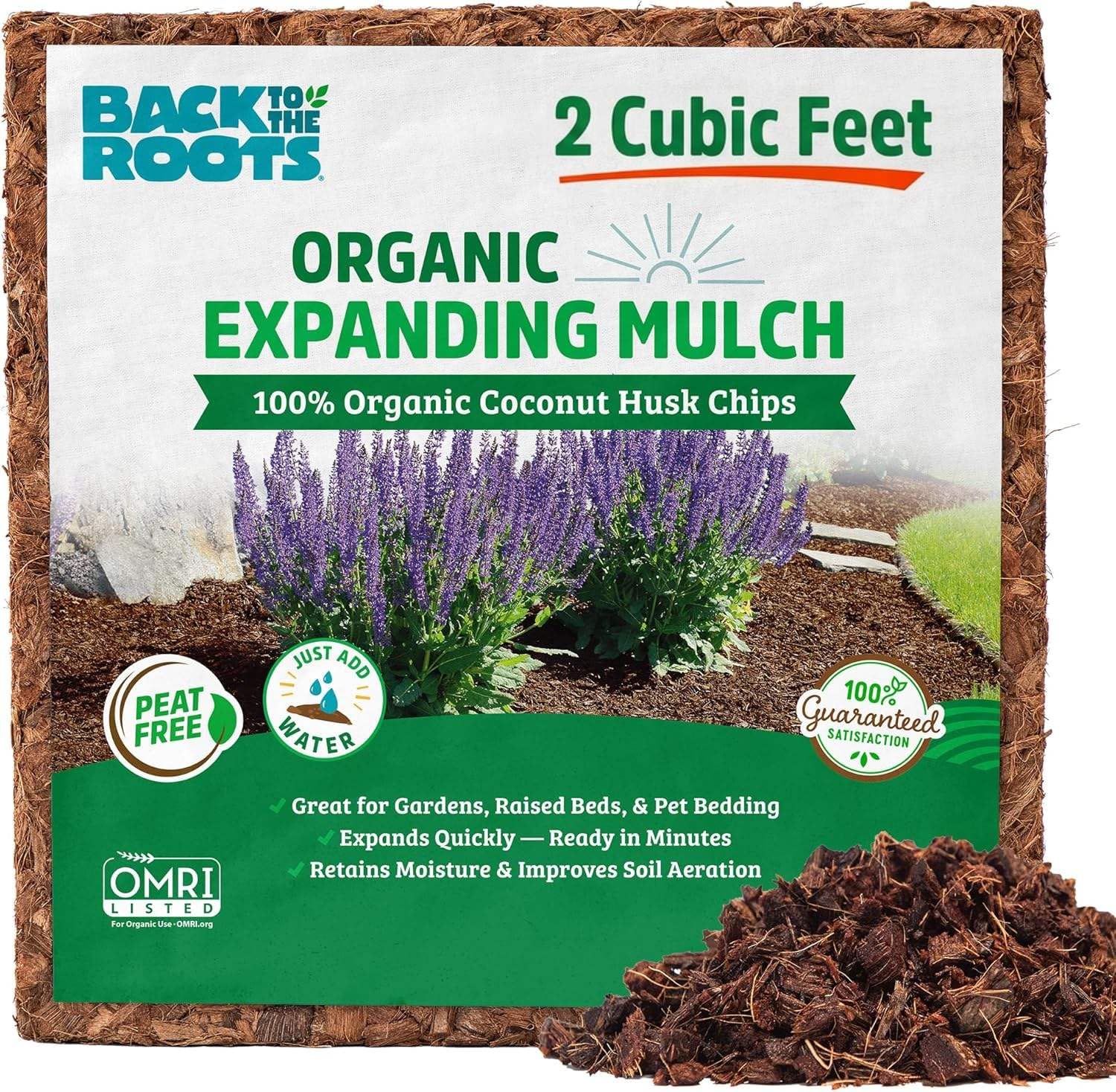
Back to the Roots delivers a 10-pound compressed brick that expands to over 2 cubic feet when soaked — enough to fill a wheelbarrow three quarters full. This OMRI-listed organic mulch is peat-free and made entirely from coconut husk, making it an excellent choice for vegetable gardens and raised beds where chemical additives are unwelcome. The brick absorbs standing water quickly, which is a lifesaver for areas prone to puddling after a heavy rain.
The chip size after expansion is medium-coarse, which suppresses weeds effectively while still allowing water to percolate through to the soil. Users report that the mulch maintains a nice dark color once hydrated and does not float away as easily as lightweight pine fines. It also works well as a soil amendment when mixed into the top few inches of garden soil, improving aeration and organic matter content over the growing season.
One minor drawback is that the compressed brick requires a large container and some patience to fully hydrate. Breaking it apart by hand before adding water speeds up the process. A few customers mentioned that the bag is heavy for its dry volume, but the post-expansion yield more than justifies the effort for medium to large garden projects.
What works
- Huge expansion ratio saves on shipping weight and storage space
- OMRI-listed organic certification makes it safe for edible gardens
- Absorbs standing water and reduces the need for frequent irrigation
What doesn’t
- Requires significant soaking time and a large container to hydrate fully
- Dry brick is heavy for its size compared to loose pine mulch
2. Plantonix Organic Coco Chips

Plantonix positions these coir chips as a sustainable alternative to traditional fiber mulch, and the performance backs up the claim. The compressed brick breaks down into medium-sized chips — larger than standard coco coir dust, but still small enough to mix into seed-starting soil or use as a top dressing for potted plants. With a high cation exchange capacity and neutral pH, this material retains nutrients without locking out calcium and magnesium like unbuffered coco coir can.
Gardeners using raised vegetable beds appreciate how the chips create air pockets in dense soil, preventing compaction while still holding moisture near the root zone. The brick expands nicely when soaked and produces noticeably less dust than shredded coir, which makes it easier to work with indoors without breathing in fine particles. Users have successfully layered these chips on top of pots to prevent fungus gnats while keeping the decorative look natural.
The main consideration is that the chips are chunkier than some expect — if you need a fine-textured mulch for delicate seedlings, you might prefer a smaller particle size. A few reviewers noted the importance of using buffered coir chips to avoid nutrient binding, and Plantonix delivers on that front, making this a smart mid-range pick for any gardener who uses liquid fertilizers regularly.
What works
- Buffered coir prevents calcium and magnesium lockout in fertilized soils
- Low dust production compared to shredded coco coir bricks
- Chips create effective air pockets for raised bed aeration
What doesn’t
- Chip size may be too large for seed-starting trays or fine-root seedlings
- Compressed brick needs thorough soaking before use
3. AVALUTION Orchid Potting Bark

AVALUTION offers an 18-quart bag of premium pine bark specifically sized for orchids, with chips ranging from 0.8 to 1.3 inches. This nugget size is ideal for phalaenopsis and dendrobium orchids that need open air flow around their roots to prevent rot. The bark is pre-sterilized, which means no surprises like fungus gnats or mold spores when you open the bag — a common issue with cheaper landscape pine bark that is not heat-treated.
Beyond orchids, this bark works well as a soil amendment for monstera, alocasia, and other aroids that demand chunky, well-draining mixes. The pieces are uniform in size with minimal dust, so you do not get a pile of fine particles settling at the bottom of your pot and blocking drainage. Users who repotted sad Walmart orchids reported seeing new root growth within weeks after switching to this bark.
The only downside is the bag volume. While 18 quarts is generous, some gardeners with large collections found themselves buying multiple bags for a single repotting session. A few reviewers also noted that the chips are smaller than what is shown in the product images, so if you need very large nuggets for giant specimen orchids, you might prefer a different source.
What works
- Sterilized pine bark reduces the risk of soil-borne pests and mold
- Uniform 0.8–1.3 inch nuggets create excellent air flow for epiphytic roots
- Versatile for orchids, aroids, and other chunky-mix plants
What doesn’t
- Chip size may run smaller than product photos suggest
- 18 quarts may not be enough for large orchid collections in one go
4. Halatool 10LBS Coco Husk Chips
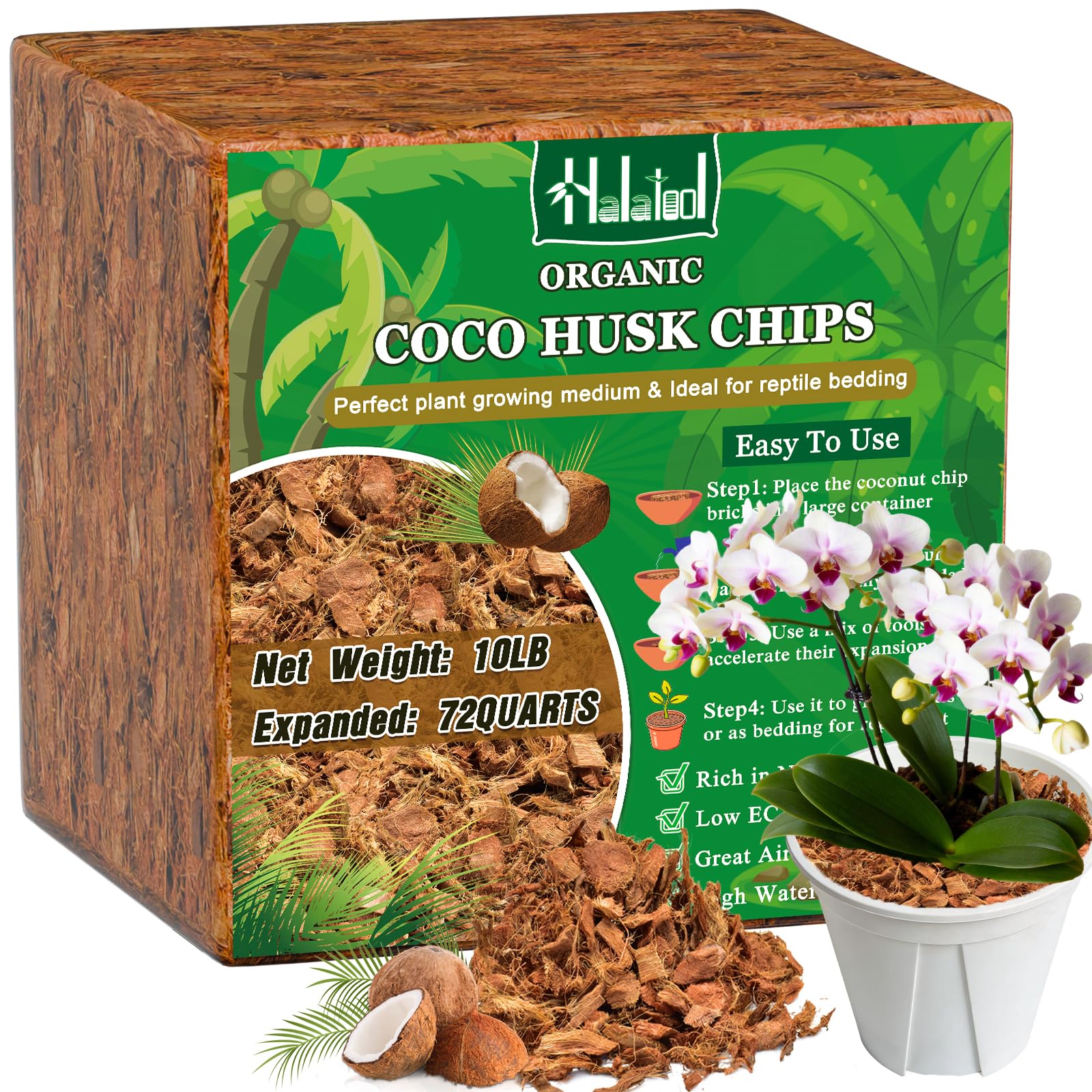
Halatool’s 10-pound compressed coco coir brick expands to a massive 72 quarts when fully hydrated — enough to fill three large 6-inch orchid pots with leftovers to spare. The chips are made from matured coconut husk with low electrical conductivity and a balanced pH, making them suitable for both potting mix and as a decorative mulch for indoor and outdoor plants. The expansion process is straightforward: drop the brick in a large container, add water, and break it apart as it swells.
Gardeners using this product as a top dressing report that the chips stay in place even during high winds, which is a common complaint with lighter mulches like shredded pine. The coconut husk also has a natural resistance to pests and fungal growth, and the pleasant scent adds a subtle tropical note to your potting area. Users who mixed it with regular potting soil noticed improved drainage and better moisture retention compared to soil alone.
The trade-off is the labor involved in breaking up the compressed brick. It takes a bit of muscle and patience to get a uniform chip size, and if you under-soak the brick, you will end with hard, dry clumps that are useless for planting. Additionally, the chips are somewhat large for small pots — this product is better suited for medium to large containers or garden beds where chip size is less critical.
What works
- Outstanding expansion yield — 72 quarts from a single 10-pound brick
- Stays in place during wind and heavy rain better than lightweight mulches
- Naturally pest-resistant with a low risk of introducing fungus gnats
What doesn’t
- Compressed brick requires significant effort to break apart completely
- Chip size is too large for small 4-inch nursery pots
5. Hull Farm Cocoa Bean Shell Mulch

Hull Farm’s cocoa bean shell mulch provides a strong, natural chocolate fragrance that lingers for about a week after application. The shells have an approximate NPK value of 2.5-1-3, which contributes a mild fertilizer boost to your soil without burning plant roots. In hot climates, this mulch does an excellent job of holding moisture in container plants, reducing the number of times you need to water per day during peak summer.
The lightweight hulls mat together after the first good watering, which helps them stay in place on sloped beds or windy sites. Users report that the chocolate scent deters squirrels from digging in flower planters — a major perk if you have dealt with animals uprooting your annuals. The product arrives in a 2-cubic-foot bag, and despite the premium price, the quality is consistent from bag to bag with no dried or moldy pieces.
However, cocoa shell mulch has serious limitations. It is toxic to dogs if ingested, so pet owners must avoid this product entirely. The strong smell can attract raccoons and other wildlife, and the hulls are not suitable for use near flower beds where they might contact sensitive blossoms. A few customers reported that the scent fades after the first week, leaving you with a plain brown mulch that costs significantly more than pine alternatives.
What works
- Natural chocolate aroma adds sensory enjoyment to gardening
- Provides a mild slow-release fertilizer value of 2.5-1-3
- Excellent moisture retention in container plants during hot weather
What doesn’t
- Toxic to dogs — not safe for pet-owning households
- Scent fades after approximately one week
- Higher cost per cubic foot compared to pine or coco coir mulches
6. Rio Hamza Trading Houseplant Mulch

Rio Hamza Trading offers an 8-quart bag of small bark wood chips designed specifically for indoor and patio potted plants. The fine particle size makes it easy to pour directly from the bag without any need to break apart bricks or soak materials. When used as a top dressing, this mulch adds a consistent visual finish to your houseplant collection and helps reduce soil splash during watering, which keeps your floors and saucers cleaner.
Users have found that this product works well as a soil amendment for indoor plants needing better aeration and drainage. The bark is clean with no signs of pests or mold, and it does not seem to attract fungus gnats — a common benefit of using bark over organic compost for indoor potting. Gardeners in colder climates reported that their overwintering plants grew stronger and stood straighter after adding a layer of this mulch to the top of the soil.
The main drawback is the bag size relative to the price. While the quality is attractive, the 8-quart bag only covers about two and a half medium-sized pots, and the cost per quart runs higher than buying a larger bulk bag of pine bark from a garden center. If you have a large houseplant collection, you will need multiple bags, which makes this option more suited for small indoor setups than for whole-home mulching.
What works
- Ready to use straight from the bag — no soaking or breaking apart required
- Fine chip size creates a clean, uniform look on top of potting soil
- Does not attract pests or introduce mold into indoor environments
What doesn’t
- Expensive per quart compared to bulk loose bark options
- 8-quart bag only covers a few medium-sized pots
7. Soil Sunrise Organic Orchid Potting Bark

Soil Sunrise sources its pine bark from USA-managed forests and processes it into an all-natural orchid mix free from additives, chemicals, or artificial dyes. The 8-quart bag contains medium-sized chips that are uniform enough to provide excellent aeration for epiphytic plants while still retaining some moisture around the root zone. For orchids and bromeliads that need quick drainage, this bark creates the open structure that mimics their natural tree-bark habitat.
Aroid growers have adopted this bark as a preferred additive for soil mixes. The pieces are roughly quarter-sized, which integrates well with perlite, charcoal, and sphagnum moss to create a chunky aroid blend. Users note that the bark is slightly dusty when first poured, but a quick rinse before use resolves that issue. The resealable bag is a practical touch for indoor gardeners who want to store the remaining bark without it spilling everywhere.
Where this product falls short is the marketing imagery. Several customers pointed out that the chip size shown in the product photos is larger and more nugget-like than what actually arrives. The real product leans toward shredded bark rather than chunky nuggets, which may disappoint orchid enthusiasts who specifically need large pieces for vanda or cymbidium plants. For most aroid and phalaenopsis mixes, however, the size is perfectly appropriate.
What works
- USA-sourced pine bark with no chemical additives or artificial dyes
- Uniform chip size integrates well into aroid potting blends
- Resealable bag keeps leftover bark fresh and contained
What doesn’t
- Chip size is smaller than product photos suggest — more shredded than chunky
- Not suitable for large vanda orchids needing very open nugget structure
Hardware & Specs Guide
Chip Size and Drainage
Bark chip size directly determines how much air reaches the root zone. For orchids, aroid mixes, and epiphytic plants, look for chips between 0.8 and 1.3 inches — large enough to create air pockets but small enough to maintain contact with the roots. Finer shredded bark, around 0.2 to 0.5 inches, is better for general potting soil amendment where drainage improvement is needed without creating large voids. When buying compressed bricks, note that the final chip size varies depending on how long and vigorously you break up the block.
Buffered vs. Unbuffered Coco Coir
Unbuffered coco coir has a high cation exchange capacity that binds calcium and magnesium, making them unavailable to plants. This can lead to deficiencies even when you fertilize regularly. Buffered coir has been pre-treated with calcium and magnesium salts to saturate the binding sites, so the chips do not steal these nutrients from your soil solution. If you use liquid synthetic fertilizers, buffered coco chips are a safer choice. For pure organic gardening where you top-dress with compost, unbuffered coir may work fine because the slow-release nutrients compensate for any binding.
FAQ
How often should I replace bark mulch in houseplant pots?
Can I use playground bark or landscape chips for my potted plants?
Does bark mulch attract termites to my home garden?
Final Thoughts: The Verdict
For most gardeners, the bark for plants winner is the Back to the Roots Organic Coconut Husk Mulch because it combines huge expansion yield with OMRI-listed organic quality, making it suitable for both vegetable beds and decorative top dressing. If you need a chunky mix specifically for orchids and aroids, grab the AVALUTION Orchid Potting Bark for its consistent 0.8–1.3 inch nuggets and pre-sterilized safety. And for a budget-friendly option that still delivers high moisture retention, the Halatool Coco Husk Chips provide the biggest volume bang for your buck when you are covering large garden beds.