
Raspberries grow like weeds — vigorous, sprawling, and utterly determined to tip over once those jewel-toned berries weigh down the canes. A proper trellis isn’t a luxury; it’s the difference between picking clean, sun-ripened fruit and wrestling a tangled mess of prickly canes off the ground. Without a structured support system, your patch becomes an impenetrable thicket that invites disease, hides harvest, and shortens the productive life of your canes.
I’m Rikta — the co-founder and writer behind Lawn Gear Lab. I’ve spent countless hours digging through spec sheets, analyzing tens of thousands of owner experiences, and comparing build materials to separate the supports that hold up season after season from those that buckle under a heavy August harvest.
Whether you’re training primocanes up a fence line or keeping a tidy raised bed row upright, the right system transforms your patch. I’ve curated this list of the best options after searching the market for raspberry trellis designs that balance sturdiness, ease of installation, and season-to-season durability.
How To Choose The Best Raspberry Trellis
A raspberry trellis has one job: keep those heavy, arching canes off the soil so air circulates, sun reaches every berry, and picking doesn’t require a hazmat suit. The wrong choice leaves you with a collapsed patch and bruised fruit. Focus on these factors before you buy.
Height and Reach for Floricane Canes
Raspberry canes in their second year (floricanes) can reach five to six feet tall and will bow under fruit weight. A trellis that stops at 48 inches is fine for dwarf varieties or primocane-fruiting types, but standard summer-bearing brambles need at least 60 inches of vertical clearance. Look for a structure that gives you support at both the lower and upper thirds of the cane — this prevents the classic “spider-leg” collapse where canes snap sideways under a heavy cluster.
Base Stability and Wind Resistance
Traditional single-stake cages work for a single tomato plant, but a row of raspberries acts like a sail in a stiff breeze. An A-frame or triangle base distributes the load across multiple legs, preventing the whole row from tipping. If your patch faces open fields or coastal gusts, prioritize models with long ground spikes — 12 to 15 inches of buried metal makes the difference between a trellis that stays upright and one that needs re-staking after every storm.
Material and Coating Longevity
Raspberry trellises live in soil, rain, and full sun — a triple assault on bare metal. Raw steel rusts within a single season. Powder-coated or heavy-gauge plastic-coated steel frames resist corrosion and UV degradation significantly longer. Polyethylene-coated steel, like the type used in premium cucumber trellises, also provides a smooth surface that won’t abrade tender cane bark as the wind rubs vines against the frame. Avoid thin galvanized wire or flimsy bamboo unless you plan to replace the system every 12 months.
Quick Comparison
On smaller screens, swipe sideways to see the full table.
| Model | Category | Best For | Key Spec | Amazon |
|---|---|---|---|---|
| Macteyia 70.8″ Metal Garden Trellis | Premium Panel | Tall floricanes & formal rows | 70.8″ H x 19.7″ W panel | Amazon |
| Quibbay 65″ Mushroom Top Trellis | Decorative Single | Container-grown & accent planting | 65″ H, 5-floor round design | Amazon |
| AGTEK 34″ x 48″ A-Frame Trellis | A-Frame | Windy raised beds & dual-row use | 48″ L x 34″ W, foldable | Amazon |
| SORANGEUN 6-Pack Triangle Cage | Heavy-Duty Cage | Individual cane support in rows | 48″ H, triangle base 13″ sides | Amazon |
| AUTOHAOL 48″ Metal Stake System | Modular Stake | Budget-friendly row trellising | 48″ H, rectangular steel stake | Amazon |
| yotoworth 63″ Arch Tunnel | Arch Tunnel | Pathway arch & heavy vine support | 63″ H, 63″ L arch, 32 lb capacity | Amazon |
| PHENEAHILL 31″ x 47″ A-Frame | Compact A-Frame | Small containers & light primocanes | 31″ W x 47″ H, foldable steel | Amazon |
In‑Depth Reviews
1. Macteyia 70.8″ x 19.7″ Metal Garden Trellis (2 Pack)

Standing nearly six feet tall, the Macteyia panel trellis gives floricanes the vertical clearance they need to arch without hitting the dirt. The lattice grid design provides multiple attachment points for training primocanes horizontally — the classic “weave” technique that maximizes light exposure on every berry cluster. At 10 pounds per panel, this is the heaviest option in the lineup, and that mass translates directly into wind stability when anchored into the ground.
The powder-coated black finish resists rust significantly longer than standard painted metal, and the 8.46-inch ground spikes bury deep enough to resist lateral pulling when heavy canes lean hard during a summer storm. The decorative bird motif adds a formal garden look that blends well with trellised roses or clematis if you dual-purpose the panel — not just a utilitarian frame but something that looks intentional even in the off-season when canes are dormant.
Each pack includes two panels, plus plant tie tape and assembly screws. The 19.7-inch width is narrow enough to fit between raised bed rows but wide enough to anchor four to six mature raspberry canes per panel. Owners consistently praise the elegant appearance and the lack of wobble even in exposed locations, with a few noting the wing-nut fastener placement sits in direct sightline — a minor aesthetic quibble that doesn’t affect function.
What works
- Tallest option at nearly six feet — ideal for full-height floricanes
- Heavy powder-coated iron frame won’t corrode after multiple seasons
- Decorative lattice design looks attractive even without foliage
- Long ground spikes provide excellent wind resistance
What doesn’t
- Wing nuts on lower legs face outward in direct line of sight
- 19.7-inch width limits each panel to roughly 4–6 canes
2. Quibbay 65″ Mushroom Top Trellis

The Quibbay trellis brings a mushroom-shaped top that gives raspberry canes a natural crown to spill over — mimicking the way brambles arch in the wild while keeping each cane supported. The five-floor ring design creates horizontal rest points every twelve inches or so, which is exactly what you need to train primocanes outward as they grow. The 65-inch height clears even the most vigorous Heritage or Caroline raspberry varieties without tipping over.
Construction combines metal pipes with a thick PP plastic coating that resists both rust and UV degradation. The bumps molded into the tubes give canes a grippy surface to latch onto — helpful when wind whips through the patch and tries to slide the vines sideways. Setup requires no tools beyond pre-drilling starter holes in compacted soil, and the entire unit disassembles into sections for winter storage.
This model works best for container-grown raspberries on patios or for accent plantings where you want one or two canes to climb elegantly rather than a full production row.
What works
- Mushroom top provides natural crown support for arching floricanes
- Thick plastic coating prevents rust and won’t abrade cane bark
- Tool-free assembly with five horizontal rings for training
- Tall enough for full-height raspberry varieties
What doesn’t
- Top-heavy design can sway in sustained high winds
- Support rings and decor heads are plastic, not metal
3. AGTEK 34″ x 48″ Foldable A-Frame Trellis

The AGTEK A-frame creates two angled growing surfaces that distribute raspberry cane weight toward the center line — dramatically reducing the leverage that causes single-post systems to tip over. At 48 inches long and 34 inches wide, it spans a standard raised bed width perfectly, giving you a dedicated trellis row that keeps canes off the walkway. The triangular base is inherently stable; in wind tunnel terms, it sheds gusts rather than catching them like a flat panel.
Construction uses powder-coated alloy steel, and the included garden stakes anchor the bottom corners deep into the soil. The frame folds flat for off-season storage, a feature that matters when you need to clear the bed for winter mulch or cover crops. The assembly connects via springs that link the two panels — no tools required, though it’s significantly easier with a second person to hold the panels upright while you thread the springs.
Owner experiences split between those who love the simple folding design and those who find the lightweight frame needs additional anchoring in loose or sandy soil. Several users report that once the raspberry canes mature and weave through the grid, the structure stiffens noticeably — the vines essentially become part of the framework. For growers in exposed sites, sinking the legs into cinderblocks or driving extra stakes eliminates any wobble completely.
What works
- A-frame geometry resists tipping better than single-stake designs
- Folds flat for easy winter storage
- Spring-loaded assembly requires no tools
- Included ground stakes improve anchoring
What doesn’t
- Lightweight frame may need additional anchoring in loose soil
- Assembly is easier with two people
4. SORANGEUN 6-Pack 48″ Triangle Tomato Cage
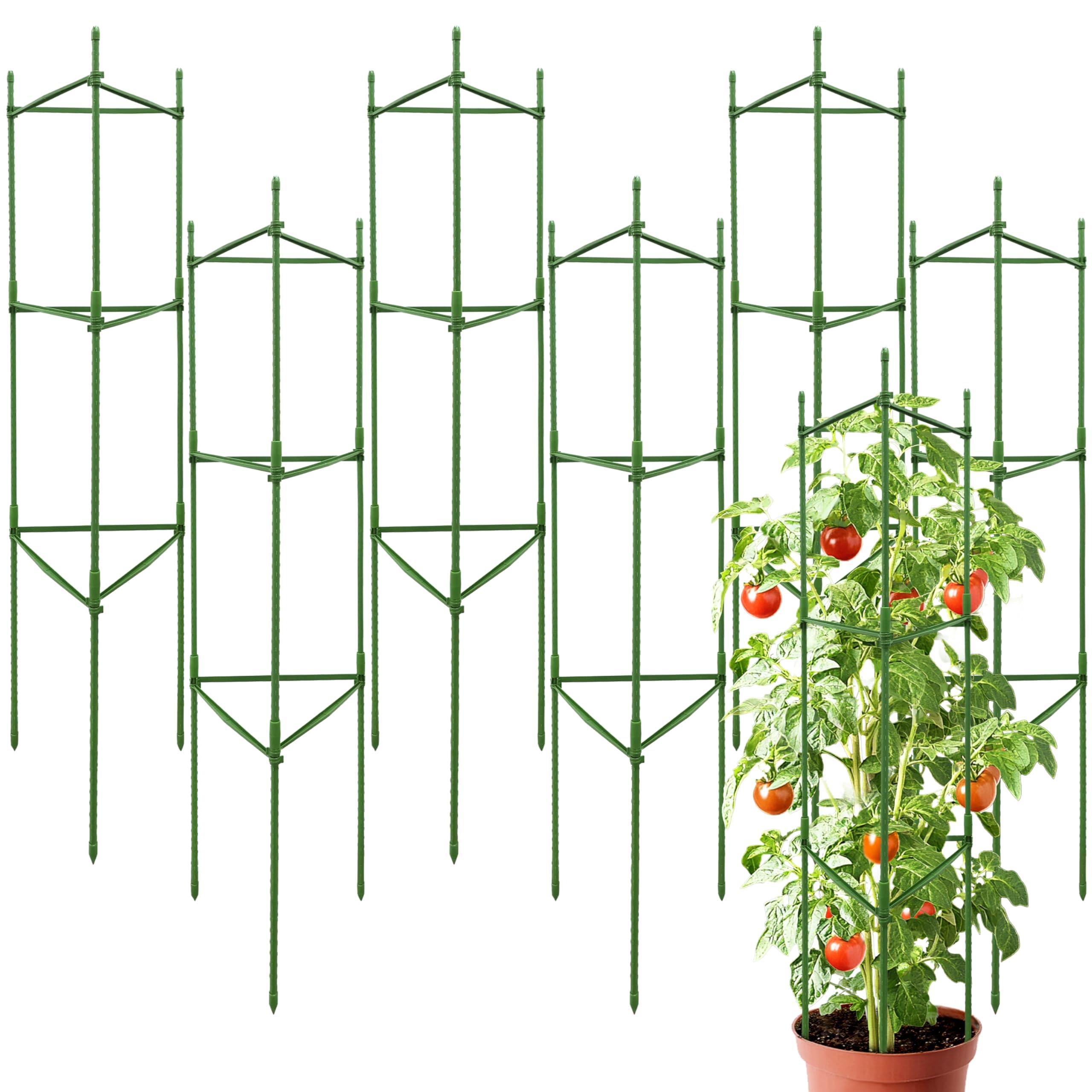
This 6-pack of triangle cages gives you the raw material to fence an entire raspberry row without buying specialty trellis kits. The triangular structure uses 13-inch sides that create a wide base — far more stable than the flimsy round cages that buckle under a single heavy tomato plant, let alone a multi-cane raspberry bush. The 48-inch height is adequate for most primocane-fruiting varieties and can be extended by stacking additional sections if you want to add vertical reach mid-season.
The steel core with plastic coating resists rust, and the three-section poles connect without tools — just snap them together and push the prongs into the ground. Each cage supports three to five raspberry canes comfortably, giving you individual cane support rather than a row-wide system. This matters when you need to remove spent floricanes at the base without disturbing neighboring plants — just lift the cage off the specific cane you’re pruning.
Owner feedback is overwhelmingly positive on sturdiness, with several noting the cages can be reconfigured into a star pattern for even wider coverage. The main complaint involves occasional missing connector pieces in the packaging — though customer service generally resolves the issue with a partial refund. For the price per cage, this is the most efficient way to support a medium-sized raspberry patch if you prefer individual cane management over a continuous trellis run.
What works
- Triangle base provides exceptional tipping resistance per cage
- Tool-free snap assembly takes minutes per unit
- Individual cages allow selective cane removal during pruning
- High-value 6-pack covers a full row economically
What doesn’t
- Packaging occasionally missing small connector pieces
- Not designed for continuous row-wide trellising
5. yotoworth 63″ x 63″ Arch Tunnel Trellis
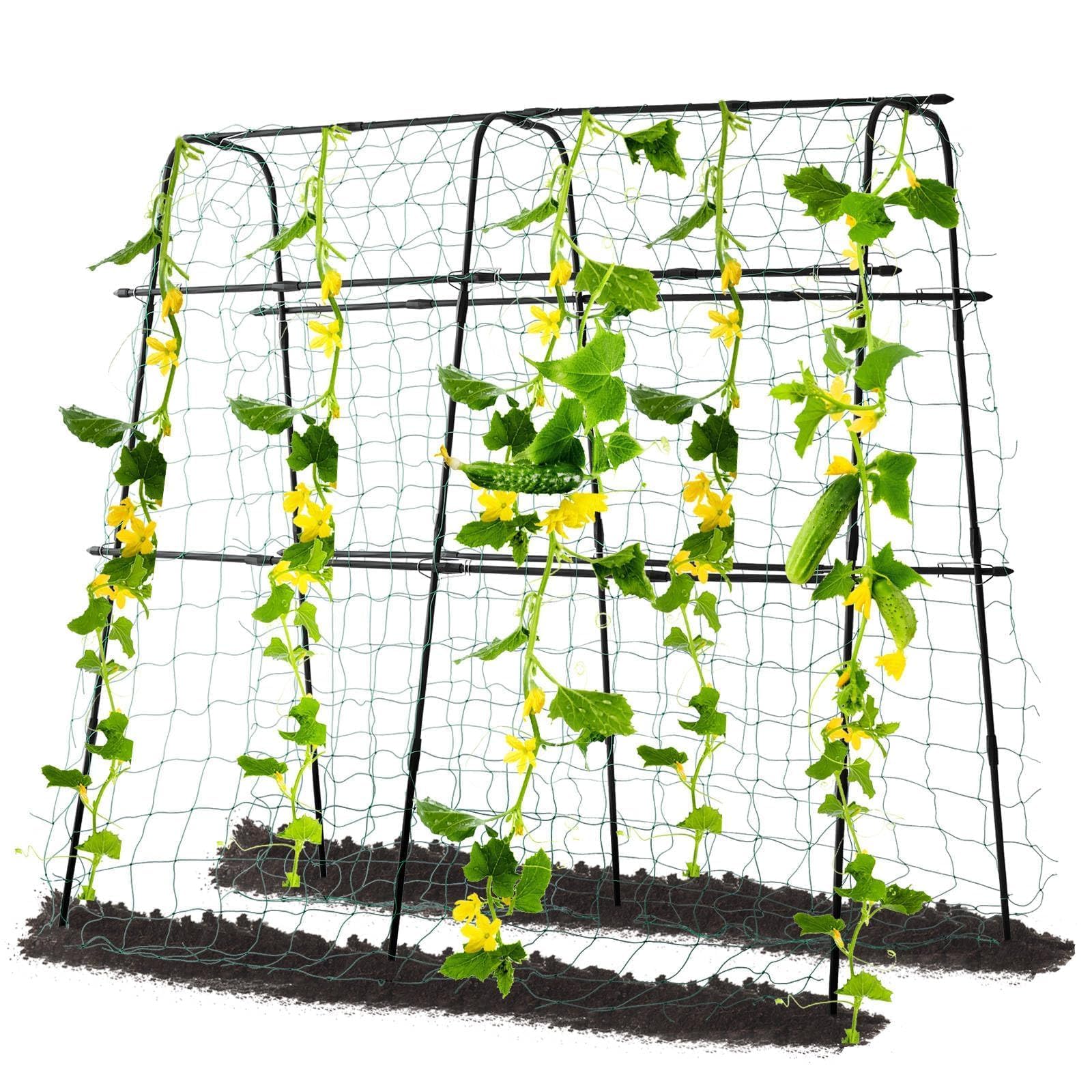
The yotoworth arch tunnel transforms a raspberry row into a walk-through experience. The 63-inch height and length create a full arch that can support eight to twelve heavy floricanes on each side, with the arch top giving canes a natural path to cross over — exactly how brambles want to grow. The 32-pound load capacity means even a fully loaded row of summer-bearing raspberries won’t collapse the frame under the weight of ripe fruit.
The polyethylene-coated steel frame resists rust and UV degradation significantly better than standard painted metal, and the nylon netting provides a soft grid for cane attachment that won’t cut into bark. Assembly takes under 20 minutes with no tools, and the frame stakes 15 inches into the ground for stability. The arch can be widened from 16 to 24 inches to match your bed width, giving you flexibility for different row layouts.
Owner reviews are largely enthusiastic, with one user reporting the arch held 30-plus watermelons without issue — a testament to its load-bearing capability. The main safety concern is the netting hanging below the lowest horizontal pole, which can trap small animals; trimming the netting to sit above ground level solves this immediately. A minority report unstable connections if the included clips aren’t used precisely — follow the instructions to the letter and the structure becomes very rigid once assembled.
What works
- Arch design allows canes to cross over naturally for better light exposure
- 32-pound capacity handles fully loaded raspberry rows
- Polyethylene coating resists rust and UV damage
- Tool-free assembly in under 20 minutes
What doesn’t
- Netting below lowest pole can trap small animals if not trimmed
- Connections require precise clip placement to avoid instability
6. AUTOHAOL 48″ Metal Stake Cage System (18 Stake Set)
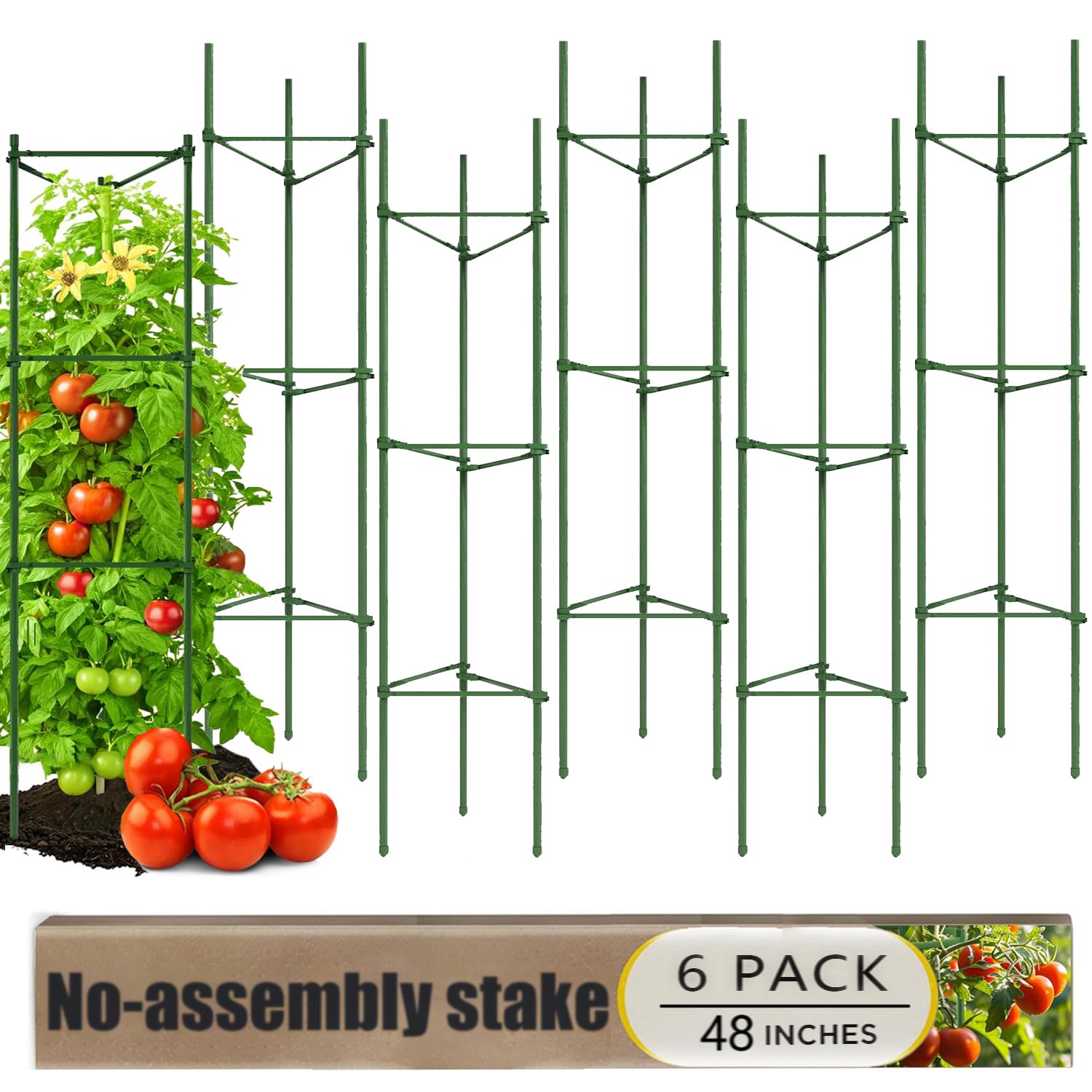
The AUTOHAOL system packs 18 steel stakes and 54 snap-on arms into a single purchase — enough material to support a 20-foot raspberry row without buying additional components. The 48-inch height works best for primocane-fruiting varieties that don’t push past five feet, and the rectangular shape allows you to create continuous support lines by connecting multiple units end-to-end. The raw solid steel core wrapped in plastic gives you the strength of metal without ground-level rust.
Each stake features a sealed tip with a pointed end for easy soil insertion, and the snap-on arms click into place at multiple heights so you can adjust support as canes grow through the season. The modular design means you can place stakes every two to three feet down the row and connect them with the arms to create a horizontal trellis line — a common technique for training raspberry canes in a hedgerow pattern.
Owner feedback confirms the system is “much better than cheap metal cages” from big-box stores, though the metal is soft enough that it requires gentle handling during installation — hammering directly on the tops can deform the plastic coating. The value proposition is strong for covering large areas on a budget; the set comes with enough components to replace an entire aging tomato cage collection while also handling your raspberry patch.
What works
- 18-stake set covers a full raspberry row economically
- Modular snap-on arms allow customizable support heights
- Solid steel core with plastic coating resists rust
- Sealed pointed tips insert easily into soil
What doesn’t
- Soft metal requires careful installation to avoid deforming
- 48-inch height is short for vigorous summer-bearing varieties
7. PHENEAHILL 31″ x 47″ A-Frame Trellis
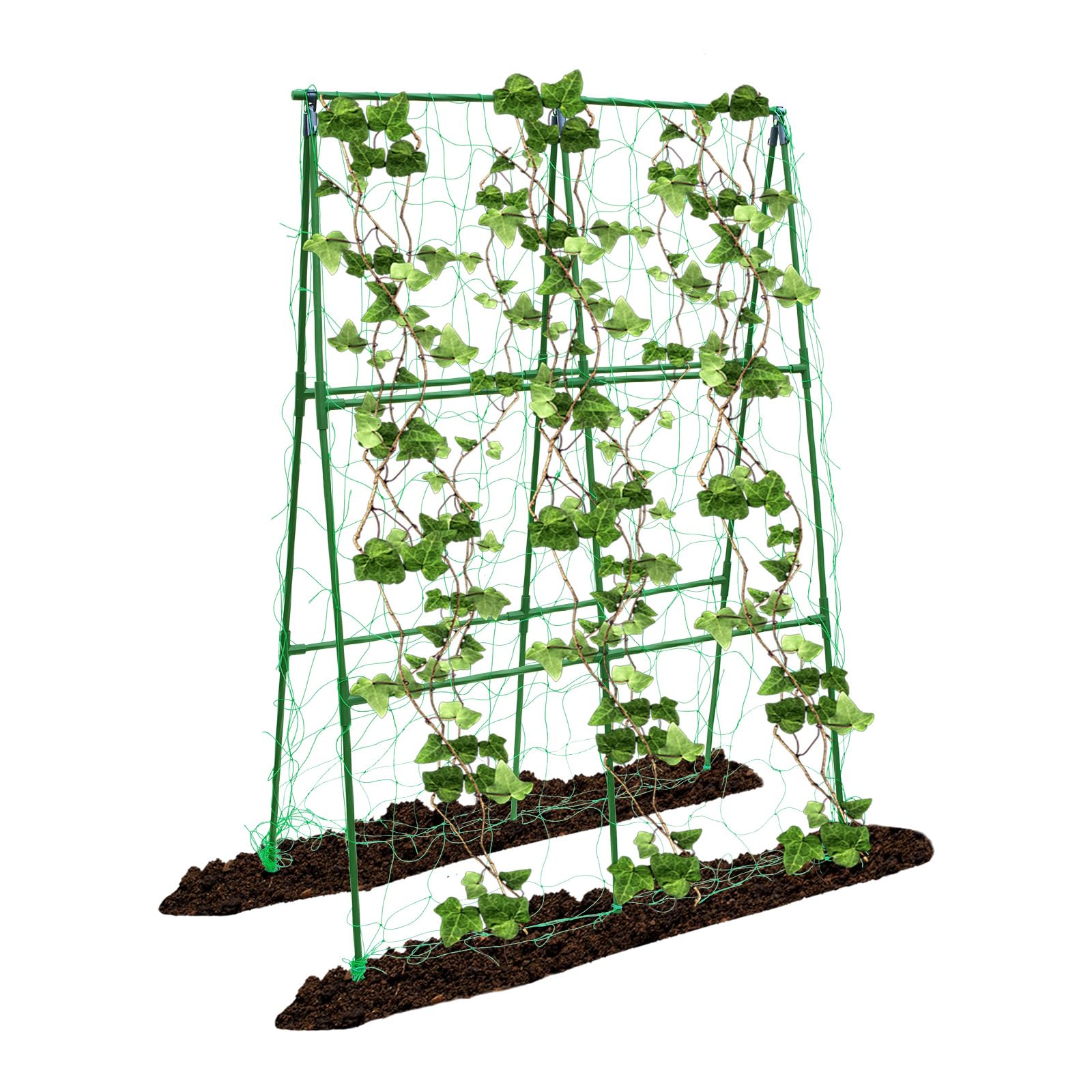
The PHENEAHILL A-frame is built for the tight spaces where raspberries are an afterthought — container gardens, narrow raised beds, and balcony planters. At 31 inches wide and 47 inches tall, it fits into spaces that reject full-length trellis systems, making it the go-to for dwarf raspberry varieties like ‘Fall Gold’ or ‘Shortcake’ that naturally stay under four feet. The nylon netting included gives canes a climbable surface from day one.
Construction uses lightweight rust-resistant steel tubing with a plastic coating, and the foldable design means you can store it flat during the off-season or move it between beds as your crop rotation changes. Assembly requires no tools — just unfold and stake — and the single-person setup is a genuine advantage for gardeners working alone. The included netting helps train primocanes upward rather than outward, keeping the footprint small.
Owner reviews consistently note the ease of assembly and the perfect sizing for raised beds as the top selling points. The trade-off is the lightweight construction: it’s not built for heavy indeterminate raspberry canes or exposed windy sites. Several users reinforce the legs with extra stakes or place the trellis against a wall for stability. For its intended use — supporting light canes in controlled environments — it performs exactly as designed.
What works
- Compact 31-inch width fits narrow beds and containers
- Foldable design stores flat between seasons
- Tool-free assembly requires only one person
- Nylon netting gives canes immediate climbable structure
What doesn’t
- Lightweight frame needs reinforcement in wind or with heavy canes
- 47-inch height limits use to dwarf raspberry varieties
Hardware & Specs Guide
Height vs. Cane Length
Raspberry canes in their fruiting second year average 48–72 inches in length, depending on variety and soil fertility. A trellis that clears 60 inches lets the arching top third of the cane remain fully exposed to sunlight — this is where the heaviest fruit clusters form. Systems under 48 inches force the apex of the cane to bend downward prematurely, creating a soil-contact zone that invites botrytis and fruit rot. For primocane-fruiting varieties (which fruit on first-year wood), 48 inches is usually sufficient because the canes stay shorter and more upright.
Base Geometry and Stability
The single biggest structural failure point in trellises is the base geometry. A single vertical stake supporting multiple canes acts as a lever: wind force at 63 inches creates over 400% more torque at the soil line compared to a 48-inch stake. A-frame and triangle bases distribute that load into two or three separate ground contact points, reducing per-stake torque to manageable levels. Long ground spikes (12–15 inches) further multiply surface area friction, effectively turning the soil itself into a stabilizing mass. In sandy or loose loam, add extra anchoring regardless of base type.
FAQ
How tall should a raspberry trellis be for summer-bearing varieties?
Can I use a tomato cage for raspberries instead of a trellis?
What is the best trellis design for a windy raspberry patch?
Final Thoughts: The Verdict
For most gardeners, the best raspberry trellis winner is the Macteyia 70.8″ Metal Garden Trellis because it provides the height floricanes need, a powder-coated finish that survives multiple seasons, and a sturdy panel design that stays upright without constant adjustment. If you want individual cane support for a large patch, grab the SORANGEUN 6-Pack Triangle Cage. And for container-grown raspberries on a patio, nothing beats the Quibbay 65″ Mushroom Top Trellis.