
Root rot is the silent killer of container plants. The primary culprit isn’t your watering schedule—it’s a dense, moisture-retentive mix that suffocates roots and invites pathogens. Selecting a substrate engineered for rapid percolation is the single most effective correction you can make, transforming a perpetually damp pot into a healthy, aerated root zone that mimics the native gritty conditions of arid plants.
I’m Rikta — the co-founder and writer behind Lawn Gear Lab. I’ve spent hundreds of hours comparing soil aeration specs, particle size distributions, and organic amendments from multiple bagged mixes, reading thousands of verified owner experiences to understand what separates a functional fast-draining medium from a waterlogged failure.
To get to the practical options quickly, I’ve curated this guide to the best soil for drainage so you can stop guessing and start growing with a mix that actually works as intended, from the very first watering.
How To Choose The Best Soil For Drainage
A bag labeled “cactus mix” is not automatically well-draining. The physical structure of the soil determines how quickly water moves through the container and how much oxygen reaches the root system. Focus on three critical factors before you buy.
Particle Size and Grit
Fast drainage depends on large interstitial spaces between soil particles. A mix dominated by fine sand, silt, or decomposed peat moss collapses those spaces, creating a dense, water-holding sludge. Look for mixes with visible chunks—perlite, pumice, lava rock, pine bark fines, or calcined clay in the 1/8″ to 1/4″ range. The grittier the texture to your fingers, the faster the water flows through.
Organic Matter vs. Inorganic Aggregate Ratio
Organic components like coconut coir, peat moss, and compost are essential for nutrient exchange, but too much turns a pot into a sponge. For plants that demand sharp drainage—cacti, succulents, snake plants, lithops—ensure the inorganic aggregate fraction (perlite, pumice, calcined clay, coarse sand) makes up at least 50 to 70 percent of the total volume. Peat-free formulas often drain significantly faster by default.
Cohesion and Structure Over Time
Some soils look airy fresh from the bag but compact into a brick after three watering cycles. Calcined clay and fired minerals maintain their shape and porosity under repeated wet-dry cycles, while bark fines and perlite stay relatively stable. Avoid mixes that feel fine and floury—these lack the skeletal structure needed for long-term aeration in a container environment.
Quick Comparison
On smaller screens, swipe sideways to see the full table.
| Model | Category | Best For | Key Spec | Amazon |
|---|---|---|---|---|
| Calcined Clay (The Bonsai Supply) | Inorganic Aggregate | Bonsai, lithops, gritty mixes | 1/8″ fired clay particles | Amazon |
| Miracle-Gro Cactus Mix (3-Pack) | Peat-Based Mix | General succulents, palms | 3 x 8 qt bags | Amazon |
| Noot Potting Mix | Pre-Soaked Organic | Monstera, aroids, finicky houseplants | Pre-soaked with NPK .10/.15/.12 | Amazon |
| Rosy Soil Cactus Mix | Peat-Free Organic | Aloe, jade, low-moisture houseplants | Peat-free with worm castings | Amazon |
| Tinyroots Succulent Soil | Greenhouse Grade | Small succulents, terrariums | Double-sifted pine bark fines | Amazon |
| Perfect Plants Snake Plant Soil | Coir-Based Mix | Snake plants, Sansevieria | Coco coir + perlite + bark | Amazon |
| Hoffman Cactus Mix (2-Pack) | Organic Blend | Bulk root development | 10 qt total (2 x 5 qt) | Amazon |
In‑Depth Reviews
1. Calcined Clay for Bonsai, Succulent, Cactus | The Bonsai Supply

This is pure high-fired calcined clay—an inorganic aggregate that refuses to break down over time. The 1/8-inch particles create consistent, large pore spaces that water flows through rapidly while still retaining a small amount of moisture on the particle surface for roots to access between watering events. It is the structural backbone of a custom-draining mix, not a bagged “complete” soil.
Users report excellent results with lithops, mesembs, and bonsai that demand absolute precision in moisture management. The material does not compact, does not rot, and can be reused after sifting. A 2-quart bag covers several small pots, and the stand-up pouch is resealable for long-term storage. The reddish-pink color differs from the familiar gray Turface, but the performance is identical.
This is not a stand-alone potting mix—it needs to be blended with organic components or fine grit for most plants. But as a high-drainage aggregate, nothing in this comparison matches its structural stability and batch-to-batch consistency. It is the gold standard for anyone building a custom substrate from scratch.
What works
- Particles hold shape permanently; no compaction over time
- Perfect pore space for oxygen and rapid water exit
- Versatile base for bonsai, succulents, and lithops
What doesn’t
- Requires mixing with organic material; not a complete soil
- Small bag volume for the price point
2. Miracle-Gro Cactus, Palm and Citrus Potting Mix (3-Pack)

This is the volume king of the list. Three 8-quart bags provide a full 24 quarts of mix, enough to fill eight 8-inch containers or refresh a large collection of succulents and palms. The formula is fast-draining by commercial standards, enriched with Miracle-Gro Plant Food for immediate feeding. It works straight from the bag with no mixing required.
Experienced growers often cut this mix with additional perlite or pumice (50/50 ratio) for plants that demand extreme drainage, such as Echeveria or Haworthia. Straight out of the bag, it performs well for general succulents, Christmas cactus, and potted citrus that appreciate consistent moisture without standing water. The texture is noticeably lighter than standard potting soil, but it does contain peat moss, which holds some moisture.
For the price per quart, this is the most economical way to get a functional fast-draining medium into multiple pots at once. It is not the grittiest or most airy mix available, but it is reliable, widely available, and forgiving for beginners who are transitioning away from standard potting soil.
What works
- Excellent price per quart for bulk repotting
- Immediately usable without amendments for general succulents
- Enriched with plant food for first few watering cycles
What doesn’t
- Peat content retains more moisture than gritty custom mixes
- May need extra perlite for lithops or high-drainage plants
3. Noot Potting Soil Mix for Indoor & House Plants
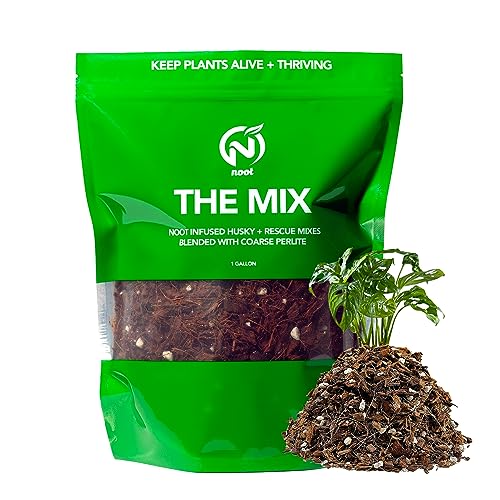
Noot Mix is pre-soaked with organic nutrients and microbial inoculants (16 strains of beneficial bacteria and fungi), so it arrives ready to use without the dust and dry-out issues typical of bagged mixes. The blend uses large coconut chips, coarse perlite, and minimal fine coco coir to create an exceptionally airy structure that water passes through quickly while still supporting robust root systems.
This mix was designed by a rare-plant seller for finicky aroids—monstera, anthurium, alocasia—that are prone to root rot in dense media. The pre-soaked formula eliminates the “first watering repotting shock” where dry peat-based mixes repel water. Users report rapid root colonization and elimination of fungus gnats after switching from standard soil. The 1-gallon resealable bag is hand-packed and inspected.
The main downside is the high cost per quart relative to bulk options. For a large collection, using Noot on every plant becomes expensive. But for prized specimens that need the best possible drainage and biological activity, this mix delivers a level of consistency and cleanliness that off-the-shelf blends rarely match.
What works
- Pre-soaked with organic nutrients and microbes for immediate use
- Very coarse, airy texture; excellent for aroids and finicky plants
- Consistent quality; hand-packed and inspected per bag
What doesn’t
- High cost per quart; not economical for bulk repotting
- Some users report slight moisture smell and gnats in initial bag
4. Rosy Soil Cactus Soil – Organic Succulent Potting Mix
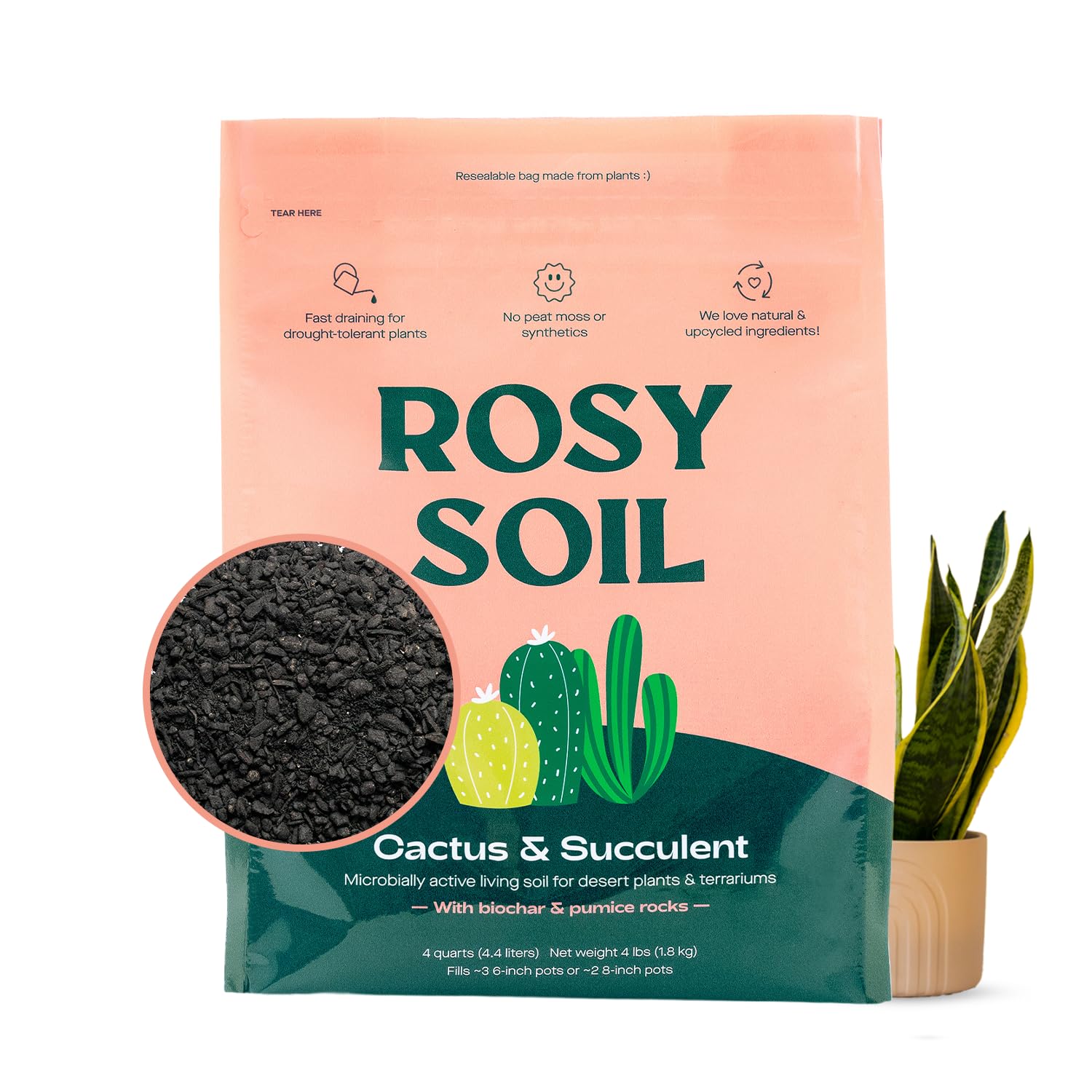
Rosy Soil skips peat moss entirely, which automatically eliminates the biggest source of hidden moisture retention in most cactus mixes. Instead, it uses a chunky, gritty blend that stays loose and airy, with pre-loaded worm castings and beneficial microbes that build a living soil ecosystem. The 4-quart resealable bag is plastic-neutral and made in the USA.
Users consistently report zero bugs across multiple bags, a clean dark texture, and excellent results with aloe vera, jade, and Christmas cactus. The mix arrives with some inherent moisture (not dry dust), which helps it integrate immediately upon potting. For plants that demand sharp drainage, some experienced growers still add extra perlite or bonsai gravel, but the base formula is significantly more free-draining than standard peat-based cactus mixes.
The bag is on the smaller side for the price, and the resealable zipper can be finicky to close. But for environmentally conscious growers who want a peat-free, microbial-rich mix that drains fast right out of the bag, Rosy Soil delivers on its promise without requiring any mixing or amendments.
What works
- Peat-free formula drains significantly faster than conventional mixes
- Pre-loaded with worm castings and microbial inoculants
- Clean consistency; no pests or mold across multiple bags
What doesn’t
- Small bag size relative to cost
- Very gritty texture may require additional aggregate for very tender succulents
5. Tinyroots Succulent Soil – Cactus Soil Potting Mix

Tinyroots combines double-sifted pine bark fines, calcined clay, pumice, and lava rock into a well-structured blend that drains aggressively while providing enough stability for root anchorage. The 2.25-quart bag is compact, but the composition is dense with high-value aggregates—this isn’t fluffed up with cheap peat or filler. The mix is specifically designed for greenhouse growers who need predictable drainage batch after batch.
Reviews highlight that the particle size is finer than many generic cactus mixes, making it ideal for small succulents like lithops, tiny echeveria, and seedlings that need a uniform, gritty medium. Users report it is nearly impossible to overwater with this mix—water passes through completely within seconds, and the pot dries out rapidly. The inclusion of calcined clay provides that crucial water-holding buffer without creating soggy conditions.
The main drawback is the premium price for a relatively small bag. For a large collection, costs add up quickly. However, for small-scale growers, terrarium enthusiasts, or those with a few high-value succulents, the drainage performance and consistency justify the investment. It is a finished product that needs no amendments.
What works
- Professional-grade blend with calcined clay, pumice, and lava rock
- Finer particle size perfect for tiny succulents and lithops
- Drains so fast it virtually eliminates overwatering risk
What doesn’t
- Small quantity for the price point
- Not cost-effective for large container gardens
6. Perfect Plants Organic Snake Plant Soil

This mix is built around coconut coir, pine bark chips, perlite, and sand—a combination that provides faster drainage than standard potting soil while retaining just enough moisture for snake plants (Sansevieria), which tolerate dry conditions better than most houseplants. The allergy-friendly coir base resists compaction better than peat and rehydrates easily after drying out.
Growers report that snake plants thrive in this mix, showing strong root development and no signs of rot when watered on a normal schedule. The heavy-duty resealable bag keeps unused material fresh, and the formula contains no slow-release fertilizer, giving you full control over feeding. It works well for all snake plant varieties including Laurentii, Black Coral, and Cylindrica.
The main complaint is cost effectiveness—the 4-quart bag is small for the price, and some larger plant owners look for cheaper alternatives for big repotting jobs. For a few pots of specialty snake plants, it is a great fit. For a whole floor of large snake plants, the price per quart is high compared to building a custom blend.
What works
- Specially formulated for all snake plant varieties
- Coco coir base drains well and resists compaction
- All-natural ingredients, no slow-release fertilizer
What doesn’t
- Small bag size for the price per quart
- May need additional perlite for extremely heavy waterers
7. Hoffman 10410 Organic Cactus and Succulent Soil Mix (2 Pack)

Hoffman delivers 10 total quarts across two easy-to-pour bags, making this the most volume-efficient option for growers with multiple pots or a full succulent collection. The mix is organic and designed to provide proper drainage for cacti and succulents while encouraging bloom and root development. It arrives ready to use with no mixing required.
User experiences are mixed regarding drainage performance. Some report it drains extremely well and dries quickly, with succulents looking vibrant and healthy. Others find it retains too much moisture, feeling dense like regular potting soil and staying damp for extended periods. The discrepancy likely reflects different watering habits and container types—growers in humid environments or using non-terracotta pots may need to amend with perlite.
For the price per quart, Hoffman provides the most soil for your money in this comparison. It is a solid foundation mix that can be customized with additional grit if your specific plants demand sharper drainage. For bulk repotting of hardy succulents and cacti where absolute drainage speed is not critical, this is a practical, budget-conscious choice.
What works
- Best volume per dollar in this lineup at 10 quarts
- Organic formula, ready to use without mixing
- Encourages bloom development in cacti
What doesn’t
- Drainage performance inconsistent—some bags feel dense and wet
- May require perlite amendment for moisture-sensitive plants
Hardware & Specs Guide
Particle Size and Texture Grading
The single most reliable predictor of drainage speed is particle size distribution. Mixes with a high proportion of particles between 1/8-inch and 1/4-inch (3-6mm) create macro-pores that allow water to percolate rapidly under gravity. Materials like calcined clay, pumice, and lava rock maintain their shape indefinitely. Fine sand (under 1mm) fills those pores and reduces drainage—avoid mixes that feel like damp flour.
Aggregate-to-Organic Ratio
For high-drainage soils, the ideal ratio is roughly 60% inorganic aggregate (pumice, perlite, calcined clay, coarse sand) to 40% organic matter (coco coir, pine bark, worm castings). Peat moss should be minimized or eliminated because it becomes hydrophobic when dry and retains water when wet. Peat-free formulas like Rosy Soil achieve faster drainage largely by removing peat and replacing it with chunkier, non-compacting materials.
Pre-Soaked vs. Dry Packaging
Dry mixes often repel water at first application, requiring repeated soaking or surfactant additives to wet fully. Pre-soaked mixes like Noot arrive already hydrated, eliminating the initial water-repelling phase and allowing roots to access moisture immediately. However, pre-soaked bags have higher weight and shorter shelf life—dry mixes store indefinitely in sealed containers. Choose based on your repotting timeline and storage space.
Microbial Inoculation and Nutrients
Fast-draining soils flush water quickly, which can also flush soluble nutrients. Mixes fortified with slow-release organic matter (worm castings, composted bark) or pre-loaded with microbial inoculants provide a nutrient reservoir that persists despite frequent watering. If using a sterile aggregate like pure calcined clay, you must supplement with liquid fertilizer on a regular schedule to prevent nutrient deficiency.
FAQ
Why does my “cactus soil” still hold water?
Can I mix calcined clay with regular potting soil?
How often should I water plants in high-drainage soil?
What is the difference between perlite and pumice for drainage?
Final Thoughts: The Verdict
For most gardeners building a custom mix from scratch, the soil for drainage champion is the Calcined Clay from The Bonsai Supply because its fired particle structure delivers permanent, predictable aeration that no bagged complete mix can match. If you want a ready-to-use option for general succulents and palms, grab the Miracle-Gro Cactus Mix (3-Pack). And for finicky houseplants like monstera or alocasia that need premium drainage with biological support, nothing beats the Noot Potting Mix.