
Watching your cucumber vines suddenly wilt, with white powder coating the leaves or dark spots spreading like wildfire, is one of the most frustrating moments in a vegetable garden. Powdery mildew, downy mildew, and anthracnose don’t just mar the leaves—they rob your plants of energy, stunt fruit development, and can collapse an entire patch in days if left unchecked. Choosing the right fungicide is the single most effective way to stop these pathogens before they end your harvest, but the concentrate-versus-ready-to-use, synthetic-versus-organic, protectant-versus-systemic decisions make it hard to pick.
I’m Rikta — the co-founder and writer behind Lawn Gear Lab. I’ve spent countless hours cross-referencing university extension bulletins, decoding active-ingredient labels, and stacking over a thousand real owner reports against lab efficacy data to build a fungicide guide that actually works for your specific growing conditions.
Whether you’re combatting powdery mildew in a humid greenhouse or trying to save your vines from a sudden leaf-spot outbreak, this deep-dive guide ranks the seven most effective treatments on the market so you can find the best fungicide for cucumbers that matches your garden size, philosophy, and disease pressure.
How To Choose The Best Fungicide For Cucumbers
Cucurbit crops are particularly sensitive to foliar diseases because their large, soft leaves create a perfect humid microclimate for spore germination. The right fungicide choice depends on whether you need a preventive barrier, a curative systemic, or an organic option safe enough to spray right up to harvest.
Contact vs. Systemic Action
Contact fungicides (like copper or sulfur-based products) form a protective shield on the leaf surface that stops spores from germinating. They must be reapplied after rain or overhead watering because they don’t penetrate the leaf tissue. Systemic fungicides, by contrast, are absorbed into the plant’s vascular system and move through the leaves, offering both preventive and early-curative activity against established infections. For cucumbers already showing symptoms, a systemic or penetrant product is usually the faster choice.
Active Ingredient & Disease Spectrum
Not all fungicides cover the same cucumber diseases. Bacillus amyloliquefaciens (a biological bacteria) is excellent against powdery mildew and blight but weaker on downy mildew. Chlorothalonil and myclobutanil are broad-spectrum synthetic options that handle multiple foliar diseases at once. Always match the active ingredient to the specific cucumber disease you’re fighting—check the undersides of leaves for the tell-tale purple fuzz of downy mildew versus the white talc-like powder of powdery mildew before buying.
Organic Certification & Harvest Interval
If you’re growing cucumbers for fresh eating or farmer’s markets, look for an OMRI-listed product with a zero-day pre-harvest interval. Many organic biofungicides can be sprayed the same day you pick, whereas synthetic systemic options may require a waiting period of 7 to 14 days. For continuous production gardens where you harvest daily, an organic concentrate that can be reapplied weekly without compromising food safety is often the most practical choice.
Concentrate vs. Ready-to-Use Format
A 16-ounce concentrate that makes 6 to 8 gallons of spray is significantly more economical than a ready-to-use bottle that covers the same area at triple the cost per treatment. For small home gardens with fewer than six cucumber plants, a ready-to-use sprayer offers convenience without the mixing mess. For anything larger, a liquid concentrate or wettable powder diluted in a pump sprayer will provide better coverage and far lower per-application cost.
Quick Comparison
On smaller screens, swipe sideways to see the full table.
| Model | Category | Best For | Key Spec | Amazon |
|---|---|---|---|---|
| Arber Organic Fungicide | Premium Organic | Preventive & systemic control | Plant-derived + biological actives | Amazon |
| Monterey Complete Disease Control | Organic Biological | Root drench + foliar | Colonizes root hairs | Amazon |
| Fertilome Systemic Fungicide II | Systemic Synthetic | Lawn & landscape disease | Propiconazole systemic | Amazon |
| Southern Ag Biological Fungicide | Biological Concentrate | Bio-fertilizer + disease prevention | 1×10⁹ CFU/g Bacillus | Amazon |
| Garden Safe Fungicide3 | Neem Oil RTU | Three-in-one insect/fungus/mite | Clarified neem oil | Amazon |
| Bonide Revitalize Biofungicide | Organic Immune Booster | Immune-triggering prevention | Bacillus amyloliquefaciens | Amazon |
| Bonide Captain Jack’s Orchard Spray | Multi-Purpose Synthetic | Broad-spectrum insect/fungus/mite | Sulfur + pyrethrin blend | Amazon |
In‑Depth Reviews
1. Arber Organic Fungicide

Arber’s formula combines certified-organic biologicals with plant-derived active ingredients that create a protective barrier on cucumber leaves while simultaneously supporting the soil microbiome. The dual-action approach—surface protection plus root-zone resilience—makes this product uniquely suited for preventing both powdery mildew and the leaf spots that plague greenhouse cucumbers. The concentrate is low-odor and can be used indoors or out, with a shelf life up to three years that removes the anxiety of wasting half a bottle between seasons.
Growers who used it on cucurbits reported that a single early spray before the new leaves budded out virtually eliminated the spotting that had ruined previous harvests. The systemic component means the formula moves through the leaf tissue rather than just sitting on top, so it can stop an infection that has already begun colonizing the underside of cucumber leaves. Users with heavy wet-season pressure noted that four thorough applications spaced five days apart saved their entire fruit crop where other fungicides had failed completely.
What sets Arber apart in the premium tier is how gentle it is on beneficial insects while still being potent against fungal pathogens. Pollinator-conscious gardeners can spray during bloom without worrying about killing bees, and the lack of synthetic residue means you can harvest cucumbers the same day you treat. The dilution rate is economical for several applications, though the premium price per ounce means it’s best reserved for high-value cucumber beds rather than large squash patches.
What works
- Systemic action moves through leaf tissue for curative control
- Pollinator-safe and OMRI-listed for organic gardens
- Low-odor formula works well indoors and in greenhouses
What doesn’t
- Higher cost per ounce than bulk synthetic concentrates
- Requires multiple applications for heavy downy mildew pressure
2. Monterey Complete Disease Control
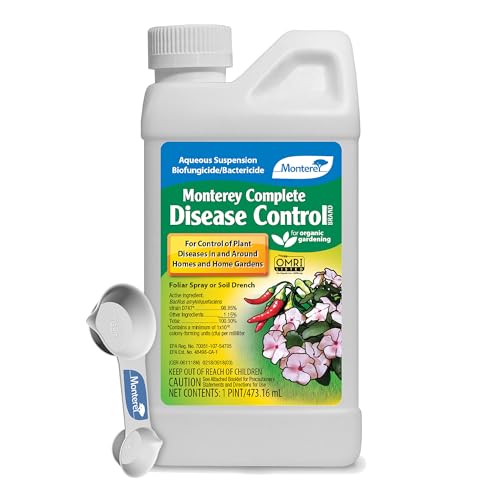
Monterey Complete Disease Control works through a biological strain that colonizes the root hairs of cucumber plants, preventing disease-causing fungi and bacteria from establishing a foothold in the root zone. This below-ground protection is critical for cucumbers grown in soil that has hosted infected cucurbits in previous seasons, where soil-borne pathogens like Fusarium can attack the vascular system before the first fruit sets. The 16-ounce pint concentrate mixes easily for both foliar spray and soil drench applications.
Southern growers using this product on tomatoes and cucurbits during rainy summers reported that it drastically slowed the spread of leaf spot and anthracnose on new foliage, giving plants enough time to size fruit before the disease caught up. For cucumbers specifically, the dual-action approach—drenching the roots while spraying the leaves—creates a comprehensive defense that a single-application foliar spray cannot match. The formula is OMRI-listed, so organic gardeners can use it without worrying about synthetic residue on pickling cucumbers.
The bundled measuring spoon is a thoughtful addition that eliminates the guesswork of mixing ratios, and the concentrated format makes this one of the more cost-effective biological options on the market. However, because this is a biological control rather than a curative synthetic, it works best as a preventive applied early in the season before visible symptoms appear. Gardeners who waited until their cucumber leaves were fully coated with downy mildew found it slowed but did not eliminate the infection.
What works
- Root drench colonizes rhizosphere for systemic protection
- OMRI-listed and safe for edible crops up to harvest day
- Concentrate format with included measuring spoon
What doesn’t
- Slower acting than synthetic fungicides on established infections
- Requires multiple spring applications for best results
3. Fertilome Liquid Systemic Fungicide II RTS
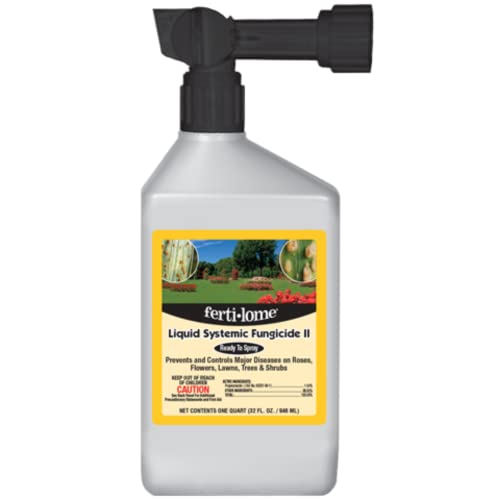
Fertilome’s Liquid Systemic Fungicide II delivers propiconazole, a triazole-class systemic fungicide that moves through the plant’s vascular system to stop fungal infections from the inside out. This ready-to-use 32-ounce bottle is as simple as it gets—no measuring, no mixing, just attach the sprayer and hit the cucumber leaves to the point of runoff. For gardeners who have never dealt with a fungicide concentrate and want a grab-and-go solution that works, this is the easiest entry point.
The systemic penetration makes this product effective against a broad spectrum of diseases, including the leaf spots and blights that commonly attack cucumber vines in humid conditions. Users reported that a single application stopped yellowing and leaf dieback on ornamentals and young trees, and the three-day spray interval schedule provides rapid control when disease pressure is high. The formulation is also labeled for lawns, so if you manage both a cucumber patch and a turf area with brown patch or dollar spot, one bottle covers both jobs.
The downside for cucumber growers is that propiconazole is a synthetic systemic with a longer pre-harvest interval than organic options. You need to plan your applications so the last spray happens well before you start picking daily. Additionally, the ready-to-use format is convenient but far more expensive per gallon of coverage than a concentrate, so for gardeners with more than six cucumber plants, the cost adds up quickly. The bottle cap sometimes drips during pouring, which wastes product.
What works
- True systemic action moves through leaf tissue for curative control
- Ready-to-use bottle requires zero mixing or measuring
- Broad-spectrum coverage works on lawn and garden diseases
What doesn’t
- Synthetic systemic requires longer harvest interval than organic options
- RTU format is cost-inefficient for large vegetable gardens
4. Southern Ag Garden Friendly Biological Fungicide

Southern Ag’s Biological Fungicide harnesses a high-concentration strain of beneficial Bacillus bacteria that colonizes the root system and outcompetes pathogenic fungi. At a concentration of 1×10⁹ CFU per gram, this 16-ounce concentrate is significantly stronger than many hydroponic-specific products, meaning you can use a fraction of the dose for the same protective effect. The bacteria produce natural enzymes that break down the cell walls of disease organisms while simultaneously acting as a bio-fertilizer that darkens leaves and strengthens overall plant vigor.
Cucumber growers in high-humidity regions like the Florida Panhandle reported that repeated applications steadily reduced pest pressure over time, with the soil drench component creating a lasting colony in the root zone that continued protecting plants between sprayings. Users who poured the concentrated solution directly onto diseased tomato plants saw recovery within 24 hours, suggesting the biological activity is fast once it contacts the pathogen. The product works on leaf miners and other soft-bodied insects as a secondary benefit, saving cucumber plants from simultaneous pest and disease attacks.
The bottle design is the most common complaint—the opening causes liquid to dribble down the side during measuring, which wastes product and creates a sticky mess on the bottle surface. Some users also noted that controlling heavy downy mildew pressure required more frequent applications than synthetic alternatives, though the organic safety margin makes this acceptable for daily-harvest growers. For the price per ounce of active biologicals, this is one of the most concentrated values in the category.
What works
- Extremely high CFU concentration for powerful biological control
- Dual-action as both fungicide and bio-fertilizer
- Safe for daily harvest with no pre-harvest interval
What doesn’t
- Bottle opening causes dripping and waste during measurement
- Requires regular reapplication under heavy disease pressure
5. Garden Safe Fungicide3
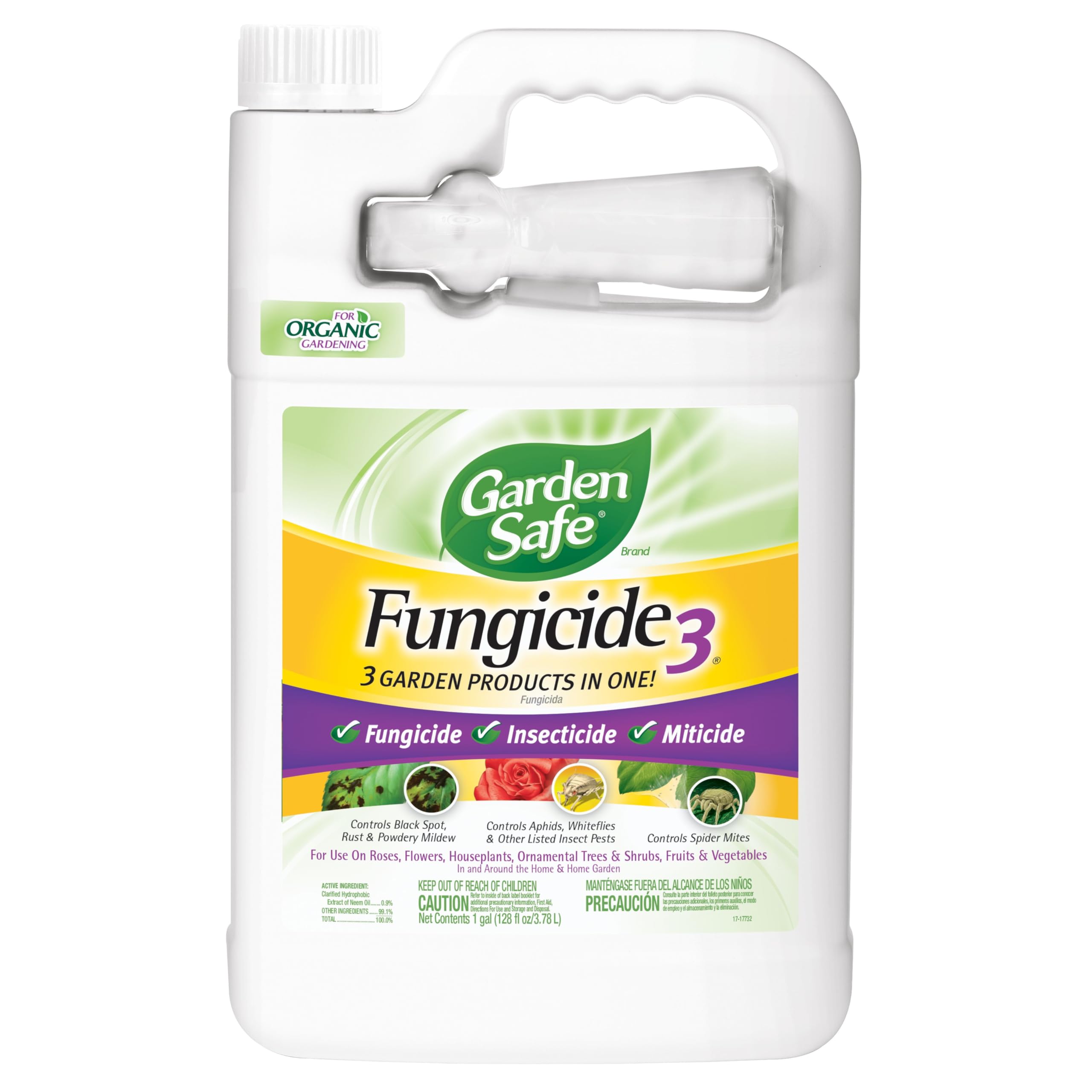
Garden Safe Fungicide3 delivers clarified hydrophobic extract of neem oil in a one-gallon ready-to-use container that functions as a fungicide, insecticide, and miticide simultaneously. For cucumber growers dealing with the trifecta of powdery mildew, aphids, and spider mites, this single bottle eliminates the need for multiple products. The neem oil suffocates soft-bodied insects and fungal spores on contact while leaving a protective residue that prevents re-infection for several days after application.
Gardeners using this product on vegetable crops reported that weekly applications virtually eliminated powdery mildew on cucumbers, tomatoes, and squash, with visible improvement in foliage health and fruit yield. The organic aspects make it suitable for edible gardens, and the attached sprayer eliminates the need for a separate applicator.
The sprayer hardware is the weakest link—the coiled pickup tube is only about four inches long, making it difficult to reach the bottom of the container as you use it up. Multiple owners reported replacing the sprayer head entirely to get adequate coverage. Additionally, neem oil works primarily as a preventive and contact treatment; if your cucumber leaves already have a heavy fungal infection, the curative effect is limited, and you’ll need to combine it with a systemic product for full control.
What works
- Triple-action covers fungus, insects, and mites with one product
- Ready-to-use gallon is convenient for small gardens
- Clarified neem oil is gentler on foliage than crude formulations
What doesn’t
- Sprayer design has short pickup tube that wastes product
- Contact mode requires thorough coverage; limited curative power
6. Bonide Revitalize Biofungicide

Bonide Revitalize takes a unique approach by triggering an immune response in the cucumber plant itself, effectively teaching the plant to recognize and resist fungal pathogens before they establish. The active ingredient, Bacillus amyloliquefaciens strain D747, colonizes the leaf surface and root zone, producing compounds that stimulate the plant’s natural defense mechanisms. This 16-ounce concentrate makes up to 6 gallons of finished spray, offering strong value for medium-sized cucumber patches.
Growers who used this on tomatoes struggling with septoria leaf spot reported genuine surprise at how effectively it turned the problem around—the immune-triggering mechanism kept new growth clean while arresting the spread of existing spots. For cucumbers specifically, the product works best as a preventive applied early in vine development, before the canopy becomes dense enough to trap the humidity that powdery mildew craves. It can be used up to the day of harvest, making it ideal for growers who pick cucumbers daily and don’t want to track a pre-harvest interval.
The biological nature means this product has a noticeable odor during mixing and application—several owners described it as “smelly but effective” and noted the smell dissipates quickly after drying. On established heavy infections of downy mildew, the immune-triggering action is slower than a synthetic systemic, so you may need to pair it with a faster-acting product if you’re already seeing yellow lesions on the leaf veins. For routine prevention on healthy vines, it’s one of the gentlest and most effective biological options available.
What works
- Immune-triggering mechanism creates lasting plant resistance
- Zero-day pre-harvest interval for daily cucumber picking
- Concentrate format provides strong value per gallon of spray
What doesn’t
- Noticeable odor during mixing and application
- Slower curative action on advanced downy mildew infections
7. Bonide Captain Jack’s Citrus, Fruit & Nut Orchard Spray

Bonide Captain Jack’s Orchard Spray combines sulfur-based disease control with pyrethrin insecticide and miticide action, creating a multi-purpose concentrate designed for fruit-bearing plants including cucumbers. One 32-ounce pint makes up to 6.4 gallons of finished spray, making this the most economical entry on this list for gardeners managing large cucumber patches alongside other vegetable crops.
Cucumber growers who used this product reported effective control of cucumber beetles, white flies, and the fungal diseases that typically follow insect damage. The sulfur leaves a slight powdery residue on the leaf surface, which is normal and actually indicates the protective barrier is in place. The product is non-persistent—it degrades quickly in the environment and must be reapplied after rain, but that also means minimal risk of chemical buildup in the soil over multiple seasons. Users noted that the leaf spots on their fruit trees began disappearing and the foliage turned noticeably greener after just two applications.
The main limitation for organic-focused growers is that sulfur, while approved for many organic programs, can be harsh on beneficial predatory mites and may cause leaf burn if applied during temperatures above 85°F. The concentrate must be mixed carefully according to label rates, as over-application can damage tender cucumber foliage. Additionally, the product has a distinct sulfur smell during mixing that some users find unpleasant, though it dissipates quickly after the spray dries on the leaves.
What works
- Extremely economical concentrate makes over 6 gallons of spray
- Broad-spectrum control covers insects, mites, and fungal diseases
- Sulfur-based protection is time-tested for powdery mildew
What doesn’t
- Sulfur can burn cucumber leaves if applied in high heat
- Powdery residue and strong smell during mixing
Hardware & Specs Guide
Active Ingredient Concentration
The biological potency of a fungicide is measured either by CFU (colony-forming units) per gram for bacterial products, or by percentage of active ingredient for chemical formulations. Bacillus-based products like Southern Ag’s at 1×10⁹ CFU/g provide root-colonizing power, while synthetic systemics like Fertilome’s propiconazole at 1.55% concentrate move through the plant vascular system. For cucumbers, a higher CFU count in biological fungicides typically means better soil colonization and longer-lasting protection between applications.
Dilution Ratio & Coverage Area
Concentrate fungicides specify a dilution rate in fluid ounces per gallon of water. Bonide Revitalize at about 2.5 oz per gallon covers roughly 10 to 15 mature cucumber plants per gallon mixed, while Bonide Captain Jack’s at 2.5 to 5 oz per gallon covers roughly the same area. Ready-to-use products cover less area per bottle but eliminate mixing errors. For a standard 10-foot cucumber trellis, budget about 1 gallon of mixed spray per application to achieve full leaf coverage top and bottom.
Pre-Harvest Interval (PHI)
The PHI is the number of days you must wait between the last fungicide application and harvest. Organic biofungicides like Arber, Monterey Complete, and Southern Ag have a zero-day PHI, meaning you can spray and harvest cucumbers the same day. Synthetic systemics like Fertilome’s propiconazole typically require a 7- to 14-day PHI. For continuous-harvest cucumber varieties that produce daily, a zero-day product is essential unless you’re willing to rotate treatments and track spray dates meticulously.
Rainfastness & Residual Activity
Rainfastness refers to how quickly a fungicide dries and bonds to the leaf surface so it won’t wash off during rain or overhead irrigation. Most contact fungicides like Garden Safe’s neem oil require 24 hours without rain to become rainfast, while systemic products like Fertilome’s propiconazole become rainfast within 2 to 4 hours because they are absorbed into the leaf tissue. Biological products colonizing the root zone are unaffected by rain after drenching, making them the best choice for monsoon-season cucumber growers.
FAQ
Can I use a fungicide labeled for roses on my cucumber plants?
How often should I spray fungicide on cucumbers during rainy weather?
What is the difference between powdery mildew and downy mildew on cucumbers?
Can I mix fungicide with insecticide in the same sprayer for cucumbers?
Should I rotate fungicides to prevent resistance in cucumber diseases?
Final Thoughts: The Verdict
For most gardeners, the fungicide for cucumbers winner is the Arber Organic Fungicide because it combines systemic activity with pollinator safety and a zero-day harvest interval, giving you curative power without compromising daily picking. If you want the deepest root-zone protection for soil with a history of cucurbit diseases, grab the Monterey Complete Disease Control and drench your cucumber roots before symptoms appear. And for budget-minded growers managing a large patch, the Bonide Captain Jack’s Orchard Spray offers the most economical broad-spectrum control per gallon of any product on this list.