
Tomato plants devour nutrients like no other crop, and the difference between a bumper crop of sweet, juicy fruit and a vine full of blossom-end rot often comes down to a single soil amendment: the right manure. Balanced nutrition, gentle soil conditioning, and the correct application method separate a thriving harvest from a salty, nitrogen-burned disaster.
I’m Rikta — the co-founder and writer behind Lawn Gear Lab. I’ve spent hundreds of hours cross-referencing NPK ratios, pH interactions, organic certification standards, and thousands of verified owner reports to identify exactly which manure-based products deliver consistently superior tomatoes without scorching roots or inviting pathogens.
Nothing rewrites a tomato plant’s growth story like knowing which manure for tomatoes supplies balanced nutrition without burning young roots, and the options below reveal which amendments earn their place in your garden bed.
How To Choose The Best Manure For Tomatoes
Selecting the right manure for tomatoes requires looking past the generic bag and understanding nutrient concentration, age, and source material. A wrong choice can introduce weed seeds, excess salts, or a nitrogen spike that produces leafy giants with zero fruit.
NPK Ratio: Matching Numbers to Growth Stage
Tomatoes are moderate nitrogen but high phosphorus and potassium feeders. A balanced product like a 4-2-3 or 5-7-3 supports robust root development and fruit set without triggering runaway foliage. Avoid manure blends exceeding 6 on the first number during fruiting, as excess nitrogen delays ripening and reduces yield.
Composted vs. Fresh vs. Pelletized
Composted manure has been thermophilically processed to kill weed seeds and pathogens while stabilizing nutrients. Fresh manure can burn roots and introduce E. coli risk. Pelletized options offer convenience and slower nutrient release, making them ideal for container growers who need precise, mess-free application.
Organic Certification and Source Transparency
OMRI-listed products guarantee the manure comes from organically managed livestock and contains no synthetic additives. For edible crops like tomatoes, this certification provides peace of mind. Vermicompost (worm castings) also qualifies as organic and adds beneficial microbes without any manure odor.
Quick Comparison
On smaller screens, swipe sideways to see the full table.
| Model | Category | Best For | Key Spec | Amazon |
|---|---|---|---|---|
| FoxFarm Happy Frog Tomato & Vegetable | Fertilizer | Fruiting & blossom-end rot prevention | 5-7-3 NPK + Calcium + Mycorrhizae | Amazon |
| Brut Cow Compost | Compost | All-purpose soil building | 10 qt, OMRI listed, odor-free | Amazon |
| Coast of Maine Tomato & Veggie | Planting Soil | In-ground beds and large containers | 20 qt, composted manure + peat moss | Amazon |
| Black Kow Composted Cow Manure | Soil Amendment | Improving clay or sandy soil structure | 8 qt, 1:1 mix ratio, granular | Amazon |
| Hoffman Dehydrated Super Manure | Pelletized Poultry | Quick nitrogen boost for early growth | 4-2-3 NPK, 5 lb pelletized | Amazon |
| Back to the Roots Worm Castings | Vermicompost | Seedlings and sensitive plants | 5 lb, no-burn, odorless | Amazon |
| Worm Bliss Organic Worm Castings | Vermicompost | Fine-rooted transplants and containers | 1 gallon, vegan-fed worms | Amazon |
In‑Depth Reviews
1. FoxFarm Happy Frog Tomato & Vegetable Fertilizer

FoxFarm engineered this dry granular fertilizer specifically for vigorous feeders like tomatoes, and the 5-7-3 NPK profile hits the sweet spot for fruiting crops. The inclusion of calcium directly addresses blossom-end rot, a common frustration for tomato growers, while mycorrhizal fungi expand root surface area for better water uptake during hot summer stretches.
Users consistently report that this blend triggers rapid flowering and fruit set in bag-grown tomatoes and raised beds. The granules dissolve easily into the soil without creating a crust, and there is no offensive fish or chemical smell — a major advantage over many organic fertilizers. One bag covers a substantial area, making it cost-effective despite the higher per-pound price compared to bulk manure.
This is a concentrated fertilizer, not a pure manure soil amendment, so it should be applied according to the label directions. Some users note that for very large in-ground gardens, the 4-pound bag runs out quickly, but for most home growers cultivating 4 to 8 plants, this remains the most effective single-product solution on the market.
What works
- Calcium addition prevents blossom-end rot in tomatoes
- Mycorrhizal fungi improve root efficiency and nutrient uptake
- Odorless application with no chemical burn risk
What doesn’t
- Premium price per pound compared to raw manure
- Not a pure manure product; contains additional amendments
2. Brut Cow Compost – Nutrient-Rich Composted Cow Manure

Brut Cow Compost delivers 100 percent pure composted cow manure with no filler, no additives, and an OMRI listing that confirms organic integrity. The fine, sifted texture makes it immediately usable as a top dressing or a soil blend component without needing further processing. The absence of odor is particularly useful for container growers working on patios or balconies.
Growers report excellent results mixing this compost at a 3-to-2 ratio with standard potting soil for tomato starts, with seedlings showing rapid root establishment and vigorous early growth. The balanced nutrient profile from composted bovine manure provides gentle slow-release nutrition without the high salt content that can plague fresh or improperly aged manures.
The 10-quart bag offers solid coverage for several large containers or a modest raised bed. The only limitation is that as a pure compost, the NPK numbers are lower than concentrated fertilizers, so heavy feeders like tomatoes may still benefit from supplemental feeding during peak fruiting, especially in containers with limited soil volume.
What works
- Pure composted cow manure with no additives or fillers
- Finely sifted, odor-free, and safe for delicate roots
- OMRI listed for certified organic gardening
What doesn’t
- Lower NPK concentration than synthetic or blended fertilizers
- Heavy feeders may need supplemental nutrition later in season
3. Coast of Maine Organic & Natural Planting Soil for Vegetables & Tomatoes

Coast of Maine combines composted manures with sphagnum peat moss to create a complete potting mix that balances water retention and drainage — a critical factor for tomatoes, which hate sitting in wet soil but also suffer from inconsistent watering. The lightweight texture is easy to work with, and the compost provides a slow nutrient release that supports steady growth without demanding frequent feeding.
Growers using this mix for heirloom tomatoes report excellent drainage that prevents root rot while still holding enough moisture to reduce watering frequency. The inclusion of aromatic cedar chips acts as a natural insect deterrent, a thoughtful addition for outdoor containers. Some users noted initial fungus gnat activity, easily controlled with neem oil or by solarizing the soil before use.
The 20-quart bag offers substantial volume for multiple large containers or a small raised bed. The primary drawback is the premium price per bag, which makes it less economical for large-scale in-ground gardens. For growers with a few prized tomato plants in containers, however, this ready-to-use mix eliminates the guesswork of blending your own soil and manure.
What works
- Ready-to-use mix with composted manure and peat moss
- Excellent drainage and moisture balance for container tomatoes
- Aromatic wood content deters soil insects naturally
What doesn’t
- Higher per-bag cost than DIY soil blends
- Initial fungus gnats reported in some batches
4. Black Kow Nitrogen Phosphate Composted Cow Manure

Black Kow has been a trusted name in soil amendments for decades, and this composted cow manure delivers exactly what the label promises: a consistent, granular product that improves both sandy and clay soils. The 1-to-1 mix ratio makes it simple to incorporate into existing garden beds, and the beneficial bacteria content accelerates the breakdown of organic matter into plant-available nutrients.
Gardeners consistently report that incorporating Black Kow into their planting holes transforms weak, compacted soil into a loose, nutrient-rich environment where tomato roots spread freely. The smell, while not overpowering, is more noticeable than some premium competitors — a trade-off many growers accept given the price point and the results. The granules pour easily and integrate quickly with native soil.
This product is a pure soil amendment rather than a complete fertilizer, so tomatoes in containers with limited soil volume will need supplemental feeding later in the season. For in-ground growers amending native soil before planting, Black Kow offers the best cost-to-volume ratio among composted options, making it the go-to choice for large gardens on a budget.
What works
- Excellent for improving heavy clay or sandy soil texture
- Beneficial bacteria enhance nutrient availability
- Affordable coverage for large in-ground garden beds
What doesn’t
- Noticeable odor compared to premium compost options
- Container growers may need additional feeding later
5. Hoffman 20505 Dehydrated Super Manure 4-2-3

Hoffman’s dehydrated poultry manure has been a staple of home gardens for years, and the pelletized 4-2-3 formulation provides a balanced start for tomatoes without the mess of bagged compost. The pellets break down gradually after watering, releasing nitrogen, phosphorus, and potassium without the rapid spike that can burn tender tomato roots when applied according to directions.
Users appreciate that a little goes a long way — just one teaspoon per 6-inch pot or one tablespoon per 12-inch pot provides noticeable results within days. The 5-pound bag is compact and easy to store, making it ideal for small-space gardeners who cannot keep bulk compost on hand. Faint odor is present but mild compared to fresh or unprocessed poultry manure.
The bag lacks a resealable closure, so a clip or separate container is needed to keep the pellets dry between uses. The dust during pouring can be mildly irritating, so wearing a mask is recommended. For growers who want a shelf-stable, space-efficient manure product that delivers consistent nutrition, Hoffman remains a reliable entry point.
What works
- Pelletized form prevents mess and allows precise application
- Compact 5-pound bag stores easily in small spaces
- Balanced 4-2-3 NPK supports steady tomato growth
What doesn’t
- Bag has no snap closure for resealing
- Dust can be irritating; mask recommended during use
6. Back to the Roots Organic Worm Castings

Back to the Roots produces pure vermicompost from earthworms fed an organic diet, resulting in a soil amendment that is chemically impossible to burn plants — even seedlings and delicate transplants. The granular texture blends effortlessly into chunky potting mixes containing coco coir, perlite, or charcoal without compacting or creating anaerobic pockets.
Tomato growers using this product as a side dressing at planting and again during early flowering report stronger stems and deeper green color without the leafy explosion that high-nitrogen products cause. The slow-release nature of worm castings means the benefits extend for weeks with a single application. The resealable bag is a practical touch for gardeners who use the product periodically throughout the season.
Worm castings have lower NPK numbers than concentrated poultry or synthetic fertilizers, so heavy-fruiting tomatoes in containers may still need a balanced fertilizer boost at peak production. The moisture-retention properties are excellent, but growers in humid climates should monitor soil moisture levels to avoid over-saturation. This is the safest manure alternative for anyone nervous about burning their plants.
What works
- Completely safe for seedlings with no burn risk
- Improves soil texture without compacting
- Resealable bag keeps product fresh between uses
What doesn’t
- Lower NPK concentration than manure fertilizers
- Holds moisture well, which may require careful watering
7. Worm Bliss Organic Worm Castings
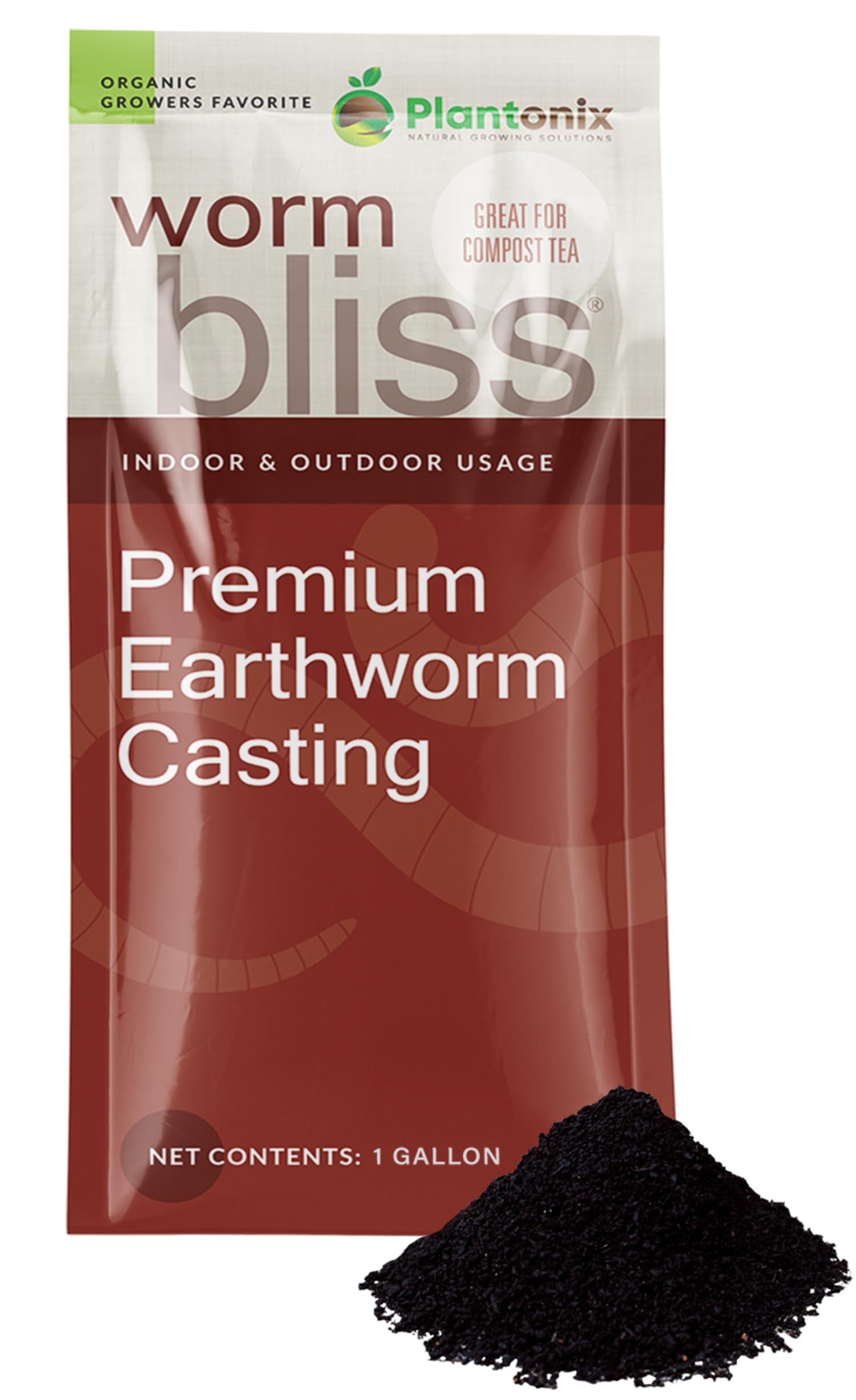
Plantonix Worm Bliss raises its worms on a strictly vegan diet in climate-controlled facilities, then screens the castings to remove any sand, rocks, or synthetic contaminants. The result is a pure, uniform vermicompost with a fine texture that protects delicate root systems — particularly valuable for tomato transplants and young starts that cannot tolerate salt-based fertilizers.
Growers report that mixing Worm Bliss into the potting soil for large containers of tomatoes, peppers, and cucumbers leads to faster establishment and more abundant early growth compared to plain soil mixes. The humus content improves water retention, which reduces the need for frequent watering during establishment — a major advantage in hot weather. The earthy smell is mild and disappears quickly after incorporation.
The 1-gallon bag is smaller than bulk compost options, making it best suited for container gardening and targeted application rather than amending large in-ground beds. Some users noted that the granules, while fine, can clump if the bag remains open in humid environments. For organic gardeners prioritizing microbial diversity and root safety, Worm Bliss offers a premium vermicompost experience.
What works
- Pure castings from vegan-fed worms, no filler or debris
- Fine texture protects delicate tomato root systems
- Humus improves moisture retention in containers
What doesn’t
- Small bag size limits use for large garden beds
- Granules may clump in humid storage conditions
Hardware & Specs Guide
NPK Ratio: What the Numbers Mean for Tomatoes
The three-number code on a manure package represents Nitrogen, Phosphorus, and Potassium percentages by weight. For tomatoes, the middle number (phosphorus) is critical for root development and flower-to-fruit transition. A ratio like 5-7-3 from FoxFarm provides higher phosphorus than nitrogen, supporting fruit set. Products such as Hoffman’s 4-2-3 have a more balanced profile suitable for early growth. Avoid ratios with a first number above 8 during flowering, as excess nitrogen diverts energy into leaves at the expense of fruit.
Composting Process and Root Safety
Raw manure contains high levels of ammonia, salts, and weed seeds that damage tomato roots and introduce competition. Composting heats the material to 130-160°F, killing pathogens and stabilizing nutrients into forms plants can absorb without burning. The Black Kow and Brut Cow products both emphasize thorough composting. Pelletized manures like Hoffman are dehydrated at high temperatures, achieving similar safety. Look for the words “composted,” “aged,” or “dehydrated” on the label to ensure root safety.
FAQ
Can I use fresh cow manure directly on my tomato plants?
How much manure should I mix into the soil for tomatoes?
Is chicken manure better than cow manure for tomato plants?
Final Thoughts: The Verdict
For most gardeners, the manure for tomatoes winner is the FoxFarm Happy Frog Tomato & Vegetable Fertilizer because its 5-7-3 NPK with calcium directly targets fruit production and prevents blossom-end rot in a single application. If you want pure composted cow manure with OMRI certification for organic beds, grab the Brut Cow Compost. And for a no-mess, beginner-friendly option that eliminates any root burn risk, nothing beats the Back to the Roots Organic Worm Castings.