
Yellowing blades, patchy runners, and weak growth in the summer heat are the three signals that your St. Augustine lawn is starving for the right nutrient balance. Unlike Bermuda or Zoysia, St. Augustine has a coarse blade and specific feeding requirements that make a general-purpose fertilizer a gamble. A formula too high in phosphorus can trigger iron deficiencies, while low potassium leaves the turf vulnerable to large patch fungus and freeze damage. The best St. Augustine grass fertilizer delivers a nitrogen-heavy profile with iron for deep color, zero to low phosphate to avoid soil lockout, and a steady release mechanism that prevents the surge-and-crash cycles that stress this finicky warm-season grass.
I’m Rikta — the co-founder and writer behind Lawn Gear Lab. My approach to this guide involved comparing NPK ratios, iron percentages, and release durations across seven bagged and liquid fertilizers while cross-referencing verified owner reports to identify which formulations actually hold up under real St. Augustine growing conditions.
The goal is to cut through the label clutter and match you with a formula that matches your soil, your climate, and your particular lawn’s stage of dormancy or active growth. This guide narrows the search for the best st. augustine grass fertilizer by weighing nitrogen source, potassium content, iron levels, and coverage value against the specific needs of this grass type.
How To Choose The Best St. Augustine Grass Fertilizer
St. Augustine grass is a heavy feeder that prefers high nitrogen, moderate potassium, and little to no phosphorus. The wrong balance causes yellowing, fungal outbreaks, and weak root systems. Focus on these factors before buying.
NPK Ratio and Zero-Phosphate Rule
Look for a first number (nitrogen) between 15 and 24, a second number (phosphorus) of zero, and a third number (potassium) between 4 and 11. St. Augustine growing in most southern soils already contains enough phosphorus from natural mineralization, and adding more blocks iron uptake, which triggers yellowing. A 15-0-4 or 24-0-11 ratio covers growth and root strength without causing chlorosis.
Iron and Potassium for Color and Disease Resistance
Iron (chelated or elemental) deepens the green within days without stimulating excessive leaf growth that forces extra mowing. Potassium strengthens cell walls and helps the turf resist large patch fungus, the most common disease in St. Augustine during humid summers. Formulas with 2 to 6 percent iron and at least 4 percent potassium handle both tasks.
Slow Release Versus Quick Release
Quick-release nitrogen gives a fast three-day green-up but lasts only three to four weeks and forces rapid blade growth. Slow-release options feed for six to eight weeks, produce steadier color, and cut mowing frequency in half. For homeowners wanting dark color without a weekly cutting schedule, a formula with at least 50 percent slow-release nitrogen is the better choice.
Quick Comparison
On smaller screens, swipe sideways to see the full table.
| Model | Category | Best For | Key Spec | Amazon |
|---|---|---|---|---|
| Yard Mastery 24-0-6 Flagship | Premium Granular | Deep greening with slow release | 24% slow nitrogen, 3% iron | Amazon |
| The Andersons Deep Green 24-0-11 | Premium Granular | Heat stress & large patch defense | 2% iron, 11% potassium | Amazon |
| SeedRanch St. Augustine 24-2-11 | Specialty Granular | Maximum iron greening | 6% iron, 11% potassium | Amazon |
| Fertilome St. Augustine Weed & Feed 15-0-4 | Weed & Feed | Spring weed prevention | Pre-emergent + post-emergent herbicide | Amazon |
| The Andersons DGL 25-0-0 | Quick Release | Fast three-day green-up | 100% quick-release nitrogen | Amazon |
| TPS Nutrients Liquid St. Augustine | Liquid Concentrate | Spot treating browned areas | 128 oz ready-to-use, fast absorption | Amazon |
| Fertilome Centipede Lawn 15-0-15 | Budget Granular | Budget feeding for large lawns | 15% potassium, 5,000 sq ft coverage | Amazon |
In‑Depth Reviews
1. Yard Mastery 24-0-6 Flagship Granular Fertilizer with 3% Iron

The Yard Mastery Flagship delivers the most balanced slow-release profile for St. Augustine lawns across an entire growing season. With 24 percent nitrogen and 6 percent potassium, it feeds the turf steadily without the surge that forces you to mow twice a week. The 3 percent iron content pushes dark green color within days and sustains it through the 8-week release window, making it a standout for homeowners who want a single application to carry the summer.
The 45-pound bag covers 15,000 square feet, which significantly reduces the cost per feeding compared to smaller premium bags. The Bio-Nite organic component adds micronutrients that improve soil microbiology over repeated applications, a feature rarely found in commodity granular fertilizers. Owner reports consistently note that Bermuda and St. Augustine lawns thickened enough to choke out weeds after one full application cycle.
The main trade-off is the aggressive growth response — expect to mow every five to six days during peak warm season, and do not overlap passes unless you want dark green zebra stripes that last two months. The fast greening also stains concrete if granules land on wet driveways, so sweep any off-target material immediately.
What works
- Steady 8-week slow release prevents nitrogen burn
- 3% iron delivers visible dark green color
- Large 15,000 sq ft coverage per bag
What doesn’t
- Stimulates heavy blade growth, requiring frequent mowing
- Overlapping creates permanent dark stripes for up to 8 weeks
2. The Andersons Deep Green 24-0-11 Professional-Grade Fertilizer

The Andersons Deep Green formula is engineered specifically to combat the yellowing and stress that St. Augustine grass suffers during July and August heat. The 11 percent potassium content is the highest on this list, and it directly strengthens cell walls to reduce large patch and gray leaf spot infections. The 2 percent iron and added manganese target chlorophyll production, giving a uniform dark green tone that does not fade after three weeks like pure quick-release formulas do.
This bag combines quick-release and slow-release nitrogen sources, so you get an initial color bump in the first week followed by sustained feeding for up to eight weeks. The 40-pound bag covers about 10,000 square feet at the standard application rate, and the professional-grade particle size spreads evenly with a rotary spreader. Owner reviews highlight the dramatic recovery of brown, patchy St. Augustine lawns within three weeks of application.
The fine particle size makes over-application easy if your spreader is not calibrated — overlapping passes produce ultra-green stripes that do not even out for two months. The bag is also relatively expensive, and the high potassium content is less beneficial for lawns that already test adequate in potassium from previous feedings.
What works
- 11% potassium provides strong large patch and heat stress protection
- Manganese boosts green color without excess blade growth
- Dual-release nitrogen feeds for up to 8 weeks
What doesn’t
- Fine particles require careful spreader calibration
- High price per bag compared to commodity fertilizers
3. SeedRanch St. Augustine Lawn 24-2-11 Fertilizer
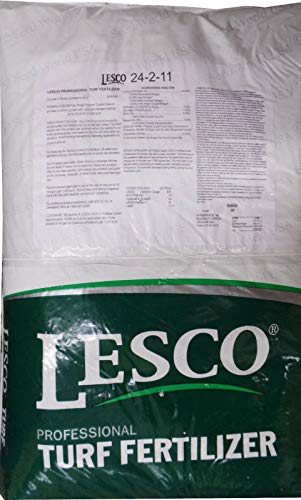
The SeedRanch formulation is built around the highest iron concentration in this guide — 6 percent — which makes it the most effective choice for correcting iron chlorosis in St. Augustine lawns with alkaline soil or high pH irrigation water. The 24-2-11 ratio provides ample nitrogen for blade density and 11 percent potassium for root and disease resistance. The 50-pound bag covers 12,000 square feet, giving it the best per-application cost in the premium category.
Owner feedback from California and Texas users confirms that St. Augustine grass responds with vigorous runner production and a dark green color that holds even through weeks of heavy rain or heat. The 2 percent phosphorus is low enough to avoid iron lockout in most southern soils, though lawns with already high phosphorus should do a soil test before applying. The granular form releases over four to six weeks, which is slightly shorter than the premium slow-release options but still manageable.
The main drawbacks are the lack of a slow-release nitrogen coating, meaning the green-up cycle is shorter than the Andersons or Yard Mastery options, and the bag weight of 50 pounds is unwieldy for smaller homeowners. The 2 percent phosphorus also makes it unsuitable for lawns with established phosphorus toxicity.
What works
- 6% iron rapidly reverses chlorosis and yellowing
- Large 50-lb bag covers 12,000 sq ft
- 11% potassium supports disease resistance
What doesn’t
- No slow-release coating, shorter feeding window
- Contains phosphorus, not ideal for high-P soil
4. Fertilome St. Augustine Weed & Feed 15-0-4
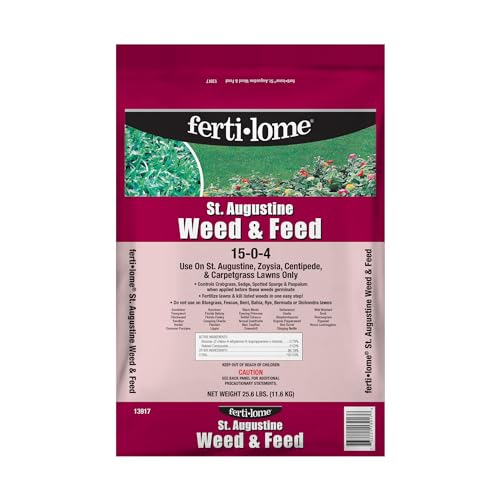
The Fertilome Weed & Feed is the only product on this list that combines a St. Augustine-safe fertilizer with both pre-emergent and post-emergent herbicide. The 15-0-4 ratio delivers moderate nitrogen for steady growth and 4 percent potassium for root health, while the herbicide targets spring and summer annual weeds like crabgrass, sandbur, and chamberbitter without damaging St. Augustine stolons. The 25.6-pound bag covers 5,000 square feet, making it suitable for medium-sized lawns.
Owner reports from Florida and Texas note that the weed control component works best when applied in early spring before soil temperatures reach 65 degrees. The zero-phosphorus formulation avoids iron chlorosis, making it safe for repeat applications. The slow-release nitrogen provides about four to five weeks of feeding, which aligns well with the spring and early fall windows recommended for St. Augustine.
The herbicide cannot be used on Bermuda, northern grass types, or newly sodded St. Augustine that has not rooted fully. The coverage area is smaller than the premium bags, so larger lawns may need two bags per application, and the weed control efficacy drops significantly if rain does not occur within 48 hours of application.
What works
- Zero phosphorus safe for St. Augustine lawns
- Dual pre-emergent and post-emergent weed control
- Granular form applies easily with standard spreader
What doesn’t
- Not suitable for newly laid St. Augustine sod
- Requires rain within 48 hours for activation
5. The Andersons DGL Dark Green Lawn 25-0-0 Fertilizer
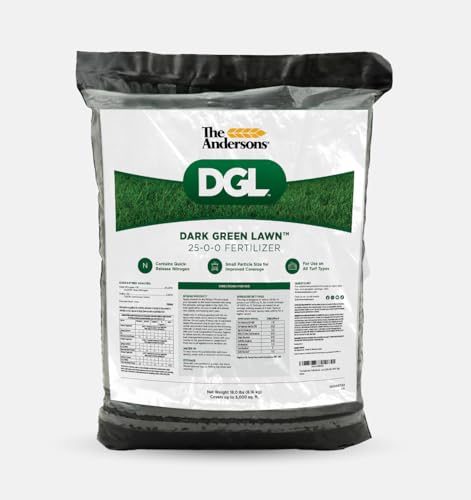
The Andersons DGL is a pure nitrogen quick-release fertilizer designed for one purpose: dark green color within three days. The 25-0-0 ratio contains no phosphorus or potassium, so it works best as a supplemental feeding between balanced applications rather than a standalone program for St. Augustine. The 18-pound bag covers 5,000 square feet, and the ultra-fine particle size provides even distribution when applied with a drop or rotary spreader at reduced settings.
Owner feedback from northern Virginia and the Carolinas confirms that dormant or weak St. Augustine lawns show visible greening within 72 hours and full dark green color within eight days. The formula contains no iron, so the color comes from pure nitrogen stimulation, not from iron-enhanced chlorophyll production. This means the green-up is fast but lasts only three to four weeks before another application is needed. The fine prills are nearly invisible after spreading, making it easy to miss overlap areas.
The lack of potassium makes this a poor choice for summer stress periods when large patch risk is highest, and the quick-release nitrogen can burn the grass if applied during drought or temperatures above 90 degrees. The product also stains concrete permanently, so careful application and immediate sweeping are mandatory.
What works
- Extremely fast greening in 3 days
- Ultra-fine particles provide even spread
- Zero phosphorus, safe for sensitive soil
What doesn’t
- No potassium for heat or disease protection
- Short 3-4 week feeding window
- Permanent staining on concrete
6. TPS Nutrients St. Augustine Grass Liquid Lawn Food
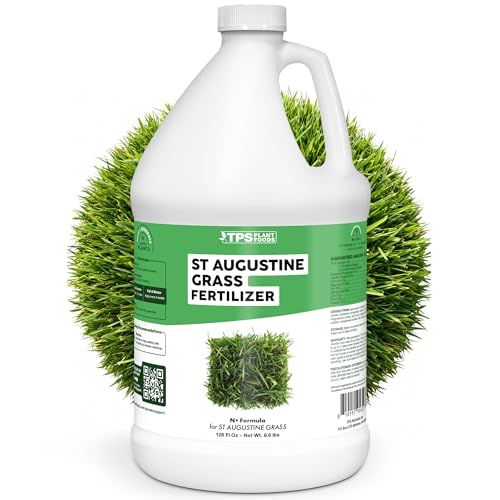
The TPS Nutrients liquid concentrate targets St. Augustine specifically with a fast-absorbing formula that bypasses the granular spreader altogether. The 1-gallon jug works well for spot-treating brown patches, new runners, or areas where a spreader cannot reach, such as narrow side yards and irregular beds. The liquid formulation delivers nutrients directly to the root zone within hours, making it effective for quick recovery after heat stress or light damage.
Owner reviews from Florida note that two applications spaced a week apart turned yellow St. Augustine deep green, and the liquid format allows for precise control over dosage in smaller areas. The coverage is lower than granular bags — one gallon treats roughly 2,500 to 3,000 square feet depending on dilution — so it is not practical for full-lawn feeding of large properties. The product is made in the USA and uses a proprietary blend of nitrogen, potassium, and micronutrients without added phosphorus.
Liquid fertilizers require more frequent applications than slow-release granules, typically every two to three weeks during active growth. The cost per square foot is higher than granular options, and the hose-end sprayer included is not always durable enough for the full gallon without clogging.
What works
- Fast absorption visible in 4-5 days
- Zero phosphorus, safe for St. Augustine
- Effective for precise spot treatment
What doesn’t
- Higher cost per square foot than granular
- Requires reapplication every 2-3 weeks
- Lower total coverage per container
7. Fertilome Centipede Lawn Fertilizer 15-0-15
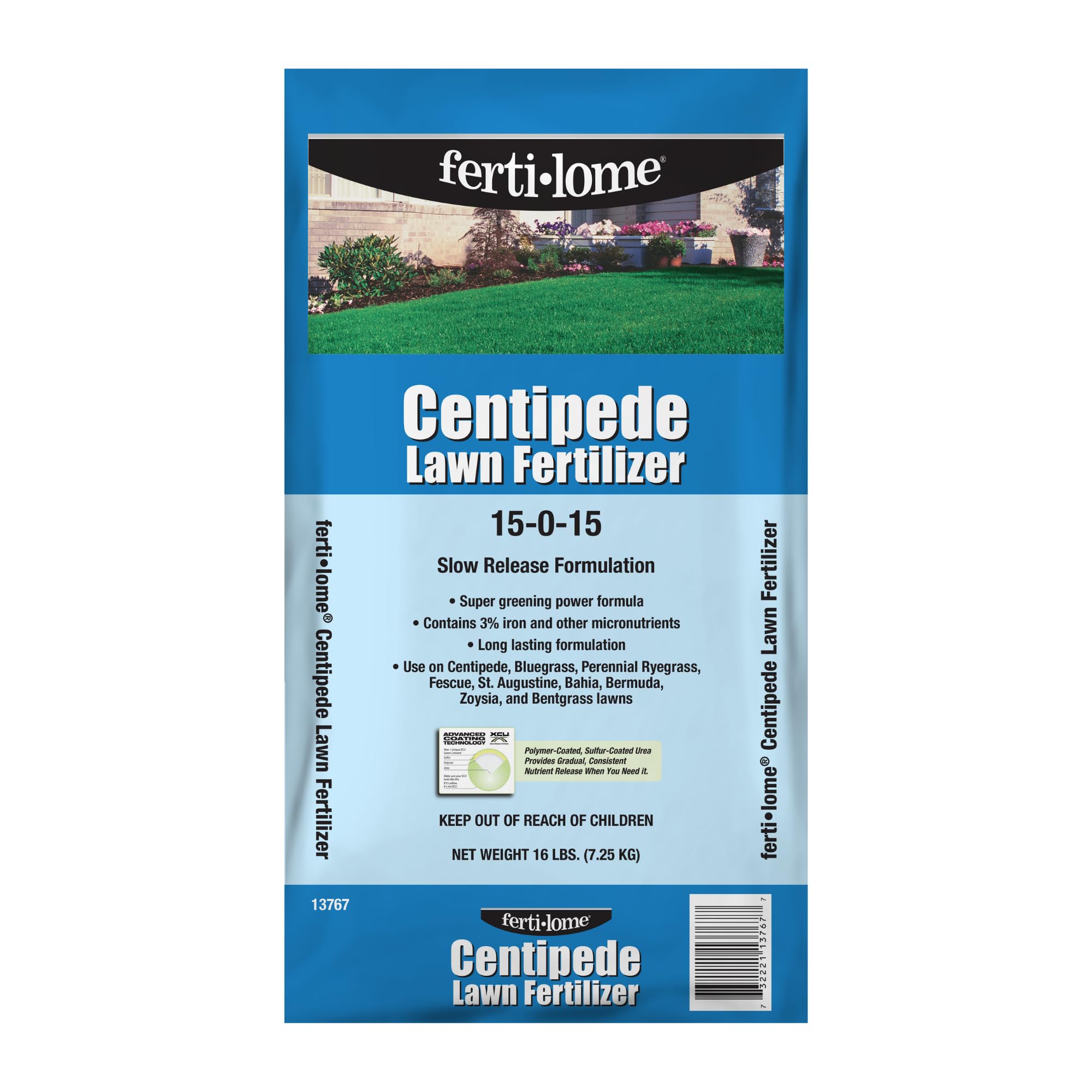
The Fertilome 15-0-15 is originally formulated for Centipede grass but works well on St. Augustine because of the matching nutritional preferences — high nitrogen, zero phosphorus, and a significant 15 percent potassium. The 16-pound bag covers 5,000 square feet, and the slow-release nitrogen reduces the risk of leaf burn common with cheap quick-release fertilizers. The 15 percent potassium is the highest in the budget tier, making it a solid option for homeowners who want disease resistance without paying premium prices.
Owner reports confirm that St. Augustine lawns respond with thicker blade density and dark green color after one application, especially when applied in early spring and again in early fall. The slow-release mechanism provides about four to five weeks of feeding, which is shorter than premium options but reasonable for the price. The bag covers both Centipede and St. Augustine, so it is a safe choice for mixed southern lawns.
The 16-pound bag covers only 5,000 square feet, which is small compared to premium bags that cover triple that area. The formulation lacks iron and micronutrients, so lawns with chlorosis issues will need a supplemental iron application. The pellet size is also coarser than professional-grade products, which can lead to uneven distribution with lower-end rotary spreaders.
What works
- Zero phosphorus avoids iron lockout
- 15% potassium supports disease resistance
- Slow-release nitrogen prevents burn
What doesn’t
- Small bag covers only 5,000 sq ft
- No added iron for chlorosis correction
- Coarse pellet size may spread unevenly
Hardware & Specs Guide
NPK Ratio: The Three Numbers
Nitrogen (first number) drives leaf blade growth and green color. Potassium (third number) strengthens cell walls against large patch fungus and drought. Phosphorus (second number) is rarely needed for St. Augustine in southern clay or sandy soils; zero-phosphorus formulas prevent iron chlorosis. A 15-0-15 or 24-0-11 ratio covers the essential macronutrients without triggering yellowing.
Iron Content for Deep Green
Iron (chelated or ferrous sulfate) directly boosts chlorophyll production without stimulating excessive leaf elongation. Products with 2 to 6 percent iron produce visible dark green color within 5 to 7 days. High-iron formulas are especially critical for St. Augustine growing in alkaline soil with pH above 7.2, where natural iron availability drops sharply.
Slow Release Versus Quick Release
Slow-release nitrogen (polymer-coated, sulfur-coated, or methylene urea) feeds the grass evenly over 6 to 10 weeks, reducing mowing frequency and preventing nitrogen burn. Quick-release nitrogen (ammonium nitrate, urea) turns the lawn dark green in 2 to 3 days but requires reapplication in 3 to 4 weeks. For St. Augustine, a blend of both sources balances speed with longevity.
Coverage and Bag Weight
Bag sizes range from 16 pounds (5,000 square feet) to 50 pounds (15,000 square feet). Larger bags reduce the per-application cost but require a rotary spreader with a hopper wide enough to handle 45+ pounds. Homeowners with lawns under 4,000 square feet should prioritize smaller bags to avoid storing opened fertilizer that absorbs moisture and clumps.
FAQ
Why should St. Augustine fertilizer have zero phosphorus?
How often should I fertilize St. Augustine grass?
Can I use a weed and feed product on St. Augustine?
What happens if I use a high-phosphorus fertilizer on St. Augustine?
Is liquid or granular fertilizer better for St. Augustine grass?
Final Thoughts: The Verdict
For most gardeners, the best st. augustine grass fertilizer winner is the Yard Mastery 24-0-6 Flagship because it delivers the longest feeding window with the highest iron content among slow-release granular options. If you need maximum large patch resistance during humid southern summers, grab the Andersons Deep Green 24-0-11. And for a budget-friendly option that still provides zero-phosphorus safety and high potassium, nothing beats the Fertilome 15-0-15.