
Compacted soil is the single greatest barrier to a lush lawn. When your soil is hard as concrete, water runs off, fertilizer sits on the surface, and grassroots can’t breathe. A dedicated aerator physically breaks up that compaction — and the right tool for the job depends on your yard size, soil type, and your tolerance for hard work.
I’m Rikta — the co-founder and writer behind Lawn Gear Lab. I spent dozens of hours cross-referencing hollow tine designs, spike configurations, tow-behind specs, and manufacturing materials, then layered in verified owner feedback to separate the tools that actually pull clean cores from the tools that just poke holes.
Whether you’re patching bare spots or overhauling an entire lawn, the right machine makes the difference between wasted effort and visible results. This guide ranks the top manual, tow-behind, and specialty options to help you find the best home lawn aerator for your specific soil conditions and yard size.
How To Choose The Best Home Lawn Aerator
Choosing the wrong type of aerator wastes your time and can even damage your lawn’s root structure. Here’s what separates effective tools from frustrating ones.
Core (Plug) vs. Spike Aerators
A core (plug) aerator uses hollow tubes to physically remove a cigar-shaped plug of soil. This relieves compaction by removing volume — the holes don’t just close back up immediately. A spike aerator pushes solid tines into the ground, which can actually compact the soil around the hole in dense clay. For most lawns with true compaction problems, a core aerator is the right choice. Spike aerators work best for light aeration on loamy soil or as a supplement between core sessions.
Soil Moisture and Penetration
Every manual core aerator is only as effective as the soil moisture allows. Dry, hard soil bends or snaps tines and makes extraction nearly impossible. The ideal condition is slightly moist soil — water your lawn thoroughly 24 hours before aerating. If the soil is so wet it clumps and sticks to the tines, wait another day. The sweet spot is when you can push a screwdriver into the ground with moderate resistance.
Handle Height and Ergonomic Design
Manual lawn aeration is demanding physical work. A handle that’s too short forces you to lean, straining your lower back. Look for handles around 40 to 42 inches tall if you’re over 5’10”. The foot bar design matters too — a wide, flat step bar gives you more surface area to apply leverage without your shoe slipping off or hitting the tine mechanism.
Tow-Behind Aerators for Larger Lawns
If your lawn exceeds 5,000 square feet, a manual aerator becomes a full-day workout. Tow-behind aerators attach to a riding mower or ATV and cover ground much faster. They come in spike and core versions. Spike tow-behinds are lighter and cheaper but may not penetrate hard soil without adding weight. Core tow-behinds are more effective but significantly heavier and more expensive. Consider the weight capacity of your towing vehicle before buying a heavy core model.
Quick Comparison
On smaller screens, swipe sideways to see the full table.
| Model | Category | Best For | Key Spec | Amazon |
|---|---|---|---|---|
| Landzie Original | Manual Core | Premium build, no-assembly | 3 stainless steel hollow tines | Amazon |
| Brinly SAT2-40BH-P | Tow-Behind Spike | Large lawns with riding mower | 40″ width, 150 lb weight tray | Amazon |
| Dolibest 4-Corer with Tray | Manual Core | Plug collection, medium yards | 4 stainless steel corers, storage tray | Amazon |
| Dolibest 4-Corer (Standard) | Manual Core | Budget-friendly 4-plug tool | 4 corers, 3.5″ deep | Amazon |
| Yard Butler Spike Aerator | Manual Spike | Light aeration, loamy soil | 4 spike tines, 3″ deep | Amazon |
| Manual Core Aerator (LawnVigor) | Manual Core | Entry-level core aeration | 3 hollow tines, heat-treated | Amazon |
| Garden Weasel Rotary Cultivator | Rotary Cultivator | Soil prep, reseeding, weeding | Rotating blade wheels, 55″ handle | Amazon |
In‑Depth Reviews
1. Landzie Original Hollow Tine Aerator
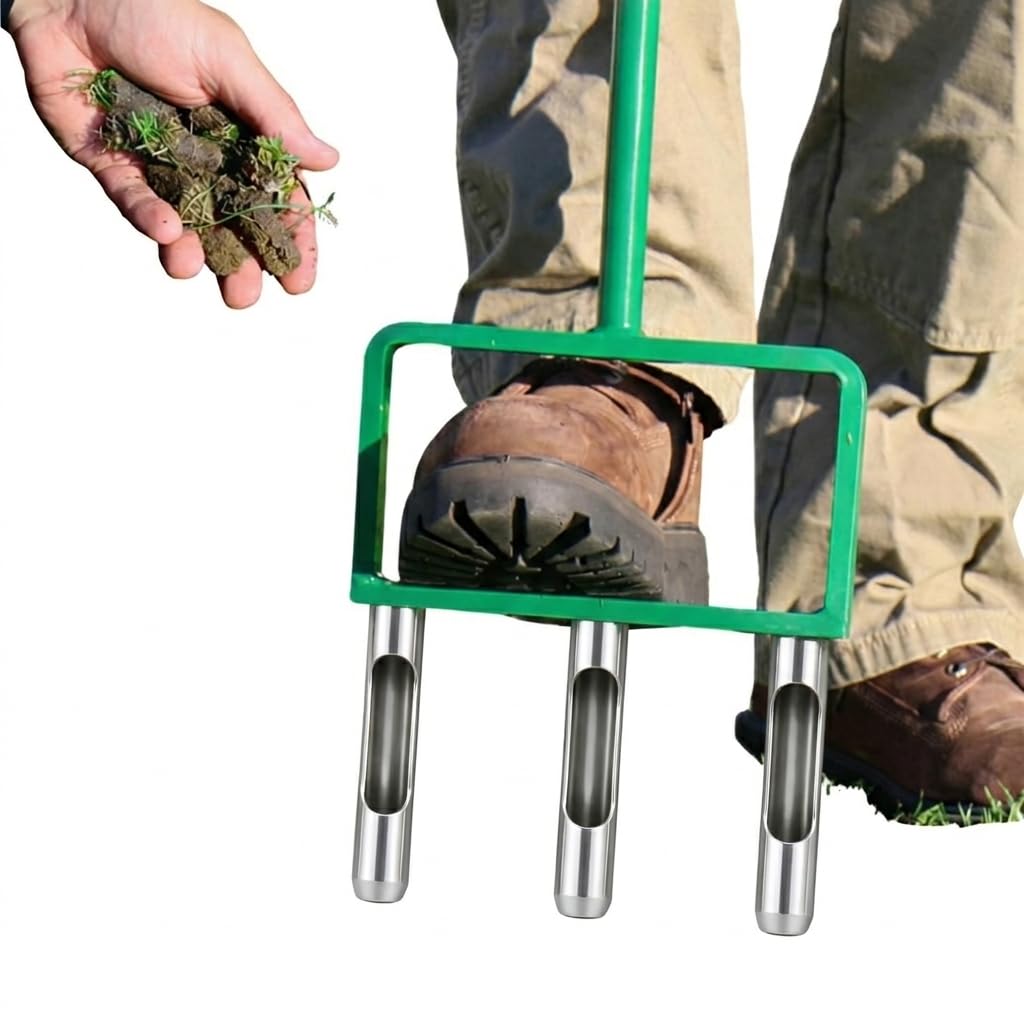
The Landzie Original is the benchmark for manual core aerators. It arrives fully assembled with three stainless steel hollow tines already fitted to the powder-coated steel frame — no wrenches, no guesswork. The tines use a beveled edge design that self-cleans as you work, which is a massive time saver compared to tools that require constant poking to unclog. At 42 inches, the handle height accommodates taller users without forcing a stoop, and the replaceable tines mean this tool can outlast cheaper competition by years.
Owner feedback consistently highlights the physical demands — multiple users reported that 2,200 square feet took about four hours and registered as “cross-fit level” exertion on a smartwatch. The foot bar can get slippery when wet, and users taller than 6 feet may find the 42-inch handle still requires some lean. However, the build quality is undeniable: solid steel frame, sharp stainless tines that don’t rust, and a clog-free operation that actually works as advertised when soil moisture is correct.
The Landzie is not a budget tool, but it’s a buy-it-for-life piece of equipment. For homeowners with compacted soil on medium-sized lawns (under 5,000 sq ft) who want a true core aerator that won’t bend or break, this is the best investment. It’s also the go-to choice for landscapers who need a reliable manual backup for tight areas where machines can’t reach.
What works
- Self-cleaning beveled hollow tines rarely clog
- Fully assembled out of the box — ready in seconds
- Replaceable tines extend tool life indefinitely
- Powder-coated steel frame withstands years of hard use
What doesn’t
- Extremely physically demanding on large lawns
- Foot bar becomes slippery when wet
- Price point is premium compared to other manual models
2. Brinly SAT2-40BH-P Tow Behind Spike Aerator

The Brinly SAT2-40BH-P is a tow-behind spike aerator designed for large properties where manual aeration is impractical. It features 11 tine stars, each 8 inches in diameter with 12 spike tips, covering a full 40-inch swath. The patent-pending 3-D galvanized steel tines are significantly stronger than standard flat tines — they resist bending even in rocky or heavily compacted clay. A rigid weight tray accepts up to 150 pounds of extra ballast, which is essential for achieving the full 2-inch penetration depth in hard soil.
Assembly requires patience and heavy-duty gloves — the tines are extremely sharp and the included hardware uses regular hex nuts that tend to loosen over time. Several owners recommend swapping to nylon lock nuts. The transport mode lever engages turf-tread wheels to cross driveways and sidewalks without damaging the surface. Users report excellent results when used after scalping the lawn and watering 24 hours prior, with some describing a transformation of previously cracked clay soil into workable turf.
This aerator is best suited for owners of riding mowers or ATVs with lawns exceeding 10,000 square feet. The spike design is better for relieving surface compaction than for deep core aeration, but the ability to add substantial weight and the 40-inch coverage make it a fast, effective tool for seasonal aeration. The two-year manufacturer warranty provides added peace of mind for a machine that sees heavy use.
What works
- 40-inch wide coverage significantly reduces aeration time
- 150-pound weight tray enables deep penetration in hard soil
- 3-D galvanized tines resist bending and rust
- Transport wheels protect driveways and sidewalks
What doesn’t
- Assembly can be challenging with sharp tines and loose nuts
- Spike design may compact soil around hole in dense clay
- Requires a riding mower or ATV to tow effectively
3. Dolibest Lawn Coring Aerator with Soil Core Storage Tray
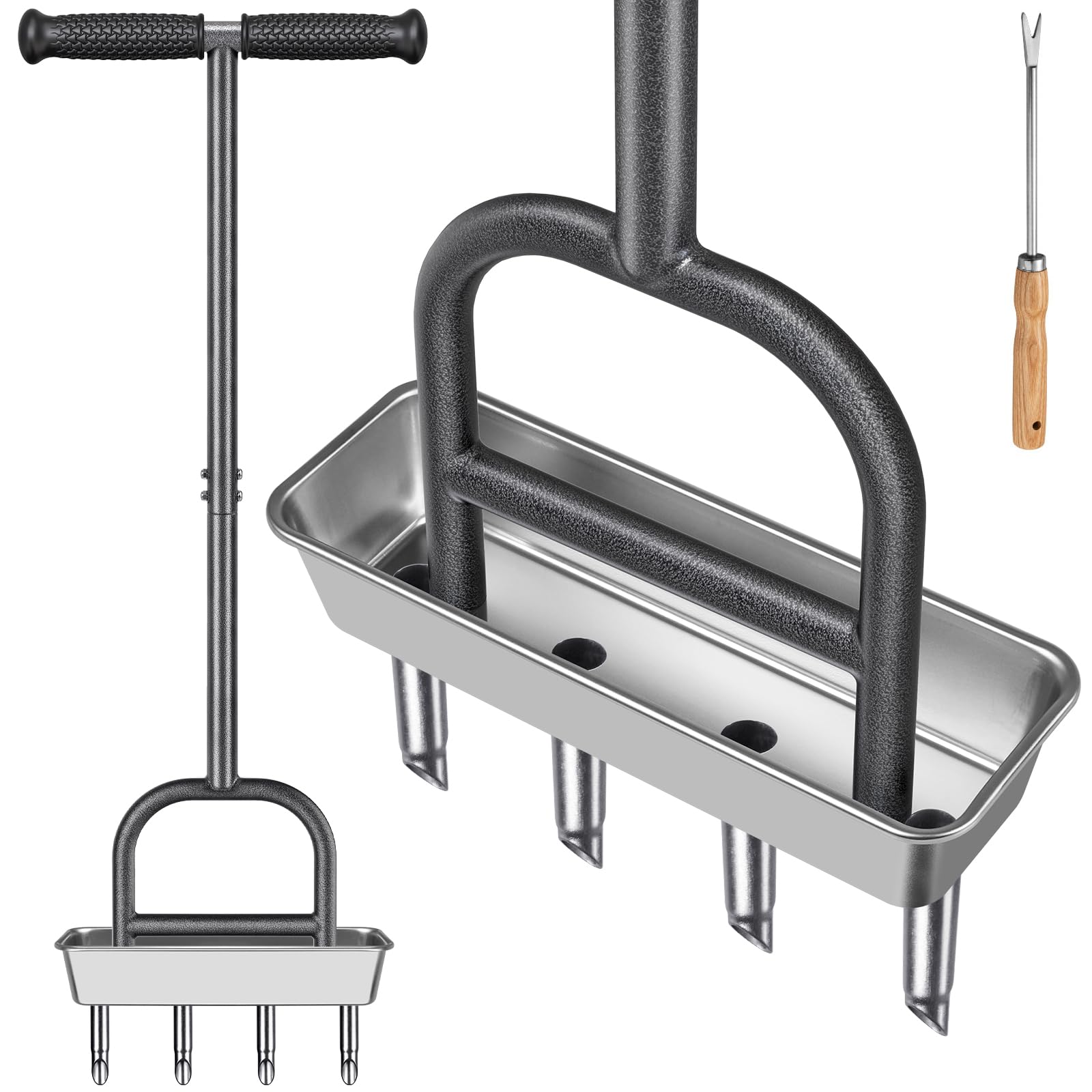
Dolibest’s 4-corer model with the integrated soil storage tray addresses one of the messiest parts of manual aeration: coring plugs scattering across the lawn. The SUS304 stainless steel tray sits below the corers and catches the ejected plugs as you work, which saves significant cleanup time. The four stainless steel corers each pull a 0.5-inch diameter plug up to 3.5 inches deep, and the elevated crossbar prevents your shoes from interfering with the ejection mechanism. The soft rubber grip on the T-handle reduces hand fatigue during longer sessions.
Owner reviews praise the tool’s convenience and build quality, noting that it works well on moist soil and collects plugs effectively. However, some users report that the included cleaning tool broke quickly, and a few noted that the handle could be taller for improved comfort. The tool arrives in three parts and assembles in about two minutes. A 12-inch weeding tool is included for cleaning the corers and for general garden tasks.
This is an excellent mid-range choice for homeowners who want the efficiency of a 4-corer but are willing to trade a small amount of raw sturdiness for the convenience of the plug collection system. It’s ideal for small to medium lawns where you want to core aerate without spending an hour afterward raking up plugs. The stainless steel construction should resist rust well, provided you clean and dry the barrels after each use.
What works
- Soil storage tray collects plugs automatically for easy cleanup
- Four stainless steel corers provide efficient 4-plug-per-step coverage
- Soft rubber grip reduces hand fatigue during prolonged use
- Quick two-minute assembly from three main parts
What doesn’t
- Included cleaning tool is brittle and may break quickly
- Handle height may feel short for users over 6 feet tall
- Some reports of wobble developing after extended use
4. Dolibest Lawn Coring Aerator (4-Corer, Standard)
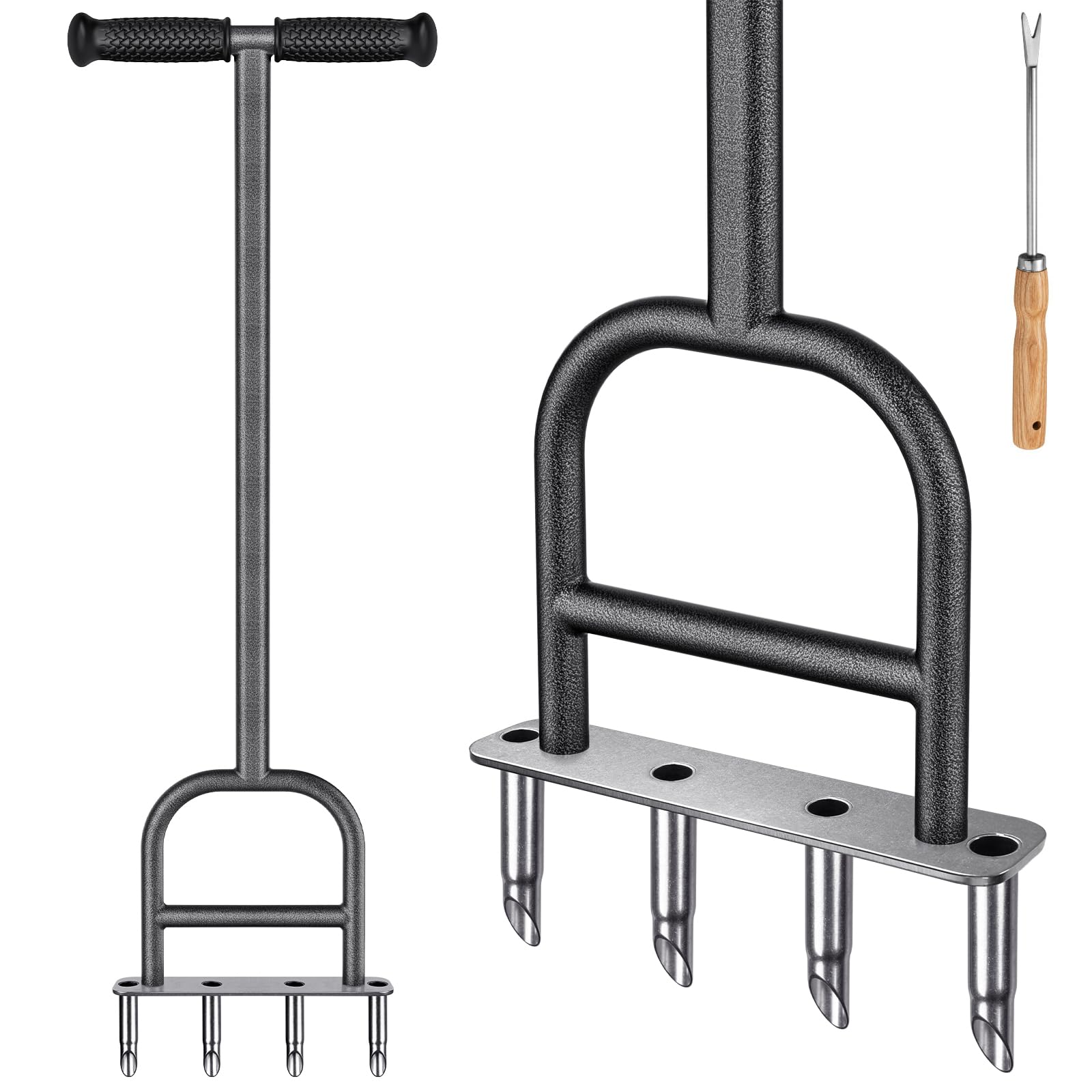
The standard Dolibest 4-corer is a solid entry in the manual core aerator category. It uses full steel construction with a black powder-coated finish and stainless steel bottom section and corers that resist rust. The four corers each measure 3.5 inches long and 0.5 inches in diameter, creating narrow but deep holes. A soft rubber grip on the handle and a foot bar that keeps shoes clear of the coring mechanism add comfort. The package also includes a 12-inch weeding hand tool for cleaning the corers.
Owner experiences are generally positive, with many noting that the tool works well on small to medium projects and that the plug spacing is appropriate. The main complaint revolves around the foot bar design — several users report that the rounded step doesn’t provide enough leverage, making it difficult to achieve full 3.5-inch depth. Users recommend wearing sturdy boots and using a side-to-side rocking motion rather than trying to push straight down. The tool works best when the soil is sufficiently dry, as wet soil causes the corers to clog frequently.
This is a good value option for homeowners with small lawns or specific patchy areas that need coring. It’s not as robust as the Landzie, but it offers four corers at a lower entry point. If you have heavy clay soil, you may find the rounded foot bar frustrating. For loamy or well-prepared soil, it delivers effective results at a budget-friendly price point.
What works
- Stainless steel corers resist rust and maintain sharpness
- Four corers provide efficient coverage per step
- Soft rubber grip minimizes hand fatigue
- Includes weeding tool for cleaning and garden tasks
What doesn’t
- Rounded foot bar design limits leverage for deep penetration
- Can only achieve about 2 inches of depth on hard soil
- Requires rocking motion which can disturb surrounding turf
5. Yard Butler Spike Aerator
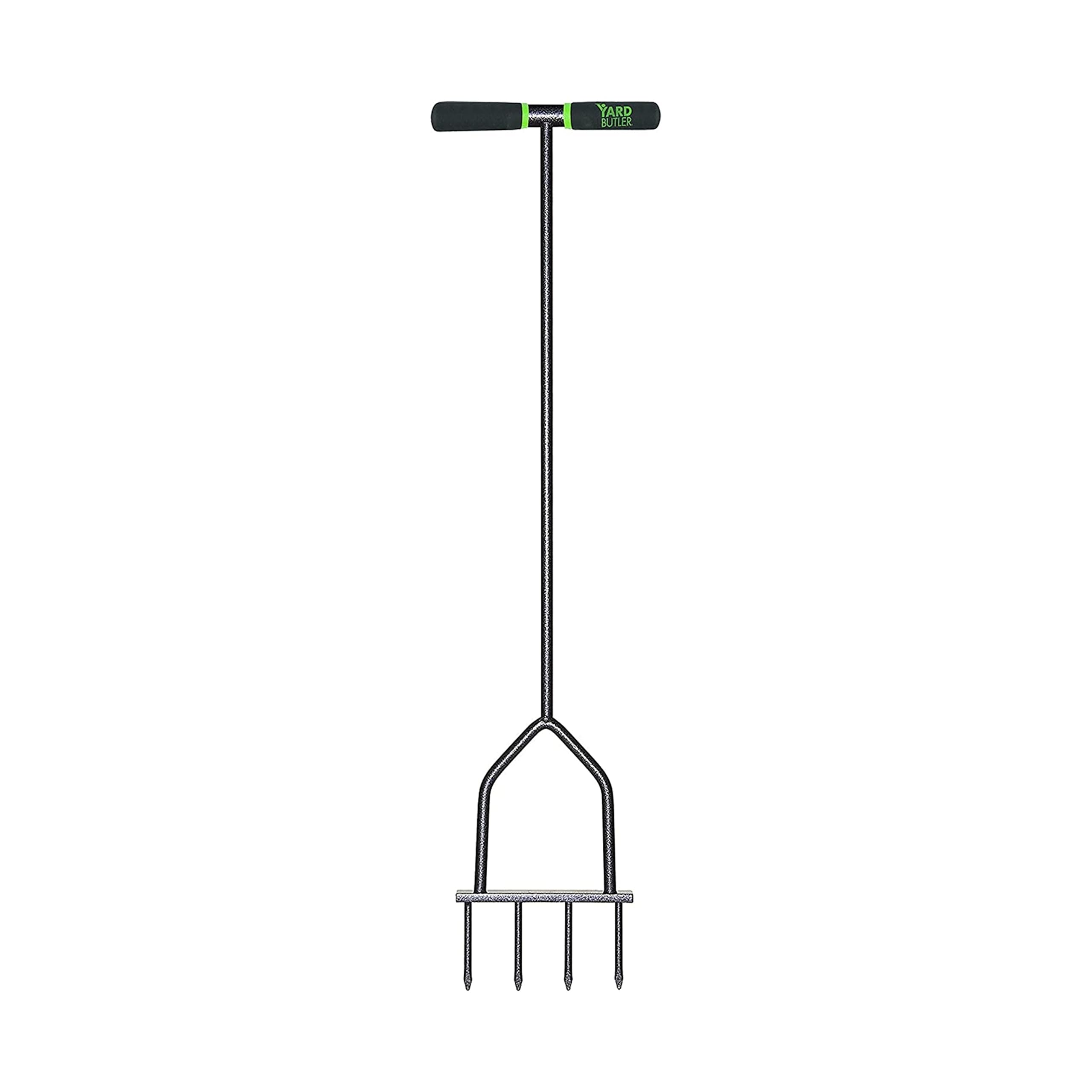
The Yard Butler IM-7C is a classic spike aerator that has been a staple of home lawn care for years. It features a powder-coated steel frame with four 3-inch spike tines that penetrate the soil when you step on the foot bar. The long handle provides leverage without requiring you to bend over excessively. It’s a simple, no-fuss design that works best for light aeration on loamy soil or as a quick treatment between core aeration sessions.
Owner reviews reflect a split between long-time users who love the tool and more recent buyers who report quality issues. Many users praise its effectiveness on moist clay soil, noting visible improvements in grass growth within a week. However, a growing number of reviews describe a decline in manufacturing quality — the steel tines are reportedly softer than in previous years, with some bending after just 15 minutes of use. Users taller than 6 feet find the 36-inch handle causes back soreness.
The Yard Butler is best suited for homeowners with small lawns and relatively loose soil who want a simple, quick aeration method. It’s not designed for heavy compaction or large areas. If your soil is hard clay, you may want to look at a core aerator instead. The declining build quality is a concern, so be prepared to return the tool if you receive a unit with visibly thin metal.
What works
- Simple design is easy to use with minimal setup
- Long handle reduces bending compared to shorter tools
- Works well in moist clay soil for surface aeration
- Lightweight at 2.25 pounds for easy transport
What doesn’t
- Recent batches have softer steel that bends under pressure
- Spike design can compact soil around the hole in dense clay
- 36-inch handle causes back strain for taller users
6. Manual Core Aerator Lawn Tool (LawnVigor)
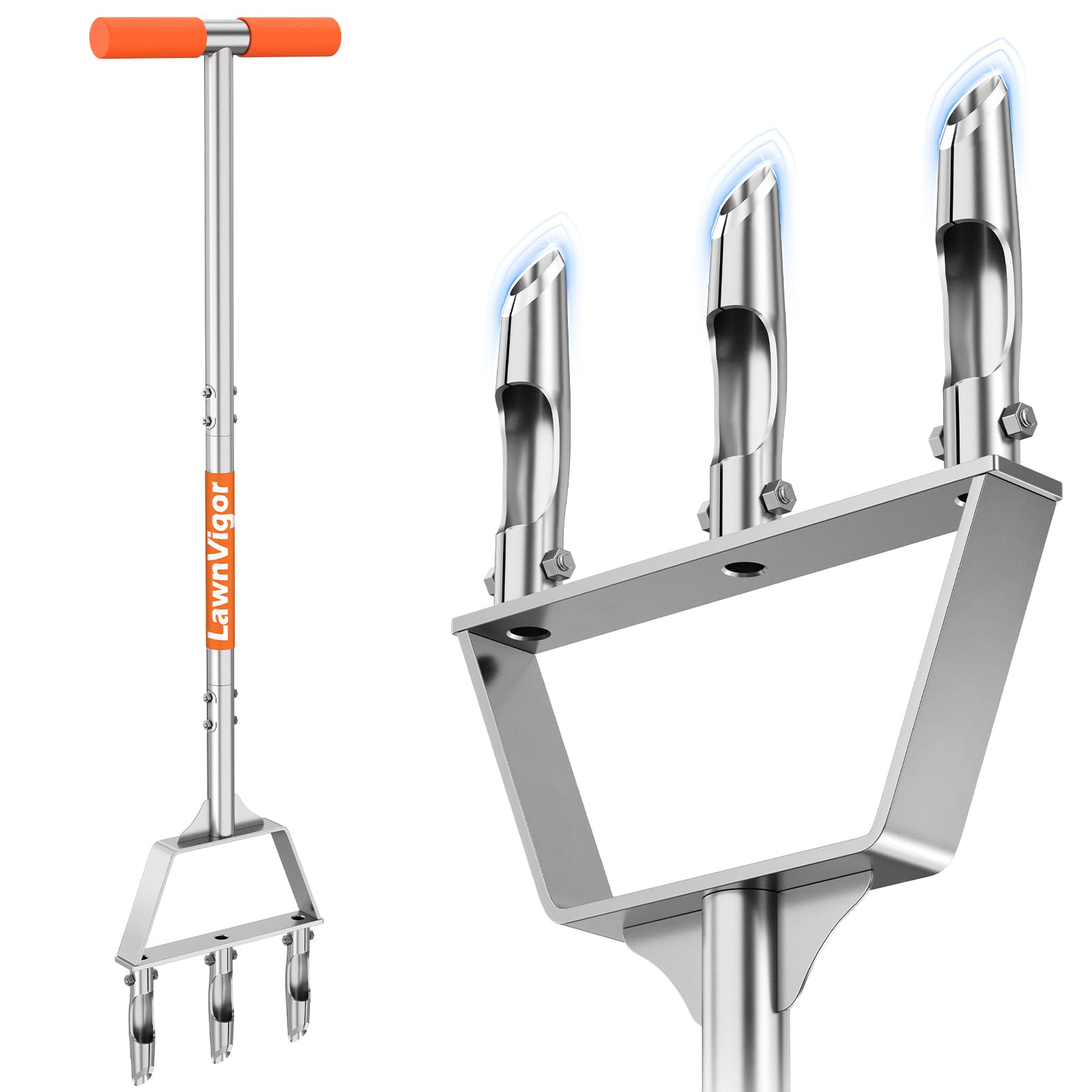
LawnVigor’s manual core aerator is an entry-level option that focuses on essential functionality. It arrives semi-assembled with a powder-coated steel frame and three heat-treated hollow tines that are replaceable. The wide T-handle features foam grips for comfort, and a foot bar provides leverage for pushing the tines into the soil. The manufacturer’s guidance to not rock, twist, or pry the tool side-to-side is important to follow, as lateral stress can damage the tine mounting.
Owner feedback is largely positive, with users praising the sturdy construction and the tool’s ability to pull 3-inch deep cores reliably. The ejection mechanism rarely clogs, and the white plastic inserts mentioned in the instructions help release soil plugs easily. The main criticism is a design issue where the bolts on each side of the foot bar stick out far enough to contact the inside of your knees during use, which becomes annoying during longer sessions. Assembly is quick at about five minutes.
This is a solid starter aerator for small to medium lawns with compacted soil. It won’t match the durability of the Landzie, but it’s priced appropriately for casual use. The knee-clipping bolt issue is a genuine ergonomic flaw, but it can be mitigated by wearing long pants or adding rubber caps to the bolt ends. If you’re new to manual aeration and want to try core aeration without a large investment, this is a reasonable starting point.
What works
- Heat-treated hollow tines pull clean 3-inch cores reliably
- Ejection mechanism rarely clogs during normal use
- Replaceable tines allow for extended tool life
- Quick assembly from semi-assembled state
What doesn’t
- Bolts on foot bar protrude and contact knees during use
- Not designed for lateral rocking or twisting motions
- Plastic inserts can be lost or damaged over time
7. Garden Weasel Rotary Cultivator & Hand Tiller

The Garden Weasel is not a traditional aerator — it’s a 2-in-1 rotary cultivator that aerates, weeds, cultivates, and prepares seedbeds. The tool features rotating blade wheels that spin as you push, breaking apart soil clods and mixing in amendments. The 55-inch handle is one of the tallest in this category, making it comfortable for users of all heights. The all-steel construction with rust-resistant carbon steel blades is built to last, and the tool comes with a lifetime guarantee against defects.
Owner reviews consistently highlight the Garden Weasel’s ability to cut garden prep time in half. It excels at loosening compacted surface soil, removing small weeds, and preparing soil for reseeding. The blades are interchangeable — you can use 1, 2, or 3 tines depending on the task. The main limitation is that it’s a surface tool — it doesn’t pull deep cores like a plug aerator. Users with limited strength or mobility may find the tool requires significant effort to push through heavy clay.
The Garden Weasel is best for gardeners who need a versatile tool for multiple tasks — soil prep, weeding, and light aeration. It’s not a replacement for a core aerator on heavily compacted soil, but it’s an excellent supplement for keeping topsoil loose between aeration sessions. The American design and lifetime warranty add confidence. If you’re looking for one tool that handles several garden jobs, this is a strong choice.
What works
- 2-in-1 design handles aeration, weeding, and cultivation
- 55-inch handle accommodates tall users without back strain
- Interchangeable tine system adapts to different tasks
- Lifetime warranty against defects in materials
What doesn’t
- Surface-level only — cannot pull deep soil cores
- Requires moderate upper body strength in compacted soil
- 55-inch handle may be too tall for shorter users
Hardware & Specs Guide
Hollow Tine vs. Solid Spike
The most important spec is the tine type. Hollow tines (corers) remove a plug of soil, actively relieving compaction by creating space for roots and water. Solid spike tines simply push soil aside, which can increase compaction around the hole in clay-heavy soils. For genuine compaction relief, choose a tool with hollow tines. Spike tools are acceptable for sandy or loamy soil where compaction is less of a concern.
Number of Tines and Spacing
Manual aerators typically have 3 or 4 tines. A 3-tine tool requires less force per step but covers less ground per step. A 4-tine tool is more efficient for larger areas but requires more downward force. The spacing between tines determines how close the holes are — closer spacing provides more thorough aeration but may weaken the turf if done too aggressively. Aim for 4-6 inches of spacing between holes for most lawns.
Handle Height and Material
Handle height directly impacts ergonomics and comfort during extended use. A handle that’s too short forces you to lean forward, straining your lower back. Look for handles between 40 and 45 inches if you’re over 5’10”. Foam or rubber grips significantly reduce hand fatigue compared to bare metal or plastic. T-handles provide more control than D-handles for vertical push motions.
Foot Bar Design
The foot bar transfers your body weight into the tines. A wide, flat foot bar distributes pressure evenly and provides a stable platform for pushing. Rounded or narrow foot bars concentrate force into a smaller area, making it harder to apply leverage and causing your foot to slip. Some foot bars are positioned too close to the tines, causing shoes to interfere with core ejection — an elevated or crossbar design solves this.
FAQ
How deep should a home lawn aerator penetrate?
Can I use a spike aerator on clay soil?
How often should I aerate my home lawn?
Should I water before using a manual aerator?
Final Thoughts: The Verdict
For most gardeners, the home lawn aerator winner is the Landzie Original because its self-cleaning stainless steel hollow tines, no-assembly setup, and replaceable parts make it a true long-term investment for any yard with compacted soil. If you want the efficiency of multi-corer coverage with automatic plug collection, grab the Dolibest with Storage Tray. And for large properties where manual aeration isn’t practical, nothing beats the Brinly SAT2-40BH-P for covering ground quickly behind a riding mower.