
Dragging 50-pound bags of granular fertilizer across a muddy food plot is a workout you don’t need. Liquid fertilizers solve that by delivering precise nutrition in a form that plants can absorb almost immediately, giving you faster green-up and more controlled application across clover, brassicas, and cereal grains. The trade-off is that you have to read the NPK ratio and the micronutrient profile with the same attention you’d give a rifle scope.
I’m Rikta — the co-founder and writer behind Lawn Gear Lab. I’ve spent hundreds of hours cross-referencing manufacturer guarantees, comparing NPK analyses, studying soil chemistry data, and filtering through thousands of owner reports to pinpoint which liquid formulations actually perform in real food plot conditions.
If you are planting for deer, turkeys, or waterfowl, you need a product that balances quick foliar uptake with long-lasting root feeding. The best way to cut through the noise is to compare the top contenders side by side, and that is exactly what this guide to the best liquid fertilizer for food plots delivers.
How To Choose The Best Liquid Fertilizer For Food Plots
Selecting a liquid fertilizer for a food plot is different from buying for a lawn. You are managing a temporary crop that needs to attract wildlife, not just stay green. The NPK ratio, nitrogen release rate, and application volume determine whether your plot thrives or fizzles by mid-season.
Match the NPK Ratio to Your Crop Phase
High-nitrogen formulas (like 28-0-0 or 20-0-0) drive rapid leaf growth in grasses and cereal grains such as oats and winter wheat. Balanced formulas (10-10-10 or 20-20-20) support broadleaf crops like clover, alfalfa, and brassicas, which need phosphorus for root establishment and potassium for stress tolerance. Using a high-N blend on clover can burn the leaves and suppress nitrogen-fixing bacteria.
Prioritize Slow-Release Nitrogen Technology
Liquid fertilizers can dump all their nitrogen at once, causing a quick flush that fades fast. Premium products blend quick-release ammonium nitrate with slow-release methylene urea or polymer-coated nitrogen. This split delivers visible greenup within three days while sustaining growth for four to six weeks, reducing how often you have to drag the sprayer back into the plot.
Check the Volume-to-Coverage Ratio
A 32-ounce bottle might cover 2,000 square feet, while a gallon jug treats 5,000 to 25,000 square feet depending on mixing ratio. Large food plots of half an acre or more demand concentrated formulas (like 20-20-20 powder or 28-0-0 liquid) that reduce total gallons you need to haul. Always calculate your plot’s square footage and read the mixing chart before buying.
Quick Comparison
On smaller screens, swipe sideways to see the full table.
| Model | Category | Best For | Key Spec | Amazon |
|---|---|---|---|---|
| PetraMax 28-0-0 | High-Nitrogen | Fast green-up on cereal grains | 70% quick / 30% slow release | Amazon |
| Jack’s Professional 20-20-20 | Balanced Powder | Heavy-feeding food plot crops | 25 lbs powder, 400 oz yield | Amazon |
| Urban Farm Liquid Lawn 13-1-2 | Organic-Rich | Soil health + pasture grasses | Includes mycorrhizae + humic acid | Amazon |
| Pennington Alaska Morbloom 0-10-10 | Bloom Booster | Flowering food plot brassicas | 0-10-0 + 0-0-10 ratio | Amazon |
| Covington 10-10-10 | Balanced All-Purpose | Small plots & container food plots | 32 oz concentrate, 1:200 mix | Amazon |
| TPS Clover Fertilizer | Clover-Specific | Clover-only food plot maintenance | 1 gallon, 128 oz liquid | Amazon |
| Whitetail Institute 30-06 Mineral | Mineral Block | Supplementing deer mineral intake | 20 lb block, 4-month supply | Amazon |
In‑Depth Reviews
1. PetraMax Liquid Nitrogen Fertilizer 28-0-0

The PetraMax 28-0-0 is the highest nitrogen concentration in this lineup, delivering a 2-in-1 blend with 70% quick-release ammonium nitrogen for immediate greenup and 30% slow-release methylene urea for sustained feeding. At a maintenance rate of 5 ounces per gallon, one gallon treats up to 25,600 square feet, making it extremely efficient for large cereal grain food plots like oats, wheat, or rye.
Owner feedback confirms that yellow, nitrogen-deficient grass turns deep green within 3 to 5 days, and the slow-release component reduces application frequency to every 4 to 6 weeks. The formula works across warm- and cool-season grasses, so it is equally effective on spring oats and fall winter wheat. PetraTools includes a 100% satisfaction guarantee with USA-based customer support from Carlisle, Pennsylvania.
The biggest drawback is that the 28-0-0 ratio is specific to nitrogen-hungry crops. Using it on established clover or alfalfa can burn leaves and upset the nitrogen-fixing bacteria balance. It also requires a separate foliar sprayer calibrated to the 1:20 correction ratio for best results, adding a small step to your application routine.
What works
- Highest nitrogen concentration in the review for fast leaf expansion
- Slow-release component extends feeding window significantly
- Massive coverage per gallon lowers trips to refill
What doesn’t
- Not suitable for clover or legume food plots
- Requires precise calibration of a sprayer to avoid burning
2. Jack’s Professional 20-20-20 Water-Soluble Fertilizer

Jack’s Professional 20-20-20 is a water-soluble powdered concentrate that delivers a perfectly balanced NPK ratio along with chelated micronutrients including iron, manganese, and zinc. The powder dissolves almost instantly in water, and at 1 teaspoon per gallon (250 ppm), a single 25-pound bag yields hundreds of gallons of liquid feed — ideal for large food plots where cost per acre matters.
Seasoned greenhouse growers have used Jack’s exclusively for decades, and hobbyists report that a light application revives heat-stressed brassicas and corrects yellowing in clover within days. The 20-20-20 ratio supports heavy-feeding crops such as kale, turnips, and rape without overloading any single nutrient. Because it is dry, shipping is cheaper and shelf life is longer than pre-mixed liquid jugs.
The main downside is that Jack’s is a straight soluble salt with no slow-release technology. You must apply it more frequently — roughly every 10 to 14 days during active growth — to maintain steady nutrition. It also requires a clean sprayer and careful measuring to avoid salt burn at higher concentrations.
What works
- Cost-effective large bag produces hundreds of gallons of feed
- Balanced 20-20-20 suits most food plot crop types
- Includes full micronutrient package for robust plant health
What doesn’t
- No slow-release mechanism requires frequent reapplications
- Salt content can burn if mixing ratio is not precise
3. Urban Farm Fertilizers Liquid Lawn 13-1-2

Urban Farm Fertilizers Liquid Lawn is a micro-brewed formulation that goes beyond NPK by including mycorrhizal fungi, humic acid, and a suite of enzymes to improve soil biology. The 13-1-2 ratio provides a solid nitrogen dose for pasture grasses and cereal grains while keeping phosphorus low to avoid runoff issues in sensitive watersheds near food plots.
Owners report that a single gallon applied with a hose-end sprayer treats 5,000 square feet up to 8 times, and visible greening occurs within 3 to 4 days even on thin or stressed turf. The humic acid component chelates micronutrients in the root zone, making iron and zinc more available — a real advantage on alkaline soils where clover and chicory often show yellowing.
The low phosphorus (1%) means this is not ideal for brassica or legume plots that need higher P for root and bloom development. Price increases since 2020 have made it less of a budget option, though the biological additives still set it apart from basic liquid nitrogen products.
What works
- Mycorrhizae and humic acid improve long-term soil health
- Low phosphorus reduces environmental runoff risk
- Hose-end sprayer makes application fast and even
What doesn’t
- Low phosphorus content not sufficient for flowering food plot crops
- Price has increased notably in recent years
4. Pennington Alaska Morbloom 0-10-10

Pennington Alaska Morbloom uses a zero-nitrogen, high-phosphorus and potassium formula (0-10-10) designed to shift a plant’s energy from leaf growth to root and flower development. For food plot brassicas like turnips, radishes, and kale that need to bulb up before hunting season, this fertilizer prioritizes the below-ground biomass deer dig for in late fall.
Long-term users report that applying Morbloom during the pre-bloom stage produces visibly thicker flower clusters and larger root bulbs. The liquid mixes cleanly with water and has a low salt index, so it is safe for foliar feeding without burning tender leaves. It is also effective on berry-producing shrubs and flowering perennials planted in plot edges.
The total lack of nitrogen means this formula should never be used as the sole fertilizer for leafy greens or grass plots. It works best as a seasonal supplement or bloom-phase finisher, not a stand-alone food plot regimen. Overuse before adequate leaf development can stunt overall plant size.
What works
- Zero nitrogen pushes energy into roots and blooms
- Low salt index allows safe foliar application
- Ideal as a late-season finisher for brassica plots
What doesn’t
- Cannot be used as a standalone general-purpose food plot fertilizer
- Requires careful timing to avoid stunting leaf growth
5. Covington Naturals 10-10-10 All Purpose Liquid Fertilizer

Covington’s 10-10-10 is a balanced, all-purpose liquid concentrate made with food-grade ingredients and a low salt index to minimize root burn. The 32-ounce bottle mixes at 1 ounce per 200 ounces of water (0.5 oz per gallon), making it a straightforward option for small food plots, garden beds, and young transplants where you want equal doses of N, P, and K without guessing ratios.
Owner reviews highlight how quickly the formula works on stressed trees and vegetable starts — a nearly dead dogwood showed new leaf and berry growth within 10 days. For food plot use, it works well on mixed plantings of clover, chicory, and small grains where a balanced ratio supports both leafy growth and root development simultaneously.
The 32-ounce volume is small for plots larger than a few hundred square feet. At the recommended dilution, a single bottle covers roughly 1,000 square feet per application, so you will need multiple bottles for a half-acre plot. This pushes the per-acre cost higher than more concentrated options.
What works
- Balanced 10-10-10 suits mixed crop food plots well
- Food-grade ingredients and low salt index reduce burn risk
- Fast visible response in as little as 10 days
What doesn’t
- Small bottle volume limits coverage per dollar
- Requires frequent reapplication for sustained growth
6. TPS Nutrients Clover Fertilizer
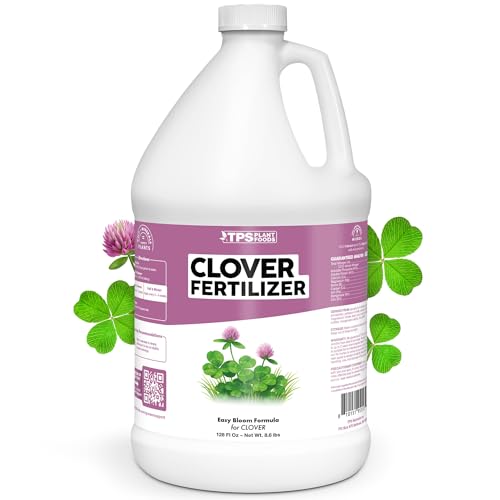
TPS Clover Fertilizer is formulated specifically for pure clover stands, including microclover and Dutch white clover, which have different nutrient requirements than grass-dominated plots. The gallon jug provides 128 ounces of ready-to-mix liquid designed to encourage dense, vibrant coverage and balanced root-to-leaf growth without over-stimulating nitrogen competition from grasses.
User reports indicate that a 2-tablespoon-per-gallon weekly application fills in bare patches within two weeks and produces noticeably thicker, softer clover that holds up better to deer grazing pressure. The formula is made in the USA by TPS Nutrients and works well as a spot treatment or full-plot feed depending on your sprayer calibration.
The label does not list a full NPK guarantee on the front, so you are trusting the brand’s proprietary blend rather than a standardized ratio. It is also not designed for mixed plots containing brassicas or cereal grains, meaning you would need a second fertilizer for multi-species food plots.
What works
- Tailored specifically to clover nutritional needs
- Fills bare patches quickly with consistent application
- Large 1-gallon volume covers substantial plot area
What doesn’t
- No standardized NPK ratio disclosed on packaging
- Not suitable for mixed brassica or grain food plots
7. Whitetail Institute 30-06 Mineral and Vitamin Supplement

Whitetail Institute’s 30-06 is a 20-pound mineral block, not a liquid fertilizer, but it serves a critical role alongside liquid feed by delivering macro and trace minerals (calcium, phosphorus, magnesium, copper, zinc) plus vitamins A, D, and E specifically formulated for antler growth, pregnancy, and lactation in deer. Placing a block near a food plot provides the mineral diversity that liquid NPK alone cannot supply.
Users report that deer, rabbits, and even foxes visit the lick regularly, with a single block lasting roughly four months depending on rainfall and soil moisture. The added scent and flavor attractants help deer locate the block quickly, which can increase plot traffic and overall herd health. It is especially useful in spring and summer when does are lactating and bucks are growing antlers.
The block is not a substitute for a liquid fertilizer program — it provides no significant nitrogen, phosphorus, or potassium for plant growth. Some users also note that individual blocks vary in density, with a small number disintegrating prematurely in heavy rain.
What works
- Supplies essential minerals missing from standard NPK fertilizers
- Long-lasting block reduces maintenance visits to the plot
- Scent attractants improve deer traffic and plot utilization
What doesn’t
- Mineral block provides zero plant nutrition for the food plot
- Some blocks disintegrate prematurely in wet conditions
Hardware & Specs Guide
NPK Ratio Analysis
The first number (N) drives leaf and stem growth in cereal grains and grass plots. The second (P) supports root establishment and bloom formation in brassicas and legumes. The third (K) improves disease resistance and stalk strength. For a mixed-species food plot, a balanced 10-10-10 or 20-20-20 is the safest starting point. Switch to a high-N (28-0-0) for pure grain plots and a bloom booster (0-10-10) when root crops need to size up.
Slow-Release vs. Quick-Release
Quick-release liquid nitrogen (ammonium nitrate or urea) greens up a plot in 2 to 5 days but can leach out after a heavy rain. Slow-release forms (methylene urea or polymer coatings) extend feeding for 4 to 6 weeks. Products like PetraMax 28-0-0 blend both types so you get immediate color while reducing reapplication frequency. Straight soluble powders like Jack’s 20-20-20 have no slow-release component and must be applied more often.
FAQ
Can I use a liquid lawn fertilizer on my food plot?
How often should I apply liquid fertilizer to a food plot?
Is a mineral block necessary if I already use liquid fertilizer?
Final Thoughts: The Verdict
For most food plot managers, the best liquid fertilizer for food plots winner is the PetraMax 28-0-0 because its 70/30 quick-slow release nitrogen delivers rapid greenup and sustained feeding on cereal grain plots. If you want a balanced option for mixed-species food plots, grab the Jack’s Professional 20-20-20 for its unmatched cost-per-acre value as a powder concentrate. And for a clover-heavy plot, nothing beats the TPS Clover Fertilizer for targeted nutrition that keeps the stand lush and grazing-resistant.