
A kitchen scrap pile that reeks, attracts fruit flies, and takes forever to break down — that’s the reality most composters face without the right bin. The difference between a smelly chore and a seamless part of your day comes down to one decision: choosing a container that actually controls airflow, seals in odors, and fits your routine. Whether you’re collecting scraps on the counter or running a full backyard operation, the mechanics of the bin dictate everything from how often you empty it to whether your neighbors complain about the smell.
I’m Rikta — the co-founder and writer behind Lawn Gear Lab. I spend my time comparing the engineering behind each model, studying composting science and airflow dynamics, and analyzing thousands of owner feedback points to separate marketing claims from real-world performance.
After evaluating capacity, sealing mechanisms, material durability, and ease of assembly across dozens of models, the right compost bin boils down to whether you need a countertop caddy for daily scraps or a high-volume tumbler that can handle your entire yard.
How To Choose The Best Compost Bin
Picking a bin isn’t just about grabbing the biggest one you find. The right choice depends on where you’ll place it, how much waste you generate, and how much effort you want to put into turning and aerating the pile. Here are the key specs that separate an efficient composter from a frustrating one.
Capacity and household size
A 1.5-gallon countertop bin fills up fast in a family of four, requiring emptying every two to three days. For outdoor bins, a 43-gallon dual chamber unit gives you room to let one side finish decomposing while you fill the other. The 80-gallon open-bottom models work best for heavy yard waste and large properties where you don’t need to haul finished compost far.
Odor control and sealing mechanism
Countertop bins rely on either charcoal filters or airtight gaskets to trap smells. Filter-free designs with tight-sealing lids avoid the recurring cost of replacements but may need more frequent cleaning. Outdoor tumblers depend on proper ventilation — not complete sealing — to keep anaerobic bacteria from creating the worst odors. A bin with too few air holes will turn your pile into a stinky, slimy mess.
Material durability for your climate
Powder-coated carbon steel provides rust resistance and a heavier feel, but plastic bins handle cold winters better because they don’t transfer temperature as aggressively. High-quality PP materials resist UV damage better than cheaper recycled plastics. If you live in a hot climate, black plastic absorbs heat and speeds up decomposition, but in extreme heat it can warp if the walls are too thin.
Aeration and turning mechanics
Stationary bins with open bottoms rely on ground contact for aeration and need manual turning with a pitchfork. Tumbling composters with dual chambers let you rotate the bin to mix the pile, which introduces oxygen and accelerates breakdown. Units with deep grooves on the drum surface make spinning easier when the bin is fully loaded. For serious composters, a built-in thermometer helps you monitor internal temperature — you want 110–160°F for active decomposition.
Quick Comparison
On smaller screens, swipe sideways to see the full table.
| Model | Category | Best For | Key Spec | Amazon |
|---|---|---|---|---|
| EJWOX 43 Gal Tumbler | Tumbler | Thermometer monitoring | 43 Gal / Thermometer | Amazon |
| F2C 80 Gal Stationary | Stationary | Large yard waste volume | 80 Gal / 80 air vents | Amazon |
| Nova Microdermabrasion 43 Gal Tumbler | Tumbler | Dual chamber convenience | 43 Gal / Dual chamber | Amazon |
| KIBAGA 1.1 Gal Countertop | Countertop | Rust-proof steel design | 1.1 Gal / Charcoal filter | Amazon |
| Dullrout 1.13 Gal Countertop | Countertop | Pop-up lid one-handed use | 1.13 Gal / Pop-up lid | Amazon |
| Blue Ginkgo 1.32 Gal Countertop | Countertop | Filter-free odor containment | 1.32 Gal / Inner colander | Amazon |
| Full Circle 1.5 Gal Countertop | Countertop | Freezer/fridge storage | 1.5 Gal / Patented airflow | Amazon |
In‑Depth Reviews
1. EJWOX 43 Gallon Dual Chamber Tumbling Composter

The EJWOX tumbler stands out because of the built-in compost thermometer that visually shows you the internal temperature — a feature serious composters use to gauge whether the pile is in the active 110–160°F zone. The dual chamber design allows you to let one side finish while you fill the other, cutting total composting time significantly. The deep groove pattern on the drum is 50mm deep, making rotation smoother even when the bin is packed full.
Assembly takes roughly 45 minutes and requires only a Phillips screwdriver, though having a second set of hands helps with aligning the panels. The galvanized steel base adds stability that keeps the unit upright during heavy storms, and the tough plastic walls handle direct sun without warping. Some users noted that the thermometer reads slightly lower than the actual internal pile temperature, but it still provides a reliable reference for tracking progress.
For households generating both kitchen scraps and garden waste, this unit delivers the best mix of monitoring capability and throughput. You can produce a wheelbarrow of rich compost in about a month during warm weather if you tumble it every few days and maintain the right carbon-to-nitrogen balance.
What works
- Thermometer provides real-time compost temperature feedback
- Dual chambers allow continuous composting
- Stable metal base keeps unit secure when spinning
What doesn’t
- Assembly requires patience with sparse picture-only instructions
- Thermometer accuracy is slightly off compared to internal pile temps
2. F2C 80 Gallon Outdoor Compost Bin
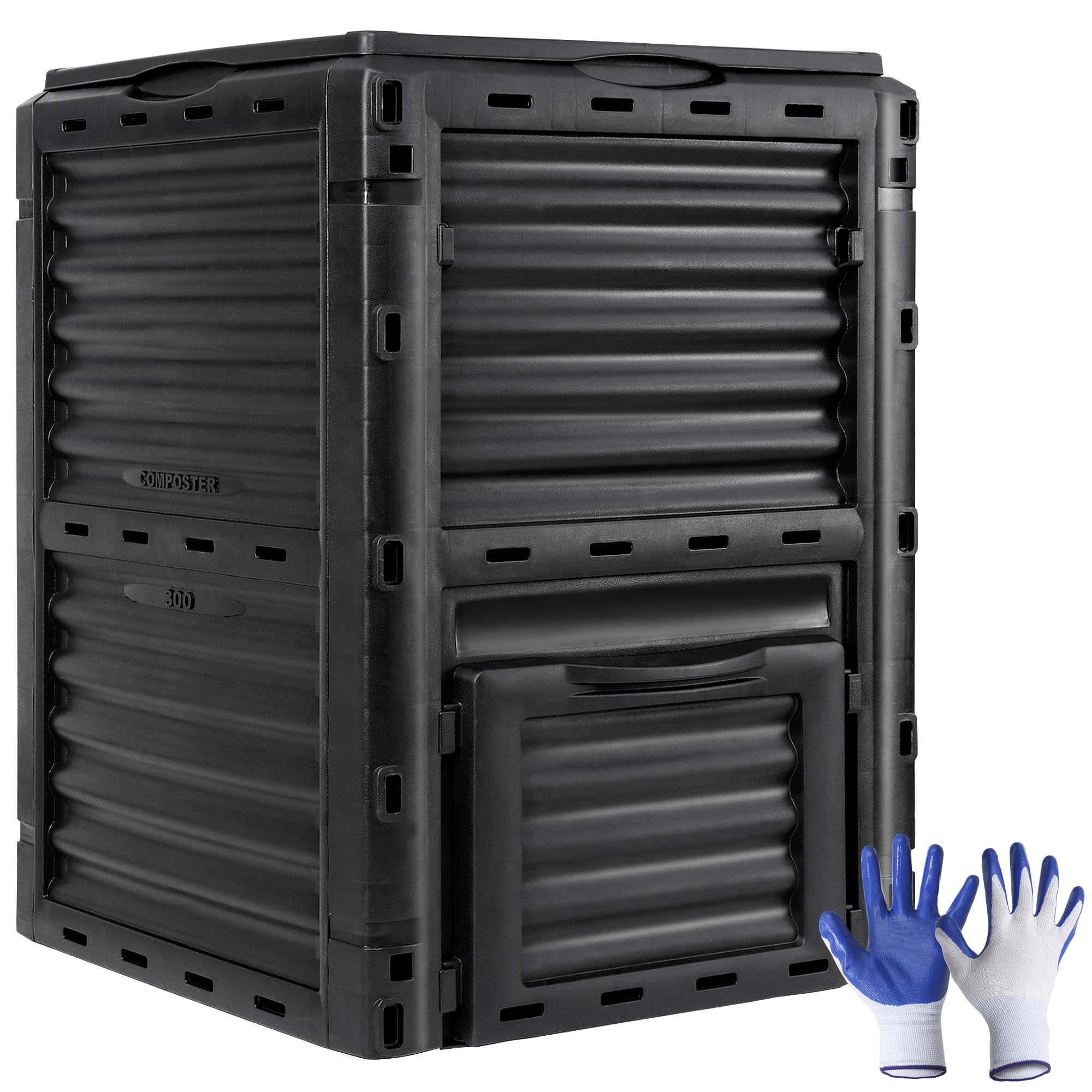
The F2C 80-gallon bin is built for volume — if you have a large yard, heavy garden waste, or even animal bedding to compost, this open-bottom design handles it without the cramped feel of smaller tumblers. The 80 air vents combined with deep fins on the walls create serious airflow through the pile, which prevents the anaerobic conditions that produce bad smells. Assembly clocks in at around five minutes with a rubber mallet, making it one of the quickest outdoor bins to set up.
The open bottom means the pile sits directly on the ground, which allows worms and beneficial microbes to enter from the soil and accelerate decomposition. That same design, however, means you’ll need to weight the lid with a brick or rock to keep raccoons and wind from flipping it open until the bin is heavy enough to stay put on its own. The bottom hatch is useful for harvesting finished compost, but once opened, it’s difficult to re-latch until the bin is empty.
This unit uses BPA-free PP plastic that holds up well in cold winters and full sun, though the plastic panels feel a bit thin compared to tumblers. For gardeners who want to process yard debris without turning a pile with a pitchfork, this stationary bin provides a simple, low-effort system that produces vitamin-rich soil in about four to six weeks during warm seasons.
What works
- Massive 80-gallon capacity for large properties
- 80 vents provide excellent aeration
- Five-minute assembly is the fastest in this category
What doesn’t
- Plastic panels feel flimsy and corners may pop open
- Bottom hatch hard to reclose while bin is full
3. Nova Microdermabrasion 43 Gallon Dual Chamber Tumbler

The Nova Microdermabrasion tumbler delivers split-chamber composting with a steel frame that provides a more solid feel than all-plastic competitors. You can fill one side with fresh greens and browns while the other side cooks, which effectively doubles your throughput. The tumbling rotation mixes the pile thoroughly, preventing the clumping that slows down decomposition in stationary bins. This unit includes a pair of garden gloves, a nice bonus if you’re starting from scratch.
Assembly is the main trade-off here — with over 50 screws, expect to spend close to an hour with a power drill or electric screwdriver. The instructions don’t explicitly mention installing the middle divider early in the process, so it’s worth noting that step to avoid disassembling later. Once assembled, the all-black body absorbs heat well, which helps maintain higher internal temperatures, and the sliding doors at each chamber make it easy to add material or scoop out finished compost.
For a mid-sized household with a garden, this unit produces usable compost in just over a month during warmer months. The dual chamber system keeps the rodent resistance stronger than open-bottom bins, and the stable legs keep the tumbler from tipping even when fully loaded. It’s a solid pick for anyone who wants the efficiency of continuous composting without the premium price of high-end tumblers.
What works
- Dual chambers enable continuous batch composting
- Steel frame adds stability compared to all-plastic tumblers
- Sliding doors make filling and emptying straightforward
What doesn’t
- Assembly takes over an hour with 50+ screws
- Chamber doors could be larger for easier emptying
4. KIBAGA 1.1 Gallon Countertop Compost Bin
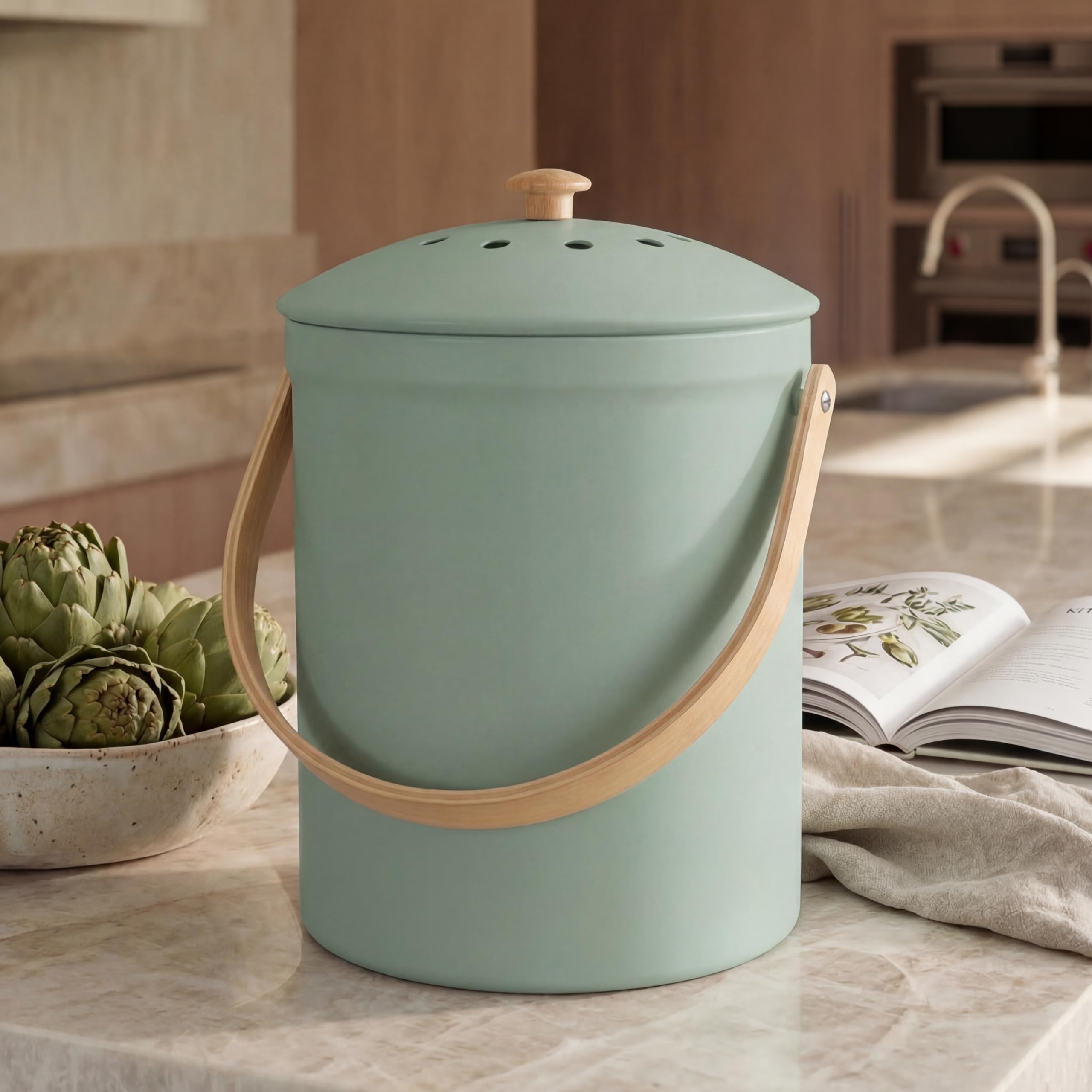
The KIBAGA countertop bin uses a powder-coated carbon steel body that won’t rust, even when you’re dumping wet coffee grounds and melon rinds daily — a major advantage over metal bins that develop rust spots after a few months. The charcoal filter compartment located under the lid traps odors before they escape, and the lid has small air holes that provide the aeration needed to keep the pile from going anaerobic. Two replacement filters come in the box, giving you several months before you need to buy more.
The 1.1-gallon capacity is compact enough to sit on a small countertop without hogging space, yet holds about one to two weeks of food waste for a couple. The wooden handle and knob add a natural aesthetic that blends well with farmhouse or rustic kitchen decor. Cleaning is straightforward — remove the filter, wash the bin with soap and water, and let the filter dry upright before reinstalling. Some users noted that the lid is permanently attached, which makes thorough scrubbing around the hinge area a bit awkward.
For anyone who wants a countertop caddy that looks like a permanent kitchen fixture rather than a plastic tub, this bin delivers the best balance of aesthetics and odor control.
What works
- Powder-coated steel resists rust far better than painted metal
- Charcoal filter eliminates odors without gaskets
- Attractive sage color with wooden accents fits kitchen decor
What doesn’t
- Permanently attached lid makes deep cleaning harder
- Filter replacement instructions are sparse in the manual
5. Dullrout 1.13 Gallon Countertop Compost Bin

The Dullrout bin solves a specific annoyance: opening a compost container when your hands are covered in raw chicken juice or sticky fruit pulp. The spring-loaded pop-up lid opens with a single button push and stays upright, so you don’t have to touch anything. The 1.13-gallon capacity is ideal for a family of three to four, requiring emptying every two to three days depending on how many vegetable peels you generate. The stainless steel sides resist fingerprints and match most modern kitchen appliances.
The removable inner bucket makes emptying straightforward — you can lift it out, dump the contents into your outdoor pile, and rinse it without moving the whole bin. A standard compostable bag fits inside and can be tucked under the lid rim for a clean liner system. One minor issue is that food bits can get trapped between the outer bin and the inner bucket around the lip, requiring occasional extra attention during cleaning.
For cooks who value one-handed operation and a sleek stainless look, this bin offers the most convenient daily-use experience among countertop options. It’s compatible with compostable bags, which keeps the interior spotless and reduces the frequency of deep cleaning.
What works
- Pop-up lid operates with one hand for messy kitchen tasks
- Removable inner bucket makes emptying and cleaning easy
- Stainless steel resists fingerprints and looks modern
What doesn’t
- Food bits can get trapped between inner and outer bin
- Rubber feet may detach on some units
6. Blue Ginkgo 1.32 Gallon Countertop Compost Bin

The Blue Ginkgo bin skips the charcoal filter entirely and relies on a tight-sealing lid and an inner colander design to keep smells contained. The removable inner colander elevates food scraps about an inch above the bottom, allowing liquids to drain away from the solid waste — which prevents the slimy, soggy bottom that makes some bins stink. The square shape fits more efficiently on counters and under cabinets compared to round bins of similar capacity, and the compact handles don’t protrude awkwardly.
The 1.32-gallon size suits a four-person household, filling up in about two to three days with heavy fruit and vegetable use. The lid seals tightly with a recessed pull tab that makes opening smooth, and there’s a carry handle on the bin itself for easy transport to the outdoor pile. Since there are no filters to replace, your long-term cost stays at zero after the initial purchase. The main drawback is that the inner basket can create suction against the outer bin when you try to lift it out, requiring two hands to separate them.
For composters who want a low-maintenance system without recurring filter purchases, this Korean-made bin delivers excellent odor containment through pure mechanical design. The smooth plastic interior rinses clean easily and is dishwasher safe, making it one of the easiest countertop bins to maintain over the long term.
What works
- No charcoal filters to replace — zero recurring cost
- Inner colander elevates scraps to prevent sogginess
- Square shape fits counter corners and under cabinets efficiently
What doesn’t
- Inner basket suction requires two hands to remove
- Must carry entire bin outside to avoid drips from colander holes
7. Full Circle Fresh Air 1.5 Gallon Countertop Compost Bin

The Full Circle Fresh Air bin flips the standard countertop formula by using active airflow instead of sealing everything tight. The patented design includes holes on top and a grate at the bottom to let air circulate through the scraps, which slows decomposition and dramatically reduces odors — a counterintuitive approach that works surprisingly well. The 1.5-gallon capacity makes it the largest countertop bin in this lineup, yet its compact footprint fits inside most freezer doors, which is where many owners store it to freeze scraps and eliminate any smell completely.
The lid opens with a push button and stays up for one-handed filling, then closes with a tap. Five compostable bags are included to get you started, and the soft recycled-plastic body lets you push the bottom to pop out frozen scraps without thawing — a clever trick for those who store the bin in the freezer. The lightweight 2.5-pound build makes it easy to carry to your outdoor pile. Being so small, you’ll need to empty it every one to two days for a family of three, which may be either a feature or a limitation depending on your routine.
This bin is ideal for anyone who wants to eliminate fruit flies without relying on filters or gaskets. The airflow design genuinely keeps odors at bay, and the freezer compatibility gives you the option of zero-smell storage. For small households that generate modest daily scraps, this is the best pick for a fresh, no-smell countertop experience.
What works
- Patented airflow design reduces odors without filters
- Fits in standard freezer doors for zero-smell storage
- Soft body allows easy removal of frozen scraps
What doesn’t
- Small capacity requires frequent emptying for larger families
- Some units reported missing lid components in packaging
Hardware & Specs Guide
Capacity vs. Household Size
Countertop bins ranging from 1.1 to 1.5 gallons fit households of two to four people if emptied every two to four days. Outdoor tumblers with 43 gallons support continuous composting for a family of four with a garden, while the 80-gallon stationary bin handles heavy yard waste from larger properties. The right capacity depends entirely on your waste generation rate and how often you’re willing to trek to the pile.
Aeration and Oxygen Flow
Airflow is the single most important factor for odor control and decomposition speed. Countertop bins either use passive airflow holes (Full Circle) or charcoal filters (KIBAGA) to manage smells. Outdoor bins rely on ventilation holes, open-bottom design, or tumbling action to introduce oxygen. The EJWOX and Nova tumblers have deep grooves that mix the pile with each rotation, while the F2C’s 80 vents provide static aeration without turning.
Material and Climate Resistance
Powder-coated carbon steel (KIBAGA) resists rust but conducts temperature, making it less ideal for freezing garages. BPA-free PP plastic (F2C, Nova, EJWOX) handles UV exposure and temperature swings better and won’t crack in cold winters. Stainless steel with plastic components (Dullrout) offers a premium look but requires care to prevent water trapping between pieces. The Full Circle bin uses recycled plastic that feels softer but holds up well indoors.
FAQ
Why does my compost bin smell even though I empty it regularly?
Should I choose a tumbling composter or a stationary bin with an open bottom?
Can I put meat, dairy, or cooked food in my compost bin?
How do I clean my countertop compost bin without causing rust or damage?
Final Thoughts: The Verdict
For most gardeners, the compost bin winner is the EJWOX 43 Gallon Dual Chamber Tumbler because the built-in thermometer gives you direct feedback on pile temperature — the single most useful metric for speeding up decomposition. If you want a rust-proof countertop caddy that looks great and never smells, grab the KIBAGA 1.1 Gallon. And for large-scale yard waste processing with minimal effort, nothing beats the F2C 80 Gallon Stationary Bin.