
Container gardens are closed ecosystems: every drop of water, every root hair, every nutrient pocket stays inside that pot. The wrong dirt compacts into a brick, drowns the roots, or starves the plant within weeks. The right mix stays light, drains fast, and holds just enough moisture to support explosive growth without turning into mud.
I’m Rikta — the co-founder and writer behind Lawn Gear Lab. I’ve spent hundreds of hours cross-referencing mix formulations, studying drainage ratios, and analyzing verified owner feedback to find the seven best soils that actually work in pots, planters, and raised containers.
If you need a reliable, ready-to-pour foundation for your pots, this guide to the best dirt for container gardens cuts through the marketing noise and delivers only mixes that pass the drainage, aeration, and nutrient tests that matter inside a confined container.
How To Choose The Best Dirt For Container Gardens
A bag labeled “potting mix” is not automatically right for your container. The key difference is structural: container dirt must stay loose after repeated watering cycles. Look for three things — drainage architecture, aeration particle size, and the absence of field soil that turns to cement.
Drainage Architecture and Root Zone Airflow
A container has no natural drainage into the earth beneath it. Every watering cycle saturates the entire volume. If the mix lacks coarse perlite, pumice, bark fines, or calcined clay, water pools at the bottom and roots suffocate. The best container dirt feels light in the bag and contains visible white or gray particles. That is your drainage insurance.
pH and Nutrient Headroom
Containers flush nutrients out faster than in-ground soil. A mix that starts with a near-neutral pH (6.0–7.0) and contains slow-release organic matter — worm castings, compost, or controlled-release fertilizer — gives you a buffer of a few weeks before you need to supplement. Avoid mixes that rely solely on chemical salt-based fertilizers; they can burn roots in the confined space of a pot.
Quick Comparison
On smaller screens, swipe sideways to see the full table.
| Model | Category | Best For | Key Spec | Amazon |
|---|---|---|---|---|
| Lambert Potting Mix | All-Purpose | General container gardening | 8 quarts, peat-based | Amazon |
| Grow Queen Craft Aroid Mix | Specialty | Tropicals & aroids | 2 quarts, peat & perlite-free | Amazon |
| DUSPRO Citrus Tree Soil | Specialty | Citrus & fruit trees in pots | 6 quarts, double-screened | Amazon |
| Rosy Soil Cactus & Succulent | Specialty | Succulents & cacti | 4 quarts, peat-free, chunky | Amazon |
| Midwest Hearth Premium Mix | All-Purpose | Seed starting & general potting | 8 dry quarts, pH-controlled | Amazon |
| Soil Sunrise Citrus Mix | Specialty | Dwarf citrus in containers | 8 quarts, worm castings added | Amazon |
| BACCTO Michigan Peat General | Budget Bulk | Large planters & raised containers | 50 lbs, slow-release fertilizer | Amazon |
In‑Depth Reviews
1. Lambert Potting Mix
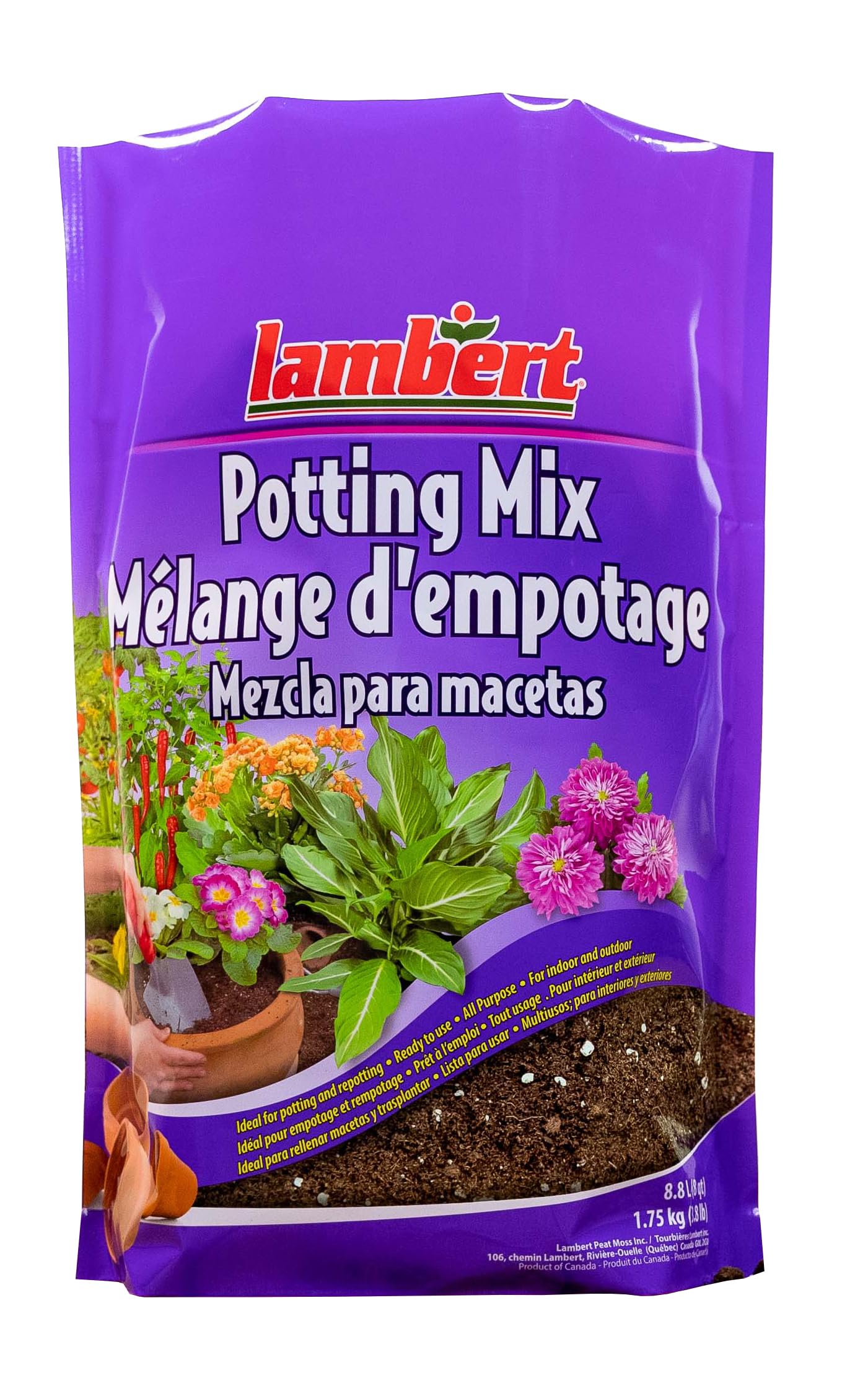
This Lambert mix hits the sweet spot for container gardeners who want one bag that works across flowers, vegetables, tropicals, and perennials without needing to amend. The 1.75-kg bag holds 8 quarts of ready-to-use mix that reviewers describe as visibly cleaner and more consistent than commodity brands — no bark chunks or fibrous clods that block drainage.
The peat-based formulation gives it a light, fluffy texture that stays aerated after multiple waterings. Multiple 5-star reviews report that weak, lifeless houseplants perked up within days after repotting, with new root growth visible in under a week. The mix drains fast enough to avoid soggy bottoms yet retains enough moisture for a three-day watering interval in standard plastic nursery pots.
Eco-friendly sourcing is a plus, and the absence of cheap filler materials means you get more usable soil per quart. It also comes at a mid-range price point that undercuts many premium blends while delivering comparable results for general-purpose container use.
What works
- Consistent particle size without cheap fillers
- Works for both indoor and outdoor container plants
- Quick recovery response from stressed plants reported by multiple verified buyers
What doesn’t
- 8-quart bag is small for large planters
- Some users note debris that may impede tiny seed germination
2. Soil Sunrise Citrus Tree Potting Soil Mix

Formulated specifically for potted citrus, this blend from Soil Sunrise combines peat moss, horticultural perlite, coarse sand, worm castings, and lime into an 8-quart mix that hits the slightly acidic pH that lemons, limes, and oranges demand. The sand adds enough weight to anchor top-heavy citrus trees while the perlite ensures the root ball never sits in standing water.
Verified buyers report that Meyer lemon and Key lime trees that stalled in generic soil pushed new leaves and flower buds within two weeks of repotting into this mix. The worm castings provide a gentle, slow-release nutrient stream that won’t burn sensitive feeder roots. The bag is packaged inside a cardboard box, which keeps the moist mix from tearing during shipping.
For growers running dwarf citrus indoors through winter, this mix maintains the correct moisture tension — not so dry that leaves curl and not so wet that yellowing appears. It also works well for avocados, olives, and other woody fruit trees in containers, though the 8-quart size covers only one or two standard 10-inch pots.
What works
- pH-balanced specifically for citrus trees in pots
- Worm castings deliver gentle long-term nutrition
- Coarse sand structure prevents container compaction
What doesn’t
- Cardboard-box packaging is not resealable for storage
- Some users find it slightly pricier than general-purpose alternatives
3. Midwest Hearth Premium Potting Soil Mix

Midwest Hearth offers a three-way blend of peat moss, perlite, and vermiculite that mirrors what commercial growers use for propagation and container finishing. The 8 dry-quart bag contains a light, almost fluffy texture that reviewers praise for never hardening around root balls — a common failure in cheaper bagged soils that turn into crust.
The pH is controlled to land in the 6.0–7.0 sweet spot that covers most flowers, herbs, and vegetables. Users report strong germination results with petunias, basil, and tomatoes started in this mix, and the resealable bag keeps the remaining soil fresh for later use. The vermiculite component adds water-holding capacity that balances the perlite’s drainage, making this a solid choice for containers that sit on hot patios where moisture evaporates fast.
Reviews note that one bag is enough for several small projects — several 6-inch pots or two 10-inch planters. The Made-in-USA claim and absence of weed seeds or fungus gnats in most bags give it an edge over bulk-bin soils sold at big-box stores.
What works
- Resealable bag for long-term storage
- Vermiculite adds moisture retention for hot climates
- Light, fluffy texture resists crusting
What doesn’t
- 8-quart volume is limited for large planters
- No slow-release fertilizer included
4. Rosy Soil Cactus & Succulent Potting Mix
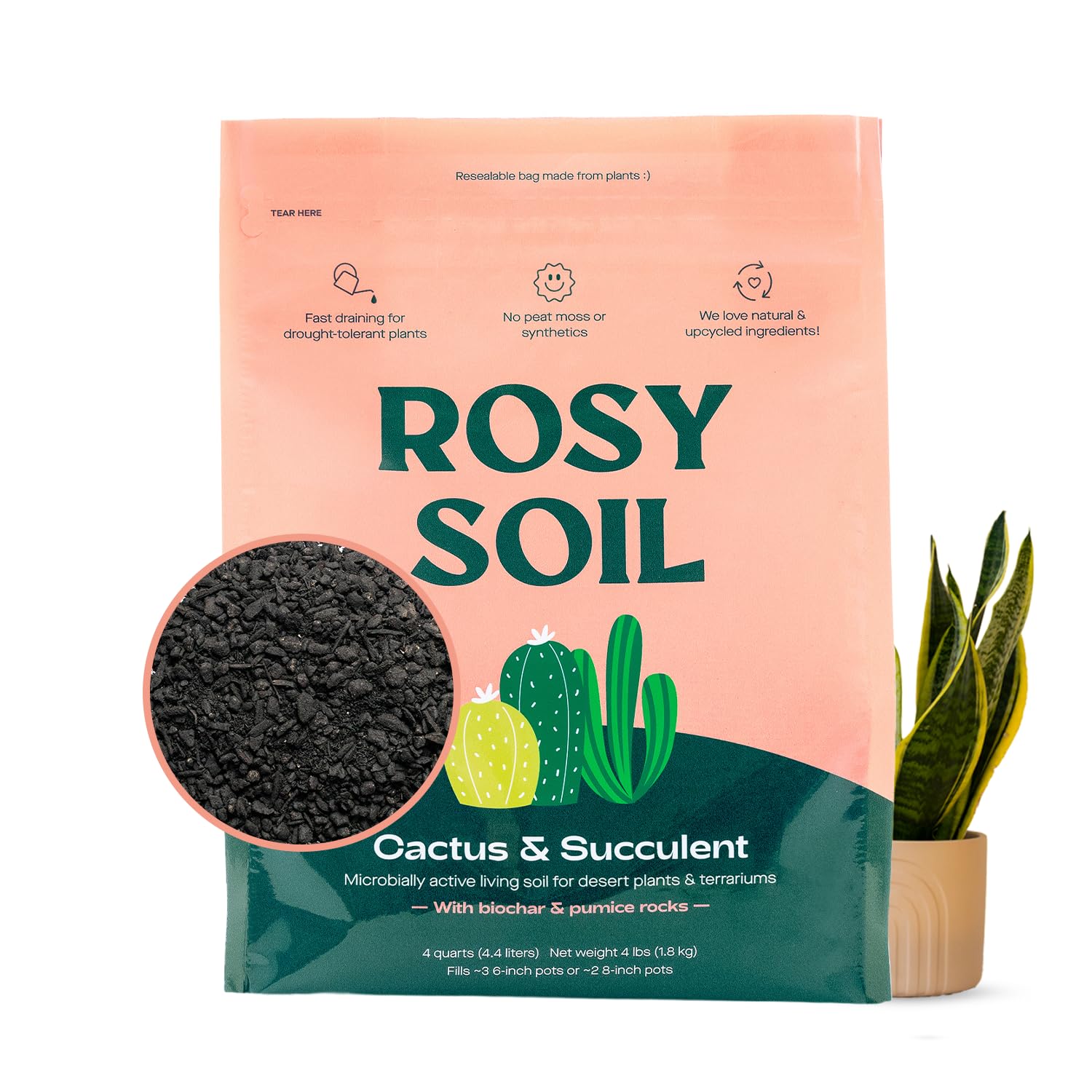
Container succulents die from wet feet — and this Rosy Soil mix is engineered to prevent exactly that. The chunky, peat-free formula uses pumice and bark fines instead of perlite, creating large pore spaces that let water drain within seconds. The 4-quart bag is resealable and printed with planting instructions, making it beginner-friendly for first-time succulent growers.
Beneficial microbes and organic worm castings are pre-loaded into the mix, building a living soil ecosystem inside the pot that feeds roots without synthetic salts. One reviewer noted their ZZ plant — notorious for root rot — was finally thriving after years of struggling in standard potting soil. The mix arrives slightly moist to prevent dust, and the tear-open, plastic-neutral bag is a rare sustainable packaging choice.
Some owners with more demanding succulents — like mature Lithops or Haworthia — add extra grit or bonsai soil to push drainage even further, but the base formula handles most Echeveria, Aloe, and Jade plants right out of the bag. It also works as a top-dressing gravel alternative for moisture-sensitive houseplants.
What works
- Peat-free and perlite-free for sustainable growing
- Chunky texture prevents overwatering damage
- Pre-loaded microbes and worm castings reduce fertilizer need
What doesn’t
- 4-quart bag is small for large potted agave
- May need additional grit for ultra-sensitive succulents
- Resealable bag can be difficult to close fully
5. Craft Aroid Potting Mix by Grow Queen
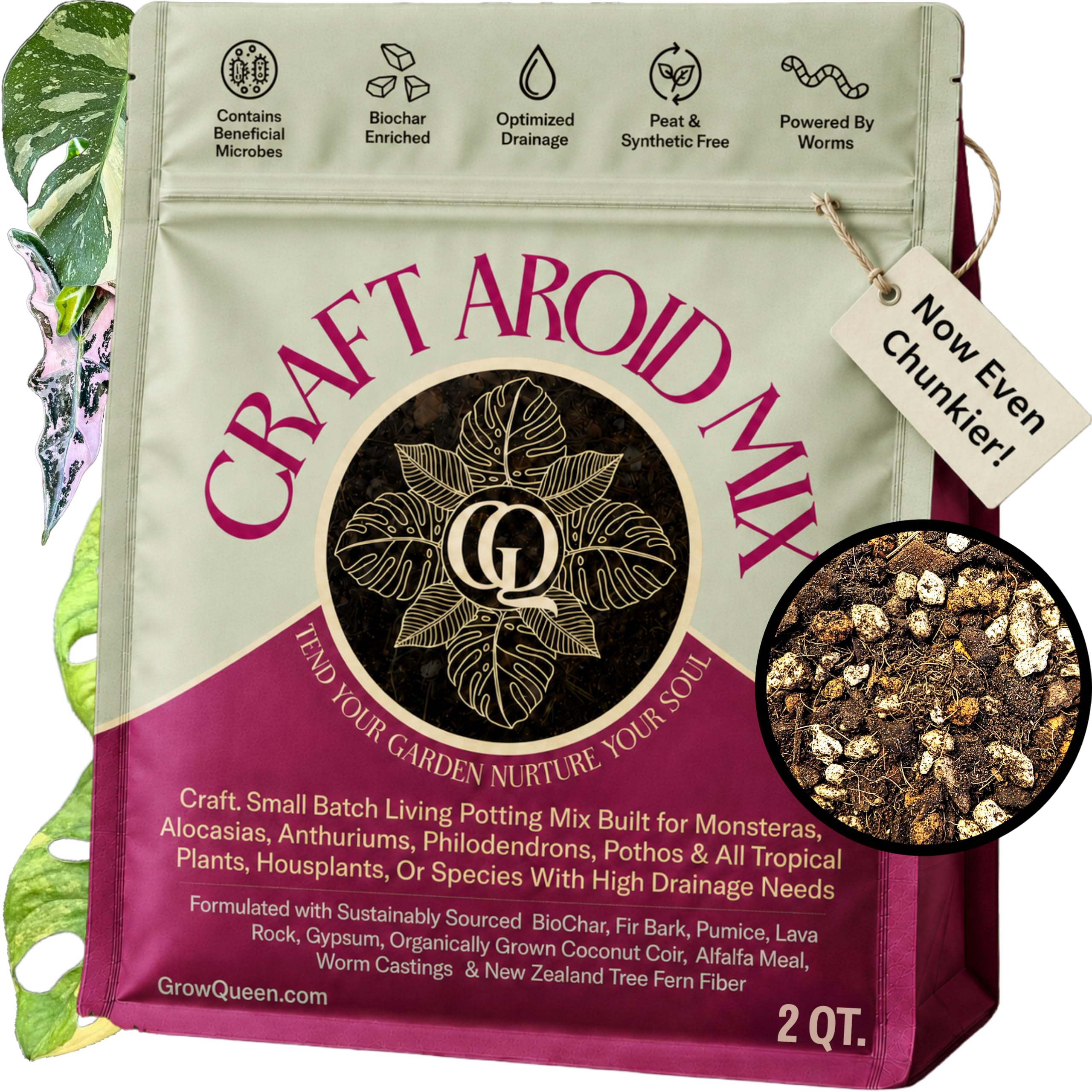
This is the gold standard for aroid collectors who keep Monstera, Philodendron, Alocasia, and Hoya in containers. The blend skips peat and perlite entirely, substituting organic coco coir, pumice, lava rock, Douglas fir bark fines, and New Zealand tree fern fiber. The result is a chunky, breathable structure that makes it nearly impossible to overwater — free-draining in seconds while still gripping moisture around the root hairs.
After five separate orders, repeat buyers describe the consistency as flawless: no dust, no bugs, no mold, no compaction. The tree fern fiber neutralizes pH to about 6.0, matching the native soil conditions of tropical understory plants. One reviewer whose plants were struggling saw new growth appear within days after repotting, and noted the mix never developed the sour smell that signals anaerobic breakdown.
The 2-quart bag is modest, but for container growers focused on high-value aroids that demand perfect drainage, this mix eliminates the guesswork of blending your own. It also works for Pothos, Snake Plants, String of Pearls, and even some Succulents, making it a versatile specialty mix for indoor plant collections.
What works
- Chunky texture virtually eliminates root rot risk
- NZ tree fern fiber buffers pH to tropical levels
- Consistent quality across multiple orders per verified reviewers
What doesn’t
- 2-quart bag is small for multiple large pots
- Premium pricing for a specialty blend
6. DUSPRO Citrus Tree Potting Soil Mix
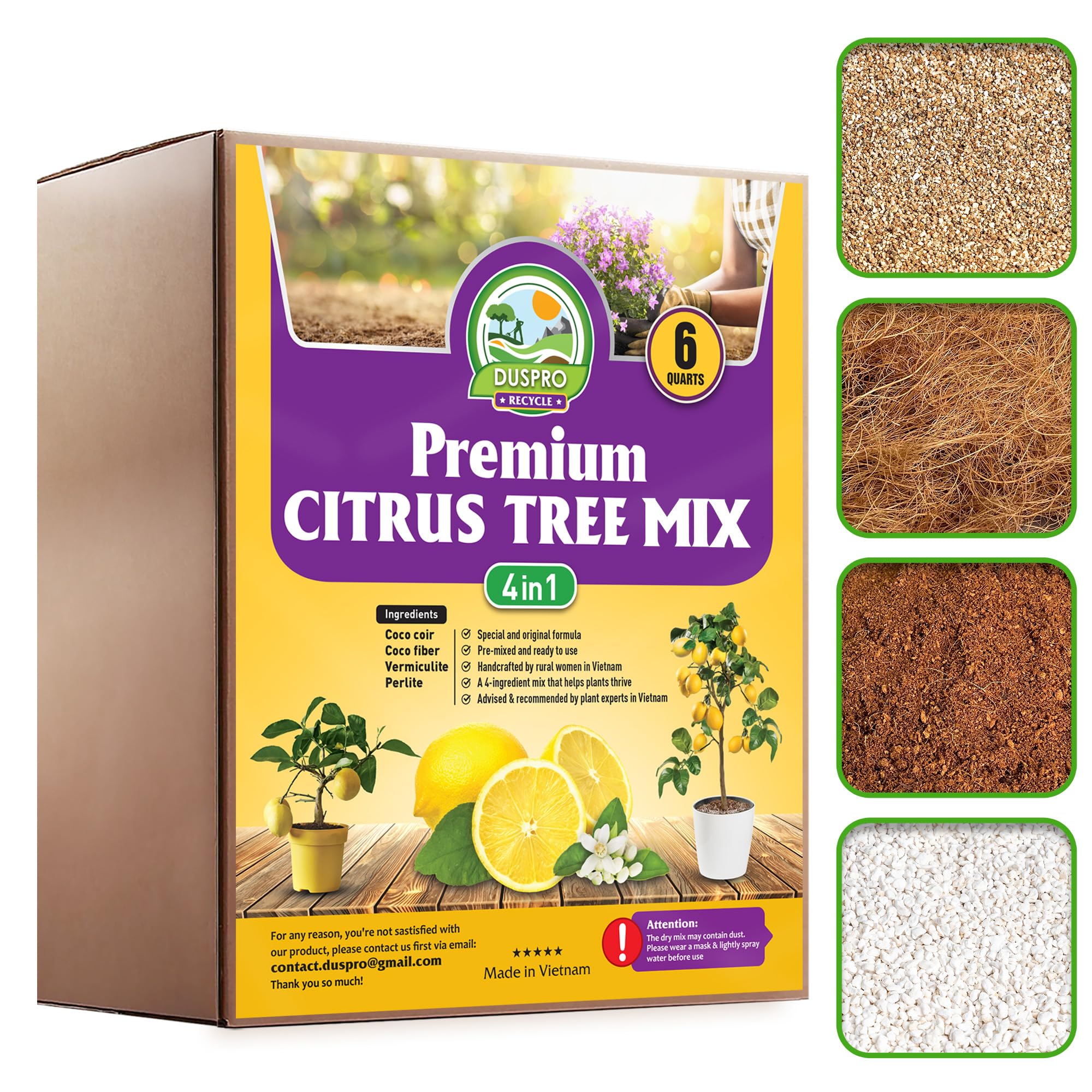
DUSPRO double-screens every raw ingredient to remove debris that can clog drainage holes — a detail that matters enormously when your citrus tree sits in a container for years. The 6-quart blend is formulated with a specific nutrient ratio and pH level that mimics the well-drained, slightly acidic conditions citrus roots crave, and it arrives pre-mixed and ready to pour.
Multiple verified buyers report that trees looking peaked or dropping leaves rebounded within days of repotting. One reviewer’s orange tree, stuck in heavy soil that held too much moisture, began pushing new growth immediately after switching to this mix. The included tree care ebook adds practical guidance on watering frequency and fertilization that container growers — especially beginners — find valuable.
The mix also works for olives, avocados, money trees, aloe vera, and palms, giving it versatility beyond citrus. A note: the bag can get dusty toward the bottom, so wearing a mask while pouring is recommended. At 6 quarts, it fills one standard 12-inch pot or several smaller nursery containers.
What works
- Double-screened for superior drainage consistency
- Fast recovery reported for stressed citrus trees
- Free care ebook included for beginners
What doesn’t
- Bag becomes dusty near the bottom
- 6-quart volume covers only one medium pot
7. BACCTO Michigan Peat General All Purpose Potting Soil

For container gardeners filling large planters, raised containers, or multiple pots at once, this 50-pound bag from Michigan Peat delivers the lowest per-volume cost without being straight garden soil. The blend combines dark reed sedge peat, perlite, and sand with starter and slow-release fertilizers, so you get several weeks of feeding built in.
The texture is coarser than premium consumer mixes — expect occasional small bits of organic matter — but for vegetables, flowers, and bulbs in large containers, it holds up well through a full growing season. Users report good results with tomatoes and peppers in 5-gallon grow bags, noting that the slow-release fertilizer reduces the need for liquid feeding during the first month.
The main trade-off is consistency. While many bags arrive clean and moist, some buyers report fungus gnats emerging after watering, which is common with peat-heavy bulk soils stored in non-sterile conditions. If you are repotting sensitive houseplants, give this mix a pre-watering and 24-hour inspection before use. For large outdoor planters where cost efficiency matters most, it is a pragmatic choice.
What works
- Extremely economical for large container projects
- Slow-release fertilizer supports early growth without extra feeding
- Ready-to-use straight from the bag
What doesn’t
- Fungus gnats reported in some bags
- Texture is coarser than premium blends
Hardware & Specs Guide
Particle Size and Aeration
The single most important spec for container dirt is particle size distribution. Mixes with a high proportion of fine particles (under 1 mm) pack together after watering, squeezing out oxygen. Look for visible aggregates — perlite (white), pumice (gray), bark fines (brown), or calcined clay (reddish) — in the 2–5 mm range. These create macro-pores that allow water to drain and air to refill the space. Mixes labeled “chunky” or “coarse” are safer for containers than finely milled seed-starting blends.
Organic Matter vs. Drainage Amendment Ratio
Peat moss, coco coir, and compost provide water-holding capacity, but too much organic matter turns a container into a swamp. The ideal ratio is roughly 40–50 percent organic base, 30–40 percent drainage amendment (perlite, pumice, sand, bark), and 10–20 percent nutrient source (worm castings, compost, slow-release fertilizer). Specialty mixes for succulents and aroids tilt toward 60 percent drainage amendments, while general-purpose blends stay closer to 40 percent. Check the ingredient list — if the first ingredient is “processed forest products” or “peat humus” without a secondary drainage ingredient listed, the mix will likely compact.
FAQ
Can I use garden soil from my backyard in a container?
Why do my container plants turn yellow even though I use potting soil?
How often should I replace the soil in a container garden?
Final Thoughts: The Verdict
For most container gardeners, the best dirt for container gardens is the Lambert Potting Mix because it offers consistent texture, no cheap fillers, and proven results across a wide range of indoor and outdoor pots at a mid-range price. If you need a specialized blend for tropical aroids, grab the Craft Aroid Mix by Grow Queen for its chunky, peat-free formula. And for large planters on a tighter budget, nothing beats the Baccto Michigan Peat 50-pound bag for raw volume per dollar.