
Container roses demand a specific soil ecosystem—a mix that delivers sharp drainage, steady moisture, and a nutrient profile that supports months of repeat blooming. Packing a rose into a pot confines its root zone, so every bagged blend either starves those roots or supplies the air-filled porosity they crave.
I’m Rikta — the co-founder and writer behind Lawn Gear Lab. I’ve spent countless hours cross-referencing bagged mix formulations, studying how drainage ratios affect root zone health, and correlating owner feedback on bloom performance with every spec listed on the label.
This guide evaluates seven commercial blends on texture, organic content, and pH balance so you can confidently choose the best soil for container roses that matches your pot size and watering habits.
How To Choose The Best Soil For Container Roses
Roses grown in containers face a different set of constraints than those planted in the ground. The potting mix must deliver fast drainage to prevent root rot while holding enough moisture between waterings, and it must provide a steady nutrient supply because the confined volume depletes quickly. Understanding the key variables—texture, organic content, pH, and feed strategy—helps you avoid the common pitfalls that lead to yellow leaves, weak canes, and few blooms.
Texture & Drainage
The ideal mix for container roses feels light and crumbly, not dense or muddy. A blend heavy on peat moss or fine bark can hold too much water, suffocating roots. Look for perlite, coarse sand, or coconut coir in the ingredient list—these create air pockets that allow oxygen to reach the root zone and excess water to drain freely. A quick test: squeeze a handful of damp mix; it should hold its shape briefly then crumble when you release pressure.
Organic Content & pH Range
Roses prefer a slightly acidic soil pH between 6.0 and 6.5. Most quality potting mixes are buffered to fall in this range, but blends heavy in uncomposted bark can drift alkaline over time. Organic matter such as compost, worm castings, or aged manure provides slow-release nutrition and improves moisture retention. A mix that lists compost as a primary ingredient—like those from Coast of Maine—tends to support stronger initial root establishment than a straight peat-perlite blend.
Feed Duration & Supplement Strategy
Bagged mixes that include a fertilizer charge—often listed as “feeds up to 6 months”—simplify early care but can deliver inconsistent nutrition as the season progresses. For heavy-feeding roses, a complete liquid rose fertilizer applied every two weeks during the growing season yields more predictable blooming. If the mix lacks added nutrients, you must start feeding immediately; if it contains slow-release pellets, wait four to six weeks before supplementing to avoid salt buildup.
Quick Comparison
On smaller screens, swipe sideways to see the full table.
| Model | Category | Best For | Key Spec | Amazon |
|---|---|---|---|---|
| FoxFarm Ocean Forest | Premium | Heavy feeders in large pots | 1.5 cu ft bag | Amazon |
| Coast of Maine Rose & Flower | Premium | Blooming perennials & roses | 20 qt bag | Amazon |
| Coast of Maine Bar Harbor Blend | Premium Organic | Container vegetable & flower gardens | 16 qt bag | Amazon |
| Miracle-Gro Potting Mix | Mid-Range | Everyday container planting | Fertilizer feeds up to 6 months | Amazon |
| Growth Technology GT Rose Focus | Liquid Supplement | Boosting blooms & root vigor | 250 ml concentrate | Amazon |
| Lambert Potting Mix | Budget | Small pots & houseplants | 8 qt bag | Amazon |
| Omitgoter Rose Nutrient Soil | Budget Specialized | Small rose specimens & bonsai | 4 qt bag | Amazon |
In‑Depth Reviews
1. FoxFarm Ocean Forest Potting Soil
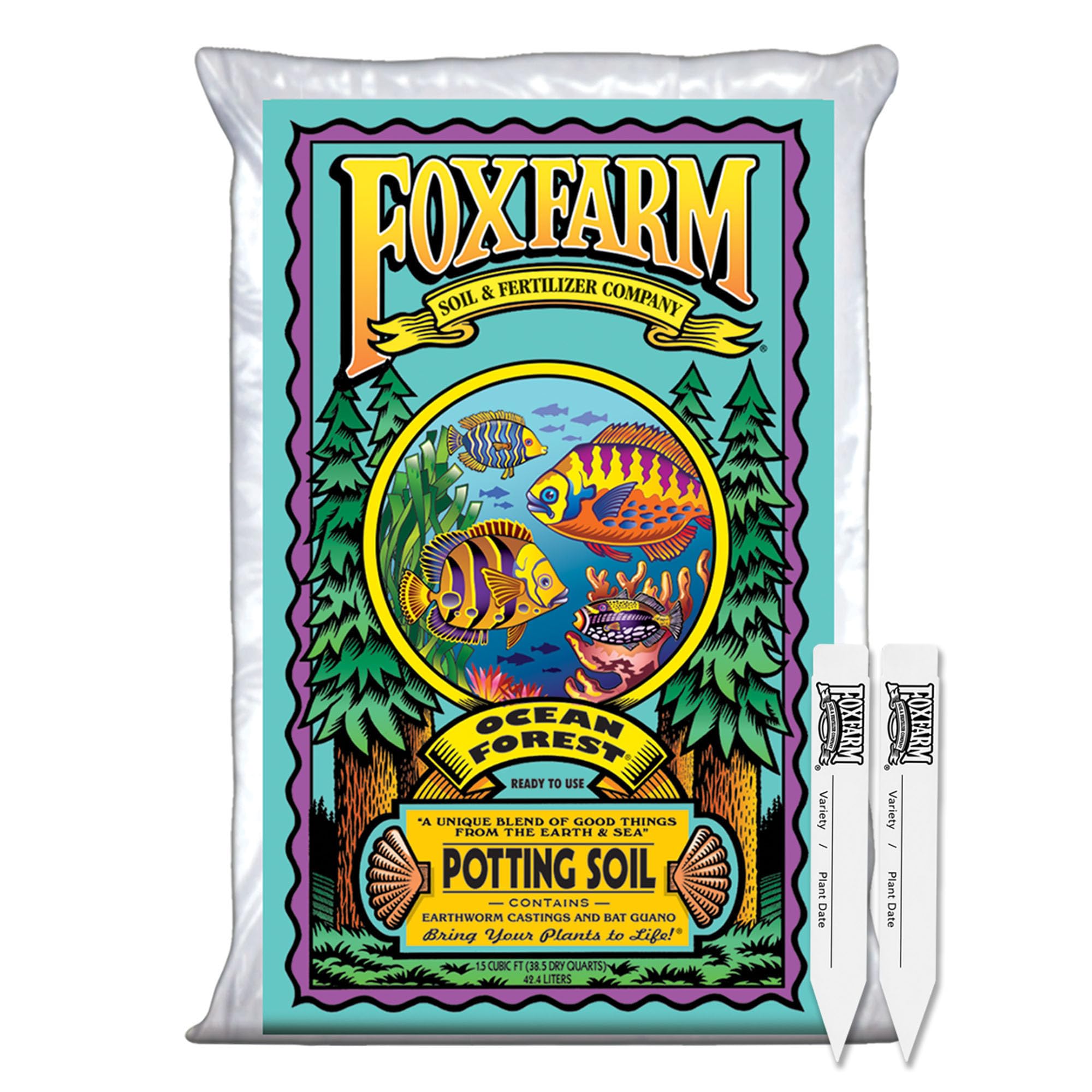
Ocean Forest’s blend of aged forest products, sphagnum peat moss, perlite, and sandy loam creates one of the lightest, most aerated textures available for container roses. The 1.5-cubic-foot bag offers substantial volume for large pots, and the fertilizer charge from fish emulsion, crab meal, and earthworm castings provides an immediate nutrient boost without burning tender root balls. This mix drains readily—a critical trait for roses that suffer quick root rot in dense media.
Growers consistently report noticeably larger foliage and more vigorous bloom sets compared to generic potting soils. The perlite fraction stays evenly distributed, preventing the compaction that usually plagues peat-heavy mixes after several waterings. Sandy loam contributes to the excellent drainage properties that keep the root zone from sitting in stagnant water, even during periods of heavy rain or frequent irrigation.
For container roses that demand consistent feeding through the season, Ocean Forest gives a strong six-week nutritional head start before you need to supplement with a liquid rose fertilizer. The bag also includes two plant tags for labeling varieties—a small but practical addition. The premium price reflects the ingredient quality, but the performance in vigorous rose growth justifies the investment for serious container gardeners.
What works
- Exceptional aeration and drainage from sandy loam and perlite
- Rich organic base feeds roses for the first several weeks
What doesn’t
- Premium price point may be prohibitive for large-scale container gardens
2. Coast of Maine Organic & Natural Planting Soil for Roses & Flowers
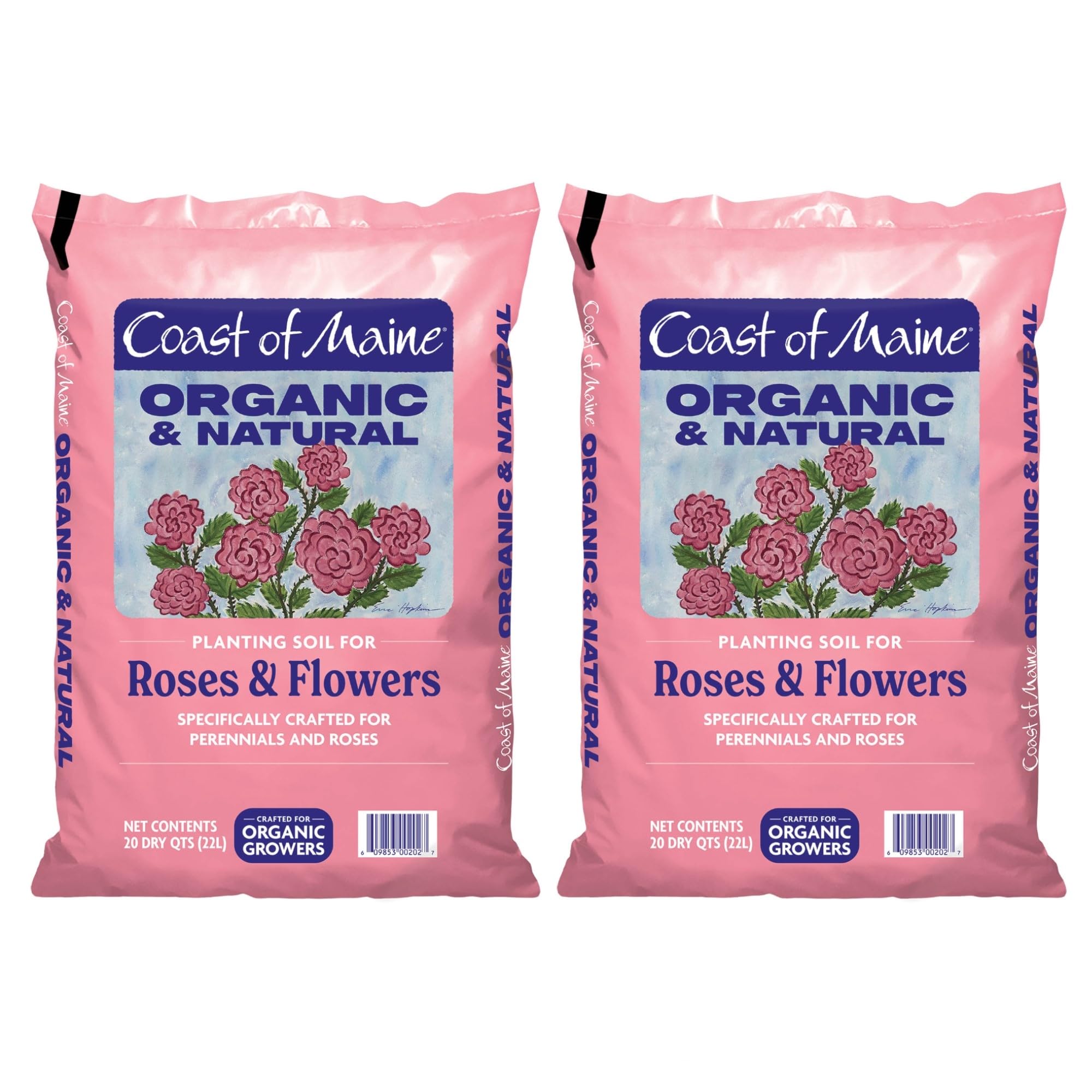
Coast of Maine formulates this blend specifically for roses and flowering perennials, using composted manure, sphagnum peat moss, and lobster and crab shell meal. The 20-quart bag is generous for medium to large containers, and the composted manure adds a slow-release nitrogen source that sustains leafy growth through the season. The organic ingredients—all OMRI listed—appeal to growers who avoid synthetic fertilizers in their container mixes.
The mix demonstrates excellent moisture retention without becoming waterlogged, a balance that rose roots appreciate during hot summer weeks. Owners report new rose bushes rebound quickly after transplanting, often showing visible new growth within the first month. The lobster and crab shell meal contributes chitin that may help suppress soil-dwelling pests, an incidental benefit for container roses prone to fungus gnat larvae.
One nuance: this mix includes more fine compost particles than some growers prefer, so it holds slightly more water than the FoxFarm Ocean Forest. In deep containers with limited drainage, you may want to add an extra handful of perlite. For roses specifically, however, this blend aligns perfectly with their preference for rich, well-decomposed organic matter and a slightly acidic pH.
What works
- Formulated specifically for rose and flower nutrition
- OMRI listed organic with natural pest-suppressing compounds
What doesn’t
- Fine texture can compact if over-watered in pots without ample drainage holes
3. Coast of Maine Bar Harbor Blend Potting Soil
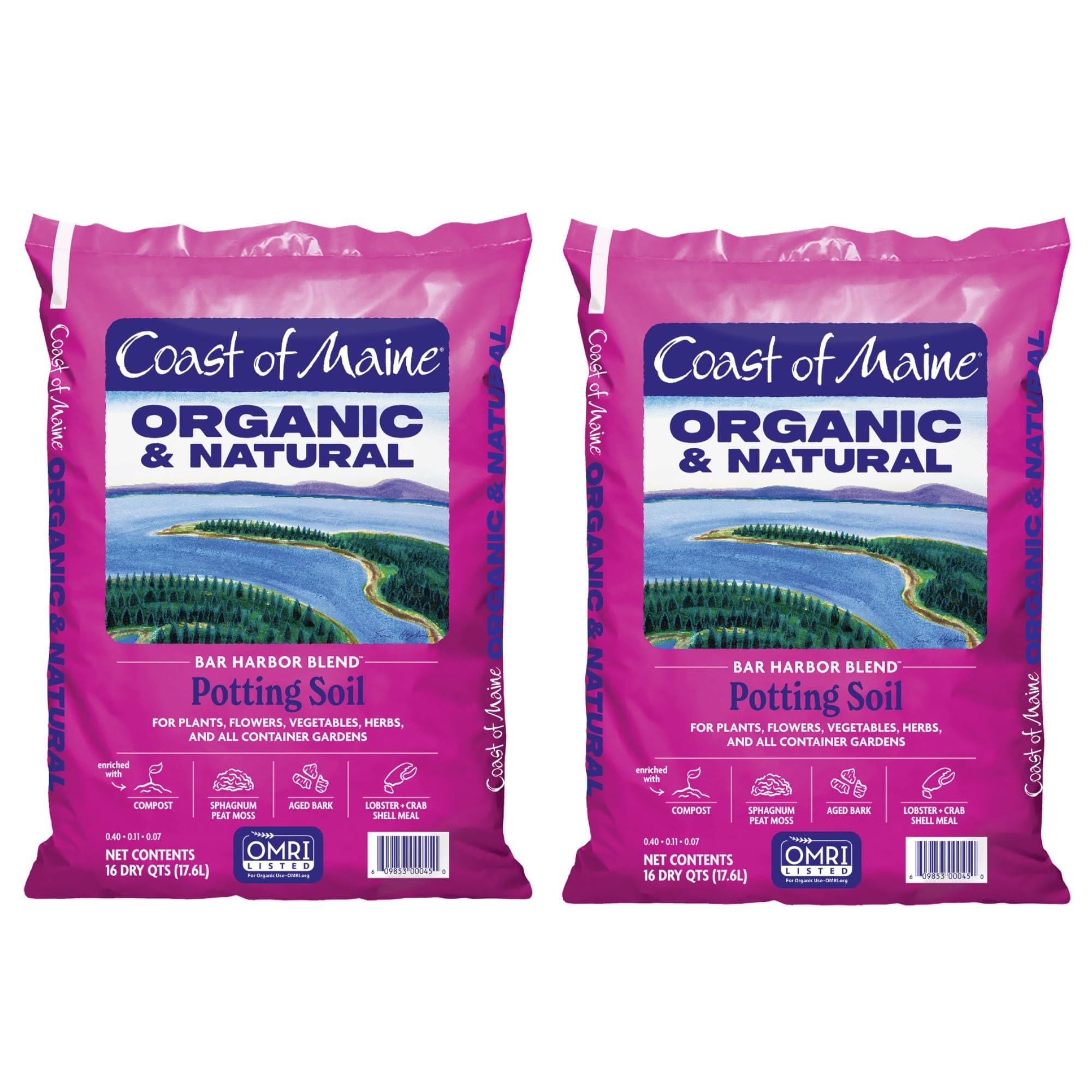
Bar Harbor Blend combines sphagnum peat moss, compost, perlite, lobster shell meal, and kelp meal into a multipurpose organic potting soil that works beautifully for container roses. The 16-quart bag is a practical size for a single large pot or several smaller containers. Lobster and crab shell meal provide a natural calcium boost that strengthens cell walls, while kelp meal supplies trace minerals that enhance bloom color and fragrance.
Growers consistently note the dark, rich color of this mix—a sign of high compost content—and the absence of large sticks or debris that plague lower-cost brands. The texture feels light and crumbly, and it maintains consistency after repeated waterings without turning into a dense block. Many reviewers repurpose it for raised beds and vegetable containers, praising its ability to revitalize tired soil structure.
For container roses, the slow-release nitrogen from the compost base reduces the need for frequent supplemental feeding early in the season. The perlite content ensures adequate aeration, though the compost fraction does hold more moisture than a straight peat-perlite mix. If you tend to over-water, increase the drainage layer at the bottom of the pot. Overall, it’s a strong organic option that supports healthy root development and sustained bloom production.
What works
- Rich organic base with natural calcium and trace minerals
- Consistent texture with no cheap fillers or large debris
What doesn’t
- Compost component can hold more moisture than some rose varieties prefer
4. Miracle-Gro Potting Mix (3-Pack)

The three-pack of 8-quart bags makes Miracle-Gro’s Potting Mix a convenient choice for gardeners managing multiple container roses. Each bag contains a fertilizer charge that feeds plants for up to six months, eliminating the need for early-season supplementing. The mix is formulated for all container plants—flowers, vegetables, shrubs—and is designed to grow plants “twice as big” compared to unfed plants, a claim backed by many owner reports of vigorous early growth.
The texture is lighter than traditional garden soil but denser than the premium Coast of Maine or FoxFarm blends. It drains adequately for roses, though growers in humid climates or with deeper pots may need to monitor moisture levels to prevent soggy root zones. Owners consistently praise the reliability and consistency of the mix—each bag arrives with uniform moisture content and no surprise sticks or mold.
For budget-conscious rose growers who want a straightforward, no-fuss potting medium, this 3-pack offers excellent value. The six-month feed window simplifies care routines, but heavy-feeding roses may still benefit from a liquid rose fertilizer boost during peak blooming months. The smaller bags are also easier to transport and store than a single large bag, making this a practical pick for urban container gardeners.
What works
- Convenient 3-pack with built-in six-month fertilizer charge
- Reliable, consistent texture bag after bag
What doesn’t
- Drainage is adequate but not as sharp as premium aerated blends
5. Growth Technology GT Rose Focus Liquid Plant Food
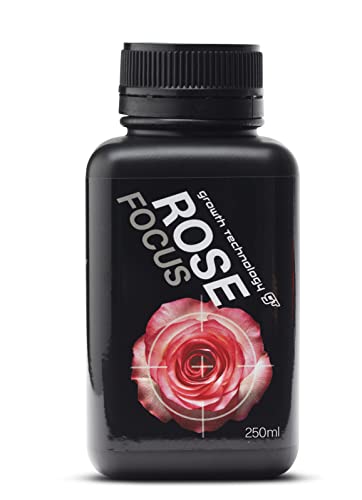
Rose Focus is not a potting soil—it’s a concentrated liquid fertilizer designed to complement any base mix. The 250-milliliter bottle contains a complete formula with 12 essential minerals plus extra calcium for stronger cell structure and improved flower development. It is pH buffered for efficient uptake and formulated without sodium, chlorides, or urea, making it safe for regular use on container roses that need consistent nutrition beyond what the potting mix provides.
The dilution ratio is economical: 3 to 7 milliliters per liter of water for soil or potting mix, meaning a single bottle can last an entire growing season for a moderate collection of containers. Users report visibly larger new growth and deeper color in foliage and blooms within weeks of starting a regular feeding schedule. Rose Focus is especially effective during the transition from vegetative growth to bud formation, when phosphorus and potassium demands peak.
For container rose enthusiasts who want precise control over nutrition without relying on the unpredictable release rate of bagged slow-release fertilizers, Rose Focus delivers predictable results. The liquid format allows you to adjust feed strength based on plant response—stronger for heavy feeders, lighter for stressed or newly transplanted roses. Keep in mind that you will still need a quality potting mix as the base; this product enhances rather than replaces your soil choice.
What works
- Precise mineral profile tailored for rose blooming
- Highly concentrated; single bottle lasts a full season
What doesn’t
- Requires regular mixing and application; not a set-and-forget solution
6. Lambert Potting Mix – All-Purpose 8 Quarts
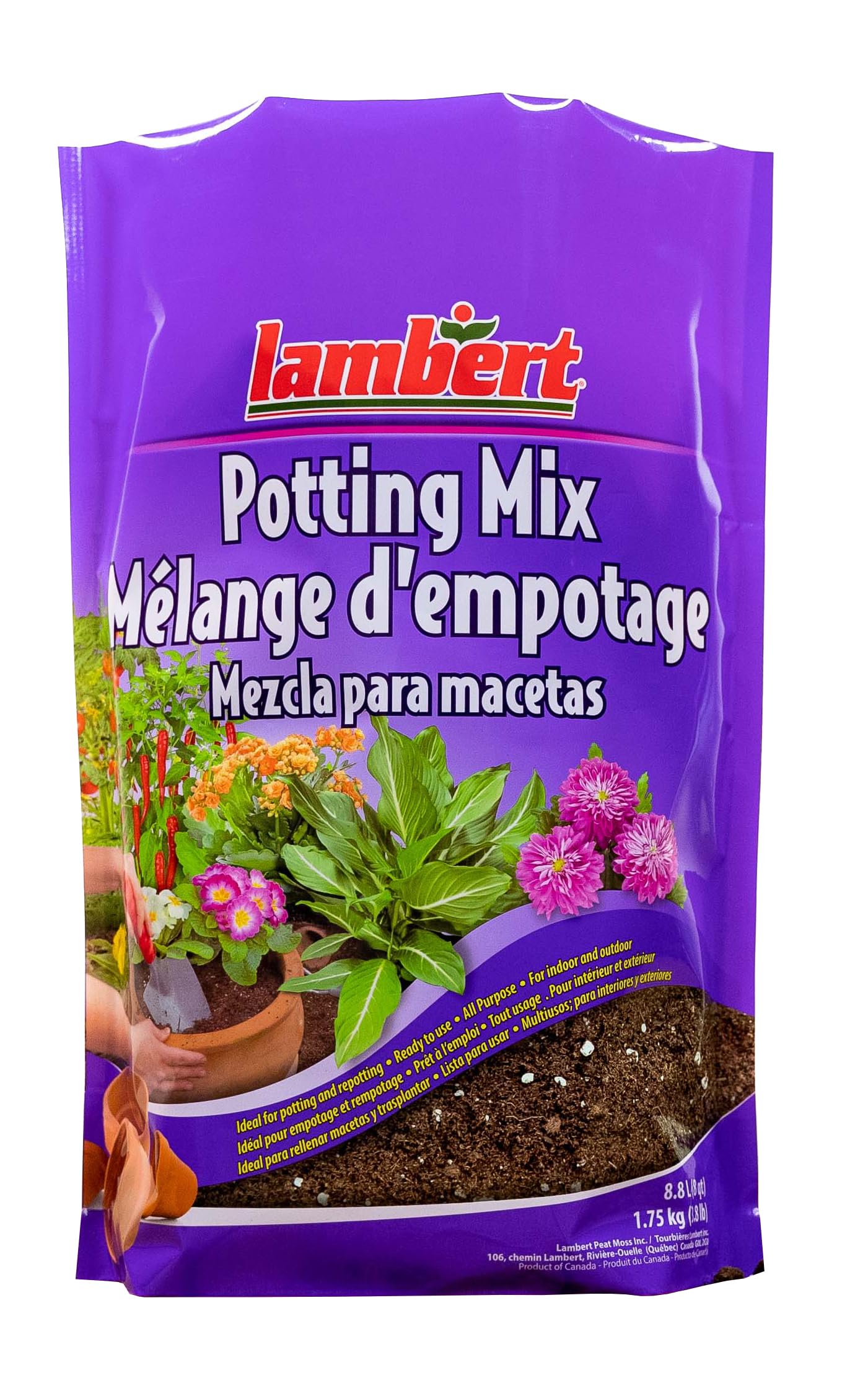
Lambert’s all-purpose potting mix offers a clean, debris-free texture that appeals to gardeners who want a simple foundation without compost chunks or bark pieces. The 8-quart bag is compact enough for a single medium pot or multiple small containers, and the peat moss and perlite base provides a neutral starting point for growers who prefer to customize their soil amendments. It arrives ready to use straight from the bag—no sifting or pre-moistening required.
Owners describe it as light and well-draining, with consistent moisture retention that supports healthy root growth without waterlogging. For container roses, this mix works best when combined with a liquid rose fertilizer from day one, as it contains no added nutrient charge. Several reviewers note that it excels as a seed-starting medium, but long-term container roses will need supplemental organic matter or compost to sustain heavy blooming.
The eco-friendly branding and absence of chemical additives align with organic gardening practices. However, the lack of built-in nutrition means this mix is better suited for experienced rose growers who plan their own feeding schedule rather than beginners who want an all-in-one solution. If you prefer a bare-bones base that you can tailor precisely, Lambert provides a reliable, filler-free canvas.
What works
- Exceptionally clean texture with no sticks or debris
- Lightweight, well-draining base suitable for custom mixing
What doesn’t
- No fertilizer charge; requires immediate and ongoing nutrient supplementation for roses
7. Omitgoter Rose Nutrient Soil – 4 Quarts
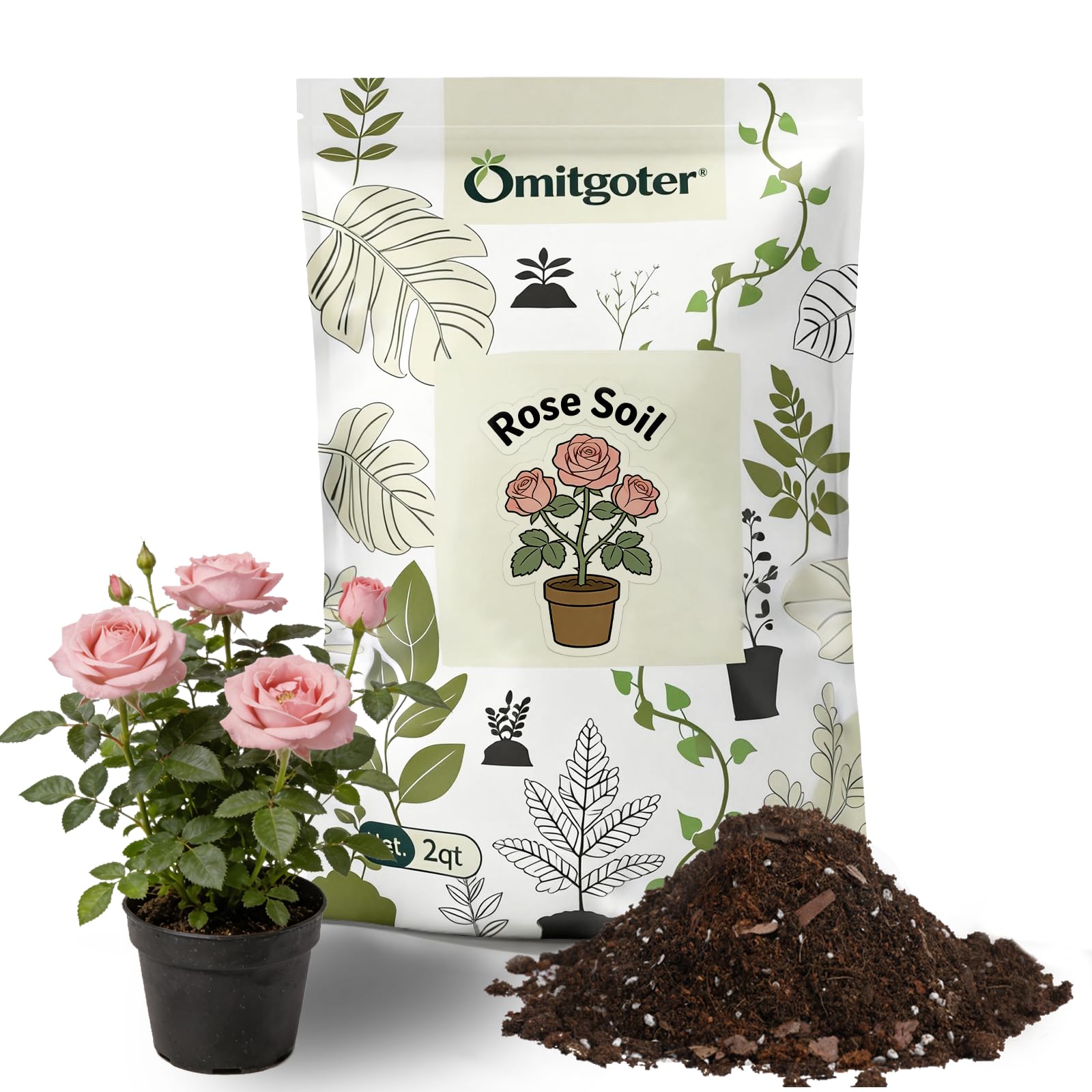
Omitgoter’s rose-specific blend is formulated with 100 percent natural ingredients—peat, coconut coir, perlite, bark, and humus—without chemical additives. The 4-quart bag is the smallest in this lineup, making it ideal for a single small rose specimen, a bonsai rose, or topping off an existing container. The mix is designed for superior drainage and breathability, with a loose structure that prevents waterlogging and root rot, a common killer of container roses.
Buyers report satisfaction when using it for single rose plants in medium pots, and several bonsai enthusiasts note that the mix revives struggling trees—a testament to its drainage properties. The inclusion of coconut coir improves moisture retention without the density of pure peat, and the humus content provides a mild organic nutrient boost. However, the small bag size means you will need multiple bags for standard 12- to 14-inch pots.
For beginners who want a ready-to-use, no-mix soil labeled specifically for roses, Omitgoter offers a fuss-free entry point. The organic formulation is safe for indoor and outdoor containers, and the drainage-focused structure reduces the risk of over-watering errors. More experienced growers may find the bag too small and the nutrient content too mild for repeat-flowering roses, but as a targeted small-quantity solution, it delivers exactly what it promises.
What works
- Formulated with drainage and aeration as primary priorities
- Chemical-free, natural ingredients safe for any environment
What doesn’t
- Small 4-quart bag is insufficient for larger pots without buying multiple units
Hardware & Specs Guide
Drainage & Aeration
Container roses require a mix that drains within minutes but retains enough moisture to sustain roots between waterings. Perlite, coarse sand, and coconut coir create pore spaces that allow oxygen to reach the root zone. Blends with a high compost or peat fraction may hold too much water in deep pots—test by watering a sample and checking for free drainage within 30 seconds.
pH & Nutrient Profile
Roses thrive in a pH of 6.0 to 6.5. Most quality bagged mixes are buffered within this range, but uncomposted bark or pine fines can drift alkaline over time. Check the label for added lime (raises pH) or sulfur (lowers pH). Natural organic mixes often contain oyster shell or crab meal, which provide calcium and maintain stable acidity throughout the season.
FAQ
Can I use standard garden soil for container roses?
How often should I repot container roses into fresh soil?
What does a pH of 6.0 to 6.5 mean for my rose soil?
Should I add perlite to a bagged potting mix for roses?
Can I mix rose-specific soil with a general potting mix?
Final Thoughts: The Verdict
For most gardeners, the soil for container roses winner is the FoxFarm Ocean Forest Potting Soil because it blends superior aeration, rich organic nutrients, and a texture that supports vigorous root growth in confined pots. If you want a rose-specific organic mix with composted manure and natural pest-suppressing compounds, grab the Coast of Maine Planting Soil for Roses & Flowers. And for budget-conscious growers who need a reliable base with a built-in feed window, the Miracle-Gro Potting Mix 3-Pack offers predictable results across multiple containers.