
Blossom end rot on your prize pepper plants feels like a personal failure, but the real culprit is almost always a calcium deficiency — and the solution is far simpler than most gardeners think. The black, sunken spots on the bottom of your peppers are a cry for a specific mineral, and the right supplement can stop the damage before it spreads.
I’m Rikta — the co-founder and writer behind Lawn Gear Lab. For this guide, I spent countless hours cross-referencing horticultural data on calcium uptake, analyzing NPK ratios, and filtering through real owner feedback to find the most effective formulations for pepper plants.
After reviewing dozens of soil amendments, liquid concentrates, and soluble powders, I’ve narrowed the market down to seven proven options. This is your complete, research-backed guide to the best calcium for pepper plants on the market today.
How To Choose The Best Calcium For Pepper Plants
Calcium is a secondary macronutrient, but for pepper plants it is anything but secondary. Without it, cell wall development fails, and the fruit literally rots from the bottom. The trick is that most soil already has enough calcium — the problem is often inconsistent watering or high humidity that prevents the plant from moving calcium to the fruit. Understanding the delivery method is the first step to picking the right product.
Liquid vs. Granular vs. Powder
Liquid formulations like Cal-Mag blends are the fastest way to correct an active deficiency because they can be absorbed through foliage and roots immediately after watering. Granular products like gypsum work slowly, conditioning the soil over weeks or months, making them better as a preventative amendment. Soluble powders, such as calcium nitrate, offer a middle ground — they dissolve into water for quick action but also provide residual soil nutrition. If you see active blossom end rot, you want a liquid or soluble powder. If you are preparing next season’s soil, a granular option is the smarter long-term play.
Calcium Source: Calcium Nitrate vs. Calcium Chloride vs. Gypsum
The source of the calcium determines how well your pepper plants can actually use it. Calcium nitrate (CaNO3) provides 19% calcium and 15.5% nitrogen, making it a dual-purpose feed that supports leafy growth and fruit firmness. Calcium chloride is common in cheap Cal-Mag blends but can leave residues in hydro systems and is less plant-friendly. Gypsum (calcium sulfate) is pH neutral and also supplies sulfur, which is great for soil structure but releases calcium slowly. For peppers specifically, calcium nitrate is the most efficient source for rapid correction, while gypsum is the best choice for organic soil building if you are already managing nitrogen separately.
OMRI Certification and Organic Growing
If you are growing peppers for your own kitchen or a farmers market, OMRI-listed products ensure you are compliant with USDA organic standards. Organic options like gypsum and fish-bone-meal blends are non-burning and gentle, but they release calcium slower than synthetic salts. If you need immediate results and are not concerned with organic certification, a greenhouse-grade calcium nitrate is the most potent tool. Check the label for “OMRI Listed” if you intend to use the product in an organic garden.
Quick Comparison
On smaller screens, swipe sideways to see the full table.
| Model | Category | Best For | Key Spec | Amazon |
|---|---|---|---|---|
| Cz Garden Calcium Nitrate 15.5-0-0 | Soluble Powder | Rapid rot correction | 19% Calcium, 15.5% Nitrogen | Amazon |
| ENVY CalMag+ Fe (4-0-0) | Liquid Cal-Mag | RO water replenishment | Calcium Nitrate derived | Amazon |
| Southern Ag Stop Blossom-End Rot | Liquid Spray | Foliar emergency treatment | 32 oz concentrate | Amazon |
| Bloom City Veggie Cure | Liquid Calcium | Prevention for wet springs | 32 oz, 1:10 mix ratio | Amazon |
| Down To Earth Tomato & Vegetable Mix | Granular Organic | Steady long-term feed | 4-6-2 NPK, OMRI listed | Amazon |
| Cz Garden Organic Gypsum Powder | Powder Soil Amendment | Organic soil conditioning | 5 lb, OMRI listed | Amazon |
| ENVY Solution Grade Calcium Nitrate (3-Pack) | Soluble Powder | Large gardens & hydro | 3 x 3 lb, 19% Ca | Amazon |
In‑Depth Reviews
1. Cz Garden Calcium Nitrate 15.5-0-0

This greenhouse-grade calcium nitrate from Cz Garden is the closest thing to a one-shot fix for blossom end rot on pepper plants. The 19% calcium content is delivered in a 100% water-soluble granule that dissolves into solution without leaving the oily agricultural residue that cheaper calcium nitrate sources produce. I appreciate that it supplies a significant 15.5% nitrogen alongside the calcium, making it a dual-action feed that greens up leaves while hardening fruit cell walls.
The 5-pound resealable pouch is practical for both soil drench and foliar spray applications. For peppers already showing bottom rot, a foliar spray provides near-immediate uptake, while a direct soil drench feeds the root zone for sustained correction. Owner reports show it stopped blossom end rot on bucket-grown tomatoes within 1.5 weeks, and the same mechanism applies directly to bell peppers and hot varieties.
Because it is not OMRI listed, this is not the choice for certified organic growers. But for conventional gardeners who want the fastest, most concentrated correction available, this product earns the top spot. The high purity also makes it suitable for hydroponic setups, NFT, and drip irrigation systems without clogging emitters.
What works
- Fast-acting soluble granules correct active rot in under two weeks
- High 19% calcium content with zero chloride residue
- Versatile for both foliar sprays and soil drenches
What doesn’t
- Not OMRI listed for organic certification
- Nitrogen component may over-feed if applied too frequently
2. ENVY CalMag+ Fe (4-0-0)
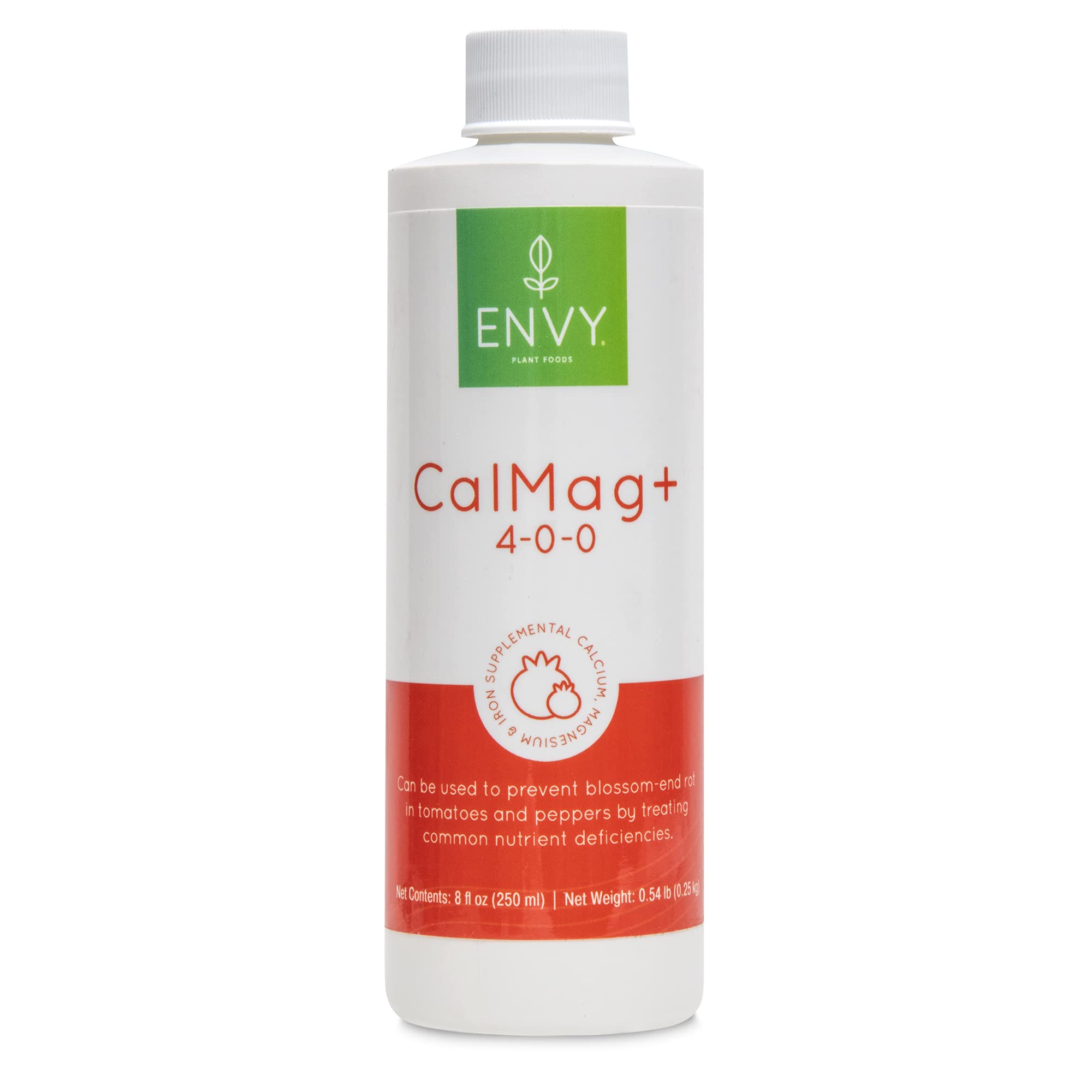
ENVY’s CalMag+ Fe solves a specific problem that many pepper growers encounter: cloudy water and residue from cheap calcium chloride-based Cal-Mag products. This liquid blend uses calcium nitrate as its calcium source, which stays clear in solution and is gentler on both soil microbiology and hydro systems. The 4-0-0 ratio delivers a modest nitrogen boost along with magnesium and chelated iron, addressing multiple micronutrient gaps that often accompany calcium deficiency.
For pepper plants grown in coco coir or with reverse osmosis water, this product effectively replenishes minerals that those growing media strip away. The formulation is also designed to counteract the nutrient lock-up common in coco fibers, which can block calcium uptake even when the mineral is present in the feed. Owner feedback highlights that it corrected blossom end rot on tomatoes with just a couple of doses.
The 8-ounce bottle is compact but concentrated — a little goes a long way in a standard watering routine. It works with any base nutrient line, making it a flexible supplement for both soil and hydroponic pepper gardens. The lack of calcium chloride also means less risk of salt buildup in pots over time.
What works
- Superior calcium nitrate source instead of calcium chloride
- Clears up coco coir nutrient lock-up problems
- Includes iron and magnesium for comprehensive micronutrient correction
What doesn’t
- Small 8-ounce bottle requires frequent repurchasing for large gardens
- Nitrogen content is minimal, so it won’t green up heavy feeders alone
3. Southern Ag Stop Blossom-End Rot

Southern Ag takes a targeted approach with this liquid concentrate designed specifically for blossom end rot correction. The active ingredient is absorbed through both foliage and roots, making it one of the fastest options for peppers that are already showing damage. Mixing just 1/2 teaspoon per 11 ounces of water creates an effective foliar spray that bypasses soil uptake issues and delivers calcium directly to where the fruit is developing.
Pepper growers have reported that even after buds dried up and fell off, a single watering with this calcium mix triggered new bud formation and healthy fruit set within days. That level of responsiveness is hard to match with slow-release soil amendments. The 32-ounce bottle goes a long way, and the value relative to local garden center sprays is substantial — several owners noted the same active ingredient at a fraction of the retail price.
This product works best as an emergency intervention. For gardeners who have already lost a round of peppers to rot, applying this as soon as the next flush of flowers appears can salvage the harvest. It is not designed as a long-term soil conditioner, so pairing it with a granular calcium source like gypsum for future seasons is a smart strategy.
What works
- Extremely fast foliar uptake stops rot progression quickly
- Highly concentrated — a little goes a long way
- Far cheaper per application than big-box retail sprays
What doesn’t
- Not a complete fertilizer — lacks nitrogen and other macros
- Requires frequent reapplication if underlying soil issue persists
4. Bloom City Veggie Cure for Blossom End Rot
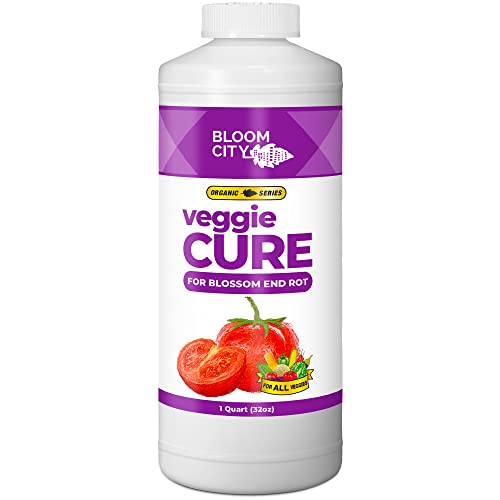
Bloom City’s Veggie Cure is formulated with a specific eye on blossom end rot prevention during challenging weather. Owner reports from a notably wet spring season noted zero rot on tomatoes while untreated plants in previous years suffered significant losses, suggesting the calcium enrichment in this liquid formula provides a protective buffer when humidity and inconsistent watering typically trigger deficiency. The 32-ounce bottle mixes at a 1:10 ratio, offering good coverage for a medium-sized pepper patch.
The formula is calcium-enriched but not overloaded, making it safe for weekly application without risk of salt burn. Users growing squash and peppers alike reported that regular application kept fruit firm and healthy throughout the harvest window. It is designed as a support product rather than a rescue product, so applying it proactively before symptoms appear yields the best results.
For pepper growers in regions with heavy spring rains or unpredictable watering schedules, this is a reliable preventative. The liquid form integrates easily into existing watering routines, and the lack of strong odor or staining makes it convenient for raised beds and container gardens near the house.
What works
- Excellent preventative performance in wet, high-humidity conditions
- Safe for regular weekly application without burning plants
- Easy 1:10 mix ratio simplifies dosing
What doesn’t
- Reactive users with active rot need faster-acting options
- Not a standalone fertilizer — must be used alongside base nutrients
5. Down To Earth Tomato & Vegetable Mix (4-6-2)

Down To Earth’s all-purpose mix is not a straight calcium supplement — it is a complete organic fertilizer with a 4-6-2 NPK ratio that happens to deliver significant calcium through ingredients like fish bone meal and rock phosphate. For pepper growers who want to build long-term soil fertility rather than chase an acute deficiency, this is the most balanced approach. The OMRI listing makes it fully compliant for certified organic production.
The beauty of this granular blend is that it feeds the soil microbiome alongside the plant. Ingredients like langbeinite, greensand, humates, and kelp meal improve soil structure and water-holding capacity, which indirectly supports calcium uptake by encouraging consistent moisture levels. Users have noted that pale, flimsy tomato plants revived within two weeks of top-dressing with this mix, which translates directly to pepper performance.
This is not the product to grab if half your pepper crop already has sunken black spots. It is a slow-release, non-burning amendment that works over weeks. But as a season-long foundation for healthy pepper growth, it delivers exceptional value. The 5-pound box lasts a full season for a moderate garden, and the ingredient list is clean enough for the most discerning organic grower.
What works
- Complete organic formula feeds plants and soil microbes simultaneously
- OMRI listed for certified organic gardens
- Gentle, non-burning granules safe for transplants and containers
What doesn’t
- Too slow-acting for emergency blossom end rot correction
- Organic smell can be unpleasant for a few days after application
6. Cz Garden Organic Gypsum Powder

Gypsum is the go-to soil amendment for adding calcium without altering soil pH, and Cz Garden’s powder form makes it easy to work into the root zone before planting. As calcium sulfate dihydrate, this OMRI-listed product delivers 22% calcium and 17% sulfur, which supports protein synthesis and enzyme function in pepper plants. It is particularly effective for breaking up compacted clay soils, improving water penetration so roots can access moisture more consistently — a key factor in preventing blossom end rot.
For container pepper gardens, mixing 1 to 2 ounces per gallon of water as a soil drench has proven effective for reducing existing rot symptoms. Owner feedback on container Roma tomatoes noted that while it did not fully reverse damage after rot started, it noticeably lessened the severity of future fruit. The 5-pound resealable pouch is easy to store and pour.
Gypsum is a poor choice for emergency corrections because its calcium releases slowly through microbial activity. But for organic growers preparing beds months before transplanting peppers, it is one of the safest and most soil-friendly calcium sources available. It is also excellent for mushroom cultivation, which speaks to its high purity and mineral profile.
What works
- pH neutral — will not raise soil alkalinity like lime
- Excellent for improving clay soil drainage and structure
- OMRI listed for certified organic use
What doesn’t
- Too slow to help with active blossom end rot on developing fruit
- Requires incorporation into soil for best results — not a top-dressing fix
7. ENVY Solution Grade Calcium Nitrate (3-Pack)
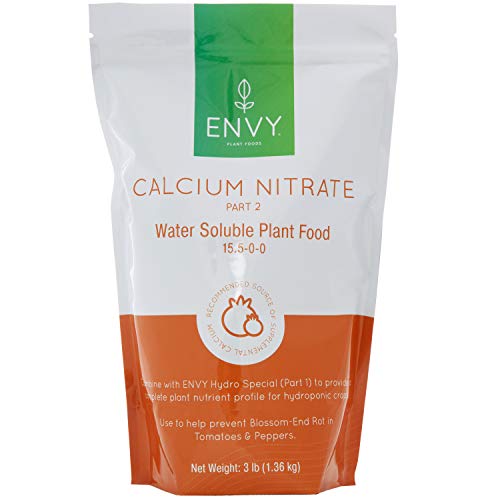
ENVY’s calcium nitrate three-pack is the volume buy for serious pepper growers with large gardens or hydroponic systems. Each 3-pound pouch delivers the same 19% calcium and 15.5% nitrogen profile as the best greenhouse-grade calcium nitrate on the market, but the triple-pack format ensures you have enough supply for full-season preventative feeding and corrective applications. The granules are 100% water-soluble and leave no oily agricultural skim, keeping hydro pumps and drip lines clean.
Each pouch includes a measuring scoop, simplifying the dosing process for growers who want consistency. For deep water culture (DWC) or Kratky systems, dissolving two scoops in warm water before adding to the reservoir corrects calcium deficiency symptoms like yellow leaf spots, weak stems, and drooping leaves within days. Owner reports from hydro growers noted stronger leaf structure and thicker stems after switching to this product.
The premium price reflects the greenhouse-grade purity and the convenience of the three-pack. For a standard backyard pepper patch, a single 3-pound pouch will likely last multiple seasons, making the three-pack overkill for small-scale growers. But for anyone running multiple towers, Earthboxes, or a serious pepper bed, the cost-per-application is competitive and the results are consistent.
What works
- High-purity, 100% soluble granules ideal for hydroponics
- Three-pack provides excellent value for heavy use
- Includes measuring scoop for accurate, repeatable dosing
What doesn’t
- Higher upfront cost than single-pouch competitors
- Excess quantity may go to waste for small container gardens
Hardware & Specs Guide
NPK Ratio & Calcium Percentage
The NPK ratio tells you exactly what macronutrients the product supplies, but for calcium supplements, the calcium percentage is the critical spec. Calcium nitrate products typically provide 19% calcium, while cal-mag liquids hover around 4% nitrogen with variable calcium content. Always check the guaranteed analysis on the back label — products that do not list a calcium percentage may have negligible amounts. The ideal range for correcting pepper blossom end rot is at least 10% calcium in a soluble form.
Solubility & Application Method
Water solubility determines whether you can use a product as a foliar spray, a soil drench, or both. Greenhouse-grade calcium nitrate should dissolve completely without leaving sediment or an oily film. Liquid concentrates should mix clear and not cloud up when added to nutrient water. Foliar sprays work fastest for acute deficiency because the calcium bypasses root uptake issues, while soil drenches provide longer-lasting root-zone correction. For heavy clay soils, a soil drench with a wetting agent can improve calcium penetration.
Organic Certification (OMRI)
The Organic Materials Review Institute (OMRI) listing is the gold standard for organic growers. Products bearing the OMRI seal have been verified to meet USDA National Organic Program standards. Not all calcium sources qualify — calcium nitrate is synthetic and generally not OMRI listed, while gypsum, bone meal, and rock phosphate are naturally derived and allowed. If you are growing for a certified organic market, prioritize OMRI-listed products like gypsum or fish-bone-meal blends. For home gardens, the choice between organic and conventional is largely about personal preference and soil health goals.
Foliar vs. Root Application Timing
Calcium is a xylem-mobile nutrient, meaning it moves upward from the roots but does not redistribute well once it settles in leaves or fruit. This makes timing critical. Foliar sprays work best when applied during early fruit set, when developing peppers are forming cell walls. Soil applications should begin at transplanting and continue weekly through the fruiting phase. Factors like high humidity, low transpiration, and inconsistent watering can block calcium movement even when sufficient calcium is present in the soil, so maintaining consistent moisture is just as important as the supplement itself.
FAQ
Can I use eggshells as my calcium source for pepper plants?
How often should I apply calcium to my pepper plants?
What is the difference between calcium nitrate and cal-mag for peppers?
Can too much calcium hurt my pepper plants?
Does blossom end rot always mean I need more calcium?
Final Thoughts: The Verdict
For most gardeners, the best calcium for pepper plants winner is the Cz Garden Calcium Nitrate 15.5-0-0 because it combines fast-acting soluble granules with a high 19% calcium concentration and dual nitrogen feeding for immediate correction of blossom end rot. If you need an organic-certified option for long-term soil building, grab the Cz Garden Organic Gypsum Powder. And for the fastest possible emergency foliar rescue on peppers already showing damage, nothing beats the Southern Ag Stop Blossom-End Rot liquid concentrate.