
Pepper plants demand warm soil, excellent drainage, and room for a root system that can support heavy fruit loads. Selecting the wrong container — one that holds too much moisture, restricts root expansion, or lacks proper aeration — often leads to stunted growth, yellowing leaves, and disappointing harvests. The narrow category of purpose-built containers for peppers specifically addresses these failure points through fabric aeration, correct gallon sizing, and reinforced handling for seasonal repositioning.
I’m Rikta — the co-founder and writer behind Lawn Gear Lab. I’ve spent dozens of hours studying container volumes, fabric material densities, drainage hole configurations, and aggregated owner feedback across hundreds of pepper-growing seasons to identify the most reliable options for beginner and experienced growers alike.
Whether you’re growing on a sunny balcony or filling a raised greenhouse bench, choosing the right container directly determines root health and final pepper yield — this guide to the best pots for pepper plants breaks down the exact specs that separate thriving harvests from struggling plants so you can make a confident buying decision.
How To Choose The Best Pots For Pepper Plants
Pepper root systems are surprisingly dense and heat-loving. Selecting a container that regulates moisture, resists UV degradation, and provides at least five gallons of root volume directly influences capsaicin production and fruit size. Here are the four critical specifications to evaluate before clicking add to cart.
Gallon Capacity — Match the Volume to the Variety
Bell peppers and other large-fruited types need a minimum of five gallons to spread their roots without becoming rootbound. Smaller hot varieties like Thai chili or habanero can thrive in three-gallon pots, but five gallons remains the safest recommendation for any pepper because it provides a thermal buffer against rapid soil temperature swings. Avoid anything smaller than three gallons for any fruiting pepper.
Fabric Material Weight and Stitching Density
Nonwoven fabric pots are dominant in this category because they passively air-prune roots and eliminate drainage guesswork. The key metric is material thickness measured in grams per square meter — 300g fabric is significantly more durable than standard 200g felt and resists tearing after multiple seasons. Look for double-stitched side seams and reinforced handle attachment points where the fabric meets the webbing.
Handle Construction and Ease of Relocation
Pepper containers often need to be moved to chase sunlight or escape early frost. Handles sewn directly into the fabric body risk tearing under the weight of moist soil — premium options use polypropylene webbing straps that are anchored to a reinforced inner liner or run completely through the bag body. For heavy 10-gallon bags, at least four handles provide balanced lifting.
Drainage Design — Mesh vs. Single Holes vs. Grid
Fabric pots inherently drain through the entire sidewall, which prevents waterlogged soil but accelerates drying in hot weather. Plastic containers with a single drainage hole often trap a perched water table at the bottom, leading to root rot in pepper plants. The best plastic designs use a grid of multiple small holes or raised drainage channels to break water surface tension and allow proper outflow.
Quick Comparison
On smaller screens, swipe sideways to see the full table.
| Model | Category | Best For | Key Spec | Amazon |
|---|---|---|---|---|
| FEED GARDEN 5 Gal 8‑Pack | Premium Fabric | Multi-season durability | 300g fabric, double-stitched | Amazon |
| Rain Science 10 Gal | Premium Mesh | Ultimate aeration | Plastic-coated mesh, UV stable | Amazon |
| iPower 5 Gal 6‑Pack | Mid-Range Fabric | Trusted brand, proven longevity | 300g nonwoven, nylon handles | Amazon |
| OPPOLIFE 10 Gal 4‑Pack | Specialty Fabric | Harvest window visibility | 14″ dia x 18″ height, flap | Amazon |
| Land Guard 5 Gal 10‑Pack | Budget Multi-Pack | High-volume planting | 9.8″ x 11.8″ x 11.8″ | Amazon |
| HealSmart 10 Gal 6‑Pack | Value Fabric | Low-cost entry for beginners | 15.9″ diameter, 11.9″ height | Amazon |
| UOUZ 12″ Plastic Planter | Plastic Pot | Indoor/patio decor | 5.8mm thick, grid drain | Amazon |
In‑Depth Reviews
1. FEED GARDEN 5 Gallon Grow Bags 8 Pack
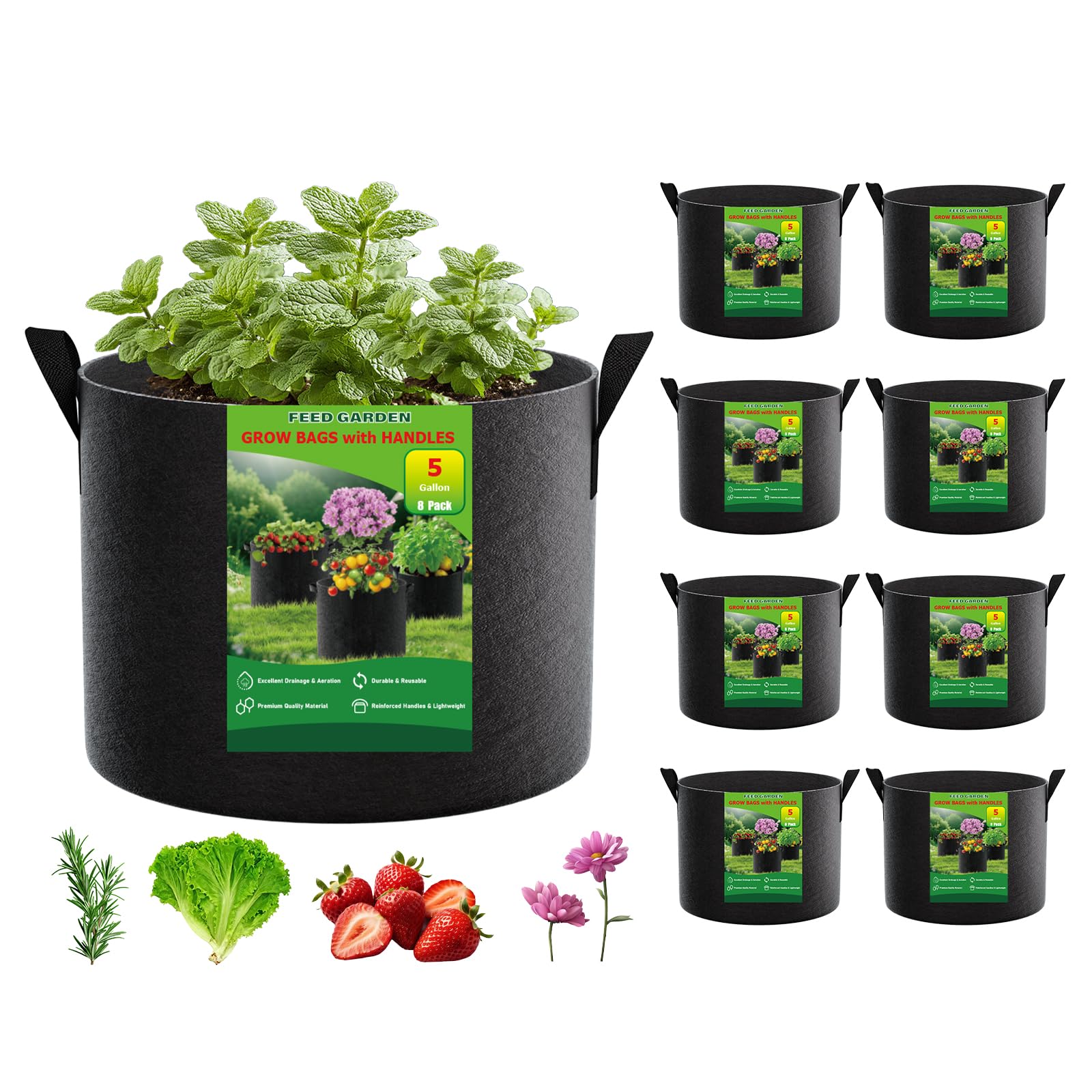
The FEED GARDEN 5-gallon bags hit a perfect balance between construction weight and pack quantity. Each bag uses 300g nonwoven fabric — substantially thicker than the entry-level felt found in cheaper multi-packs — and the double-stitched side seams resist splitting even when the fabric is saturated. The reinforced nylon handles are anchored through the bag body rather than surface-tacked, which matters when you lift a fully watered pepper plant weighing over thirty pounds.
Gardening feedback consistently points out that these bags fold flat for winter storage and show no fabric delamination after a full growing season. The 5-gallon size is ideal for bell peppers, jalapeños, and serranos because it provides enough root volume for steady fruiting without wasting soil. The only trade-off is that fabric pots dry out faster than plastic — you will need to water more frequently during July heat waves, but the improved oxygenation prevents the root rot that kills pepper plants in dense soil.
At eight bags per pack, this is the most cost-effective premium fabric option for a serious pepper garden. The material density and stitching integrity put it a tier above standard grow bags, and the consistent 5-gallon capacity across every bag ensures uniform root development across your entire planting.
What works
- Thick 300g fabric stands up to multiple seasons
- Double-stitched seams prevent handle tears
- Consistent drainage across every bag in the pack
What doesn’t
- Dries out faster than plastic containers in heat
- No harvest window for monitoring root growth
2. Rain Science 10 Gallon Grow Bag
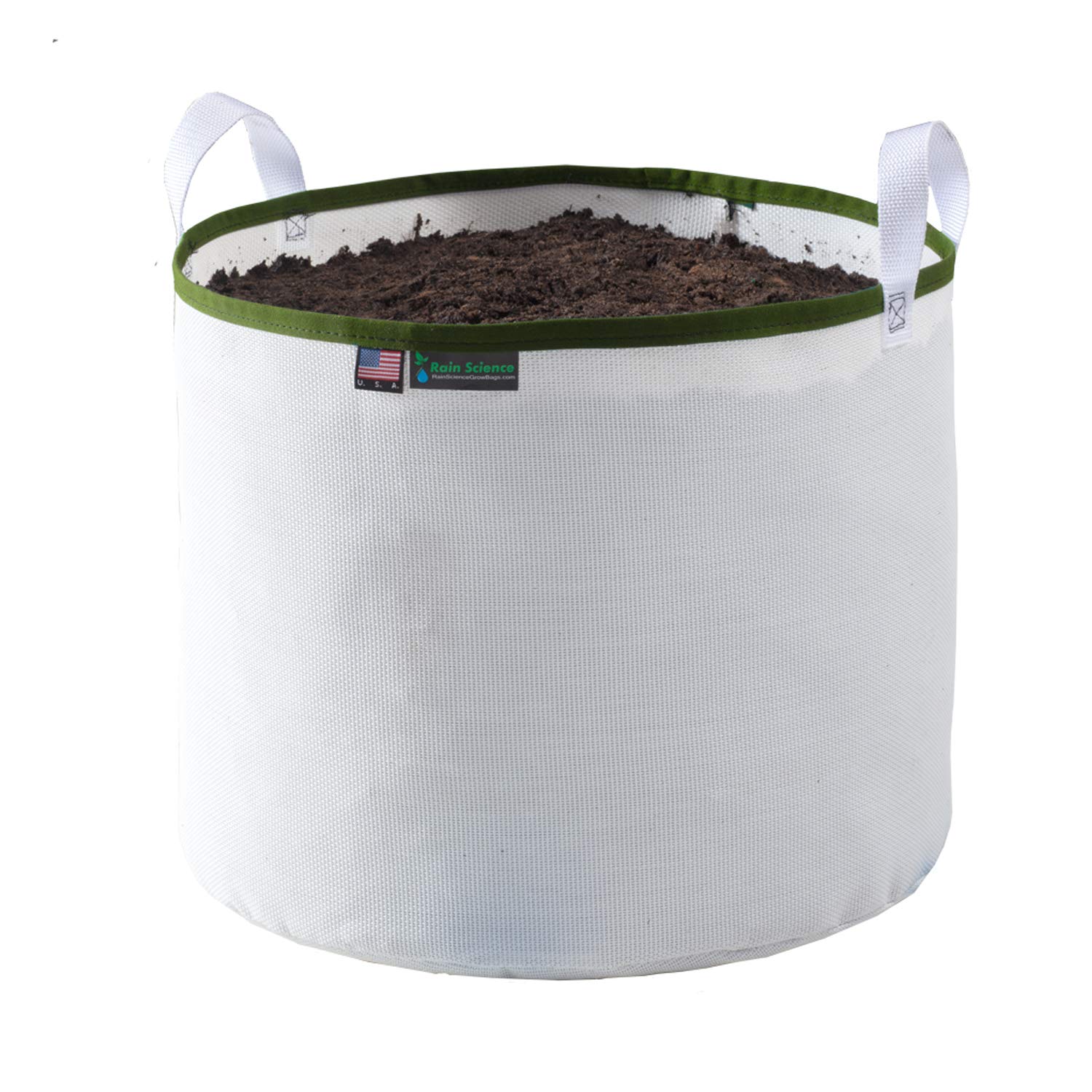
Rain Science takes an entirely different approach from nonwoven fabric bags. The material is a plastic-coated mesh that does not absorb water — water passes through the sidewall instantly rather than wicking through felt and evaporating. This eliminates the constant dampness that standard fabric bags retain on the exterior, which means the bag stays lighter and the soil temperature remains more stable for heat-loving pepper roots.
The 10-gallon capacity is generous enough for large pepper varieties like bell and poblano, and the white color option reflects sunlight to keep the root zone cooler than black fabric alternatives. Owners report that these bags have survived five-plus years with no structural degradation, which is exceptional for this category. The tapered design also makes transplanting easier because the root ball slides out cleanly without tearing.
The trade-off is price per bag — this is a single-bag purchase at a premium cost, so it makes sense for your best pepper plants rather than a full garden planting. The plastic-coated mesh also feels less natural to work with than soft fabric, but the longevity and superior aeration justify the investment for dedicated growers.
What works
- Non-absorbent mesh prevents soggy exterior
- Exceptional multi-year durability
- Tapered shape reduces transplant shock
What doesn’t
- Higher cost per bag than fabric alternatives
- Only available as a single bag
3. iPower 5 Gallon Grow Bag 6-Pack
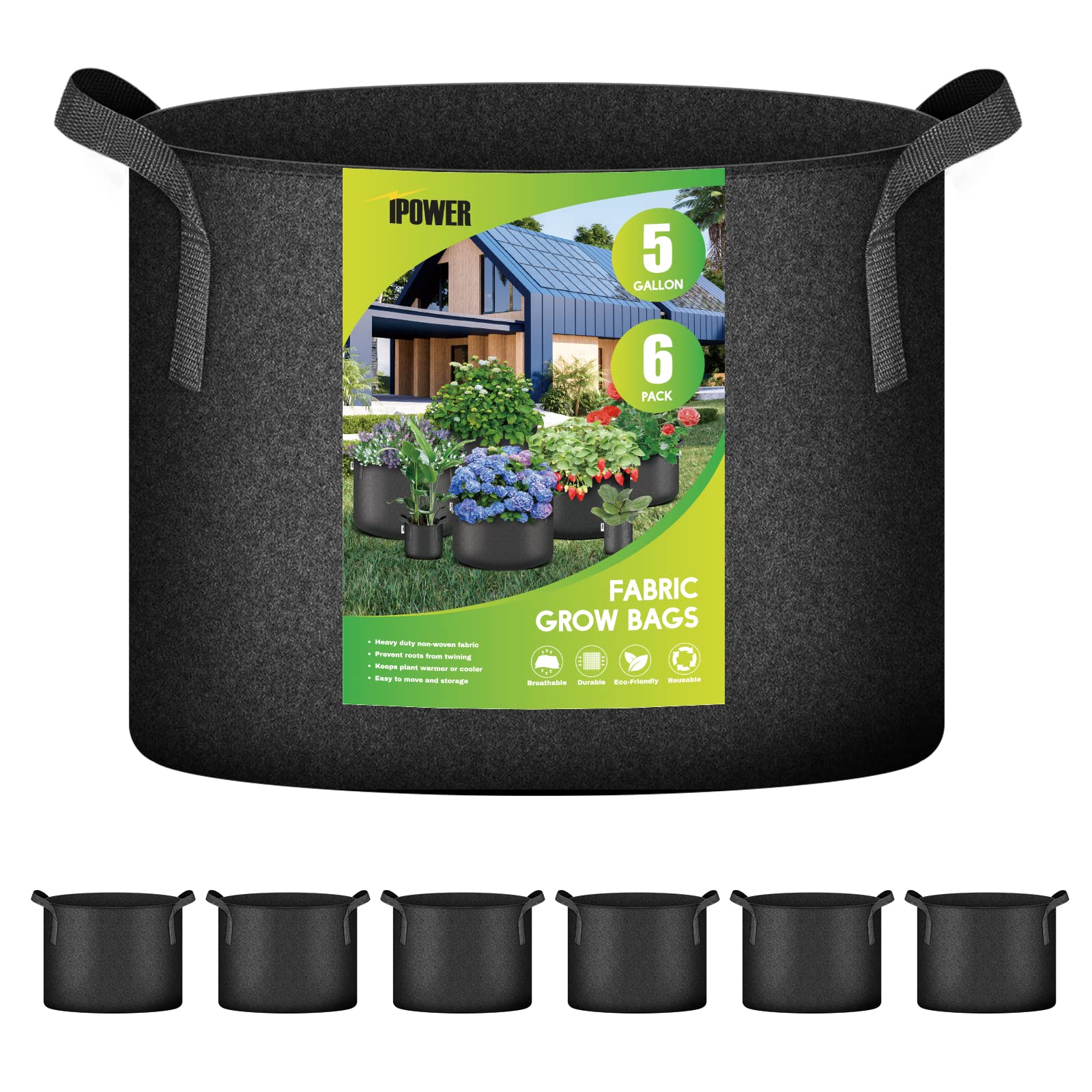
iPower has been a staple in the fabric pot category for years, and the 2024 iteration of their 5-gallon bags maintains the same 300g nonwoven construction that experienced growers trust. The fabric stands upright on its own even when empty, which simplifies the initial filling process compared to flimsier bags that collapse. The nylon handle straps are stitched into a reinforced hem that distributes the load across the full width of the bag rather than concentrating stress on a single stitch line.
Owner feedback from multiple growing seasons confirms these bags survive full sun exposure without fabric fraying or UV brittleness. Several reviewers report using the same bags for four consecutive years with peppers, tomatoes, and herbs rotating through the same containers. The 5-gallon volume is perfectly calibrated for bell pepper root systems — not so large that soil stays cold in spring, but big enough to support fruit production through late summer.
The six-bag pack hits a practical quantity for a home pepper garden without forcing you to buy a ten-pack that may exceed your needs. The only limitation is the black color, which absorbs more heat than lighter colors — this is an advantage in cool climates but may require afternoon shade in extreme southern zones.
What works
- Industry-proven fabric density and stitching
- Bags stand open for easy filling
- Multiple seasons of reliable use
What doesn’t
- Black fabric can overheat roots in direct sun
- No color variety offered
4. OPPOLIFE 10 Gallon Potato Grow Bags 4-Pack
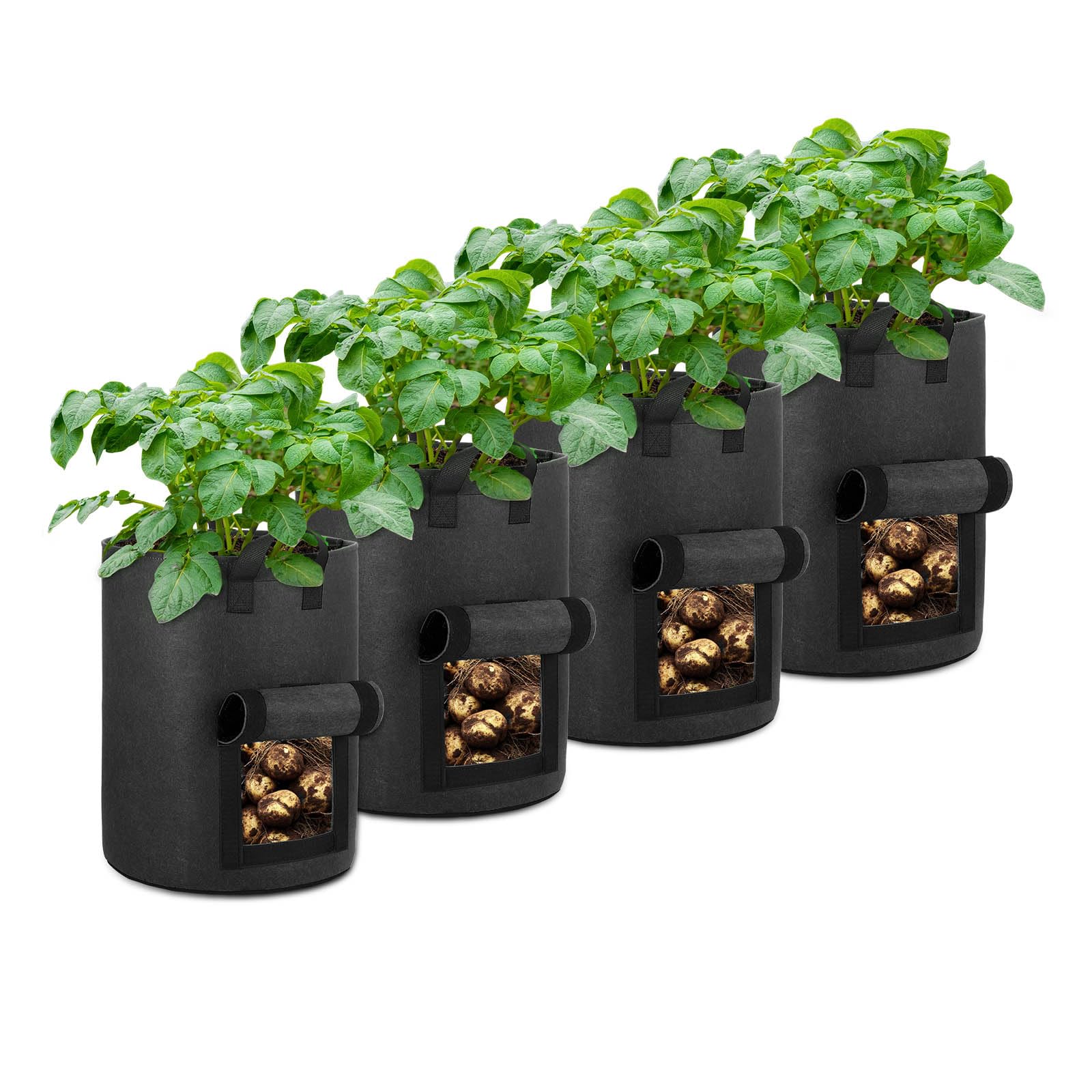
The OPPOLIFE bags stand out for their harvest visualization window — a fabric flap that zips open to reveal the soil level. While marketed primarily for potatoes, this feature is useful for pepper growers who want to monitor root development without dumping the entire container. The 10-gallon capacity at 14 inches diameter and 18 inches tall gives pepper plants exceptional vertical root depth, which benefits larger varieties that develop deep taproots.
The polypropylene webbing handles are wider and thicker than standard nylon straps, and they are reinforced with an inner lining that prevents the handle from pulling through the fabric under heavy loads. The nonwoven fabric itself feels dense and resists punctures from garden tools. Several reviewers report reusing these bags for multiple years with sweet potatoes and peppers rotating through the same containers without visible wear.
The four-bag pack is smaller than most alternative offerings, so this works best as a supplement to a larger fabric pot collection rather than a primary solution. The taller profile also means these bags hold more soil mass than typical 10-gallon grow bags, which makes them heavier to move when fully saturated.
What works
- Flap window allows root inspection
- Tall profile supports deep root growth
- Wide polypropylene handles reduce strain
What doesn’t
- Only four bags per pack
- Heavy when fully filled with moist soil
5. Land Guard 5 Gallon Fabric Grow Bags 10-Pack
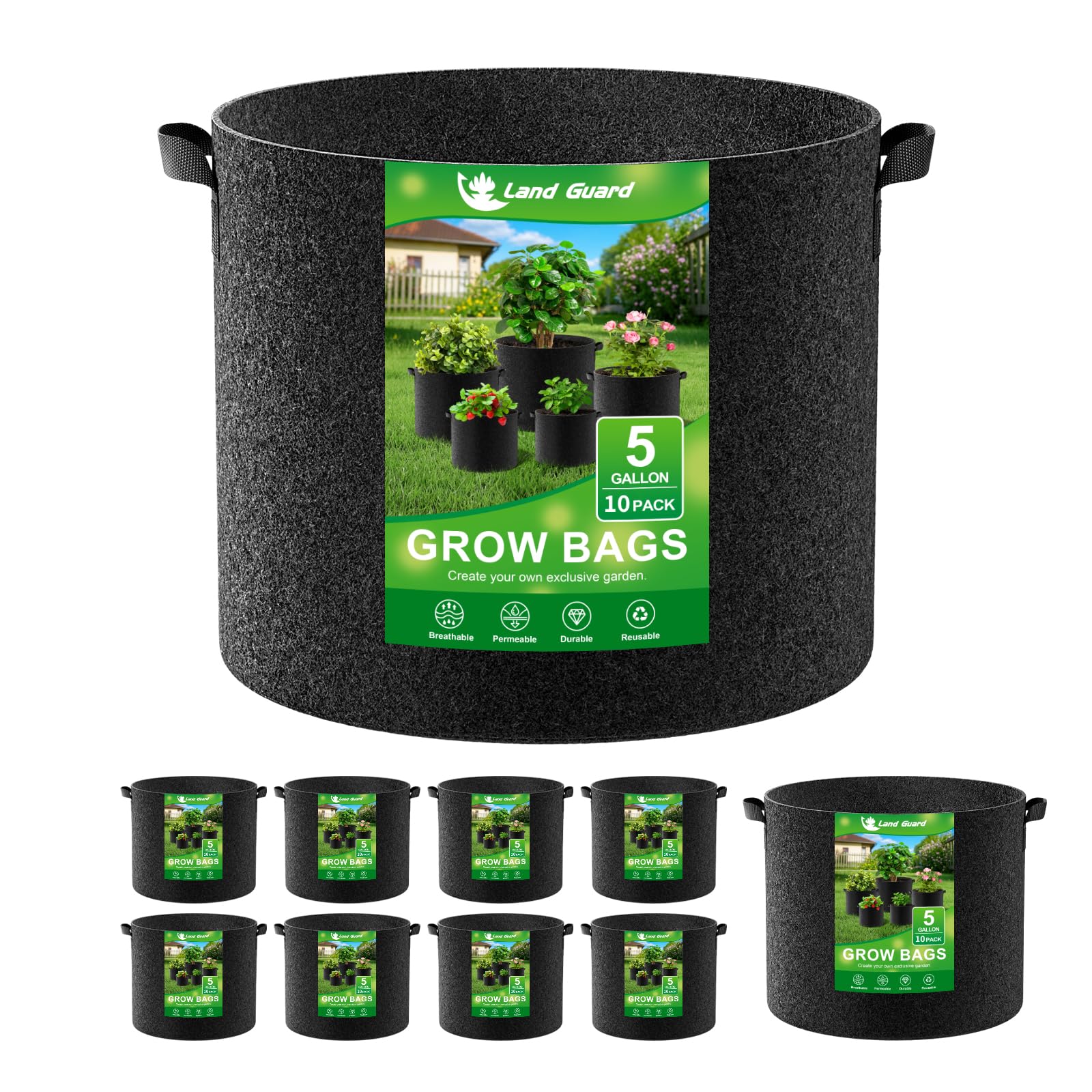
The Land Guard 10-pack delivers the lowest cost per bag in this lineup without sacrificing the essential aeration and drainage characteristics that pepper plants require. Each bag uses high-density nonwoven fabric that feels lighter than 300g material but still provides adequate sidewall breathability. The handles are integrated into the fabric body rather than attached as separate straps, which saves manufacturing cost but still allows reasonable lifting capability for a 5-gallon container.
Gardening feedback highlights that these bags hold up well for a full season and many report successful second-year reuse with tomatoes, peppers, and cucumbers. The 5-gallon dimensions — roughly 9.8 inches deep and 11.8 inches wide — provide sufficient root zone for standard pepper varieties without excess soil cost. The fabric texture promotes good water drainage through the entire surface, preventing the perched water table that plagues solid plastic pots.
The trade-off for the low per-unit cost is noticeable when comparing fabric thickness to premium 300g bags. These will not last as many seasons as the FEED GARDEN or iPower options, but for a beginner starting a large pepper plot or a grower who wants to expand capacity affordably, the Land Guard ten-pack is difficult to beat on value per bag.
What works
- Excellent cost-per-bag for bulk planting
- Good drainage and airflow for healthy roots
- Lightweight when empty, easy to store flat
What doesn’t
- Fabric thinner than premium alternatives
- Shorter expected lifespan
6. HealSmart 10 Gallon Nonwoven Grow Bags 6-Pack
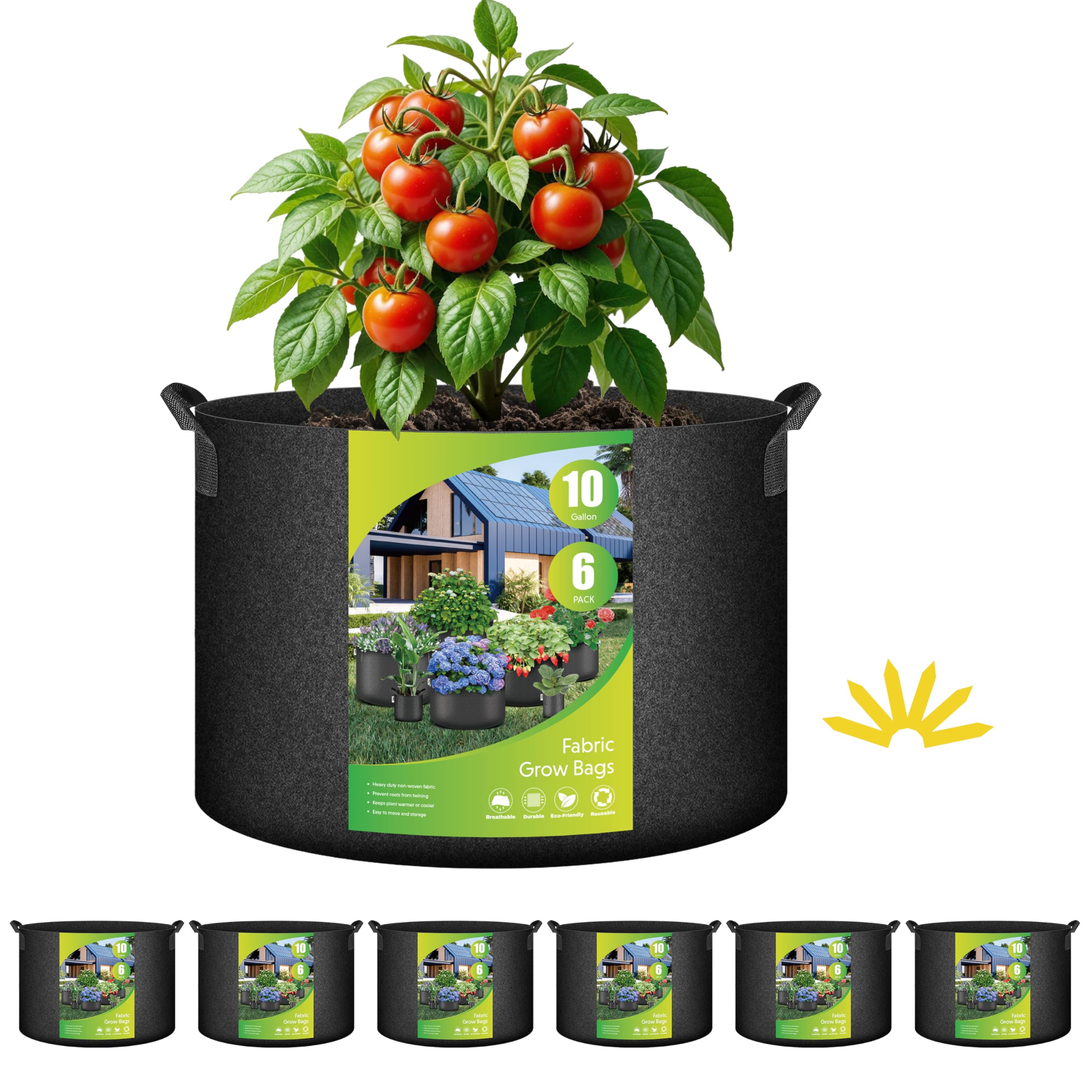
The HealSmart 10-gallon six-pack is one of the most wallet-friendly ways to get started with fabric pots for pepper plants. Each bag measures 15.9 inches in diameter and 11.9 inches tall, offering generous horizontal root spread that suits pepper plants with wide, shallow root systems. The nonwoven fabric is BPA-free and provides the same air-pruning benefits as more expensive alternatives, though the material density is closer to entry-level felt than to 300g pro-grade fabric.
Owner reports indicate these bags hold up well for a full growing season and store flat without issues when cleaned and dried. The sturdy handles are functional for short moves, though caution is advised when carrying fully saturated 10-gallon bags over long distances. A nice bonus is the inclusion of six plant labels, which helps keep track of different pepper varieties when growing multiple types simultaneously.
The dimensional accuracy concern raised in customer feedback is worth noting — some users found the actual measurements slightly smaller than advertised, though the 10-gallon capacity still provides adequate root room. This pack is best suited for budget-conscious growers or those testing fabric pots for the first time before committing to premium multi-season bags.
What works
- Six-pack at entry-level pricing
- Wide diameter suits pepper root spread
- Includes plant labels for organization
What doesn’t
- Fabric thickness below premium standard
- Reported dimensional inconsistencies
7. UOUZ 12-Inch Large Plant Pot with Saucer

The UOUZ 12-inch planter is the only non-fabric option in this guide, and it serves a specific niche: pepper growers who need a decorative container for indoor or patio display without sacrificing drainage performance. The plastic construction is 5.8mm thick — unusually robust for this price tier — and the matte exterior finish resists scuffing better than glossy plastic pots. The real standout feature is the grid-shaped drainage system, which replaces the single central hole with multiple small openings that prevent soil from forming a water seal.
This 5-gallon planter holds approximately 0.77 cubic feet of soil, which matches the volume needed for a single bell pepper plant. The included saucer catches excess water, making it suitable for indoor use where runoff cannot drain freely. The modern aesthetic works well in kitchen windows or on patio tables where black fabric bags would look out of place. Plastic retains soil moisture longer than fabric, which reduces watering frequency — a practical advantage for indoor growers who cannot water daily.
The limitation is the single-bag packaging and the lack of fabric aeration benefits. Pepper roots will not air-prune in this container, so you must be more careful with watering to avoid root rot. This is the right choice if aesthetics matter and you can manage the watering discipline required for plastic pots, but for pure root health the fabric options above are superior.
What works
- Thick sturdy plastic with grid drainage
- Attractive modern design for indoor use
- Included saucer prevents water damage
What doesn’t
- No air-pruning benefit for roots
- Single pot — not a multi-pack
Hardware & Specs Guide
Fabric Weight — The 300g Threshold
Nonwoven fabric for grow bags is measured in grams per square meter (gsm). Standard entry-level bags use 200g felt that feels thin and can develop pinhole leaks within a single season. The 300g fabric used in premium bags like the FEED GARDEN and iPower options provides roughly 50 percent more material density, which translates to better UV resistance, reduced soil moisture evaporation through the sidewall, and structural integrity that survives multiple growing seasons. When comparing fabric options, 300g is the minimum for multi-year reuse; anything below 250g is effectively a single-season product.
Gallon Capacity — Why 5 Gallons Is the Sweet Spot
Pepper plants produce the best fruit-to-plant ratio when roots have at least 5 gallons of unrestricted growing space. Anything smaller than 3 gallons forces the plant into a survival mode that reduces fruit set and limits plant height. Anything larger than 10 gallons provides no additional yield benefit for standard pepper varieties and simply wastes soil and weight. The 5-gallon container — whether fabric or plastic — holds roughly 0.75 cubic feet of soil, which is enough to support a full-sized pepper plant through an entire fruiting cycle while remaining portable enough to chase afternoon sunlight.
Handle Attachment — Webbing vs. Fabric Strap
Handle construction is the single most overlooked durability spec in this category. Budget bags often cut handles from the same fabric as the bag body and stitch them directly to the sidewall, which creates a stress concentration point that fails when the fabric is wet and heavy. Premium designs use polypropylene or nylon webbing that runs through a reinforced channel or is anchored with an inner backing patch. For 10-gallon bags filled with moist soil, the handle attachment system must withstand roughly 40 to 50 pounds of load — webbing handles with cross-stitching at the anchor point are significantly more reliable than fabric cutout handles.
Drainage Holes — Grid Configuration vs. Single Center Hole
The drainage design in plastic pots directly affects pepper plant health. A single central drainage hole often fails because water surface tension holds a layer of water across the bottom of the pot, creating a saturated zone that promotes root rot in the lower root ball. Grid configurations, like the one used in the UOUZ planter, break this surface tension by providing multiple small openings across the base. Fabric pots sidestep this problem entirely because the entire sidewall is porous, but they introduce the counter-issue of faster soil drying. Choosing between the two depends on your watering habits and climate conditions.
FAQ
Can I plant two pepper plants in one 5-gallon grow bag?
How often should I water pepper plants in fabric grow bags compared to plastic pots?
Will black fabric grow bags overheat pepper roots in direct sun?
Do plastic pots with drainage holes work as well as fabric pots for peppers?
Final Thoughts: The Verdict
For most gardeners, the best pots for pepper plants winner is the FEED GARDEN 5 Gallon 8-Pack because it combines thick 300g fabric construction with reinforced handles at a per-bag cost that makes sense for serious home growers. If you want ultimate aeration and a bag that will last a decade, grab the Rain Science 10 Gallon. And for a budget-friendly multi-pack to start your pepper garden, nothing beats the Land Guard 5 Gallon 10-Pack.