
Deer browsing on young trees does not just strip leaves — it rubs bark, breaks leaders, and stunts growth for years. A dedicated physical barrier is the only reliable solution when deer pressure is high. Netting, welded wire, and kit-based fences each handle this job differently, and the right choice depends on the number of trees you are protecting and how permanent you need the barrier to be.
I’m Rikta — the co-founder and writer behind Lawn Gear Lab. I have spent hundreds of hours analyzing deer fence materials, comparing mesh sizes and coating thicknesses, and studying owner feedback on long-term durability across multiple climates to build this guide.
Whether you need a single tree guard or a full orchard perimeter, this guide reviews the top options to help you find the best deer fence for trees that matches your property and budget.
How To Choose The Best Deer Fence For Trees
Deer fencing is a balance between height, mesh size, material durability, and ease of installation. The wrong choice either wastes money on overbuilt material or lets deer through after one season.
Height Is Non-Negotiable
Whitetail deer can clear a 6-foot fence from a standing start. For reliable protection you need a barrier at least 7 feet tall, and 8 feet is safer for areas with high deer pressure. Shorter fences only work if angled outward or electrified.
Mesh Size Determines What Gets Through
Large mesh openings around 2 inches block deer but let rabbits and squirrels pass. Tiny 0.6-inch openings stop smaller animals but reduce airflow and visibility. A 0.75-inch opening is the most common compromise for protecting trees from deer and most ground pests.
Material: Netting vs. Welded Wire
Polypropylene netting is lightweight, easy to roll out, and costs less upfront. Welded wire fencing with PVC coating costs more but stands rigid for decades without sagging or being chewed through. Choose netting for seasonal or temporary wraps and welded wire for permanent perimeters.
UV Resistance and Weathering
Unprotected polypropylene breaks down in direct sunlight within 12 to 18 months. Look for UV-stabilized or UV-treated material if the fence will stay up year-round. Galvanized steel with vinyl coating does not degrade in UV and resists rust, making it the best choice for permanent installations.
Quick Comparison
On smaller screens, swipe sideways to see the full table.
| Model | Category | Best For | Key Spec | Amazon |
|---|---|---|---|---|
| Jobe’s Deer Barrier Fencing | Polypropylene Netting | Year-round orchard protection | UV-treated, 7ft x 100ft | Amazon |
| FRUITEAM Deer Fence Netting | PP Coated Netting | Extra height for high jumpers | 8ft x 100ft, 0.7″ mesh | Amazon |
| Tenax Deer Fence Kit | Netting Kit | All-in-one setup with poles | 7ft x 100ft, includes 10 poles | Amazon |
| Gisafai Welded Wire Fence | Welded Wire | Permanent perimeter fencing | 16-gauge, 2.36″ mesh, PVC coated | Amazon |
| Fencer Wire Garden Netting | Polypropylene Netting | Low-visibility protection | 7ft x 100ft, 0.75″ mesh | Amazon |
| Tenax Deer Netting | Polypropylene Netting | Seasonal garden barriers | 7ft x 100ft, 0.63″ mesh | Amazon |
| PotatoLife Plastic Mesh Netting | Plastic Mesh | Single tree wraps and guards | 40″ x 25ft, 0.8″ mesh | Amazon |
In‑Depth Reviews
1. Jobes Jobe’s Deer Barrier Fencing

The Jobe’s Deer Barrier fencing uses UV-treated polypropylene that holds up for multiple seasons even under intense sun exposure — owners in Arizona report it lasting two years and counting. The 7-foot height is the practical minimum for stopping whitetail deer, and the lightweight roll makes long runs around orchards manageable for a single person.
The mesh measures approximately 1.125 inches by 0.875 inches, which blocks deer and larger animals while still allowing pollinators through. Users pair it with UV-stabilized zip ties on metal T-posts for a setup that remains taut without sagging. One reviewer noted that deer left nose slime on the netting but could not breach it.
This fence is not suitable for draping directly over plants — it works best as a taut perimeter barrier. The polypropylene will not rust or rot, but it can tear if snagged by falling branches. For long-term permanent fencing around a tree line or young orchard, this is the most balanced option between cost, weight, and longevity.
What works
- UV-stabilized formula lasts years in direct sun
- Lightweight roll is easy to transport and install
- Strong mesh withstands deer impact without tearing
What doesn’t
- Not designed for drape-over use on individual plants
- Can stretch slightly if tensioned too aggressively
2. FRUITEAM Deer Fence Netting
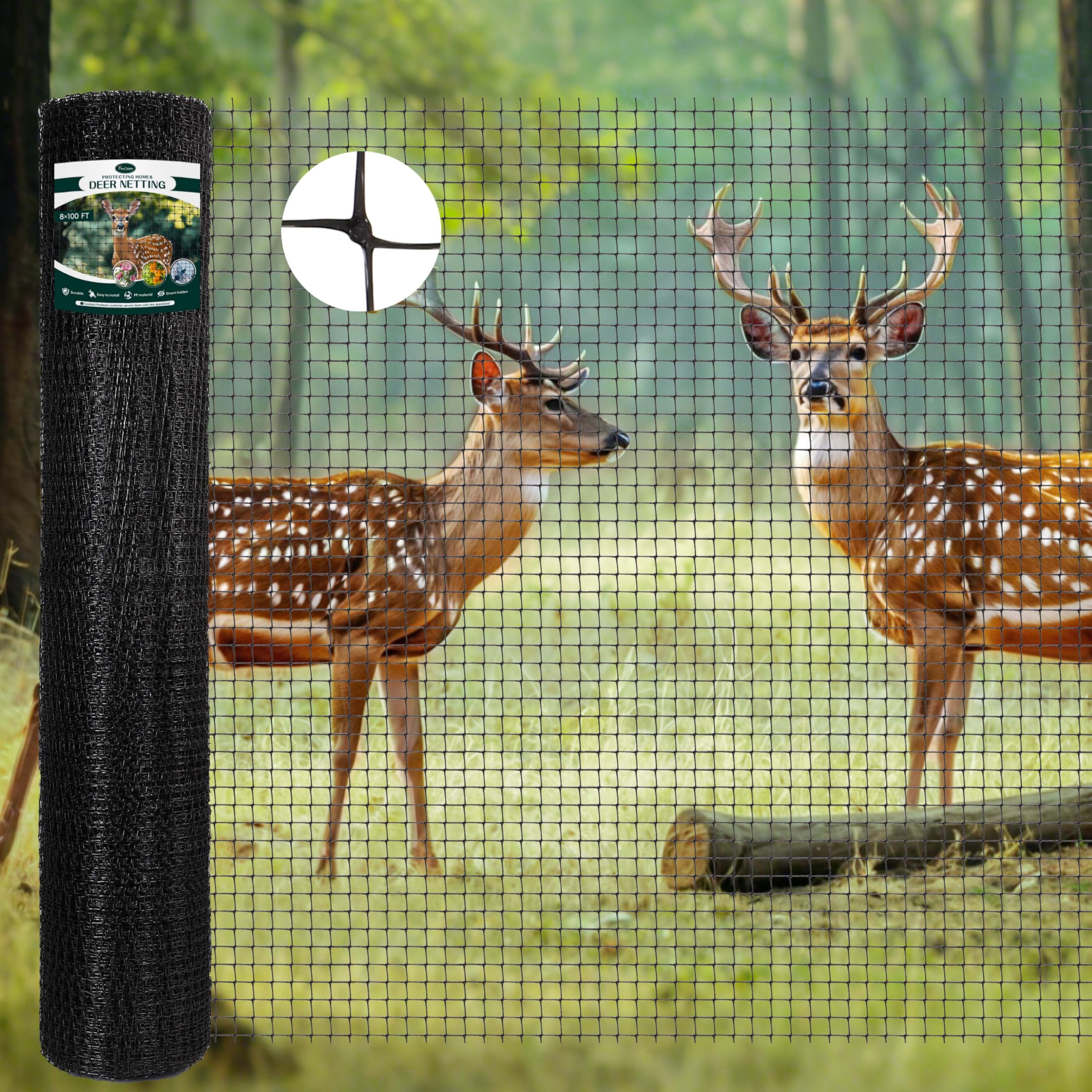
The FRUITEAM netting stands 8 feet tall, giving you an extra foot of clearance over standard 7-foot rolls. This height is critical for areas where deer have room to build a running jump, especially on sloped terrain where a shorter fence might be cleared. The 0.7-inch hexagonal mesh is tight enough to exclude fawns and smaller animals.
Made from corrosion-resistant and anti-aging polypropylene with a PP coating, the material feels denser than basic netting rolls. Owners installed it around blueberry patches and fruit trees using 10-foot rebar and zip ties, reporting no breaches after several months. The material cuts cleanly with scissors and does not fray aggressively.
A small percentage of rolls arrive with manufacturing tension issues that make the netting sit out of square, which can complicate stretching it tightly. Overall, for large edible gardens or orchards where maximum vertical clearance is needed, this netting delivers premium coverage area and reliable deer exclusion.
What works
- 8-foot height provides a safety margin against jumping deer
- PP coating resists weathering and UV damage
- Large 100-foot roll covers extensive orchard runs
What doesn’t
- Some rolls may have out-of-square manufacturing defects
- Heavier material requires sturdy posts for tensioning
3. Tenax Deer Fence Kit

The Tenax Deer Fence Kit bundles 100 feet of 7-foot netting with 10 adjustable poles, 50 self-locking ties, and 10 sod staples — everything you need for a straight fence line without buying extra hardware. The netting uses a 0.63 by 0.75-inch rectangular mesh that balances visibility with animal exclusion, and the polypropylene construction is thicker than standard bird netting.
Owners consistently highlight how the rigid mesh does not tangle or snag during installation, unlike cheaper netting that folds into a knot. The included poles are adjustable, though some users prefer to swap them for taller 8-foot metal stakes to maximize the effective height. The netting unrolls flat and cuts easily without fraying.
At nearly 130 ounces, the roll is heavier than bare netting, so a helper is useful during setup. The kit is priced higher than buying netting alone, but for someone fencing a single orchard block or large garden, the convenience of having matched poles and fasteners in one box saves multiple trips.
What works
- Complete kit with poles, ties, and staples included
- Rigid mesh resists tangling during unrolling and installation
- Easy to cut, adjust, and store for reuse
What doesn’t
- Cut ends can be sharp and may need trimming
- Included poles are shorter than optimal 8 feet
4. Gisafai Welded Wire Fence
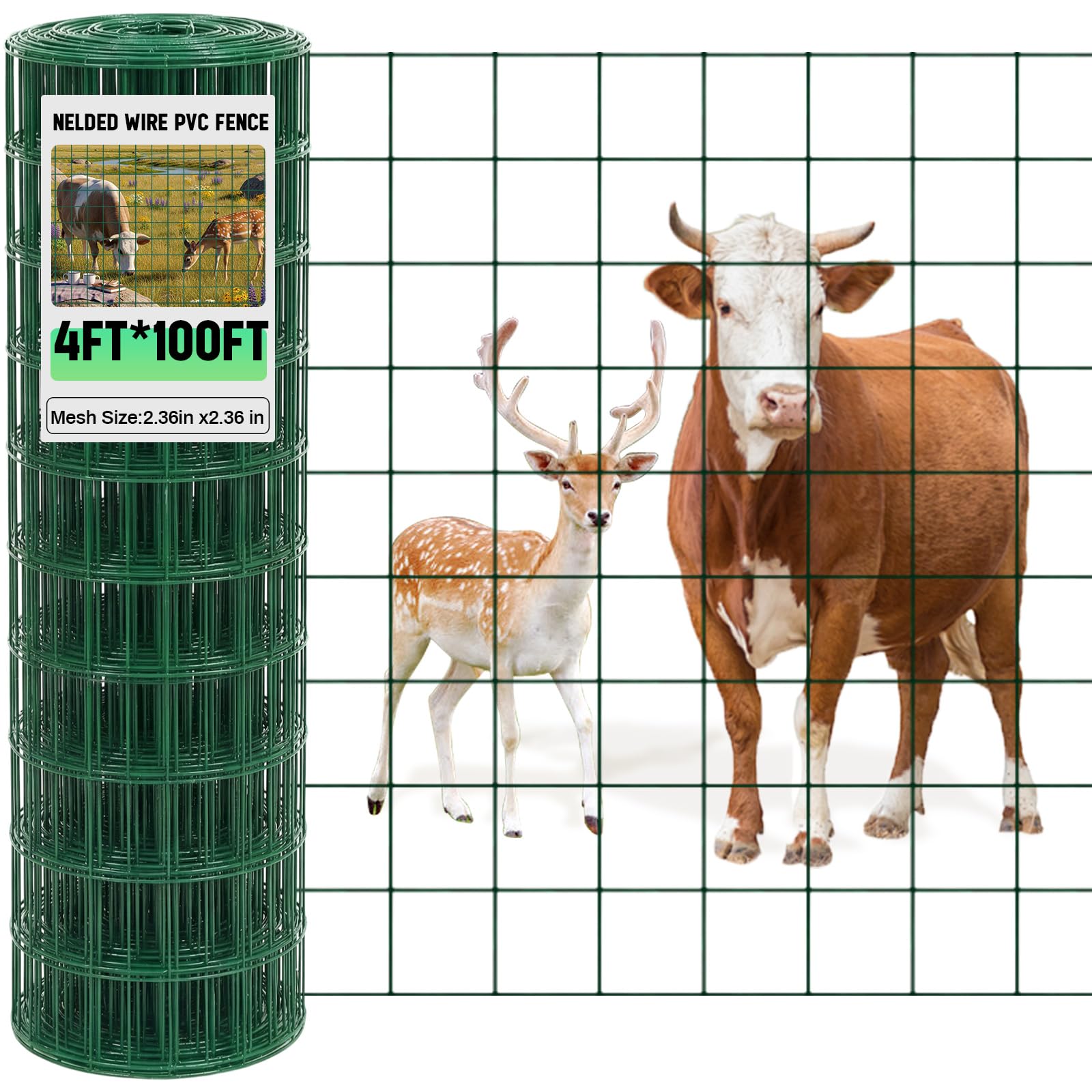
The Gisafai fence is built from 16-gauge galvanized steel wire with a double-layered PVC vinyl coating, making it the most physically robust option in this lineup. The 2.36-inch square mesh blocks deer while remaining large enough for sunlight and airflow to pass through. This fencing does not sag, stretch, or tear like netting does over time.
Each welding joint is reinforced to maintain structural integrity against impact from deer, dogs, or livestock. The 4-foot height by 100-foot roll covers a large footprint, though the welded steel makes it heavier and slightly harder to maneuver during installation. Users wrap it around tree trunks, build garden perimeters, and use it for chicken runs.
A few buyers reported receiving wire that was thinner than the advertised 16-gauge specification, with some strands breaking under tension. The variance suggests inconsistent quality control between production batches. For buyers who want a permanent, rust-resistant fence that will last many years, this is a strong option if you inspect the gauge upon arrival.
What works
- Steel construction resists chewing, bending, and impact
- PVC coating prevents rust and UV degradation
- Large 2.36-inch mesh maintains visibility and airflow
What doesn’t
- Some rolls may deviate from the stated 16-gauge thickness
- Heavy material requires more effort to unroll and install
5. Fencer Wire Garden & Plant Protective Netting

The Fencer Wire netting uses a 0.75-inch mesh that is small enough to exclude deer, birds, rabbits, and squirrels while letting bees and other beneficial insects through. The polypropylene material is lightweight but rugged, with owners reporting that a single strand cannot be broken by hand. The netting weighs only 8 pounds for a 7-foot by 100-foot roll.
Installation is straightforward with zip ties on T-posts. The netting is not sticky and does not snag on branches during setup, which is a common frustration with cheaper alternatives. Owners in the Ozark mountains report it surviving five years of wind, snow, and temperature swings from 0 to 90 degrees Fahrenheit without significant degradation.
The material is nearly invisible from a distance of 70 feet, which preserves the look of a landscape while providing functional protection. The main tradeoff is that this netting is designed for perimeter enclosure rather than individual tree wraps, and deer may need visual cues like ties to recognize the barrier when running at full speed.
What works
- Nearly invisible from a distance, preserving landscape aesthetics
- Lightweight yet rugged; survives extreme temperature swings
- Easy to cut, install, and reuse across multiple seasons
What doesn’t
- Deer may not see it at a run without visual markers
- Not intended as a stand-alone wrap for individual tree trunks
6. Tenax Deer Netting
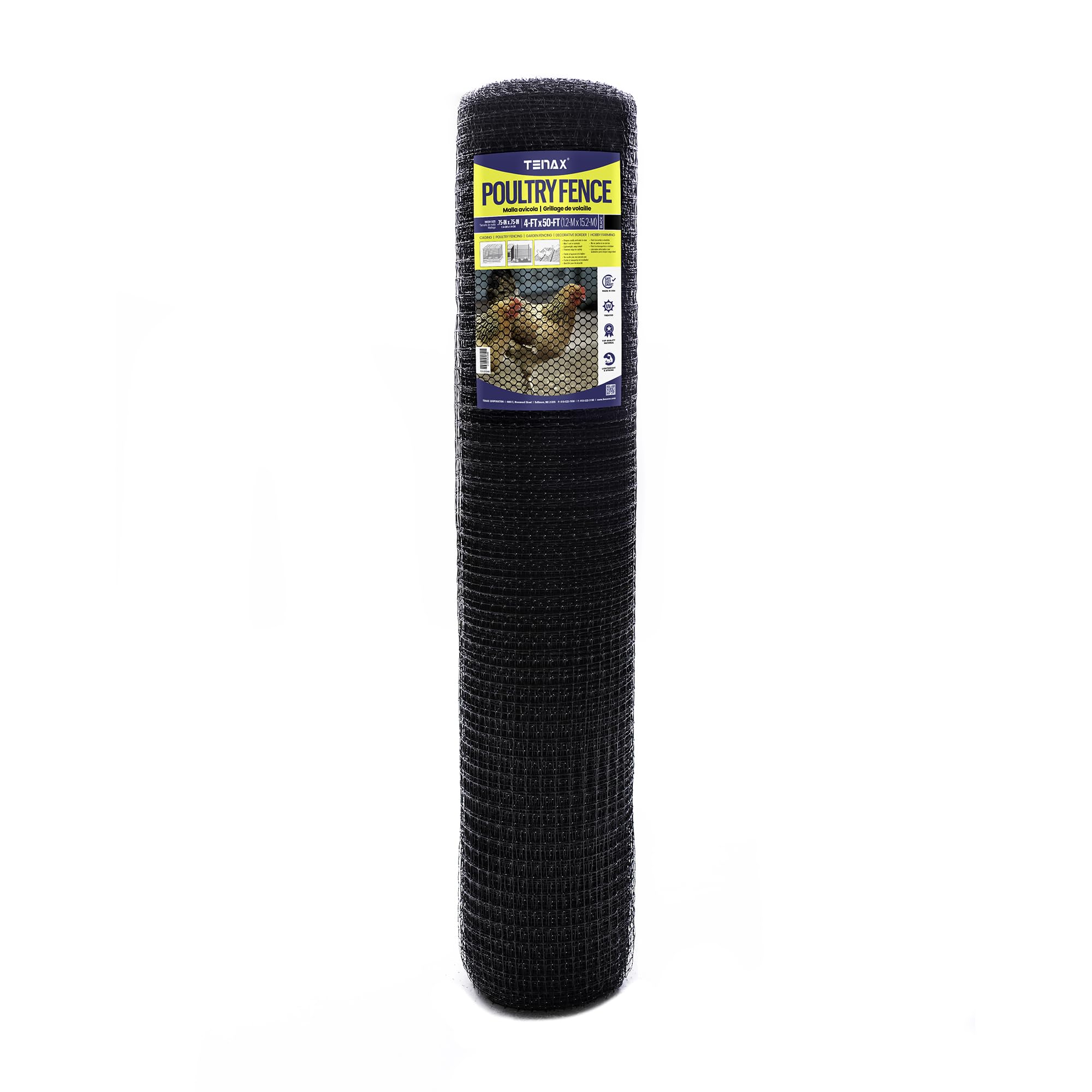
The standard Tenax Deer Netting offers a 0.63-inch by 0.75-inch mesh size that blocks deer while being noticeably thicker and easier to handle than generic store-bought netting. The 7-foot by 100-foot roll provides substantial coverage for seasonal protection of flower beds, blueberry rows, and grape vines.
Owners report that it is rigid enough to roll up and reuse year after year without tangling, which sets it apart from cheaper netting that knots irreversibly after one season. The cut ends are slightly poky and may require trimming to avoid snagging, but the material itself does not fray or lose shape during installation.
This netting is priced higher than basic polypropylene rolls, but the improved durability and reusability make it a smart mid-range investment for moderate-sized gardens. For homeowners fencing a 30-foot blueberry row or a small orchard, this netting delivers reliable seasonal protection without the expense of a full kit or welded wire.
What works
- Thicker and more rigid than basic garden netting
- Can be rolled up and reused across multiple seasons
- Does not tangle or knot during storage
What doesn’t
- Cut ends can be sharp and require trimming
- Heavier material may need two people for full-length installation
7. PotatoLife Plastic Hardware Mesh Netting
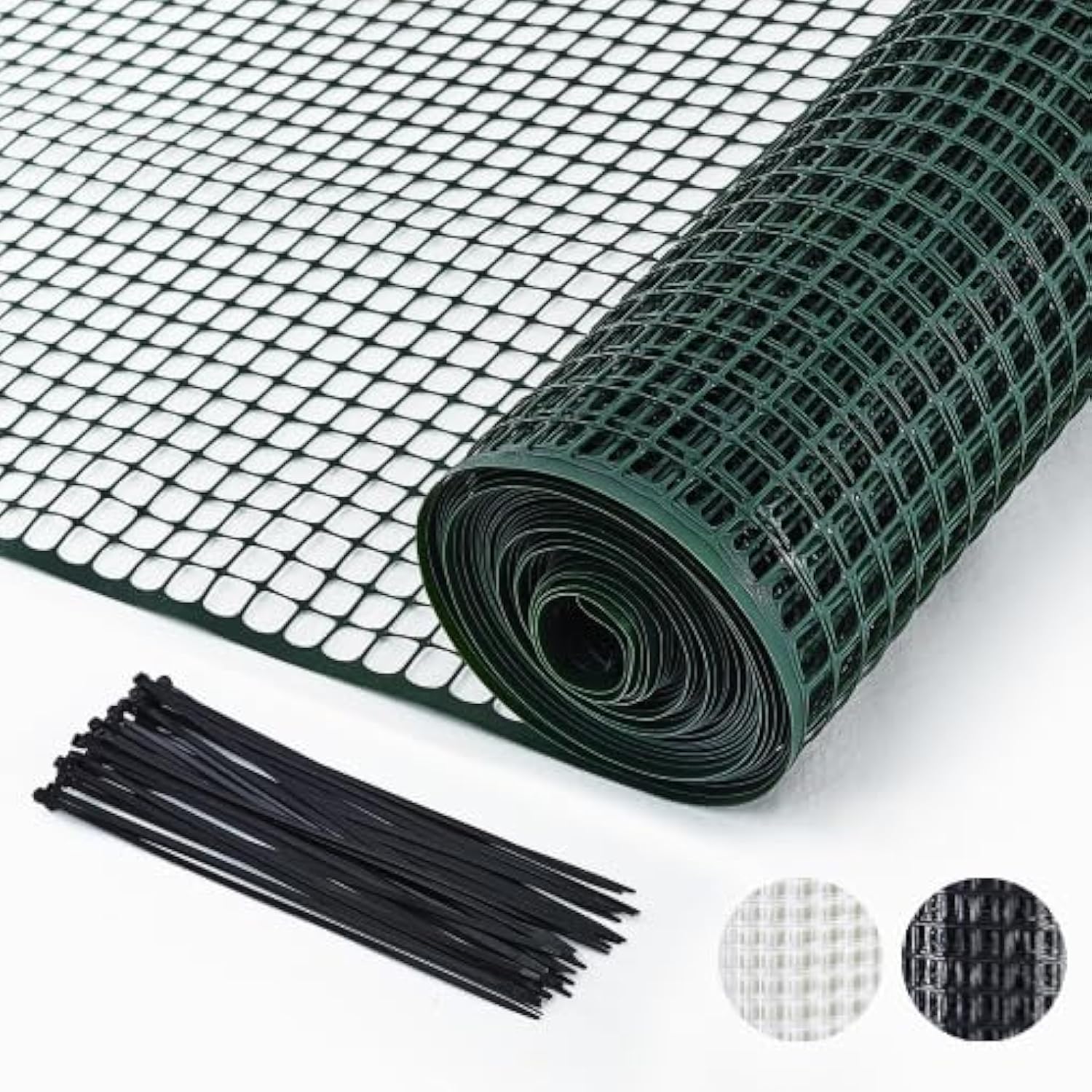
The PotatoLife netting is a compact 40-inch by 25-foot roll made from UV-protected high-density polyethylene. At only 40 inches tall, this fence is not a standalone deer solution for open areas — deer can easily step over it. It works best as a tree guard around individual saplings or as a short barrier on a deck or balcony where deer pressure is low.
The 0.8-inch mesh is small enough to stop rabbits and poultry while letting airflow reach young trunks. Fifty zip ties are included, so no extra hardware is needed for basic installation around a post, railing, or tree. Users have successfully repurposed it as puppy-proofing, pigeon barriers, and porch screening.
The material is lightweight and cuts easily with scissors or a utility knife. It is not designed for high-tension stretches across long spans, and the included zip ties are small — some users reported pigeons biting through them. For wrapping a few young trees or protecting a small garden bed from ground animals, this is an inexpensive entry point.
What works
- Compact roll with included zip ties for quick setup
- UV-protected plastic resists outdoor weathering
- Versatile for tree guards, pet barriers, and balcony nets
What doesn’t
- 40-inch height is far too short to stop deer from jumping
- Provided zip ties may be chewed through by animals
Hardware & Specs Guide
Mesh Size and Animal Exclusion
Mesh openings between 0.6 and 0.8 inches block adult deer while allowing bees and small birds to pass. Openings larger than 2 inches let rabbits and squirrels through, so if you need full ground-to-top protection, stay under 1 inch. Welded wire with 2-inch squares works for deer only and requires a separate lower barrier for smaller pests.
Material Lifecycle
Polypropylene netting typically lasts 2 to 5 years depending on UV exposure. UV-stabilized formulations extend that window. Galvanized steel with PVC coating can last 10 to 20 years with no degradation from sunlight or moisture. The tradeoff is weight and installation difficulty — netting rolls under 10 pounds, while steel rolls can exceed 20 pounds.
FAQ
Is 7 feet tall enough to stop deer from jumping over?
Can I use deer netting as a permanent fence around a tree?
Will a deer fence harm birds or small wildlife?
Final Thoughts: The Verdict
For most gardeners, the deer fence for trees winner is the Jobe’s Deer Barrier Fencing because it offers UV-treated durability at a balanced price point with proven results across multiple climates. If you need maximum vertical clearance for high-pressure areas, grab the FRUITEAM Deer Fence Netting with its 8-foot height. And for a permanent perimeter that will outlast any netting, nothing beats the Gisafai Welded Wire Fence.