
Houseplant roots suffocate in dense, moisture-logged dirt. The difference between a thriving Monstera and a yellowing, wilted one often comes down to one thing: the physical structure of the soil itself. You need a mix that holds enough water to sustain growth but drains fast enough to prevent root rot — a balance that standard garden soil cannot deliver.
I’m Rikta — the co-founder and writer behind Lawn Gear Lab. I spend my weeks comparing the aeration, drainage rates, and nutrient profiles of different potting blends, studying horticultural soil science, and analyzing thousands of owner reviews to find the formulas that actually work for indoor container plants.
After evaluating seven distinct blends across price and performance, it is clear that the best houseplant soil depends entirely on your plant’s specific needs for aeration, moisture retention, and nutrient availability.
How To Choose The Best Houseplant Soil
Indoor plants are confined to containers, meaning they cannot send roots deeper to find oxygen or escape standing water. The ideal potting mix must physically support root health through a balance of water retention and drainage, while also providing a stable nutrient supply.
Texture and Drainage
Chunky ingredients like pine bark, pumice, and perlite create air pockets that allow oxygen to reach the root zone. A mix that is too fine and sandy will compact over time, trapping moisture and suffocating roots. For aroids like Monstera and Philodendron, a chunky texture is non-negotiable. For succulents, even more grit is required. For ferns and moisture-loving plants, a higher ratio of coco coir or peat moss is acceptable.
Nutrient Content and pH
Look for mixes that include worm castings, bat guano, or fish meal for slow-release nutrition. A blend that feeds plants for six months reduces the guesswork of fertilizing schedules. The pH should sit between 6.0 and 7.0 for most houseplants. Avoid mixes with synthetic time-release fertilizers unless you are prepared for potential salt buildup in containers.
Pest Prevention
Fungus gnats thrive in consistently wet, bark-heavy soils that contain compost or uncomposted organic matter. A mix that is designed to dry evenly and contains no compost or forest products is less likely to harbor these pests. If you struggle with gnats, prioritize a blend that specifically markets itself as gnat-resistant.
Quick Comparison
On smaller screens, swipe sideways to see the full table.
| Model | Category | Best For | Key Spec | Amazon |
|---|---|---|---|---|
| FoxFarm Ocean Forest 12QT | Premium All-Purpose | Nutrient-dense growth for seedlings & transplants | 12 Quarts with earthworm castings & bat guano | Amazon |
| Miracle-Gro 2-Pack 6qt | Mid-Range All-Purpose | General repotting with gnat-resistant formula | 2 x 6 qt bags, feeds for 6 months | Amazon |
| Craft Organic 2QT | Bioactive Chunky Mix | Root health for sensitive aroids | 2 Quarts, peat-free, pre-moistened | Amazon |
| DUSPRO 2QT Pre-Mixed | Hand-Blended Specialty | Versatile aroid and herb potting | 2 Quarts, 7-in-1 with worm castings | Amazon |
| Miracle-Gro 6qt + Food | Kit & Fertilizer Combo | New plant parents wanting an all-in-one kit | 6 qt bag + 8 oz liquid plant food | Amazon |
| Brut Organic 1 CU FT | OMRI-Certified Organic | Chemical-free growing for edibles and ornamentals | 1 cu ft, pH balanced 6.3-6.5 | Amazon |
| Perfect Plants Snake Plant 8QT | Specialty Succulent Mix | Snake plants, ZZ plants, and succulents | 8 Quarts, coco coir based with sand | Amazon |
In‑Depth Reviews
1. FoxFarm Ocean Forest 12QT
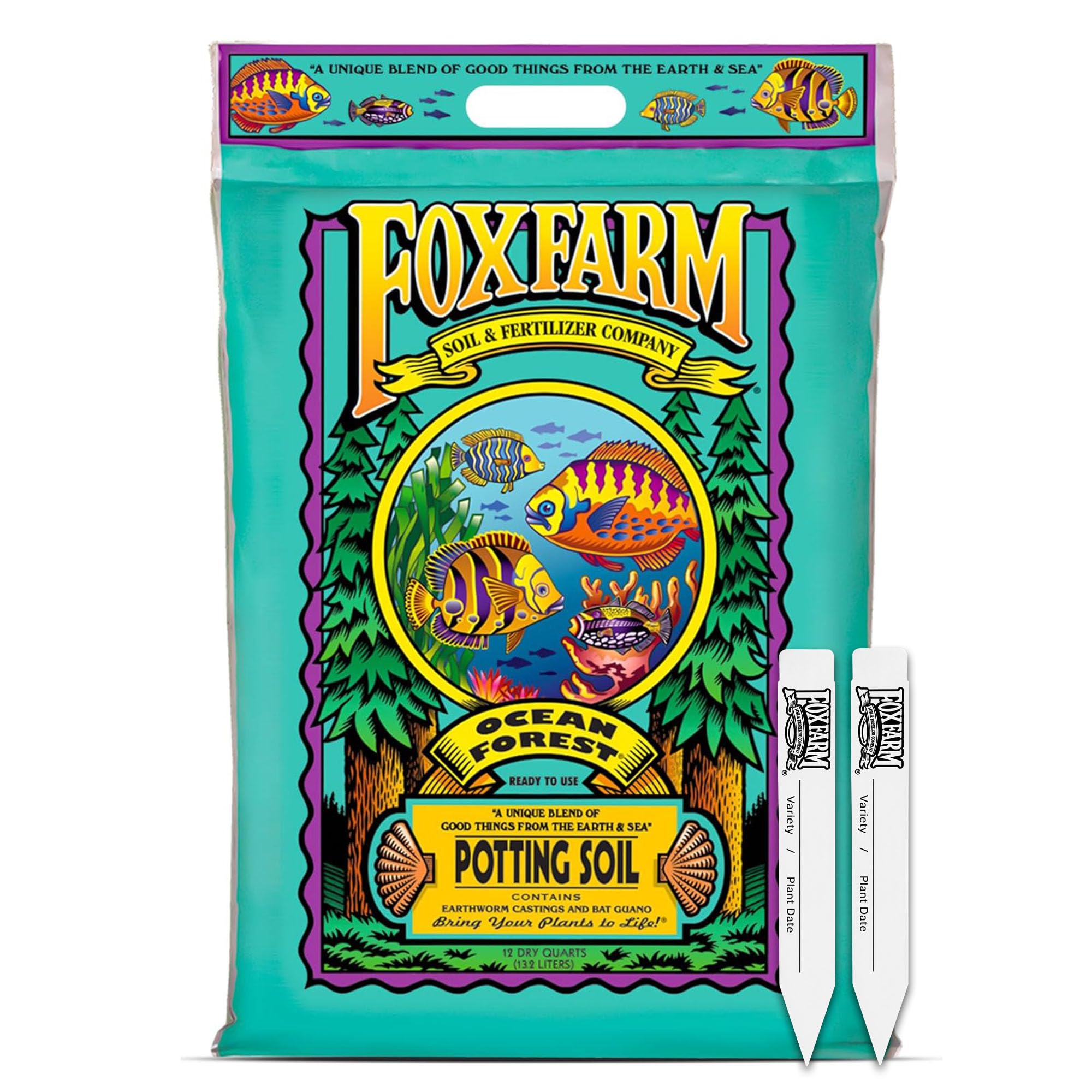
The FoxFarm Ocean Forest mix sets the standard for premium houseplant soil. It arrives already packed with a rich blend of earthworm castings, bat guano, and crab meal, which provides a robust nutrient profile that supports vigorous leaf growth and root development from day one. The texture is light and aerated, allowing for excellent drainage while still retaining enough moisture for consistent feeding.
Seasoned growers often note that this mix can be slightly too “hot” for very delicate seedlings due to its high nutrient concentration. A common workaround is to blend it with a gentler base mix like FoxFarm Happy Frog if you are starting seeds. For established houseplants like pothos, peace lilies, and monsteras, this soil performs beautifully straight out of the bag.
The 12-quart bag comes with two plant tags, a thoughtful bonus for labeling varieties or planting dates. While it sits at a higher price point, the nutrient density means you can often delay fertilizing for several weeks, making the cost more manageable over time.
What works
- Exceptional nutrient density with natural amendments like bat guano and worm castings
- Light, aerated texture that drains well without compacting
- Balanced pH suitable for most houseplants
What doesn’t
- Can be too nutrient-rich for very young seedlings without dilution
- Higher cost per quart compared to standard potting mixes
2. Miracle-Gro Indoor Potting Mix 6 qt. (2-Pack)
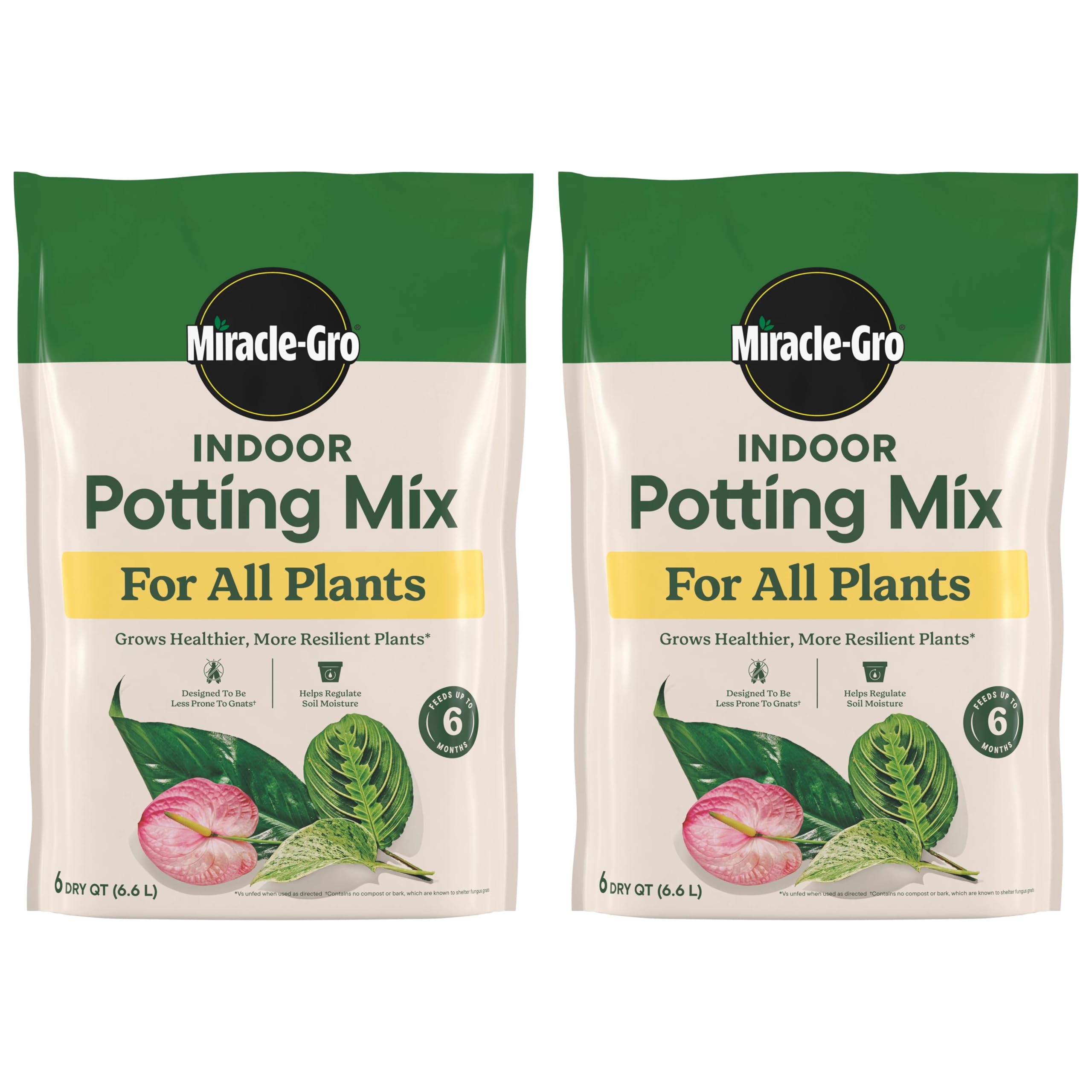
Miracle-Gro’s Indoor Potting Mix is a workhorse for the casual houseplant owner. The formula deliberately excludes compost and bark, two materials that commonly harbor fungus gnats, making this one of the most reliable mass-market options if you have dealt with gnat infestations before. The blend uses sphagnum peat moss, coconut coir, and perlite to create a texture that holds water well but drains adequately for most common houseplants.
The inclusion of a 6-month feeding schedule is a major convenience factor. You can repot your plants and not worry about adding fertilizer for half a year, which simplifies care for beginners or busy plant owners. The 2-pack bundle provides enough soil to fill eight 6-inch containers, giving you plenty of volume for a medium-sized collection.
Some users report that the soil can be dusty when first pouring it into a pot, which is a minor inconvenience. The texture is not chunky enough for aroids that crave heavy aeration, so you may want to add perlite if you are potting a Monstera or Philodendron.
What works
- Excellent gnat resistance due to lack of compost and bark
- Feeds plants for up to 6 months, reducing fertilizing chores
- Light and easy to work with; good value for the volume
What doesn’t
- Texture can be dusty upon opening
- Not chunky enough for aroids needing high aeration
3. Craft Organic Houseplant Potting Mix 2QT
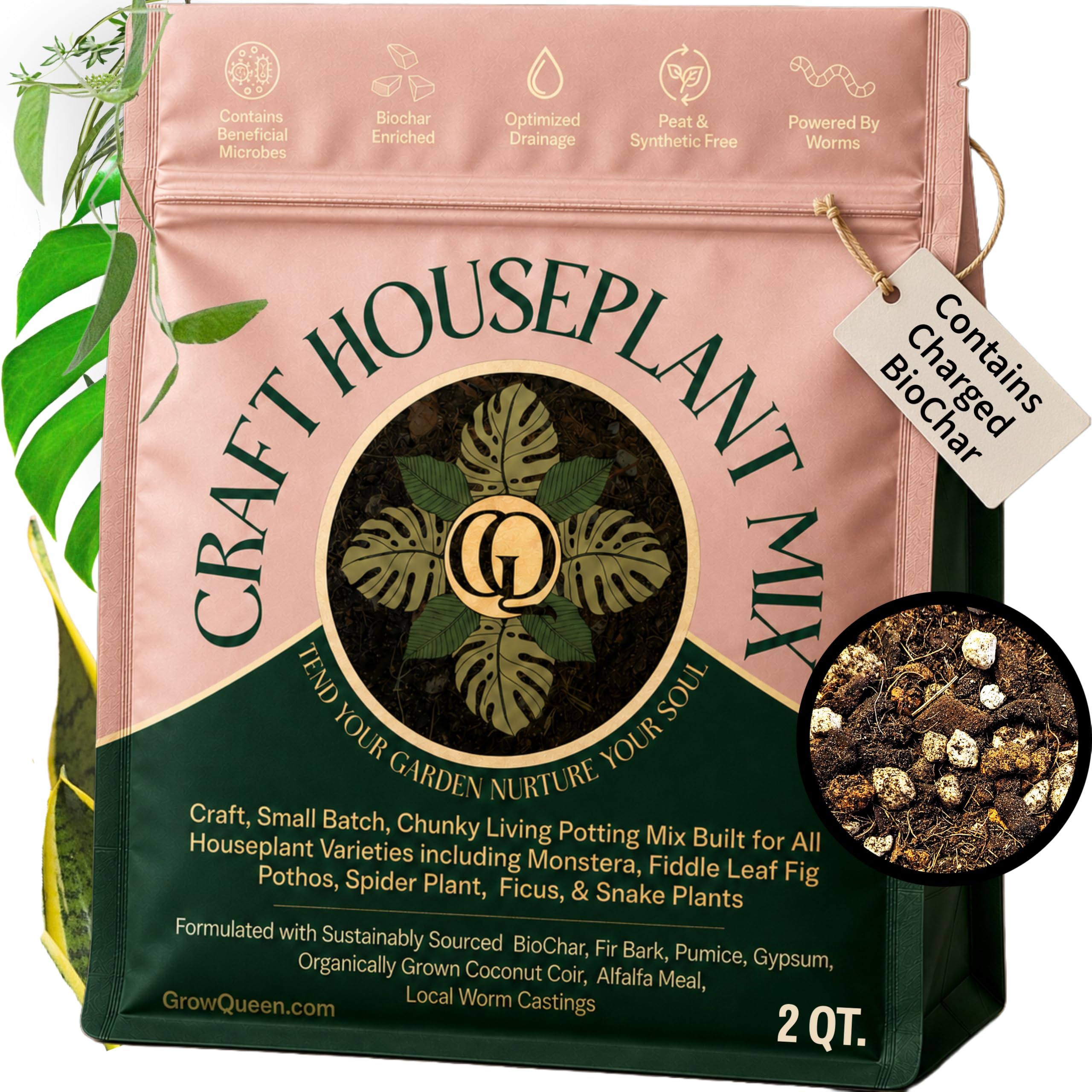
Craft Organic (by Grow Queen) delivers a chunky, bioactive blend that is engineered for the aroid enthusiast. The formula uses large Douglas fir bark fines, lava rock, and pumice instead of standard perlite, creating a permanent soil structure that resists compaction over months of watering. The mix arrives pre-moistened, which eliminates the hydrophobic layer that dry peat-based soils often form.
The inclusion of charged biochar technology enhances nutrient retention without resorting to synthetic fertilizers. This is a sustainable approach that supports long-term soil health, especially for heavy feeders like Monstera Thai Constellation and Alocasia. The peat-free and perlite-free design also means no floating white chunks or dusty mess when pouring.
The 2-quart bag is ideal for a few pots or a medium-sized repotting project. If you have a large collection, you may need multiple bags. The absence of compost also makes this mix less attractive to fungus gnats, which is a significant advantage for indoor growers.
What works
- Chunky texture with pumice and lava rock for superior aeration
- Pre-moistened to reduce transplant shock
- Biochar technology improves nutrient retention and soil structure
What doesn’t
- Small bag size may require multiple purchases for large collections
- Higher cost per quart than standard potting mixes
4. DUSPRO 2QRT Pre-Mixed House Plant Soil
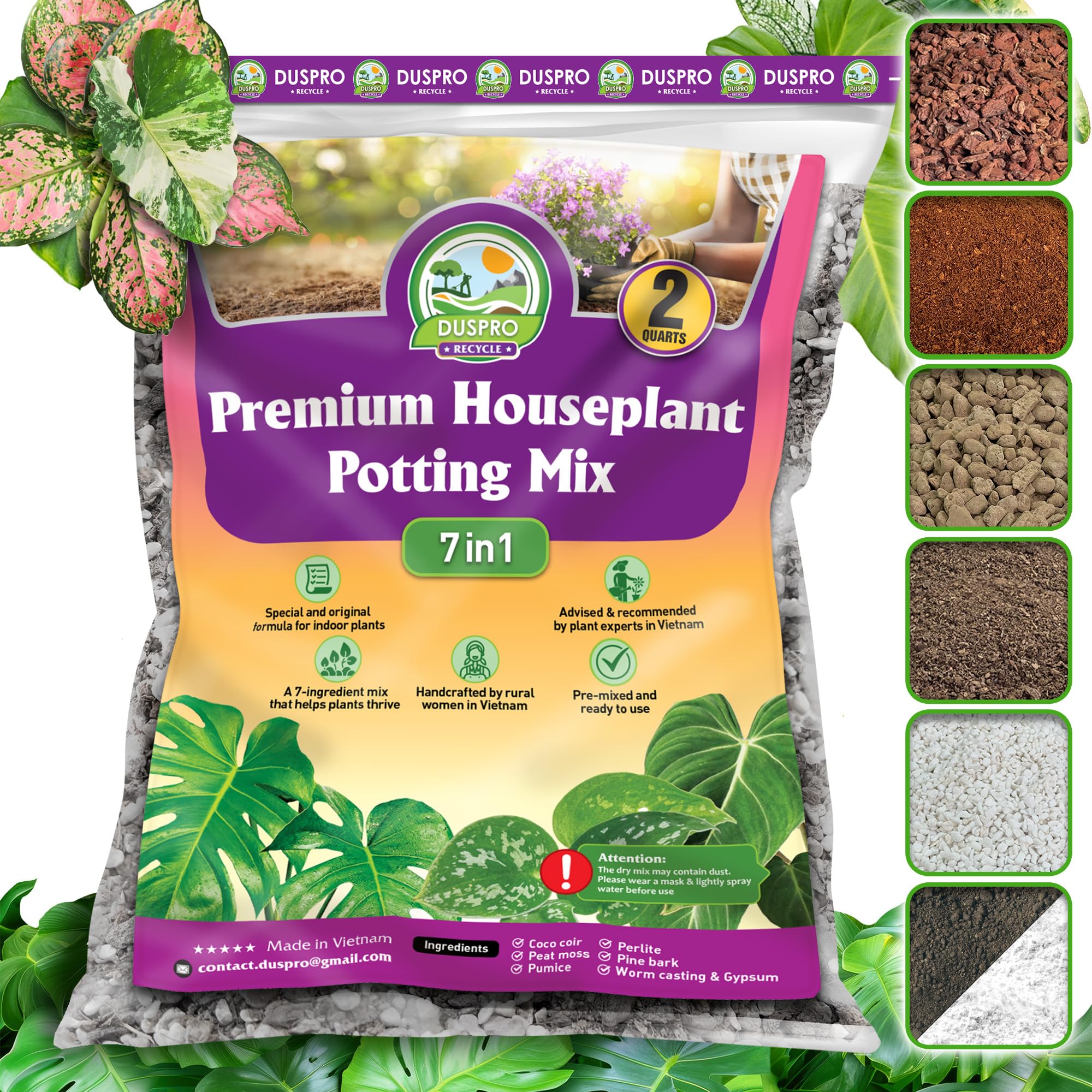
DUSPRO offers a unique 7-in-1 blend that combines coco coir, peat moss, perlite, pumice, worm castings, pine bark, and gypsum. This combination is hand-blended by skilled workers in Vietnam, giving each bag a personal touch that mass-produced soils lack. The formula is designed to hit a sweet spot between water retention for moisture-loving plants and drainage for more sensitive species.
The gypsum addition helps with pH balance and provides trace minerals, which is an uncommon but valuable feature in a pre-mixed houseplant soil. Users have reported that the mix supports everything from monsteras and pothos to culinary herbs like basil and mint without needing amendments. The 2-quart size is practical for small to medium collections.
One common note from owners is that the soil can be dusty in the bag due to the fine coco coir particles. It is recommended to shake the bag before use, as heavier components like pumice can settle during shipping. The drainage is fast, so you may need to water more frequently in very dry environments.
What works
- Comprehensive 7-ingredient blend with gypsum for pH balance
- Hand-crafted consistency suitable for many plant types
- Good moisture retention without becoming waterlogged
What doesn’t
- Can be dusty initially; fine particles settle during shipping
- Fast drainage may require more frequent watering schedules
5. Miracle-Gro 6 qt. Indoor Potting Mix + Plant Food

This bundle from Miracle-Gro pairs their standard 6-quart Indoor Potting Mix with an 8-ounce bottle of liquid indoor plant food. It is a purpose-built starter kit for new plant owners who want everything in one delivery. The soil formula matches the same gnat-resistant, peat-and-coco-coir blend from the larger pack, ensuring consistent drainage and moisture release.
The liquid fertilizer uses a precise applicator tip, making it easy to measure the correct amount per gallon of water. Users report noticeable improvement in leaf color and new growth within a few weeks of consistent use. The bundle simplifies the initial care routine, as you have both the growing medium and a feeding solution ready to go.
The main limitation is volume. The 6-quart bag is a modest amount, suitable for repotting perhaps three to four medium-sized plants. If you have a larger collection, you will need to buy additional soil separately. The fertilizer bottle lasts for many applications given its concentrated formula, so the kit offers good value for a small setup.
What works
- Complete starter kit with soil and liquid fertilizer
- Gnat-resistant soil formula with an easy-to-rewet structure
- Liquid food delivers fast visible results for leaf health
What doesn’t
- Soil quantity is modest; not cost-effective for large collections
- Must follow fertilizing directions carefully to avoid overfeeding
6. Brut Organic Potting Soil 1 CU FT
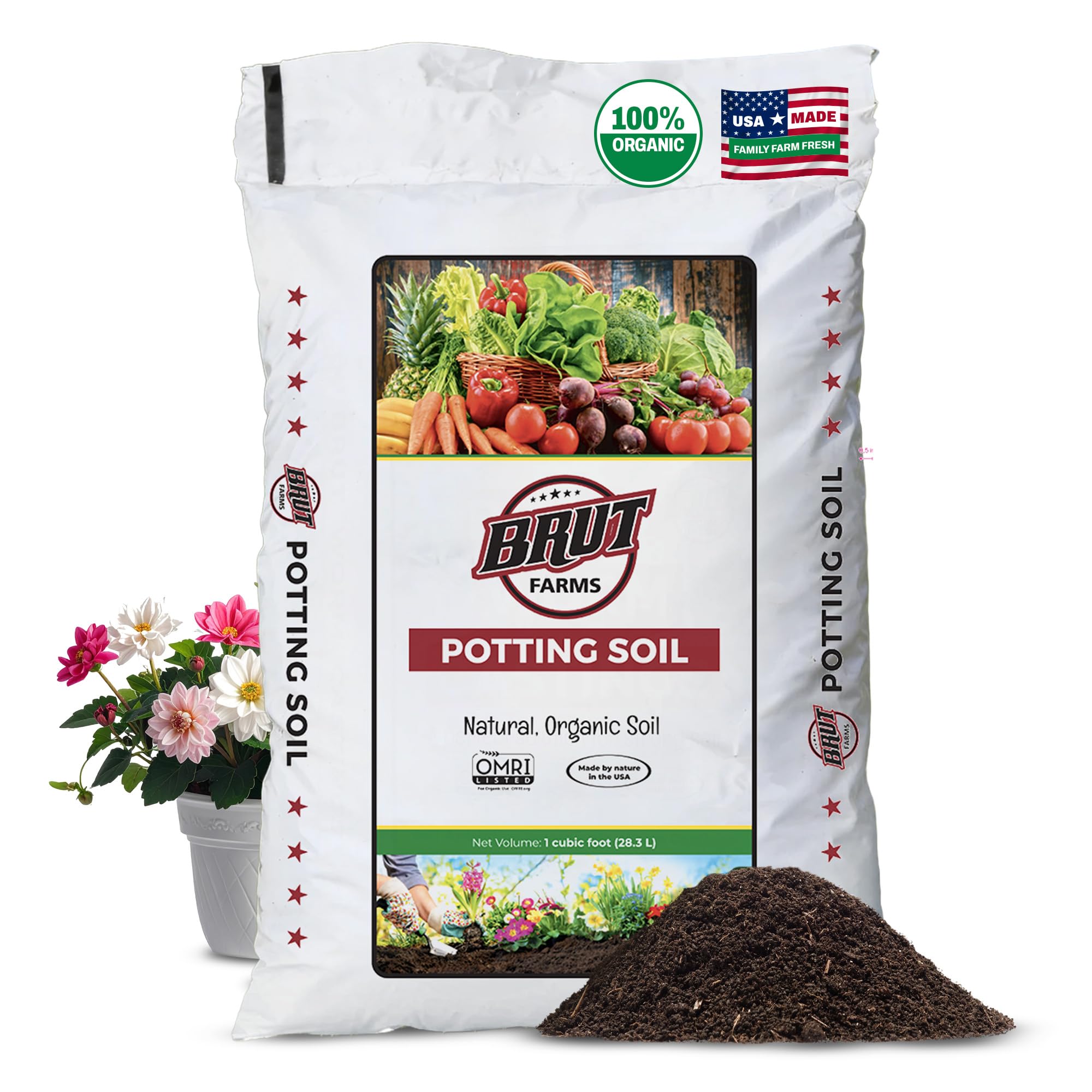
Brut Worm Farms delivers an OMRI-listed organic potting soil that is free from synthetic chemicals and filler materials. The base is enriched with microbe-rich worm castings, kelp, and azomite trace minerals, creating a living soil that feeds plants at the root level. The pH is naturally balanced between 6.3 and 6.5, which covers the preference range for the vast majority of common houseplants.
The 1 cubic foot bag (21 quarts) provides substantial volume for larger repotting sessions or for mixing your own custom blends. The texture is fine and easy to work with, without the large wood chips that sometimes appear in cheaper organic soils. Many gardeners find that their tomato and pepper seedlings respond particularly well to this mix when started in containers.
Some users have noted that the nutrient content is potent enough that it can attract flies if left uncovered outdoors. For indoor use, applying a thin layer of sand or gravel on top of the soil can prevent any pest issues. The price point is higher than standard mixes, but the certified organic label and large volume offset the cost for dedicated organic growers.
What works
- OMRI-certified organic with no synthetic chemicals
- Large 1 cu ft bag offers excellent volume for the price
- Naturally pH balanced with microbe-rich nutrients
What doesn’t
- Potent organic content can attract flies if not covered
- Texture may be too fine for plants requiring heavy aeration
7. Perfect Plants Organic Snake Plant Soil 8QT
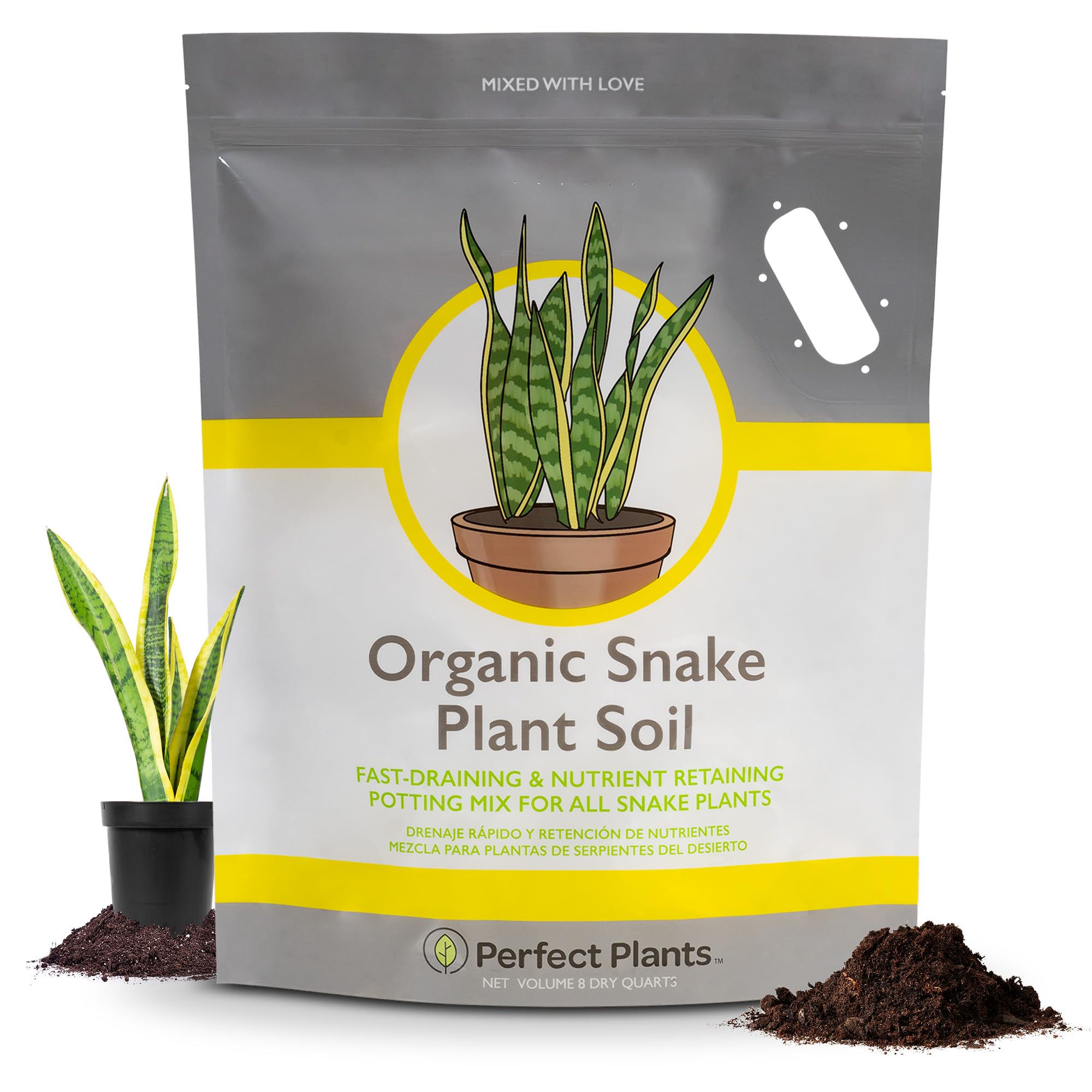
Perfect Plants has formulated this mix specifically for Sansevieria and other succulents that cannot tolerate moisture-retentive soils. The base uses coconut coir instead of peat moss, combined with pine bark chips, perlite, and sand to create a substrate that drains excess water rapidly after watering. This is critical for snake plants, which are highly susceptible to root rot in dense soil.
The bag is resealable, which is a practical feature for plant owners who only use a portion at a time. The 8-quart volume is large enough to repot several snake plants or mix in with other substrates for custom potting recipes. Unlike many succulent mixes, this one does not contain slow-release fertilizer, giving you full control over feeding schedules.
A recurring observation from buyers is that the soil performs well but is not the most economical option for very large pots. For a single large snake plant, you might need more than one bag. The texture is coarse enough that it works well for ZZ plants, aloe, and other succulents in addition to snake plants.
What works
- Formulated specifically for high-drainage needs of snake plants and succulents
- Resealable bag for convenient storage
- Contains no slow-release fertilizer, allowing custom feeding
What doesn’t
- Higher cost per quart compared to general-purpose mixes
- Volume may be insufficient for very large containers without buying multiple bags
Hardware & Specs Guide
Texture and Aeration
Chunky mixes with components like pine bark, pumice, and lava rock create air pockets essential for root respiration. Fine-textured soils compact over time, reducing oxygen flow. For aroids, choose a mix with visible bark and perlite pieces. For succulents, sand and pumice should dominate. For moisture-loving ferns, a higher proportion of coco coir or peat moss helps retain humidity.
Nutrient Longevity
Pre-fertilized mixes reduce the need for frequent feeding but vary widely in duration. Soils containing worm castings and guano provide steady organic nutrition for 4-6 months. Synthetic time-release fertilizers last 3-9 months but carry a risk of salt buildup in containers. If you prefer precise control over feeding, choose an unfertilized base mix and apply liquid fertilizer on your own schedule.
FAQ
Can I use garden soil from my yard for houseplants?
Why does my houseplant soil develop a white crust on top?
How often should I replace houseplant soil?
Final Thoughts: The Verdict
For most gardeners, the best houseplant soil winner is the FoxFarm Ocean Forest 12QT because it provides the most reliable balance of nutrient density, aeration, and pH stability for a wide range of common houseplants. If you want a gnat-proof, budget-friendly option that feeds for six months, grab the Miracle-Gro Indoor Potting Mix 2-Pack. And for aroids or plants that demand exceptional drainage and soil structure, nothing beats the Craft Organic Chunky Mix.