
String of Hearts (Ceropegia woodii) is a succulent vine prized for its delicate, heart-shaped leaves that trail gracefully from hanging baskets. The single most common killer of this plant is not underwatering but the exact opposite — soggy, dense soil that rots the fine, tuberous roots before a grower even notices the yellowing leaves. A mix that holds too much moisture or compacts around the root ball suffocates the plant in its own pot.
I’m Rikta — the co-founder and writer behind Lawn Gear Lab. I’ve spent hundreds of hours cross-referencing bag ingredients, analyzing particle size, studying drainage rates from verified owner reports, and matching soil composition to the epiphytic root structure of this specific trailing succulent.
Getting the drainage and aeration balance exactly right transforms a wilting, leggy plant into a cascading display of thick, colorful leaves. This guide breaks down the top bagged options to help you buy the best soil for string of hearts without guessing or mixing from scratch.
How To Choose The Best Soil For String Of Hearts
String of Hearts roots are fine and grow in shallow layers. They need a mix that dries out completely between waterings while still providing some organic matter to hold trace nutrients. A bag that works for a standard houseplant is a death sentence here.
Drainage and Aeration
The number one spec for this plant is particle size. Look for a visibly chunky texture with coarse sand, perlite, pumice, or lava rock. Dense, powdery soil holds water against the roots for days, which triggers rot in Ceropegia faster than almost any other succulent.
Organic Content
String of Hearts is not a pure desert cactus. It appreciates a small amount of organic matter like coco coir or worm castings for moisture retention and nutrients. A mix with zero organics dries out too fast for the roots to absorb anything; a mix with too much peat moss stays wet too long. The sweet spot is a blend that is roughly 40–50% inorganic drainage material.
pH and Nutrients
This plant prefers a slightly acidic to neutral pH range (6.0–7.0). Pre-mixed soils that advertise pH balancing for succulents or African violets are often a safe bet. Avoid any soil with slow-release synthetic fertilizer beads — the gentle feeding schedule of String of Hearts does not match the release curve, and you risk burning the fine roots.
Quick Comparison
On smaller screens, swipe sideways to see the full table.
| Model | Category | Best For | Key Spec | Amazon |
|---|---|---|---|---|
| Rosy Soil Cactus & Succulent | Peat-Free / Premium | Root health & microbial life | Peat-free, chunky with worm castings | Amazon |
| Perfect Plants Snake Plant Soil | Organic / Mid-Range | Water management & texture | Coco coir, pine bark, perlite, sand | Amazon |
| Midwest Hearth African Violet Mix | pH Controlled | Fine root aeration | Peat moss, perlite, vermiculite 4 qt | Amazon |
| Duspro 7-in-1 Succulent Mix | Value / Multi-Ingredient | Particle variety on a budget | Perlite, pumice, lava rock, worm castings | Amazon |
| Midwest Hearth Cactus & Succulent | Budget / Ready-to-Use | No-mix simplicity | Peat moss, perlite, vermiculite 4 qt | Amazon |
| Miracle-Gro Succulent Potting Mix | Entry-Level | Beginners with careful watering | Sphagnum peat moss, forest products | Amazon |
| Avalution Lava Rock Pebbles | Amendment / Gritty Mix | Boosting drainage of other soils | 2.4 lb horticultural lava rock | Amazon |
In-depth Reviews
1. Rosy Soil Cactus & Succulent Potting Mix
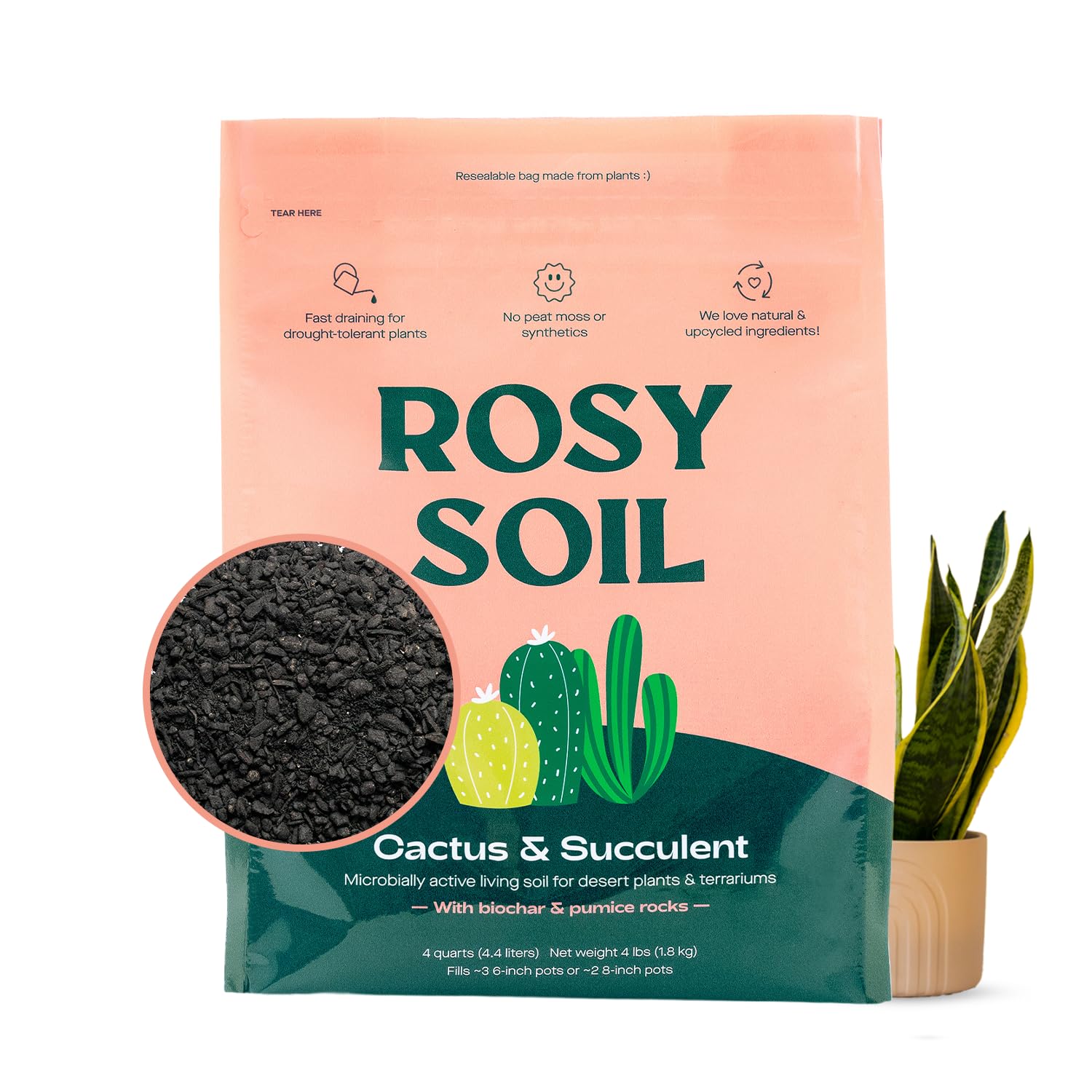
Rosy Soil skips peat moss entirely, formulating instead with a chunky, airy base of horticultural grit and coco coir. For String of Hearts, this means the mix stays physically loose — no compaction around the delicate tuberous roots — and water flows through the pot in seconds rather than pooling. The inclusion of worm castings and beneficial microbes provides a gentle, steady nutrient stream without the risk of synthetic fertilizer burn.
Owner feedback consistently highlights that plants develop thicker, more vibrant leaves after switching to this mix, even when coming from a sinking, dense potting soil. The 4-quart resealable bag is plastic-neutral and covers 2-3 repots, making it a practical choice for a single plant or a small collection. Users note the soil arrives with some natural moisture, which is normal and harmless for a living-soil product.
Because it drains so aggressively, growers in very dry homes may need to water slightly more often, especially during active summer growth. But for anyone who has lost a String of Hearts to root rot, this texture is the exact insurance policy the plant requires. It is the finest bagged choice for long-term health.
What works
- Peat-free formula drains faster than any peat-based competitor
- Pre-loaded microbes and worm castings support root development
- Chunky, non-compacting texture ideal for fine succulent roots
What doesn’t
- Premium price per quart compared to basic succulent mixes
- Some users add extra perlite or bonsai soil for very mature plants
- Resealable bag can be finicky to close fully
2. Perfect Plants Organic Snake Plant Soil

Though marketed specifically for snake plants, this blend of coconut coir, pine bark chips, perlite, and sand hits the same structural requirements that String of Hearts needs. Coco coir retains some moisture but resists compaction better than peat, while the sand and perlite create the open pore space that prevents waterlogging. The bag is heavy-duty and resealable, making it easy to store leftover mix for future repots.
Users consistently report that this soil drains well without developing the sour, anaerobic smell of saturated peat. The mix contains no slow-release fertilizer, which is ideal — you control feeding separately. Many owners of String of Hearts find this works perfectly straight from the bag, though some add a handful of pumice for extra insurance in deeper pots.
The main tradeoff is cost per quart relative to generic succulent soils. If you are maintaining a large collection, the price adds up. But for a few prized pots, the consistent texture and reliable drainage make it a strong mid-range contender that outperforms most cheap cactus blends.
What works
- Fast drainage without being bone-dry — good balance for this plant
- Natural ingredients with no synthetic fertilizer beads
- Resealable bag keeps leftover mix fresh
What doesn’t
- More expensive per quart than bulk cactus mixes
- Pine bark particles can be slightly large for very small pots
3. Midwest Hearth African Violet Natural Potting Soil

African violet soil is often overlooked for succulents, but the fine, fluffy texture of this Midwest Hearth blend works surprisingly well for String of Hearts roots. It uses peat moss, perlite, and vermiculite to create a mix that holds a little moisture for nutrient uptake while still maintaining good airflow. The pH is specifically balanced to 6.0–7.0, which aligns closely with what Ceropegia woodii prefers.
Owner reviews praise the soft, consistent texture — no large bark chunks or gravel that can damage tiny roots during repotting. The mix is light enough that you can feel the aeration when you squeeze a handful. For growers who find full cactus mixes too coarse or fast-drying, this offers a middle path that still protects against rot when watering discipline is maintained.
Do note that peat moss as a primary ingredient means this mix will retain moisture longer than coco coir or mineral-heavy blends. If you tend to overwater, you will need to be more careful here. For a controlled, dry-environment grower, however, this is a premium, consistent option that produces strong root systems.
What works
- pH balanced perfectly for String of Hearts
- Light, fluffy texture protects fine roots
- Make in USA with professional grower formulation
What doesn’t
- Peat base can stay wet too long for heavy waterers
- Price per quart is higher than succulent-specific mixes
4. DUSPRO 7-in-1 Succulent Potting Mix
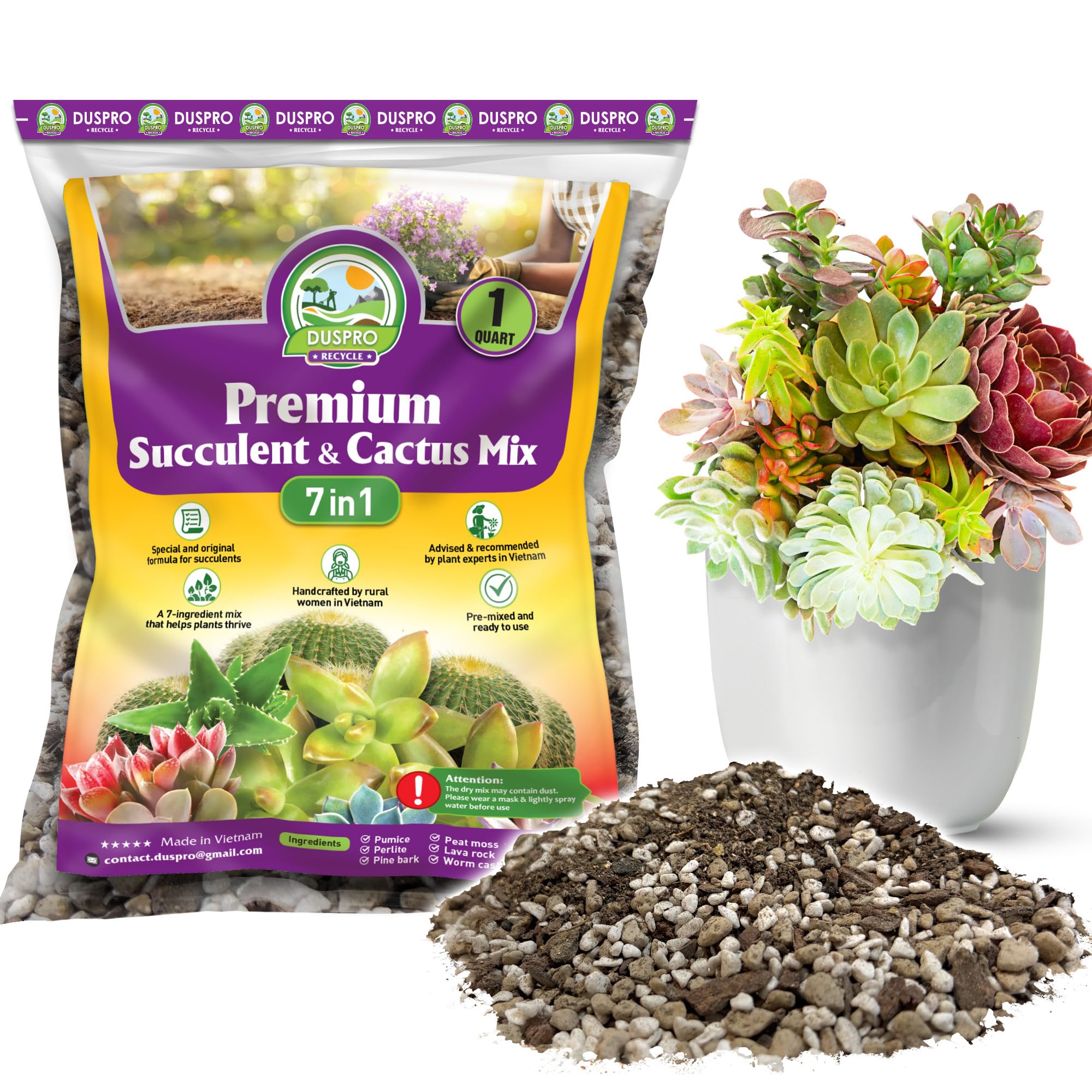
Duspro blends seven components — perlite, pumice, lava rock, peat moss, pine bark, worm castings, and vermiculite — into a single bag that tries to cover every base. For String of Hearts, the combination of pumice and lava rock provides the heavy drainage needed, while worm castings offer a gentle organic nutrient boost. The bag is available in multiple sizes down to 1 quart, which is ideal for a single plant without buying bulk.
Customer reports note that the mix can arrive with the ingredients partially separated during shipping, so you should dump the bag into a bowl and stir before potting. Once properly blended, the texture is open and gritty, letting water pass quickly. The worm castings do add a slight natural odor, but it dissipates after watering and indicates active organic material.
The biggest drawback is that the 1-quart size is small — check your pot volume before ordering, as one bag may only cover a single repot. On a per-quart basis, this is a mid-range price for a genuinely multi-component mix that rivals premium blends in particle diversity.
What works
- Multiple inorganic drainage components prevent compaction
- Worm castings provide natural slow-release nutrition
- Available in small sizes perfect for single plants
What doesn’t
- Ingredients may separate during shipping — needs remixing
- 1-quart bag is smaller than expected for the price
5. Midwest Hearth Cactus & Succulent Potting Mix
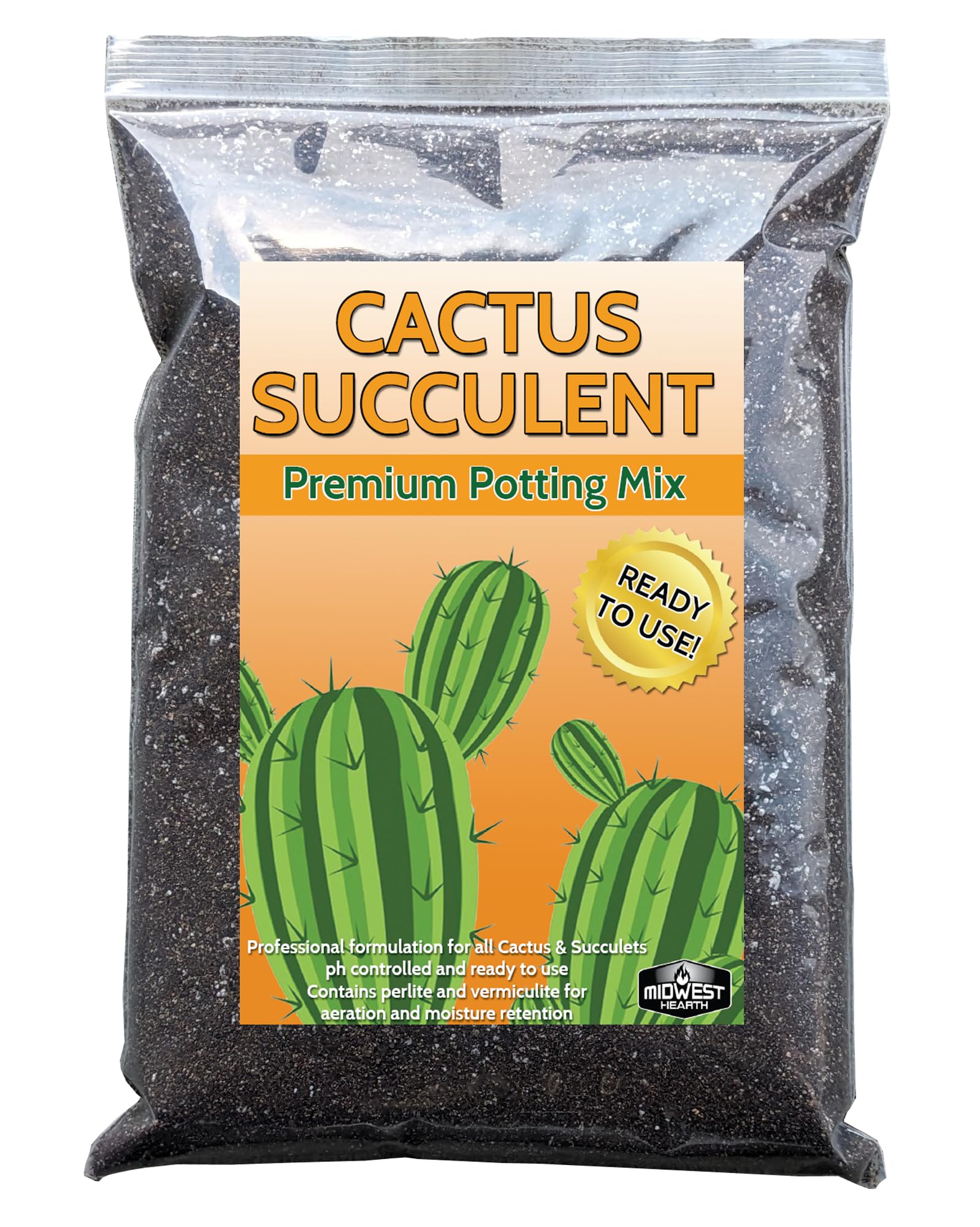
Midwest Hearth positions this as a no-mix, open-the-bag-and-plant solution. The blend uses peat moss, perlite, and vermiculite to achieve the fast drainage cacti and succulents demand. It is pH balanced for drought-tolerant plants, making it a reasonable starting point for a String of Hearts grower who wants a simple, affordable option without custom blending.
Real-world testing by owners reveals that this mix works well for standard succulents, but for String of Hearts specifically, some growers add extra perlite or pumice to increase the grit content. The dry top layer can also blow away if the pot is near an open window, which is a minor nuisance. The 4-quart resealable bag is convenient for storage.
The main issue is that peat moss is the primary organic component, so if you are prone to overwatering, this mix can hold moisture longer than ideal. For a disciplined waterer in a bright, airy location, this is a perfectly functional budget choice that gets the job done without breaking the bank.
What works
- Affordable price point for a 4-quart bag
- pH balanced for succulents out of the bag
- Resealable bag for easy storage
What doesn’t
- Dry particles can blow away from open pots near windows
- Peat base may need extra grit for heavy waterers
6. Miracle-Gro Succulent Potting Mix

Miracle-Gro’s succulent mix is the most accessible option on the list, found at nearly every garden center. It is a blend of sphagnum peat moss, processed forest products, and Miracle-Gro plant food. For a String of Hearts just starting out, this soil will work if you are careful about watering frequency — the peat-heavy composition means it stays damp longer than a gritty mix.
Several owners note that the bag is mostly peat moss and recommend mixing in at least 30% perlite or pumice to improve aeration. Straight from the bag, it can stay wet four days after watering, which is risky for this plant. The added plant food provides a quick nutrient boost, but it is synthetic and can accumulate salts over time if not leached regularly.
Where this mix shines is convenience and cost. It is the cheapest option per quart among the pre-mixed soils here. If you already use it for other succulents and want to avoid buying a separate bag, amending it with extra grit before potting your String of Hearts is a realistic workaround that many growers use successfully.
What works
- Extremely easy to find and purchase
- Lowest cost per quart in this comparison
- Good starting point if you add perlite or pumice
What doesn’t
- Too moisture-retentive for String of Hearts straight from bag
- Contains synthetic fertilizer that may burn fine roots
- Mostly peat moss with minimal drainage particles
7. Avalution Horticultural Lava Rock Pebbles

Avalution’s lava rock is not a standalone soil — it is a clean, porous aggregate designed to be mixed into potting soils to improve drainage and create air pockets. For String of Hearts owners who already have a bag of peat-heavy soil (like Miracle-Gro), adding a handful of this lava rock transforms the mix into something much closer to the plant’s natural epiphytic substrate. The 2.4-pound bag is enough to amend several pots.
Users report that the pebbles have a subtle grey color that works well as a top dressing, and they do not degrade or compact over time like perlite. The lava rock is also chemically inert and slightly porous, meaning it can hold a tiny amount of water and nutrients on its surface without keeping the root zone saturated. It is a favorite addition for growers who build their own blend.
The only catch is that the rocks arrive very dusty and need thorough rinsing before use, or the fine dust can temporarily cloud the soil. Also, as a straight amendment, you still need a base potting mix — this is not a buy-and-go solution. But for the DIY grower who wants total control over aeration, this is the best gritty additive available.
What works
- Porous, non-compacting particles ideal for String of Hearts roots
- Improves any existing succulent or potting soil instantly
- Works as a decorative top dressing to prevent soil splash
What doesn’t
- Requires rinsing before use to remove dust
- Not a standalone soil — must be mixed with a base substrate
- Price per pound is higher than bulk perlite
Hardware & Specs Guide
Particle Size & Texture
String of Hearts roots need room to breathe. Look for a mix with visibly coarse particles — perlite, pumice, lava rock, or pine bark in the 2–6 mm range. A mix that looks like fine powder or feels dense when squeezed will suffocate roots. The best bagged soils list “chunky” or “gritty” in their descriptions; if you see “fine” or “smooth”, skip it.
Organic vs Inorganic Ratio
Aim for roughly 50–60% inorganic drainage material (perlite, pumice, sand, lava rock) and 40–50% organic matter (coir, peat moss, worm castings, pine bark). Too much organic matter traps water; too little leaves the roots without moisture during hot, dry periods. Pre-mixed bags that list perlite or pumice as the first ingredient are ideal for this plant.
FAQ
Can I use regular potting soil for String of Hearts?
Should I add perlite to my String of Hearts soil?
Is cactus soil good for String of Hearts?
Final Thoughts: The Verdict
For most gardeners, the soil for string of hearts winner is the Rosy Soil Cactus & Succulent Mix because it delivers the perfect peat-free, chunky texture with built-in microbial support for root health. If you want a ready-to-use, no-fuss bag that works with disciplined watering, grab the Perfect Plants Snake Plant Soil. And for growers who already have base soil and want to dial in aeration precisely, nothing beats the Avalution Lava Rock Pebbles as an additive.