
Avocado trees are heavy feeders that demand a precise balance of nitrogen, phosphorus, and potassium — too much nitrogen and you get a towering tree with no fruit; too little and the leaves yellow and drop. The right fertilizer delivers dark green foliage, robust root systems, and a harvest of creamy, nutrient-dense avocados.
I’m Rikta — the co-founder and writer behind Lawn Gear Lab. I’ve spent hundreds of hours researching avocado tree nutrition, comparing NPK ratios, analyzing soil science, and filtering through thousands of verified owner experiences to build this guide.
After evaluating seven products on their formulation, nutrient delivery method, and real-world results, I’ve identified the top options for every growing scenario to help you choose the best fertilizer for avocado trees for your specific orchard size and soil conditions.
How To Choose The Best Fertilizer For Avocado Trees
Avocado trees have unique nutritional demands that differ from typical citrus or stone fruit trees. Selecting the wrong formulation can stunt growth, cause leaf burn, or reduce fruit quality. Focus on these four criteria to narrow your options.
Understand the N-P-K Ratio
Avocados need a moderate nitrogen level — typically 6-8% — to support leafy growth without sacrificing flower and fruit development. A 6-4-6 or 6-3-3 ratio works well for most in-ground and container trees. Higher first numbers (12-10-10) are suitable for mature trees in active growth but can burn young or potted trees if misapplied.
Slow-Release vs. Quick-Release Nitrogen
Slow-release granular formulas feed roots steadily over 6-8 weeks and reduce the risk of nitrogen runoff or salt buildup. Quick-release nitrogen provides an immediate green-up burst but requires careful measurement and more frequent application. Container-grown avocados benefit more from slow-release to avoid root damage.
Micronutrients Are Non-Negotiable
Avocado trees are prone to deficiencies in zinc, iron, and boron — these trace elements directly affect leaf color, flower retention, and fruit size. Look for formulations that explicitly list these micronutrients on the label. A fertilizer with only N-P-K and no secondary nutrients will leave your tree underperforming over time.
Application Form: Granules, Spikes, or Liquid
Granular fertilizers offer even coverage for in-ground trees and can be worked into the topsoil. Spikes provide a mess-free, pre-measured option for container trees but distribute nutrients in a concentrated zone. Liquid formulas give the fastest absorption but require more frequent dosing during the growing season. Choose based on your tree’s location and your maintenance schedule.
Quick Comparison
On smaller screens, swipe sideways to see the full table.
| Model | Category | Best For | Key Spec | Amazon |
|---|---|---|---|---|
| Gardenwise 6-4-6 | Granules | All-around feeding | 6-4-6 NPK with micronutrients | Amazon |
| FoxFarm Happy Frog | Granules | Organic soil health | Slow-release N + mycorrhizae | Amazon |
| Down To Earth Citrus Mix | Granules | OMRI organic feeding | 6-3-3 with kelp & basalt | Amazon |
| Jobe’s Organics Spikes | Spikes | Container trees | 3-5-5 time-release, 6 spikes/pack | Amazon |
| Miracle-Gro Shake ‘N Feed | Granules | Easy season-long feeding | Feeds up to 3 months, 8 lb | Amazon |
| Nelson NutriStar 12-10-10 | Granules | Mature tree boost | 12-10-10 high-potency formula | Amazon |
| GARDENWISE Professional | Granules | Budget-friendly citrus mix | 6-4-6 with coated slow-release | Amazon |
In‑Depth Reviews
1. Gardenwise 6-4-6 Avocado and Citrus Tree Professional Fertilizer
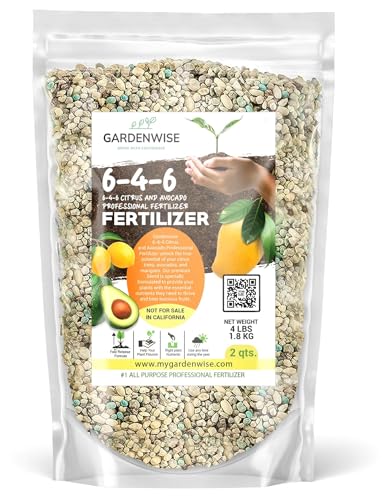
The Gardenwise 6-4-6 delivers a balanced N-P-K profile that hits the sweet spot for avocado trees — enough nitrogen to fuel canopy growth without overwhelming flower and fruit development. The slow-release granular formula feeds for months, requiring only three applications per year in late winter, late spring, and early fall. This aligns perfectly with the avocado tree’s natural growth cycle, providing steady nutrition when the tree needs it most.
Reviewers consistently report visible recovery after transplant shock or weather stress, with one owner noting their avocado tree bounced back after storm damage and freezing temperatures. The 4-pound bag covers multiple in-ground trees or several large container specimens, making it a practical choice for homeowners with mixed citrus and avocado plantings. The formula includes secondary nutrients that support firm fruit development and deep green foliage.
The quick-release nitrogen component gives trees an immediate energy zap while the coated granules sustain feeding over weeks. This dual-action approach suits both novice gardeners who might forget a second dose and experienced growers who want reliable results without constant monitoring. For most backyard avocado growers, this is the most versatile, forgiving option on the market.
What works
- Balanced 6-4-6 ratio prevents nitrogen burn while supporting fruit set
- Three-feed-per-year schedule fits low-maintenance routines
- Proven recovery results after cold snaps and storm damage
What doesn’t
- Quick-release component requires careful watering to avoid salt buildup
- Not OMRI-listed for certified organic growers
2. Nelson NutriStar Citrus Fruit & Avocado Tree Plant Food 12-10-10
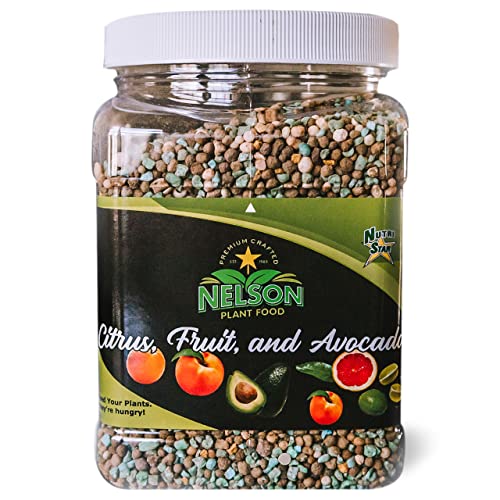
The Nelson NutriStar formula stands apart with its 12-10-10 analysis — a higher nitrogen and potassium concentration designed for mature, in-ground avocado trees that have established root systems. The elevated potassium content specifically helps trees withstand colder temperatures, a critical advantage for growers in marginal climates where late frosts threaten fruit set. Calcium is also included to strengthen trunk and limb structure.
Owner feedback highlights dramatic leaf growth within two months of application, with one reviewer reporting a full canopy recovery on an orange tree moved indoors. The formula works faster than typical slow-release blends, so you’ll see visible greening within days. Nelson has formulated this product for over thirty years, and the 2-pound bag provides enough material for several medium-sized trees when applied monthly during the growing season.
The 12-10-10 ratio is too aggressive for young or container-grown trees — the high nitrogen can burn sensitive roots if overapplied. Stick to this product for established orchard trees at least three years old. For those with mature avocado groves or large landscape specimens, this delivers the most concentrated nutrient punch in the lineup.
What works
- High potassium boosts cold tolerance and fruit quality
- Fast-acting granules show visible greening in days
- Includes calcium for stronger trunk and limb structure
What doesn’t
- Too potent for young or container avocado trees
- Requires monthly reapplication during growing season
3. Down To Earth All Natural Organic Citrus Mix 6-3-3
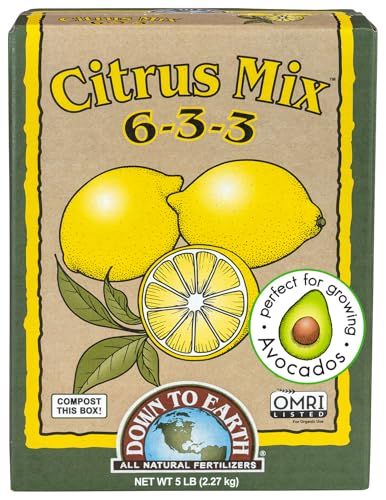
Down To Earth’s Citrus Mix earns its place with a thoughtfully sourced ingredient list: feather meal, fish bone meal, alfalfa meal, greensand, langbeinite, basalt, sulfate of potash, zinc sulfate, and kelp meal. The 6-3-3 ratio is slightly lower in phosphorus and potassium than some competitors, but the broad mineral profile — including calcium, sulfur, zinc, and iron — addresses the micronutrient deficiencies that plague avocado trees in alkaline or sandy soils.
The OMRI listing makes this a top choice for certified organic growers who need verified inputs. Reviewers with decades-old trees report dramatic rejuvenation: one owner revived a 40-year-old grapefruit tree that appeared to be dying, watching it flush with new growth after a single application. The 5-pound box offers more volume than most competitors in this price tier, and the manufacturer notes it does not expire when stored in cool, dry conditions.
The alfalfa meal base gives the product a smell that attracts dogs — multiple owners warn that pets may dig up freshly applied fertilizer. Water it in thoroughly and keep animals away for 24 hours. If you prioritize organic certification and a diverse micronutrient package, this is the most complete option available.
What works
- OMRI-listed for certified organic production
- Broad mineral profile addresses zinc and iron deficiencies
- Does not expire when stored properly
What doesn’t
- Alfalfa meal smell attracts dogs and wildlife
- Lower NPK numbers require more product per feeding
4. FoxFarm Happy Frog Citrus and Avocado Fertilizer

FoxFarm’s Happy Frog formula focuses on soil biology as much as nutrition. The inclusion of mycorrhizal fungi helps avocado roots extend their reach, improving water and nutrient uptake — particularly valuable in compacted urban soils or heavy clay. The slow-release nitrogen fuels steady vegetative growth without the surge-and-crash pattern of synthetic fertilizers, which reduces leaf tip burn in sensitive avocado varieties.
Owner experiences are overwhelmingly positive, with one decade-long user reporting success across four avocado and ten citrus trees. Multiple reviewers note that leaf yellowing resolved within days of application, and lime yields increased dramatically after switching to this product. The 4-pound bag is lightweight but concentrated enough for multiple feedings on a standard backyard orchard.
The primary ingredient is alfalfa meal, which some buyers question given the price point — one reviewer compared it directly to feed-store alfalfa. However, the mycorrhizae and carefully balanced secondary nutrients justify the cost for growers who want to improve long-term soil health rather than just dump NPK. It works best when paired with regular compost top-dressing.
What works
- Mycorrhizal fungi improve root efficiency and drought tolerance
- Rapidly corrects leaf yellowing and stimulates new growth
- Trusted by long-term users with diverse avocado and citrus collections
What doesn’t
- Alfalfa meal base smells appealing to dogs
- Higher cost per pound compared to synthetic options
5. Miracle-Gro Shake ‘N Feed Citrus, Avocado, Mango Plant Food
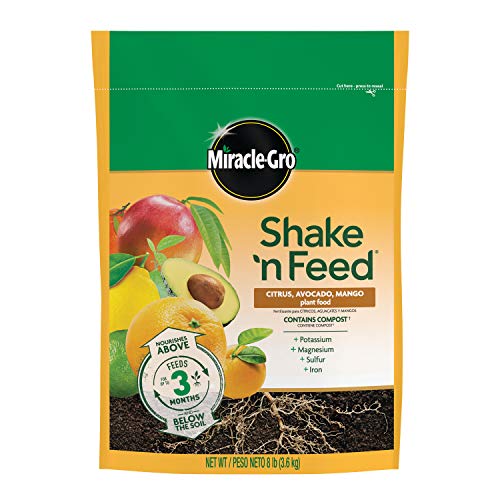
Miracle-Gro’s Shake ‘N Feed is the most convenient option in this comparison. The 8-pound bag provides enough material to feed multiple avocado trees for an entire growing season, and the shake-and-walk application requires no measuring or mixing. Just sprinkle evenly under the canopy, avoid the trunk, and water it in. The formula includes potassium, magnesium, sulfur, and iron — targeting the most common avocado nutrient deficiencies.
Owners of both in-ground and container trees report visible results within weeks. One Meyer lemon grower described the application as “super easy” with new buds and strong leaves appearing quickly. The three-month feeding window means a single spring and summer application covers most of the active growing period, reducing the risk of over-fertilization that comes with monthly schedules.
While the NPK ratio is not explicitly stated on the product page, the formula is designed for fruit production rather than ornamental growth. This makes it a solid mid-range choice for gardeners who want a no-fuss solution and don’t need the granular control of a specialist blend. The 8-pound bag is the largest in this lineup, offering the best cost-per-feeding ratio for owners with multiple trees.
What works
- Extremely simple shake-and-feed application
- 8-pound bag covers multiple trees all season
- Includes iron and magnesium to prevent chlorosis
What doesn’t
- NPK ratio not optimized for young or potted avocados
- Not OMRI listed or organic
6. GARDENWISE Professional Citrus Fertilizer + Vital Micronutrients

The GARDENWISE Professional formulation shares the same core 6-4-6 NPK as the Gardenwise branded product but is marketed specifically as a citrus fertilizer that works on avocados. The coated granules are designed to melt gradually with each watering, providing sustained nourishment post-harvest to help trees regain strength before the next fruiting cycle. This makes it a strong choice for growers who want affordable, reliable nutrition without premium pricing.
Customer feedback highlights fast results on lime and lemon trees — one owner saw tons of new growth within a week. The 2-quart bag weighs 4 pounds and provides enough material for several applications on medium-sized trees. The inclusion of magnesium, zinc, copper, iron, and boron means you get a complete micronutrient package that many budget fertilizers omit.
The primary downside is that this product is optimized for citrus first, with avocado as a secondary use case. Avocado trees have slightly different calcium and magnesium requirements than lemons or oranges, so you may need to supplement with additional amendments over time. For growers with mixed citrus and avocado plantings, however, the convenience of a single-bag solution outweighs this limitation.
What works
- Complete micronutrient package at a budget-friendly price point
- Coated granules prevent nutrient leaching between waterings
- Rapid new-growth response reported within one week
What doesn’t
- Formulated primarily for citrus rather than avocados
- May require supplemental calcium for optimal avocado growth
7. Jobe’s Organics Fruit & Citrus Tree Fertilizer Spikes 3-5-5

Jobe’s Organic Spikes offer a fundamentally different delivery method — pre-measured sticks that you hammer into the soil around the tree’s drip line. The 3-5-5 ratio is lower in nitrogen than granular options, which reduces the risk of over-feeding container trees. Each package contains 6 spikes, and the set of three packs covers multiple trees for a full season. The Biozome microorganism archaea in the spikes helps break down organic matter in the root zone.
Users with potted Meyer lemon and Calamondin trees report abundant fruit production and no mess — no measuring cups, no dusty granules, no runoff. The spikes release nutrients directly at the root zone, minimizing waste and preventing surface runoff that can attract pests. One owner noted that timing and placement are critical: spikes must be inserted in late fall or early spring and kept several inches from the trunk to avoid root burn.
The spike format delivers nutrients in a concentrated zone rather than evenly across the root system, which can lead to uneven feeding in large in-ground trees. For container-grown avocado trees and small patio specimens, though, the convenience is unmatched. If you want organic certification and hate measuring fertilizer, this is the cleanest solution available.
What works
- No measuring, no dust, no mess application
- OMRI listed and Biozome technology boosts soil biology
- Ideal for container-grown avocado trees
What doesn’t
- Spikes concentrate nutrients in a narrow zone
- Placement must be precise to avoid root burn
Hardware & Specs Guide
Understanding N-P-K Ratios for Avocados
The three numbers on a fertilizer bag represent nitrogen (N), phosphorus (P), and potassium (K) by percentage weight. Avocado trees respond best to moderate nitrogen — typically 6-8% — to support canopy growth without suppressing flowers. A 6-4-6 or 6-3-3 ratio provides enough N for leaf production while keeping P and K balanced for root development and fruit maturity. Higher potassium levels, as seen in the 12-10-10 Nelson formula, aid cold tolerance and fruit firmness.
Slow-Release vs. Quick-Release Nitrogen
Slow-release fertilizers use coated granules or organic materials (feather meal, alfalfa meal) that break down over weeks or months. This reduces the risk of nitrogen burn and provides steady nutrition. Quick-release nitrogen, often from ammonium nitrate or urea, gives an immediate green-up but requires careful dosing — avocado trees are sensitive to salt buildup from rapid-release synthetics. For container trees, always favor slow-release to protect confined root systems.
Micronutrients Avocados Cannot Ignore
Zinc deficiency causes small, narrow leaves and rosette formation at branch tips. Iron deficiency leads to interveinal chlorosis — yellow leaves with green veins. Boron deficiency results in poor fruit set and misshapen fruit. Any fertilizer you select must include these three elements, ideally along with manganese and copper. Products like Down To Earth and FoxFarm Happy Frog explicitly list these micronutrients; budget blends often skip them.
Application Timing and Frequency
Young avocado trees (1-3 years) benefit from light feedings every 6-8 weeks during the growing season with a lower-nitrogen formula. Mature trees (4+ years) should be fed three times per year: late winter (before spring flush), late spring (after fruit set), and early fall (before dormancy). Container trees need more frequent but weaker doses because nutrients leach out faster with each watering. Spike fertilizers simplify this by releasing nutrients slowly over months.
FAQ
What NPK ratio is best for avocado trees?
Can I use citrus fertilizer on avocado trees?
How often should I fertilize a potted avocado tree?
What are signs of over-fertilizing avocado trees?
Do avocado trees need more nitrogen or potassium?
Final Thoughts: The Verdict
For most gardeners, the fertilizer for avocado trees winner is the Gardenwise 6-4-6 because it combines a balanced NPK ratio, slow-release convenience, and proven recovery results in a single affordable bag. If you want soil biology benefits and organic certification, grab the FoxFarm Happy Frog for its mycorrhizal fungi and rapid leaf correction. And for container-grown trees where mess is a concern, nothing beats the Jobe’s Organics Spikes for zero-measurement precision feeding.