
Yellowing fronds, stunted growth, and brittle trunks are the unmistakable signs that a palm tree is starving for the specific micronutrients standard all-purpose fertilizers cannot provide. A proper feeding regimen depends on an NPK ratio that prioritizes potassium and delivers chelated iron, magnesium, and manganese in a form the palm can actually absorb from alkaline soil.
I’m Rikta — the co-founder and writer behind Lawn Gear Lab. I’ve spent hundreds of hours analyzing soil science data, comparing micronutrient delivery systems, and cross-referencing owner-reported outcomes to build this guide around measurable results rather than marketing claims.
Whether you maintain a single container pygmy date palm or a row of mature Canary Island specimens, this analysis of the best fertilizer for palm trees will help you match the right release mechanism and formula to your specific growing conditions.
How To Choose The Best Fertilizer For Palm Trees
A standard lawn fertilizer loaded with nitrogen will push rapid leaf growth while leaving the palm starved for potassium and magnesium, which eventually causes yellowing lower fronds and weak root systems. Matching the right NPK profile and delivery method to your palm type is essential.
Look for a Potassium-Heavy NPK Ratio
Palms require significantly more potassium than nitrogen compared to most plants. An ideal ratio shows the third number (K) roughly equal to or higher than the first (N). Ratios around 8-2-12, 12-4-11, or 9-4-9 provide the potassium needed for sturdy trunks and disease resistance while keeping nitrogen modest to avoid burning roots and creating overly soft growth.
Confirm the Presence of Secondary Micronutrients
Magnesium, manganese, and iron in chelated forms are critical. Magnesium deficiency causes the lower fronds to turn yellow, while manganese shortage results in frizzle-top and stunted new spears. A fertilizer that lists these elements on the guaranteed analysis is far more likely to prevent the visual problems that alarm most palm owners.
Choose the Right Release Mechanism for Your Schedule
Granular slow-release formulas feed continuously for 3 to 12 months from a single application, making them the lowest-effort choice for most in-ground palms. Liquid concentrates allow precise weekly dosing and show visible greening within days, which suits container palms or trees recovering from transplant shock. Spikes eliminate measuring and mess but concentrate nutrients in a small root zone — best for established specimens with wide root spread.
Quick Comparison
On smaller screens, swipe sideways to see the full table.
| Model | Category | Best For | Key Spec | Amazon |
|---|---|---|---|---|
| Real Growers Ultimate Palm | Granular Slow-Release | Annual low-maintenance feeding | 12-month controlled release | Amazon |
| Miracle-Gro Shake ‘N Feed Palm | Granular Quick-Release | In-ground & container palms | NPK 8-2-12 | Amazon |
| Jobe’s Palm Spikes | Pre-Measured Spikes | Mess-free deep root feeding | NPK 10-5-10 | Amazon |
| Farmer’s Secret Booster | Liquid Concentrate | Quick green-up & recovery | NPK 4-15-12 | Amazon |
| Espoma Organic Palm-Tone | Organic Granules | Organic gardening | NPK 4-1-5 | Amazon |
| Nelson NutriStar Palm | Granular Slow-Release | Acid-loving palms | 90% slow-release N | Amazon |
| Pennington Ultra Green | Granular Slow-Release | Budget-friendly feeding | NPK 9-4-9 | Amazon |
In‑Depth Reviews
1. Real Growers Ultimate Palm Tree Fertilizer 12-4-11
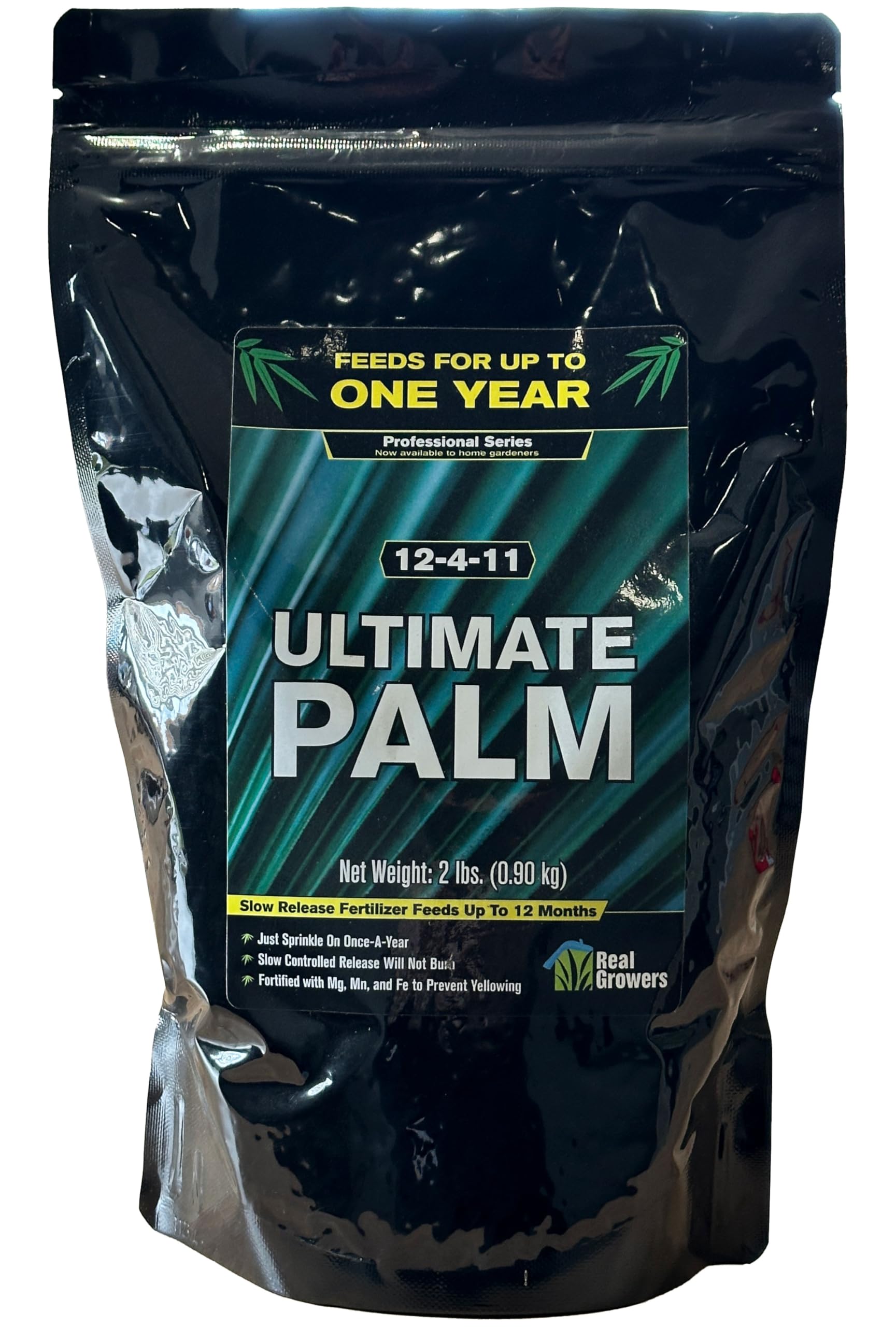
The Real Growers Ultimate formula delivers a 12-4-11 NPK profile that keeps potassium high relative to nitrogen, which is the single most important ratio for long-term palm vigor. The controlled-release coating meters nutrients steadily over a full 12 months, so a single spring application carries the tree through an entire growing season without monthly reapplication.
Owner reports consistently mention visible new spear growth and deeper green color appearing within a few weeks of the first application. The bag includes magnesium, sulfur, iron, and molybdenum — the full micronutrient suite that prevents frizzle-top and interveinal chlorosis. It works equally well on sago palms, cycads, and landscape specimens.
The main drawback is the sparse printed instructions. Several buyers noted the lack of clear dosage guidelines for in-ground palms, which forces first-time users to estimate based on the tree’s drip-line diameter. Pre-weighing the granules with a kitchen scale resolves the confusion, but the packaging could be more helpful.
What works
- True 12-month slow release saves reapplication labor
- NPK and micronutrient package matches palm-specific deficiency patterns
What doesn’t
- Inadequate dosage instructions for in-ground trees
- Relatively small 2-lb bag covers only two mature palms
2. Miracle-Gro Shake ‘N Feed Palm Plant Food 8-2-12

The Shake ‘N Feed Palm formula uses an 8-2-12 ratio that delivers more potassium than nitrogen — exactly what palms need to support stiff fronds and strong roots. The granular format is designed for scatter-and-water application, working into the top 1–3 inches of soil around the tree’s drip line. Each 8-lb bag covers up to 533 square feet, making it the best coverage-per-dollar in this lineup.
Magnesium, iron, and manganese are included in the blend to prevent the yellowing lower fronds and tip burn common in potassium-starved palms. The product feeds for roughly three months, so three applications per growing season are typical. Professional landscapers have been observed switching to this product after seeing results on client properties.
It is not a true controlled-release formula — the nutrients break down relatively quickly after watering, which means you need to reapply more frequently than with a 12-month option. The powder form can also cake if stored in a humid environment, so keeping the bag sealed is important.
What works
- Excellent NPK ratio with essential chelated micronutrients
- Large bag covers extensive ground at a low per-application cost
What doesn’t
- Three-month feeding window requires regular reapplication
- Powder form can clump in humid storage conditions
3. Jobe’s Palm Tree Fertilizer Spikes 10-5-10

Jobe’s spikes bypass the measuring, mixing, and scattering required by granular or liquid products. Each spike contains a 10-5-10 analysis with sulfur, magnesium, iron, and zinc pre-blended into the matrix. You hammer the spikes into the soil around the drip line, and moisture releases nutrients directly to the root zone over several weeks. The 15-spike three-pack bundle provides enough material for multiple trees.
Users report visible results within days — fronds become more upright, new growth appears faster, and overall canopy color deepens. The spikes eliminate the risk of over-application because the nutrient dose is fixed. This is especially helpful for novice palm owners who worry about burning roots with granular concentrates.
The concentrated nutrient placement means spikes are less effective for very large in-ground palms that have outgrown a single root zone. You may need multiple spikes per tree, and the packaging can overstate how many spikes a single mature queen palm requires. Also, the spikes cannot be used in shallow container soils without risking root damage during insertion.
What works
- Zero-mess, pre-measured application with no mixing
- Contains targeted micronutrients for deficiency correction
What doesn’t
- Difficult to distribute evenly across very large root spreads
- Not suitable for shallow container plantings
4. Farmer’s Secret Palm Tree Booster Fertilizer 4-15-12
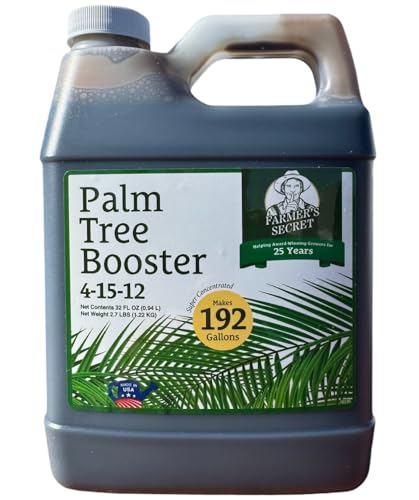
Farmer’s Secret uses a liquid 4-15-12 formulation that puts heavy emphasis on phosphorus and potassium while keeping nitrogen low. The super-concentrated bottle requires only one teaspoon per gallon of water for weekly feeding, making the 32-ounce bottle last many seasons. This is the best option for palms recovering from transplant shock, cold damage, or visible nutrient deficiency because the liquid form is immediately available to the roots.
Multiple owners report that yellow fronds returned to deep green after a single dose. The product includes trace amounts of iron and zinc that target the specific micro-deficiencies that cause interveinal chlorosis in alkaline soils. For container palms, cutting the dosage in half prevents salt buildup in the potting medium.
Liquid feeding requires a consistent weekly schedule to maintain results — missing applications can cause the rapid green-up to reverse. The bottle also lacks a measuring cap, so you need a separate teaspoon or syringe for accurate dosing. The high phosphorus content makes it less ideal for trees already growing in phosphorus-rich native soil.
What works
- Immediate visible greening after first application
- Highly concentrated with very low per-dose cost
What doesn’t
- Requires consistent weekly application schedule
- No measuring cap included in the bottle design
5. Espoma Organic Palm-Tone 4-1-5
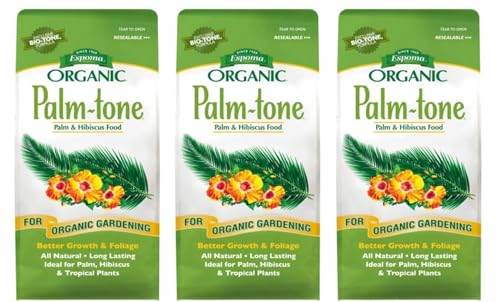
Espoma’s Palm-Tone is built around a 4-1-5 analysis enhanced with Espoma’s exclusive Bio-tone microbe stimulant and 5% calcium for cell-wall strength. The product is OMRI-listed for organic gardening, meaning it contains no synthetic chemicals, sludges, or toxic ingredients. It comes as a ready-to-use granular formula that gets spread around the drip line and watered in.
The organic base feeds both the palm and the soil biology simultaneously, which improves long-term nutrient cycling in the root zone. Gardeners using Palm-Tone on hibiscus, yuccas, and tropical companions report deeper bloom color and denser foliage. The three-month feeding interval for palms matches a typical season cycle, and monthly use on hibiscus keeps flowers coming continuously.
The smell is notably strong — several owners describe it as a barnyard odor that lingers for a day or two after application. The nitrogen content is also quite low at 4%, so very large or fast-growing palms may show slower green-up compared to synthetic high-nitrogen alternatives. The 4-lb bag covers a modest area, so multiple bags may be needed for a grove of mature trees.
What works
- Certified organic with beneficial soil microbial additives
- Safe for use around children, pets, and edible landscapes
What doesn’t
- Strong manure-like odor during first 24 hours after application
- Low NPK numbers require larger volume for big trees
6. Nelson NutriStar Palm Food 11-4-6
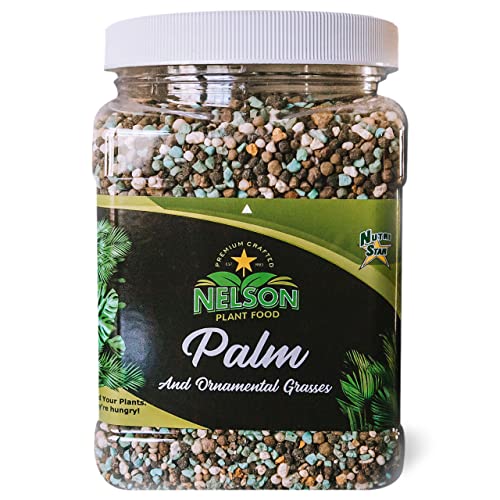
Nelson NutriStar uses a low-salt, acidic formula with an 11-4-6 analysis designed for palms growing in alkaline or clay-heavy soils where nutrient lockout is common. An impressive 90% of the nitrogen is ureaform slow-release, which requires microbial breakdown — this eliminates the risk of nitrogen burn and provides a steady supply over several weeks. The inclusion of elemental sulfur helps lower soil pH, making iron and manganese more available to the roots.
The product is a favorite among professional landscapers who work with Canary Island date palms, Mediterranean fans, and sagos. The nutrient list includes ferrous sulfate, magnesium sulfate, manganese sulfate, and zinc sulfate — each in a form that remains plant-available even in high-pH irrigation water. Users with acid-loving palm species see particularly strong results from the sulfur component.
The 2-lb bag is small relative to the recommended 30-day reapplication schedule during the growing season. Frequent reapplication drives up the annual cost compared to a single 12-month granular. A small number of reviews report that the formula caused leaf damage on very sensitive indoor palms, so it is best reserved for established outdoor specimens with active soil biology.
What works
- Low-salt formulation protects roots in poor or compacted soil
- Sulfur content acidifies alkaline soil for better micronutrient uptake
What doesn’t
- Small bag size leads to frequent repurchase during growing season
- May cause leaf burn on sensitive indoor palms in containers
7. Pennington Ultra Green Palm Tree & Hibiscus 9-4-9

The Pennington Ultra Green formula provides a balanced 9-4-9 NPK ratio with iron, magnesium, and three chelated essential nutrients that remain stable in varying soil pH levels. The granules are designed to retain water in the root zone, which is a unique feature for hot, dry climates where irrigation frequency is a challenge. A single application feeds for up to four months.
Long-term users mention applying this product twice per year — once in spring and once in late summer — and seeing consistent health in queen palms, hibiscus, and other tropicals over many years. The 5-lb bag size is generous for the entry-level price tier, and the slow-release coating prevents the rapid nutrient flush that can wash away in heavy rain.
The 9-4-9 ratio is slightly less potassium-heavy than premium palm-specific blends, so trees growing in severely potassium-deficient soil may still show marginal frond yellowing between applications. The granules also have a coating that can feel oily to the touch, which some users find unpleasant during manual broadcasting.
What works
- Unique water-retention granules benefit hot, dry climates
- Consistent four-month feeding with reliable long-term results
What doesn’t
- Potassium percentage could be higher for K-deficient soils
- Granule coating feels greasy during hand application
Hardware & Specs Guide
NPK Ratio
The three-number ratio on the label represents Nitrogen (leaf growth), Phosphorus (root/flower development), and Potassium (overall structure and disease resistance). For palms, the third number should be equal to or higher than the first. A ratio like 12-4-11 or 8-2-12 indicates a palm-specific formulation. A 24-8-16 lawn fertilizer will cause soft, elongated fronds and potassium deficiency symptoms.
Slow-Release vs. Quick-Release
Slow-release formulas use polymer coatings or ureaform technology to meter nutrients over weeks or months. This prevents root burn and reduces application frequency. Quick-release granules or liquid concentrates provide an immediate nutrient surge but require consistent reapplication. Twelve-month slow-release granules are ideal for forgetful owners; liquids suit hands-on gardeners who want to control dosage week by week.
FAQ
Can I use a regular 10-10-10 fertilizer on my palm trees?
How often should I apply slow-release granular palm fertilizer?
Final Thoughts: The Verdict
For most gardeners, the fertilizer for palm trees winner is the Real Growers Ultimate Palm 12-4-11 because its single-application annual feeding and complete micronutrient package eliminate guesswork across an entire season. If you want instant greening and have the discipline for weekly watering, grab the Farmer’s Secret Booster. And for a no-spill, no-measure option that works reliably on smaller landscapes, nothing beats the Jobe’s Palm Spikes.