
The single fastest way to green up a nitrogen-starved garden in spring is also the one that makes your neighbors sneeze. Fish emulsion fertilizer delivers an immediate blast of organic nitrogen that synthetic granules simply cannot match, and the microbial response in your soil is visible within days. But the real challenge isn’t the NPK ratio — it’s finding a formula potent enough to drive results without making your entire property smell like a cannery.
I’m Rikta — the co-founder and writer behind Lawn Gear Lab. I’ve spent hundreds of hours analyzing owner feedback, comparing NPK breakdowns, and studying the hydrolysis and cold-pressing methods that determine whether a fish emulsion delivers steady growth or just a stinky puddle.
Whether you are feeding roses, tomatoes, herbs, or container vegetables, the product you choose determines how fast your plants take up nitrogen and how much odor you tolerate. This guide breaks down six contenders to help you find the best fish emulsion fertilizer for your specific garden setup.
How To Choose The Best Fish Emulsion Fertilizer
Fish emulsion is not a one-size-fits-all product. The NPK ratio, the fish species used, and the processing method all determine whether your plants get quick green-up or steady season-long feeding. Here are the three factors that separate a smart buy from a regretful pour.
NPK Ratio — Nitrogen Dominance vs. Bloom Support
Most fish emulsions sit in the 5-1-1 or 2-3-1 range. High-nitrogen formulas (5-1-1) are perfect for leafy greens, lawns, and early vegetative growth. Lower-nitrogen, higher-phosphorus ratios like 2-3-1 or 2-6-4 shift the plant’s energy toward flowering and fruiting. Match the ratio to your crop: tomatoes and peppers benefit from a phosphorus boost, while spinach and kale thrive on nitrogen-heavy feedings.
Processing Method — Cold-Pressed vs. Acidulated
Cold-pressed (hydrolyzed) fish emulsion retains more amino acids and micronutrients because no heat is applied during processing. The result is a thinner consistency that microbes digest faster. Acidulated formulas use phosphoric acid to stabilize the fish solubles, which extends shelf life but can reduce the diversity of beneficial organic compounds. Cold-pressed options generally smell stronger but deliver a faster biological response.
Odor Level and Application Practicality
Every fish emulsion has a smell — that is the nature of the product. But the intensity and longevity vary wildly between brands. Deodorized formulas use additives or specific fish species to cut the pungency, though some gardeners argue that a faint smell indicates weaker nutrient content. Consider where you garden: outdoor beds can handle stronger odors that dissipate within hours, while indoor or greenhouse use demands a formula that does not linger for days.
Quick Comparison
On smaller screens, swipe sideways to see the full table.
| Model | Category | Best For | Key Spec | Amazon |
|---|---|---|---|---|
| Alaska Fish Fertilizer 5-1-1 | Single Gallon | OMRI organic vegetable gardens | 5-1-1 NPK | 115 oz | Amazon |
| Neptune’s Harvest Rose & Flowering | Bloom Formula | High-phosphorus bloom boosting | 2-6-4 NPK | 36 oz | Amazon |
| The Grow Co Fish Emulsion | Hydrolyzed Gallon | Sustainable cold-pressed feeding | 2-3-1 NPK | 128 oz | Amazon |
| Heirloom Roses Founder’s Fish Fertilizer | Rose Specific | Rose and tomato soil mineralization | Acidulated solubles | 32 oz | Amazon |
| Bush Doctor Wholly Mackerel | Fast Uptake | Immediate nutrient availability | 3-1-0 NPK | 1 Pint | Amazon |
| FOOP Garden Organic Fish Manure | Mint-Scented | Low-odor indoor feeding | OMRI listed | 32 oz | Amazon |
In‑Depth Reviews
1. Alaska Fish Fertilizer OMRI Listed 5-1-1, 115 oz
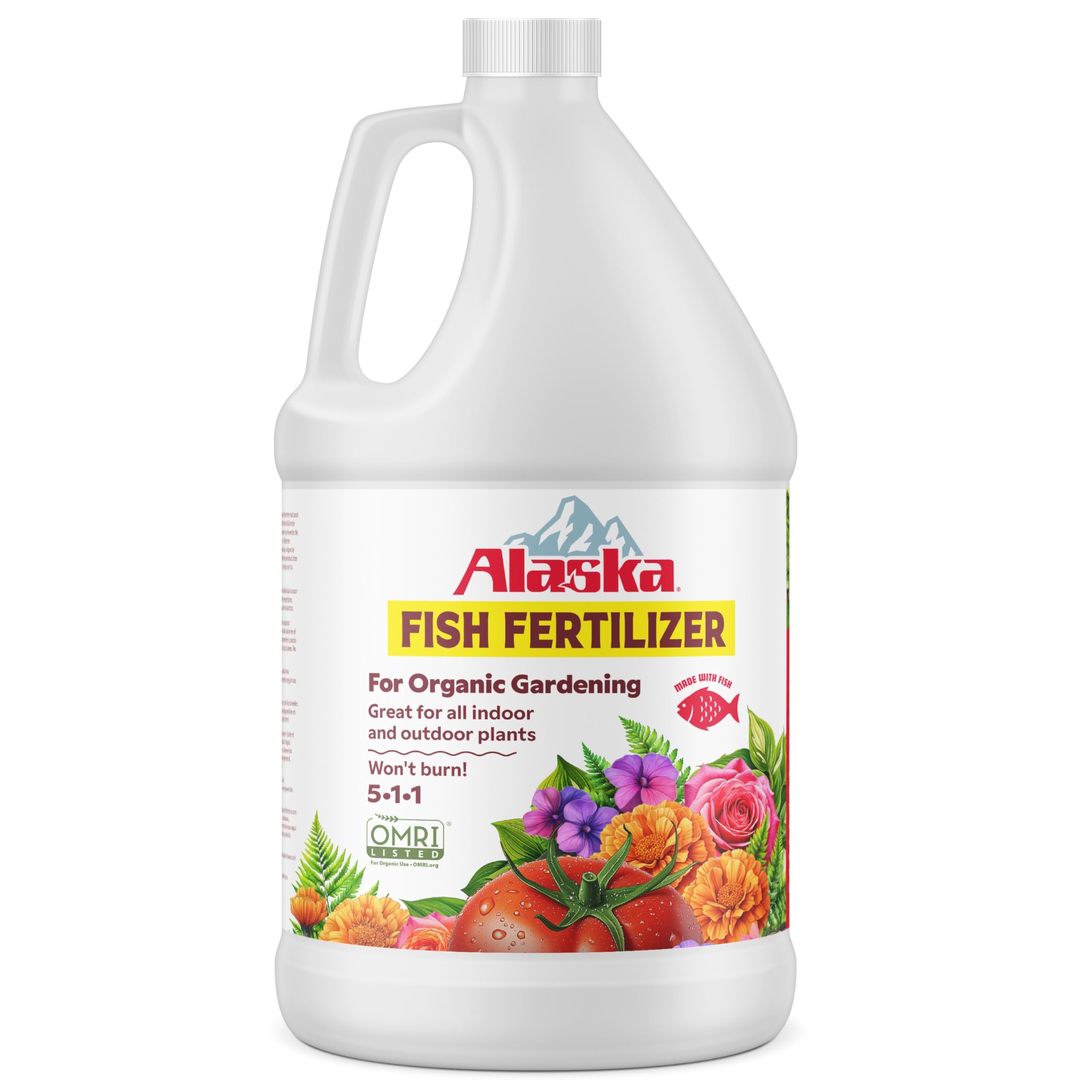
This 115-ounce bottle of Alaska Fish Fertilizer 5-1-1 delivers the highest nitrogen concentration among the reviewed options, making it a go-to choice for leafy greens, lawns, and any plant in rapid vegetative growth. It is OMRI Listed for organic production and covers up to 1,000 square feet per application, and it remains one of the best-selling fish fertilizers on Amazon, with thousands of bottles purchased every month. This is a true fish emulsion, not a deodorized product — expect the classic fishy smell during application, which fades once it is watered into the soil.
The 5-1-1 ratio works well for vegetables, herbs, trees, and container plants, and the manufacturer recommends applying every three weeks during the growing season. Long-term users mention that it supports soil biology without burning roots, even when applied to sensitive seedlings at half strength. The consistency is thin and pours easily, mixing without clumping into any watering can or hose-end sprayer.
Because the phosphorus and potassium levels are low, this fertilizer is best used for early-season growth spurts rather than bloom support. Some gardeners combine it with a bloom booster later in the season. Also, the bottle is large and heavy — at nearly 9 pounds — so lifting and pouring require care. For organic gardeners who want a single, reliable nitrogen source for a large vegetable patch or orchard, this is the most straightforward option available.
What works
- OMRI-listed certification for organic gardening peace of mind
- One of Amazon’s best-selling fish fertilizers, with strong repeat-purchase volume
- Large 115-ounce bottle covers up to 1,000 square feet per dose
What doesn’t
- Low phosphorus and potassium mean it is not ideal for flowering or fruiting
- Heavy 8.8-pound bottle can be awkward to handle and pour
- Full, undiluted fish odor during application — this is not a deodorized formula
2. Neptune’s Harvest Rose & Flowering Fertilizer (2-6-4) – 36oz
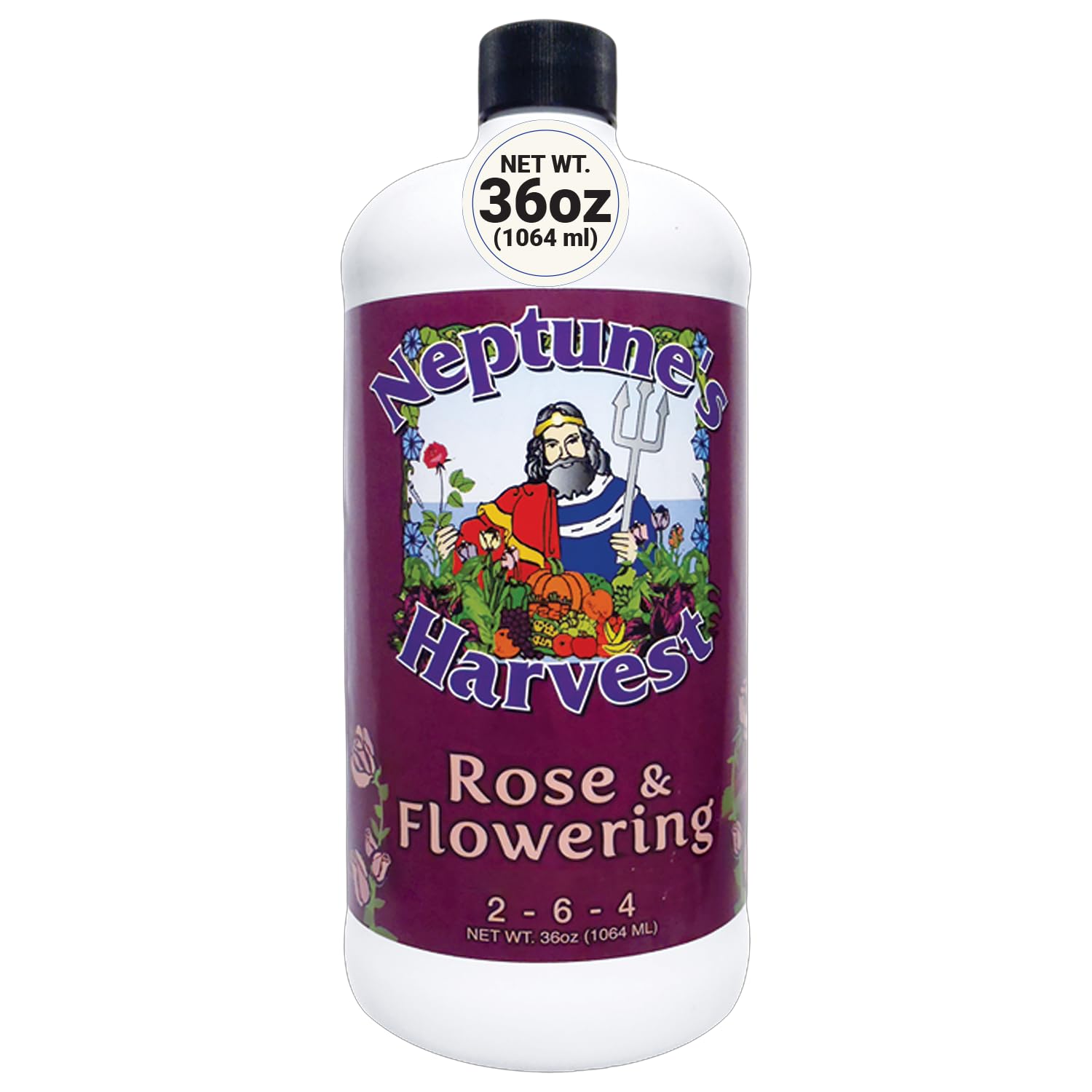
Neptune’s Harvest flips the standard fish emulsion script by putting phosphorus front and center. The 2-6-4 NPK ratio is specifically engineered for flowering and fruiting plants, with phosphorus levels three times higher than nitrogen. This makes it the best choice for roses, peppers, tomatoes, and any crop where you want dense buds and heavy fruit set rather than leafy growth. The formula also includes seaweed, molasses, humic acids, and yucca extract — a biological cocktail that feeds soil microbes while delivering nutrients.
Users report exceptional results with indoor and container plants, describing how stunted tomato plants revived overnight and began producing flowers within four weeks. The versatility of this product is a major strength: it can be applied as a soil drench at 1/8 cup per gallon or used as a foliar feed at 1 tablespoon per gallon for houseplants. Gardeners note that the smell is more like ocean air than rotting fish, which is a welcome change for anyone who has dealt with pungent emulsions. The addition of liquid calcium also helps prevent blossom-end rot in tomatoes.
Because the nitrogen is low relative to phosphorus, this is not a good stand-alone feed for leafy greens or lawns that need heavy nitrogen. The 36-ounce bottle also runs out faster than gallon-sized options if you have a large garden. For dedicated flower gardeners and vegetable growers focused on maximizing yields during the fruiting stage, this formula delivers targeted results that standard 5-1-1 emulsions cannot match.
What works
- High phosphorus ratio (2-6-4) directly supports blooming and fruit development
- Can be used as both soil drench and foliar feed for flexibility
- Includes seaweed, humic acids, and calcium for comprehensive plant nutrition
What doesn’t
- Low nitrogen content makes it unsuitable for leafy greens and lawns
- Smaller 36-ounce bottle requires more frequent reordering for large gardens
3. The Grow Co 1 Gallon Organic Fish Emulsion Fertilizer (2-3-1)

The Grow Co offers a full gallon of cold-pressed, hydrolyzed fish emulsion with a balanced 2-3-1 NPK that works well as a general-purpose feed throughout the growing season. The lower nitrogen content compared to the 5-1-1 options makes this safer for frequent light applications — the manufacturer recommends using it every two weeks rather than every three weeks, which gives you more precise control over nutrient delivery. The sustainably sourced fish emulsion is 100% cold-pressed, which retains the amino acids and micronutrients that heat-based processing destroys.
This fish emulsion carries a 4.8-star average from over 600 ratings and is one of the top-selling products in its category, with reviewers frequently praising its thin consistency that mixes instantly with water, even cold tap water. The 2-3-1 ratio is particularly well suited for fruit-bearing plants like tomatoes and peppers, where you want moderate nitrogen to support foliage without sacrificing bloom energy. The product also works effectively as a foliar spray, with users noting visible greening within 48 hours of application.
The smell is undeniably potent — the manufacturer openly states that if it does not smell like fish, it is not real fish emulsion. This makes indoor use difficult without ventilation, and the odor can linger for up to 48 hours in enclosed spaces. Some users also note that the consistency is thinner than molasses-based emulsions, which can make it feel less concentrated than expected. For organic growers who prioritize sustainability and want a large volume of gentle, balanced feed for a mixed vegetable garden, this gallon option delivers excellent value.
What works
- Cold-pressed hydrolysis retains full amino acid and micronutrient profile
- Balanced 2-3-1 NPK suits frequent feeding schedules without burn risk
- Full gallon provides extended coverage for large vegetable gardens
What doesn’t
- Extremely strong fish odor can linger indoors for up to two days
- Thin consistency may feel less concentrated than thicker emulsion alternatives
4. Heirloom Roses Founder’s Fish Fertilizer, 32 oz
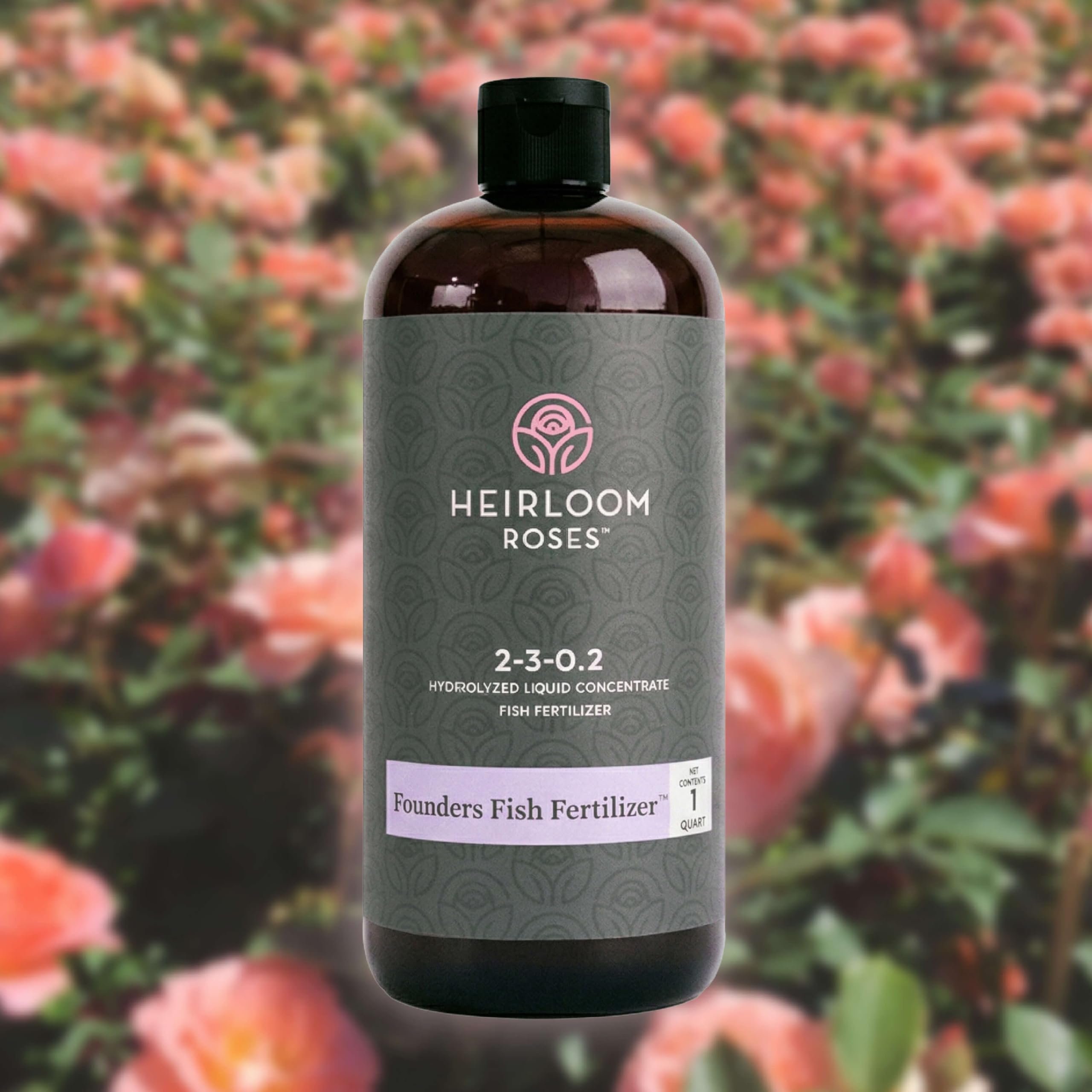
Heirloom Roses has formulated this emulsion specifically for rose and tomato plants, using acidulated fish solubles stabilized with phosphoric acid to maximize soil mineralization. The product is derived from multiple fish species, which provides a broader spectrum of trace minerals compared to single-source emulsions. It carries a 4.7-star rating across 683 reviews, and reviewers regularly cite strong repeat bloom cycles on established rose bushes after a season of regular feeding.
The application rate is straightforward: mix 4 ounces per gallon of water, with one gallon covering two to three roses. What makes this product stand out for rose growers is the emphasis on mycorrhizal feeding — the organic matter from the decomposed fish builds healthy bacteria that improve nutrient uptake between waterings. Gardeners note that the foliage on their roses became visibly thicker and greener within two weeks of the first application, and the sustained blooming continued through late summer.
The smell is the main drawback, as is typical of acidulated fish solubles — applying it away from doors, windows, and outdoor seating areas will minimize the impact on people nearby. The bottle is also relatively small at 32 ounces, which means large rose gardens will need multiple bottles. For dedicated rose enthusiasts who want a species-specific feed that supports both root health and continuous flowering, this is the most targeted option available.
What works
- Multi-species fish blend provides diverse trace minerals for soil health
- Specifically formulated to support rose blooming and tomato fruit set
- Feeds mycorrhizae for improved nutrient retention between waterings
What doesn’t
- Extremely potent odor that can affect nearby neighbors during application
- Small bottle size may require multiple purchases for large rose gardens
5. Bush Doctor Wholly Mackerel Fish Fertilizer (3-1-0) – 1 Pint

FoxFarm’s Bush Doctor Wholly Mackerel is formulated for immediate nutrient uptake, with a 3-1-0 NPK ratio that delivers nitrogen quickly without the phosphorus and potassium that can accumulate in soil over time. This makes it an excellent choice for correcting nitrogen deficiencies in container plants, where you want a fast green-up response without altering the overall soil chemistry. It holds a 4.7-star rating across more than 700 reviews, with reviewers frequently citing quick, visible green-up after application.
The mixing ratio is economical: just 1 tablespoon per gallon of water, applied every other week. The pint-sized bottle goes further than its small volume suggests because of the concentrated formula. Gardeners appreciate that the product is designed for both in-ground and container plantings, and the FoxFarm brand has a long track record of greenhouse-tested consistency since 1984.
The main complaint revolves around the bottle design: the lid has a hole that allows the fishy smell to escape even when closed, which means you need to wrap the bottle in plastic for storage. The 3-1-0 NPK also lacks the phosphorus and potassium needed for long-term bloom support, so it works best as a supplement rather than a complete feeding regimen. For container gardeners who need a rapid-response nitrogen boost that will not throw off their soil balance, this is the fastest-acting option tested.
What works
- Immediate nutrient uptake shows visible green-up within 24 hours
- Concentrated formula requires only 1 tablespoon per gallon
- Low phosphorus prevents soil accumulation in container gardens
What doesn’t
- Bottle lid design allows smell to escape during storage
- Lacks phosphorus and potassium for complete long-term plant nutrition
6. FOOP Garden Organic Liquid Plant Food (Fish Manure) – 32 oz

FOOP takes a different approach by combining fish manure with kelp, mycorrhizae, and a fresh minty scent designed to mask the traditional fish fertilizer odor. This makes it the most practical choice for indoor gardeners and those who grow near living spaces. The OMRI listing confirms organic compliance, and the formula provides a broad spectrum of essential nutrients including nitrogen, phosphorus, potassium, calcium, magnesium, and silica.
Users who switched from chemical fertilizers to this organic option report vigorous growth in seedlings, potted plants, and herbs, with visible results comparable to synthetic alternatives. The product is safe around pets and children once watered in, which is a significant advantage for families who garden near play areas. The mint scent, however, does not fully eliminate the fish odor — multiple reviewers note that the mint is subtle and the underlying fish smell still clears a room.
At 32 ounces, the bottle is on the smaller side, and the price per ounce is higher than traditional fish emulsions. Some users also caution against overuse on seedlings, recommending patience and strict adherence to the dilution instructions. For urban gardeners, apartment balcony growers, or anyone who needs a fish-based fertilizer that will not offend neighbors or family members, FOOP offers the most discreet solution.
What works
- Mint scent helps mask traditional fish fertilizer odor for indoor use
- OMRI-listed organic formula safe around pets and children after application
- Includes kelp, mycorrhizae, and silica for comprehensive plant nutrition
What doesn’t
- Mint scent does not fully eliminate the underlying fish smell
- Smaller bottle and higher per-ounce cost than traditional options
Hardware & Specs Guide
NPK Ratio — The Nutrient Triangle
The three numbers on every fish emulsion label represent nitrogen (N), phosphorus (P), and potassium (K). High-nitrogen ratios like 5-1-1 drive vegetative growth and deep green foliage, making them ideal for lawns, leafy greens, and early-season feeding. Ratios with elevated phosphorus (2-6-4 or 2-3-1) shift the plant’s energy toward flower and fruit production. Choose based on what your crop needs most at its current growth stage.
Hydrolysis Method — Cold-Pressed vs. Acidulated
Cold-pressed (hydrolyzed) fish emulsion retains the full amino acid and micronutrient profile because the fish is processed without heat. The result is a thinner, more biologically active product that soil microbes digest rapidly. Acidulated fish solubles use phosphoric acid to stabilize the fish waste, extending shelf life but potentially reducing the diversity of organic compounds. Cold-pressed formulas generally smell stronger but produce faster microbial response.
FAQ
How often should I apply fish emulsion fertilizer during the growing season?
Can fish emulsion fertilizer burn my plants if I use too much?
Does the smell of fish emulsion fertilizer attract animals or pests?
Final Thoughts: The Verdict
For most gardeners, the best fish emulsion fertilizer winner is the Alaska Fish Fertilizer OMRI Listed 5-1-1 because it delivers the highest nitrogen concentration of the group, OMRI-listed organic certification, and one of the best sales track records on Amazon. If you want a bloom-specific formula for flowering plants and fruiting vegetables, grab the Neptune’s Harvest Rose & Flowering Fertilizer. And for low-odor indoor feeding where discretion matters, nothing beats the FOOP Garden Organic Fish Manure formula.