
Roses are heavy feeders that demand a steady supply of organic matter to produce the thick stems, dark-green foliage, and heavy-petaled blooms that define a prize-winning bush. The wrong compost leaves you with sparse flowers and yellowing leaves, while the right soil amendment supplies the precise nutrients and microbial life that rose roots crave. This guide compares seven of the best formulations on the market to remove the guesswork from your choice.
I’m Rikta — the co-founder and writer behind Lawn Gear Lab. I spend hundreds of hours analyzing ingredient lists, studying NPK ratios and OMRI certifications, and cross-referencing real owner feedback to identify which compost blends deliver measurable results for rose growers at every price tier.
Whether you are planting bare-root varieties, top-dressing established climbers, or rejuvenating tired soil in raised beds, this detailed breakdown will help you select the ideal compost for roses based on your specific garden needs and budget.
How To Choose The Best Compost For Roses
Selecting the right compost requires looking past the bag’s marketing and focusing on three core factors: the quality of the organic ingredients, the nutrient analysis, and the physical texture that supports root aeration and water retention. Rose growers should prioritize a balanced, slow-release formula that feeds the soil biology rather than forcing a quick flush of weak growth.
Understand the NPK and the Source
The three numbers on the bag — nitrogen, phosphorus, and potassium — only tell part of the story. A rose-specific compost with an NPK around 4-3-2 or 5-3-3 is common, but what matters more is where those nutrients come from. Blends featuring seabird guano, fish bone meal, shrimp and crab shell meal, or composted cow manure release nutrients at different rates and build soil humus in ways synthetic salts never can.
Texture and Moisture Management
Roses despise waterlogged roots. A quality compost should be dark, crumbly, and free of large sticks or plastic contaminants. It should hold moisture without becoming a dense, cake-like mass. Fine-textured compost works well for top-dressing and container plants, while coarser blends improve drainage in heavy clay beds.
Organic Certification and Safety
Look for OMRI (Organic Materials Review Institute) listing or clear labeling that the compost is approved for organic production. This guarantees no sewage sludge, synthetic additives, or toxic residual chemicals are present. This becomes especially critical around edibles and for households with pets and children who share the garden space.
Quick Comparison
On smaller screens, swipe sideways to see the full table.
| Model | Category | Best For | Key Spec | Amazon |
|---|---|---|---|---|
| Espoma Organic Rose-Tone 4-3-2 | Granules | Monthly feeding of all rose types | 4-3-2 NPK, contains Bio-tone | Amazon |
| R&M Organics Premium Organic Compost | Manure-based | Reviving stressed plants | 5:1 mixing ratio, 10 lb bag | Amazon |
| Brut Cow Compost | Pure manure | Economical soil amendment | OMRI listed, 10 quarts | Amazon |
| Farmer’s Secret Rose Booster | Liquid | Quick rescue of sick plants | 32 oz concentrate, covers 128 gal | Amazon |
| True Organic Rose & Flower Food | Granules | Heavy bloom production | 12 lb bag, covers 210 sq ft | Amazon |
| Coast of Maine Organic Planting Soil | Potting mix | New rose planting and repotting | 20 quarts, OMRI listed | Amazon |
| Ribbon Organics OMRI Compost | Pure compost | Premium soil building | 7.9 gal, 32-35 lb bag | Amazon |
In‑Depth Reviews
1. Espoma Organic Rose-Tone 4-3-2 (Pack of 2)

Espoma has been formulating organic fertilizers since 1929, and the Rose-Tone 4-3-2 reflects that long experience with a blend built around its proprietary Bio-tone microbial inoculant. The 4-pound bag covers a significant area when applied monthly from May through September, and the 5 percent calcium content supports strong cell walls and disease resistance in rose canes. The granules are ready to use straight from the bag with no mixing required.
Real owners report seeing greener leaves, faster growth, and notably more flower buds after switching from generic fertilizers. The formula is approved for organic gardening and contains no sludges, making it safe to use around children and pets as long as you water it into the soil after application. Many users also note its effectiveness on climbers, knockout roses, and clematis.
The two-pack provides excellent value for gardeners with multiple rose bushes, and the slow-release action reduces the risk of burning delicate root systems compared to synthetic salt-based plant foods. For a balanced, reliable monthly feeding schedule, this is the set of features that earns the top spot.
What works
- Bio-tone microbes improve soil biology naturally
- Monthly feeding schedule is simple and consistent
- Works on all rose varieties plus flowering shrubs
What doesn’t
- Bag size runs out faster for large rose gardens
- Results require a few weeks to appear compared to liquid feeds
2. R&M Organics Premium Organic Compost (10 lb)
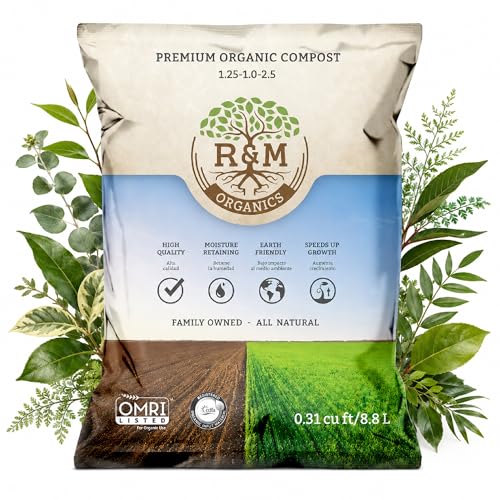
R&M Organics focuses on a fully composted dairy cow manure that is processed with continuous aeration to minimize odor. The result is a dark, earthy material that has a fine topsoil texture with no clumps or strong manure smell. The 10-pound bag is easy to handle for small to medium garden beds and works well as a quarter-inch top dressing around rose crowns.
Customer reviews highlight its effectiveness in reviving stressed plants, including azaleas damaged by roof-cleaning chemicals. The compost’s ability to improve moisture retention means less frequent watering, which is particularly beneficial during summer heat. Users report noticeable improvement in yellowing leaves and new growth within a week of application.
The mixing ratio of 5:1 with existing soil makes this a versatile amendment for both container roses and in-ground beds. While the price per pound is higher than bulk options, the quality control and lack of contaminants justify the cost for gardeners who need to rejuvenate a small area quickly.
What works
- Effectively revives stressed and ailing plants
- Fine texture with no clumps or manure odor
- Boosts moisture retention in sandy soils
What doesn’t
- Bag size too small for large garden beds
- Lower nutrient concentration than granular fertilizers
3. Brut Cow Compost (10 Quarts)

Brut Cow Compost is a straightforward, no-additive product made from thoroughly composted dairy cow manure that has been aerated, tested, and finely sifted. The OMRI listing certifies its organic purity, and the manufacturer explicitly guarantees no risk of root burn, which is a common problem with uncomposted fresh manure. The 10-quart bag provides a generous volume for mixing into rose beds.
First-time gardeners and veterans alike praise its versatility when blended with standard potting soil in a 3:2 ratio. Users report explosive growth in tomato seedlings, and roses planted in this compost show faster root establishment and richer green color. The low odor makes it suitable for indoor container use as well.
For rose growers who want a clean, reliable organic base amendment without paying for expensive proprietary additives, this bag delivers consistent quality. The fine sifting ensures even distribution through the root zone, helping new transplants settle in quickly.
What works
- OMRI certified for organic gardening confidence
- No burn risk even when used in containers
- Fine, sifted texture distributes evenly
What doesn’t
- Bag volume modest for large landscaping projects
- No added microbial boosters like Bio-tone blends
4. Farmer’s Secret Rose Booster (32 oz)
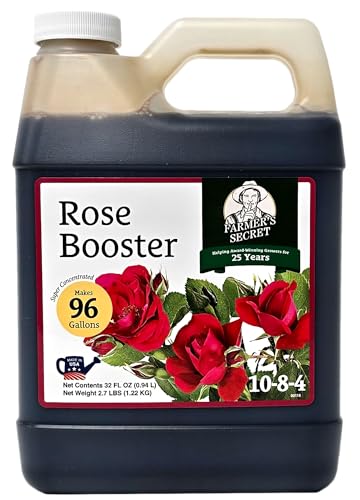
Farmer’s Secret takes a different approach — a super-concentrated liquid that dilutes at just two teaspoons per gallon of water. This 32-ounce bottle produces over 100 gallons of ready-to-use feed, making it one of the most economical options per application. The liquid form delivers nutrients immediately to the root zone, which is critical when you are trying to save a rose that is declining rapidly.
Owners consistently report that this booster rescued roses that were nearly dead — one user described a plant that returned from a “last breath” state with new growth appearing all over the bush. The sulfur smell is noticeable during mixing but dissipates quickly after watering. It is formulated for all rose types throughout the full life cycle, from early spring green-up to bloom support.
While it works fast, the liquid nature means it requires weekly application during the growing season rather than the monthly granular schedule. For gardeners who prefer a set-it-and-forget-it routine, the extra effort may be a drawback, but for targeted rescue or container feeding, the concentrated liquid delivers unmatched speed.
What works
- Extremely concentrated — a little goes a long way
- Fast-acting liquid formulation revives sick roses quickly
- Formulated specifically for all rose varieties
What doesn’t
- Requires weekly mixing and application during season
- Noticeable sulfur smell during mixing
5. True Organic Rose & Flower Food (12 lb)
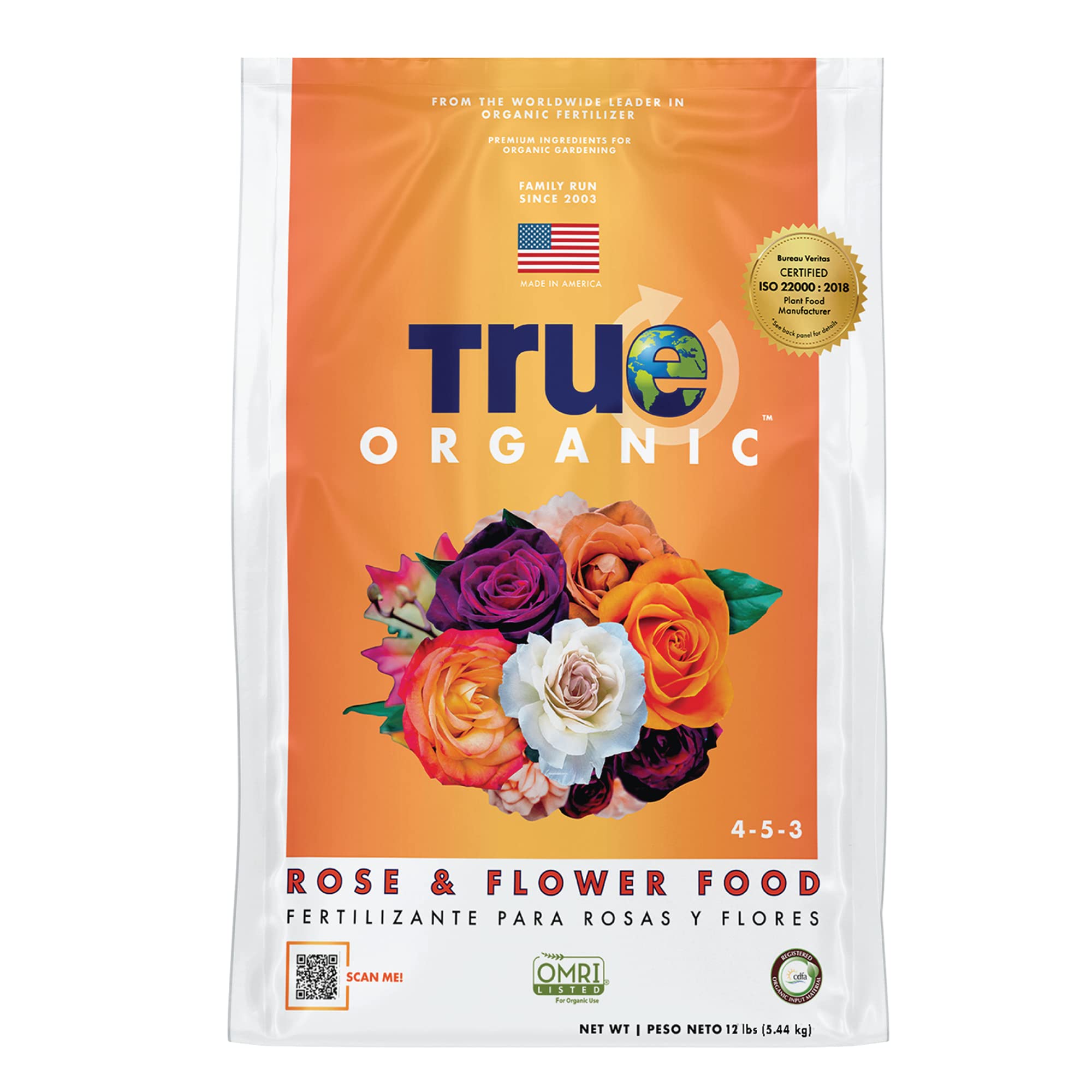
True Organic’s granular food leverages seabird guano, shrimp and crab shell meal, fish bone meal, and soybean meal to create a robust nutrient profile designed specifically for heavy bloomers. The 12-pound bag covers up to 210 square feet, which is enough for a substantial rose garden or multiple flower beds. The application is simple — one-quarter cup per bush every three to four weeks.
Long-term users have documented dramatic results, including one rose variety called “Playboy” that grew from 2 to 7 feet tall after a season of feeding. The smell is noticeably less offensive than fish-based liquid fertilizers even after rain or heat. Many gardeners report that the formula produces double blooms and fuller flowers that hold their shape longer on the stem.
The organic blend improves soil structure over time rather than just feeding the plant directly. This makes it an ideal choice for gardeners who want both immediate visual results and lasting soil health. The monthly application schedule balances convenience with steady nutrition.
What works
- Impressive bloom size and fullness reported by owners
- Large 12 lb bag covers extensive garden area
- Pleasant earthy smell compared to fish-based formulas
What doesn’t
- Requires measuring for precise application per bush
- Granules may sit on top of mulch if not watered in
6. Coast of Maine Organic Planting Soil for Roses (20 Qt)
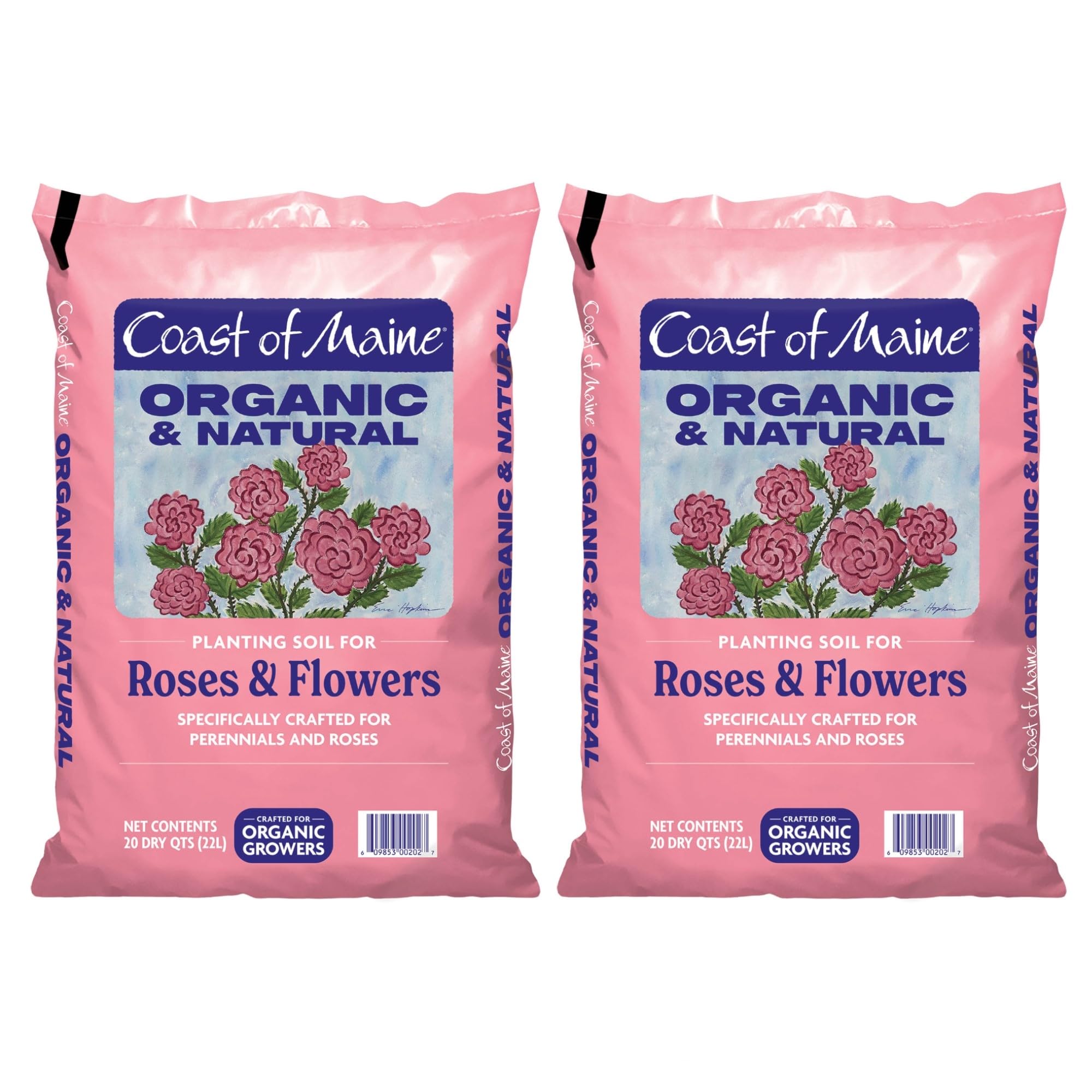
Coast of Maine formulates this specially blended organic topsoil with composted manure, sphagnum peat moss, and aged bark to balance moisture retention and drainage — the two most critical physical properties for rose root health. The 20-quart bag is sold as a two-pack, giving you enough material to fill several large containers or refresh a significant flower bed area. The OMRI listing ensures every ingredient meets organic production standards.
One owner describes how a new rose that arrived nearly dead with root mites was rinsed and transplanted into this soil, then fully recovered within weeks. Multiple users mention that their roses showed new growth within one month and began blooming within three. The consistency stays loose and airy even when wet, preventing the waterlogged conditions that encourage black spot fungus.
This is more of a complete planting mix than a top-dressing fertilizer, so it works best when used at initial planting time or as a replacement soil in existing beds. For gardeners establishing new roses or transplanting weak specimens, the Coast of Maine blend gives roots a near-perfect growing environment right from the start.
What works
- Excellent drainage and moisture balance for roses
- Revived a dying rose plant with root issues successfully
- OMRI organic certification for safe planting
What doesn’t
- Not a standalone fertilizer — need supplemental feeding later
- Heavy bag at 22 pounds for transport
7. Ribbon Organics OMRI Certified Organic Compost (7.9 Gal)

Ribbon Organics produces what many experienced gardeners call the closest thing to black gold you can buy in a bag. The 7.9-gallon bag (weighing 32 to 35 pounds) is densely packed with a rich, dark compost that has an earthy, soil-like smell and a consistent crumbly texture. Visible live worms and bugs inside the bag confirm an active microbial ecosystem — a strong indicator of true composting quality.
Users who mix this with perlite and orchid bark for container plants like Clivias and orchids report perfect moisture and air balance with zero fungus gnats. For rose growers, blending a quarter of this compost into the native soil or potting mix provides a powerful biological boost that improves nutrient cycling and root zone aeration. The OMRI certification provides peace of mind for organic growing.
The main consideration is the premium cost — this is an expensive product compared to home center bags. It is best used as a targeted amendment for high-value plants or small containers rather than for filling entire raised beds. For rose enthusiasts who want uncompromising organic material to enrich their best specimens, this compost delivers noticeable quality that cheaper alternatives cannot match.
What works
- Exceptionally clean with no sticks, plastic, or contaminants
- Live microbial activity visible inside the bag
- OMRI certified, safe for organic production
What doesn’t
- Higher cost per cubic foot than bulk options
- Best used as an amendment rather than a full bed filler
Hardware & Specs Guide
NPK Ratio and What It Means for Roses
The nitrogen (N) promotes leaf and stem growth, phosphorus (P) supports root development and flower bud formation, and potassium (K) strengthens overall plant health and disease resistance. Roses generally benefit from a slightly higher middle number (phosphorus) to encourage blooming. True Organic’s 4-3-3 and Espoma’s 4-3-2 both reflect this balanced approach, while pure composts like Ribbon Organics rely on natural microbial breakdown rather than a printed ratio.
Granular vs. Liquid vs. Pure Compost
Granular fertilizers such as Espoma Rose-Tone and True Organic provide slow, steady nutrition over weeks and improve soil biology with each application. Liquid concentrates like Farmer’s Secret offer immediate nutrient availability for rescue situations but require weekly mixing. Pure composts like R&M Organics and Ribbon Organics act primarily as soil amendments, improving structure and microbial life, but release nutrients more gradually and should be paired with a fertilizer if your goal is heavy bloom production.
FAQ
Can I use standard compost instead of rose-specific compost?
How often should I apply compost to my rose bushes?
What is the best compost for roses growing in containers?
Final Thoughts: The Verdict
For most gardeners, the compost for roses winner is the Espoma Organic Rose-Tone 4-3-2 because its Bio-tone microbial formula provides consistent, balanced nutrition with a foolproof monthly schedule that works across all rose varieties and flowering shrubs. If you want True Organic Rose & Flower Food it because the seabird guano and shellfish meal blend produces noticeably larger, fuller blooms throughout the season. And for Ribbon Organics OMRI Compost it is the go-to for gardeners who consider their roses high-value specimens worth the premium cost for the cleanest, most biologically active compost available in a bag.