
Bare soil in a garden bed is an open invitation for weeds, rapid evaporation, and temperature swings that stress plant roots. The right ground cover changes that dynamic entirely, creating a stable microclimate that suppresses unwanted growth and keeps moisture where it belongs. But with options ranging from compressed coconut blocks to synthetic rolls to traditional straw bales, choosing the right material for your specific beds requires understanding how each type behaves over a full growing season.
I’m Rikta — the co-founder and writer behind Lawn Gear Lab. I specialize in dissecting horticultural product categories by comparing material science, studying long-term owner reports, and analyzing how each spec translates to real-world performance in the garden.
Whether you are refreshing annual beds or establishing a permanent pathway, the right choice starts with a clear understanding of each option’s trade-offs, and this guide to the best mulch for garden use breaks down the key differences between organic, synthetic, and hybrid solutions so you can match the product to your specific conditions.
How To Choose The Best Mulch For Garden
The best choice depends on your garden’s specific challenges—whether that is relentless weed pressure, poor moisture retention, or erosion on a slope. By understanding a few key material properties, you can match the product to the purpose without overcomplicating the decision.
Organic vs. Synthetic: The Core Decision
Organic mulches like straw, wood chips, and coconut coir break down over time, adding organic matter to your soil and improving its structure. They are ideal for vegetable beds and annual flower gardens where you till the soil each season. Synthetic options like recycled rubber or felt mats provide permanent coverage and do not decompose, making them better suited for pathways, perennial borders, and areas where you want a one-time installation that lasts for years.
Water Retention and Airflow
Not all mulches handle water the same way. Coarse materials like large coconut chips allow water to penetrate freely while still shading the soil, reducing evaporation. Fine, dense materials like compressed straw can form a mat that sheds water if applied too thickly. Rubber mats are designed to let water and air pass through while blocking sunlight for weeds—always check for perforations or the manufacturer’s water permeability claims before installing over root zones.
Weight and Stability in Wind or Rain
Lightweight mulches like loose straw and shredded bark are prone to washing away on slopes and blowing around in open, windy areas. Heavier options like compressed coir blocks (which expand into a dense mat) and rubber rolls stay put without constant maintenance. If your garden faces heavy downpours or gusty conditions, prioritize a mulch that can anchor itself or be secured with stakes.
Expansion and Coverage per Unit
Compressed coir and peat products are sold by weight but are meant to be hydrated, expanding dramatically. A small block that weighs only a few pounds can yield several cubic feet of loose mulch once soaked. Compare the expanded volume, not the dry weight or bag size, when evaluating whether a product offers good coverage for your bed area. Straw bales are sold by cubic footage and do not expand, so what you see is what you get.
Quick Comparison
On smaller screens, swipe sideways to see the full table.
| Model | Category | Best For | Key Spec | Amazon |
|---|---|---|---|---|
| FibreDust 17 lbs Coconut Coir Mulch | Organic Coir | Moisture retention in hot climates | Expands to 3.2 cu ft per 2-block pack | Amazon |
| EZ Straw Seeding Mulch with Tack | Processed Straw | New seed protection and erosion control | 2.5 cu ft bale covers up to 600 sq ft | Amazon |
| Zyppio Black Rubber Mulch Border | Rubber Mat | Permanent pathways and hillside erosion | 6′ L x 22″ W roll with 16 anchors | Amazon |
| Adnee Double Sided Rubber Mulch Roll | Rubber Edging | Edging borders and wind-prone areas | 140″ L x 5.5″ W, 0.2-inch thick | Amazon |
| MODELLOR Premium Coco Chips | Coconut Chips | Orchid beds and long-lasting decorative mulch | 10 lb block yields 2 cu ft loose chips | Amazon |
| 2Pcs Recycled Felt Mulch Mat Roll | Felt Barrier | Walkway paths between raised beds | 8.2′ x 2′ per roll, 0.07-inch thick | Amazon |
| 100% Natural Wheat Straw | Organic Straw | Small animal bedding and light seed cover | 4 lb bag, resealable packaging | Amazon |
In‑Depth Reviews
1. FibreDust 17 lbs Coconut Coir Mulch

This two-block pack of compressed coconut coir expands to roughly 3.2 cubic feet when hydrated with around 8 gallons of water, yielding nearly a full wheelbarrow of mulching medium. The material is 100 percent coconut husk that has been washed, cut, dried, and compressed with no added colors or chemical binders, making it a clean organic choice for vegetable beds and ornamental borders alike.
What separates this product from typical bark mulches is its water behavior: the coir fibers absorb and retain moisture rather than letting it sheet off, and the finished mulch is dense enough that it does not float away during heavy rain. Users in arid climates like Arizona report that soil stays cool and moist an inch down even under full sun, and the natural brown color provides a uniform aesthetic without the staining or splintering that can come with dyed wood products.
The blocks do require pre-soaking, ideally overnight in a wheelbarrow or large drum, and the expanded coir can stain concrete if allowed to sit wet on paving. A few buyers note that the cost per cubic foot is higher than bagged bark mulch, but the longevity—often lasting a full growing season without breaking down—offsets the initial investment for gardeners who value consistent moisture control.
What works
- Exceptional water retention keeps soil moist longer than bark or straw
- Dense enough to resist washing away during rainstorms
- Clean, splinter-free texture that is pleasant to handle
What doesn’t
- Requires overnight soaking and pre-planning before use
- Expanded coir can temporarily stain concrete walkways
- Higher cost per cubic foot than traditional shredded bark
2. EZ Straw Seeding Mulch with Tack
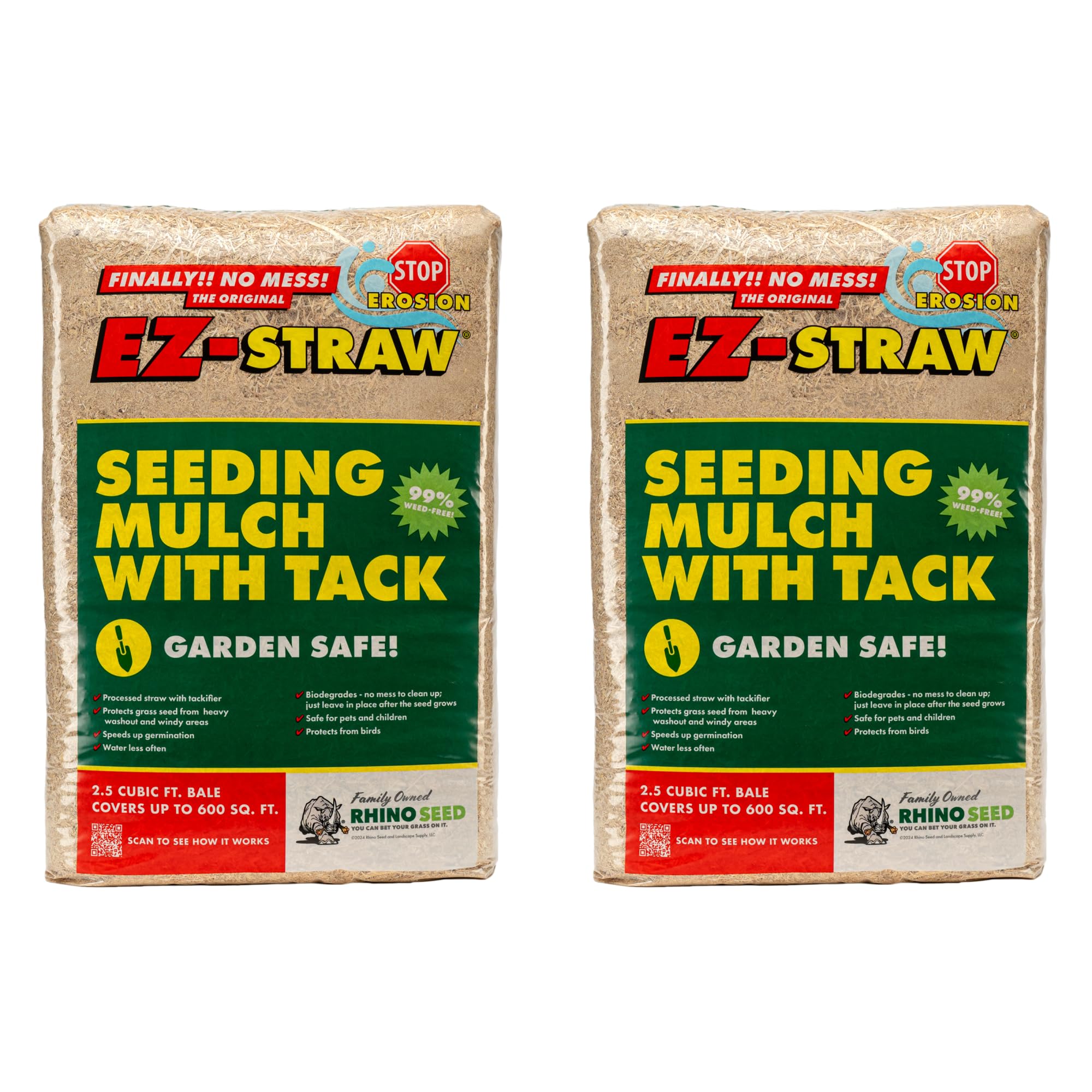
Each bale in this two-pack contains 2.5 cubic feet of processed wheat straw that has been fortified with a natural biodegradable tackifier, giving the material a slight stickiness that helps it hold together on slopes and in windy conditions. The straw is chopped into smaller, more uniform pieces than typical loose bales, which allows for more even coverage and better seed-to-soil contact when used as a topdressing for new lawns.
The 99 percent weed-free claim is critical here—unprocessed straw bales often contain dormant weed seeds that can introduce invasive grasses into a clean bed or newly seeded lawn. Users consistently report zero wheat or weed germination after application, and the tackifier keeps the straw from blowing into neighbors’ yards during dry spells. It is particularly effective for protecting exposed soil after drainage work or for holding moisture over freshly sown grass seed.
Some buyers find the price noticeably higher than generic straw bales from big-box stores, and there have been occasional complaints about receiving only one bale when a two-pack was ordered. For gardeners who need a clean, seed-free straw that stays put without constant raking, the premium over bulk straw is justified by the reduced labor and weed pressure.
What works
- Virtually weed-free with no germinating wheat seeds reported
- Tackifier holds straw in place on slopes and in wind
- Chopped size provides even coverage over grass seed
What doesn’t
- Costs more per bale than standard straw from a garden center
- Packaging and order fulfillment can be inconsistent
- Lightweight material may still shift under very heavy rain
3. Zyppio Black Rubber Mulch Border

This rubber mulch roll is manufactured from recycled shredded tires and measures 6 feet long by 22 inches wide, providing a substantial barrier strip for pathways, hillside edges, or the borders of flower beds. The material is designed to allow air and water to penetrate through to the soil while blocking sunlight from reaching weed seeds, creating a permanent ground cover that does not decompose or need annual replenishment.
Installation is straightforward: roll it out over the prepared area, cut to length with a utility knife, and secure it using the 16 included heavy-duty plastic anchors. Users on sloped lots report that the rubber stays in place during intense storms where loose bark or straw would wash down the hill, and the natural black color blends reasonably well with soil and mulch without looking overly manufactured. The flexibility of the rubber allows it to conform to gentle curves around tree rings or irregular bed shapes.
The included plastic anchors are the most frequently cited weak point—several reviewers describe them as flimsy and prone to breaking during installation. There are also reports of the rubber material itself degrading after a year of full sun exposure, with some users observing cracking or loss of structural integrity. For permanent installations, replacing the supplied stakes with heavier-duty metal landscape pins is a recommended upgrade.
What works
- Stays firmly in place on slopes and in high-wind areas
- Allows water and air to reach plant roots while blocking weeds
- Cut-to-fit sizing works well for irregular bed shapes
What doesn’t
- Included plastic anchors are too weak for permanent installation
- Rubber material may show signs of UV degradation within a year
- Higher upfront cost compared to organic mulch options
4. Adnee Double Sided Rubber Mulch Roll

This narrow rubber roll measures 140 inches in length and 5.5 inches in width, making it specifically suited for edge borders, fence lines, and narrow strips where loose mulch constantly blows or washes away. At 0.2 inches thick, the recycled rubber material is sturdy enough to resist tearing during installation yet flexible enough to wrap around tree trunks or follow curved bed outlines with a utility knife.
The double-sided design means both faces have a finished texture, so it looks consistent whether installed with the smooth side up or the textured side up. Users in windy regions report that this product completely solves the problem of bark chips ending up down the street after a storm, and the rubber acts as a physical barrier that keeps grass from creeping into garden beds from the edges. It also simplifies mowing by creating a clean, hard boundary that the mower wheels can ride against without scalping the bed edge.
Cutting the material requires a sharp knife—scissors generally struggle with the thick rubber—and the initial cost is higher than a bag of loose mulch for the same linear footage. Some users note that over multiple seasons, the rubber can become brittle and crack, though most find it holds up well for at least two to three years of outdoor exposure before needing replacement sections.
What works
- Eliminates wind and rain displacement of loose mulch along edges
- Double-sided finish looks clean from both orientations
- Thick enough to block grass rhizomes from entering beds
What doesn’t
- Requires a sharp utility knife for cutting; scissors are ineffective
- Rubber can become brittle after extended UV exposure
- Narrow width limits use to edging rather than broad coverage
5. MODELLOR Premium Coco Chips

This 10-pound compressed block of coconut husk chips hydrates to roughly 2 cubic feet (about 18 gallons) of chunky, porous mulch. The chips have been triple-washed to reduce salt content, which is important when using the material around sensitive plants or as a reptile bedding substrate—excess salt can harm both plant roots and animal inhabitants over time.
The coarse chip size distinguishes this product from finer coir dust or shredded mulch. Large husk pieces resist compaction, maintaining air pockets in the soil profile and allowing water to percolate quickly rather than pooling on the surface. This makes the chips particularly well-suited for orchids, monstera, and other aroids that demand excellent drainage, as well as for top-dressing outdoor beds where a decorative, natural-looking mulch is desired without the rapid decomposition of wood chips.
Breaking the dry block apart requires significant force—several users recommend a metal tool or a sturdy screwdriver to chip off manageable pieces before soaking. While the expanded volume is impressive for the weight, some batches have been reported to contain a higher proportion of fine, dusty particles rather than the chunky chips shown in marketing images, which reduces the aeration benefit for potting mixes.
What works
- Large chip size provides excellent drainage and airflow
- Triple-washed with low salt content for sensitive plants
- Compact storage that expands to 2 cubic feet after hydrating
What doesn’t
- Dry block is very hard and difficult to break apart
- Batch consistency varies; some contain excessive fine dust
- Not ideal as a standalone mulch for moisture-loving annuals
6. 2Pcs Recycled Felt Mulch Mat Roll

This two-pack of non-woven felt mats provides 8.2 feet by 2 feet of coverage per roll, designed specifically for creating walkways between garden rows or under raised beds. The upgraded felt material is thicker than standard landscape fabric and resists tearing during installation, while the black color helps it blend into garden paths without drawing attention away from the plants.
The felt acts as a physical weed barrier that also solves mud and erosion problems in high-traffic areas. Users who installed the mats between raised beds report that stepping stones stayed level and clean all summer, and the fabric prevented soil from splashing onto low-growing vegetables during rain. The included plastic spikes are simple to push through the felt into the ground below, and the material can be cut with ordinary scissors to fit irregular path layouts.
Installation orientation is not clearly documented—it is unclear whether the smooth side or the felt side should face upward, and different users have reported success with both orientations. A small number of reviewers felt the product was not durable enough compared to rubber alternatives and returned it in favor of plastic sheeting, though most found the thickness adequate for seasonal pathway use.
What works
- Thick felt material stays put and resists tearing during install
- Stops mud and erosion in high-traffic garden pathways
- Easy to cut with scissors for custom path layouts
What doesn’t
- No clear instructions on which side should face upward
- Plastic spikes may not hold in very loose or sandy soil
- Less durable than rubber for permanent installations
7. 100% Natural Wheat Straw
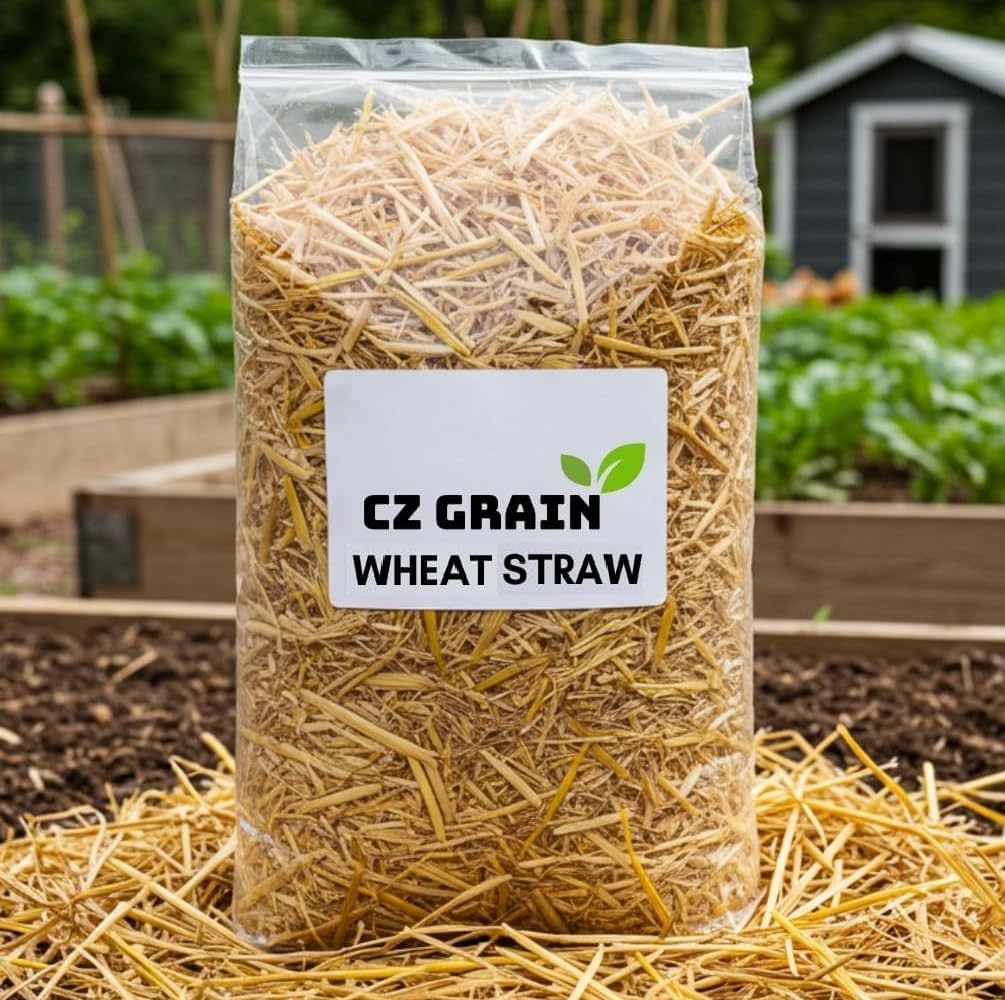
This 4-pound bag of 100 percent natural wheat straw is a straightforward, unprocessed organic mulch option that also serves as bedding for small animals like chickens, guinea pigs, or outdoor cats. The straw arrives clean with minimal dust and is packaged in a resealable bag that makes portioning easy for small garden applications or pet enclosures.
The primary garden use here is as a light seed cover or a thin moisture-retention layer over newly planted beds. The straw pieces are long and rigid, which helps them stay in place during wind and light rain, though some users recommend shredding the longer strands down to 1-to-2-inch pieces for softer bedding applications. When used as mulch, a 4-pound bag covers a relatively small area—roughly a few square feet at a 2-inch depth—so it is best suited for container gardens, small raised beds, or targeted spots rather than full landscape coverage.
Several reviewers note that the quantity feels skimpy for the price compared to buying a full bale from a farm supply store, and the long, rigid pieces can poke through thin fabric if used as animal bedding without shredding. The product is best viewed as a convenient, small-volume option for urban gardeners who need a clean straw source without driving to a rural supplier.
What works
- Clean, low-dust straw with minimal debris or mold
- Resealable bag keeps unused portions fresh and dry
- Multipurpose use as both garden mulch and animal bedding
What doesn’t
- Small 4-pound volume covers only a limited area
- Long, rigid pieces may require shredding for some uses
- Cost per pound is higher than bulk straw from farm suppliers
Hardware & Specs Guide
Expansion Ratio (Compressed Coir)
Compressed coconut coir blocks are sold by dry weight but expand dramatically when hydrated. A 10-pound block typically yields 2 to 3.2 cubic feet of loose mulch, representing an expansion ratio of roughly 5:1 to 8:1 by volume. Always check the manufacturer’s stated expanded volume rather than the dry weight, as two blocks of the same weight can produce very different coverage areas depending on how finely the coir was shredded and compressed.
Water Permeability (Synthetic Mats)
Rubber and felt mulch mats are designed to block sunlight for weed suppression while allowing water and air to reach the soil. Perforated rubber rolls and non-woven felt fabrics achieve this through small pores or the natural porosity of the material. When installing synthetic barriers over established plant beds, verify the product’s water transmission rate or look for visible perforations to ensure roots do not dry out during summer heat.
FAQ
How often should I replace organic mulch in my garden beds?
Will rubber mulch mats harm my plants by heating the soil?
Can I use compressed coir mulch directly on top of existing bark mulch?
Final Thoughts: The Verdict
For most gardeners, the best mulch for garden winner is the FibreDust Coconut Coir Mulch because it combines exceptional moisture retention, a clean organic composition, and enough density to resist washouts without requiring annual replacement. If you need a lightweight, seed-free cover for protecting new grass seed or vegetable beds, grab the EZ Straw Seeding Mulch with Tack. And for permanent pathways or hillside erosion control, nothing beats the stability of the Zyppio Black Rubber Mulch Border with upgraded stakes.