
Killing a cactus is almost always an act of mercy, fueled by a soil that traps water instead of shedding it. The difference between a thriving desert plant and a mushy, rotting one is entirely beneath the surface, locked into a single variable: drainage speed.
I’m Rikta — the co-founder and writer behind Lawn Gear Lab. I’ve spent hundreds of hours comparing bag ingredients, analyzing drain rates, and studying owner feedback to separate the mixes that genuinely protect roots from those that just look like dirt.
This guide breaks down porosity, particle size, pH range, and organic content to help you pick the best cactus soil for your specific collection without guessing or overpaying for marketing hype.
How To Choose The Best Cactus Soil
A cactus soil mix isn’t just dirt with extra sand. The physical structure determines whether the plant thrives or rots, and commercial blends vary wildly in their actual drain performance. You need to understand three specific elements before buying.
Grit-to-Organic Ratio
The core engineering challenge of any cactus soil is balancing water-holding organic matter against non-absorbent grit. Too much peat or compost creates a sponge that stays wet for days. The ideal ratio sits around 60% inorganic material — perlite, pumice, coarse sand, lava rock — against 40% organic. Mixes with visible wood chips or fine bark as the primary ingredient hold moisture too long for most desert species.
Particle Size and Uniformity
Fine, dusty soil packs tight and eliminates the air pockets cactus roots need to dry out between waterings. Look for a chunky, irregular texture where individual particles are visible to the naked eye. Coarse perlite, pumice pebbles, and lava rock create macro-pores that let water flow through in seconds rather than minutes. A mix that feels sandy and gritty in your hand is structurally better than one that feels like cake flour.
Peat-Free vs Peat-Based
Peat moss holds several times its weight in water, which is useful for moisture-loving plants but dangerous for cacti. Peat-free formulas use coconut coir or composted bark as the organic fraction, which drains faster and resists compaction longer. Some premium blends skip peat entirely and rely on worm castings as the only moisture-retentive component, creating a mix that stays airy for multiple growing seasons without needing replacement.
Quick Comparison
On smaller screens, swipe sideways to see the full table.
| Model | Category | Best For | Key Spec | Amazon |
|---|---|---|---|---|
| Rosy Soil Cactus Mix | Premium Organic | Peat-free indoor growers | Chunky texture with worm castings | Amazon |
| SunGro Cactus Mix | Commercial-Grade | Large collections | 8-quart bag with pumice & perlite | Amazon |
| Hoffman 10404 Organic | Mid-Range Classic | Fungus gnat prevention | Low dead organic matter formula | Amazon |
| Midwest Hearth 4qt | Value Blend | Budget-minded repotting | Peat-perlite-vermiculite blend | Amazon |
| Tinyroots Succulent Soil | Specialty Fine-Grain | Lithops and small succulents | Finer grain, no perlite dust | Amazon |
| DUSPRO 7-in-1 Mix | Ingredient-Rich | Nutrient-sensitive succulents | 7 ingredients incl. lava rock & pumice | Amazon |
| Miracle-Gro Cactus Mix | Household Standard | Beginner cactus care | 8-quart 3-pack with slow-release feed | Amazon |
In‑Depth Reviews
1. Rosy Soil Cactus Mix
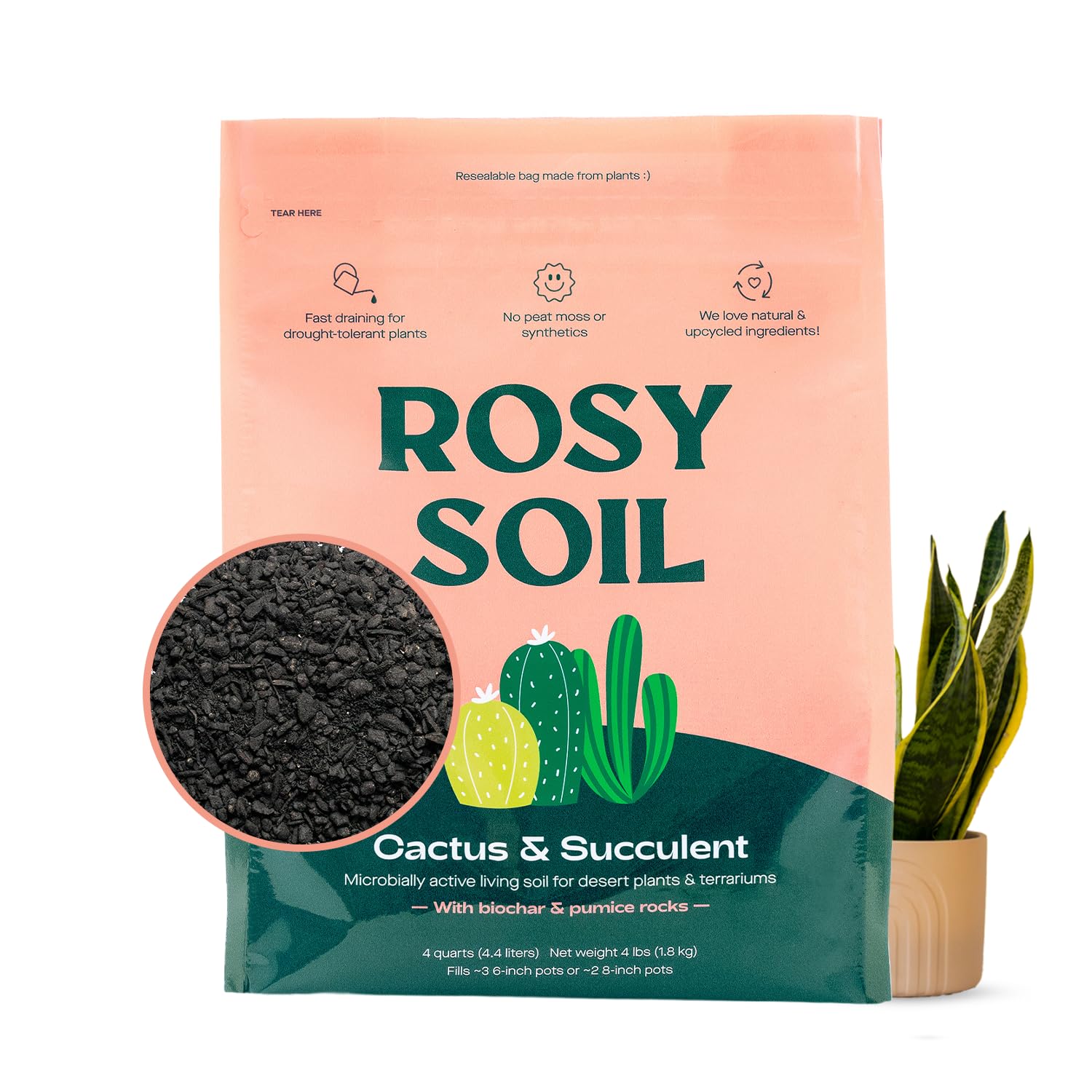
Rosy Soil engineers its cactus mix with a deliberately chunky texture that stays loose and airy rather than compacting into a dense block after watering. The absence of peat moss removes the single biggest moisture-retention risk found in most bagged soils, and the inclusion of pre-loaded beneficial fungi and microorganisms creates a living substrate that feeds roots without synthetic fertilizers. The 4-quart resealable bag includes clear planting instructions printed directly on the package, which lowers the barrier for first-time succulent owners who might otherwise overwater.
Owner reports consistently note that container surfaces stay dry, dark, and even after a full month of growth, with zero insect contamination across multiple bags. Users who repotted aloe and jade plants observed that the soil drained fast enough to eliminate the soggy-bottom syndrome common with cheaper blends. Some experienced growers add extra bonsai soil or perlite for lithops and other ultra-gritty species, but the blend works straight out of the bag for standard desert cacti, echeveria, and snake plants.
The resealable packaging is a genuine convenience for small-space growers, though the adhesive closure loses grip after a few open-close cycles and may require a separate ziplock for long-term storage. The mix also arrives slightly moist from the bag, which is normal for living soil products but may surprise users accustomed to bone-dry commercial mixes. For growers who prioritize sustainability and root health over bag size, this is the most thoughtfully engineered formula in the category.
What works
- Peat-free formulation drains aggressively without staying soggy
- Pre-loaded microbes and worm castings support root health naturally
- Chunky, irregular texture resists compaction over repeated waterings
What doesn’t
- Resealable bag struggles to close after a few uses
- Arrives slightly moist, which may feel unusual at first
- Some users add extra grit for very sensitive species like lithops
2. SunGro Cactus Mix
SunGro’s commercial cactus mix earns consistent praise from plant communities for being one of the few bagged soils that actually drains the way a desert plant needs. The blend of earthworm castings, pumice, and perlite creates a lightweight, porous structure that lets water race through the pot rather than pooling at the bottom. The 8-quart bag size is unusually generous compared to the 4-quart standard, making this a smart choice for anyone repotting multiple plants or maintaining a substantial collection.
Users who switched from popular grocery-store brands specifically cite the end of fungus gnat issues as a primary reason for staying with SunGro, noting that the mix arrives dry, clean, and free of mildew. Sansevieria and succulent owners report visibly faster growth and more consistent leaf firmness after repotting, which aligns with the soil’s balanced aeration profile. The mix holds its structure well over multiple seasons, though some owners add extra coarse sand or perlite for plants that demand even sharper drainage, such as lithops or certain mammillaria species.
The price per quart lands at a solid value for the quality tier, especially when buying larger quantities. A few bags in the review stream arrived with inconsistent particle distribution, but the overwhelming majority of feedback praises the uniform texture and lack of soggy clumps. If you want a dependable, widely-tested mix that doesn’t require custom amendments for standard succulents, this is the workhorse option.
What works
- Pumice and perlite create rapid, reliable drainage
- Large 8-quart format suits multi-plant repotting projects
- Arrives dry and clean with no mildew or gnat larvae
What doesn’t
- Some bags show inconsistent particle distribution
- May need extra grit for ultra-drought-sensitive species
- Less chunky texture compared to premium peat-free blends
3. Hoffman 10404 Organic Cactus Mix

Hoffman’s long-running organic cactus mix has built a cult following among growers who struggled with persistent fungus gnat infestations from other brands. The formula uses minimal dead organic matter — specifically avoiding the wood chips and uncomposted bark that attract gnats in moist conditions — and relies on a balanced blend of peat moss, perlite, and sand to create a lightweight, fast-draining texture. It is pH-balanced specifically for desert and jungle cacti, supporting both bloom cycles and root development without requiring adjustment.
Multiple long-term owners report that switching to Hoffman eliminated recurring gnat problems that plagued their collections for months, and that snake plants and echeveria showed visible new growth within weeks of repotting. The mix works well as a base that accepts amendments like orchid bark or extra pumice for growers who want to dial in the drainage for specific genera. One downside noted across several reviews is that bag integrity can be inconsistent — some shipments arrived with torn or leaking packaging, though the soil itself performed well once transferred to a pot.
The 4-quart size is standard for the mid-range tier and fills roughly three 6-inch pots. The texture runs slightly lighter than some competitors, which helps drainage but may feel too fine for owners accustomed to chunkier mixes. For anyone whose primary goal is eliminating moisture-related pest cycles without spending premium-tier money, this is the most reliable option.
What works
- Low dead organic matter effectively reduces fungus gnat risks
- pH balanced specifically for cacti and succulent root systems
- Light texture drains well straight out of the bag
What doesn’t
- Bag seam quality is inconsistent and can leak during shipping
- Texture feels finer than chunky premium blends
- Some users still add perlite for very sensitive desert species
4. Midwest Hearth Cactus Mix
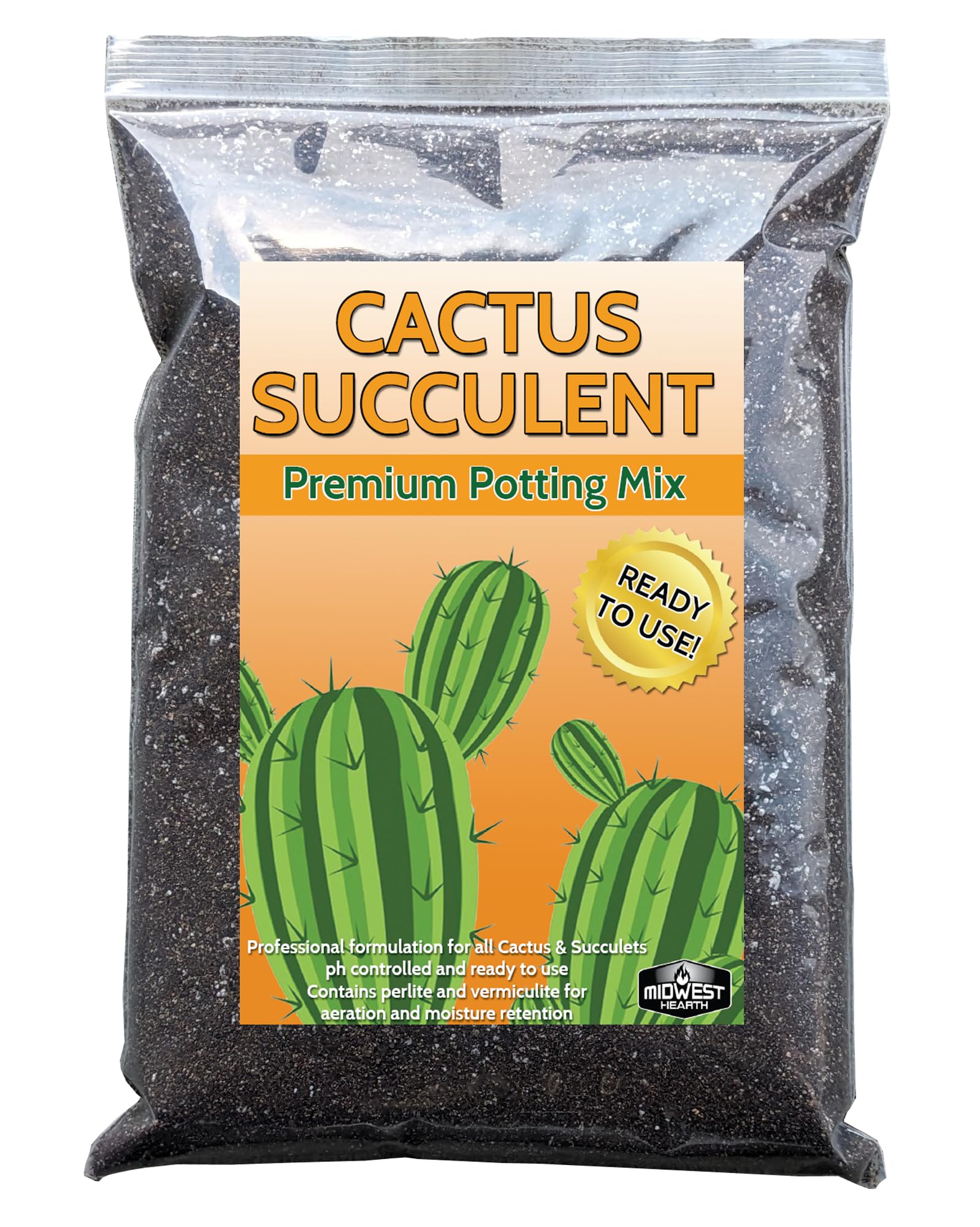
Midwest Hearth delivers a straightforward, no-amendment-required cactus soil that prioritizes convenience and price. The blend of peat moss, perlite, and vermiculite creates a mix that drains quickly enough for standard desert cacti, jade, and aloe while maintaining enough structure for the roots to anchor. The 4-quart resealable bag is smaller than many competitors, but the low entry cost makes it an easy choice for a single repotting project or for testing a new brand without committing to a large volume.
Owner feedback is generally positive, with multiple verified buyers reporting healthy succulent dish gardens and improved condition in previously struggling aloe plants. The mix is noted as being slightly dusty at the top layer — a few customers mention that dry particles from the surface can blow around if the pot sits near an open window, requiring occasional surface sweeping. This side effect is common with mixes that use vermiculite, which breaks down into lighter particles during handling.
Several experienced users treat this as a base mix, combining it with additional perlite or other cactus soils to customize the drainage profile for more demanding species. As a standalone product for common houseplant cacti like Christmas cactus and jade, it works reliably without any fuss. The dustiness and relatively small bag size are the main compromises at this price point.
What works
- Ready to use with no mixing or amendments needed
- Affordable price point for single-pot repotting projects
- Blend of peat, perlite, and vermiculite drains consistently
What doesn’t
- Top layer is dusty and can blow around near open windows
- 4-quart bag is small compared to other value options
- Vermiculite holds slightly more moisture than pumice alternatives
5. Tinyroots Succulent Soil

Tinyroots fills a specific niche for growers who work with tiny succulents, lithops, and delicate seedlings that can be destabilized by the large perlite particles common in standard cactus mixes. The formula uses a finer grain size overall, which allows it to pack gently around small root systems while maintaining enough porosity to prevent waterlogging. The 2.25-quart volume is notably smaller than most entries in this category, which matches its purpose as a specialty substrate rather than a bulk bag for large pot projects.
Owners of lithops and other mesembs specifically praise the Tinyroots mix for eliminating the overwatering risk that kills these plants more than any other cause. One verified reviewer reported the first ever bloom on a cactus after switching to this blend, and multiple users noted that the soil drains so effectively that filling the pot to saturation and letting it drain once a week is all the care required. The lack of perlite dust is a subtle but real advantage for indoor growers who dislike the white particles scattering across their windowsill.
The premium per-quart cost is the most significant barrier here — this is not an economical choice for large container gardens. But for anyone cultivating a specialized succulent collection where root health is the limiting factor, the higher price buys exactly the particle size and drainage characteristics that standard blends miss. If your collection fits in a small tray, this is the most forgiving mix available.
What works
- Finer grain size suits lithops and tiny succulent root systems
- No perlite dust means cleaner indoor repotting
- Drains so aggressively that overwatering is nearly impossible
What doesn’t
- High per-quart cost compared to standard cactus mixes
- 2.25-quart bag is too small for large or multiple pots
- Finer texture may compact slightly over multiple growing seasons
6. DUSPRO 7-in-1 Succulent Mix
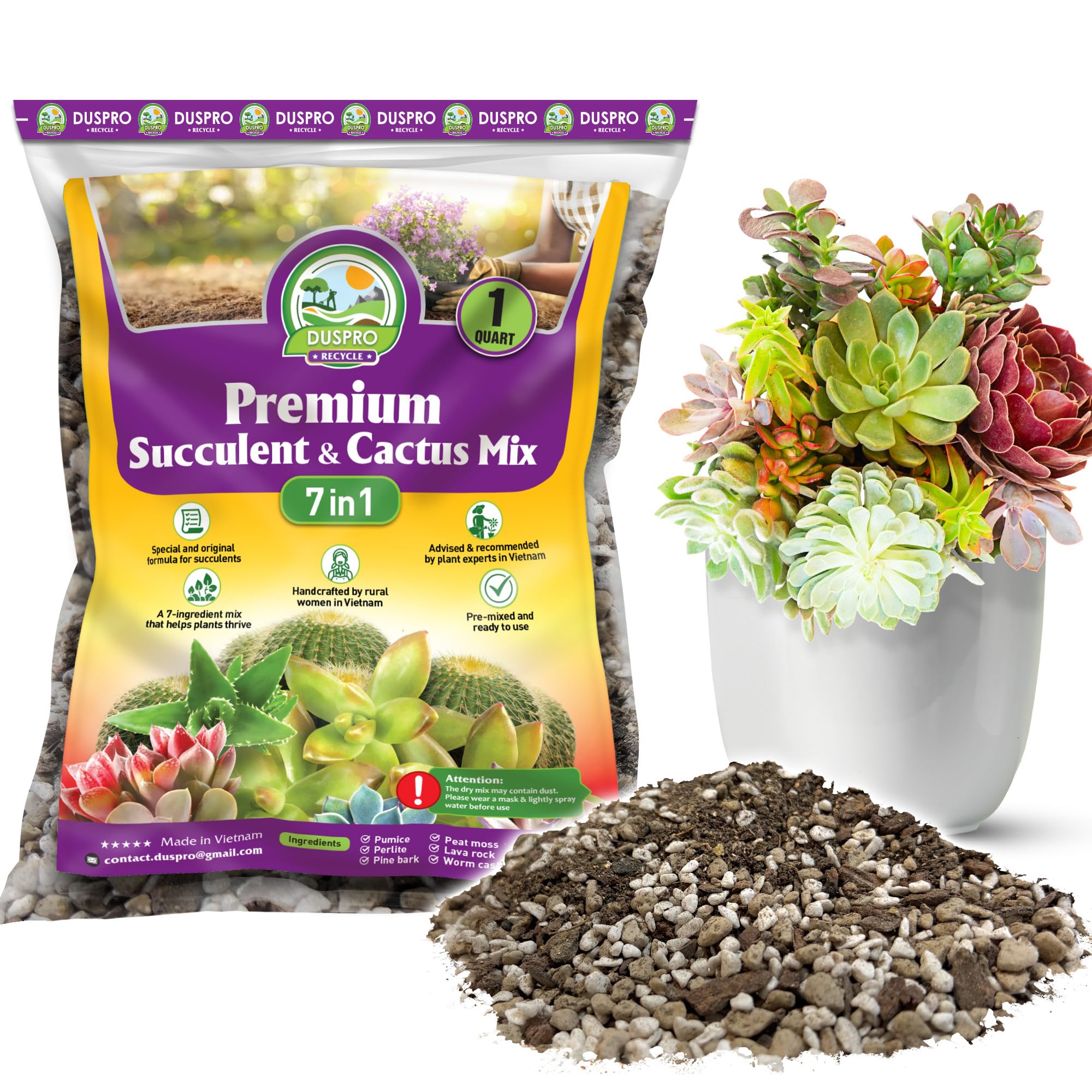
DUSPRO packs seven distinct components — perlite, pumice, lava rock, peat moss, pine bark, worm castings, and vermiculite — into a single mix that aims to cover every physical and nutritional need a succulent might have. The lava rock and pumice provide the heavy-grit drainage layer, while the worm castings deliver a slow-release nutrient source that supports growth without chemical fertilizer burn. The mix comes in multiple size options ranging from 1 quart to 8 quarts, making it adaptable for anything from a single desk plant to a full patio shelf.
Owner reviews highlight that the ingredients arrive slightly separated in the bag, requiring a thorough hand-mixing before use to distribute the particles evenly. Once mixed, the texture drains well and supports healthy root development across echeveria, haworthia, and standard cacti. A few customers flagged that the 1-quart size is smaller than expected visually, despite being accurately described, which can be a surprise for buyers who don’t check volume specifications closely. The mix shows no sign of gnats or mold, and multiple verified buyers report repurchasing after seeing improved plant condition.
The inclusion of pine bark sets this mix apart from stricter peat-free alternatives, as bark holds more moisture than plain perlite or pumice. Owners of desert cacti that need very dry dormant periods should supplement with additional pumice or coarse sand. For mixed succulent arrangements where a variety of moisture tolerances exist, this blend hits a useful middle ground.
What works
- Seven-ingredient blend provides balanced drainage and nutrition
- Multiple size options fit different pot and collection scales
- Worm castings deliver natural slow-release feeding
What doesn’t
- Ingredients settle in the bag and require hand-mixing first
- Pine bark holds more moisture than pumice-heavy blends
- Small bag sizes ship at a premium per-quart cost
7. Miracle-Gro Cactus, Palm & Citrus Mix

Miracle-Gro’s entry into the cactus soil category comes as a 3-pack of 8-quart bags, delivering a total volume that easily handles large repotting projects or multiple containers without running out halfway through. The formula uses a fast-draining base enriched with Miracle-Gro Plant Food, providing a built-in nutrient boost that supports growth through the first few months after transplanting. The mix works for cacti, palms, citrus, and succulents, making it a versatile option for households with mixed container plant collections.
Long-time users of the brand report consistent results with holiday cacti and general succulent care, noting that the soil performs well when mixed at a 50-50 ratio with standard potting soil for plants that need slightly more moisture retention. Some experienced growers find the straight mix holds a bit too much water for strict desert species and add extra perlite or sand to increase the drainage rate. The 3-pack pricing brings the per-bag cost down significantly compared to single-bag specialty brands, which is the primary reason this mix remains popular among budget-conscious buyers.
Critics point out that the formula includes more fine organic matter than dedicated cactus blends, which can lead to compaction over time if the pots are left in standing water. A handful of owners also note that the slow-release feed is unnecessary for cacti that grow best in lean conditions, and that it can contribute to leggy growth in low-light environments. For large-scale succulent repotting on a budget, this is the most economical option, but it works best when treated as a base that gets customized rather than a standalone solution.
What works
- Three 8-quart bags provide exceptional volume per dollar
- Built-in slow-release feed supports early growth after repotting
- Versatile enough for cacti, palms, citrus, and succulents
What doesn’t
- Finer organic content can compact if drainage is poor
- Slow-release feed may cause leggy growth in low light
- Most growers still amend with perlite for true desert cacti
Hardware & Specs Guide
pH Range
Cacti thrive in slightly acidic conditions between 5.5 and 6.5 pH. Soils outside this range lock up essential micronutrients, causing stunted growth and yellowing despite adequate watering. Most commercial cactus mixes are buffered to stay within this window, but homemade blends should be tested with a pH probe before potting sensitive species like astrophytum or gymnocalycium.
Particle Size Distribution
The physical structure of cactus soil is defined by the ratio of particles larger than 2mm to those smaller than 0.5mm. High-performing mixes keep at least 50% of their volume in the coarse fraction, using perlite, pumice, or lava rock as the backbone. Mixes with a high percentage of fine sand or silt compact over time, reducing air porosity below the 10-15% threshold that cactus roots need to avoid rot.
FAQ
Can I use regular potting soil for my cactus?
How often should I repot my cactus with fresh soil?
What is the difference between perlite and pumice in cactus soil?
Final Thoughts: The Verdict
For most gardeners, the best cactus soil winner is the Rosy Soil Cactus Mix because its peat-free, microbe-rich formula drains aggressively while feeding roots naturally. If you want a bulk-friendly option that handles large collections, grab the SunGro Cactus Mix. And for eliminating fungus gnats on a budget, nothing beats the Hoffman 10404 Organic Cactus Mix.