
Watching a climbing Monstera or Pothos send out aerial roots searching for a grip is the sign of a happy plant — but without a proper support, those roots dangle aimlessly, and the vine fails to size up its leaves. The right fill for your pole is not just an anchor; it is a moisture reservoir that encourages roots to dig in, triggering the mature leaf fenestrations every indoor gardener chases.
I’m Rikta — the co-founder and writer behind Lawn Gear Lab. I spend hours poring over horticultural data, comparing fiber lengths, moisture retention rates, and structural integrities of different sphagnum and coir products to separate what actually drives root adherence from what just looks green in a bag.
This guide breaks down the top loose sphagnum and pre-made coir poles on the market to help you find the best moss for moss poles that suits your specific climbing plant setup and watering habits.
How To Choose The Best Moss For Moss Poles
Selecting the right fill for your climbing support is about matching the fiber structure to your plant’s root behavior and your humidity environment. Aerial roots need a texture they can cling to and a material that stays damp between waterings without turning anaerobic.
Fiber Length and Structure
Long-fiber sphagnum moss retains its shape and creates air pockets that roots penetrate easily. Shorter, chopped fibers or dusty coir compacts quickly, reducing airflow and making it harder for roots to anchor. For poles, prioritize materials where the strands are visibly at least two to three inches long.
Moisture Retention vs. Drainage
Moss poles work because the fill wicks water upward and holds it against the stem. Sphagnum can hold up to 20 times its dry weight in water, releasing it slowly. Coco coir holds less water and dries faster — which means more frequent misting — but it resists breaking down longer than sphagnum.
Pre-Made Pole Build Quality
Pre-filled coir poles vary widely in density. A loosely wrapped pole compresses and sheds its fill within weeks. Look for tightly packed coir or a sturdy mesh cage if you plan to pack your own sphagnum. The internal support structure determines whether the pole stays upright as the plant gains weight.
Quick Comparison
On smaller screens, swipe sideways to see the full table.
| Model | Category | Best For | Key Spec | Amazon |
|---|---|---|---|---|
| DIY Metal Moss Pole Kit | DIY Kit | Custom height & shape | 13 ft wire mesh + 12 ft D-sheet | Amazon |
| Legigo Sphagnum Moss | Loose Moss | Filling DIY poles | 2.6 lbs / 50 QT compressed | Amazon |
| Snuvid 4-Pack Coir Poles | Pre-Made | Large multi-plant setups | 2 x 28″ + 2 x 48″ poles | Amazon |
| WAENLIR 4-Pack Poles | Pre-Made | Stackable expandable support | Rubber locking ring stacking | Amazon |
| Espoma Organic Peat Moss | Loose Moss | Organic potting mix additive | 8 qt bag, OMRI listed | Amazon |
| imezos 2-Pack Coir Poles | Pre-Made | Bendable shaping for small pots | 30″ x 2″, flexible coir wrap | Amazon |
| Yecna Sphagnum Peat Moss | Loose Moss | Budget top-dressing & mix | 3 qt compressed bale | Amazon |
In‑Depth Reviews
1. ADGYULB 12ft D-Shaped DIY Metal Moss Pole Kit
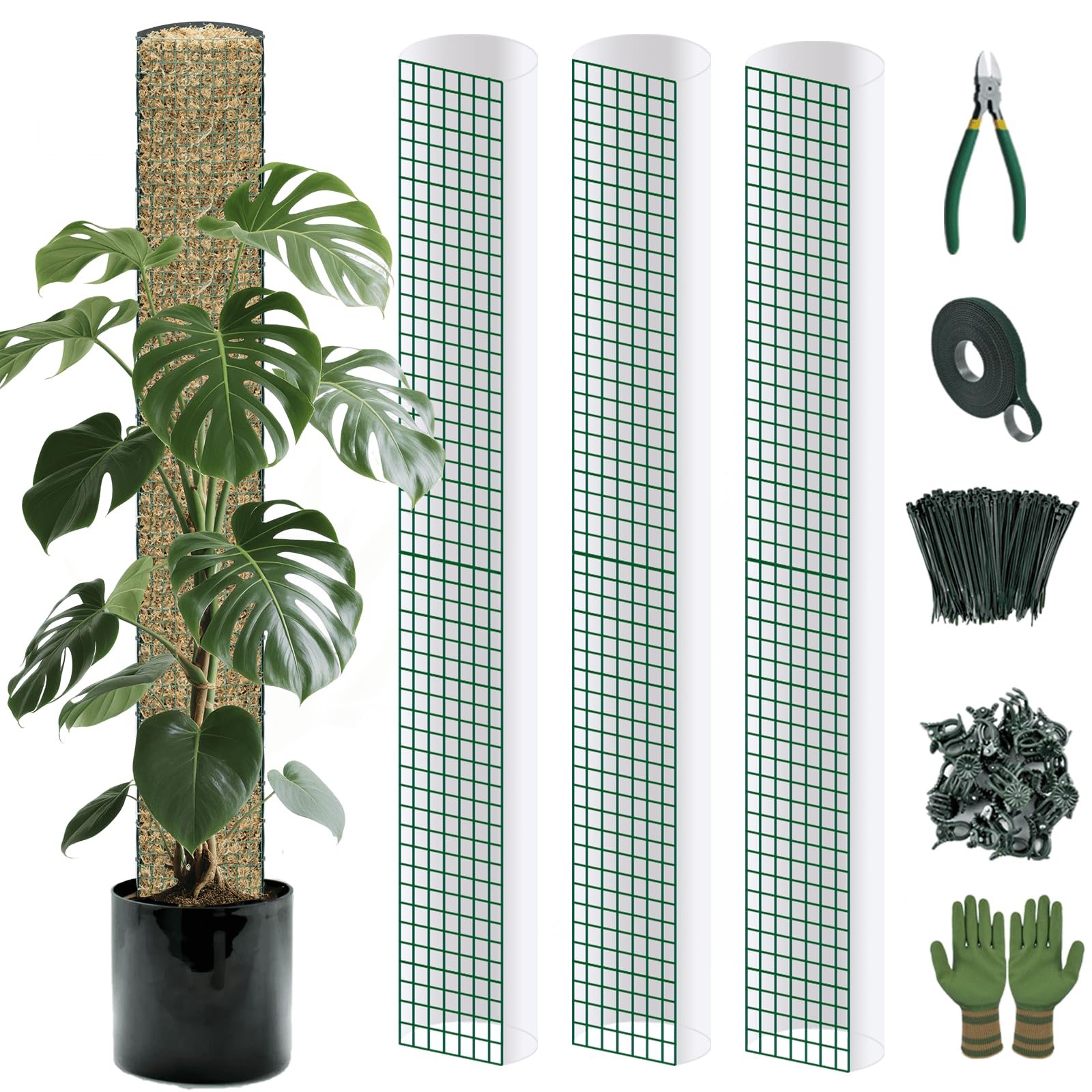
This kit solves the biggest limitation of pre-made poles — fixed height. With 13 feet of vinyl-coated wire mesh and 12 feet of frosted D-shaped backing, you can cut a single continuous pole to match any pot depth and plant height, avoiding the wobble that comes with stacked sections. The D-shape profile puts the flat mesh side against the plant, giving aerial roots a full surface to latch onto rather than the limited contact of round poles.
The included tools — pliers, gloves, 200 zip ties, and plant tape — mean you need nothing else besides your own sphagnum moss filling. The vinyl coating on the galvanized wire resists rust in the consistently damp pole environment. This is the best value for anyone who wants a permanent, customized support system for multiple plants over time, especially large Monstera or Philodendron that will eventually need extension.
Assembly requires cutting the mesh to length and bending the D-sheet into shape, which takes about 15 minutes per pole. The wire is stiff enough to hold its form under a mature plant’s weight without sagging. If you want the highest degree of control over pole dimensions and filling density, this kit outperforms any single pre-packed pole.
What works
- Customizable height eliminates stacking wobble
- Includes all tools and fasteners for assembly
- D-shape provides more surface area for root attachment
What doesn’t
- Requires manual assembly and cutting
- You must purchase sphagnum moss separately
2. Legigo 2.6LBS Sphagnum Moss 50QT
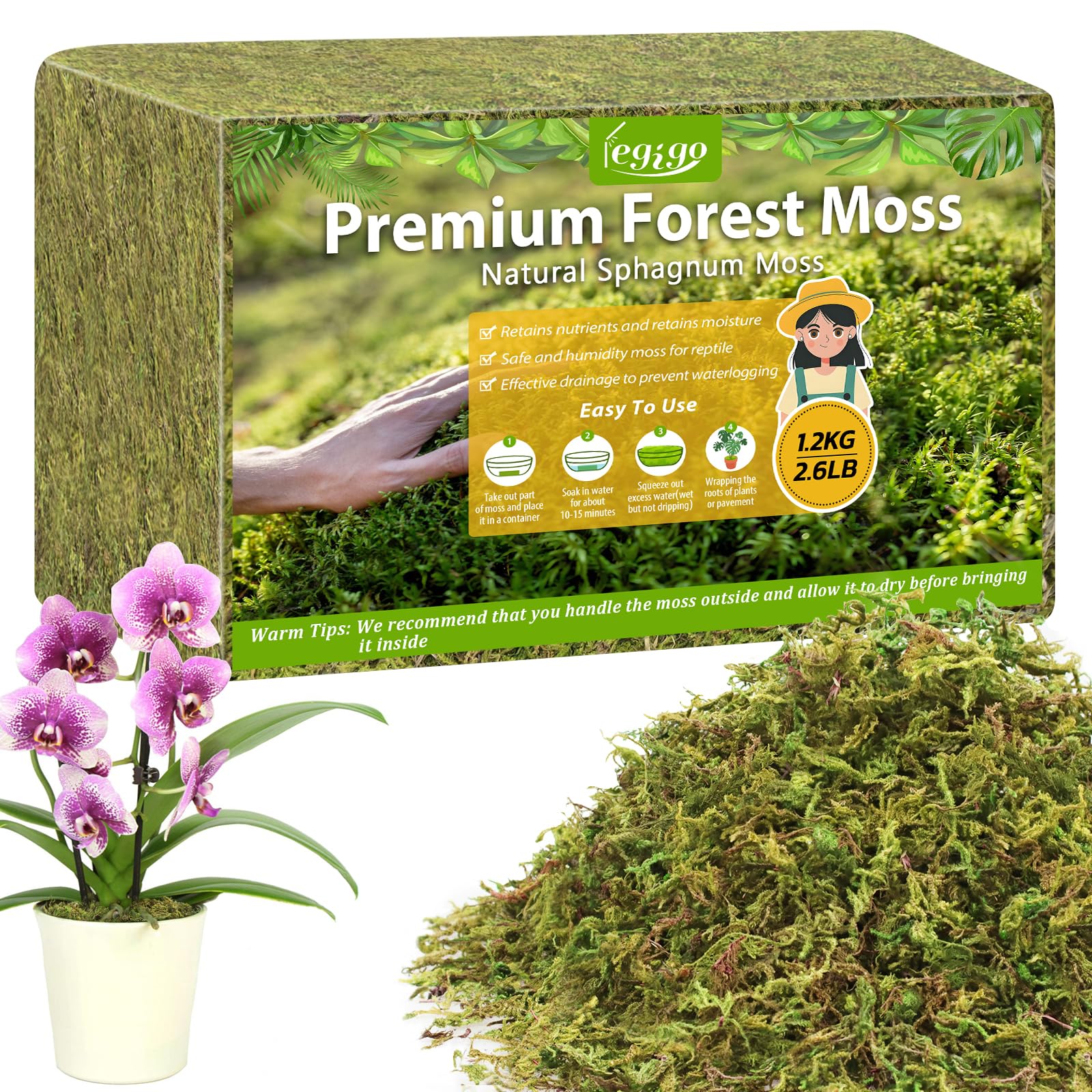
This is the loose fill to pair with the DIY kit above. The long, fluffy strands do not break down into dust like some generic peat products, which means the pole maintains its air pockets and drainage longer.
The moss comes dried and compressed into a brick. Soaking it in water for five minutes expands it fully — the rehydration ratio is roughly 1:10 by volume. The natural green color looks attractive when visible through mesh poles, and the loose texture packs easily into D-shaped or cylindrical cages without requiring hard stuffing. For orchids or props placed on top of the pole, the fibers cradle aerial roots without crushing them.
A faint earthy smell upon rehydration is normal for fresh sphagnum and dissipates within a day. The bag is resealable, which helps store unused dry moss without it attracting pests. If you are building your own poles, this is the most cost-effective bulk fill that consistently triggers root rooting.
What works
- Long-fiber structure holds shape inside mesh cages
- Compressed brick expands to 50 quarts when soaked
- Natural green finish blends well with plant stems
What doesn’t
- Must be thoroughly rehydrated before use
- Initial earthy odor upon soaking
3. Snuvid 4 Pack Moss Pole Monstera Plant Support
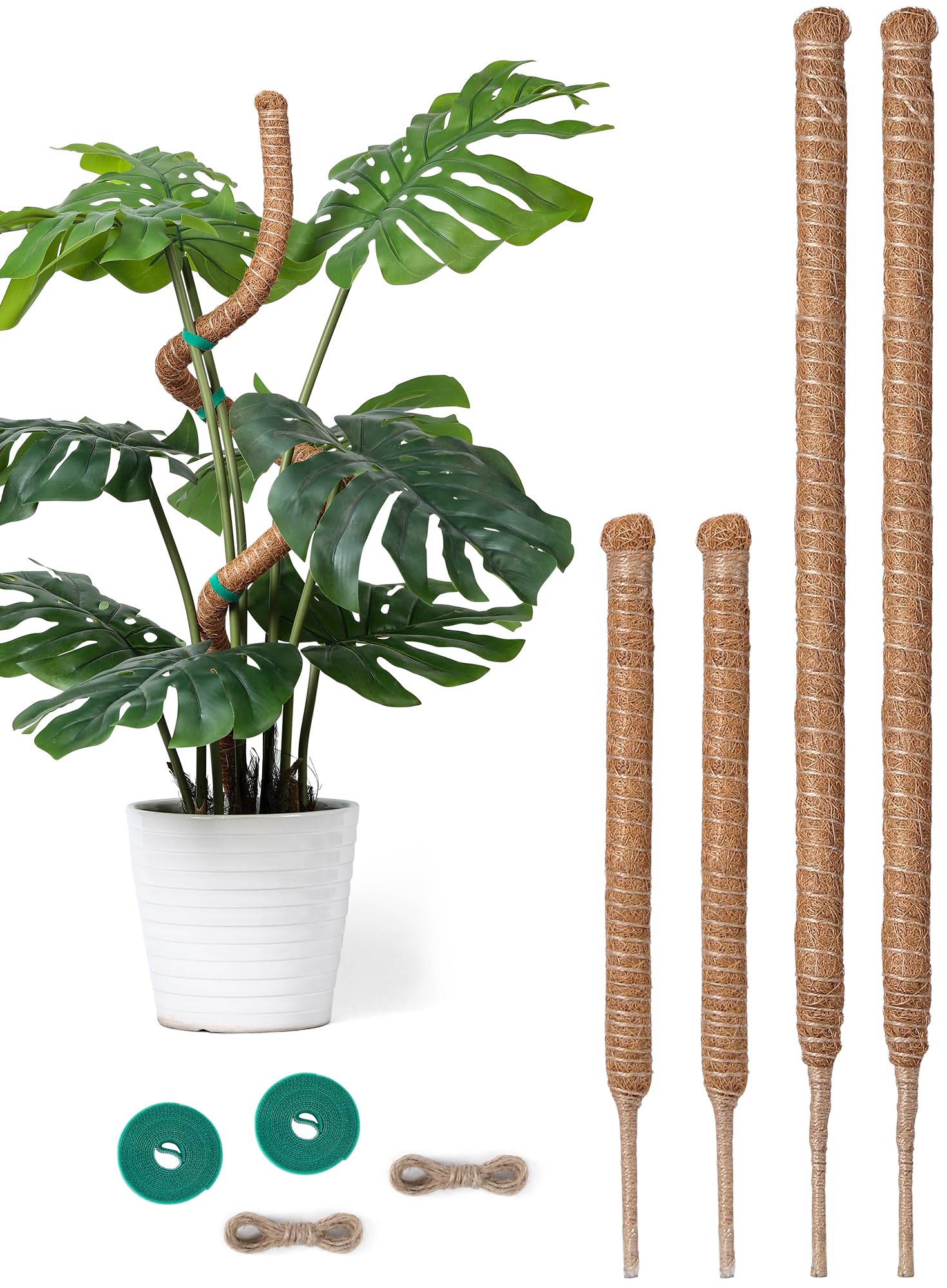
This four-pack includes two 28-inch poles and two 48-inch poles, giving you flexibility for plants at different growth stages without buying separate products. The poles are made from compressed coconut coir wrapped tightly around a central stake. The coir surface is rough and fibrous, providing immediate texture for aerial roots to grip compared to smooth plastic alternatives.
The 28-inch poles work well for Pothos and smaller Philodendron in six-inch pots, while the 48-inch sticks suit Monstera deliciosa that have already outgrown their first support. The pack also includes 26 feet of plant ties — both green tape and jute rope — so you can start training vines immediately. The coir is not sphagnum, so it does not hold as much moisture, but it resists compaction and fungal growth better in high-humidity rooms.
Some users note the poles are thinner than expected — about 1.5 inches in diameter — which may not provide enough lateral surface for very large Monstera with thick stems. The coir can also shed small fibers when first handled. For the price per pole and included accessories, this is a strong mid-range option for setting up multiple climbing plants at once.
What works
- Includes two heights for varying plant sizes
- Rough coir texture aids immediate root grip
- Comes with generous lengths of plant ties
What doesn’t
- Thinner diameter may not support very large stems
- Coir sheds loose fibers during initial handling
4. WAENLIR 48 Inch Monstera Plant Support 4 Pack
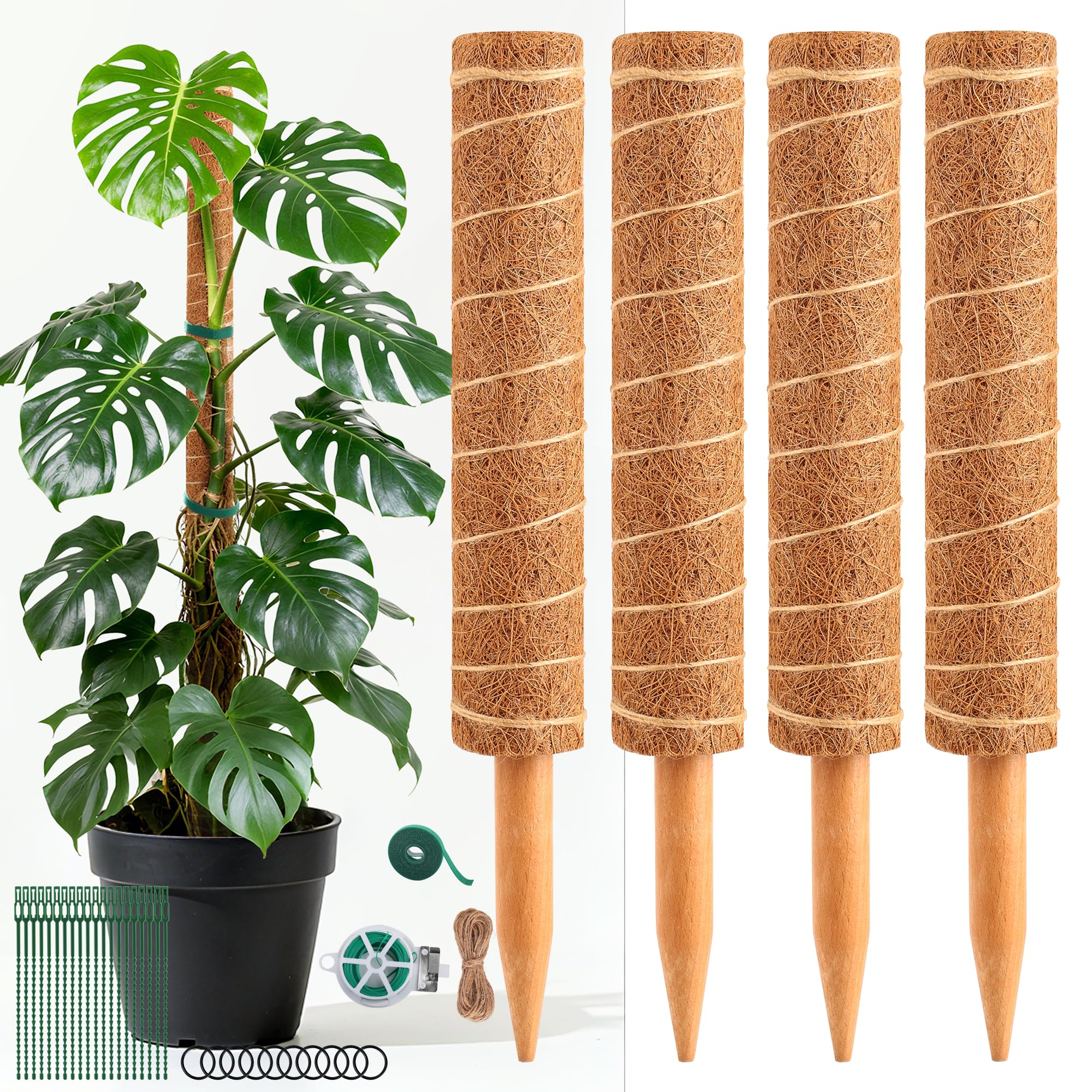
Each of these poles is 16 inches tall and designed to stack on top of one another using rubber locking rings, allowing you to build a support up to 48 inches without replacing the base. The locking rings create a tighter, more gap-free connection than simple insertion methods, which reduces the side-to-side wobble that taller assembled poles often have. The wooden rod inside each section is sharpened at the base for easy insertion into the soil.
The coir wrap is dense and secured with jute twine, giving it a more finished look than loosely wrapped alternatives. The included accessory pack — 65 feet of twist ties, 6.6 feet of hook-and-loop ties, 16 feet of jute, and 20 zip ties — covers every fastening need. The natural brown color blends into the background of most foliage, keeping the visual focus on the plant.
Because each section is only 16 inches, you need at least three sections to reach most climbing plant heights. The rubber rings require firm pressure to snap into place; if not fully seated, the connection can separate under heavy plant weight. For a neat, modular system that grows with the plant, this set provides a clean solution.
What works
- Stackable design with gap-free locking rings
- Comprehensive accessory kit with multiple tie options
- Dense coir wrap resists shedding
What doesn’t
- Each segment is only 16 inches, requiring stacking
- Locking rings must be fully seated to prevent wobble
5. Espoma Organic Peat Moss PTM8

Espoma is a trusted name in organic soil amendments, and this 8-quart bag of sphagnum peat moss is no exception. OMRI-listed for organic gardening, it contains no additives or synthetic wetting agents. The texture is more decomposed than long-fiber sphagnum — it has a finer, darker consistency that is better suited for mixing into potting soil than for stuffing into a pole where structural air pockets matter.
When used as a soil amendment, this peat moss lowers pH and improves moisture retention in dry or sandy mixes. It is also effective as a top dressing for pots where you want to maintain humidity at the soil line without disturbing surface roots. For carnivorous plants like Venus flytraps or sundews, which require mineral-free acidic media, this product is a reliable base at 50/50 with perlite.
The bag uses a zipper closure that can fail if overstuffed, and the material is dusty when dry — wearing a mask during mixing is recommended. This is not the best choice for filling a vertical moss pole because the finer particles settle and compact, reducing airflow to aerial roots. Buy this for soil blending, not for pole construction.
What works
- Certified organic with no chemical additives
- Excellent for lowering soil pH and improving moisture retention
- Trusted brand with consistent quality
What doesn’t
- Finer texture compacts inside moss poles
- Zipper seal on bag is prone to breaking
6. imezos 2 Pack 48 Inch Moss Pole
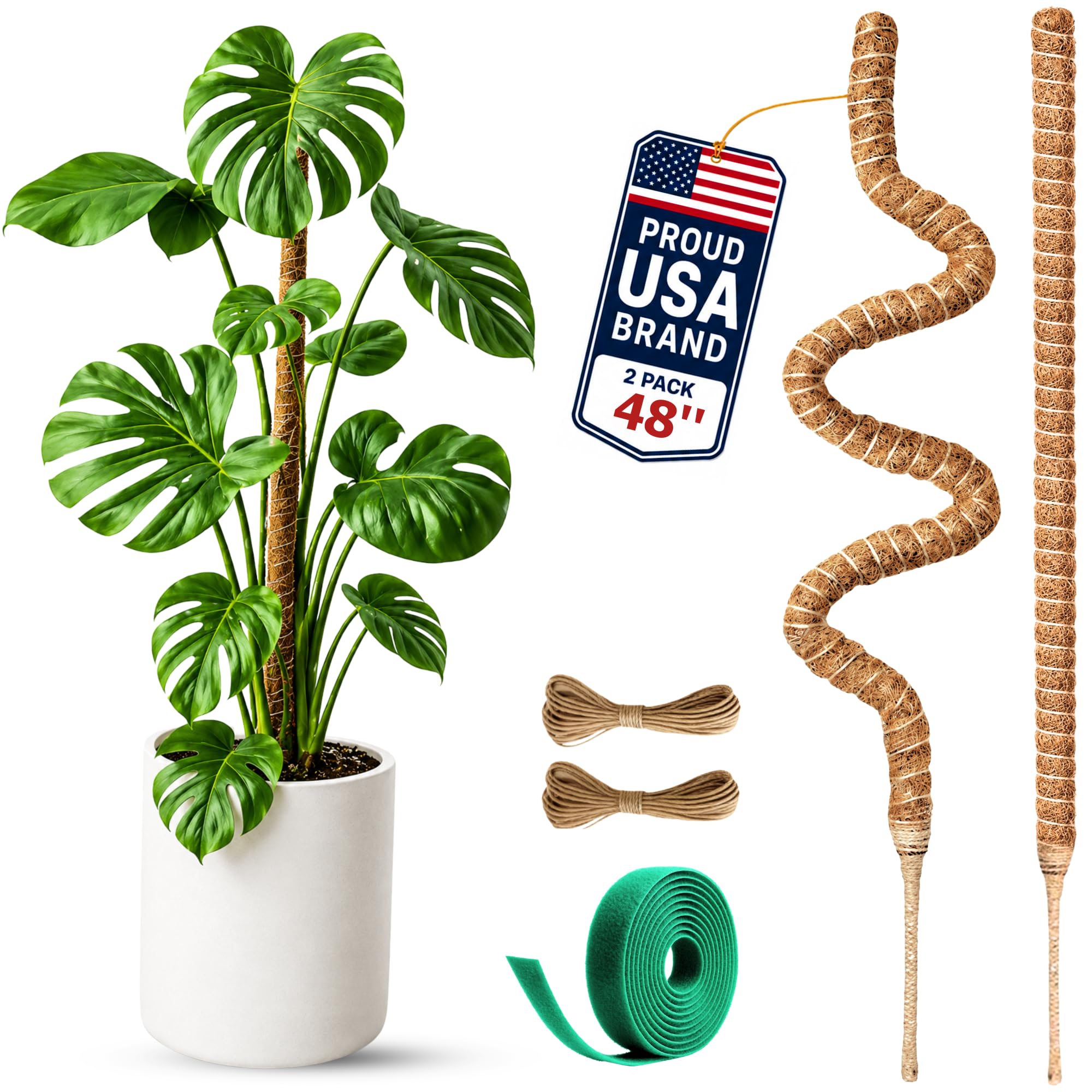
These poles are constructed from flexible wire wrapped in coco coir, allowing you to bend them into curves, zigzags, or heart shapes for creative plant training. Each pole measures 30 inches long and 2 inches wide, with a central wire that holds its shape once bent. The coir wrap is moderately dense and stays intact during bending without cracking or shedding excessively.
The flexibility makes these ideal for training a single long vine to travel in a specific pattern across a wall or shelf. For a Monstera that has a long bare stem with leaves only at the tip, you can curve the pole to bring the top nodes closer to the coir surface for rooting. The included jute rope and self-adhesive tape give you two methods for securing stems.
The coir layer is thinner than some competing poles, which means less moisture reservoir for aerial roots. The wire core is sturdy enough for small to medium plants — up to about three feet of vine — but a heavy Monstera can cause the bend to straighten over time. For lightweight vines or decorative shaping, these are a creative alternative to rigid poles.
What works
- Bendable wire core allows custom shapes
- Comes with jute rope and adhesive tape
- Good for training single long vines
What doesn’t
- Thin coir layer holds less moisture
- Not sturdy enough for heavy mature plants
7. Yecna Sphagnum Peat Moss 3qt

This 3-quart compressed block of sphagnum peat moss is the most accessible entry point for someone who wants to experiment with a single small moss pole. When rehydrated, it expands to roughly three times its compressed volume, providing enough fill for one standard 24-inch pole or for mixing into a few small pots as a moisture-retentive top dressing.
The texture is finer than the Legigo long-fiber product, with more decomposed particles mixed in. For a DIY pole packed tightly into a mesh cage, this works adequately as a base layer if you supplement with longer fibers on the surface where roots contact. It rehydrates quickly in warm water and holds moisture well — the peat stays damp for several days in normal indoor humidity.
The 3-quart volume limits you to one or two small poles, so it is not economical for multiple large plants. Some users mention the block contains a few small sticks or debris, which is typical of unprocessed peat. For a single Monstera cutting or a small propagator looking to test whether aerial roots respond to a moss pole, this is the lowest-cost way to find out.
What works
- Low cost for testing moss pole use
- Compressed block expands noticeably when soaked
- Good moisture retention for small poles
What doesn’t
- Small volume limits to one or two poles
- Contains some fine particles and debris
Hardware & Specs Guide
Fiber Length
Long-fiber sphagnum (2+ inches per strand) maintains air pockets inside the pole, allowing aerial roots to penetrate and grip without suffocating. Short-fiber or decomposed peat moss compacts under the weight of the fill, creating a dense, waterlogged core that discourages root entry. Always inspect the strand length before buying loose moss for pole filling.
Moisture Capacity
Sphagnum moss holds 15 to 20 times its dry weight in water, making it ideal for poles that need to stay damp between misting sessions. Coco coir holds roughly 8 to 10 times its weight and dries faster, which works in high-humidity environments but requires more frequent watering in dry rooms. The moisture capacity directly affects how often you need to spray the pole.
Pole Diameter
The diameter of pre-made coir poles determines how much surface area roots can access. Standard poles range from 1.5 to 2.5 inches in diameter. A larger diameter supports thicker stems and provides more room for root mass development, but it also requires a wider pot for the base stake to fit. For Monstera deliciosa, aim for at least 2 inches in diameter.
Stacking Mechanism
Expandable poles use either friction-fit inserts, rubber locking rings, or central PVC cores to connect sections. Rubber locking rings provide the most gap-free connection, reducing wobble. Friction-fit systems can shift over time as the pole dries and shrinks. The type of stacking mechanism determines whether the pole stays vertical as the plant gains weight.
FAQ
Can I use regular potting soil instead of moss in a moss pole?
How often should I mist a sphagnum moss pole?
What is the difference between sphagnum peat moss and coco coir for poles?
How do I rehydrate compressed moss bricks for a pole?
Final Thoughts: The Verdict
For most gardeners, the moss for moss poles winner is the ADGYULB 12ft DIY Metal Moss Pole Kit because it gives you complete control over pole height and shape while including every tool needed for assembly. If you want bulk loose moss to fill multiple DIY poles, grab the Legigo 2.6LBS Sphagnum Moss. And for a ready-to-use modular system with a clean stackable design, nothing beats the WAENLIR 4 Pack Stackable Poles.