
Direct afternoon sun is the single most common reason vegetable leaves wilt, curl, and stop producing. A shade cloth filters that harsh light into a diffused glow, dropping temperatures by 15–20°F and letting your tomatoes, peppers, and leafy greens thrive through a heatwave without the need for constant watering. The difference between a plant that struggles and one that explodes with fruit often comes down to one layer of fabric.
I’m Rikta — the co-founder and writer behind Lawn Gear Lab. I’ve spent hundreds of hours comparing weave densities, grommet spacing, UV stabilization ratings, and long-term owner feedback to separate the shade cloths that genuinely protect a garden from those that fray, sag, or disintegrate mid-season.
The key spec is the shading percentage — a 40% cloth lets ample light through for vegetables while a 90% cloth creates near-complete darkness better suited for patios or livestock. This guide evaluates the best shade cloth for gardens by balancing durability, weave density, and real-world climate performance.
How To Choose The Best Shade Cloth For Gardens
Selecting the right shade cloth is a balance of three variables: light reduction percentage, fabric durability, and installation hardware. Pick the wrong percentage and your peppers won’t fruit; pick a poorly UV-stabilized cloth and it will turn brittle before September.
Shade Percentage: Matching Light to Your Crop
A 40% cloth blocks roughly 40% of direct sunlight, which is the sweet spot for most fruiting vegetables — tomatoes, peppers, cucumbers, squash, and eggplants. A 50% cloth works well for leafy greens and herbs like lettuce, spinach, and cilantro that prefer cooler conditions. A 70% cloth is better for patios or shade-loving ornamentals, while a 90% cloth is essentially a tarp and should only be used for livestock, covered structures, or as a wind barrier.
Fabric Construction: Knit vs. Woven
Knitted high-density polyethylene (HDPE) is the gold standard. HDPE allows the fabric to stretch slightly under wind load rather than tearing, and it resists UV degradation longer than woven polyester or polypropylene alternatives. Look for the words “HDPE knit” in the material specification — that single detail correlates strongly with multi-season durability. Raw-cut edges indicate a budget cloth; reinforced hems with stitched binding indicate a cloth built for tension.
Hardware and Mounting
Aluminum grommets every 20–24 inches along all four edges give you the most mounting flexibility using bungee cords, zip ties, or hooks. Avoid cloths with brass grommets that corrode or plastic grommets that crack. Some premium rolls come without grommets — those are intended for custom installations where you cut and fasten the raw edge against a frame. For most gardeners, pre-grommeted cloths with aluminum rings save setup time and allow tension adjustments throughout the season.
Quick Comparison
On smaller screens, swipe sideways to see the full table.
| Model | Category | Best For | Key Spec | Amazon |
|---|---|---|---|---|
| Coolaroo 70% | Premium Roll | Durable UV-rated privacy | 70% UV block, 15yr warranty | Amazon |
| Cool Area 60-70% | Mid-Range Mesh | Open-weave airflow | 0.16 inch grid, 5yr UV rating | Amazon |
| Glieskir 90% | High Density | Maximum sun/heat reduction | 90% shading rate | Amazon |
| DGSL 40% | Balanced Shade | Vegetable garden protection | 40% shade, 10 ft x 20 ft | Amazon |
| Alion Home 50% | Entry Level | Small-space coverage | 50% UV block, 6×6 ft | Amazon |
| Patio 95% Roll | Bulk Fabric | Custom DIY pergola cover | 95% UV block, 6×50 ft | Amazon |
| TANG 95% Roll | Heavy Duty Roll | Large structure covering | 95% UV block, 8×50 ft | Amazon |
In‑Depth Reviews
1. Coolaroo 70% UV Block Privacy & Screening Fabric

The Coolaroo stands apart from commodity shade cloths through its tear- and fray-resistant HDPE knit structure backed by a 15-year limited warranty against UV degradation. At 70% UV block, it reduces heat transmission significantly while allowing enough light through for shade-tolerant ornamentals and patio seating. Owner reports consistently show three to six years of continuous outdoor exposure without fraying edges or brittle failure — a lifespan two to three times longer than budget options.
The roll format (no grommets) requires you to cut and fasten the fabric using clips, ties, or a staple gun, which gives more flexibility for custom pergola or fence installations. The fabric cuts cleanly without unraveling, and the 100% recyclable, lead-free material makes it a safe choice around edible gardens. A few users note the forest green color leans slightly more red than expected, but the structural integrity holds up through Colorado hail, Arizona sun, and coastal storms.
For gardeners who want a single shade cloth that outlasts a half-decade of UV exposure and can be reused across multiple structures, the Coolaroo delivers the best per-year cost of any option here. The lack of pre-installed grommets means slightly more setup effort, but the long-term durability trade-off is overwhelmingly positive.
What works
- 15-year UV warranty is unique in this category
- HDPE knit resists tearing and fraying year after year
- Flexible enough to cut and install on custom frames
What doesn’t
- No pre-installed grommets — must be fastened with clips
- Cut edges curl slightly until secured
2. Cool Area 60-70% Sun Shade Cloth 10x12FT

The Cool Area cloth uses a round monofilament open-weave HDPE structure with 0.16-inch grid openings, which prioritizes air movement and visibility over dense shading. This makes it a strong candidate for covering chicken coops, catios, or mushroom log shelters where you need insect exclusion and passive ventilation alongside light reduction. The 60-70% shading percentage sits in a middle zone — enough to drop patio surface temperatures by 20°F according to owners, but not so dense that it blocks all photosynthesis for plants beneath it.
Reinforced double-stitched edges with wide polyester webbing and aluminum grommets spaced every 20 inches give the cloth strong anchoring points. Owners who installed it on a porch frame or PVC structure report that the fabric remains taut through thunderstorms and high wind events. One caveat: the grommet spacing can vary by up to an inch between corners, which occasionally complicates mounting on pre-drilled frames.
Where this cloth excels is versatility — it shades, blocks debris, prevents bird damage, and still allows you to see through it. For a gardener who wants a single multi-purpose cover that handles plants, pets, and patio use, the open-weave design justifies the mid-range price.
What works
- Open weave allows breeze and visibility through the fabric
- Corner and edge reinforcement uses thick polyester webbing
- Aluminum grommets every 20 inches with 5-year UV resistance
What doesn’t
- Grommet spacing can be slightly uneven
- 60-70% density may be insufficient for very intense direct sun
3. Glieskir 90% Blackish Green Shade Cloth 10x16FT

The Glieskir cloth is built with six-needle binding on all four sides — a reinforcement detail typically found on heavy-duty commercial covers rather than residential shade cloths. At a stated 90% shading rate, this is for users who need near-complete sun elimination: covering a koi pond, shading a livestock coop, or wrapping a tent frame where plants underneath should receive minimal direct light. The HDPE knit is breathable, allowing hot air to escape and rain to penetrate, which prevents the trapped-heat greenhouse effect you get with solid tarps.
Grommets are placed every 3.3 feet, which provides adequate anchor points for most garden and patio structures. Owners report that the material feels substantial and the shading performance matches the specification. One unit out of the batch had a grommet detach after installation, though the majority of feedback across two months of use describes the cloth as durable and weatherproof against wind and heavy rain.
This is a good match for gardeners who need a high-density shade that still breathes and drains, especially over structures where premium UV block must coexist with airflow. The wide grommet spacing compared to the Cool Area cloth means you’ll want to add supplemental attachment points if tension needs to be high across a large span.
What works
- Six-needle hem reinforcement resists edge tearing under tension
- 90% shade block with breathable HDPE mesh construction
- Weatherproof against heavy rain and wind loads
What doesn’t
- Grommet quality can be inconsistent on some panels
- Too dense for vegetable gardens — limits plant growth
4. DGSL 40% Shade Cloth Greenhouse Shade Cover 10Ft x 20Ft
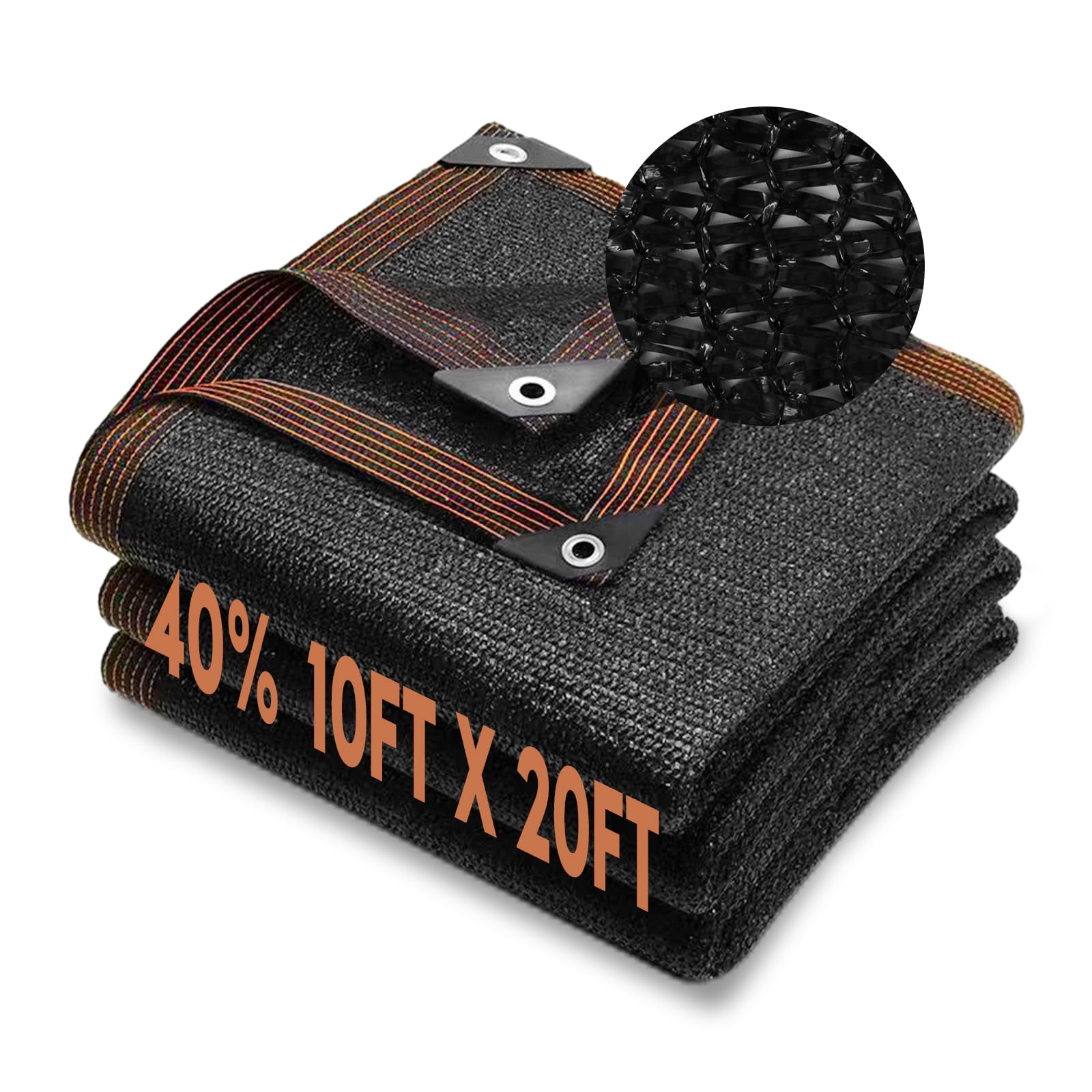
The DGSL 40% cloth is the entry-level benchmark for vegetable garden protection. Its 40% shade density is the ideal starting point for tomatoes, peppers, squash, and leafy greens — enough to prevent leaf scorch during midday peaks while still delivering the 6+ hours of direct light these crops need to fruit. The HDPE knit is lightweight at just 0.82 kilograms for the 10×20-foot panel, making it easy to drape over hoop houses, PVC frames, or simple rope lines.
Rustproof aluminum grommets are spaced every 3.28 feet with reinforced edges, allowing quick attachment with zip ties or bungee cords. Owner feedback is split on long-term durability: several users report the cloth fading or fraying within 4–6 months, while others describe it lasting a full growing season without issues. The discrepancy appears linked to wind exposure — this is a lightweight mesh that needs secure anchoring in breezy locations.
For the cost, the DGSL provides the best per-square-foot coverage of any pre-grommeted cloth at the 40% density. Treat it as a single-season cover for budget-conscious projects. If you live in a calm climate with moderate sun, it will protect your vegetables effectively through summer without the premium price of a multi-year panel.
What works
- 40% shade is the ideal density for fruiting vegetables
- Lightweight and easy to install with included grommets
- Rustproof aluminum grommets are placed for standard spacing
What doesn’t
- Longevity is inconsistent — some panels degrade within 4-6 months
- Lightweight mesh snags easily on rough surfaces or branches
5. Alion Home HDPE 50% Sun Block Shade Cloth Garden Netting 6’x6′

The Alion Home cloth uses UV-stabilized HDPE with grommets spaced every 24 inches, and owners consistently confirm two to three years of continuous outdoor use without degradation. At a 50% UV block, it offers a slightly denser shade than the DGSL, making it a better fit for leafy greens, herbs, and seedlings that can’t tolerate full afternoon sun. The beige color reflects more light than black, keeping surface temperatures lower under the fabric.
Multiple users in tropical and hurricane-prone climates report the cloth surviving severe weather, which speaks to the durability of the knit structure and hem reinforcement. The included rope is low-quality — several reviews recommend replacing it immediately with weather-proof paracord. The cloth itself holds up under UV exposure, and the 2-year limited replacement warranty adds a layer of confidence for first-time buyers.
The 6×6-foot size is restrictive compared to roll options, but for small raised beds, individual greenhouse shelves, or covering a single chicken coop, this pre-cut cloth is a practical, ready-to-hang solution. The color is slightly more orange than the product photos suggest, so match expectations if aesthetics matter for patio use.
What works
- UV-stabilized HDPE lasts 2-3 years in direct sun
- Aluminum grommets every 24 inches provide even tension points
- Beige color stays cooler than black under midday sun
What doesn’t
- Included rope degrades quickly — replace with paracord
- Limited to 6ft widths; cannot cover large spans without seams
6. Patio 6′ x 50′ Sun Shade Fabric Roll 95% UV Block

The Patio 95% roll is a raw-cut HDPE knit fabric without grommets or edge binding, designed for users who want maximum flexibility to cut custom shapes for pergolas, carports, or greenhouse interiors. At 95% UV block, it is functionally a light mesh that eliminates nearly all direct sunlight while allowing heat and humidity to escape through the knitted structure. Owners report ambient temperature drops of up to 33% in covered areas.
This is not a grab-and-install product — you will need to staple, clamp, or sew your own mounting system. Several users have successfully stapled the fabric to wooden pergola beams or used EZ clips along aluminum frames. The fabric has proven durable through rain and moderate wind, though one account notes unraveling at the edges after a tornado-level event, which is not a realistic use case for most installations.
For gardeners building custom frames or covering large structures where pre-grommeted cloths won’t fit, this bulk roll delivers the lowest per-linear-foot cost at the highest UV block density. The raw edges require finishing if you want a clean aesthetic, and the 3-year warranty excludes extreme weather, so plan your mounting strategy accordingly.
What works
- Bulk roll lets you cut custom sizes for any structure
- 95% UV block creates deep shade for patios and livestock
- HDPE knit construction allows heat and moisture to escape
What doesn’t
- No grommets or edge binding — requires DIY fastening system
- Raw edges may unravel under high wind stress
7. TANG Sun Shade Fabric Roll 8′ x 50′ 95% UV Block

The TANG roll offers the widest coverage in this comparison — an 8-foot-wide by 50-foot-long sheet of 95% UV-block HDPE knit fabric. The two extra feet of width compared to the Patio roll make a meaningful difference when covering a standard carport, large chicken run, or full greenhouse roof in a single piece without seaming. The raw-cut edges mean no grommets to tear out, but the material is heavy at 15.8 pounds, requiring a sturdy frame or multiple anchor points to keep it taut.
Owner experiences highlight two characteristics unique to this fabric: significant shrinkage (up to 6–8 inches) when first exposed to prolonged sun, and a tendency for the edges to curl before being secured. Several users recommend preshrinking the fabric by wetting it or ordering extra length to account for the contraction. Once installed, the fabric provides excellent privacy and temperature reduction, blocking almost all sunlight while allowing air to circulate.
This roll is best suited for serious DIY installations where the structure can handle the weight and where the installer plans for shrinkage. The beige color works well for privacy screens and carport sidewalls, and the heat-set construction resists fraying better than standard woven alternatives. If you need wide-span coverage and are willing to manage preshrinking, the TANG roll delivers maximum UV protection per dollar.
What works
- 8-foot width covers large spans without needing to seam
- 95% UV block for maximum heat and light reduction
- Heat-set construction reduces fraying compared to woven fabrics
What doesn’t
- Fabric shrinks by up to 8 inches in direct sun
- Edges curl before being secured — requires preparation
Hardware & Specs Guide
Shade Percentage vs Light Transmission
The percentage rating on shade cloth represents how much total solar radiation is blocked, not just visible light. A 40% cloth blocks 40% of PAR (photosynthetically active radiation), which is why it works for sun-loving vegetables. At 70% block, only 30% of PAR reaches the plants, which is insufficient for fruiting crops. At 90% block, you are essentially creating a night-time environment — suitable only for shade-only ornamentals, livestock, or people.
Grommet Spacing and Edge Reinforcement
Grommets should be spaced no wider than 24 inches apart to distribute tension evenly across the fabric. Wider spacing (like 3.3 feet on some budget models) concentrates stress at fewer points, increasing the risk of tearing at the grommet holes. Edge reinforcement — double-stitched binding, polyester webbing, or six-needle hemming — prevents the fabric from unraveling when you tension it for wind resistance. Look for at least two rows of stitching along the perimeter.
FAQ
Can I leave shade cloth up during winter?
Which shade percentage stops tomatoes from getting sunscald?
Is black or beige shade cloth better for plants?
Final Thoughts: The Verdict
For most gardeners, the best shade cloth for gardens winner is the Coolaroo 70% UV Block Fabric because its 15-year UV warranty and tear-resistant HDPE knit deliver the lowest per-year cost of any option. If you want maximum air circulation and visibility with your shade, grab the Cool Area open-weave cloth. And for covering a 40% shade vegetable bed on a strict budget, nothing beats the DGSL 40% panel for pure value.