
A cedar elevated garden bed turns a patch of patio or deck into a productive growing zone without you ever having to kneel in the dirt. The real challenge isn’t whether to buy one—it’s navigating the huge range of sizes, wood thicknesses, assembly quality, and hidden weight limits to find the build that won’t sag or split after a single season of heavy soil and summer storms.
I’m Rikta — the co-founder and writer behind Lawn Gear Lab. I’ve spent dozens of hours cross-referencing lumber dimensions, fastener quality, load ratings, and owner-reported durability data to pinpoint which elevated cedar beds actually deliver on their promises and which are destined for the compost pile.
The guide below breaks down the nine strongest contenders for the title of best cedar elevated garden bed, comparing real-world specs like cubic-foot capacity, leg gauge, and wood grade so you can confidently choose the right one for your space and your back.
How To Choose The Best Cedar Elevated Garden Bed
Not all cedar is equal, and “elevated” can mean anything from a flimsy 24-inch stand to a heavy-duty planter that supports hundreds of pounds. Before you click “add to cart,” you need to understand the three specifications that separate a bed that lasts from one that collapses mid-season.
Wood Thickness and Grade
Most entry-level elevated beds use ½-inch or ¾-inch fir or cedar bonded with weak joinery. Premium options like the Infinite Cedar model use full 1-inch-thick Western Red Cedar, which resists splitting even when fully saturated with soil moisture. Thicker wood also holds screws better under the outward pressure of damp potting mix. If you plan to fill the bed with heavy loam or topsoil, 1-inch walls are not optional—they are essential.
Load Capacity and Bottom Support
An elevated garden bed’s weak point is almost always the bottom. The advertised “200-pound capacity” often assumes perfectly distributed dry soil, not the real-world weight of saturated mix, plants, and rainwater. Look for designs with multiple crossbars, metal corner brackets, or a leg structure that transfers weight directly to the ground rather than relying on thin bottom planks. The Vego Garden metal bed and the MUPATER cedar unit with six legs demonstrate how engineered support prevents the dreaded bottom-out failure.
Drainage and Depth
Cedar elevated beds typically have slatted bases or pre-drilled drainage holes, but the spacing matters. Gaps that are too wide let soil wash out; gaps that are too narrow trap water and rot roots. A bed depth of at least 10 inches is necessary for tomatoes, peppers, and carrots. Shallower beds (7–8 inches) work well for leafy greens and herbs but limit your crop rotation options. The included liner should be a heavy non-woven fabric, not a cheap weed mat that degrades within one season.
Quick Comparison
On smaller screens, swipe sideways to see the full table.
| Model | Category | Best For | Key Spec | Amazon |
|---|---|---|---|---|
| Infinite Cedar Premium 4×8 | Premium | Serious yields | 1-inch thick cedar | Amazon |
| Gardener’s Supply Co. 2×8 | Premium | Patio longevity | Aluminum corners | Amazon |
| Vego Garden V-Series 2×4 | Mid-Range | Modern durability | 700 lbs capacity | Amazon |
| MUPATER 6x3x2FT Cedar | Mid-Range | Large-space coverage | 6 legs, 837 lbs shelf | Amazon |
| Kdgarden 48x24x33 | Mid-Range | Ergonomic height | 48 gallons, 2 tiers | Amazon |
| Greenes Fence Original Cedar | Mid-Range | True cedar on a budget | 4.8 cu ft capacity | Amazon |
| BIRASIL Elevated Fir | Budget | First-time buyers | Storage shelf, 150 lbs | Amazon |
| Maple99 48x24x30 | Budget | Compact decks | 200 lbs capacity | Amazon |
| DUMOS 72x23x30 Fir | Budget | Long, narrow spaces | 300 lbs capacity | Amazon |
In‑Depth Reviews
1. Infinite Cedar Premium Raised Garden Bed 4×8
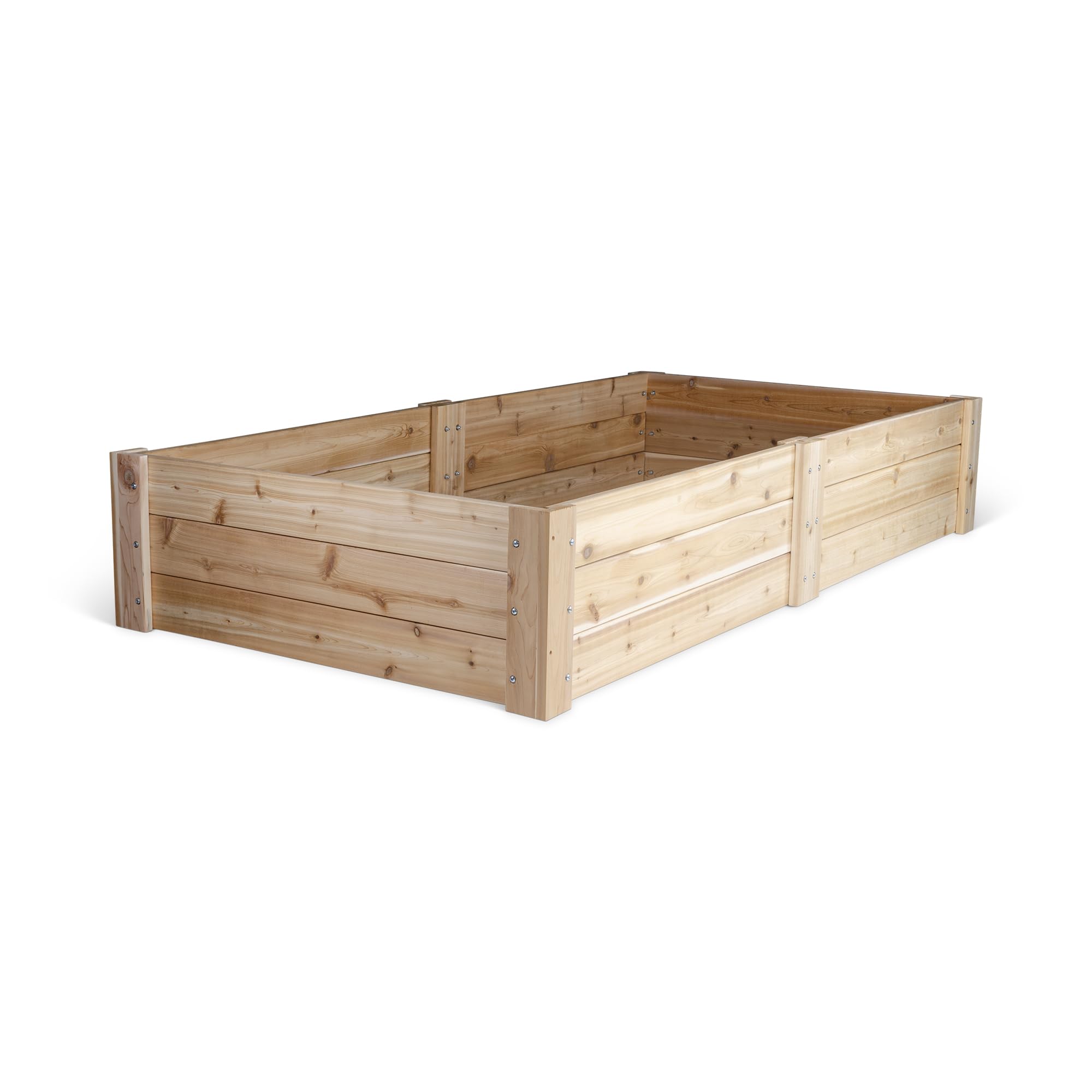
This 4×8-foot bed is built with full 1-inch-thick Western Red Cedar—a grade that most competitors reserve for fence boards, not garden boxes. The material choice alone makes it one of the most rot-resistant and structurally sound options on the market, and at 44 cubic feet of capacity, it offers enough room for a serious vegetable garden.
Assembly is straightforward: pre-cut and pre-drilled boards bolt together without carpentry skills, though the included nuts with seal rings can prevent a fully flush fit unless replaced with standard hardware. Multiple owners report the bed lasting three or more seasons in New England freeze-thaw cycles without warping or cracking—a testament to the premium wood quality.
The trade-off is that 1-inch cedar costs more, and you’ll need a lot of soil to fill this monster. Budget eight to ten bags of premium raised-bed mix. For anyone who wants a set-and-forget bed that delivers high yields for years, this is the gold standard.
What works
- True 1-inch Western Red Cedar resists rot and splitting far longer than thinner or cheaper woods.
- Holds 44 cubic feet for serious vegetable production.
- Pre-drilled bolt-together assembly is fast and solid.
- No chemicals or pressure treatment—safe for organic gardening.
What doesn’t
- Included nuts with seal rings may need replacing to eliminate wobble.
- Very large—requires a substantial amount of soil and a flat, cleared location.
2. Gardener’s Supply Company Elevated Cedar Bed 2×8

This 2×8-foot planter combines naturally weather-resistant cedar with heavy-duty, rustproof aluminum legs and corners to create a bed that feels like furniture rather than a disposable kit. The 29-inch standing height puts the growing surface at an ergonomic level that eliminates stooping entirely, and the 10-inch depth accommodates most root vegetables with ease.
Assembly consistently earns high marks: pilot holes are pre-drilled (a small detail that prevents cedar from splitting), and the included stainless hardware and instructional planting guide make it a 30-minute job. Several owners note that adding a coat of food-safe varnish or exterior oil extends the cedar’s already impressive lifespan.
The trade-off is the price, which sits at a premium relative to the total cubic footage. You’re paying for the metal-reinforced structure and USA-made craftsmanship. If you want a bed that looks beautiful on a deck and holds up for a decade, this is a strong option.
What works
- Aluminum corners and legs are completely rustproof and add structural rigidity.
- 29-inch height is back-friendly for users with knee or mobility issues.
- Pre-drilled holes and pilot guides make assembly quick and splinter-free.
What doesn’t
- Price is high relative to soil capacity—you pay for the metal framework.
- 10-inch depth limits deep-rooted crops like carrots unless you mound soil.
3. Vego Garden V-Series Elevated Bed 2×4

Vego Garden’s V-Series breaks the cedar mold with a VZ 2.0 steel construction—a proprietary zinc, magnesium, and aluminum-coated material verified by Texas A&M’s corrosion lab to last 20 years. The 2×4 model supports 700 pounds, and the one-piece welded corners eliminate the joint weakness common in all-wood designs.
The 32-inch total height (12-inch planting depth) is generous for a metal unit, and the included heavy-duty rubber edging covers sharp edges. Assembly takes about 1.5 hours, but some owners report that the instructions are unclear and that parts are unmarked. The lack of pre-drilled drainage holes means you’ll want to drill your own or use a screen-and-gravel layer at the bottom.
It is not cedar, so traditionalists may miss the wood scent and warmth. But if you want a bed that will never rot, splinter, or need sealing, this metal unit is a pragmatic long-term investment. The olive green finish blends nicely with foliage.
What works
- Corrosion-tested VZ 2.0 steel with a 20-year lifespan.
- 700-pound capacity handles wet soil without flexing.
- One-piece welded corners prevent joint separation.
What doesn’t
- No drainage holes included—you must modify the bottom.
- Assembly instructions are poorly organized and parts are unmarked.
4. MUPATER 6x3x2FT Cedar Raised Garden Bed

The MUPATER bed is one of the few oversized cedar units that doesn’t skimp on support. Six legs (three per long side) and a dedicated bottom shelf rated at 837 pounds give this 6-foot-long planter a stability that shorter beds can’t match. The internal depth of 13.7 inches is among the deepest in this review, making it suitable for root vegetables and large tomato plants.
Assembly is mostly straightforward, though some owners report misaligned pre-drilled holes in the longest board and poor-quality thumbtacks for securing the included liner. Replacing the tacks with staples or clips solves the liner issue permanently. The rustic cedar finish looks natural in any garden setting.
The main concern is the softness of the cedar—some panels are prone to splitting if screws are over-torqued. Pre-drilling pilot holes for every screw is strongly recommended. For the price, you get a huge growing footprint and an integrated shelf that keeps tools off the ground.
What works
- Six-leg design provides excellent stability for a 6-foot bed.
- 13.7-inch internal depth works for deep-rooted crops.
- Bottom shelf with 837-pound capacity adds storage.
What doesn’t
- Some pre-drilled holes misalign—check board fit before final assembly.
- Thumbtacks for liner are inadequate; plan to use staples or clips.
5. Kdgarden Raised Garden Bed 48x24x33

At 33 inches tall, this Kdgarden bed is one of the highest options available—ideal for users who need to avoid bending entirely. The two-tier design includes a built-in storage shelf, and the 48-gallon capacity gives you enough room for a solid mix of flowers, herbs, and vegetables without overwhelming a patio space.
Assembly takes about 30 minutes with two people, and the wood is lightweight (soft fir, not cedar). Owners consistently praise its easy build and clean appearance. However, the soft wood is prone to denting during assembly, and the bottom shelf may not support heavy storage loads long-term. The drainage system—basic pre-drilled holes—could be more generous for such a tall planter.
This bed is best for urban gardeners who prioritize ergonomics and easy assembly over wood longevity. Sealing the wood with a food-safe outdoor finish is highly recommended to extend its useful life beyond a single season.
What works
- 33-inch height is among the tallest, fully eliminating back strain.
- Fast 30-minute assembly with clear instructions.
- Two-tier built-in shelf keeps garden tools organized.
What doesn’t
- Soft fir wood dents easily and may not last many seasons without sealing.
- Drainage holes are limited—potential for waterlogging in heavy rain.
6. Greenes Fence Original Cedar Elevated Bed 2×4

Greenes Fence delivers a genuine North American cedar elevated bed at a price point that undercuts most competitors by a wide margin. The 2×4-foot bed holds 4.8 cubic feet of soil and features a rustic, unfinished look that ages gracefully outdoors. The assembly is exceptionally simple—only four screws, plus a rubber mallet to tap the slats into place.
The cedar is untreated and smells rich, but the lumber comes rough and splintery. Wearing gloves during assembly and giving the bed a quick sanding before planting is a smart move. Drainage works through gaps between the bottom planks, which is effective but allows some soil spillage without a liner. The included fabric liner helps contain the mess.
For gardeners on a budget who still want authentic cedar rather than fir or pine, this bed offers the best price-to-wood-quality ratio in the group. It won’t win any beauty contests out of the box, but a coat of tung oil or varnish transforms it into a handsome planter that should last several years.
What works
- Authentic North American cedar at a budget-friendly price.
- Easy 15-minute assembly with rubber mallet—no complex power tools.
- Natural drainage between slats prevents water buildup.
What doesn’t
- Rough, splintery wood requires sanding and gloves for safe handling.
- Cap holds only 4.8 cubic feet—too small for large-scale planting.
7. BIRASIL Outdoor Wood Raised Garden Bed 48x24x30

The BIRASIL bed uses 100% solid fir wood with a natural, non-toxic finish. The 30-inch height and integrated bottom shelf for tool storage make it a functional choice for first-time elevated-bed buyers. At 48 inches long, it fits comfortably on most balconies and small patios.
Assembly is simple with included hardware and takes under two hours solo. Some owners report that the wood is soft and prone to splitting if fasteners are driven without pilot holes. A few durability complaints mention the bottom planks giving out after six weeks under heavy soil—the 150-pound manufacturer rating may be optimistic for wet conditions. Sealing the wood before filling is strongly advised.
This bed is best suited for light to medium use with herbs, lettuce, and flowers. If you plan to grow water-heavy tomatoes or squash, consider reinforcing the bottom with additional crossbars or choosing a sturdier model.
What works
- Integrated bottom shelf offers convenient tool storage.
- 30-inch height is comfortable for ergonomic gardening.
- Simple assembly with included hardware and instructions.
What doesn’t
- Fir wood splits easily—pilot holes are necessary for every screw.
- Bottom boards have failed under wet soil load in some cases.
8. Maple99 Raised Garden Bed with Legs 48x24x30

Maple99 offers a 48x24x30-inch elevated bed that combines cedar and fir wood with a 200-pound claimed capacity. The included bed liner is a welcome addition for retaining soil, and the 30-inch leg height provides excellent back relief without requiring a stool or kneeling pad.
Owners report easy assembly with clear instructions, but some caution that the cedar is on the softer side (7.66 GPa MOE) and that the bottom may struggle under fully saturated soil loads exceeding the 200-pound rating. A few users added steel bar supports across the bottom to prevent bowing—a simple fix that dramatically extends the bed’s durability.
For the price, this bed works well for lightweight container gardening on a deck or paved patio. If you plan to load it with heavy garden soil and water-hungry plants, plan on adding reinforcement. It’s a solid entry-point bed that rewards a little DIY ingenuity.
What works
- Bed liner included to prevent soil leakage and protect wood.
- 30-inch height is comfortable for standing gardening.
- Clear instructions make assembly accessible for beginners.
What doesn’t
- Bottom boards may fail under soil weight above 200 lbs without reinforcement.
- Soft cedar wood splits if screws are overtightened without pilot holes.
9. DUMOS Raised Garden Bed 72x23x30
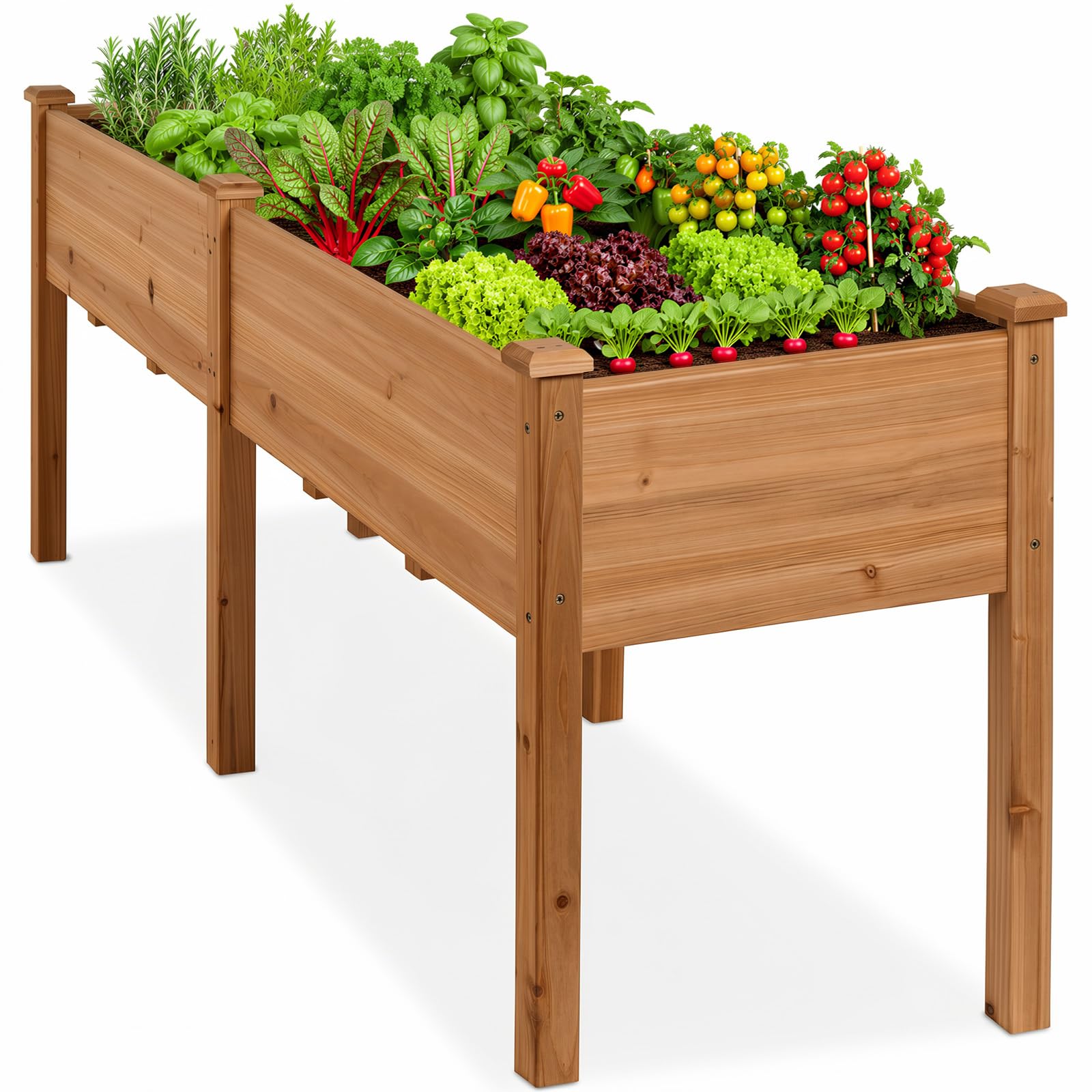
The DUMOS 72-inch elevated bed stretches 6 feet long but only 23 inches wide, making it a perfect fit for narrow balconies, railings, or side-yard pathways. Made from fir wood with a claimed 300-pound capacity, it is one of the strongest budget-friendly options in terms of weight rating relative to its price.
Assembly earns consistent praise: instructions are clear, the structure feels sturdy after tightening, and the included liner fits well. The 30-inch height is back-friendly. However, the planting depth is only about 7 inches, which limits your choices to shallow-rooted crops like lettuce, spinach, herbs, and strawberries. The unfinished fir also needs sealing to withstand repeated rain exposure.
If your growing space is long and narrow and you’re focused on greens, this bed provides excellent value. For deeper rooted vegetables, consider the 13.7-inch MUPATER bed despite its higher cost.
What works
- 72-inch length fits narrow spaces other beds can’t accommodate.
- 300-pound rated capacity is notably high for a budget bed.
- Easy solo assembly with clear instructions.
What doesn’t
- Shallow planting depth (approximately 7 inches) limits crop choices.
- Unfinished fir wood requires sealing to prevent moisture damage.
Hardware & Specs Guide
Wood Type and Thickness
The best beds use Western Red Cedar for its natural rot resistance and low thermal expansion. Entry-level models use fir or mixed fir/cedar blends, which are more prone to splitting and require sealing. Thickness is equally critical: 1-inch boards (like the Infinite Cedar) resist outward soil pressure far better than ½-inch or ¾-inch slats, which can bulge or crack after a wet season.
Load Rating and Reinforcement
Manufacturer load ratings assume dry soil. Wet garden soil weighs roughly 100 pounds per cubic foot. A bed rated for 200 pounds actually supports only about 2 cubic feet of saturated mix safely. Look for models with multiple crossbars, center support legs, or metal corner arms—these features distribute weight away from the bottom boards and into the ground, preventing the sudden structural failure reported by some budget-bed owners.
Growing Depth
Depth determines what you can grow. Shallow beds (7–8 inches) are perfect for lettuce, spinach, radishes, and herbs. Medium-depth beds (10–12 inches) support peppers, bush beans, and strawberries. Beds 13 inches or deeper can handle indeterminate tomatoes, carrots, potatoes, and squash. Measure your preferred crop’s root depth before choosing a bed, or opt for a deeper model to keep your options open.
Drainage System
Elevated beds drain either through slatted bases (gaps between boards) or pre-drilled holes. Slatted bases allow excellent airflow but can lose soil through gaps—a liner is essential. Pre-drilled holes in solid-bottom beds are more contained, but spacing must be generous enough to prevent water pooling during heavy rain. The Vego Garden metal bed lacks any drainage holes, requiring the owner to drill their own, a step many forget until after soil is added.
FAQ
What is the ideal depth for a cedar elevated garden bed?
Do I need to seal or stain a cedar elevated bed?
How much soil does a 4×8 elevated garden bed need?
Can I assemble an elevated cedar bed alone?
Final Thoughts: The Verdict
For most gardeners, the best cedar elevated garden bed winner is the Infinite Cedar Premium 4×8 because its 1-inch-thick Western Red Cedar, simple bolt-together assembly, and 44-cubic-foot capacity deliver unmatched long-term value for serious growers. If you want a back-friendly, rustproof structure that will never rot, grab the Vego Garden V-Series. And for a compact, authentic cedar bed that won’t bust your budget, nothing beats the Greenes Fence Original Cedar Elevated Bed.