
Planting dozens of tulips, daffodils, or crocus corms one at a time with a hand trowel means hours on your knees, inconsistent hole depths, and a sore back the next day. The right dedicated tool changes that entirely — stepping once, pulling a perfect plug, and moving on without bending.
I’m Rikta — the co-founder and writer behind Lawn Gear Lab. I’ve spent countless hours analyzing soil extraction mechanisms, auger spiral flighting, and ergonomic handle designs to find the tools that actually make mass bulb planting efficient and comfortable.
Whether you prefer a long-handled stand-up planter or a drill-powered auger, the right tool for planting bulbs eliminates stooping, speeds up the job, and delivers consistent depth for healthier blooms.
How To Choose The Best Tool For Planting Bulbs
Not every bulb tool works the same way. The best choice depends on how many bulbs you plant, your soil type, and whether you want to stand or use a drill. Focus on these three factors to narrow down the options.
Stand-Up Planter vs. Drill-Powered Auger
Stand-up planters like the Colwelt or Dolibest use a foot pedal to push a hollow cylinder into the soil, extracting a plug of earth. They are ideal for larger bulbs and heavy clay where you need leverage. Drill augers, such as the Power Planter or VASGOR set, spin into the ground quickly and work best for high-volume planting in loamy or sandy soil. Augers require a compatible drill and can jerk hard if they snag a root or rock, so a clutch drill is important.
Cutting Diameter and Depth Range
Bulb size dictates hole width. Small crocus and grape hyacinths fit a 1.6- to 2-inch diameter hole, while tulips and daffodils need 2.5 to 3.5 inches. Depth is just as critical — most spring bulbs require a hole 4 to 6 inches deep. Tools with adjustable depth stops, like the Dolibest, let you set a consistent depth across an entire bed. Augers shorter than 7 inches may not reach deep enough for larger bulbs.
Handle Design and Build Materials
A soft rubberized or T-style grip reduces hand fatigue during repetitive use. Stainless steel or powder-coated steel heads resist rust in moist soil. Look for a serrated base on stand-up planters — it helps the tool cut through compacted or rocky ground more easily. Avoid tools with thin-gauge metal that can bend under pressure in hard clay.
Quick Comparison
On smaller screens, swipe sideways to see the full table.
| Model | Category | Best For | Key Spec | Amazon |
|---|---|---|---|---|
| Dolibest 3-in-1 | Stand-Up Planter | High-volume standing work | 3-6″ adjustable depth | Amazon |
| Colwelt Long Handle | Stand-Up Planter | Heavy soils with serrated base | 3.5″ dia x 4.7″ depth | Amazon |
| TABOR TOOLS 3-Piece | Hand Tool Set | Versatile small-scale planting | Spring-loaded release | Amazon |
| Berry&Bird Bulb Planter | Hand Planter | Precise single holes | 6″ depth mark | Amazon |
| K-Brands 3-Pack Auger | Drill Auger Set | Deep holes with extension | 1.6″-3″ dia + 16.5″ ext | Amazon |
| Power Planter 2×7 | Drill Auger | Small bulbs and grass plugs | 2″ x 7″ single auger | Amazon |
| VASGOR 4-Piece Set | Drill Auger Set | Multi-size versatility | 4 bits, 1.6″-4″ dia | Amazon |
In‑Depth Reviews
1. Dolibest 3-in-1 Sod Plugger & Bulb Planter
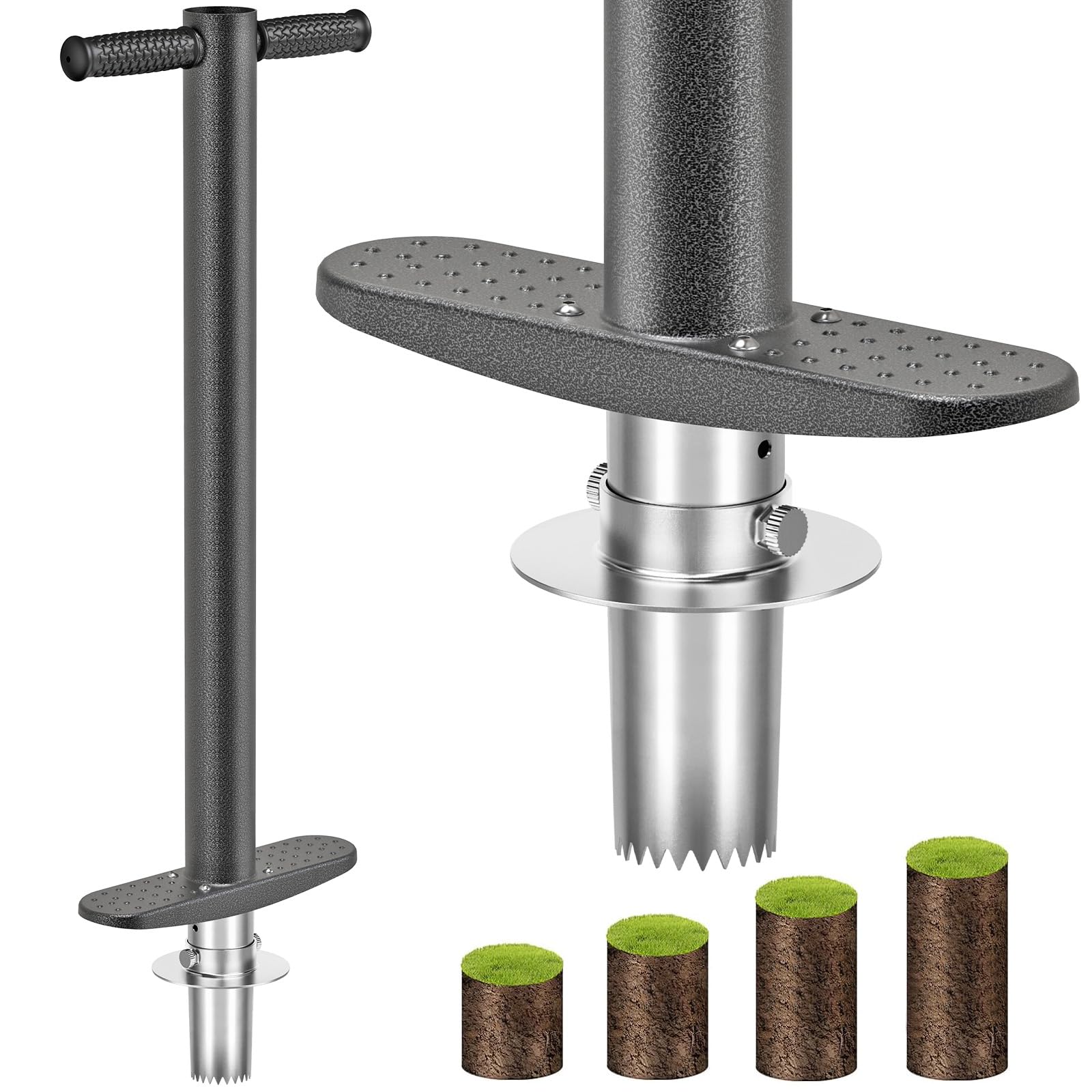
The Dolibest stands out because it solves the single biggest pain point of stand-up planters: inconsistent depth. Its central spacer mechanism lets you lock in a depth between 3 and 6 inches, so every hole in your bed is identical — critical for bulbs that need uniform planting depth to bloom in unison. The head is made from 304 stainless steel with serrated teeth that bite into compacted clay without bending, and the wide dual foot pedals let you apply full body weight for clean core extraction.
At 35.7 inches tall with a soft rubberized T-handle, this tool keeps you standing comfortably for hundreds of repetitions. Users report planting 100 bulbs in roughly one hour, compared to four or five hours with a handheld planter. The soil storage chamber lets you eject the plug cleanly by simply flipping the tool over, which keeps the workflow fast and continuous. Build quality is heavy-duty — the powder-coated steel frame resists rust and the one-piece design eliminates wobble at the joint.
The main trade-off is weight: at nearly 3.6 kg (close to 8 lbs), it is the heaviest stand-up planter here. Some users also noted that the teeth can bend if used in extremely compacted, rocky ground, though they can be straightened with pliers. For large-scale planting where speed, depth consistency, and back comfort matter most, this is the premium pick.
What works
- Adjustable depth from 3 to 6 inches for consistent holes
- Stainless steel serrated base cuts through tough soil
- Dual foot pedals provide stable leverage
- Soft rubberized handle reduces hand fatigue
What doesn’t
- Heavier than other stand-up planters
- Teeth can bend in extremely compacted ground
2. Colwelt Bulb Planter Tool Long Handle

The Colwelt is designed for gardeners who face rocky or dense clay soil regularly. Its serrated base acts like a saw, cutting through the top layer before the foot pedal drives the 3.5-inch-diameter cylinder to its maximum 4.7-inch depth. The two-pedal system is smart: one pedal lets you push the tool into the ground, while the raised pedal acts as a lever to eject the soil core, so you never have to touch the dirt. The 37-inch total length and soft T-style grip keep you upright and comfortable throughout the job.
Assembly takes just a few minutes using the included tools and gloves, and the powder-coated steel construction feels solid. Users planting 50 narcissuses reported no issues, though some noted that the tool requires significant arm strength to twist and lift in very hard ground. The removable handle section makes storage easier but can introduce a small amount of flex at the connection point. For moderate to large bulb planting in tough soil, the Colwelt delivers reliable performance without the premium price tag of the Dolibest.
The most common feedback is that the single flange (the raised pedal) requires a firm step to fully sink the tool in compacted earth — a second flange on the opposite side would make it more balanced. Still, for its sub-premium price point, the Colwelt offers exceptional value for standing work and has proven durable enough to handle hundreds of holes in a single session.
What works
- Serrated base cuts through rocky and clay soil
- Two-pedal design for foot leverage and clean eject
- Long handle eliminates bending and kneeling
- Assembly hardware and gloves included
What doesn’t
- Requires arm strength for twisting in hard ground
- Single flange design can feel unbalanced
3. TABOR TOOLS 3-Piece Bulb Planting Garden Tool Set D123A
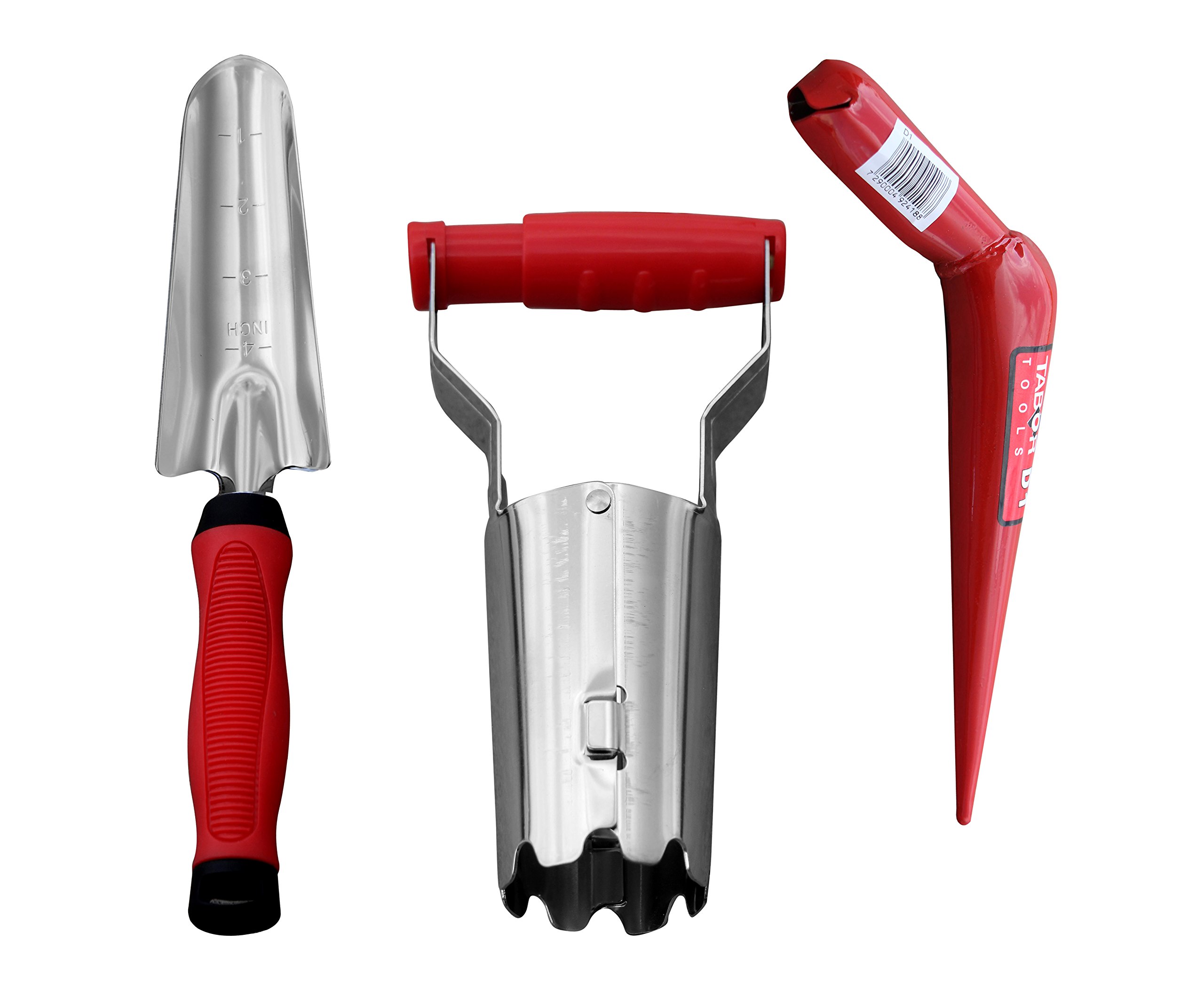
The TABOR TOOLS set offers three separate tools — a bulb planter, a dibber, and a transplanter — giving you flexibility for different planting scenarios. The main bulb planter features a spring-loaded handle that triggers an automatic soil release mechanism, which speeds up the process when you are planting dozens of bulbs. The reinforced steel head resists bending in heavier soils, and the depth marker on the 2.5-inch-diameter base helps keep holes consistent. The transplanter blade includes gradation marks for measuring depth, and the sharp-pointed dibber handles the job of punching precise starter holes for smaller corms.
All three tools have padded soft-grip handles that reduce hand fatigue, and the cast-aluminum transplanter head is rust-resistant. Users have successfully planted 300 bulbs with this set, including around tree roots, with the round planter creating pockets large enough for three daffodil bulbs or five to six crocus corms. The compact size — the planter is about 9 inches tall — makes the set easy to store in a tool bag or garden cart.
The downside is that the bulb planter is a hand-operated tool, meaning you still need to bend down or kneel to use it, unlike the long-handled stand-up options. The spring mechanism can also wear over time if used in very rocky soil where the head needs to be pried loose. For gardeners who want multiple specialized tools in one affordable package and don’t mind bending, this set delivers excellent utility.
What works
- Three tools cover planting, dibbling, and transplanting
- Spring-loaded soil release speeds up repetitive work
- Padded handles reduce hand fatigue
- Depth markers on planter and transplanter
What doesn’t
- Requires bending or kneeling to use
- Spring mechanism may wear in rocky soil
4. Berry&Bird Garden Bulb Planter with Wooden Handle

Berry&Bird uses an FSC-certified ash wood handle and stainless steel head, making this one of the more environmentally conscious hand planters available. The wooden handle is shaped ergonomically and, as the manufacturer notes, becomes smoother with use over time. The stainless steel head features a sharp notch that cuts through soil easily, and a clear 6-inch depth mark lets you gauge hole depth while working. This is a straightforward manual tool with no moving parts — you push, twist, and pull — built to last for years with proper care.
Users report that it works especially well in clay soil, where the sharp notch helps penetrate the dense surface without excessive force. The 12.6-inch overall length is shorter than a stand-up planter, so you will still be bending, but the tool’s lightweight 1.4-pound design makes it easy to handle. Many gardeners use it not just for bulbs but also for transplanting annuals from trays, since the 3.94-inch-wide head creates a hole just the right size for small nursery plants.
The main limitation is that the handle can detach under heavy stress — one user reported it separating after planting 300 sod plugs. This tool is best suited for light- to medium-duty work in loose or regularly tilled soil. For gardeners who want a sustainably sourced, long-lasting hand planter for moderate use, Berry&Bird offers a solid choice.
What works
- FSC-certified ash handle is eco-friendly and comfortable
- Stainless steel head resists rust and stays sharp
- 6-inch depth mark for consistent hole depth
- Lightweight and easy to maneuver
What doesn’t
- Handle may detach under heavy or continuous use
- Requires bending — not a stand-up tool
5. K-Brands 3-Pack Auger Drill Bit with Extension
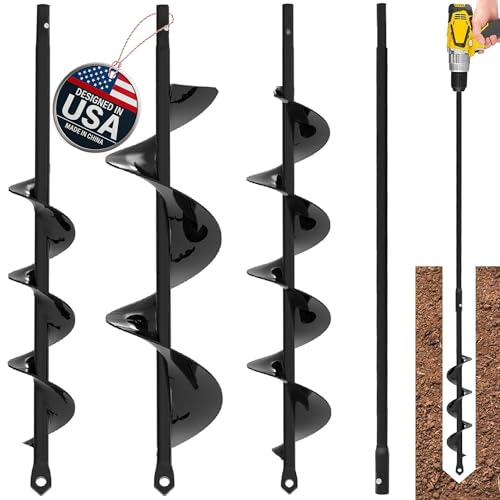
The K-Brands auger set is built for deep drilling without back strain. It includes three bits — 1.6×12 inches, 3×12 inches, and 2.6×15 inches — plus a 16.5-inch extension that lets you drill far deeper than standard bulb augers. The bits feature 360-degree spiral welding along the seam, which reinforces the flighting against twisting forces in rocky or root-heavy soil. The black oxide finish and heavy-duty alloy steel construction resist corrosion and wear. Each bit uses a 3/8-inch hex shank that fits securely into most cordless drills.
Users have used this set to dig 3-foot post holes in rocky, glacial soil where gas-powered augers failed — a testament to the bit’s strength and aggressive cutting angle. The extension piece is a standout feature for taller gardeners or anyone planting deep-rooted bulbs and saplings, as it eliminates the need to kneel. The 2.6×15-inch bit is particularly useful for larger bulbs like tulips and daffodils that need a 6- to 8-inch deep hole with some extra width.
The only downside is the lack of a depth stop. Without a visual marker or collar, it is easy to accidentally drill too deep, especially when using the extension. Some users also reported that the connecting screw for the extension is unnecessary and can loosen. For those who want a rugged, versatile auger set that can handle everything from bulb planting to fence post holes, this is a top contender.
What works
- 360° spiral welding adds strength in tough soil
- 16.5-inch extension enables deep holes without bending
- Three sizes cover small bulbs to large planting holes
- Black oxide finish resists rust
What doesn’t
- No integrated depth stop or marking
- Extension connecting screw can loosen during use
6. Power Planter Flower Planting Auger & Grass Plug Tool

The Power Planter 2×7 auger is a no-frills attachment built for homeowners who need fast, clean holes for small bulbs, grass plugs, and annuals. The 2-inch diameter is ideal for crocus, muscari, and small daffodil varieties, and the 7-inch length provides enough depth for most 4-inch-deep bulb requirements. Made from American-made alloy steel with a glossy black enamel coating, the single-flute design lifts soil upward as it spins, reducing the mess around the hole. The 5/8-inch steel shaft with a 3/8-inch non-slip hex drive fits most cordless drills with a standard chuck.
Users regularly report planting 30 to 50 bulbs in a single afternoon without back pain, noting that the auger replaces the need for a hand trowel entirely. In loose garden soil, the bit chews through without much effort; in clay, pre-watering the area helps the flighting bite in smoothly. A few experienced users recommend keeping the drill’s clutch on a loose setting to prevent wrist injury if the bit hits a rock or root. The compact size also makes it easy to use for weeding and mixing soil amendments in planter boxes.
The main limitation is the 2-inch diameter and 7-inch length — too narrow and shallow for large bulbs like tulips or daffodils that need a 3-inch-wide pocket and 6 to 8 inches of depth. Some users also noted that the weld points at the top and bottom of the flighting can be weak, and the auger may spin loose in the chuck after repeated use. For small-bulb planting and grass plugs, it remains one of the most affordable and effective drill attachments.
What works
- Quickly drills clean holes for small bulbs and plugs
- Fits standard cordless drill chucks securely
- Spiral flighting lifts soil, reducing mess
- American-made alloy steel construction
What doesn’t
- 2-inch diameter too narrow for large bulbs
- 7-inch length insufficient for deeper planting
- Weld points may loosen under heavy use
7. VASGOR 4-Piece Auger Drill Bit Set

The VASGOR set provides four auger bits — 1.6×9, 2.4×12, 3.2×16, and 4×16 inches — covering the full spectrum from tiny crocus holes to large 16-inch-deep planting pockets. The spear point tip on each bit helps center the auger on the soil surface and prevents wandering. With a 3/8-inch hex drive, these bits fit most drills, though an 18V or higher drill is recommended for the larger sizes. The two-flute design on the wider bits helps clear soil faster than single-flute designs.
Users have used this set to plant 170 tomato seedlings in one-third of their usual time, and the 4-inch-wide bit has proven effective for digging post holes in rocky desert soil by pushing rocks aside rather than jamming. The bits are uncoated metal, so keeping them clean and dry after use is important to prevent rust. The set’s main appeal is the sheer versatility — for roughly the same price as a single premium auger, you get a size for every common gardening scenario.
The trade-off for the low price point is construction quality. The metal is not as thick as premium augers, and some users noted that the bits can bend if used in exceptionally hard clay with high torque. The larger bits also weigh more, which can strain weaker drills. For gardeners on a budget who need multiple sizes for different tasks and work mostly in moderate soil, the VASGOR set offers unbeatable value.
What works
- Four sizes from 1.6 to 4 inches cover every need
- Spear point tip prevents skidding on soil surface
- Saves significant time vs. hand digging
- Great value for a full-size set
What doesn’t
- Uncoated metal can rust if not dried after use
- Bits may bend in very hard or rocky clay
- Larger bits require a powerful drill
Hardware & Specs Guide
Cutting Diameter and Depth
The diameter of the cutting cylinder or auger determines the hole width. Small bulbs like crocus need only 1.5 to 2 inches, while tulips and daffodils require 2.5 to 3.5 inches to accommodate the bulb and allow room for root growth. Depth is equally important: most spring bulbs need a planting hole 4 to 6 inches deep, measured from the base of the bulb to the soil surface. Stand-up planters typically max out around 4.7 to 6 inches, while augers with extensions can reach 16 inches or more for deep-rooted plants and post holes.
Handle and Pedal Ergonomics
Stand-up planters rely on foot pedals to drive the cutting head into the ground. Dual-pedal designs distribute your weight evenly and allow for more stable force, while single-pedal designs require more balance. The handle should be at least 35 inches long to let you work standing upright without hunching. Soft rubber or T-style grips reduce blistering during extended sessions. For hand-held planters and dibbers, padded handles and a compact form factor (under 12 inches) make the tool easy to control in tight garden beds.
FAQ
How deep should I plant most spring bulbs?
Can I use a drill auger in heavy clay soil?
What size auger bit do I need for daffodil bulbs?
Is a stand-up planter worth it for occasional use?
How do I clean and maintain a bulb planting tool?
Final Thoughts: The Verdict
For most gardeners, the tool for planting bulbs winner is the Dolibest 3-in-1 because it combines adjustable depth control, a sturdy stainless steel base, and comfortable standing ergonomics into one reliable package that handles hundreds of bulbs per session. If you want a drill-powered option for faster digging, grab the K-Brands 3-Pack Auger with its 16.5-inch extension and 360° welded flighting. And for budget-conscious gardeners who still need multi-size versatility, nothing beats the VASGOR 4-Piece Set.