
The single cubic foot of soil you back into your cart might be loose and light, or it could arrive as a packed brick of wood chips and fine dust that suffocates roots. One cubic foot looks the same on every bag label, but the difference in bulk density, organic matter content, and aeration structure between a premium blend and a commodity filler is the difference between a root zone that breathes and a soggy anaerobic pit.
I’m Rikta — the co-founder and writer behind Lawn Gear Lab. I’ve spent countless hours comparing specification sheets, analyzing ingredient lists, sifting through thousands of owner reports, and studying soil science documentation to determine which bagged soil mixes actually deliver on their claims for different growing scenarios.
This guide breaks down the top contenders for anyone looking to buy a 1 cubic foot of soil and explains the crucial differences in texture, drainage, nutrient content, and intended use that separate a smart purchase from a wasted trip to the garden bed.
How To Choose The Best 1 Cubic Foot Of Soil
Every bag labeled “potting mix” or “garden soil” has a different ratio of peat moss, compost, perlite, vermiculite, bark fines, and sometimes sand. The packaging rarely tells you the bulk density or how fast the mix will compact after a few waterings, so you need to read the ingredient list and the reviews carefully to avoid buying a bag that turns into mud or dries into a crust.
Texture and Aeration Structure
The best soil for containers feels fluffy and light in the bag. It should contain visible perlite or pumice for drainage and coarse peat or coco coir for water retention without becoming gluey. Chunky bark pieces in aroid mixes serve a different purpose — they create large air pockets that tropical roots need. A soil that feels heavy or has a high proportion of fine sand or undecomposed hardwood bark will eventually compact and starve roots of oxygen.
Nutrient Content and Organic Certification
OMRI-listed organic bags mean no synthetic fertilizers or prohibited chemicals, but “organic” alone doesn’t guarantee fertility. Look for specific ingredient mentions: worm castings, kelp meal, alfalfa meal, feather meal, or mycorrhizae. A bag with composted lobster shells or fish meal adds trace minerals and microbial life that synthetic-fertilizer-laden mixes lack. On the other hand, a bag that lists only peat moss and perlite is essentially a blank slate that requires you to add fertilizer yourself.
Intended Use — In-Ground vs. Container
Garden soil intended for in-ground use is denser and designed to be mixed with your native dirt. Potting mix for containers is lighter, has sharper drainage, and often includes wetting agents or coarser amendments. Using a heavy in-ground soil in a pot can suffocate roots; using a light potting mix in the ground washes away too fast. The product descriptions and the reviews will tell you which scenario the bag was designed for.
Quick Comparison
On smaller screens, swipe sideways to see the full table.
| Model | Category | Best For | Key Spec | Amazon |
|---|---|---|---|---|
| Espoma Organic Potting Soil Mix | Container Potting Mix | Indoor & outdoor containers, herbs, vegetables | 1 cu. ft., includes mycorrhizae + worm castings | Amazon |
| Coast of Maine Bumper Crop Soil Builder | Soil Amendment | Breaking up clay, enriching raised beds | 1 cu. ft., lobster compost amendment | Amazon |
| Brut Organic Potting Soil | Potting Mix | All-purpose indoor/outdoor, filler-free | 1 cu. ft., OMRI listed, pH 6.3–6.5 | Amazon |
| Espoma Organic Vegetable & Flower Garden Soil | In-Ground Garden Soil | Vegetable and flower beds in-ground | 1 cu. ft., enriched with earthworm castings | Amazon |
| Coast of Maine Organic Vegetable & Tomato Soil | Potting Mix | Tomatoes, vegetables in containers or in-ground | 20 quarts, composted manure + peat moss | Amazon |
| AROID Potting Mix by Top Tier Genetics | Specialty Mix | Monstera, Philodendron, tropical aroids | 4 quarts, orchid bark + pumice + biochar | Amazon |
| Midwest Hearth Premium Potting Soil Mix | Potting Mix | Small containers, seed starting, small projects | 8 dry quarts, pH controlled, peat + perlite + vermiculite | Amazon |
In‑Depth Reviews
1. Espoma Organic Potting Soil Mix

Espoma’s AP1 is the most versatile full-cubic-foot bag on the market because it bridges the gap between an indoor container mix and an outdoor planter filler. The ingredient list reads like a soil textbook that worked: sphagnum peat moss for water-holding capacity, perlite for drainage structure, humus for nutrient exchange, and a proprietary Myco-Tone blend of endo- and ectomycorrhizae that colonize root systems. Multiple owner reports confirm that plants potted in this mix visibly outperformed those in store-brand organic alternatives within the same growing period, citing deeper green leaves and faster stem elongation.
The bag’s texture strikes the critical balance between fluffy enough for a 5-gallon pot and substantial enough to resist total collapse after two weeks of watering. Several reviews mention using it for Amaryllis bulbs, herbs on a kitchen windowsill, and outdoor vegetable containers without needing to add perlite or additional drainage amendments. The earthworm castings and kelp meal provide a gentle nutrient charge that sustains seedlings for the first four to six weeks without burning tender roots.
Some users reported fungus gnats appearing after the bag was opened and stored for a few weeks — a common issue with any peat-based organic mix that was not heat-sterilized. If you plan to use this indoors, consider baking the soil at 180°F for 30 minutes before potting, or use a top-dressing of sand or diatomaceous earth to break the gnat cycle. The lack of synthetic fertilizer is a feature for organic growers, but it means you must plan a supplemental feeding schedule for heavy feeders like tomatoes or peppers after the first month.
What works
- Myco-Tone blend boosts root colonization and nutrient uptake
- Rich in worm castings, kelp meal, and alfalfa meal for gentle fertility
- Works well for both indoor containers and outdoor planters
What doesn’t
- Lacks synthetic fertilizer — heavy feeders need scheduled feeding after 4 weeks
- Some users report fungus gnats in stored bags, likely due to non-sterilized peat
2. Coast of Maine Organic Bumper Crop Soil Builder
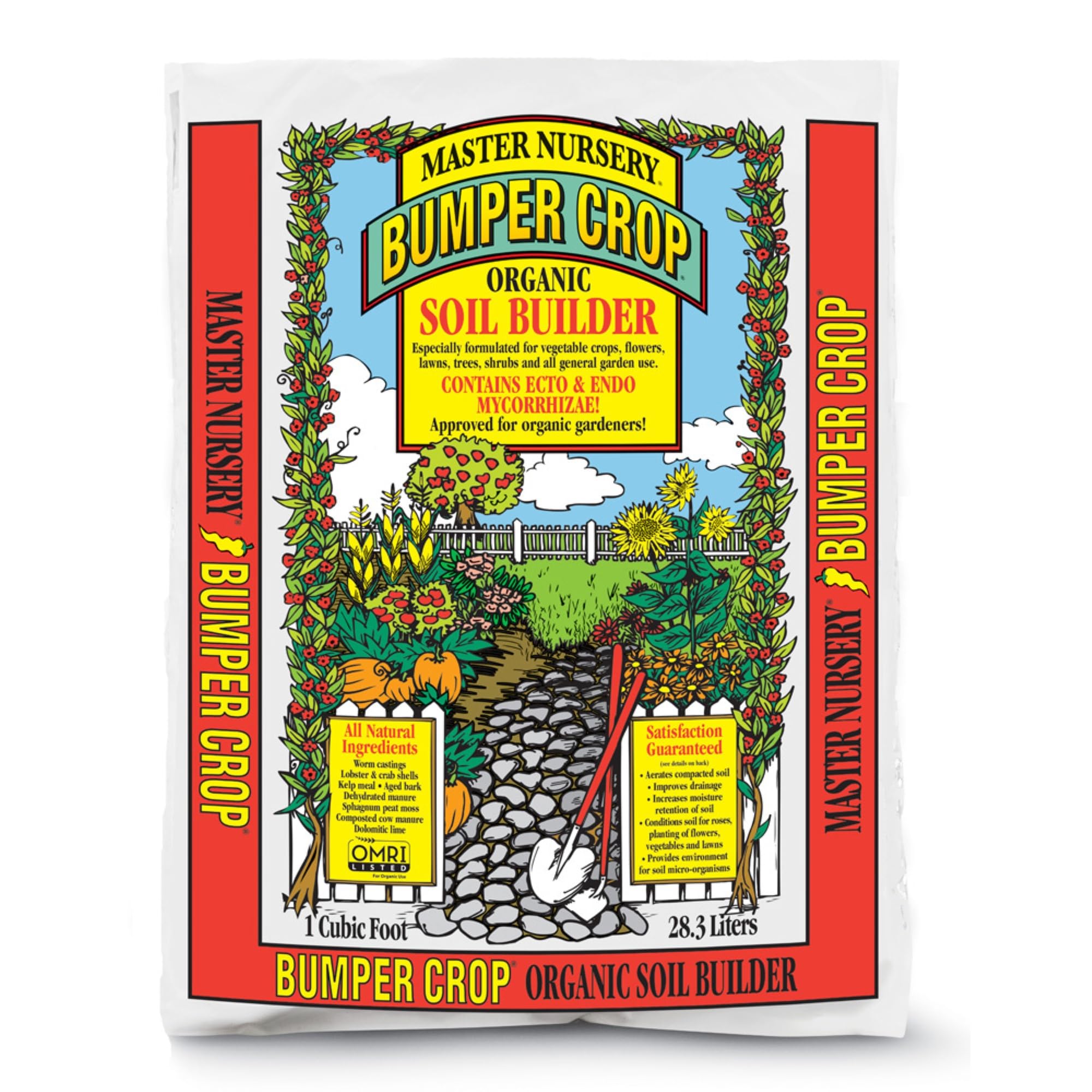
This is not a traditional potting mix — it is a soil amendment designed to be mixed into existing garden beds, raised beds, or clay-heavy native soil. The headline ingredient is lobster compost, a byproduct of Maine’s seafood industry that supplies chitin, calcium, and a dense population of beneficial microorganisms. In raised-bed vegetable gardens, users consistently report the best harvests of their gardening lives after incorporating Bumper Crop, with specific mentions of tomatoes, peppers, and squash producing noticeably larger yields.
The physical texture is coarser than a standard potting mix, with visible shell fragments and fibrous organic matter. This coarseness is intentional for heavy clay soils: the organic particles wedge between clay platelets, creating pore space for air and water movement where previously only impermeable hardpan existed. Multiple five-year repeat buyers confirm they use this product annually to top-dress and re-enrich the same raised beds without seeing the nutrient depletion that occurs with cheaper soil blends.
This product is not intended as a standalone container medium. Using it straight out of the bag in a pot will result in excessive water retention and a heavy mix that compacts quickly. Mix it at a ratio of one part Bumper Crop to two parts native soil or a light potting mix for best results. The price per cubic foot sits firmly in premium territory, but the concentration of organic matter means you need less volume per bed compared to a generic garden soil.
What works
- Exceptional organic matter concentration with lobster compost
- Proven track record for breaking up clay soils and enriching raised beds
- Loyal five-year repeat buyers report sustained bed fertility
What doesn’t
- Not a standalone potting mix — must be blended with other media
- Premium price point per cubic foot compared to standard garden soil
3. Brut Organic Potting Soil
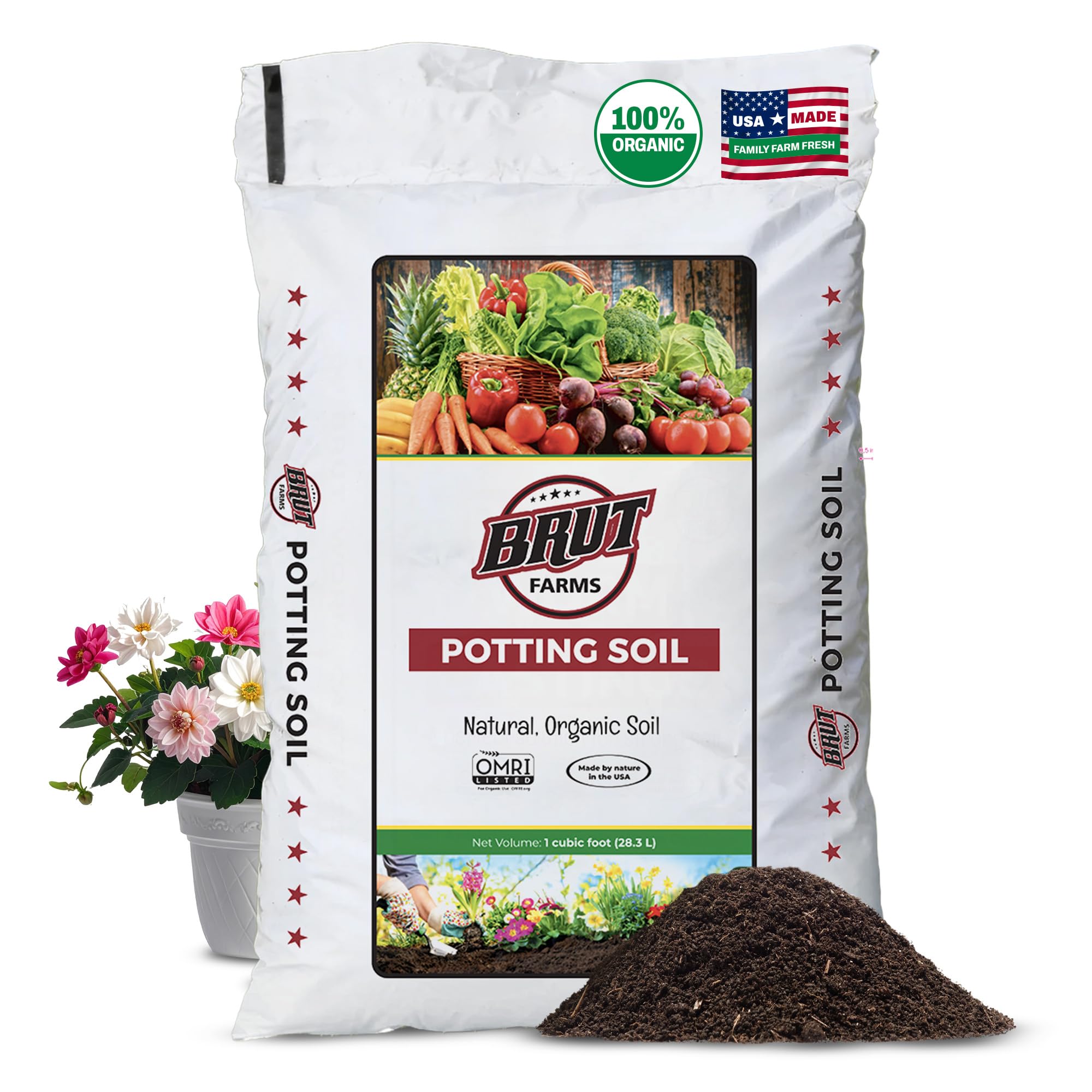
Brut positions this bag as a “filler-free” alternative to the many commercial mixes that bulk up their volume with large wood chips, undecomposed bark, and fibrous sticks that rob the root zone of usable space. Owner reviews consistently confirm that the texture is uniformly fine and particulate, with no visible debris or sharp chunks that would impede delicate root hairs. The inclusion of worm castings and Azomite trace mineral powder supplies a slow-release nutrient profile that doesn’t require immediate supplementation for most common houseplants and garden starts.
The pH range of 6.3 to 6.5 tested consistently across multiple batches according to owner feedback, which is ideal for the majority of vegetables, herbs, and flowering annuals. One notable review described how Cara Cara orange and Lapins cherry trees, when potted in Brut soil, showed deep green leaf color and visible new growth within 48 hours of transplanting — a strong indicator that the root microbiome was active and supportive from day one. The bag’s density is also lighter than many competitors, meaning you get greater volumetric coverage per pound.
The premium pricing triggers the most common critique: owners who need multiple cubic feet for large raised beds or extensive container gardens note that the cost adds up quickly. If you are filling a single 10- to 15-gallon pot or amending half a dozen smaller containers, the per-bag quality justifies the expense. But for large-scale ground bed preparation, the same owners recommend using Brut as a top-dressing amendment rather than a bulk fill medium to manage costs without losing the biological benefits.
What works
- Truly filler-free with no sticks, wood chips, or artificial bulking agents
- pH consistently tested between 6.3 and 6.5, ideal for most plants
- Visible plant response within days of transplanting, per owner reports
What doesn’t
- Premium per-bag cost makes it expensive for large-scale projects
- Attracts flies if bag is left open outdoors due to fish/bone meal content
4. Espoma Organic Vegetable & Flower Garden Soil

This bag is designed specifically for in-ground vegetable and flower beds, and it excels in that role. The formula is denser than Espoma’s AP1 potting mix because it is intended to be blended with your native garden soil, not used as a standalone container medium. The earthworm castings and mycorrhizae work together to inoculate the existing dirt with beneficial biology, helping vegetables like tomatoes, peppers, and marigolds access nutrients that were previously locked up in the native soil matrix.
Multiple owner reviews highlight that plants potted into garden beds amended with this mix had visible size and health advantages over plants in beds amended only with generic topsoil or cheap bagged garden soil. The mycorrhizal colonization appears to be genuinely active rather than just a labeling claim — one reviewer noted that their marigolds and tomatoes “outperformed” the same varieties planted in a competing organic brand purchased from a big-box retailer. The texture is slightly heavier than a potting mix but still friable when tilled into existing dirt, which helps prevent the “soup bowl” effect that occurs when pure compost is mixed into heavy clay.
Some indoor users reported soil gnats appearing after potting houseplants with this mix. Because this product is formulated for in-ground use, it is not heat-treated to the same standard as indoor-specific potting mixes, and it may carry dormant insect eggs. If you repurpose it for indoor containers — which the manufacturer does not recommend — you should expect to deal with small flying insects. Stick to using this bag for its intended in-ground garden application, and you get a rich, biologically active soil amendment that measurably improves bed performance.
What works
- Enriched with mycorrhizae and worm castings for in-ground beds
- Visible plant performance advantage over generic garden soil brands
- Friable texture works well when tilled into heavy native soil
What doesn’t
- Not suitable for indoor container use — can introduce soil gnats
- Denser texture may feel too heavy for pure container applications
5. Coast of Maine Organic Vegetable & Tomato Planting Soil

This 20-quart bag from Coast of Maine hits a sweet spot for home vegetable gardeners who want the regional marine compost expertise without jumping to the premium Bumper Crop price. The blend of sphagnum peat moss and composted manure provides immediate organic matter that feeds plants from transplant day. Multiple owners specifically call out its effectiveness for heirloom tomatoes, which are notoriously sensitive to root suffocation and benefit from the cedar/aromatic wood content that deters soil-dwelling insects without chemical pesticides.
The texture balances moisture retention and drainage effectively — a critical feature for container-grown vegetables, especially tomatoes that will quickly rot if kept wet. One experienced grower noted this was “the best soil” for their wife’s vegetable garden after trying several other bagged brands. The lightweight nature of the mix also makes it easier to carry and handle for gardeners who need to fill multiple large pots without straining their back. The OMRI-listed organic certification gives peace of mind to those avoiding synthetic inputs in their edible garden.
A minority of owners reported fungus gnats emerging after bringing the soil indoors for seed starting, suggesting the bag is not heat-sterilized. This is common with many organic, compost-based products. For a small tomato patch or a few large containers, the quality justifies the premium, but large-scale plantings will require multiple bags and a higher total cost.
What works
- Excellent moisture balance and drainage for tomatoes and vegetables
- Contain cedar/aromatic wood to naturally deter soil pests
- Lightweight texture makes handling and carrying easy
What doesn’t
- Not a true 1 cu. ft. bag — 20 quarts offers less volume for the price
- Lack of heat sterilization means potential fungus gnats when used indoors
6. AROID Potting Mix by Top Tier Genetics
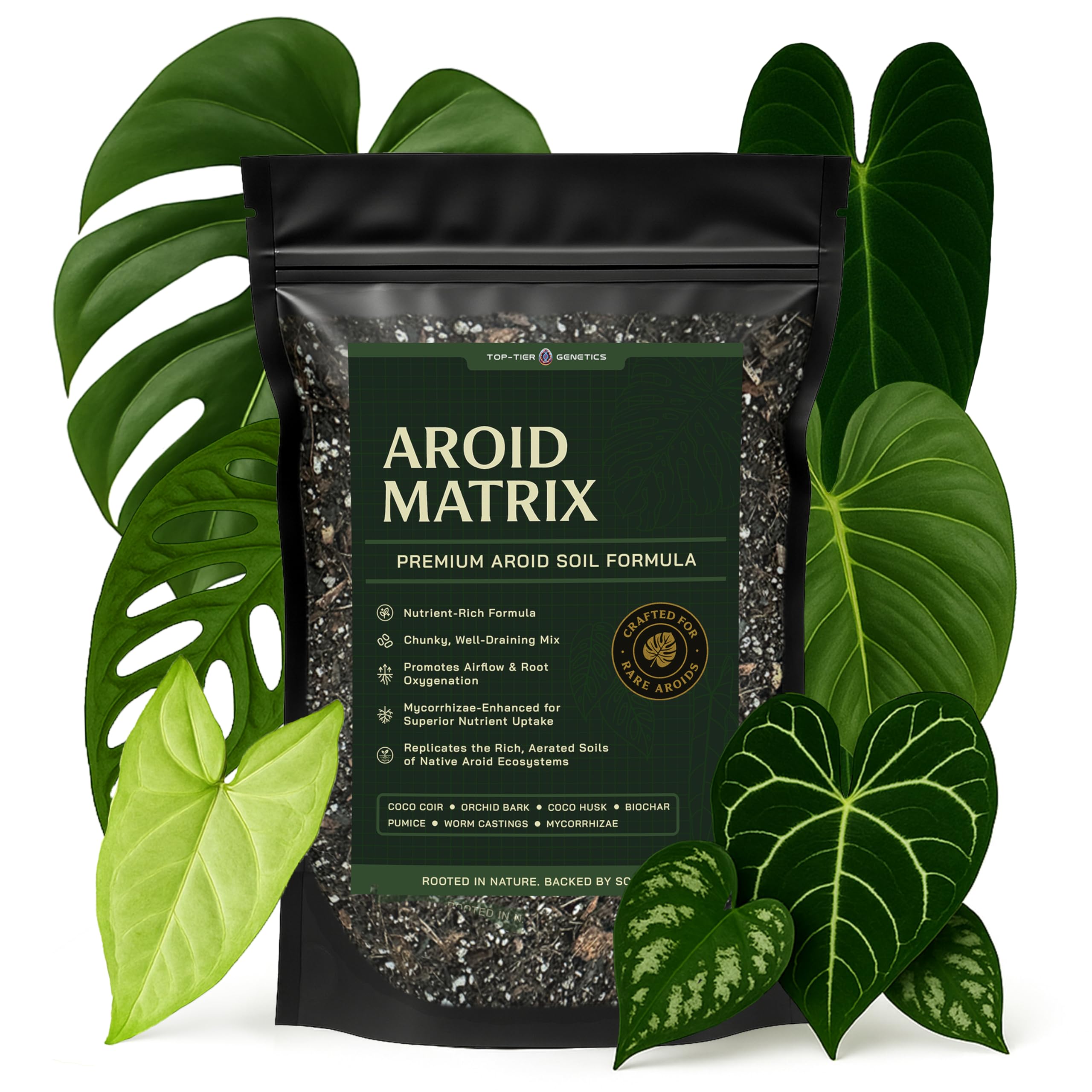
This is the most specialized product on this list, formulated specifically for aroid plants — Monstera, Philodendron, Alocasia, Anthurium, and related tropical species that require a chunky, fast-draining medium to prevent root rot. The mix contains orchid bark, coco husk, pumice, biochar, and coco coir, creating a particle size distribution that is intentionally coarse. Unlike a fine-textured potting mix that holds water like a sponge, this blend allows heavy tropical roots to access oxygen between waterings, which is the single most important factor in preventing the stem rot and leaf yellowing that plague aroid owners who use standard soil.
Owner reports are near-unanimous in their praise: plants that were struggling in generic potting soil perked up within days of repotting into this mix. One review describes “explosive root growth” and “healthier foliage” in Monstera and Philodendron specimens after the switch. The inclusion of biochar — a stable form of carbon that provides habitat for beneficial microbes — is a forward-thinking addition that most commercial aroid mixes miss. The mix is ready to use straight from the bag and requires no additional perlite, bark, or pumice additions that aroid hobbyists typically need to do with other potting soils.
The 4-quart bag size (roughly 1 dry gallon) is appropriate for repotting three to four small to medium houseplants, but if you are filling a large 12-inch pot or multiple specimens, you will need two or three bags. The price per quart is high relative to general-purpose potting mixes, but this is a specialty product designed for a specific plant family, not a bulk fill medium. Aroid enthusiasts who have spent years blending their own custom mixes find the convenience and pre-balanced formula worth the premium, especially because the bag eliminates the need to source separate components.
What works
- Chunky, coarse texture with orchid bark and pumice prevents root rot in aroids
- Biochar addition supports long-term microbial life and nutrient retention
- Ready to use with zero amendments needed for tropical houseplants
What doesn’t
- Small bag volume (4 quarts) — inadequate for large containers without buying multiple
- High price per quart limited to specialty users who need the aroid-specific mix
7. Midwest Hearth Premium Potting Soil Mix

Midwest Hearth offers a straightforward, no-nonsense blend of sphagnum peat moss, perlite, and vermiculite that mirrors the classic “grower’s mix” used in professional nurseries. The formula is pH-balanced across a broad spectrum, making it safe for most common houseplants, herbs, and flowers without needing lime or sulfur adjustments. Multiple owners have praised it specifically for seed starting — its light, fluffy texture allows delicate seedlings to push through the surface without crusting, and the resealable bag design is a practical touch for gardeners who don’t use all 8 quarts in one session.
The lack of added compost, worm castings, or synthetic fertilizer means this is essentially a “blank canvas” soil. This is a feature for growers who want to control their own fertility schedule or who are germinating seeds that require a low-nutrient medium. One review noted that a jade plant repotted in this mix quickly adapted and showed no signs of stress, and another described excellent results with petunias that germinated reliably. The texture remains airy and does not harden around roots over time, a common failure of cheap bargain-bin soils that solidify into a brick after a few water cycles.
The bag size is the biggest limitation: 8 dry quarts is roughly a third of a standard 1 cubic foot bag. Gardeners filling a single large 10-inch pot or multiple small containers may find the volume perfectly adequate, but anyone planning to fill a raised bed or half a dozen large patio pots will need several bags, and the per-quart cost becomes less favorable at that scale. The product is best treated as a specialized medium for small indoor projects, seed starting, or repotting a handful of houseplants where you want a controlled, predictable base mix.
What works
- Classic grower’s blend of peat, perlite, and vermiculite for aeration and drainage
- Light texture prevents crusting, excellent for seed starting and delicate roots
- pH balanced for a broad range of plant types without amendments needed
What doesn’t
- Small 8-quart bag size is impractical for large-scale gardening projects
- No added nutrients — requires scheduled fertilization after the first few weeks
Hardware & Specs Guide
Bulk Density and Air-Filled Porosity
Bulk density is the weight of soil per unit volume, measured in grams per cubic centimeter. For container plants, a bulk density below 0.8 g/cm³ is ideal because it indicates high porosity — the percentage of air-filled space after the soil is saturated and drained. A high bulk density (above 1.2 g/cm³) means the soil compacts easily and starves roots of oxygen. Look for mixes that feel light for their bag size and that include recognizable aeration amendments like perlite, pumice, or coarse horticultural bark.
Amendments in the 1 Cu. Ft. Bag
The specific amendments tell you whether a bag is “active” nutrition or a “blank canvas.” Worm castings, kelp meal, alfalfa meal, feather meal, and fish bone meal supply nitrogen, phosphorus, and trace minerals that feed plants slowly over several weeks. Mycorrhizal inoculants (endo- and ectomycorrhizae) colonize the root system to extend water and nutrient absorption. Composted manure or lobster compost adds organic matter that improves soil structure. A bag that lists only peat moss, perlite, and a generic “organic matter” phrase is nutritionally inert and will need supplemental fertilizer within the first week of planting.
FAQ
Is a 1 cubic foot bag the same as a 25-quart bag?
Can I use in-ground garden soil in a container pot?
Why do some organic potting mixes have fungus gnats?
Final Thoughts: The Verdict
For most gardeners, the 1 cubic foot of soil winner is the Espoma Organic Potting Soil Mix because it offers the most balanced blend of Myco-Tone inoculants, worm castings, and aerating perlite for both indoor containers and outdoor planters without requiring immediate amendments. If you need a soil builder for heavily compacted clay or raised vegetable beds that need a deep organic boost, the Coast of Maine Bumper Crop Soil Builder is the premium choice that delivers concentrated lobster compost and proven bed rejuvenation. And for aroid houseplant enthusiasts who need a chunky, oxygen-rich mix that prevents root rot on Monstera and Philodendron, nothing beats the AROID Potting Mix by Top Tier Genetics.