
A dull blade on a pruner crushes stems instead of slicing them, leaving ragged wounds that invite disease. A mower blade that has lost its edge tears grass, turning a healthy lawn brown at the tips. The only cure is a dedicated sharpener built to restore the factory bevel without grinding away too much metal.
I’m Rikta — the co-founder and writer behind Lawn Gear Lab. I spend my time cross-referencing abrasive material data, grit sequence theory, and ergonomic design feedback across hundreds of owner reports to separate the tools that actually hold an edge from those that waste your time.
The seven models in this line-up cover everything from pocket-sized cards for field touch-ups to purpose-built files for chainsaw cutters, so regardless of what you maintain, you will find the right best garden tool sharpener for your specific collection of blades.
How To Choose The Best Garden Tool Sharpener
Selecting a sharpener means first understanding the blade geometry and steel hardness of the tools you own. A 100-grit silicon carbide stone removes metal fast, making it ideal for reshaping a nicked axe edge, while a 600-grit diamond plate is better for daily maintenance on a bypass pruner that should never feel rough. Matching abrasive type to blade hardness and matching grit to the job at hand is the single skill that separates a clean cutting edge from a rounded mess.
Abrasive Material: Diamond vs. Silicon Carbide vs. Ceramic
Diamond-bonded plates cut faster on hardened high-carbon steel found in premium pruners and loppers. Silicon carbide stones (often called Crystolon) work well on softer carbon steel mower blades and axes because they self-sharpen as the abrasive breaks down, constantly exposing fresh grit. Ceramic rods produce a very fine polish and are best suited for final honing of an edge that is already reasonably sharp, rather than repairing a damaged bevel.
Grit Progression and Bevel Angle
A single coarse stone can raise a wire edge, but without a finer grit to knock that burr off, the blade will feel sharp and immediately dull. A two-stage system — coarse (100–325 grit) to set the edge, then fine (600–1200 grit) to refine and polish — delivers lasting sharpness. The sharpener’s preset angle also matters: most pruners and shears sharpen effectively at 20–22 degrees, while axes and splitting tools need a broader 30-degree bevel for impact resistance.
Form Factor: File, Stone, Card, or All-in-One Kit
A long sharpening stone with a handle offers better control and keeps your fingers away from the edge, making it the safest choice for large mower blades and spades. Pocket-sized diamond cards slide into a tool bag for quick touch-ups on loppers during a long pruning session. Multi-tool kits combine carbide notches for thick blades, ceramic rods for serrated edges, and diamond rods for fishhooks, but the added versatility often comes with a compromise in ergonomics for any single function.
Quick Comparison
On smaller screens, swipe sideways to see the full table.
| Model | Category | Best For | Key Spec | Amazon |
|---|---|---|---|---|
| Norton Crystolon Utility File Stone | Coarse Stone | Mower blades & spades | 14 in overall, 100-grit silicon carbide | Amazon |
| Darlac Fine Diamond Sharpener | Diamond Rod | Pruners & loppers | Fine diamond, 52 billion particles per sq in | Amazon |
| SHARPAL 116N Diamond Card | Multi-Grit Card | Travel & curved blades | 325 / 600 / 1200 grit monocrystalline diamond | Amazon |
| SHARPAL Combo Gift Pack | All-in-One Kit | Versatile home sharpening | 5 preset-angle slots, 3 abrasive types | Amazon |
| Ironwood IW1490 Diamond | Tapered Diamond | Curved pruner blades | 400 / 600 grit electroplated diamond, TPR grip | Amazon |
| PFERD CS-X Chainsaw Sharpener | Chainsaw File | Chainsaw chains | 13/64 in file for 3/8 in low-profile chain | Amazon |
| FELCO Model 905 Carbide Stone | Pocket Stone | Felco pruners & floral snips | 22-degree carbide steel edge | Amazon |
In‑Depth Reviews
1. Norton Crystolon Utility File Sharpening Stone
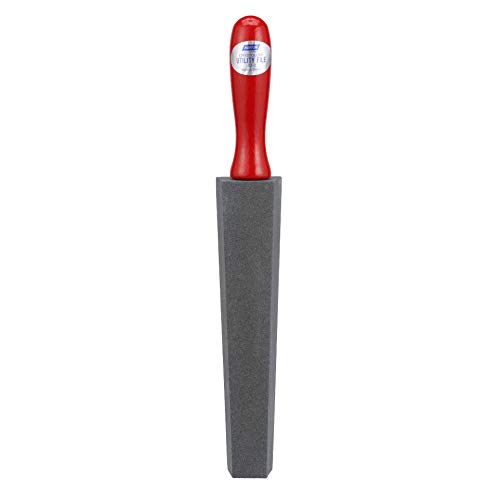
Norton uses a bonded silicon carbide abrasive that exposes fresh cutting surfaces as the stone wears, which means this file stone does not glaze over the way a natural stone can after extended use on mower blades. The 14-inch overall length provides enough reach to sharpen a full spade edge without repositioning, and the wooden handle keeps your hand a safe distance from sharpened steel. At 100-grit coarse, this tool is designed for material removal rather than polishing, making it a proper first-stage sharpener for tools that have seen heavy use.
The four-sided rectangular profile gives you multiple wear surfaces before the stone needs replacement, and the 1.31-inch width allows contact with both flat and slightly curved blade faces. Owners frequently mention that the stone moves through metal quickly and evenly, which is exactly what you want when reshaping a nicked axe or restoring a neglected shovel edge. Best results with lubricating oil help carry away the metal and abrasive debris that would otherwise clog the pores.
This sharpener lacks a fine-grit side, so you will need a honing step afterward if you demand a polished edge for pruning shears or kitchen knives. The coarse nature also means you must be deliberate with pressure — too much force digs uneven grooves into softer steel. For the mid-range investment, you get a long-lasting stone that prioritizes speed and durability over versatility.
What works
- Self-sharpening silicon carbide stays aggressive through many uses
- Extended 14-inch length makes large mower blade work efficient
- Wooden handle provides secure grip and clearance from sharp edges
What doesn’t
- Single 100-grit coarse surface requires separate fine stone for final polish
- Rod-like shape less convenient for quick pocket carry
2. Darlac Fine Diamond Sharpener

The Darlac sharpener uses electroplated diamond particles bonded to a steel rod, and the fine-grade grit — rated at approximately 52 billion particles per square inch — creates a honing surface that restores a keen edge without removing mass from the blade. This is a tool designed for regular maintenance rather than aggressive reprofiling. A few light strokes on a bypass pruner or lopper blade will bring back the bite that faded after a morning of heavy cutting.
The rod diameter is narrow enough to fit into the curved gullet of most pruner blades, and the compact form factor lets you work in the field without needing a vise or a dedicated workspace. Darlac markets this as a companion for their own cutting tools, but the diamond surface works just as effectively on any hardened steel blade from other manufacturers. Owners report that pocket knives and secateurs both respond well to the fine diamond cutting action.
The downside is a lack of a coarse side for blades that are truly dull or have visible nicks. If your loppers are already rounded over, this rod will take a very long time to restore a proper bevel. Its small size also makes it less suited for large mower blades. For a moderate entry price, it delivers a precise final edge for the tools that matter most in daily pruning.
What works
- Fine diamond surface produces a razor edge without heavy metal removal
- Compact rod shape reaches curved pruner blades easily
- Excellent for quick touch-ups during active cutting sessions
What doesn’t
- No coarse grit for repairing damaged or very dull edges
- Too small for effective sharpening of lawn mower blades or axes
3. SHARPAL 116N Pocket Diamond Sharpening Card
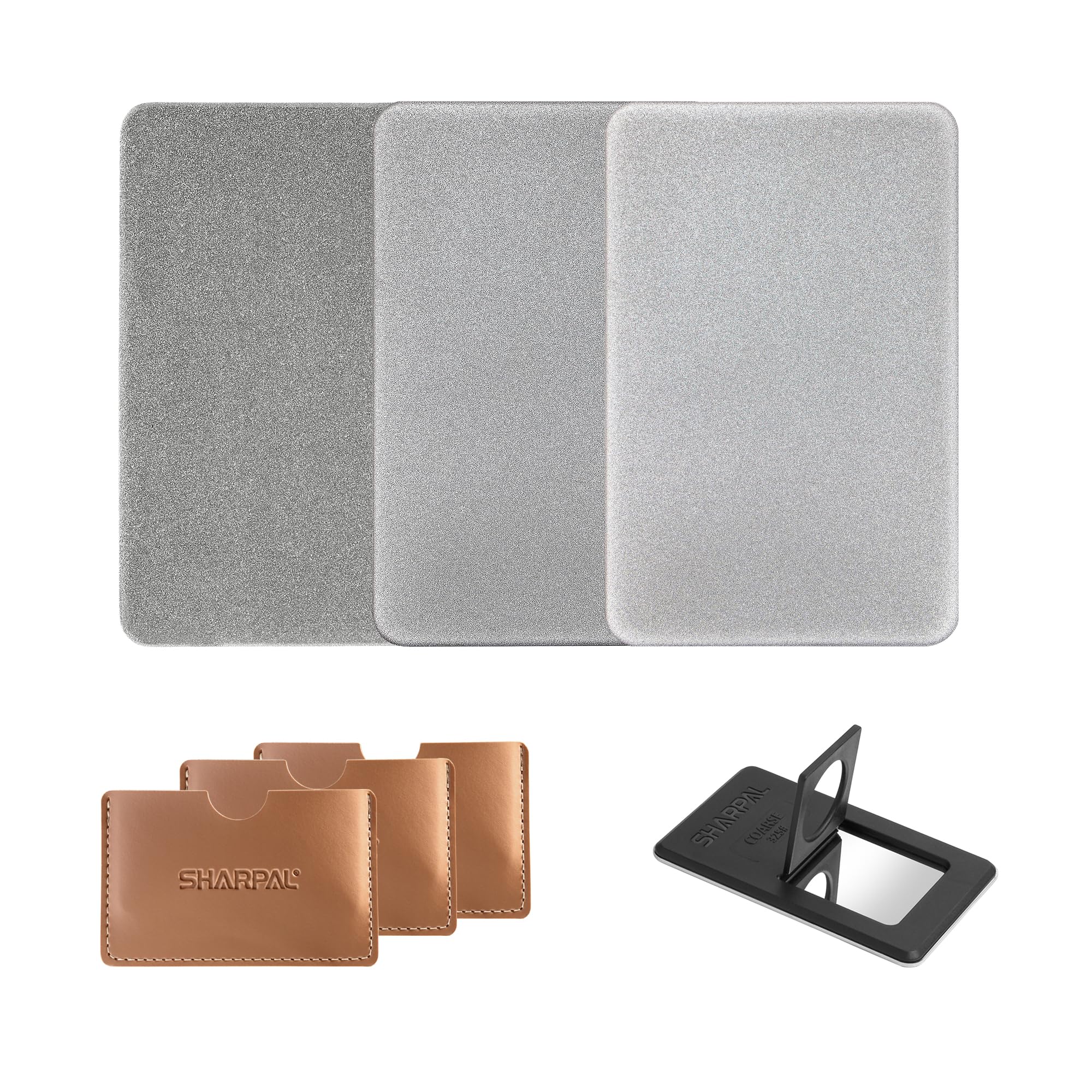
Sharpal packs three monocrystalline diamond plates into a credit-card-sized package: 325-grit coarse for setting a fresh bevel, 600-grit medium for refining the edge, and 1200-grit extra-fine for honing. This progression lets you move through a full sharpening sequence without switching tools, which is rare in a form factor that fits inside a shirt pocket. The diamond abrasive cuts hardened steels like D2 and M390 without loading, and the plastic backing includes a ring grip that keeps your fingers clear of the blade path.
Each card is designed for dry sharpening — no oil or water required — so you can use it immediately regardless of your environment. The flat plates work best on straight edges and slightly curved blades, and owners have used them effectively on wood lathe carbide cutters, hatchets, and carving knives. The set comes with a storage pouch that helps protect the diamond surface from contamination when tucked into a tool bag or backpack.
The ultra-flat profile means these cards are less comfortable for long sessions on large mower blades, where a handled file stone provides better leverage. Some users remove the plastic backings to store all three cards in a single leather case for a slimmer carry. For a mid-range price, you get a complete grit family that handles everything from kitchen knives to hunting blades without needing a separate strop.
What works
- Three grits allow a full progression from bevel setting to honing
- Monocrystalline diamond cuts fast on high-hardness steels
- Ring grip provides safe handling and comfortable control
What doesn’t
- Flat card shape lacks leverage for large mower blade sharpening
- Plastic backing adds bulk for pocket carry when combined with all three
4. SHARPAL Combo Gift Pack

This two-piece combo includes a 6-in-1 pocket sharpener with carbide, ceramic, and diamond rods alongside a larger all-in-one tool sharpener that handles mower blades, axes, and pruners. The 6-in-1 unit features five different slots with preset sharpening angles, so you do not need to guess the correct bevel for a straight knife versus a serrated blade. The larger sharpener provides a flat diamond surface and a ceramic rod for serrations, giving you coverage for nearly every edged tool in a typical garage and garden shed.
The carbide notches in the pocket unit remove material quickly, making them effective for establishing a new edge on a very dull axe or lawn mower blade. The ceramic rods handle serrated edges and fishhooks, while the diamond rod provides fine honing. Owners consistently note that the kit restores machetes, kitchen knives, and hedge shears to razor sharpness, and the included all-weather fire starter and emergency whistle add outdoor utility for campers and hikers.
The trade-off is that a multi-tool sharpener rarely matches the ergonomics of a dedicated stone or rod. The preset-angle slots work well for standard blade geometries but may not align perfectly with custom-grind tools. For a moderate mid-range investment, you get a comprehensive system that covers almost every sharpening scenario, though purists may prefer single-purpose tools for better control.
What works
- Covers straight, serrated, and curved edges with three abrasive types
- Preset-angle slots remove guesswork for common blade bevels
- Compact 6-in-1 unit fits in a backpack for field use
What doesn’t
- Multi-tool design compromises ergonomics compared to dedicated sharpeners
- Preset angles may not suit tools with non-standard blade geometry
5. Ironwood Tool Company IW1490 Diamond Sharpener
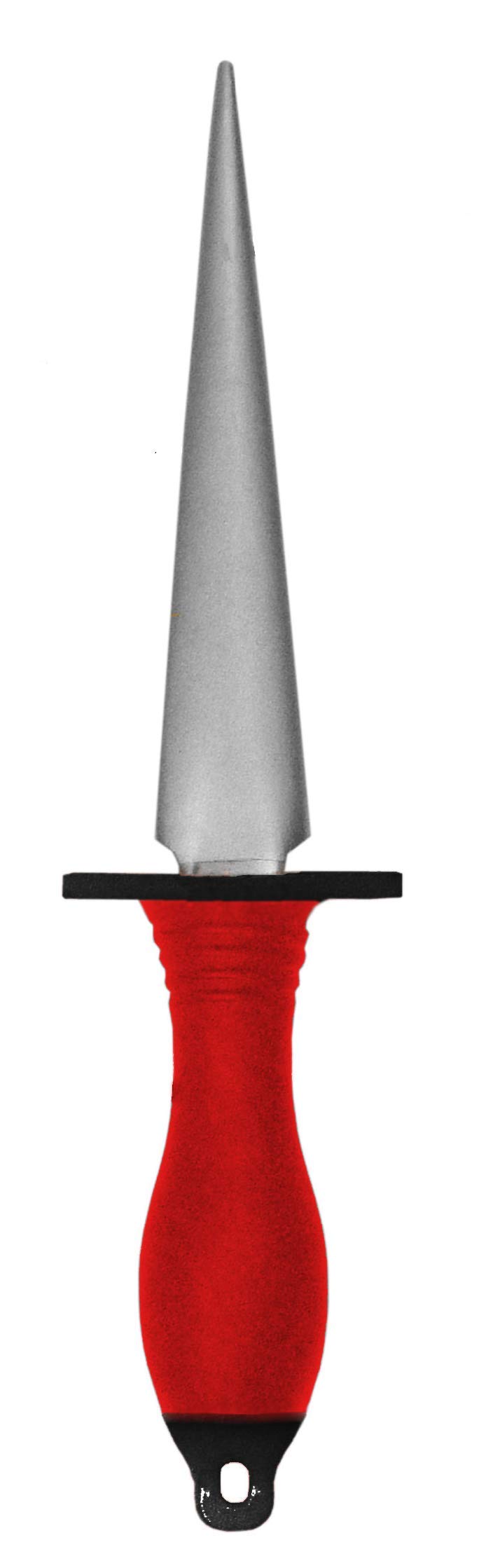
Ironwood’s diamond sharpener uses a tapered rod design that is specifically shaped to access the curved cutting edge of pruners and loppers without disassembling the tool. The 400-grit round side is electroplated with diamond particles that remove material fast enough to repair a dull or slightly damaged edge, while the 600-grit flat side refines that edge to a polished finish. The tapered profile means the rod contacts the blade along the entire bevel, not just at the tip.
The TPR (thermoplastic rubber) grip provides slip resistance even with wet or gloved hands, and the manufacturer states that 15 to 20 strokes are sufficient to bring a worn pruner back to full sharpness. Owners consistently describe this as the sharpener that saved their loppers and keeps their Felco shears razor sharp. The build quality feels dense and well-balanced, with the diamond plating holding up through many seasons of regular use.
The 400-grit coarse side is not aggressive enough to reshape a heavily nicked axe or mower blade, so this tool is best reserved for maintaining pruning and cutting tools rather than repairing badly damaged edges. The premium price reflects the durable diamond bonding and ergonomic handle, making it a focused tool for the gardener who prioritizes feel and precision over raw material removal.
What works
- Tapered diamond rod perfectly follows the curve of pruner blades
- TPR grip stays secure when hands are wet or gloved
- Two-grit progression handles both dull and worn edges effectively
What doesn’t
- Coarse side insufficient for repairing heavily nicked or chipped blades
- Form factor less useful for large flat mower blades or axes
6. PFERD CS-X Chainsaw Chain Sharpener
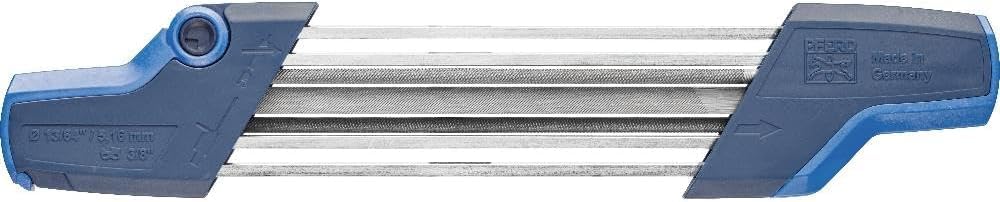
PFERD designed the CS-X specifically for chainsaw cutters, and it includes a 13/64-inch round file matched to 3/8-inch low-profile chain along with a flat depth gauge file. The tool locks the file at a precise 30-degree sharpening angle, eliminating the guesswork that leads to uneven cutters and chain pull. The two-in-one design lets you sharpen the cutting tooth and lower the depth gauge in a single setup, which reduces the time needed to restore a full 20-inch bar to peak cutting performance.
The ergonomic body provides a comfortable grip for repetitive strokes, and the interchangeable file system means you replace only the round file when it wears out rather than buying an entirely new sharpener. Owners report that the CS-X produces razor-sharp cutter faces in about 10 minutes on the first try, and subsequent sessions take even less time as you learn the rhythm. The push-only motion (never pull back across the cutter) delivers a clean edge that produces long wood shavings rather than fine sawdust.
This sharpener is limited to chainsaw chains and cannot be used on pruners, axes, or mower blades. The round file profile is also specific to 3/8-inch low-pitch chain, so owners with different chain sizes will need to source alternate file diameters. For a premium price, you get a purpose-built system that outperforms hand filing and saves the cost of dealer sharpening services.
What works
- Preset 30-degree angle eliminates uneven cutter wear
- Two-in-one design sharpens cutter and adjusts depth gauge together
- Interchangeable file extends tool life and reduces ongoing cost
What doesn’t
- Dedicated to chainsaw chains only; not usable for other garden tools
- File size limited to 3/8-inch low-profile chain pitch
7. FELCO Model 905 Carbide Stone
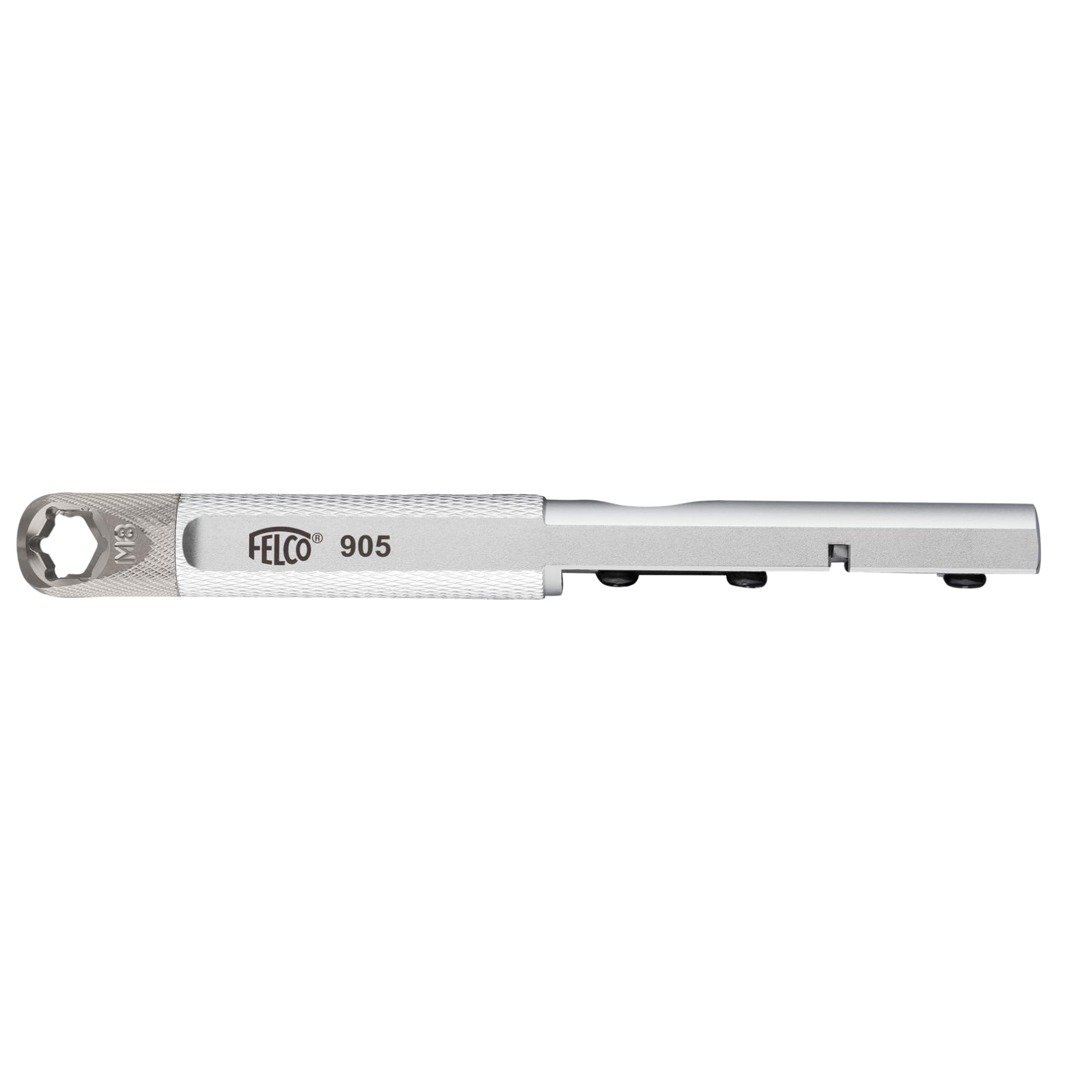
Felco manufactures the 905 pocket sharpener as a companion for their own line of pruners, and the carbide steel cutting edge is factory-set at 22 degrees — the ideal bevel for maintaining Felco No. 2 secateurs and similar bypass pruners. The stone has a flat profile that fits inside a pocket or pruning pouch, and the carbide material stays sharp through many passes without requiring lubrication or conditioning. A few light swipes along the blade bevel restore the clean cut that prevents stem crushing.
The compact dimensions — just under three inches long and a third of an inch wide — make this sharpener easy to carry to garden jobs, floral arrangements, or wedding events where shears must stay sharp. Owners who work with floral snips and pruners daily report that the 905 lets them maintain cutting performance throughout a full work session without needing to return to a bench. The consistent 22-degree angle removes the variable that causes uneven edges when sharpening by feel.
The carbide stone is not suited for large mower blades, axes, or any tool with a significantly different bevel angle. Some users note that the stone is too narrow to reach the full blade width on larger loppers, and the flat profile does not accommodate deeply curved pruner blades. For a premium price, you get a purpose-specific tool that excels at one task: keeping Felco pruners in factory-fresh cutting condition.
What works
- Factory-set 22-degree angle matches Felco pruner bevel perfectly
- Compact pocket size allows carry to jobsite or event
- Carbide steel edge stays sharp without oil or water
What doesn’t
- Limited to pruner-type blades; ineffective on mower blades or axes
- Flat narrow stone does not reach full curve on large loppers
Hardware & Specs Guide
Grit and Abrasive Material
Grit number determines cut aggressiveness — lower numbers (100–325) remove metal quickly for reshaping, while higher numbers (600–1200) refine the edge. Silicon carbide (Crystolon) stones self-sharpen and work well on softer carbon steel. Diamond-bonded plates cut fast on hardened high-carbon steel and last longer but cost more. Ceramic rods produce the finest polish but remove almost no material. Choose diamond for daily maintenance of premium pruners, and silicon carbide for heavy work on mower blades and axes.
Bevel Angle and Blade Compatibility
Most bypass pruners and garden shears sharpen best at 20–22 degrees. Axes and splitting tools require a broader 30–35 degree bevel for impact resistance. Chainsaw cutters use a 30–35 degree side plate angle with a specific file diameter matched to chain pitch (3/8 inch low-profile uses a 13/64 inch file). Sharpening at the wrong angle rounds the edge, reduces cutting efficiency, and wastes metal. Preset-angle sharpeners eliminate this risk for standard tools, while hand stones require careful angle control.
FAQ
How often should I sharpen my garden pruners during a heavy pruning season?
Can I use a chainsaw sharpener on my pruners or mower blades?
Do I need lubricating oil for a diamond sharpening plate?
What does the wire edge mean and how do I remove it after sharpening?
Final Thoughts: The Verdict
For most gardeners, the best garden tool sharpener winner is the Norton Crystolon Utility File Stone because its 14-inch silicon carbide surface removes metal fast on mower blades and spades while the wooden handle keeps you safe. If you want a precision diamond tool for daily pruner maintenance, grab the Ironwood IW1490. And for dedicated chainsaw owners who want dealer-quality edges without removing the bar, nothing beats the PFERD CS-X.