
Air plants (Tillandsia) absorb moisture and nutrients through their leaves, not from soil, making standard fertilizers risky and often counterproductive. A dedicated air plant food delivers a gentle, balanced dose of nitrogen and trace minerals that matches their unique epiphytic metabolism.
I’m Rikta — the co-founder and writer behind Lawn Gear Lab. I’ve spent hundreds of hours dissecting NPK ratios, analyzing micronutrient profiles, and cross-referencing thousands of verified owner reports to isolate the formulas that actually support vibrant color, pup production, and bloom cycles in Tillandsia and related species.
If you’re serious about helping your air plants thrive, this guide cuts through the hobbyist chatter to deliver a clear, data-backed shortlist of the best air plant food available right now, with concrete reasons why each option earns its place.
How To Choose The Best Air Plant Food
Air plants get their nutrition from the air, rain, and debris in their natural habitat. Replicating that with a bottle means paying attention to three essentials: formula strength, application method, and ingredient quality.
NPK Ratio and Nitrogen Source
Air plants need a low-nitrogen formula, typically around 3-1-2 or lower. Excess nitrogen, especially from synthetic urea, burns their delicate trichomes. Look for water-soluble liquid concentrates or gentle pre-mixed sprays with a clear breakdown on the label.
Application Method: Mist vs. Soak
Some formulas are designed for quick foliar misting, others for diluting in a soaking bath. Misting is ideal for mounted plants or rare species that dislike being submerged; soaking provides thorough coverage for larger collections. Choose a product that matches your watering routine.
Concentrate vs. Ready-to-Use
Concentrates offer more feedings per dollar and let you control strength. Ready-to-use spray bottles are convenient for beginners but cost more per application. Consider how many plants you have and how often you feed.
Quick Comparison
On smaller screens, swipe sideways to see the full table.
| Model | Category | Best For | Key Spec | Amazon |
|---|---|---|---|---|
| TeaDrops Organic Orchid + Bromeliad + Air Plant Fertilizer | Premium Organic | Organic feeders | 16 tea bags / 32 gal | Amazon |
| TPS Nutrients Air Plant Fertilizer | Premium Concentrate | Large collections | 32 oz bottle | Amazon |
| HiThrive 32oz Bromeliad Fertilizer | Premium Concentrate | Bromeliad & air plant combo | 48 gal yield / 32 oz | Amazon |
| Cute Farms Tillandsia Air Plant Fertilizer | Mid-Range RTU | Easy weekly misting | 2-pack, 8 oz spray | Amazon |
| Leaves and Soul Bromeliad Fertilizer | Mid-Range Concentrate | Versatile indoor plants | 3-1-2 ratio / 8 oz | Amazon |
| The Green Alcove Orchid Fertilizer Spray Kit | Mid-Range Kit | Delicate orchids & air plants | 1.7 oz concentrate + spray | Amazon |
| ALIINKD Hydroponics Nutrients A&B Plant Food | Budget Hydroponic | Hydroponic systems | 1000 ml / A&B parts | Amazon |
In‑Depth Reviews
1. TeaDrops Organic Orchid + Bromeliad + Air Plant Fertilizer

The TeaDrops system breaks away from measuring spoons and drippy bottles — each packet is a pre-dosed organic tea bag you steep in a gallon of water. One tube of 16 packets yields up to 32 gallons of gentle fertilizer, which covers even a large air plant collection for months. The formula targets epiphytic species including Tillandsia, Bromeliads, and most orchids, making it a true multi-category solution.
Users consistently report stronger spikes, more vibrant foliage, and repeat blooming cycles after switching to TeaDrops. The organic composition is safe for pets and children, and the no-mess application eliminates the risk of over-concentrating. Steeping for a few hours or overnight allows full nutrient release without any odor or sediment.
The premium price per tube reflects the convenience and organic certification. Each packet is single-use, so you cannot adjust dosage mid-bottle. For owners of smaller collections, the per-gallon cost is higher than direct liquid concentrates. Still, if ease and clean feeding are top priorities, this is the most foolproof entry point.
What works
- No measuring or mixing — steep and pour
- Organic, vegan, pet-safe formula
- Covers orchids, bromeliads, and air plants in one system
- Very gentle on sensitive Tillandsia species
What doesn’t
- Higher cost per feeding than bulk liquid concentrates
- Single-use packets limit dosage flexibility
2. TPS Nutrients Air Plant Fertilizer
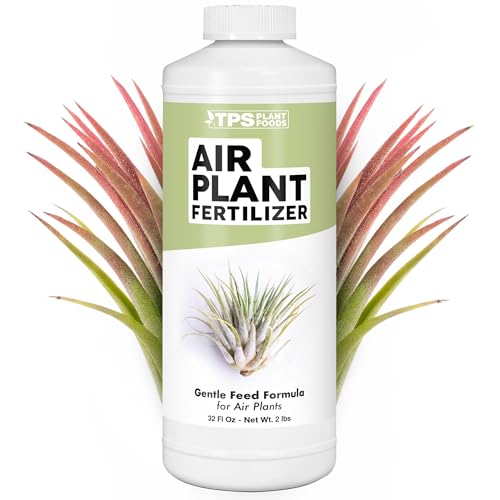
TPS Nutrients bottles a gentle liquid concentrate engineered specifically for soil-free plants. The 32-ounce jug makes a substantial volume of ready-to-use solution, and the low-strength formulation reduces the risk of burning trichomes common with off-the-shelf fertilizers. Owners report using it for weekly 30-minute soaks with visible improvement in leaf color and pup production within three to four weeks.
One of the strongest signals from the user community is the rapid propagation seen after switching — several reviewers noted their three original air plants multiplied to over a dozen through offsets. The concentrate mixes easily with water, and the mild profile means you can adjust the strength depending on the season or your plants’ condition without worrying about shocking them.
The mixing ratio requires a measuring tool; the bottle lacks a built-in measuring cap. Some users found the instructions sparse regarding optimal strength for different Tillandsia varieties. Despite these minor friction points, the low cost per gallon and consistent results make this a top recommendation for dedicated air plant hobbyists.
What works
- Excellent value — big bottle with many feedings
- Mild enough for weekly soaks without burn
- Clear positive impact on pup production
What doesn’t
- No measuring cap, need separate tool
- You must calculate dilution ratios yourself
3. HiThrive 32oz Bromeliad Fertilizer
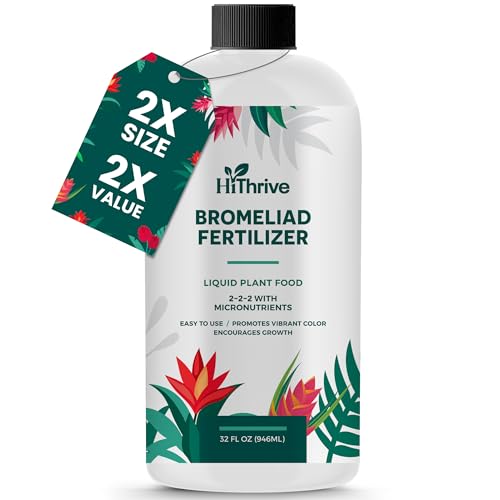
HiThrive’s 32-ounce concentrate stretches to 48 gallons of usable liquid, giving it one of the lowest per-feeding costs in this lineup. The balanced macronutrient profile supports both foliage vigor and bloom development, and the micronutrient boost — calcium, iron, magnesium, zinc — targets common deficiencies that cause leaf tip burn and faded color in epiphytic plants.
While the label markets it primarily for bromeliads, the gentle low-nitrogen formula works well for air plants when used as a foliar spray or soak at the recommended dilution. Owners of mixed collections (bromeliads + Tillandsia) appreciate a single bottle that feeds both groups without needing separate products.
One caution: the concentrate is potent enough that some users accidentally burned plants by failing to dilute properly. Always follow the 1 teaspoon per quart guideline for foliar feeding. The bottle is large and may be more than occasional hobbyists need before it expires. For frequent feeders with many plants, it’s a top-tier economy pick.
What works
- Extremely high yield for the bottle size
- Loaded with micronutrients for vibrant coloring
- Dual-use for bromeliads and air plants
What doesn’t
- Burning risk if not diluted to spec
- Large volume may outlast infrequent usage
4. Cute Farms Tillandsia Air Plant Fertilizer

Cute Farms delivers a ready-to-use misting formula that skips all mixing steps. The fine spray nozzle delivers even coverage on mounted or terrarium-bound air plants, and the gentle weekly formula is calibrated for direct leaf absorption. Each 8-ounce bottle lasts approximately six months when used on a modest collection, and the two-pack extends that to a full year.
The pre-mixed convenience makes it ideal for beginners who want to start feeding without researching dilution math. Several owner reports note that their air plants bloomed for the first time after consistent use, and the target list of compatible species covers nearly all common Tillandsia varieties from Ionantha to Xerographica.
Because it is pre-diluted, you cannot tweak strength during active growth periods or reduce it in winter dormancy. Some experienced users found the effect subtle and preferred stronger concentrates. If you value grab-and-mist simplicity above maximum nutrient density, this pack delivers solid results with zero fuss.
What works
- No mixing required — spray directly on leaves
- Fine mist nozzle gives even coverage
- Two bottles cover a full year for most collections
What doesn’t
- Pre-diluted strength cannot be adjusted
- Subtle effects, less potent than concentrates
5. Leaves and Soul Bromeliad Fertilizer Liquid 3-1-2
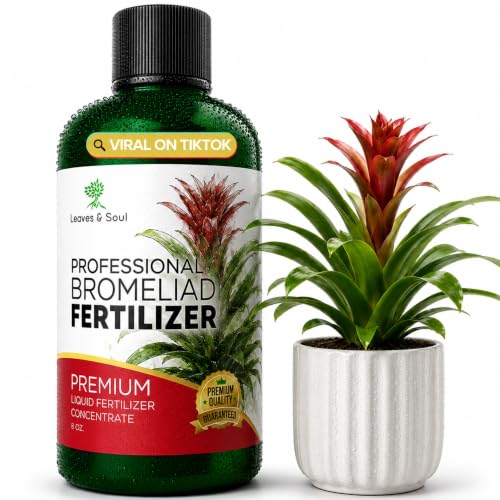
Leaves and Soul offers a tightly controlled 3-1-2 NPK ratio that aligns well with the nutritional needs of both bromeliads and Tillandsia. The liquid concentrate mixes at a simple 1–2 teaspoons per 8 cups of water, and owners report fast recovery on stressed plants — one reviewer saw a Gardenia (used on bromeliad relatives) bounce back from shipping shock within days.
The 8-ounce bottle is compact but concentrated enough for regular feeding over a small to medium collection. Users praised its ability to revive drooping Peace Lilies and Pothos, which suggests the formula’s versatility extends beyond strict epiphytic use. For air plant owners who also keep conventional houseplants, this bottle serves dual duty.
Some buyers noted the bottle size is relatively small compared to other concentrates in this price tier. The ratio is slightly nitrogen-forward, so careful dilution is necessary to avoid leaf burn on sensitive Tillandsia. It works best as a soak or mist when used at half the recommended strength for true soil-free plants.
What works
- Versatile — works on houseplants and air plants
- Quick recovery signs on stressed plants
- Made in the USA with quality control
What doesn’t
- Small bottle size for the price
- Nitrogen ratio requires careful half-strength dosing for air plants
6. The Green Alcove Orchid Fertilizer Spray Kit
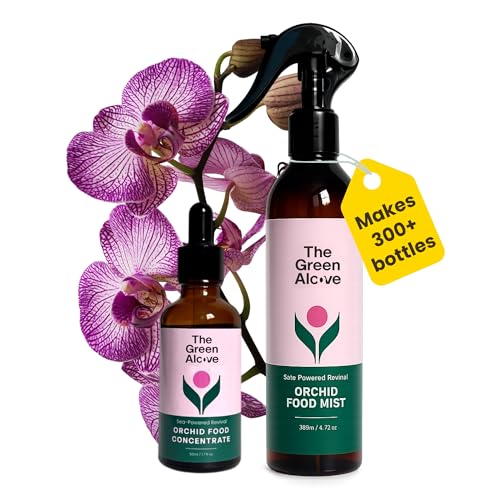
The Green Alcove kit combines a tiny dropper bottle of concentrated fertilizer with a reusable amber spray bottle, making it a self-contained system. The formula is enriched with brown kelp seaweed extract, which supplies natural auxins and trace minerals that stimulate root activity without harsh synthetic salts.
Users highlight the extreme dilution ratio — just three drops per eight ounces of water. The bottle yields an enormous number of feedings, and the low concentration practically eliminates burning risk, even for delicate orchid roots or air plant leaves. Many owners of small collections found this kit lasted over a year with regular weekly use.
The dropper system requires careful counting per batch, and the 1.7-ounce concentrate bottle is tiny — easy to misplace. While the seaweed base is excellent for gentle feeding, it lacks a complete macronutrient profile, so plants may need supplementary nutrition during peak growth season if you rely solely on this spray.
What works
- Extremely concentrated — a little goes a long way
- Seaweed extract supports root and leaf health
- Nearly impossible to over-fertilize at recommended dose
What doesn’t
- Limited macronutrient balance for heavy feeders
- Small bottle easy to lose among supplies
7. ALIINKD Hydroponics Nutrients A&B Plant Food

This two-part granule system is designed for hydroponic setups, but the idea of dosing A and B nutrients can be transferred to air plant feeding if you understand the dilution. The pack includes two main bottles plus eight extra nutrient packets totaling 1,000 ml. Each serving adds 5 ml of part A and 5 ml of part B per liter of water.
Hydroponic nutrients are typically balanced for soil-less growing, which mirrors the air plant environment. Users growing vegetables and herbs in hydro systems reported strong results, and the included measuring cup simplifies mixing. For air plants, diluting to half or quarter strength is recommended to match their lower feeding requirements.
The granular form takes longer to dissolve completely compared to liquid concentrates, and the two-part system adds complexity. It is not formulated specifically for epiphytic plants, so you risk overloading micronutrients designed for fruiting crops. This is a budget option best suited for owners who already maintain a hydroponic garden and want to experiment with air plants.
What works
- Very low cost per feeding
- Includes measuring cup and multiple packets
- Suitable for soil-less growing systems
What doesn’t
- Not designed for air plants — requires careful dilution
- Granules dissolve slower than liquid concentrates
- Two-part dosing adds complexity
Hardware & Specs Guide
NPK Ratio
The nitrogen-phosphorus-potassium ratio is the most critical spec. Air plants need a low-nitrogen formula (3-1-2 or 2-2-2) to avoid burning the trichomes that capture moisture. Ratios over 5-5-5 from general-purpose fertilizers will damage your collection.
Concentrate vs. RTU
Concentrates (liquid or granular) require mixing but deliver more feedings per ounce. Ready-to-use (RTU) sprays such as the Cute Farms mist are convenient but cost more per application. RTU bottles also have a shorter shelf life once opened.
FAQ
Can I use regular houseplant fertilizer on my air plants?
How often should I fertilize my air plants?
Is misting or soaking better for applying air plant food?
Final Thoughts: The Verdict
For most gardeners, the best air plant food winner is the TeaDrops Organic Fertilizer because it blends zero-measure convenience with certified organic ingredients and proven results across orchids, bromeliads, and Tillandsia in one simple system. If you want maximum value and propagation-friendly results, grab the TPS Nutrients Air Plant Fertilizer. And for beginners seeking a pre-mixed mist that eliminates all guesswork, nothing beats the Cute Farms Tillandsia Spray.