
Nothing is more frustrating than watching the birds, bunnies, squirrels, and stray cats decimate a bed of tender lettuce, broccoli, or strawberries just days before harvest. The most effective shield against these daily garden raids isn’t a fence or a spray — it’s the right physical barrier designed to allow airflow and sunlight while locking out every pest.
I’m Rikta — the co-founder and writer behind Lawn Gear Lab. My approach to ranking garden covers is rooted in hours of comparing mesh densities, tensile strengths, UV stabilization ratings, and frost tolerance specs against aggregated owner feedback from hundreds of verified buyers.
This guide breaks down the key differences in material, weave density, and durability so you know exactly which covers for vegetable gardens will survive a full season of wind, rain, and sun without tearing or trapping heat beneath the fabric.
How To Choose The Best Covers For Vegetable Gardens
Not every cover handles the same job. A frost blanket designed to trap ground heat will suffocate seedlings in July sun. A bird net with a half-inch gap does nothing against aphids or flea beetles. The right choice depends on matching the barrier’s physical properties to the specific threat — and the season.
Mesh Density vs. Threat Size
Mesh count is the single most important spec. A 0.5-inch gap stops birds and squirrels but lets in every insect smaller than a bumblebee. For cabbage worms, aphids, and leaf miners, you need a weave of 0.8 mm or finer — roughly 60 to 80 mesh per inch. That density also blocks deer flies and mosquitoes while still allowing rain to pass through.
Weight and Frost Rating
Frost covers are measured in ounces per square yard (oz/sq yd). A 0.5 oz fabric offers light freeze protection down to about 30°F, while a 1.2 oz blanket can handle dips to 24°F when draped properly with no direct contact to foliage. Anything heavier than 1.5 oz restricts too much light for leafy greens and should only be used for overnight emergency protection.
UV Stabilization and Material Composition
Polyethylene (PE) with UV inhibitors holds up for two to three seasons of continuous outdoor exposure. Nylon and non-stabilized polypropylene degrade within weeks under direct sun — they turn brittle and shed microfibers into your soil. Always check the product description for “UV-stabilized” or “UV-resistant” language. If it isn’t stated, assume the cover will not last a full growing season.
Quick Comparison
On smaller screens, swipe sideways to see the full table.
| Model | Category | Best For | Key Spec | Amazon |
|---|---|---|---|---|
| KLEWEE 10 x 50 FT | Bird & Bug Barrier | Large raised beds | 0.8 mm mesh / 80 per inch | Amazon |
| SnugNiture 10x50FT | Insect Screen | Brassica & leafy greens | 0.1 mm mesh / ultra-fine | Amazon |
| AlpineReach 10 x 30 ft | Frost Blanket | Cold snaps & early planting | 1.2 oz/sq yd / 28°F protection | Amazon |
| JUNKOGO 7x100ft Frost Cloth | Heavy Frost Cover | Long rows & strawberries | 0.9 oz/sq yd / 100 ft length | Amazon |
| Chicken Wire Cloche 10-Pack | Physical Barrier | Seedlings & transplants | 9 x 9 in / PVC-coated metal | Amazon |
| FARAER 10x33ft Barrier Netting | Multi-Use Shade | Sun scorch & birds | 0.67 x 1 mm / 30% shade | Amazon |
| GonLei 2-Pack 10X30FT | Budget Bird Net | Tomatoes & berries | 0.04 in mesh / 60 per inch | Amazon |
In‑Depth Reviews
1. KLEWEE 10 x 50 FT Garden Mesh Netting

KLEWEE’s 10 x 50 ft netting uses an 80-mesh-per-inch weave that stops birds, deer, rabbits, cicadas, and most insects while still letting full sunlight and rain penetrate. The 0.8 mm x 0.8 mm ultra-fine grid is dense enough to block flea beetles and cabbage worms — a rare combination in a general-purpose barrier.
Owner reports confirm it holds up well against thinner competitors, surviving multiple seasons when stored dry. The white translucent material makes it easy to spot plants underneath, and the lightweight PE construction won’t crush tender foliage even when draped directly.
This cover suits gardeners managing medium-to-large raised beds who want one net that handles both avian and insect threats without constant removal for watering.
What works
- Dense 80-mesh weave blocks insects plus birds
- Full 50-ft length covers multiple beds from one roll
- Lets rain and sun through without removal
What doesn’t
- Can snag if dragged over rough edges or stakes
- Does not offer any frost protection
2. SnugNiture Garden Netting 10x50FT
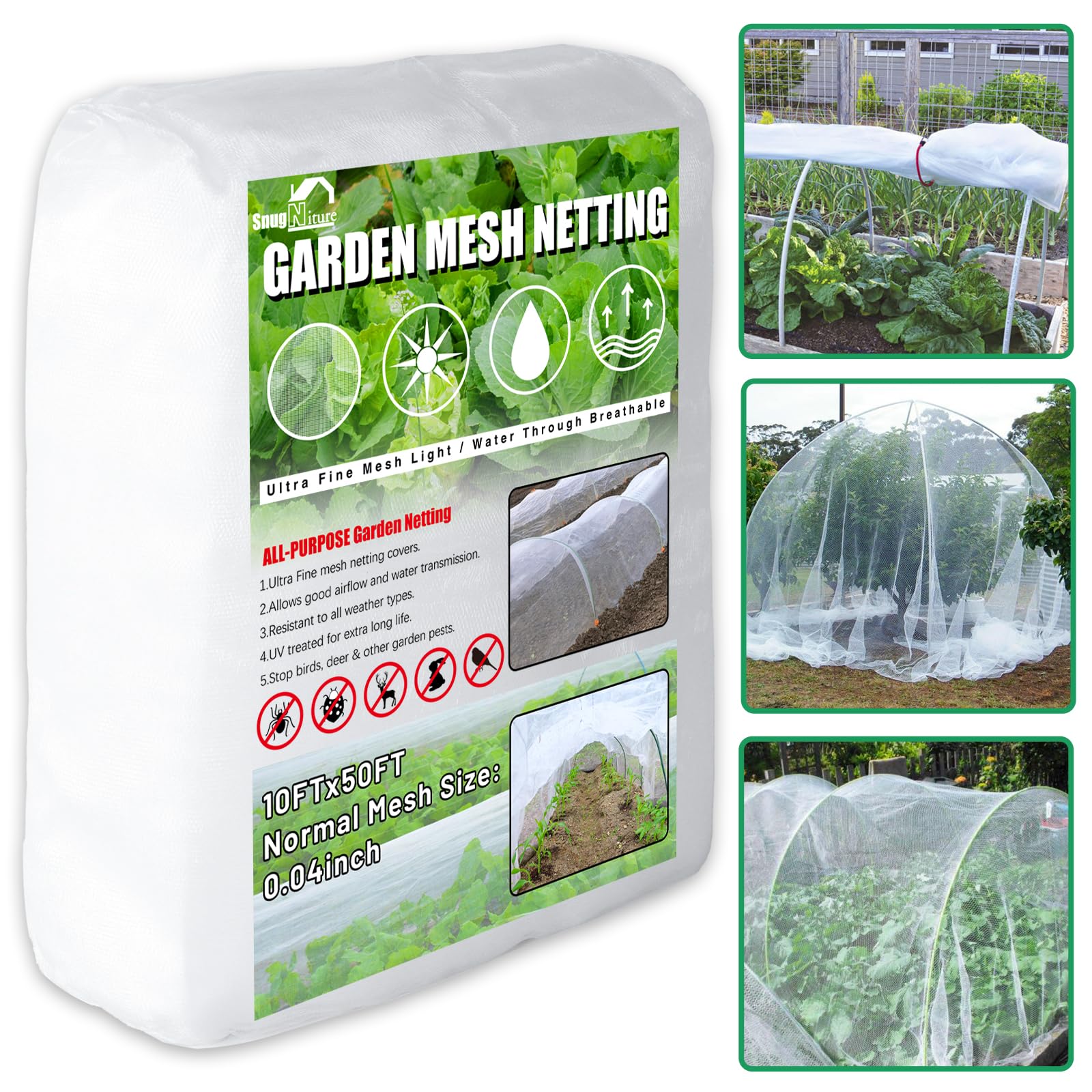
SnugNiture pushes the mesh density to 0.1 mm x 0.1 mm — fine enough to block aphids, thrips, and even the tiniest caterpillars from reaching brassicas and leafy greens. This is the tightest weave in the roundup, yet the fabric remains thin enough to allow air exchange and diffuse light without overheating the canopy.
Customers running fall brassica beds reported zero worm damage after seven months of continuous use. The material does catch on rough surfaces if handled carelessly, so avoid dragging it across sharp stake tops. It comes rolled as a single 10 x 50 ft sheet with translucent white construction for easy monitoring.
Choose this cover if your primary enemy is insect pressure rather than birds or mammals. It also works well as a patio enclosure screen, as noted by several buyers.
What works
- Ultra-fine 0.1 mm weave stops aphids and worms
- Lightweight and nearly invisible when installed
- Holds up for multiple seasons with careful handling
What doesn’t
- Snags easily on sharp edges or stakes
- Not designed for bird deterrence alone
3. AlpineReach Plant Covers Frost & Sun Protection 10 x 30 ft
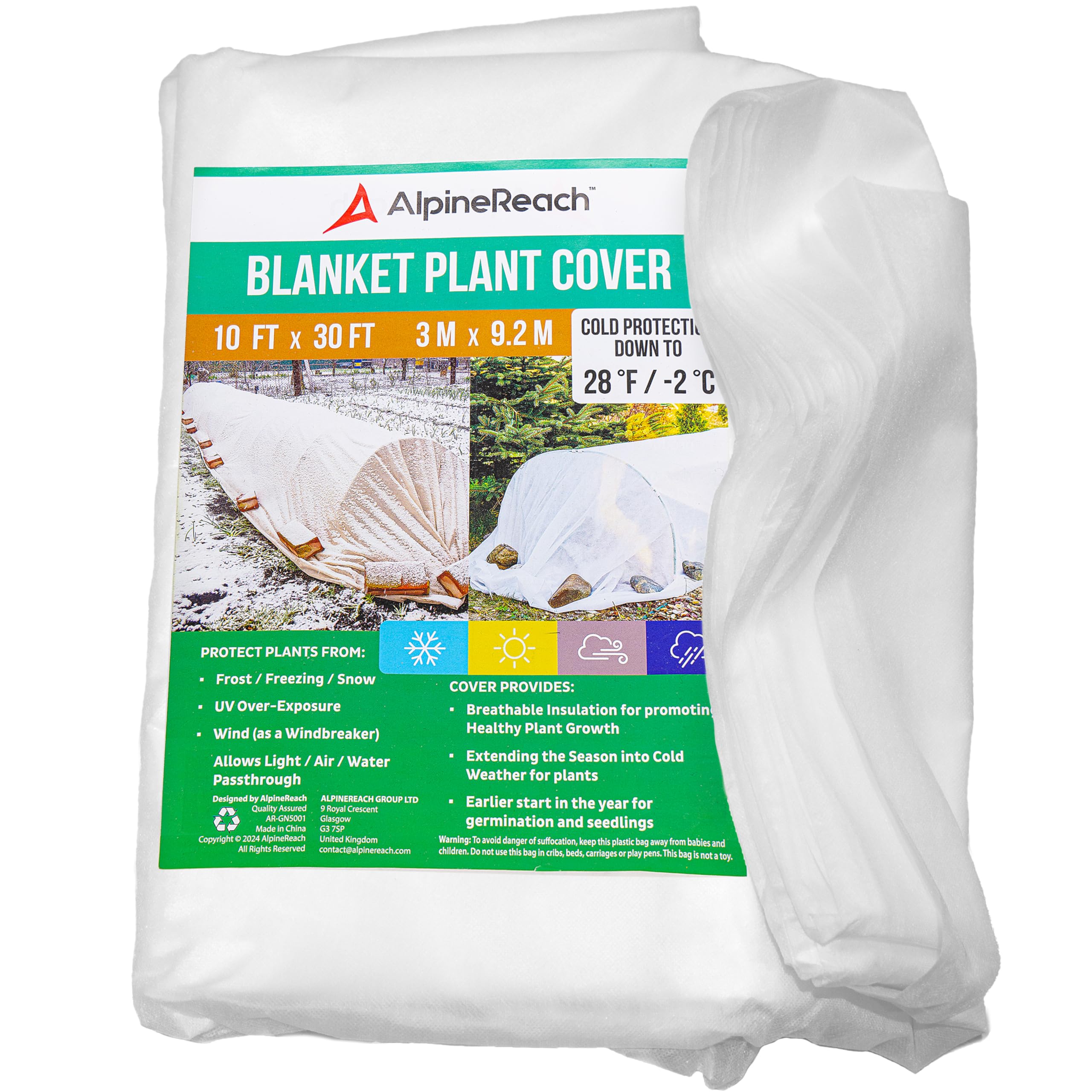
AlpineReach’s 1.2 oz/sq yd fleece-style fabric is purpose-built for frost events down to 28°F. Unlike thin insect nets, this material creates a true microclimate by trapping radiant ground heat while still allowing light and moisture to reach the soil. The 10 x 30 ft size covers several full-sized raised beds or a long row of in-ground vegetables.
Buyers in north central Texas and desert climates confirmed it survived week-long freezes and high winds when secured with spiral stakes. The fabric also provides UV protection during unexpected winter sun exposure, preventing leaf scorch on cold, bright days.
Note that this is an all-season cover — it works as a windbreak and light shade cloth in spring. One reviewer reported disintegration after two weeks of April sun, so avoid leaving it on during prolonged hot weather if your region sees intense UV.
What works
- 1.2 oz fabric handles 28°F freezes reliably
- Breathable non-woven construction prevents condensation burn
- Large 30-ft length fits long rows without splicing
What doesn’t
- May degrade faster in high-UV regions if left on too long
- Not suitable as a permanent insect barrier
4. JUNKOGO Plant Freeze Protection Cover 7x100ft
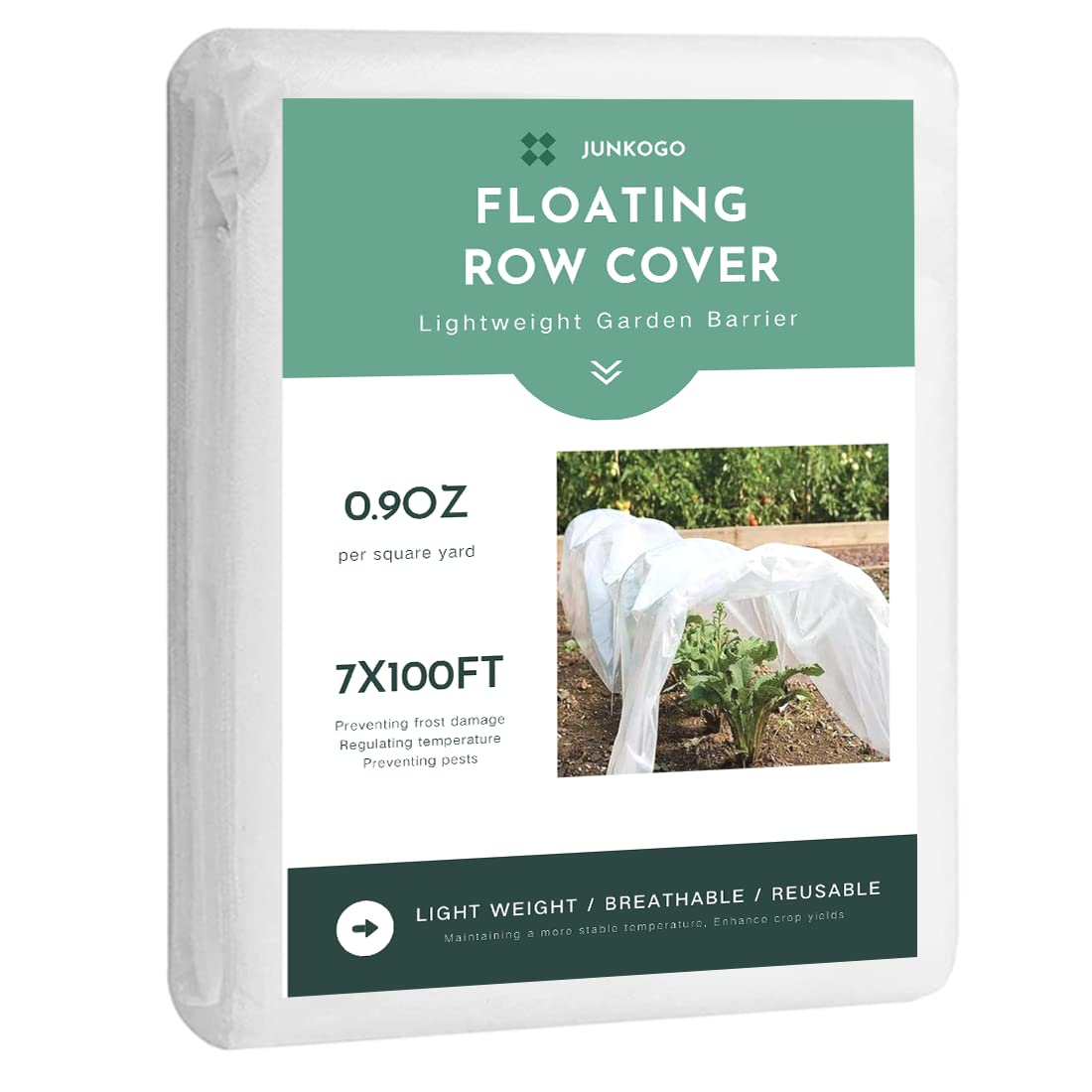
JUNKOGO’s 100-ft frost cloth is the longest single roll in this lineup, giving market gardeners and large-plot growers enough material to drape an entire strawberry patch or multiple hoop-house rows. The 0.9 oz/sq yd non-woven fabric offers reliable freeze protection down to the mid-20s while remaining light enough to be suspended on hoops without sagging.
Real-world use confirms that it kept strawberry blooms and fruit intact through 25–28°F freezes. The material also blocks vine borers when laid directly over squash plants early in the season, and several users praised its ability to handle storm winds when properly staked at the edges.
The fabric is slightly delicate compared to heavier floating row covers — some buyers reported tearing when tensioned too aggressively. Cut the roll with sharp scissors and reinforce edges with tape if you plan to reuse it for multiple winters.
What works
- 100 ft length covers large commercial-style rows
- Effective freeze protection for strawberries and citrus
- Works as a vine borer barrier for squash
What doesn’t
- Thinner fabric can tear if pulled too tight
- Not suitable for permanent hot-weather coverage
5. Chicken Wire Cloche Plant Covers 10-Pack

This 10-pack of metal cloches takes a completely different approach from fabric nets. Each 9 x 9 inch dome is made from PVC-coated steel wire, creating a rigid, chew-proof barrier that stands up to squirrels, raccoons, and even chickens. The square-hole grid allows full sunlight and airflow while keeping every mammal and large bird off of individual transplants.
Buyers confirmed that the included U-shaped stakes keep the cloches anchored in wind and that the smooth coating prevents rust. The 9-inch height accommodates young plants for about three to four weeks before they outgrow the dome, making these ideal for the vulnerable seedling stage.
These cloches excel in situations where fabric would be torn or pushed aside by determined animals — especially if you have free-range poultry or persistent groundhogs.
What works
- Rigid steel construction stops chewing mammals
- PVC coating prevents rust and sharp edges
- 10-pack covers an entire transplant session
What doesn’t
- Limited 9-inch height restricts growth quickly
- Not effective against insects or frost
6. FARAER Garden Barrier Netting 10x33ft

FARAER’s green barrier netting combines a 30% shade factor with an oblong mesh that measures 0.67 mm x 1 mm — fine enough to block most birds and larger insects while giving heat-sensitive crops like lettuce and spinach a break from intense afternoon sun. The high-density polyethylene construction is UV-stabilized and lightweight, making it easy to cut and reposition across the season.
User reports highlight the netting’s ability to catch falling leaves and acorns in autumn while protecting the soil bed. It also serves as a greenhouse shade panel for hoop houses and livestock shelters, giving it multi-purpose utility beyond the vegetable patch.
The major trade-off is that the mesh is not fine enough to stop flea beetles or cabbage worms — this is a bird-and-sun cover first, not an insect-exclusion system.
What works
- 30% shade reduces heat stress on cool-season crops
- UV-stabilized PE lasts multiple seasons
- Large 33 x 10 ft sheet covers multiple beds
What doesn’t
- Mesh gaps too large for small insect exclusion
- Green color can make it harder to spot pests underneath
7. GonLei Garden Netting 2-Pack 10X30FT
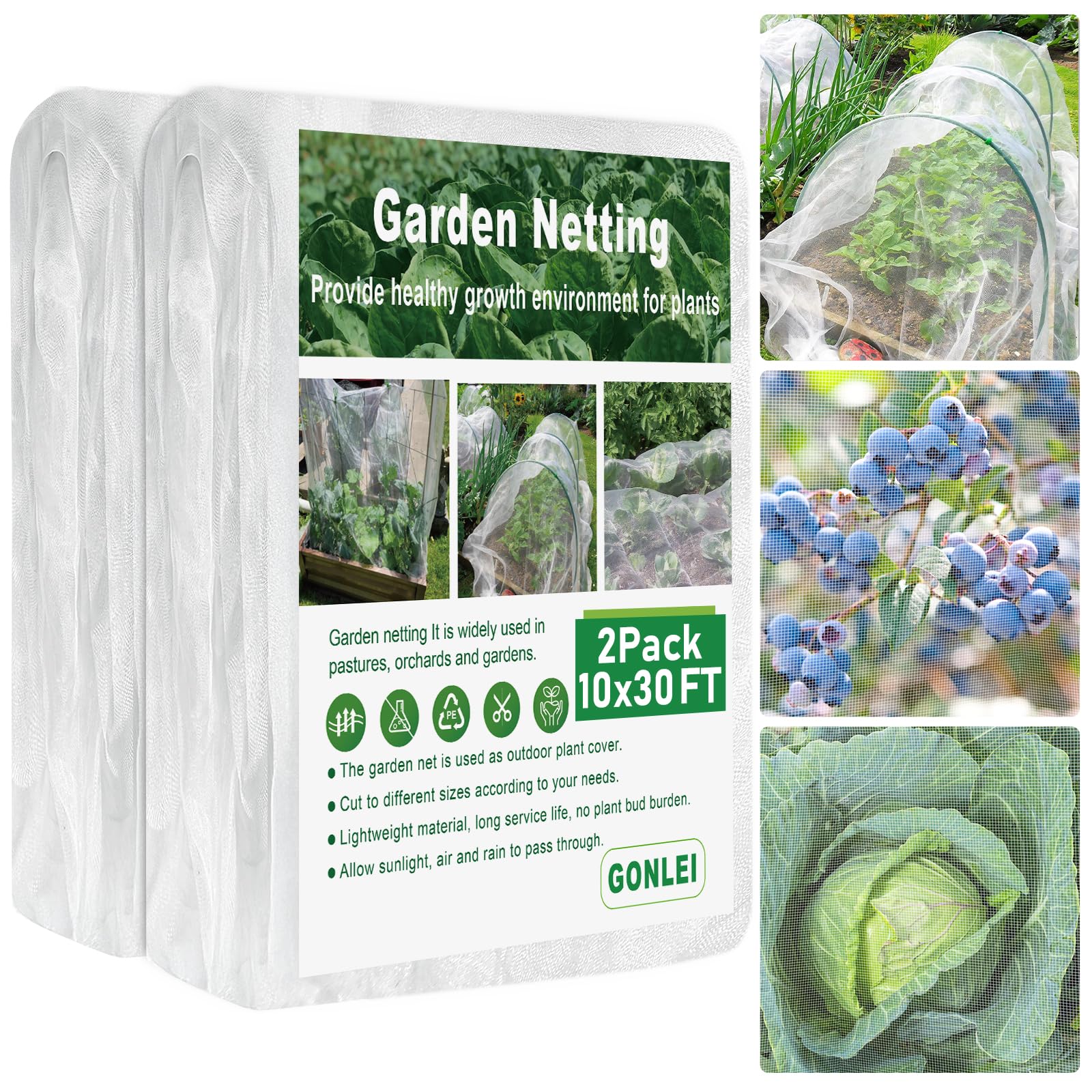
GonLei’s two-pack offers 60 total feet of netting at an entry-level price point. The 0.04-inch (roughly 60 mesh per inch) nylon weave blocks squirrels, birds, and larger insects reasonably well. Buyers reported that the netting saved their tomatoes and blueberry bushes from determined wildlife, and the transparent design makes plant inspection straightforward.
The main compromise is material longevity. Nylon lacks the UV resistance of polyethylene, and several owners noted that the netting tears more easily than expected, especially when stretched over sharp stakes or scraped by tree branches. Plan on one season of reliable use before replacement rather than expecting a multi-year investment.
Despite the lower durability, this is a practical choice for gardeners who need immediate pest protection on a tight budget and are willing to replace the net annually.
What works
- Two-pack provides 60 total feet of coverage
- Transparent mesh allows easy plant monitoring
- Effective squirrel and bird barrier
What doesn’t
- Nylon degrades faster in direct UV light
- Prone to tearing if not handled carefully
Hardware & Specs Guide
Mesh Density (Mesh Per Inch)
Mesh per inch determines what size pest can penetrate. For bird protection, anything from 0.5-inch gaps to 60 mesh works. For insect exclusion (cabbage worms, aphids, flea beetles), look for 80 mesh or tighter — the Knight and SnugNiture nets hit this spec. Lower-density nets like the Faraer or GonLei stop birds but not small bugs.
Fabric Weight (oz/sq yd)
Frost blankets are rated by weight per square yard. Lighter fabrics (0.5–0.9 oz) provide moderate freeze protection down to about 28°F. Heavier fabrics (1.2 oz) create a thicker insulation layer and can handle dips to 24°F when properly secured. The AlpineReach and JUNKOGO options sit in the effective zone for most temperate-zone frost events.
UV Stabilization
Exposure to direct sunlight breaks down non-stabilized polymers within weeks. Polyethylene (PE) with added UV inhibitors survives two to three full growing seasons. Nylon and plain polypropylene typically fail in one season or less. Check the product description for “UV-stabilized” — if the phrase isn’t present, assume the cover will need annual replacement.
Length and Coverage Area
Standard rolls range from 30 ft to 100 ft in length with widths from 7 ft to 10 ft. A 10 x 50 ft net covers roughly 500 sq ft — enough for four to six standard 4×8 raised beds. Longer rolls (100 ft) suit market gardeners, while shorter rolls (30 ft) are sufficient for the home grower with a few beds. Plan for 6–12 inches of extra material on each side for staking or weighing down.
FAQ
Can I leave a garden cover on during rain and watering?
What mesh size stops cabbage worms but still lets pollinators through?
How do I keep a frost blanket from touching the foliage?
Will a white or green net affect plant growth differently?
Final Thoughts: The Verdict
For most gardeners, the covers for vegetable gardens winner is the KLEWEE 10 x 50 FT Garden Mesh Netting because its 80-mesh-per-inch weave hits the sweet spot between bird protection and insect exclusion at a reasonable length for home growers. If you need to lock out aphids and cabbage worms from brassicas, grab the SnugNiture 10x50FT Ultra Fine Netting. And for overnight frost protection that won’t suffocate your spring seedlings, nothing beats the thickness of the AlpineReach 1.2 oz Freeze Blanket.