
Walking out to your fruit trees in late spring only to find cracked soil, parched roots, and a weed jungle choking the drip line is a gardener’s reality check. A proper layer of organic material does more than just look tidy — it regulates soil temperature, holds moisture through dry spells, and feeds the microbial life that trees depend on for nutrient uptake. The wrong choice, however, can tie up nitrogen, invite pests, or simply wash away after the first heavy rain.
I’m Rikta — the co-founder and writer behind Lawn Gear Lab. I’ve spent hundreds of hours digging through horticultural research, comparing NPK ratios, analyzing moisture retention data across different organic mediums, and cross-referencing owner feedback to separate the mulches that actually improve tree health from those that just fill a bag.
After evaluating particle size, decomposition rate, pH neutrality, and overall soil impact across dozens of products, I’ve narrowed the field to seven contenders that deliver real results. This is my curated guide to the best mulch for fruit trees on the market today.
How To Choose The Best Mulch For Fruit Trees
Selecting the right mulch for fruit trees isn’t about grabbing the cheapest bag on the shelf. The material you choose directly influences root zone temperature, moisture availability, soil biology, and even the flavor profile of your harvest. Here are the critical factors to weigh before you spread a single scoop.
Material Type: Wood, Compost, or Coco Coir
Wood-based mulches like bark chips break down slowly and are excellent for long-term weed suppression, but they can temporarily tie up soil nitrogen as microbes work to decompose them. Compost-based mulches, such as manure blends or lobster-and-crab meal mixes, release nutrients steadily and improve soil structure without the nitrogen penalty. Coco coir chips offer a middle path: they decompose slowly, retain moisture exceptionally well, and remain pH neutral — ideal for acid-sensitive fruit trees like apples and peaches.
Particle Size and Depth
Oversized chips (1–3 inches) allow water and air to move freely but may shift during heavy rain. Smaller particles (¼–½ inch) create a more uniform mat that suppresses weeds better but can compact if applied too thick. For fruit trees, aim for a 3-to-4-inch layer using medium-sized particles — enough to block sunlight from weed seeds while still permitting gas exchange at the root zone.
Decomposition Rate and Longevity
Fast-decomposing mulches like fresh compost need replenishment every season but feed the soil food web continuously. Slow-decomposing options like coconut husk chips or aged bark can last 12–18 months before requiring a top-up. Consider your willingness to reapply annually versus your tree’s need for steady nutrient release when deciding between a quick-feed and a set-and-forget approach.
pH and Salt Content
Fruit trees generally prefer a slightly acidic to neutral soil pH (6.0–7.0). Some mulches, like pine bark, can acidify the soil over time, which may benefit blueberries but harm stone fruits. Coco coir is naturally pH neutral, while manure-based composts can vary widely. Check the product’s pH range and — especially for coir — whether it has been pre-rinsed to remove salts that could damage young roots.
Quick Comparison
On smaller screens, swipe sideways to see the full table.
| Model | Category | Best For | Key Spec | Amazon |
|---|---|---|---|---|
| Back to the Roots Organic Coco Mulch | Coco Husk | Long-lasting moisture retention | 2 cu. ft. expanded volume | Amazon |
| Blue Ribbon Organics Compost | Compost | Deep soil enrichment | 32–35 lb, 7.48 gal bag | Amazon |
| Espoma Land and Sea Compost | Compost | Mycorrhizae + nutrient boost | 1 cu. ft. with lobster & crab meal | Amazon |
| Plantonix Coco Coir (6-Pack) | Coco Coir | Seed starting & raised beds | 12.5 gal expanded, OMRI-listed | Amazon |
| Thrive Natural Gardens Coco Chips | Coco Husk | Fast-expanding bulk coverage | 11 lb brick, expands to 1.8 cu. ft. | Amazon |
| R&M Organics Premium Compost | Compost | Low-odor indoor/outdoor feeding | 10 lb bag, manure-based | Amazon |
| Rio Hamza Trading Houseplant Mulch | Bark Chips | Small potted tree top-dressing | 8 qt, fine bark chips | Amazon |
In‑Depth Reviews
1. Back to the Roots 100% Organic Coco Mulch
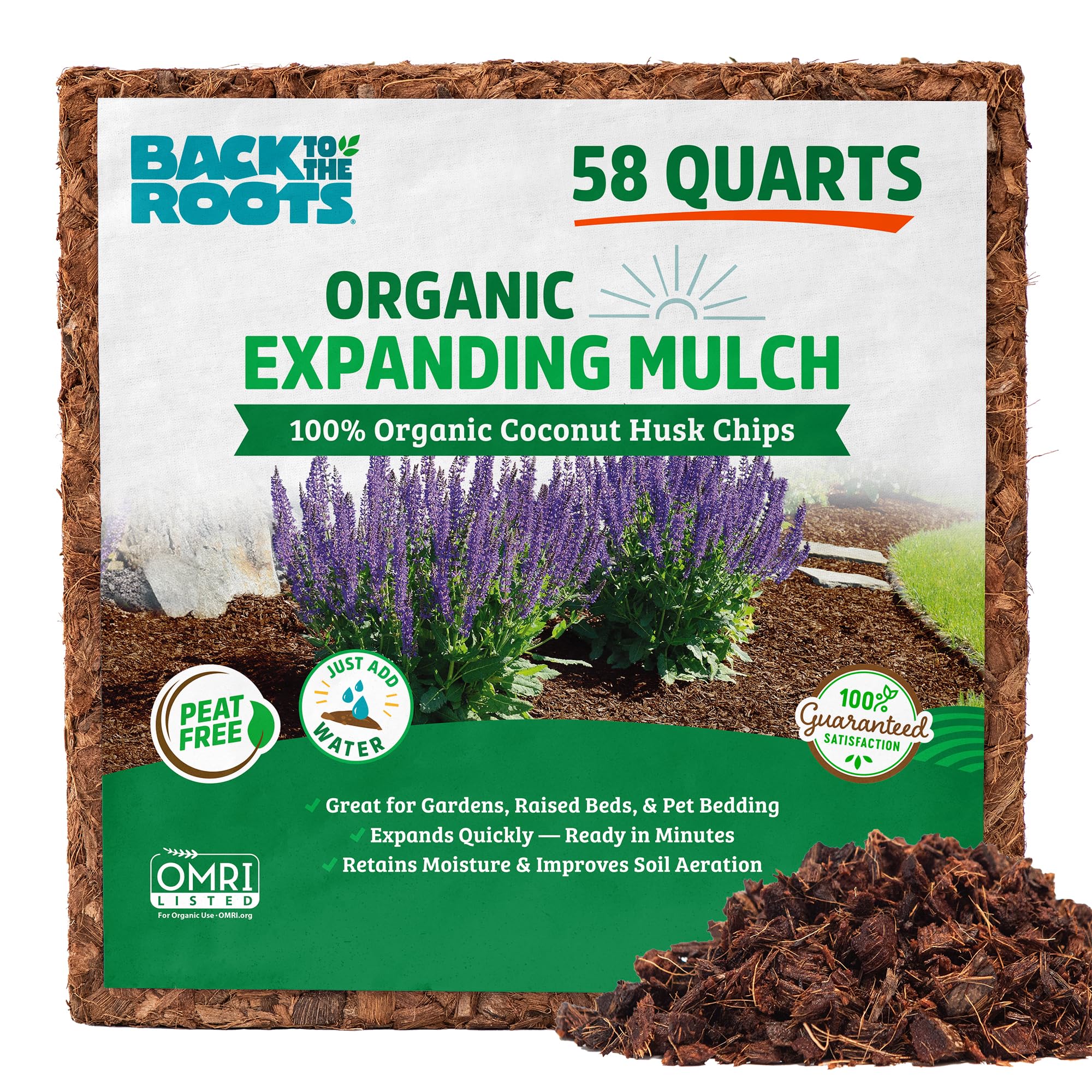
This compressed coconut husk block delivers the most usable volume per dollar in the premium category. The 10-pound brick expands to over 2 cubic feet of organic mulch — enough to cover a 4-foot tree ring with a 3-inch deep layer. The coarse, chunky texture allows water and air to penetrate freely while creating a durable weed barrier that lasts well beyond a single growing season.
The OMRI listing confirms the material is free from synthetic additives, which matters when you’re mulching edible crops like apples, pears, or citrus. Owner reports consistently highlight the exceptional expansion ratio and the lightweight nature of the hydrated husk — one reviewer noted it filled a wheelbarrow three-quarters full from a single brick, saving significant hauling effort compared to heavyweight bark bags.
Because the chips are pH neutral, they won’t gradually acidify the soil the way pine bark or peat-based mulches can. This makes the product a safe, long-term option for mixed fruit tree plantings where soil chemistry needs to remain stable year after year.
What works
- Excellent expansion ratio — 10 lb brick yields 2+ cu. ft. of mulch
- pH neutral, safe for sensitive fruit tree varieties
- OMRI-listed organic, no synthetic chemicals
What doesn’t
- Requires full hydration before spreading, adding prep time
- Not suitable as a standalone nutrient source for heavy feeders
2. Blue Ribbon Organics OMRI Certified Compost

Blue Ribbon Organics delivers what multiple experienced gardeners call “black gold” — a rich, dark compost with an earthy aroma and zero visible contaminants. The fine, uniform texture blends seamlessly into existing soil, improving both drainage and moisture retention in a single application. For fruit trees planted in heavy clay or sandy soil, this compost acts as a structural amendment that addresses the root cause of poor growth.
Reviews consistently praise the absence of plastic, sticks, or metal fragments — a common frustration with lower-grade bulk composts. The OMI certification assures that every scoop is free from synthetic pesticides and fertilizers, making it safe for use around edible fruit trees. One owner highlighted its effectiveness for container-grown citrus and epiphyllums, noting it mixed well with perlite and orchid bark without attracting fungus gnats.
The main trade-off is the smaller bag volume relative to the price. A 7.9-gallon bag covers less ground than a bulk cubic-foot option, so larger orchards may need multiple bags. For the home grower tending 3–5 trees, however, the soil improvement results justify the premium.
What works
- Exceptionally clean, contaminant-free organic compost
- Improves both soil aeration and water retention
- Odorless, suitable for container trees near living spaces
What doesn’t
- Higher cost per cubic foot than bulk alternatives
- Small bag size requires multiple purchases for larger projects
3. Espoma Organic Land and Sea Gourmet Compost

Espoma’s Land and Sea blend stands apart from standard composts by incorporating lobster and crab meal alongside a proprietary mycorrhizae mix (Myco-Tone). The seafood-based ingredients provide a slow-release supply of calcium, chitin, and trace minerals that directly benefit fruit tree root development and disease resistance. This is not a passive mulch — it’s an active soil inoculant that continues feeding the rhizosphere for weeks after application.
The granular texture spreads easily around tree drip lines and integrates quickly with the topsoil. Users with hostas, vegetables, and citrus trees report visibly greener foliage and increased flower bud set within a month of application. The mycorrhizae component helps trees access phosphorus and micronutrients that would otherwise remain bound in the soil, reducing the need for synthetic fertilizer supplements.
One drawback is the relatively low volume per bag — 1 cubic foot covers roughly a 4×4-foot area at a 3-inch depth. Gardeners with multiple mature trees will need several bags for full coverage. The cost per cubic foot places it firmly in the premium tier, but the biological activity packed into each bag makes it a strategic investment for improving long-term tree vitality.
What works
- Lobster and crab meal provide calcium and chitin for strong roots
- Myco-Tone mycorrhizae improve phosphorus uptake
- Granular consistency spreads and incorporates easily
What doesn’t
- Higher cost per bag for the volume delivered
- Seafood-based ingredients may attract animals if left uncovered
4. Plantonix Coco Bliss Coco Coir (6-Pack)

Plantonix’s Coco Bliss delivers a six-brick bundle that expands to 12.5 gallons of fine, fluffy coir — an excellent choice for creating custom soil blends for fruit trees in containers or raised beds. The material has been pre-rinsed and pre-screened through an extremely fine filter, which removes sand, fiber strands, and rocks that can clog root zones. This level of processing is rare among budget-tier coir products and directly translates to more consistent moisture distribution.
Owners consistently mention two standout attributes: the purity of the material and the high expansion rate compared to competing brands. One reviewer noted that a single 1.4-pound brick yielded noticeably more usable coir than other products at the same weight. The neutral pH and high cation exchange capacity (CEC) make it a superior base for nutrient delivery, especially when blended with a slow-release organic fertilizer.
The fine texture excels as a top dressing or a seed-starting medium, but it may compact more quickly than chunkier husk chips if applied too thick around tree trunks. For best results around fruit trees, use this coir as a soil amendment mixed with perlite or as a thin moisture-retentive layer beneath a coarser bark mulch.
What works
- Pre-rinsed and screened for minimal impurities
- High expansion ratio — more usable volume per brick
- pH neutral with excellent CEC for nutrient retention
What doesn’t
- Fine texture can compact if applied as a thick standalone layer
- Rinsing still recommended to remove residual salts
5. Thrive Natural Gardens Coco Coir Chips (11 lb)

Thrive Natural Gardens offers a chunky coco husk chip brick that expands to 1.8 cubic feet — ideal for gardeners who want the moisture management of coir without the fine, dusty texture of ground coir. The larger chip size creates air pockets that prevent soil compaction and encourage deep root exploration, which is exactly what young fruit trees need during establishment. The material decomposes slowly, meaning a single spring application can carry through to the following season.
Users with allergy sensitivities to pine bark specifically praised this product as a safe alternative that doesn’t trigger respiratory reactions. The dry brick is lightweight and easy to store; owners recommend chiseling off small sections with a knife before wetting for smaller projects rather than hydrating the entire block at once. The chips retain moisture effectively, with one gardener reporting significantly reduced summer watering frequency in raised beds after applying a 3-inch layer.
The main considerations involve the pre-wetting step and the need to rinse the expanded chips to reduce mineral salt content. Coir from any brand can carry residual salts from coastal processing, and Thrive’s product is no exception — a quick rinse with fresh water before spreading eliminates the risk of root burn in sensitive young trees.
What works
- Chunky chips resist compaction and improve aeration
- Hypoallergenic — safe for pine allergy sufferers
- Low decomposition rate, lasts 12–18 months
What doesn’t
- Requires rinsing to reduce salt content
- Must be pre-hydrated before spreading; expansion takes time
6. R&M Organics Premium Organic Compost
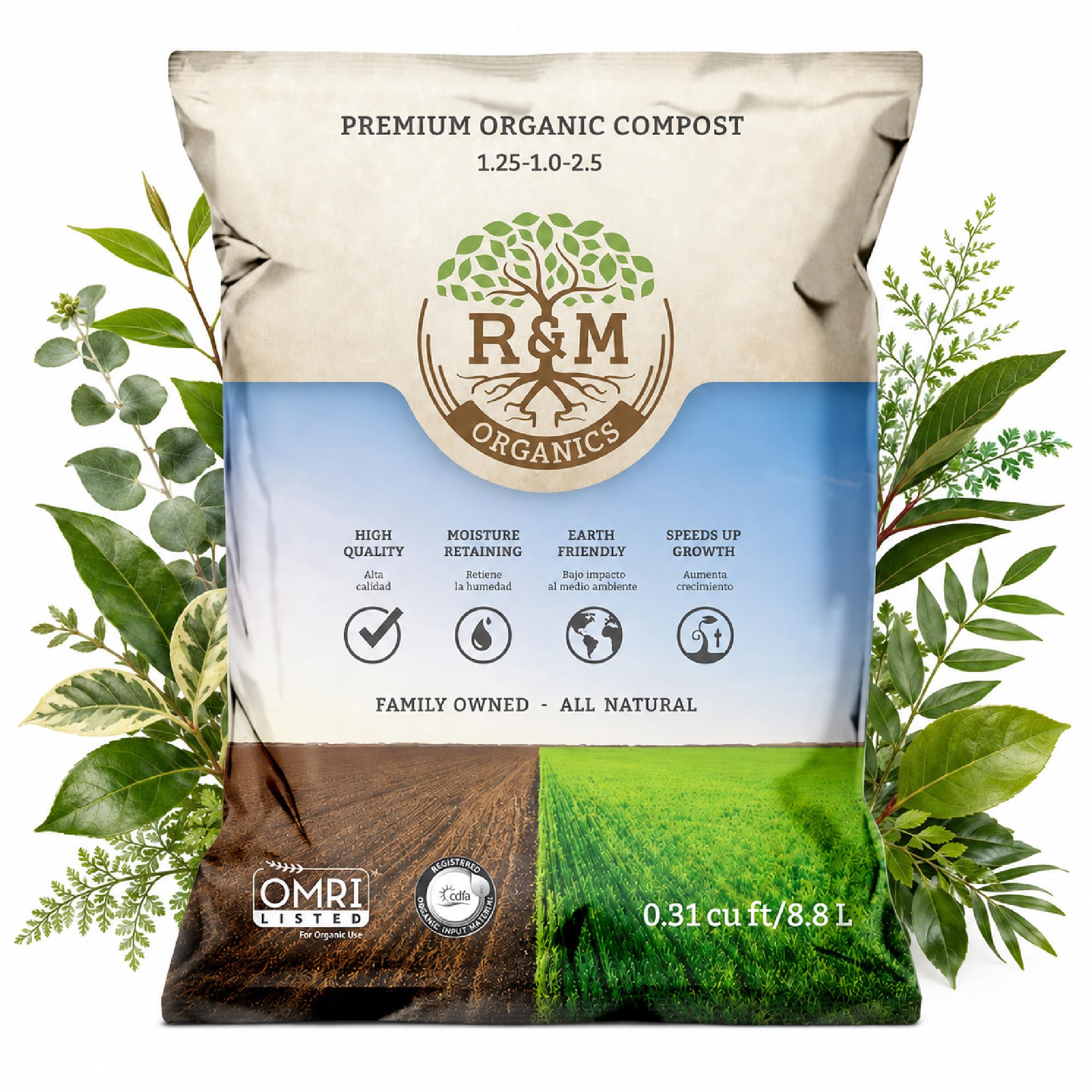
R&M Organics’ manure-based compost offers a straightforward, low-odor solution for gardeners who want to top-dress fruit trees without dealing with the smell or clumps typical of raw manure. The fully composted dairy cow manure has been processed with continuous aeration, resulting in a fine, soil-like texture that blends into the topsoil without forming a crust. A quarter-inch layer around the drip line delivers a slow-release supply of nitrogen and organic matter that feeds the tree without overwhelming it.
Customer feedback includes multiple accounts of reviving struggling plants — one user reported a tomato plant’s yellow leaves turning green within a week of mixing the compost into the planter. For fruit trees, this compost works best as a spring top-dress before adding a coarser insulating layer. The 10-pound bag is compact enough for convenient storage and handling, though larger properties with multiple mature trees may find the volume limiting.
While the nutrient profile is solid, the compost lacks the mycorrhizae and specialized trace minerals found in premium blends like Espoma. It functions best as a general-purpose soil booster for trees that don’t have specific pH or micronutrient deficiencies.
What works
- Fully composted with minimal manure odor
- Fine texture blends easily without clumping
- Quick visible results for nutrient-deficient plants
What doesn’t
- 10 lb bag covers limited area for mature trees
- Lacks mycorrhizae or specialized mineral amendments
7. Rio Hamza Trading Houseplant Mulch (8 Quarts)

Rio Hamza Trading’s houseplant mulch is a fine bark chip product designed primarily for indoor potted plants and small patio containers. For the fruit tree grower with a few dwarf varieties in pots on a balcony or deck, this bag provides a clean, decorative top dressing that helps retain moisture and prevent soil splash during watering. The wood chips are longer lasting than shredded coir or shavings, maintaining their appearance through multiple watering cycles.
Owners appreciate the insect-free nature of the product — several reviews specifically note that no pests or fungus gnats emerged after application, which is a common headache with bagged organic mulches stored in damp conditions. The natural brown color also adds visual consistency to container arrangements without clashing with the tree’s foliage or fruit.
The obvious limitation is the volume. At 8 quarts (roughly 0.3 cubic feet), this bag covers only 2–3 medium-sized pots at a 1-inch depth. For in-ground fruit trees, you would need many bags to achieve adequate coverage, making it cost-prohibitive for full orchard use. It is best reserved for accent container trees or small patio projects.
What works
- Clean, pest-free material out of the bag
- Longer lasting than coco shavings in containers
- Attractive natural color for ornamental display
What doesn’t
- Low volume — impractical for in-ground fruit trees
- Premium cost per quart compared to bulk alternatives
Hardware & Specs Guide
Expanded Volume vs. Dry Weight
Compressed coco coir bricks can expand dramatically — some brands yield 1.8 to 2 cubic feet from a single 10-pound block. This metric is more useful than dry weight when estimating coverage because the hydrated material is what actually reaches your tree’s root zone. Always check the “expanded volume” spec rather than assuming bag weight correlates with coverage area.
pH Range and Electrical Conductivity (EC)
Fruit trees thrive in a pH range of 6.0–7.0. Mulches with a pH below 5.5 (like some pine barks) can gradually acidify the root zone. Coco coir typically tests at 5.8–6.8 after rinsing, while composted manure usually lands near neutral. For coir products, the salt content (measured as EC) matters more than pH — pre-rinsed coir should read below 0.5 mS/cm to avoid root damage.
Carbon-to-Nitrogen Ratio (C:N)
Wood-based mulches have a high C:N ratio (often 200:1 or higher), meaning soil microbes must pull nitrogen from the surrounding soil to break down the material. This can cause temporary nitrogen deficiency in fruit trees if the mulch is tilled in or applied too thick. Compost-based and coir mulches have lower C:N ratios (20:1–60:1), making them safer for direct root contact without a nitrogen penalty.
Particle Size Distribution
Mulch particles are typically classified as fine (under ¼ inch), medium (¼–1 inch), or coarse (1–3 inches). Fine particles compact easily and are best for seed-starting or as a thin top-dress. Medium particles strike the best balance for fruit tree rings, allowing water infiltration while blocking weed germination. Coarse chips are ideal for long-term pathways but can leave gaps that weeds exploit.
FAQ
Can I use fresh wood chips as mulch around fruit trees?
How often should I replace the mulch around my fruit trees?
Is coco coir or bark mulch better for fruit trees in hot climates?
Should I remove old mulch before applying new mulch to fruit trees?
Final Thoughts: The Verdict
For most gardeners, the mulch for fruit trees winner is the Back to the Roots Organic Coco Mulch because it combines a massive expanded volume, pH-neutral chemistry, and OMI organic certification in one easy-to-transport brick. If you want a biologically active compost that feeds your soil food web continuously, grab the Espoma Organic Land and Sea Compost. And for budget-conscious gardeners building soil from scratch in raised beds or containers, nothing beats the Plantonix Coco Bliss 6-Pack for pure value and expansion efficiency.