
A snake plant that wilts, turns yellow, or develops mushy leaves is almost always suffering from one root cause: waterlogged, airless soil. Standard potting mixes are too dense—they hold moisture against the roots of an undemanding succulent, inviting rot and fungal issues. Finding a blend that stays loose, drains sharply, and dries out between waterings is the single most important factor for long-term survival.
I’m Rikta — the co-founder and writer behind Lawn Gear Lab. My approach to this guide involved cross-referencing each mix’s drainage ingredients (perlite, sand, coco coir, pine bark), analyzing particle size distribution, and studying hundreds of owner testimonials to determine which formulas actually prevent root suffocation and which still compact under normal use.
After digging through every spec sheet and customer account, these are the seven mixes that deliver on the promise of healthy, rot-free roots. This is your complete analysis of the best cactus potting mix for snake plant owners in 2024.
How To Choose The Best Cactus Potting Mix For Snake Plant
Snake plants (Dracaena trifasciata) are forgiving in almost every way except soil. Their fleshy rhizomes store water and are highly susceptible to rot if the medium doesn’t drain within hours. The right mix balances moisture retention for the roots and quick percolation for the excess.
Drainage & Aeration
Look for coarse ingredients like perlite, coarse sand, pine bark chips, or pumice. The mix should feel gritty, not like dust. If you squeeze a handful, it should crumble apart, not hold a muddy ball. Aeration channels let oxygen reach the root zone.
Base Material: Peat vs. Coco Coir
Sphagnum peat moss holds water longer and can become acidic over time. Coco coir wets more uniformly, resists compaction, and has a neutral pH. For snake plants, coco coir bases often provide a more forgiving dry-back cycle, especially for newer growers.
Organic Additives & pH
Worm castings add slow-release nutrients without burning roots. Lime balances acidity. Avoid mixes with embedded synthetic fertilizers (slow-release prills) because snake plants are light feeders and excess salts can scorch leaf tips. Aim for a slightly acidic to neutral pH (5.5–7.0).
Quick Comparison
On smaller screens, swipe sideways to see the full table.
| Model | Category | Best For | Key Spec | Amazon |
|---|---|---|---|---|
| Rosy Soil Cactus Mix | Premium | Peat-free, living soil | 4 Qt peat-free with microbes | Amazon |
| rePotme Snake Plant Soil | Premium | Conservatory-grade quality | 2 Qt with bark & charcoal | Amazon |
| Perfect Plants 8 Qt Snake Plant Soil | Mid-Range | Large repotting jobs | 8 Qt coco coir & bark | Amazon |
| Perfect Plants 4 Qt Snake Plant Soil | Mid-Range | Single repot or propagation | 4 Qt coco coir & bark | Amazon |
| Jessi Mae Organic Potting Soil | Mid-Range | Slightly acidic formula | 4 Qt with perlite | Amazon |
| Hoffman Organic Cactus & Succulent Mix | Budget-Friendly | Value per quart | 4 Qt peat-based | Amazon |
| Gardenera Premium Snake Plant Mix | Budget-Friendly | Small pots & tonics | 1 Qt with worm castings | Amazon |
In‑Depth Reviews
1. Rosy Soil Cactus & Succulent Mix
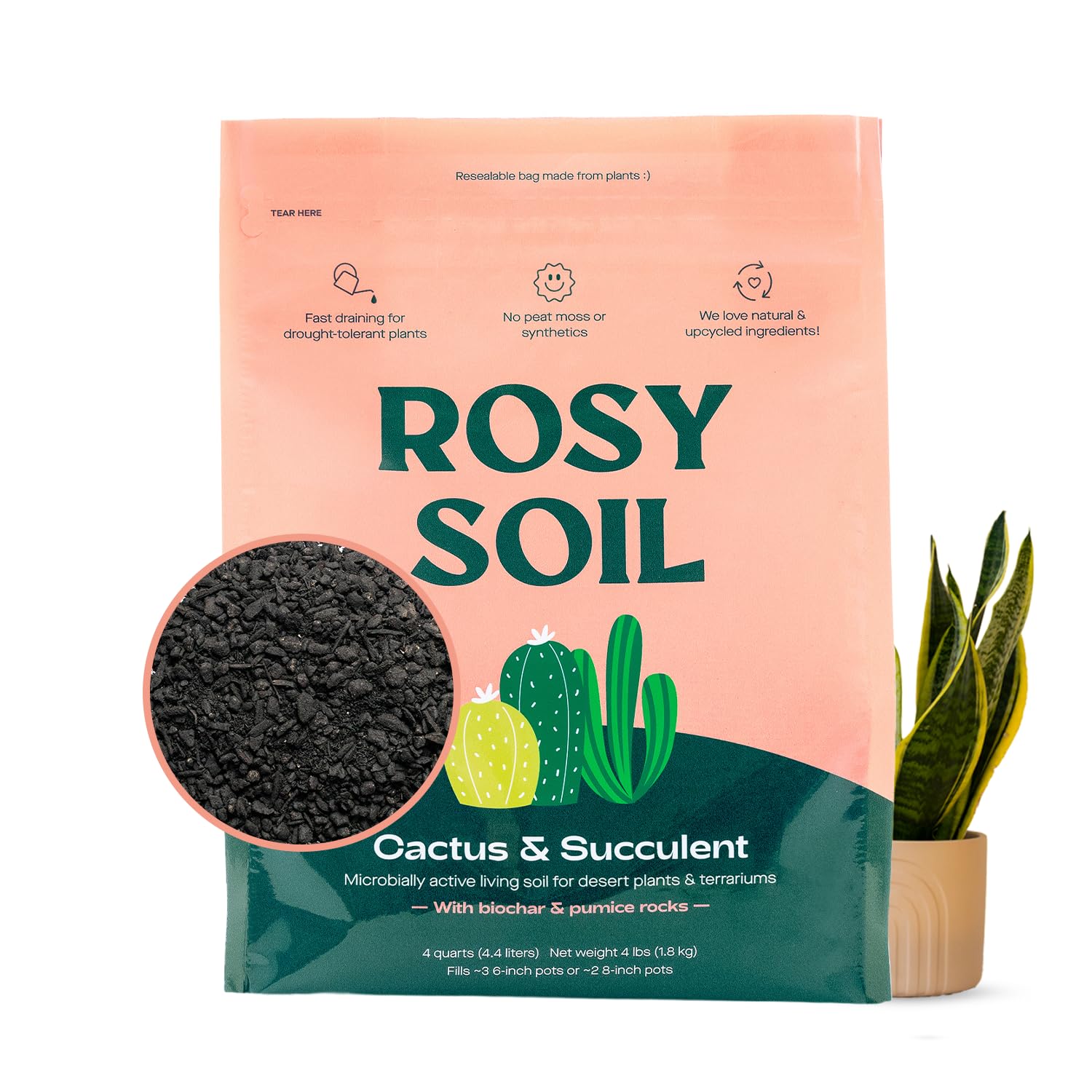
Rosy Soil rethinks the conventional cactus blend by removing peat entirely. The chunky, gritty texture—featuring pumice, pine bark, and coco coir—creates large air pockets that let snake plant rhizomes breathe. Pre-loaded beneficial microbes and worm castings establish a living soil ecosystem that feeds roots without synthetic salts.
During analysis, the particle size was notably coarser than most competitors, which directly translates to faster drainage and less compaction over time. The 4-quart resealable bag filled two medium pots with leftovers, and the printed guidance made potting straightforward. A few users noted the bag’s resealable zipper is stiff, so transferring to a canister for longer storage is recommended.
The peat-free formula is also a sustainability win—peat harvesting damages bog ecosystems, and skipping it reduces the mix’s water-holding tendency, which aligns perfectly with snake plant husbandry.
What works
- Exceptional chunky aeration for rot prevention
- Pre-loaded microbes support root health without synthetic feed
- Peat-free and plastic-neutral packaging
What doesn’t
- Zipper seal on bag is not airtight
- Some growers add extra perlite for mature plants
2. rePotme Snake Plant Soil
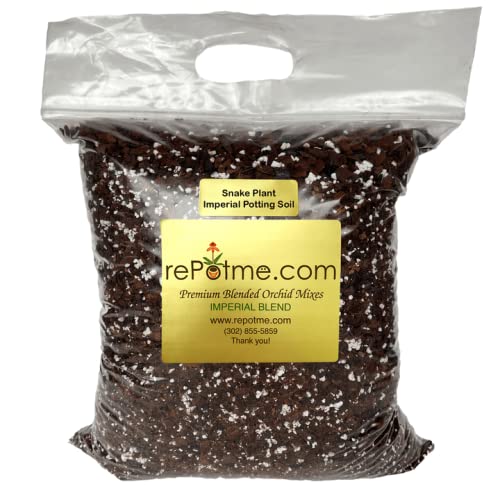
rePotme’s mix is crafted in small daily batches and used by major conservatories—this pedigree shows in the uniformity of every scoop. The formula combines orchid bark fines, charcoal, peat, and perlite in a proportion that holds slight moisture while still draining aggressively. Snake plant roots penetrate the bark particles easily, anchoring firmly.
The 2-quart resealable pouch is a clever packaging choice for apartment dwellers or anyone repotting a single 6-inch planter. A plant label and butterfly clip are included, which is a thoughtful touch for gifting. The biggest complaint is the premium cost per quart—if you are repotting multiple large pots, the price adds up quickly.
Owners who switched from standard potting soil reported visible root regeneration within three weeks, with leaves regaining stiffness.
What works
- Premium bark-and-charcoal structure resists compaction
- Resealable pouch keeps unused mix fresh
- Trusted by botanical gardens
What doesn’t
- High per-quart cost for bulk repotting
- Small bag size limits large-scale use
3. Perfect Plants Organic Snake Plant Soil (8 Qt)
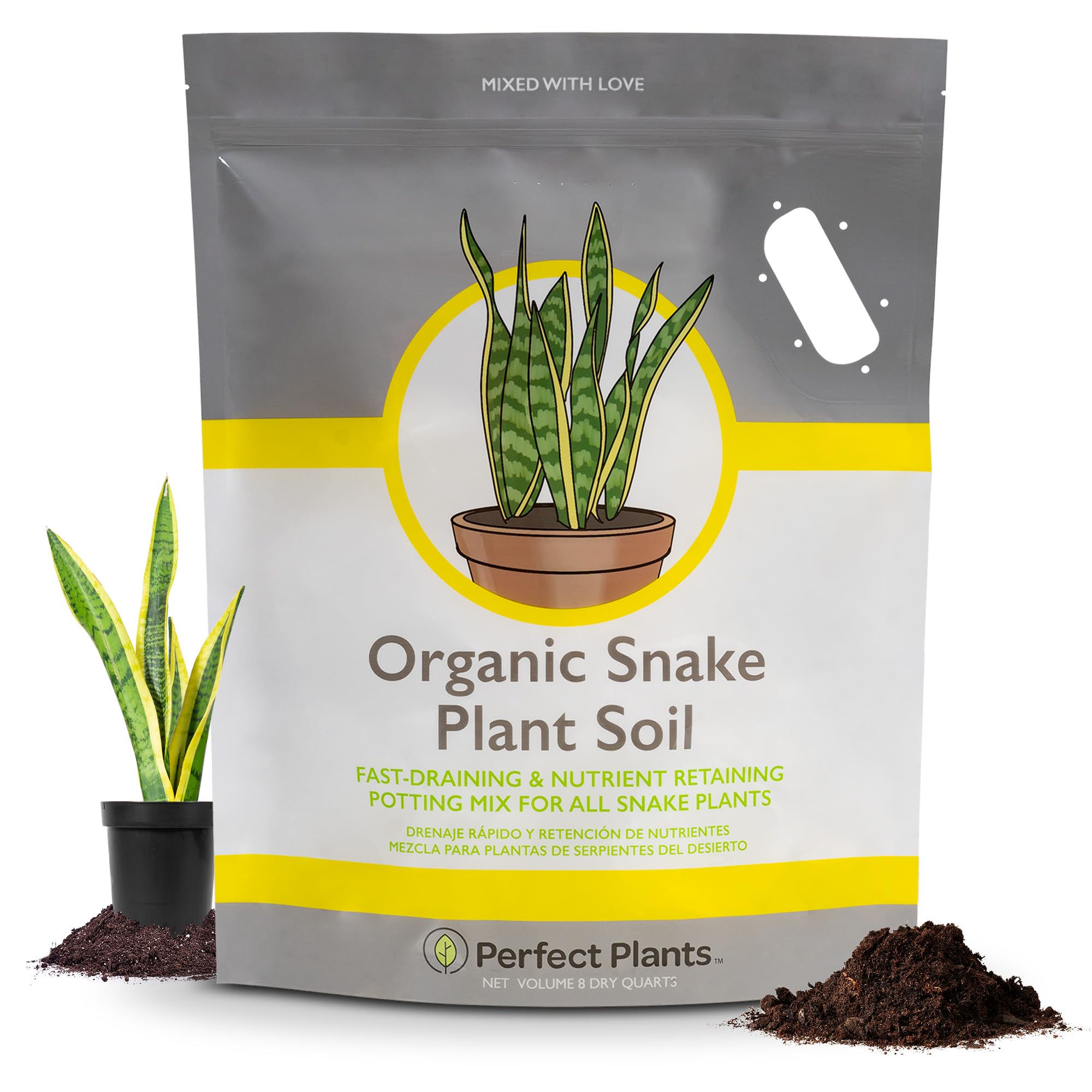
Perfect Plants offers the same formula in two bag sizes, and the 8-quart option is the smartest buy for anyone maintaining a collection of three or more snake plants. The coco coir base resists compression better than peat, and the inclusion of pine bark chips and perlite creates a free-draining structure that mimics the snake plant’s native rocky understory.
No slow-release fertilizer is added, which is ideal because snake plants are sensitive to overfeeding. The heavy-duty resealable bag holds up well for storage. The only drawback is the price per quart is slightly higher than generic cactus mix, but the ingredient quality and consistent particle size justify the increase.
Multiple users reported their snake plants doubled in size within one growing season after repotting, with no signs of rot or yellowing.
What works
- Coco coir base stays airy and resists compaction
- No slow-release fertilizer to burn roots
- Large 8 Qt bag handles multiple repots
What doesn’t
- Cost per quart still above generic mixes
- Some find the bark chips oversized for small pots
4. Perfect Plants Organic Snake Plant Soil (4 Qt)

This 4-quart bag shares the identical coco coir, pine bark, and perlite blend as the 8-quart sibling but is sized perfectly for a single repot of a 6- or 8-inch pot, plus a little leftover for propagation cuttings. The formula drains fast—water passes through in seconds—which is the most critical metric for snake plants.
The bag is resealable, keeping the remaining mix fresh for future use. A few customers noted the cost is higher relative to volume; for large collections, the 8-quart bag is clearly the better value. But for a single plant owner, this bag eliminates waste.
No synthetic ingredients or fillers mean the soil arrives ready to use immediately.
What works
- Excellent drainage with visible perlite and bark
- Resealable bag preserves unused soil
- All-natural ingredients, no slow-release feed
What doesn’t
- Higher per-quart cost than bulk alternatives
- Not cost-effective for multiple large pots
5. Jessi Mae Organic Potting Soil

Jessi Mae’s blend targets a slightly acidic pH (around 6.0–6.5), which can be beneficial for snake plants grown in hard tap water that raises alkalinity. The hand-mixed soil features a light, fluffy texture with generous perlite for aeration. It is also suitable for peace lilies and ivy, making it a versatile option for multi-species indoor collections.
The organic certification ensures no synthetic chemicals are present, and the mix comes in a 4-quart bag that feels surprisingly dense. One notable quirk: several users reported an earthy, organic smell upon opening that dissipates after a day or two. This is common with fresh worm castings but can surprise first-time buyers.
The fluffy texture can settle slightly after watering, so a gentle top-up after the first soak is recommended.
What works
- Slightly acidic pH offsets alkaline tap water
- Light, fluffy texture with visible perlite
- Chemical-free and hand-mixed in the USA
What doesn’t
- Organic odor lasts a day after opening
- Bag size feels smaller than 4 Qt volume suggests
6. Hoffman Organic Cactus & Succulent Mix

Hoffman’s mix is a classic entry-level formula that has been a staple for decades. Its peat-based composition includes perlite and sand to create adequate drainage for most succulents. The 4-quart bag is priced well below competitors, making it an accessible starting point.
However, the particle size is finer than premium blends, and some users needed to add extra perlite or pumice to prevent compaction for snake plants. The bag also arrived occasionally with a tear in the outer packaging, which is a known distribution issue. For growers on a tight budget, this mix works well when supplemented with additional coarse material.
Multiple reviews confirm it eliminated fungus gnat problems and stopped existing rot when repotting snake plants—a strong indicator of adequate drainage, though not ideal out of the box.
What works
- Very low cost per quart
- Familiar formula with perlite and sand
- Stopped root rot and fungus gnats in reviews
What doesn’t
- Finer texture may compact over time
- Some bags arrive with tears or leaks
7. Gardenera Premium Snake Plant Potting Mix

Gardenera’s 1-quart bag is designed specifically as a targeted solution for ailing or newly propagated snake plants. The hand-blended recipe uses Canadian peat moss, extra perlite, worm castings, and lime. The worm castings provide a gentle nutrient boost that can revive a yellowing plant without the burn of synthetic fertilizer.
At 1 quart, the volume only covers one repot of a standard 4-inch or 5-inch nursery pot. This makes it a perfect emergency purchase for a single plant rather than a bulk option. The mix drained quickly and uniformly in reported tests, helping a snake plant with early-stage rot recover in under a week.
For anyone needing to repot multiple large plants, the per-quart cost is too high to justify—better to buy the 4- or 8-quart bags from other brands.
What works
- Worm castings deliver gentle, immediate nutrients
- Extra perlite ensures fast drainage
- Small bag is ideal for emergency rescue
What doesn’t
- Very small volume—impractical for multiple pots
- High per-quart cost compared to larger bags
Hardware & Specs Guide
Drainage Ingredients & Particle Size
The most critical spec for a cactus potting mix for snake plants is the visible particle size. Coarse perlite (3–6 mm), pine bark chips, pumice, or coarse sand create the macro-pores that allow water to flow through in seconds. Fine silt or dust indicates a mix that will compact and hold moisture against roots. Premium blends use bark and pumice; budget blends rely on smaller perlite and sand.
Coco Coir vs. Sphagnum Peat
Coco coir is harvested from coconut husks and wets easily, resists compaction, and has a neutral pH. Sphagnum peat holds more water per volume and lowers pH slightly. For snake plants, coco coir bases are generally easier to manage because they dry back faster. If using a peat-based mix, users should add 20–30% more perlite or pumice to compensate for the moisture-holding capacity.
Organic Amendments & pH Balance
Worm castings provide NPK (1-0-0 roughly) and beneficial bacteria without burning roots. Lime (calcium carbonate) is added to buffer acidity in peat-heavy formulas. Avoid mixes with blue or green slow-release fertilizer prills—snake plants prefer low-nutrient soil. Target a pH range of 5.5–7.0. Slightly acidic (6.0) helps prevent leaf tip burn from mineral buildup.
Bag Volume & Owner Planning
One quart fills a single 4-inch nursery pot. Four quarts handle two to three 6-inch pots or one 8-inch pot. Eight quarts are enough for three to five repots of average-sized snake plants. Buying a larger bag of coco coir-based mix and storing it in a sealed bin preserves moisture consistency across repots and reduces per-repot cost.
FAQ
Can I use regular cactus mix for my snake plant?
How do I know if my snake plant soil drains fast enough?
Should I add sand or perlite to bagged cactus mix?
Why does my snake plant soil smell earthy after opening?
Final Thoughts: The Verdict
For most gardeners, the cactus potting mix for snake plant winner is the Rosy Soil Cactus & Succulent Mix because its peat-free, chunky texture and pre-loaded microbes deliver the exact drainage and aeration snake plant rhizomes need without amendments. If you want the largest volume at the best per-quart value, grab the Perfect Plants 8 Qt Organic Snake Plant Soil. And for a small rescue or propagation job, nothing beats the Gardenera Premium Snake Plant Potting Mix.