
Fall is the single most critical feeding window for cool-season lawns. Applying the right granular formula before winter sets in determines whether your turf emerges thin and patchy or thick and resilient next spring. The wrong fall fertilizer can push leafy growth when you need root development, leaving grass vulnerable to winter kill.
I’m Rikta — the co-founder and writer behind Lawn Gear Lab. I spend my time comparing N-P-K ratios, studying slow-release nitrogen technologies, analyzing 6+ month owner feedback on granular spreads, and cross-referencing soil science data to find which fall blends actually deliver on root mass and spring green-up without burning or surging growth.
This guide breaks down the N-P-K profiles, coverage specs, and release mechanics that separate effective fall feeds from generic fertilizers. You’ll find the best lawn fertilizer for fall based on real turfgrass science, not seasonal marketing hype.
How To Choose The Best Lawn Fertilizer For Fall
Fall lawn fertilizers are chemically different from spring and summer blends. The goal is not to push top growth but to store energy in roots and crowns for winter dormancy. Understanding N-P-K ratios, release mechanisms, and coverage rates is essential to making the right choice.
Understand the N-P-K Ratio
The three numbers on the bag represent nitrogen (N), phosphorus (P), and potassium (K). For fall, look for a low or zero middle number (phosphorus) and a high third number (potassium). Potassium strengthens cell walls, improves cold tolerance, and helps grass resist disease during winter. A ratio like 24-0-14 or 10-0-20 tells you the blend prioritizes root energy over leaf growth.
Prioritize Slow-Release Nitrogen
Quick-release nitrogen can cause a flush of green top growth that is vulnerable to frost damage. Slow-release nitrogen, often listed as sulfur-coated or polymer-coated urea, feeds the grass gradually over 6 to 10 weeks. This sustained nutrition supports root development without forcing tender new leaves that die back when temperatures drop.
Consider Coverage and Granule Size
Coverage ratings (square feet per bag) determine how much product you need. Larger bags covering 15,000 sq. ft. are cost-effective for bigger lawns. Granule size and distribution matter too — smaller, uniform granules spread more evenly through a rotary spreader, preventing dark green stripes and pale patches.
Check for Iron and Micronutrients
Fall blends that include iron deliver a deep green color without stimulating excessive growth. Iron helps chlorophyll production, giving your lawn a healthy appearance even as growth slows. Some premium formulas also include humic acids or bio-stimulants that improve soil structure and nutrient uptake in cooler soil temperatures.
Quick Comparison
On smaller screens, swipe sideways to see the full table.
| Model | Category | Best For | Key Spec | Amazon |
|---|---|---|---|---|
| Scotts WinterGuard Fall Weed & Feed | Weed & Feed | Weed control + fall feeding | 11.28 lb. covers 4,000 sq. ft. | Amazon |
| Andersons Premium Fall 24-0-14 | Balanced Feed | Consistent green-up and winter prep | 24-0-14 with 3x release N | Amazon |
| Andersons PGF 16-0-8 with Humic DG | Pro Formula | High-P soil and long root feeding | 16-0-8, feeds up to 8 weeks | Amazon |
| Jonathan Green Winter Survival 10-0-20 | Winter Prep | Deep root storage and early spring green | 10-0-20 high potassium | Amazon |
| Scotts Turf Builder WinterGuard Fall 32-0-10 | All-Grass Feed | Large lawn recovery from summer | 32.3 lb. covers 12,000 sq. ft. | Amazon |
| Yard Mastery 16-0-0 Double Dark | Iron Booster | Deep green color without growth surge | 16-0-0 with 6% iron | Amazon |
| GreenView Fairway Formula Fall | Low-Growth Feed | Slow-release without clippings surge | 45 lb., ~60% slow-release N | Amazon |
In-Depth Reviews
1. Jonathan Green Winter Survival 10-0-20

The Jonathan Green Winter Survival formula is built specifically for fall root storage. Its 10-0-20 N-P-K profile delivers almost no phosphorus — important for soil that already tests high — while the high potassium content drives carbohydrate storage in root systems. Coupled with slow-release nitrogen, this feed keeps grass greener later into fall without forcing frost-vulnerable top growth.
At 45 pounds covering 15,000 square feet, this bag offers exceptional value per square foot. Multiple owner reports confirm that lawns treated with this blend in early fall plus a second application in early November showed noticeably earlier green-up in spring compared to untreated areas. The large granule size minimizes dust during spreading, though users with older rotary spreaders may need to calibrate twice for even distribution.
This phosphate-free formula is safe around waterways and newly seeded lawns. The high potassium ratio directly supports cold tolerance, making it the strongest option for gardeners in zones 5 through 7 who face hard freezes and want to maximize spring recovery. It is the most category-locked fall fertilizer on this list.
What works
- Highest potassium ratio (20) in the comparison for winter root energy
- Zero phosphorus prevents runoff and suits high-P soil
- Covers 15,000 sq. ft. for large-lot efficiency
- Deep root response carries into early spring green-up
What doesn’t
- Large granules require a well-calibrated spreader to avoid uneven coverage
- Does not contain iron for immediate cosmetic green-up
- Must apply before soil temperature drops below 50°F for best results
2. Andersen’s Premium Fall 24-0-14
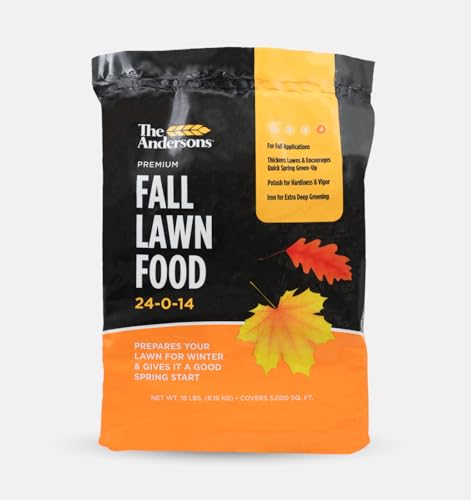
The Andersons Premium Fall Food 24-0-14 is engineered for the fourth application window of a season-long lawn program. It combines quick-release, intermediate-release, and slow-release nitrogen to deliver immediate color while still providing sustained feeding over the fall season. The inclusion of iron drives a deep dark green that many users report outperforming their local landscape service results.
Covering 5,000 square feet, this 18-pound bag is ideal for medium-sized lawns where precision matters more than raw coverage volume. The 24-0-14 ratio provides a solid potassium base for root storage while the higher nitrogen count suits lawns that need recovery after a hot, stressful summer. Multiple verified buyers from cooler climates reported noticeably thicker grass and better winter color within three weeks of application.
This formula works across all turf types and spreads easily through standard broadcast spreaders. The three-stage nitrogen release means you get an immediate cosmetic benefit followed by weeks of background feeding — a smart choice for homeowners who want visible results while still building long-term root health.
What works
- Triple-release nitrogen system gives rapid green plus long feeding
- Iron content produces deep, rich color without extra growth
- Safe for all cool-season and warm-season turf types
What doesn’t
- Smaller coverage area per bag compared to 15,000 sq. ft. options
- Higher nitrogen ratio may push growth if applied when soil is still warm
3. Andersen’s PGF 16-0-8 with Humic DG
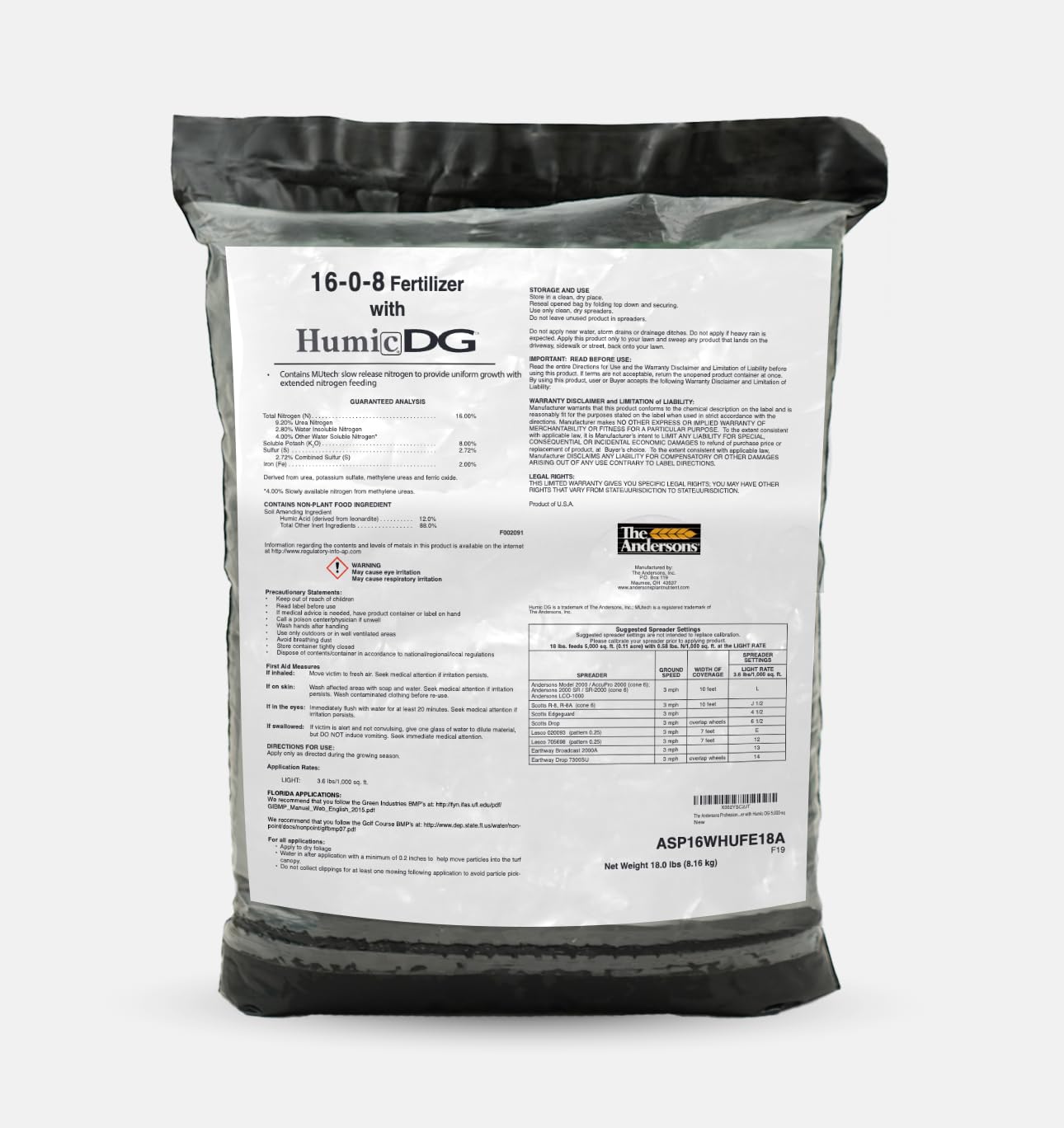
Andersons PGF 16-0-8 is a professional-grade fall option that adds Humic DG — a dispersing granule technology that improves soil structure and nutrient uptake. The 16-0-8 ratio makes this a strong choice for lawns with existing high phosphorus levels because it adds zero phosphorus while still providing potassium for winter root storage and slow-release nitrogen for up to 8 weeks.
The super-fine particle design delivers nearly double the particle count per square foot compared to standard granular fertilizers. This means more even distribution and reduced risk of dark stripes or burn spots. Users report dramatic lawn transformation within weeks, with greener, denser turf that holds color through the cooler months. The 18-pound bag covers approximately 10,000 sq. ft. when applied at standard rates.
Humic DG acts as a soil conditioner, helping roots absorb nutrients more efficiently in cooler fall soil temperatures. This makes the PGF formula particularly effective for lawns with compacted or poor soil. It is pricier per bag than commodity blends, but the combination of micronutrients, Humic DG, and zero phosphorus makes it a high-value pick for soil-conscious lawn owners.
What works
- Humic DG improves nutrient uptake in cold soil
- Zero phosphorus suits high-P soil conditions
- Super-fine particles spread more evenly than standard granules
What doesn’t
- Not available in California or Oregon
- Premium price compared to basic fall blends
4. Scotts Turf Builder WinterGuard Fall 32-0-10

Scotts Turf Builder WinterGuard Fall 32-0-10 is a high-nitrogen fall option for lawns recovering from summer heat, drought, and foot traffic. The 32-0-10 ratio provides a heavy nitrogen dose for rebuilding blade density while the potassium supports root system health. This formula is designed for use on any grass type and can be applied to wet or dry lawns.
The 32.3-pound bag covers 12,000 sq. ft., making it a strong choice for medium to large lawns. Verified buyers report this product revived tired late-summer turf quickly, with visible greening within days and sustained color even as temperatures dropped into the 20s. The formula includes Scotts’ proprietary slow-release technology to minimize burning risk, though the high nitrogen content demands careful spreader calibration to avoid overlap.
One limitation is the nutrient profile — with only 10 in the potassium position, this blend prioritizes top growth recovery over deep root storage. For lawns in zones 6 and colder where winter survival is the primary goal, a higher-potassium formula (like the Jonathan Green 10-0-20) may be a better fit. This is ideal for transitional zone lawns where recovery is as important as winter prep.
What works
- Quick recovery for summer-damaged lawns
- Works on all grass types, wet or dry application
- Large bag covers 12,000 sq. ft.
What doesn’t
- High nitrogen-to-potassium ratio limits winter root storage
- Less suitable for extremely cold winter climates
5. GreenView Fairway Formula Fall Fertilizer

GreenView Fairway Formula Fall Fertilizer is built around nearly 60% slow-release nitrogen, which means minimal surge growth and fewer clippings even after application. The zero-phosphate formula protects waterways and is safe to use where phosphorus restrictions apply. This product is designed to produce a deep, rich green color without forcing excessive leaf growth that would be vulnerable to frost.
At 45 pounds covering 15,000 sq. ft., this is one of the highest-coverage options available. Users consistently report that a single fall application produced a “kelly green” lawn that held its color through the winter and into late spring. The moisture-proof bag packaging is a practical detail that prevents clumping, a common frustration with bulk fertilizer bags stored in garages or sheds.
GreenView’s Fairway Formula is slightly more expensive per bag than basic fall blends, but users who have switched from major brands report noticeably better long-term color consistency and reduced weed pressure the following spring. The slow-release profile makes this an excellent choice for homeowners who want a single, worry-free fall application without the need for repeat feeding.
What works
- Nearly 60% slow-release nitrogen prevents frost-vulnerable surge
- Zero phosphate is environmentally responsible
- Moisture-proof bag prevents clumping in storage
What doesn’t
- Higher upfront cost per bag than commodity alternatives
- Slow-release profile means slower initial visual green-up
6. Scotts WinterGuard Fall Weed & Feed
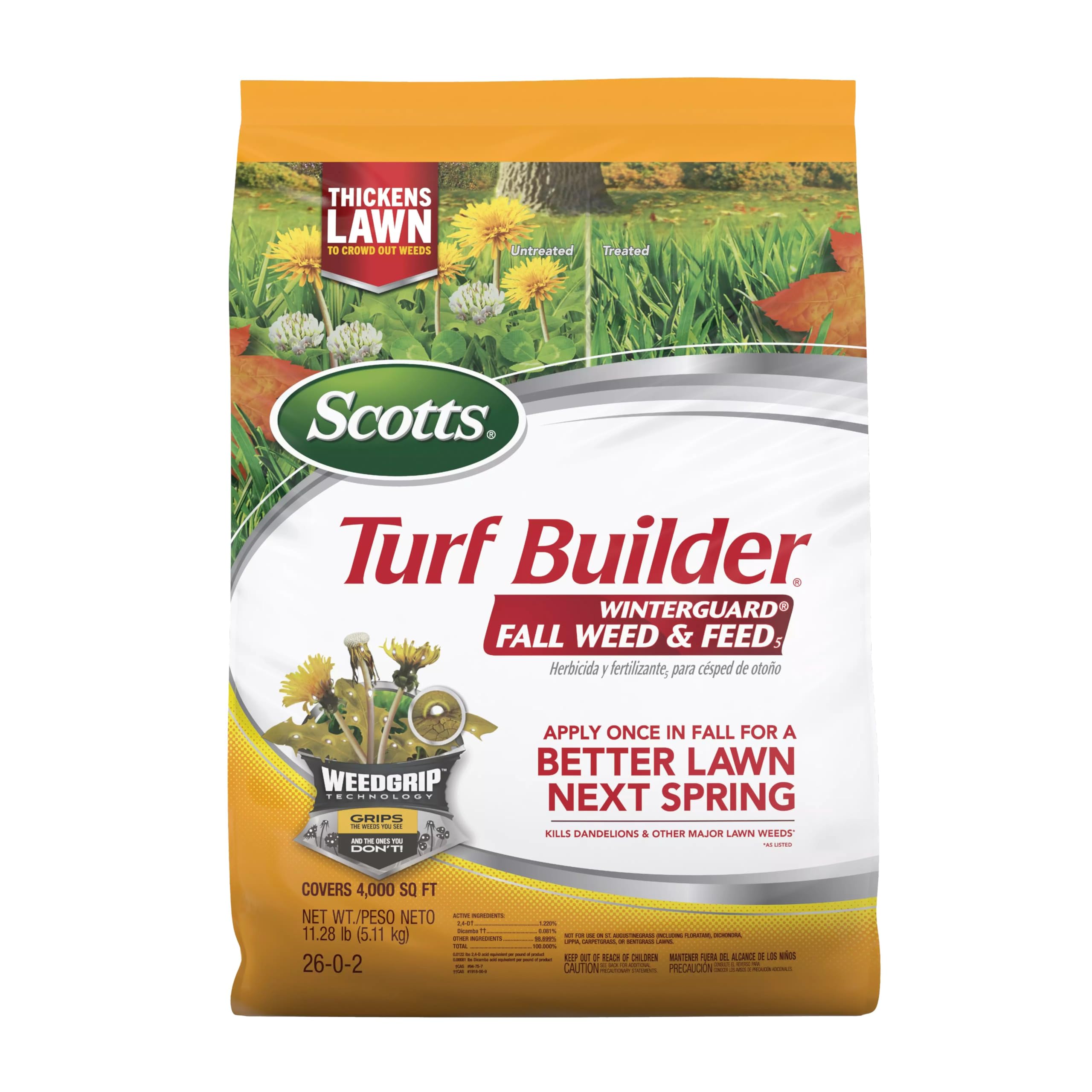
The Scotts WinterGuard Fall Weed & Feed is a dual-action product that addresses both feeding and broadleaf weed control in a single application. The weed killer component targets over 50 listed lawn weeds including clover, dandelion, plantain, and purslane. This makes it a practical choice for lawns with an existing weed problem going into fall, as it eliminates the need for a separate herbicide pass.
Application timing is specific — the product must be applied to a wet lawn when temperatures are consistently between 60°F and 90°F and weeds are actively growing. Users who followed these conditions reported weeds dying within three weeks and significant thickening of the grass. The 11.28-pound bag covers 4,000 sq. ft., a smaller coverage area than standard feed-only products, which reflects the added herbicide weight.
This product works on all major grass types including Bahiagrass, Bermudagrass, Fescue, and Zoysiagrass. It is a solid entry-level option for homeowners managing a weedy lawn on a budget. However, the weed killer component limits flexibility — you cannot use this product if you plan to overseed in fall, as the herbicide will prevent new grass seed germination.
What works
- Controls 50+ broadleaf weeds while feeding the lawn
- Works on all major grass types
- Visible weed die-off within 3 weeks when applied correctly
What doesn’t
- Weed killer prevents overseeding during the same window
- Smaller coverage area per bag than feed-only products
- Requires specific temperature and moisture window for best results
7. Yard Mastery 16-0-0 Double Dark with Iron
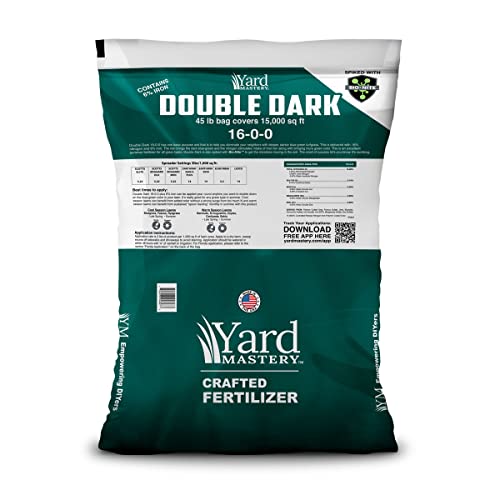
Yard Mastery Double Dark 16-0-0 is a specialized fall iron booster designed for one specific purpose: delivering a rapid, deep green color without pushing excessive leaf growth. The 16-0-0 ratio provides nitrogen for basic maintenance while the 6% iron content drives chlorophyll production. This makes it an ideal supplement for homeowners who want a dark cosmetic appearance in late fall without the surge growth that makes grass vulnerable to frost.
The 45-pound bag covers 15,000 sq. ft., offering strong coverage for larger lawns. Users report visible darkening within about 7 days of application, provided the product is watered in properly. The lack of potassium in the 16-0-0 formula means this product should be used as a supplement to a balanced fall fertilizer, not as a standalone winter prep feed. It works best when applied after a potassium-rich base feed like the Jonathan Green 10-0-20 has already been laid down.
Some users note the price is higher than basic iron supplements, but the granular form with Bio-Nite technology improves iron availability in cooler soil. Spreading in a back-and-forth plus diagonal pattern is recommended to prevent uneven greening. This is a targeted tool, not a complete fall feeding solution.
What works
- 6% iron delivers deep green color in ~7 days
- Zero phosphorus and low nitrogen prevent surge growth
- Large 15,000 sq. ft. coverage per bag
What doesn’t
- No potassium — cannot be used as primary fall feed
- Pricier per application than basic iron supplements
- Requires careful spreading to avoid patchy greening
Hardware & Specs Guide
N-P-K Ratio
The three numbers on a fertilizer bag define the percentage by weight of nitrogen (N), phosphorus (P), and potassium (K). For fall blends, look for a low or zero middle number and a high third number. A 10-0-20 ratio means 10% nitrogen for slow top growth, 0% phosphorus, and 20% potassium for root energy storage. Ratios like 24-0-14 or 32-0-10 prioritize recovery from summer stress while still supporting root health.
Slow-Release vs. Quick-Release Nitrogen
Slow-release nitrogen, often derived from polymer-coated urea or sulfur-coated urea, breaks down gradually over 6-10 weeks based on soil temperature and moisture. This prevents a rapid green flush that would produce soft, frost-vulnerable tissue. Quick-release nitrogen gives immediate color but wears off faster and can burn turf if over-applied. Most premium fall blends combine both types for immediate cosmetic results plus sustained feeding.
Coverage Area
Coverage is measured in square feet per bag and varies widely — from 4,000 sq. ft. for small combination products to 15,000 sq. ft. for standard 45-pound bags. Larger coverage means fewer refills for big lawns, but also requires more precise spreader calibration to ensure even distribution across the entire area. Always measure your lawn’s square footage before purchasing to avoid guessing application rates.
Iron Content
Iron (Fe) is a micronutrient that stimulates chlorophyll production, giving grass a deep green color without forcing growth. Fall formulas with iron percentages between 2% and 6% are effective for cosmetic greening. High-iron products like Yard Mastery Double Dark (6% iron) can be used as a supplement after a primary potassium-rich feed, but should not replace a balanced fall fertilizer for root storage.
FAQ
Can I use a regular summer fertilizer for fall feeding?
Should I apply fall fertilizer before or after overseeding?
When is the best time to apply fall fertilizer in zones 5-7?
Final Thoughts: The Verdict
For most gardeners needing deep winter root storage, the best lawn fertilizer for fall winner is the Jonathan Green Winter Survival 10-0-20 because its high potassium ratio (20) directly supports cold tolerance and spring recovery without pushing frost-vulnerable growth. If you need quick cosmetic green-up after a hard summer, grab the Scotts WinterGuard Fall 32-0-10. And for precise, long-duration feeding with soil conditioning, nothing beats the Andersons PGF 16-0-8 with Humic DG.